2,422 videos 1,389,747,653 views US Joined Aug 30, 2018
Charlie Kirk is the Founder and President of Turning Point USA, the largest and fastest growing conservative youth activist organization in the country with over 250,000 student members, over 150 full-time staff, and a presence on over 2,000 high school and college campuses nationwide. Charlie is also the Chairman of Students for Trump, which aims to activate one million new college voters on campuses in battleground states in the lead up to the 2020 presidential election. His social media reaches over 100 million people per month and according to Axios, he is one of the "top 10 most engaged" Twitter handles in the world. He is also the host of “The Charlie Kirk Show,” which regularly ranks among the top news shows on Apple podcast charts.
Charlie Kirk Explains Why America Must Limit Green Cards and Prioritize American Students First
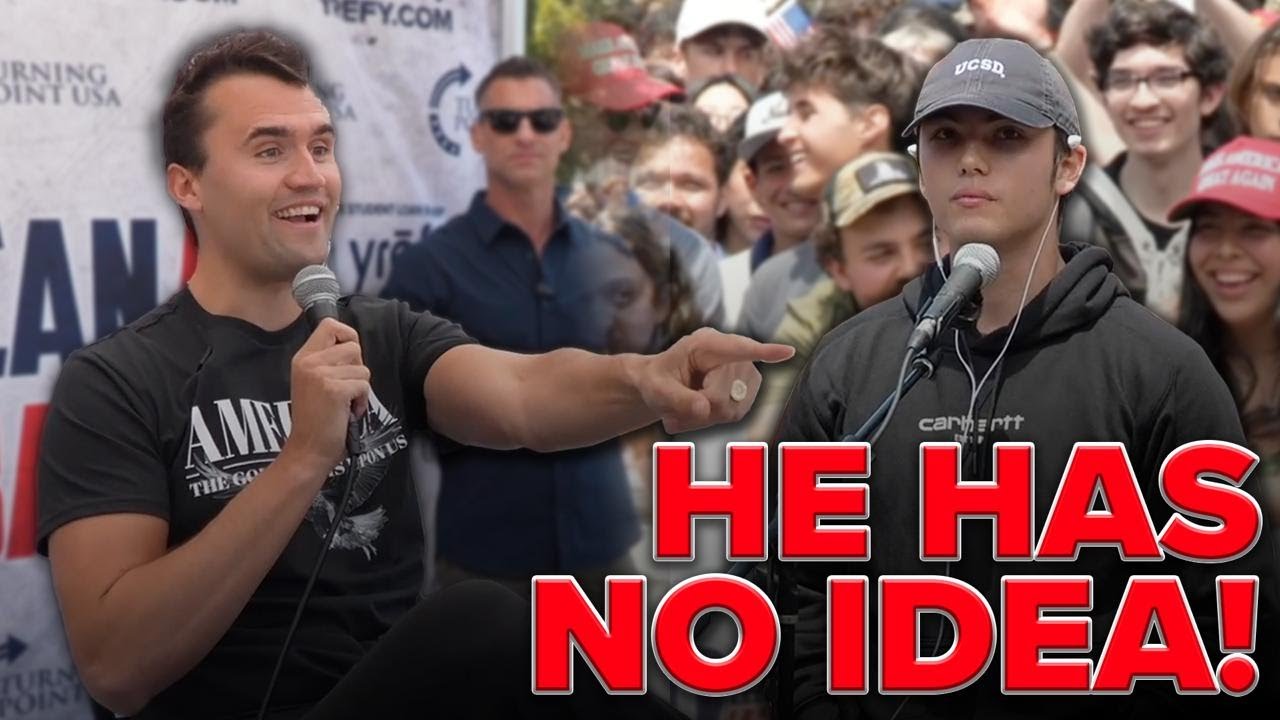
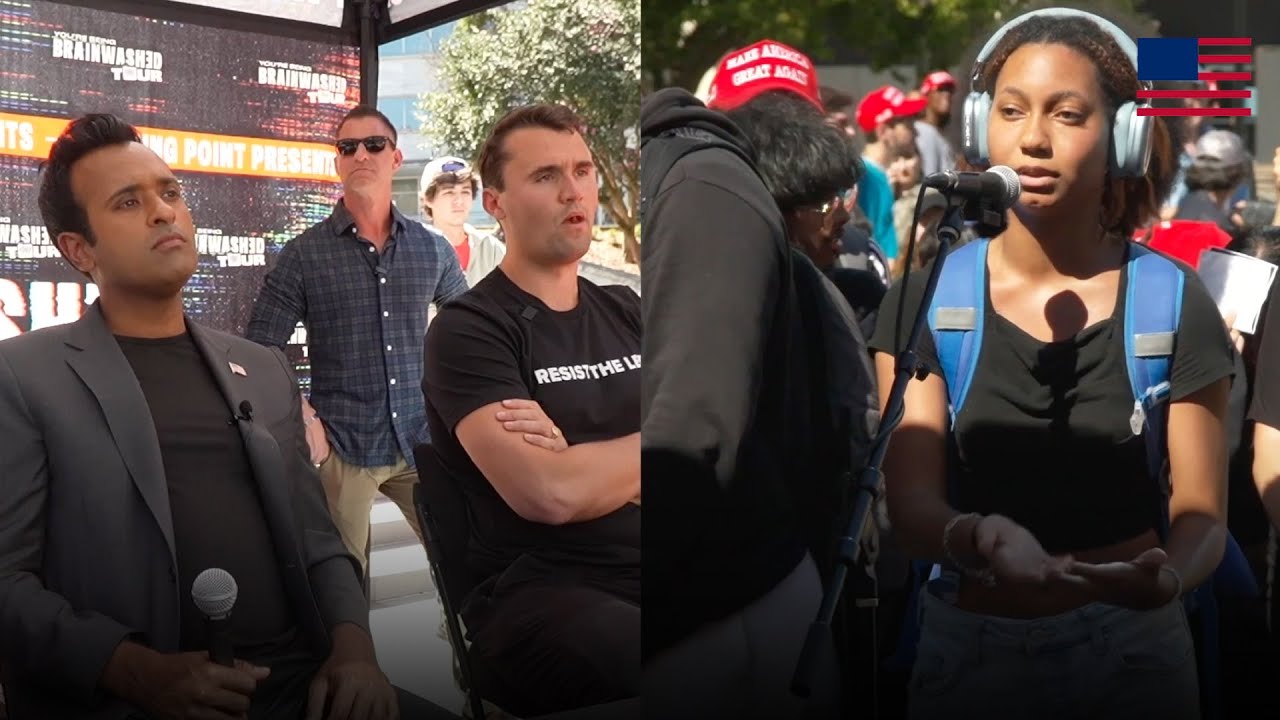
Charlie Kirk addresses a challenging question from a student whose friend faces deportation and green card uncertainty. Kirk argues that America must temporarily limit green cards and prioritize American students' ability to own homes, secure higher wages, and achieve the American dream. While acknowledging exceptions exist for merit-based cases, Kirk contends that decades of overly generous immigration policies have hurt American citizens, making it harder for young people to succeed economically.
At a campus event, Charlie Kirk fielded a question from a Trump-supporting student wearing a MAGA hat. The student asked about the future of immigration policy, specifically regarding his friend who is currently on a student visa. The friend's family had been deported back to Mexico two years prior under the Biden administration. The student wanted to understand Kirk's perspective on how people like his friend could obtain green cards fairly while supporting necessary border security measures like the wall and deportations.
America Must Put Its Own Students First
Kirk offered a candid response that he acknowledged might not win over the student's friend. He explained that his perspective centers on limiting the number of green cards for the time being, arguing that any country would make the same decision. Kirk emphasized that America's primary obligation must be to American students first and foremost, ensuring that young people in the audience can own homes, earn higher wages, and become stakeholders in their own country.
Kirk pointed to a troubling pattern over the last 40 years where America has been overly generous to its own detriment. He highlighted how it has become harder than ever for young Americans to own a home, get married, have children, and achieve the American dream that previous generations enjoyed. While not blaming green card holders entirely for this situation, Kirk argued that policy changes are necessary.
The H-1B Program and Competition for American Jobs
To illustrate his point, Kirk discussed the H-1B visa program, which allows companies to import foreign workers for specialized positions. He used the example of computer science and engineering students at Florida State University, arguing that it is wrong to import workers from foreign countries to compete against American students in these fields. American students who are pursuing degrees in computer engineering and similar programs should be given priority over foreign students, according to Kirk.
This perspective reflects Kirk's broader belief that American educational institutions and the job market should prioritize citizens and provide them with the best opportunities to succeed in their chosen careers without facing unnecessary competition from imported labor.
Merit-Based Immigration as the Path Forward
While taking a restrictive stance on current immigration levels, Kirk clarified that once America returns to a more prosperous and robust economic situation, the country should maintain a merit-based immigration policy. This policy would feature no illegal immigration and very limited legal immigration, with all legal immigration being merit-based.
Kirk acknowledged that the student's friend, who is assimilating to American culture during his time at university, represents the type of person who could qualify under such a system. The student had described his friend as already being more American than most people, very involved in American culture, patriotic, and a Trump supporter. Kirk agreed that the friend appeared to be an exception rather than the rule.
The Assimilation Problem Facing America
The student pressed Kirk on why his patriotic, America-loving friend should face barriers while protesters who don't appreciate America remain in the country. Kirk responded by noting that those born in America have a social contract that comes with citizenship by birth, which must be honored to keep society together.
However, Kirk conceded that the student made a compelling argument on the surface: some newcomers to America do tend to love the country more than its current inhabitants. Despite this valid point, Kirk maintained that as a broad rule, America needs a hard stop on current immigration levels.
Kirk identified what he described as a mass assimilation problem facing the nation. He pointed to figures like Ilhan Omar as examples of immigrants who have shown discord, venom, and ingratitude toward America rather than embracing its values and opportunities. While exceptions like the student's friend can, should, and will be made through a merit-based immigration system, Kirk emphasized that such cases are exceptions, not the rule.
The Unregulated Immigration Crisis
Kirk concluded by finding common ground with the questioning student, noting that they could both agree that far too many foreigners have entered the country over the last couple of years in an unregulated and unruly fashion. This chaotic situation has created the need for a reset in immigration policy.
The exchange illustrated Kirk's position that the time has come to put American students and Americans first. While this approach may disappoint some who are seeking paths to legal status, Kirk framed it as a necessary correction to decades of policies that have made it increasingly difficult for young Americans to achieve economic security and prosperity.
Throughout the conversation, Kirk maintained respect for the student and his friend while holding firm to his policy positions, demonstrating his belief that honest disagreement can coexist with civil discourse.