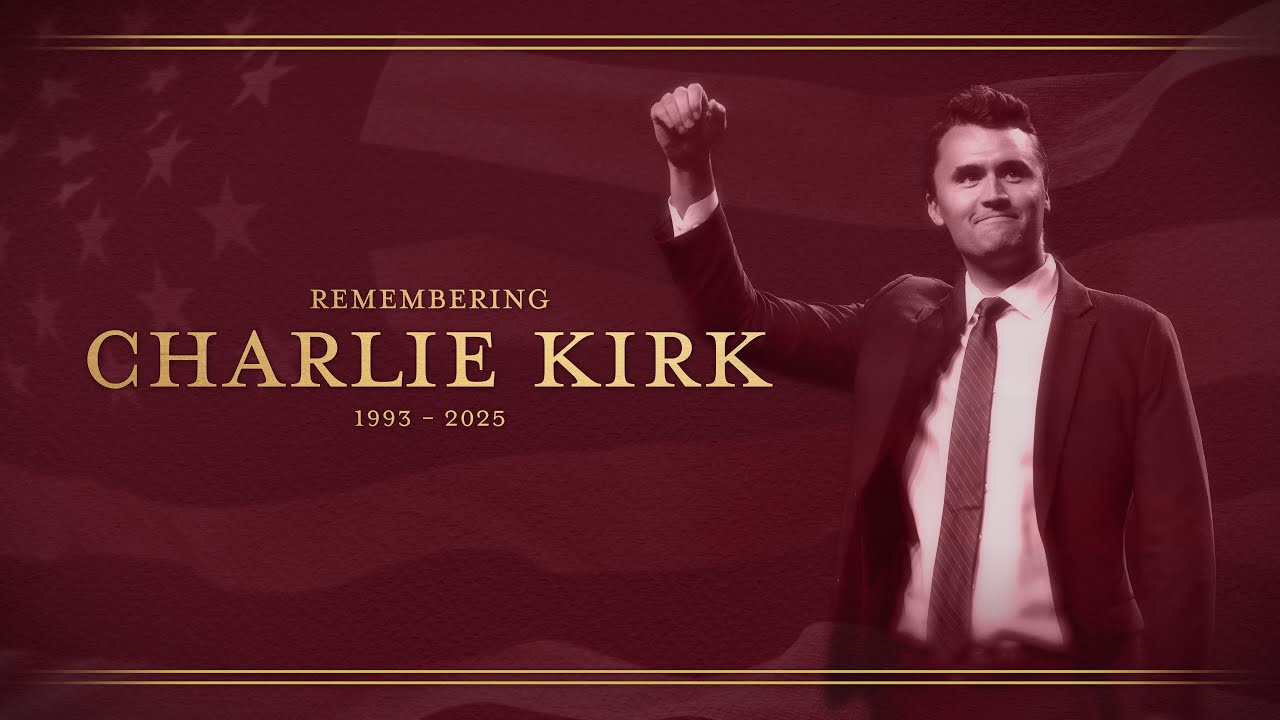
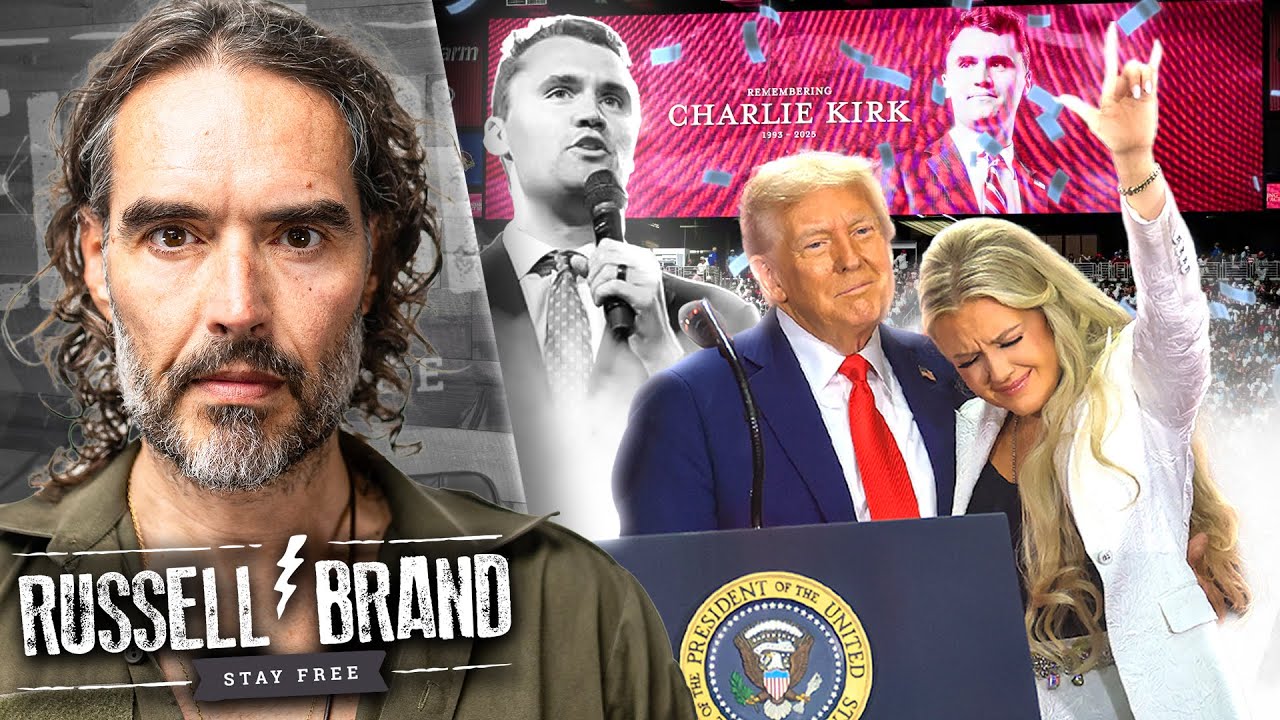
[00:00] So obviously after the assassination of
[00:02] Charlie Kirk, uh it's been 12 days now
[00:05] and it was 11 days on the day of the
[00:07] memorial yesterday. And um it's
[00:11] definitely changed the United States. Uh
[00:14] all of my American friends, I I don't
[00:16] want to say radicalized, that's not the
[00:18] right word, because their opinions
[00:20] haven't changed. They're still um
[00:23] exactly the kind of Republicans that
[00:24] they were before. They're still, you
[00:26] know, pro America and all this sort of
[00:27] thing. Um but the
[00:30] willingness to concede is the thing that
[00:33] has changed. I've seen them become a lot
[00:36] more entrenched in their position say
[00:37] you know what no I am right you are
[00:39] wrong and I'm not even going to
[00:41] entertain what your argument is against
[00:43] my position at this point.
[00:44] >> So it's it's affirmed their conviction
[00:46] then.
[00:47] >> Yeah. Yeah. A deep sort of retrenchment
[00:50] in the right and a unity in the right
[00:52] which I haven't actually ever seen
[00:54] before. The closest I think that we got
[00:56] to it was the initial campaign of Donald
[00:59] Trump actually where he was battering
[01:01] his way through all of the old
[01:02] Republicans, the Rhinos, and uh casting
[01:05] them into the pit of Hades, which was
[01:08] great. Um but yeah, so there's a huge
[01:11] huge amount of really positive energy
[01:13] which surrounds um this memorial for
[01:16] Charlie Kirk. As you see, this is
[01:17] people, tens of thousands of people at
[01:18] 4. It was held in Phoenix, Arizona, and
[01:21] tens of thousands people were just
[01:22] standing since 4:00 a.m. because
[01:25] otherwise you weren't going to get into
[01:26] the stadium. And I just want to I mean,
[01:29] this is just like obviously you had
[01:32] millions of people watching online, you
[01:34] know, like when I tuned into it, there
[01:36] was something like 600,000 people
[01:38] watching live on just the YouTube stream
[01:39] and then it's being streamed everywhere
[01:41] else. And you can see the stadium there.
[01:42] I mean, this is just absolutely packed.
[01:44] was being watched in France.
[01:46] >> It's being watched every being broadcast
[01:48] in France late at night and people were
[01:50] watching it there.
[01:51] >> Yeah.
[01:51] >> So, um
[01:52] >> and so it's gen Yeah like you know it's
[01:55] just all over the place. All over the
[01:57] place.
[01:58] >> Uh and so you've got you know a huge
[02:01] unifying experience for the American
[02:05] right going on which is really
[02:07] interesting. Um because
[02:10] I don't think anyone expected this to be
[02:13] as I mean no one expected this to happen
[02:15] but and everyone in their moment of
[02:18] grieving
[02:19] they weren't sort of projecting
[02:20] themselves into the future. Everyone was
[02:22] very concerned with the here and now
[02:24] thinking oh my god look what's happened.
[02:26] Um, but this has really come just drawn
[02:29] everyone together because and there
[02:30] there were people who are critics of
[02:32] Charlie Kirk from the right obviously. I
[02:34] mean, lots of people critical of him
[02:35] from the right, but that's all fallen
[02:38] away at this point. No one cares about
[02:40] the doctrinal differences they had on
[02:42] any individual issue with Charlie Kirk.
[02:45] What matters is he was one of ours and
[02:48] they murdered him. And that's it. That's
[02:50] the the end of the story, right? He was
[02:52] the debate guy who wanted to talk to
[02:54] you, who actually cared about your
[02:55] opinions and you murdered him. So,
[02:58] forgive us if we don't care about your
[03:00] opinions. We're not interested in
[03:01] talking to you is the attitude of many
[03:04] right-wingers in America at the moment.
[03:05] Anyway, so you had uh snipers on the
[03:07] roof uh protecting
[03:11] uh the crowd because
[03:14] unfortunately that's a dire necessity,
[03:16] isn't it, in America? Now, I just as a
[03:19] quick thing, I don't know about any of
[03:20] the conspiracy theories about Charlie
[03:22] Kirk's death, and I'm not inclined
[03:24] towards conspiracy theories, so I'm just
[03:26] going to go with the official narrative
[03:28] as it stands at the moment. It was a
[03:29] deranged leftist with a 306 rifle or
[03:34] something that shot him from a rooftop.
[03:36] And so, unsurprisingly, they have to
[03:38] make sure their roofs are covered
[03:40] because America is no longer a safe
[03:42] place. And the thing is, it's not the
[03:43] only leftist shooter in recent days. In
[03:45] the last week, there have been three. So
[03:48] anyway, moving on. Like I said,
[03:52] this is a unifying experience for the
[03:54] right.
[03:55] Here's Elon and Trump at the service sat
[03:58] next to each other.
[04:00] >> Uh which is, you know, a nice thing to
[04:05] see, especially after they've very
[04:07] publicly beefed. There's a photo of them
[04:09] shaking hands. It's not in that clip. um
[04:12] after they've very publicly beefed and
[04:13] call each other all sorts of mean names
[04:16] in the wake of this experience. It's
[04:18] really made the small differences uh the
[04:21] sort of the vanity of the small
[04:23] differences fall away and seem far less
[04:26] important because actually it could be
[04:28] you tomorrow.
[04:30] >> Martyrdom is a fundamentally unifying
[04:32] thing. That's why the Catholics say that
[04:33] the blood of martyrs is is is the seat
[04:35] of the church. Um, so this is what
[04:38] happened and you rally around your
[04:40] martyrs and you put aside your small
[04:42] differences and you try to figure out,
[04:43] okay, there are people trying to kill.
[04:46] Yes.
[04:46] >> How do we deal with them?
[04:47] >> It's interesting, isn't it? The the
[04:48] radical left
[04:51] how sort of brazen they were to state
[04:53] when all of this happened.
[04:55] There were numerous that were saying,
[04:56] "Oh, well, you know, he'll never go down
[04:57] as a martyr." Quite literally.
[04:59] >> Well, we we'll get to those in a minute
[05:00] if that's all right, cuz I'm going to go
[05:02] through those in a minute. uh because
[05:04] the you know I very rarely have I heard
[05:07] a take that wrong.
[05:08] >> Um
[05:10] >> anyway, as you can see, they had to give
[05:12] their speeches uh in Charlie Kirk's
[05:15] memory from behind bulletproof glass and
[05:18] it is not in any way an exaggeration to
[05:21] say this was a very reasonable
[05:23] precaution to take.
[05:24] >> Yeah. No, absolutely.
[05:26] >> Uh it's a sad
[05:27] >> it's such a shame, isn't it? We
[05:28] shouldn't have to live like that and we
[05:31] didn't have to live like that. like this
[05:33] is this is a relative relatively new
[05:36] phenomenon and it's tragic. It's
[05:38] absolutely tragic. It's a choice as
[05:40] well. Like
[05:41] >> it's a choice.
[05:42] >> Yes.
[05:43] >> But it is unfortunately the reality of
[05:45] political discourse in America at this
[05:47] point. So
[05:48] >> um yeah, no I I don't blame them at all
[05:50] for giving their speeches from behind
[05:52] bulletproof glass. Um so let's go
[05:55] through some of some takes that people
[05:57] gave some notables. Uh Elon Musk was
[06:00] asked by a journalist uh what his
[06:02] opinion was.
[06:03] >> Why was he killed?
[06:06] [Music]
[06:08] >> He was he was he was killed because his
[06:10] words made a difference because he was
[06:15] showing people the light
[06:18] and he was killed by the dark.
[06:20] >> Thank you, sir. Thank you.
[06:21] >> That was quite an emotional sounding uh
[06:24] piece there. But I think Elon really did
[06:27] hammer it correctly there. Like he was
[06:29] killed because his words were making a
[06:31] difference.
[06:31] >> Yes.
[06:32] >> If his words didn't make a difference,
[06:33] he wouldn't have been such a hate figure
[06:35] for the left and they would have just
[06:37] ignored him or laughed at him. And if he
[06:39] >> wore the truth, right?
[06:40] >> Yeah.
[06:40] >> Yeah. Absolutely.
[06:41] >> And and and if his words did not bring
[06:43] light, they would not be that angry.
[06:45] >> Yes.
[06:45] >> That the sort of demonic forces of the
[06:47] left would not be that angry and would
[06:50] not be reelling in his death in the way
[06:51] that they did until there were
[06:53] consequences.
[06:53] >> It's funny, isn't it? because it it's
[06:55] illustrative of a few incidents that
[06:57] have happened um throughout the last
[06:59] couple of years. Libs of Tik Tok, I
[07:01] mean, all they did for instance was just
[07:03] show insane videos and go,
[07:06] >> "Look how mental this person is." Eight
[07:08] figure now. Yeah.
[07:10] >> Yeah. She got docks. People like tried
[07:11] to, you know, attempted murder and
[07:13] things like that.
[07:14] >> And and and that's the thing, right?
[07:16] Like the truth hurts these people.
[07:18] >> Exactly. And that that was that was that
[07:20] was what Charlie Cook
[07:21] >> that that's what makes them creatures of
[07:22] the dark. That's what makes them
[07:24] creatures of the dark.
[07:25] >> And that I I like the light dark motif
[07:28] here as well because it's very much the
[07:30] the left's mo modus operandi to censor
[07:34] as in I want to make sure that people
[07:35] aren't aware of what you who you are,
[07:37] what you think, and any consequences
[07:39] that follow from that. Whereas the right
[07:41] has always been like, look, I'll show
[07:42] you my enemy. Here's my enemy. This is
[07:44] the stupid thing they say. This is the
[07:46] repulsive creatures that they are. And
[07:49] so it very much is the sort of light
[07:51] dark motif being played out just in the
[07:53] general political environment which I I
[07:55] have to say I really do quite like it.
[07:57] Um Tucker's speech was deeply Christian.
[08:00] Now there's a particular clip of him
[08:02] talking about the Pharisees and how they
[08:03] killed Jesus to silence him. Uh which
[08:07] >> has been going around and everyone's
[08:08] like ah this is anti-semitic. And it's
[08:10] like, well, I mean, he's speaking about
[08:12] a particular event that is documented in
[08:15] the Bible by specific peopleactly who
[08:18] took specific actions. He's not
[08:20] abstracting that into an entire class of
[08:23] people.
[08:23] >> And and and frankly, I'm sick and tired
[08:25] of being told that um Christianity must
[08:28] always be in a defensive uh crouch.
[08:31] >> Yeah.
[08:31] >> And afraid of what others will think.
[08:33] No. No. Christianity is true. Everybody
[08:35] else is wrong. That's the end of that
[08:37] discussion. Well, um, that's definitely
[08:38] the opinions of Christians. But Tucker
[08:41] gave a deeply Christian, uh, speech,
[08:44] actually, if you listen to more of it,
[08:46] and I'm going to play a little bit of
[08:46] it, cuz Tucker, I I'm always amazed at
[08:49] just how good a public speaker Tucker
[08:51] is.
[08:51] >> He doesn't have a script. He just goes
[08:53] up there, and he sits there just not not
[08:56] even riffing, just explaining what he
[08:57] genuinely thinks. And it comes out like
[09:00] poetry
[09:01] >> of what we've known for 2,000 years,
[09:05] which is any attempt to extinguish the
[09:08] light causes it to burn brighter every
[09:11] single time.
[09:16] So as we
[09:19] as we proceed into whatever comes next,
[09:22] and clearly something's coming next,
[09:27] remember this moment. remember being in
[09:29] a room with the Holy Spirit humming like
[09:32] a tuning fork.
[09:35] This is the way right here. This is the
[09:38] way. And that is what Charlie Kirk was
[09:41] saying underneath it all. Thank you. And
[09:43] God.
[09:44] >> So I mean you can see that he's just a
[09:46] superb rhetoric. Um and obviously this
[09:50] whole the whole thing was very very
[09:52] deeply Christian. Um which is what one
[09:54] would expect. Uh JD Vance gave um a very
[09:58] mature and manly speech. I thought uh
[10:02] we'll play a clip of it as well because
[10:04] I I particularly enjoyed it. The thing
[10:06] is JD Vance had there was a risk of him
[10:09] coming off a bit too strong actually. Uh
[10:12] it it could have it could have gone down
[10:14] poorly if uh if there wasn't such a nice
[10:18] energy in the stadium. Better to die a
[10:20] young man in this world than to sell
[10:22] your soul for an easy life with no
[10:25] purpose, no risk, no love, and no truth.
[10:35] Christ told us in the Gospel of John, "I
[10:38] have said these things to you that in me
[10:40] you may have peace.
[10:43] In the world you will have tribulation,
[10:46] but take heart. I have overcome the
[10:49] world.
[10:51] [Applause]
[10:54] >> So again, strong stuff. It's better to
[10:57] die young man in this world than to sell
[10:58] your soul for an easy life with no
[10:59] purpose, no risk, no love, and no truth.
[11:01] Um, but I agree. That's the thing. I
[11:04] fundamentally agree. You know, so
[11:06] someone might say, well, this is a bit
[11:07] insensitive at a funeral or something.
[11:08] It's like, well, I think Charlie Ko
[11:10] would agree with that, actually.
[11:12] >> Yeah, I guess I see what you're saying,
[11:13] but I mean, he's he's actually
[11:14] applauding Charlie, isn't he, for
[11:15] saying,
[11:16] >> of course he is. Yeah. But you you know
[11:17] he he he he lived a
[11:19] >> of course but the the you know I mean
[11:21] it's it's it could be interpreted
[11:24] differently and I I I wouldn't obviously
[11:26] but I mean
[11:27] >> if at a funeral the best thing you can
[11:29] say is that his life and death had great
[11:32] meaning.
[11:33] >> Yes.
[11:34] >> And obviously this is a man whose life
[11:36] and whose death had enormous meaning.
[11:38] the the fact that this became a
[11:41] religious celebration again is a sign
[11:44] that it is in fact martyrdom.
[11:46] >> Yeah, it is. That's absolutely true. Um
[11:49] there's if if if anything it would be
[11:52] hard to describe this as not a martr's
[11:54] death
[11:54] >> precisely.
[11:55] >> I don't even know how you would go about
[11:57] making the argument. Um then you had the
[11:59] speech from Erica Kirk who decided that
[12:02] she would in proper Christian fashion
[12:04] forgive her killer. And uh this was
[12:07] shared a lot.
[12:13] >> Father, forgive them for they not know
[12:16] what they do.
[12:20] That man,
[12:24] that young man,
[12:28] I forgive him.
[12:44] So, it's at this point that I have to
[12:45] break with my Christian friends. Um,
[12:48] everyone knows I have many Christian
[12:50] friends. I'm an ally of Christianity,
[12:53] but I wouldn't forgive him. I would drag
[12:55] him around the walls of Troy from a
[12:57] chariot displaying his body. I'm a lot
[13:00] more pagan on these things, I'm afraid.
[13:03] Uh people who do terrible things deserve
[13:05] terrible things to happen to them and I
[13:07] think I I would be quite happy to do
[13:09] them myself uh as a restoration of
[13:11] justice. Explain to me why that's wrong.
[13:14] >> The two are not in any way in conflict.
[13:16] >> Okay.
[13:16] >> The the two are not in any way in
[13:18] conflict. You
[13:20] as a Christian you punish him
[13:23] >> not out of animosity towards him
[13:26] >> but because justice demands him demands
[13:28] that and because the order of society
[13:31] demands that and so there is no conflict
[13:34] between personal forgiveness and the
[13:37] state delivering justice including the
[13:40] death penalty. these two like there's a
[13:43] sword in Germany that keeps making the
[13:44] rounds on X
[13:46] >> seen it
[13:46] >> which sort of states that I I hope that
[13:49] this helps get get him into heaven.
[13:51] >> Yeah. May the sinner be given eternal
[13:52] life.
[13:53] >> Maybe eternal life. Exactly. So there is
[13:56] no conflict between wanting justice and
[14:01] you personally uh loving your enemy and
[14:04] choosing to forgive.
[14:05] >> Uh the mistake is wanting one but not
[14:09] the other. is wanting only retribution
[14:12] uh or wanting only forgiveness without
[14:15] any retribution. And obviously the
[14:17] condition for the murderer to go to
[14:18] heaven is his genuine repentance.
[14:22] If if like when you when you go when you
[14:25] go to confession, it's not confession.
[14:27] It's the sacrament of reconciliation.
[14:29] The first part of the sacrament is the
[14:31] confession. You admit that you've done
[14:33] wrong. You admit it in good conscience,
[14:36] in good faith, with genuine repentance.
[14:39] Therefore, you get forgiven and you are
[14:41] absolved of your sins. But it's not one
[14:43] or the other. And so, I I don't see a
[14:46] contradiction between uh Erica Kirk's
[14:49] personal forgiveness
[14:50] and the demand of justice that this man
[14:54] hang.
[14:55] >> Yeah. But I'm not, like I said, I'm I'm
[14:57] not a Christian. I don't love my
[14:58] enemies.
[14:59] >> But a different perspective would be you
[15:02] can forgive someone, but it doesn't mean
[15:03] you have to forget.
[15:05] >> Well,
[15:06] >> yeah. I'm not sure I'd even want to
[15:07] forgive. I'm actually very much more
[15:08] with Donald Trump on this. Uh he had a a
[15:13] take that very much resonated with me.
[15:16] >> In that private moment on his dying day,
[15:19] we find everything we need to know about
[15:21] who Charlie Kirk truly was. He was a
[15:24] missionary with a noble spirit and a
[15:27] great great purpose. He did not hate his
[15:31] opponents. He wanted
[15:33] the best for them. That's where I
[15:35] disagreed with Charlie.
[15:37] I hate my opponent
[15:40] and I don't want the best for them. I'm
[15:42] sorry. I am sorry, Erica.
[15:45] >> Well, I I think we're being confused
[15:46] about two kinds of bests for them.
[15:48] >> I I think I just love Trump when he
[15:50] talks. It's just so funny.
[15:52] >> It It just sort of shows the guy is
[15:54] isn't acting.
[15:56] >> Trump is
[15:58] >> um the most Sorry, that's just the most
[16:01] Trump statement in the world. So, oh
[16:03] yeah, he's a good guy. He loved his
[16:05] enemies. I don't I hate my enemies.
[16:07] Quintessentially Trump. So I can't
[16:10] just
[16:11] >> So let me put it to you this way.
[16:13] >> In front of millions of people, hundreds
[16:15] of millions of people watching this and
[16:17] Trump's like, "Yeah, no, I hate my
[16:18] opponents. I don't want the best for
[16:20] them. [ __ ] those guys." Sorry.
[16:24] >> There are two kinds of I want the best
[16:26] for them. I don't want my opponent to
[16:28] have a job where he has power over me,
[16:31] >> obviously. Yeah. or I don't want him to
[16:33] have a position where he can keep on
[16:36] destroying society as the left has been
[16:38] doing.
[16:38] >> Yeah.
[16:39] >> But what is genuinely best for him is
[16:41] the salvation of his soul and therefore
[16:44] his repentance. And so therefore some
[16:46] punishments in this world
[16:48] >> that might push him towards regret are
[16:51] actually good for him and in that sense
[16:54] I want the best for him. the the the key
[16:57] point I I think I sent you that very
[16:59] long auh aquinus quote um that it is not
[17:02] being done with a spirit of malice
[17:05] >> towards the person. It is done with God
[17:08] at the center and part of what God is is
[17:10] justice. Mhm.
[17:12] >> So it is just that people who celebrate
[17:15] uh killing people for political
[17:17] disagreements when there's absolutely no
[17:20] need for that uh be faced with enormous
[17:23] punishment in this world because it
[17:26] might help them repent and save them in
[17:28] the next world.
[17:28] >> Yeah. I I just want I just want them
[17:30] strung up.
[17:32] >> I I'm I'm going with mice
[17:33] >> because you don't think about the next
[17:34] world, but that's a different
[17:35] >> I don't You're right. But I'm I'm going
[17:36] with malice in this world. Um anyway, so
[17:39] yeah, like the you got people who are
[17:41] like, "Oh, I'm glad he's dead because
[17:43] he's not a martyr." This video came out
[17:46] the day that Charlie Ko was shot.
[17:48] >> The best part of this whole goddamn
[17:50] thing is that he is not martyr material.
[17:54] So his death will mean nothing. It will
[17:57] activate no one. It will impact few.
[18:03] It's just great.
[18:05] >> I mean also just how What a terrible
[18:08] take. But
[18:09] >> yeah, the wrongest take ever.
[18:10] >> Yeah, truly. But what an awful
[18:13] individual. I mean, I keep going back to
[18:15] the the sort of celebratory left in
[18:17] this.
[18:18] >> It's truly awful just how desensitized
[18:21] people are to barbarism and, you know,
[18:25] the the the the brutal mortal nature of
[18:29] life being the best gone in one second.
[18:31] I just can't bring these people
[18:32] celebrating someone's death. It's truly
[18:35] disgusting. He was obviously martyr
[18:37] material.
[18:37] >> Yeah,
[18:38] >> he was obviously martyr material. And
[18:39] what she's admitting is that she is
[18:41] neither wife material nor mother
[18:42] material.
[18:43] >> That's very true. And she can be
[18:45] >> civilization material. People like that
[18:47] should not be in a civilization because
[18:49] you must be civil to be in a
[18:50] civilization.
[18:51] >> Not Christian civilization. If she was
[18:53] asic, she'd be fine.
[18:54] >> Um, so there is that important detail to
[18:59] to sort of bear in mind. But what she is
[19:02] showing is obviously her own nature. And
[19:04] part of wishing her well is wishing her
[19:06] whatever is necessary for her
[19:08] conversion. And if that includes her
[19:11] losing her job, her being told you can't
[19:13] be a nurse, you can't be a teacher, you
[19:15] can't be in any kind of government
[19:17] position, um you know, do manual labor
[19:20] until you change your mind, then that is
[19:24] part of wishing her well. It's not that
[19:27] I want her soul to burn. It's that I
[19:30] want her to be punished enough to
[19:31] change.
[19:33] >> And we'll move from the Christian
[19:34] perspective to uh Steven Miller's
[19:36] perspective because uh he's not so
[19:39] forgiving.
[19:40] >> No.
[19:41] >> Again, I'm very very much finding myself
[19:44] uh aligned with these chaps. This is so
[19:47] good.
[19:48] >> We will prevail over the forces of
[19:50] wickedness and evil. They cannot imagine
[19:55] what they have awakened. They cannot
[19:57] conceive of the army that they have
[20:00] arisen in all of us
[20:04] because we stand for what is good, what
[20:06] is virtuous, what is noble. And to those
[20:09] trying to incite violence against us,
[20:12] those trying to fment hatred against us,
[20:15] what do you have?
[20:17] You have nothing. You are nothing. You
[20:21] are wickedness. You are jealousy. You
[20:23] are envy. You are hatred. You are
[20:26] nothing. You can build nothing. You can
[20:29] produce nothing. You can create nothing.
[20:34] We are the ones who build. We are the
[20:36] ones who create. We are the ones who
[20:39] lift up humanity.
[20:42] You thought you could kill Charlie Kirk.
[20:46] You have made him immortal. You have
[20:49] immortalized Charlie Kirk. And now
[20:51] millions will carry on his legacy.
[20:55] [Applause]
[20:57] True.
[20:58] >> I love it.
[20:59] >> That that is, you know, a clear contrast
[21:02] of good versus evil.
[21:03] >> He names a few of of of the of the
[21:06] deadly sins.
[21:07] >> Envy,
[21:08] >> wrath, uh,
[21:11] sloth,
[21:12] >> um,
[21:14] and he says that what is good is to use
[21:16] your talents for the good. This is this
[21:18] is a very
[21:20] Christian speech from someone who is
[21:22] Jewish. Yeah. But
[21:23] >> so I' I have zero problem with what he's
[21:26] saying.
[21:26] >> I'm not saying he's not got the virtues,
[21:28] but the sentiment.
[21:30] >> Mhm.
[21:30] >> It's not terribly Christian.
[21:31] >> Yes, it is.
[21:32] >> No, he's not going to Steven Miller is
[21:35] not loving his enemies.
[21:36] >> Any medieval Catholic would have
[21:38] recognized this as a profoundly
[21:40] Christian sentiment.
[21:42] >> Yeah, but Steven Miller is not loving
[21:43] his enemies. He's crushing his enemies,
[21:45] >> which is part of what you should do.
[21:46] >> He recognized them. He recognizes them
[21:48] as irredeemably evil and to be smoten
[21:52] wherever they are found. And I I agree
[21:54] with him. I think he's on something
[21:56] here. Um
[21:59] there we go. Um and then you get the
[22:01] coverage, right? The BBC were obviously
[22:03] like, "Oh, right. He's far right
[22:05] >> really
[22:05] >> in their coverage." Yeah. Yeah. This
[22:06] this was just like the f they were
[22:09] literally like far right.
[22:10] >> Don't know what far right actually.
[22:14] >> Charlie Ko was the moderate. Everyone
[22:15] knows Charlie Ko was the moderate. If
[22:17] you think he was far right, then okay,
[22:18] you continue to damn his memory.
[22:21] >> Yeah, exactly. You're in for a surprise
[22:22] because I think that the uh American
[22:24] right now is just beyond negotiating
[22:26] with this kind of position of slander. I
[22:29] really think they're beyond it. And good
[22:30] for them, frankly. You know, I'm with
[22:33] Trump and Miller. Just know we're going
[22:34] to crush you now. We're just going to
[22:36] absolutely crush you. And you get you
[22:38] get what you deserve. And then you get
[22:39] like, you know, delusional nonsense. Oh,
[22:41] Charlie Kirk's lead overdose is
[22:43] irrelevant. Honestly, I don't think so
[22:45] at all, man. you if you guys think that
[22:47] Charlie Kirk isn't Martyr material, if
[22:50] you think this doesn't matter, I don't
[22:52] think you're looking very far into the
[22:53] future with your predictions here. And
[22:55] then you get uh truly the
[22:58] most I mean just I can't I can't
[23:01] understand how he's still allowed on the
[23:02] internet with takes like this. Destiny
[23:04] said, "This Charlie Coke memorial is
[23:06] indistinguishable from a Nazi rally and
[23:08] f anyone who wants to pretend that it's
[23:10] not." It's like, "Yeah,
[23:11] >> what?"
[23:12] >> Yeah, yeah, yeah, yeah. John's just
[23:13] like, "Yeah, that young man, I forgive
[23:15] him. Adolf Hitler 1939. So you are
[23:19] he he's being deliberately provocative.
[23:21] He's just a pratt. Um and then you get
[23:25] uh the protesters. Of course there were
[23:27] leftist protesters there.
[23:29] Turn off the music just uh but as you
[23:31] can see it's the sort of left-wing
[23:33] Westborough Baptist church. Um but truth
[23:36] equals love which is why we're here
[23:38] protesting a funeral.
[23:39] >> God hates who does God hate apparently?
[23:42] >> Oh I don't know.
[23:43] >> Proud sinners.
[23:44] Is it?
[23:45] >> Yes. Yes.
[23:46] >> At least it's not gays anymore, I
[23:47] suppose.
[23:48] >> But um yeah, so
[23:50] >> weird thing to protest again. Just truly
[23:52] awful humans.
[23:53] >> Uh and then you have the truly online
[23:55] radical leftwing position. White
[23:57] supremacy is so crazy because you
[23:58] literally killed your husband. You're
[24:00] forgiving him because he's white.
[24:01] >> Ah, yes. That's that's that's the
[24:03] reason.
[24:06] >> 100,000 likes on this tweet.
[24:08] >> What is wrong with me?
[24:09] >> Cuz you Oh, you've just pulled out some
[24:11] random thing that's had 300 views. No.
[24:13] No, no, no. 100,000 likes.
[24:15] >> What?
[24:16] >> This is this is representative of a
[24:18] large slice of leftist thinking.
[24:20] >> That's that's that's actual delusion,
[24:22] isn't it? Like that's
[24:23] >> Yeah. I don't know what to say at this
[24:24] point.
[24:25] >> And I think that mental illness tweet
[24:27] Yeah. Well, exactly.
[24:27] >> Demonic possession, right?
[24:29] >> This tweet properly exemplifies why I
[24:30] think the American right it's just
[24:31] beyond debating with leftists now.
[24:33] >> Yeah. So,
[24:35] >> you've ended the debate.
[24:36] >> If you're if you're that delusional,
[24:38] there's there's no point in having a
[24:40] conversation with you at that. There
[24:42] just isn't, right? like
[24:43] >> that's your position. Just go in the bin
[24:46] like that. We we'll step over you.
[24:48] You're done. That's
[24:50] >> correct.
[24:50] >> Not even worth entertaining.
[24:52] >> Correct. And and there's nothing
[24:53] uncchristian about that.
[24:54] >> Like there's nothing even if it's
[24:56] uncchristian. It's realism. I'm afraid
[24:58] you know what can be what can be debated
[25:01] with this?
[25:01] >> Nothing. Nothing. Exactly. Nothing. No.
[25:03] The these people should not be in any
[25:06] position where they have power over
[25:07] anyone else. All what they are allowed
[25:10] to do from now on is probably manual
[25:11] labor. Not that there's anything wrong
[25:13] with manual labor, but
[25:14] >> Oh, no.
[25:15] >> There's something wrong with them having
[25:16] responsibility over anybody's life.
[25:18] That's the end of it.
[25:20] >> Completely agree. Um, so yeah, in
[25:21] conclusion, um, it was an incredible
[25:24] memorial service, incredible turnout,
[25:26] incredible feeling of unity from the
[25:28] American right with all of this. Um, it
[25:31] as an Englishman, it was very American.
[25:32] So, you know, I'm not going to I'm not
[25:34] going to judge how Americans do
[25:36] pageantry, but they, you know, they do
[25:38] it fairly well.
[25:39] >> Um, sorry.
[25:40] >> Well done for them.
[25:41] >> Yeah. Yeah. No, exactly. It's it's their
[25:42] own thing. So, I'm not going to judge
[25:44] that. Um, but it was it was really
[25:46] heartfelt the whole way through. And you
[25:47] could tell that literally millions of
[25:49] people uh were genuinely changed by all
[25:52] of this. And so, incredible incredible
[25:55] work, everyone. And uh, Godspeed. Who
[25:58] are the men that pig for scraps amongst
[26:00] the ruins of the end of history? You
[26:02] should know because you encounter them
[26:04] every day. Between the towering
[26:06] buildings of a fallen empire, we find
[26:08] the Fahheim, the historyless men who
[26:12] know nothing of the turning of the
[26:13] cosmic wheel and find themselves outside
[26:16] of civilization itself. Cut loose from
[26:19] the great chain of being, they represent
[26:22] the lone into which our dying culture
[26:24] will return. That is, unless we choose
[26:28] to take up the burden once again. This
[26:31] feline condition is the subject we
[26:34] explore in issue 4 of Islander magazine.
[26:37] On sale while stocks last and available
[26:40] worldwide at shop.loadseaters.com.
[26:41] Upload seaters.com.