Russell Brand Examines the Disturbing Conspiracy Theories Surrounding Charlie Kirk's Death and Forensic Ballistics Questions
Enjoying this? Share it with someone who needs to see it.
Up Next
Jesse ON FIRE's Ultimate Test: One Question Explains Every Charlie Kirk Anomaly, No Blood, No Grief, No Exit Wound
18:55
Charlie Kirk's Head of Security Brian Harpole Breaks Silence and Debunks Conspiracy Theories Surrounding the Assassination
37:29
Viva Frei Breaks Down the Tyler Robinson Case: What Evidence Actually Shows and What Doesn't
8:31
Russell Brand Examines the Disturbing Conspiracy Theories Surrounding Charlie Kirk's Death and Forensic Ballistics Questions
Russell Brand addresses the swirling conspiracy theories following Charlie Kirk's death, focusing on forensic ballistics reports claiming the bullet may not match the rifle allegedly used by suspect Tyler Robinson. Brand explores how modern media amplifies speculation, drawing parallels to historic assassinations while warning about the dangers of untethered information in the digital age. He examines claims about palm pistols, exit wounds, and the fragmented bullet evidence, while acknowledging the restrictions faced by those close to Kirk, including Erika Kirk and Turning Point, due to ongoing investigations. Brand ultimately calls for anchoring ourselves in higher truth amid the overwhelming flood of speculation.
Russell Brand opens with a stark observation about the ammunition allegedly used in Charlie Kirk's death. According to reports being circulated, Kirk was shot with a .30-06 round, a powerful cartridge typically used for hunting large game like moose. Brand notes the disturbing claim that despite the size of this round, there was no exit wound visible in the footage.
Brand reads from headlines claiming the bullet that killed Charlie Kirk does not match the rifle allegedly used by suspect Tyler Robinson. He notes how these headlines have evolved from definitive statements to more qualified language, shifting from "did not match" to "may not match" as the story develops.
Understanding Ballistics Evidence
Brand examines the technical explanation behind the forensic findings. He explains that when forensic ballistics reports state they are "unable to identify" a match, it doesn't necessarily mean the rifle has been ruled out. Instead, it often means the bullet was too fragmented or damaged for a conclusive positive match via rifling marks. This is actually common with high-velocity rounds.
The defense attorneys for Tyler Robinson argue that the ATF was unable to identify the bullet recovered at autopsy to the rifle allegedly tied to their client. Brand notes how the language keeps shifting, from "does not match" to "may not match" to "unable to identify," highlighting how headlines are constructed to appeal to certain emotions and types of reporting that generate engagement.
The Palm Pistol Theory
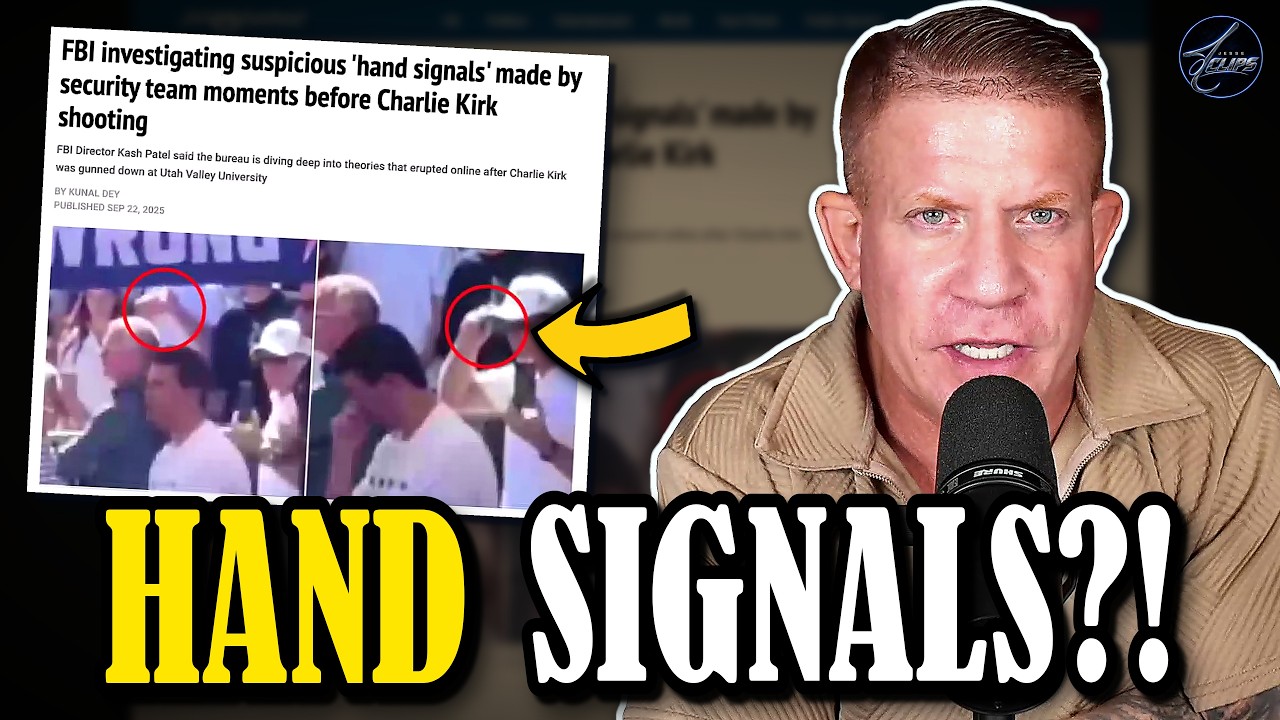
Brand addresses one of the more outlandish conspiracy theories circulating online, involving alleged palm pistols. He describes watching footage where theorists claim to see someone with a palm gun firing at Charlie Kirk. Brand admits his own skepticism, stating he cannot see what others claim to identify in the footage.
He compares this phenomenon to magic eye pictures, expressing frustration with theories suggesting that Erika Kirk or Kirk's close associates were somehow involved in his death. Brand finds these theories disturbing and expresses exhaustion with a worldview that assumes everything is perpetually evil.
Historical Parallels to Past Assassinations
Brand draws comparisons to historical assassinations, noting a pattern where official narratives are often questioned. He references Lee Harvey Oswald, Jack Ruby, and the assassinations of Martin Luther King Jr. and Malcolm X, pointing out that "it's never a lone gunman." He notes how conspiracy theories consistently emerge around high-profile deaths.
However, Brand distinguishes Charlie Kirk's death as "the first truly modern assassination," suggesting that while we reach back to bygone media eras for contrast and comparisons, the world has vastly altered. In the current digital landscape, everyone can be everywhere all the time, creating an unprecedented information environment.
The Information Overload Problem
Brand reflects on his personal connection to Kirk, mentioning he met him several times. He expresses how quickly the deluge of information has become overwhelming, making it difficult to process the reality of what happened. He notes that Erika Kirk has already "lived a Jackie Onassis life" in terms of scrutiny, and Charlie Kirk has experienced "JFK's worth of analysis" in an incredibly compressed timeframe.
Brand argues that people rush to conclusions not based on careful analysis of new information, but as a response to stimulants that engage already present internal potentialities. He suggests we should think of modern information not as objective data but as stimuli that activate pre-existing biases and tendencies.
Restrictions on Those Close to the Case
Brand acknowledges that people closely associated with Charlie Kirk, including Erika Kirk and Turning Point, have stated there is an ongoing investigation and they cannot talk about these matters explicitly. Drawing from his own involvement in a criminal trial, Brand understands how restrictive these matters can be and why those closest to the case might remain silent.
A Spiritual Warning About Digital Technology
Brand concludes with a philosophical reflection on the nature of modern technology and information. He argues that the world cannot handle this much attention and scrutiny without being anchored in something transcendent. Brand states that "we need to be anchored in God even to use this technology."
He contends that technology untethered from divinity is "by definition luciferian because it's a kind of counterfeit creation of consciousness." Brand describes modern digital infrastructure as creating "an unholy consciousness" and "a kind of omnipresence," making it inherently diabolical when disconnected from higher spiritual truth.
Brand ends by inviting viewers to share their thoughts in the comments, acknowledging the complexity and difficulty of navigating these disturbing questions in the modern information age.