2,422 videos 1,389,747,653 views US Joined Aug 30, 2018
Charlie Kirk is the Founder and President of Turning Point USA, the largest and fastest growing conservative youth activist organization in the country with over 250,000 student members, over 150 full-time staff, and a presence on over 2,000 high school and college campuses nationwide. Charlie is also the Chairman of Students for Trump, which aims to activate one million new college voters on campuses in battleground states in the lead up to the 2020 presidential election. His social media reaches over 100 million people per month and according to Axios, he is one of the "top 10 most engaged" Twitter handles in the world. He is also the host of “The Charlie Kirk Show,” which regularly ranks among the top news shows on Apple podcast charts.
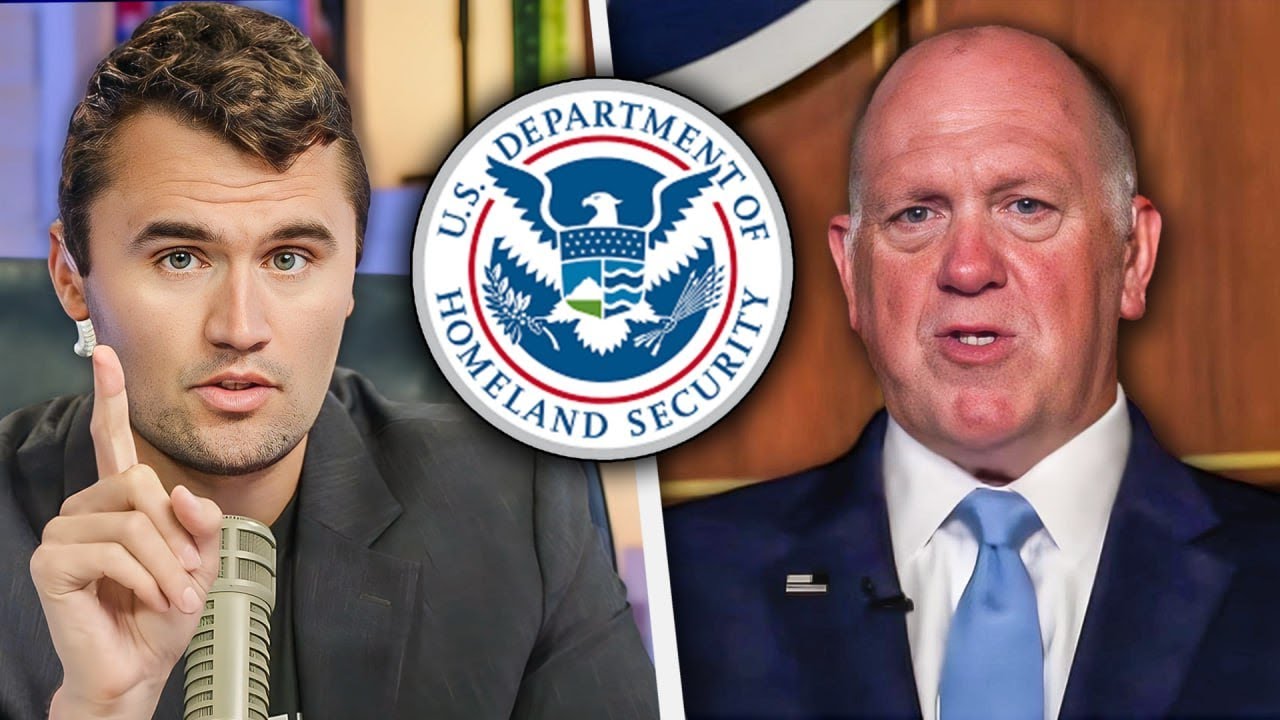
Todd Bensman Explains How Trump Reduced Border Crossings to Lowest Levels in Recorded History
Todd Bensman, fellow at the Center for Immigration Studies and author of Overrun, breaks down the unprecedented shift at the southern border. Under Biden, crossings averaged 7,000 to 14,000 per day, with nearly 400,000 in December 2023 alone. Within 30 days of Trump's second term, that number plummeted to just 277 daily crossings, all being detained and expelled. Bensman explains how this dramatic reversal was achieved not through complicated legislation, but through simple enforcement of existing law: detention, deportation, and ending catch-and-release. He also discusses the massive cleanup ahead, with an estimated 12 million illegal immigrants in the interior, including 650,000 criminal aliens ready for immediate deportation.
The transformation at the southern border has been nothing short of extraordinary. Todd Bensman, fellow for the Center for Immigration Studies and author of Overrun, lays out the dramatic shift in illegal immigration numbers between the Biden and Trump administrations. During the final month of Biden's regime, thousands of people crossed the southern border daily. The typical day saw 7,000 to 8,000 crossings, but that number frequently ranged up to 14,000 per day. In December 2023, which represented the height of the crisis, nearly 400,000 people entered the country when including parolees flying in and crossing at land ports, plus illegal immigrants.
Within just 30 days of Trump's second term, those numbers dropped by two-thirds. By February, apprehensions had fallen to 8,326 illegal crossings—and then dropped by another two-thirds to just 277 per day. According to Mike Banks, the new chief of border patrol, this represents the lowest number in U.S. recorded history. All of these individuals are being detained and expelled or are in the process of being expelled. None are being released into the interior.
No Complex Legislation Required
Bensman emphasizes a critical point that demolishes years of political rhetoric: closing the border required no complicated Senate bills, no Marshall Plan for Central America, and no years-long comprehensive immigration reform. The solution was remarkably simple—follow existing law through detention, expulsion, deportation proceedings, and ending catch-and-release.
The reason for the previous surge was straightforward. Under Biden, most illegal immigrants were being released into the interior. Once word of this policy spread internationally, migrants were willing to pay smuggling fees and gamble that they would gain entry. It took all of one hour on inauguration day to close the southern border, or to get it as close to operationally secure as possible. While operational security would mean zero crossings, having just 200 to 300 per day represents a significant win.
Bensman warns against letting off the gas, noting that the policies Trump has put in place must be maintained rigorously and evenly applied border-wide for the duration, or the surge will return. The good news is that the policy is already showing reverse effects—thousands of migrants are moving back through the Darien Gap from Mexico through Panama to Colombia, returning home to supposedly dangerous countries from which they had claimed to need asylum and refuge.
Lessons from Trump 1.0
The Trump administration's preparedness for day one represented a significant improvement over the first term. Several key differences emerged from lessons learned during the four years between administrations. The biggest change was bringing the Mexican military on board immediately using the 25% trade tariff as leverage. Mexico deployed 10,000 troops to turn back anyone they catch down into southern Mexico and even conduct their own deportations from southern Mexico to home countries. While Trump implemented this strategy in his first term, he did it much later in the administration. This time it happened first.
The administration is also utilizing Section 212(f) of the Immigration and Nationality Act, which provides instant expulsion authority clearly spelled out in current law. This allows the president to instantly expel all arrivals without providing asylum. Anticipating litigation, the administration also reinstated the Remain in Mexico policy as a backup, which allows quick expulsions while permitting asylum claims to be processed in Mexico rather than releasing claimants into the U.S. interior. This policy was vetted all the way to the Supreme Court during Trump's first term.
Additional improvements include deploying far more military personnel for spotting, gap-filling, and coverage in areas where border patrol isn't present. Since the administration isn't releasing everyone who comes to the border, border patrol agents don't need to process migrants for release. Instead, they're out catching and detaining illegal immigrants rather than providing babysitting services, baby formula, food, and water while processing people into the interior.
The Massive Interior Cleanup
With the border bleeding stopped, the Trump administration faces a massive cleanup operation in the interior. The Center for Immigration Studies estimates approximately 12 million illegal immigrants entered the country during the historic crisis under Biden. These are recent arrivals, many of whom are on public welfare systems, and some exist in a quasi-legal state while applying for different kinds of benefits.
The situation doesn't allow for simply swooping in and removing everyone, but there are undoubtedly many millions who are completely illegal. At least 650,000 criminal aliens are immediately deportable if authorities can locate them. Another 1.4 million have final judicial orders for removal that the last administration refused to execute. Then there's everyone else who hasn't gotten in trouble yet or hasn't been through all the appeals, plus people here on parole programs.
Bensman compares the situation to a Category 9 hurricane that raked the country back and forth for four years. Now there's a mammoth cleanup to do, and it won't be easy or cheap. It will require phases. One of the key challenges is that the Biden administration systematically dismantled the detention and deportation infrastructure, leaving parts scattered everywhere. Tom Homan and his team must rebuild that machine and get it tuned up.
The administration has already removed 50,000 criminal aliens in the first month and a half, following a worst-first approach. Many more are in the pipeline. Eventually, operations will expand as the administration acquires more detention space, more officers, and more resources. There's a $175 billion request in the current budget package for this work, which will be necessary to rebuild the infrastructure to where it was before Biden dismantled it.
The Sanctuary City Problem
A significant tension exists between states that declare themselves sanctuary jurisdictions and federal immigration law. Bensman dislikes the term "sanctuary policy" because it papers over what's really happening. At root, sanctuary policy means local police chiefs, sheriffs, and prison officials won't simply pick up the phone and call ICE to notify them when a criminal alien is about to be released. This prevents ICE from being right there to pick them up so they don't enjoy one moment of freedom before deportation.
The category of immigrants affected by sanctuary policies are criminals. Why any mayor, police chief, or sheriff anywhere would support inflicting criminal illegal aliens on their own people remains incomprehensible. These policies force ICE officers to track criminal aliens down at their homes or workplaces, creating officer safety issues and inefficiency. During these operations, officers often encounter other illegal aliens who aren't criminals but must be swept up as well.
The Trump administration is working to withdraw federal funding from sanctuary jurisdictions until they cooperate on something as basic as notifying federal authorities when criminal aliens are being released from custody.