Up Next

Steve Bannon Challenges Official Narrative on Charlie Kirk Shooting and FBI Investigation Credibility

Steve Bannon Challenges Official Narrative on Charlie Kirk Shooting and FBI Investigation Credibility

5:12

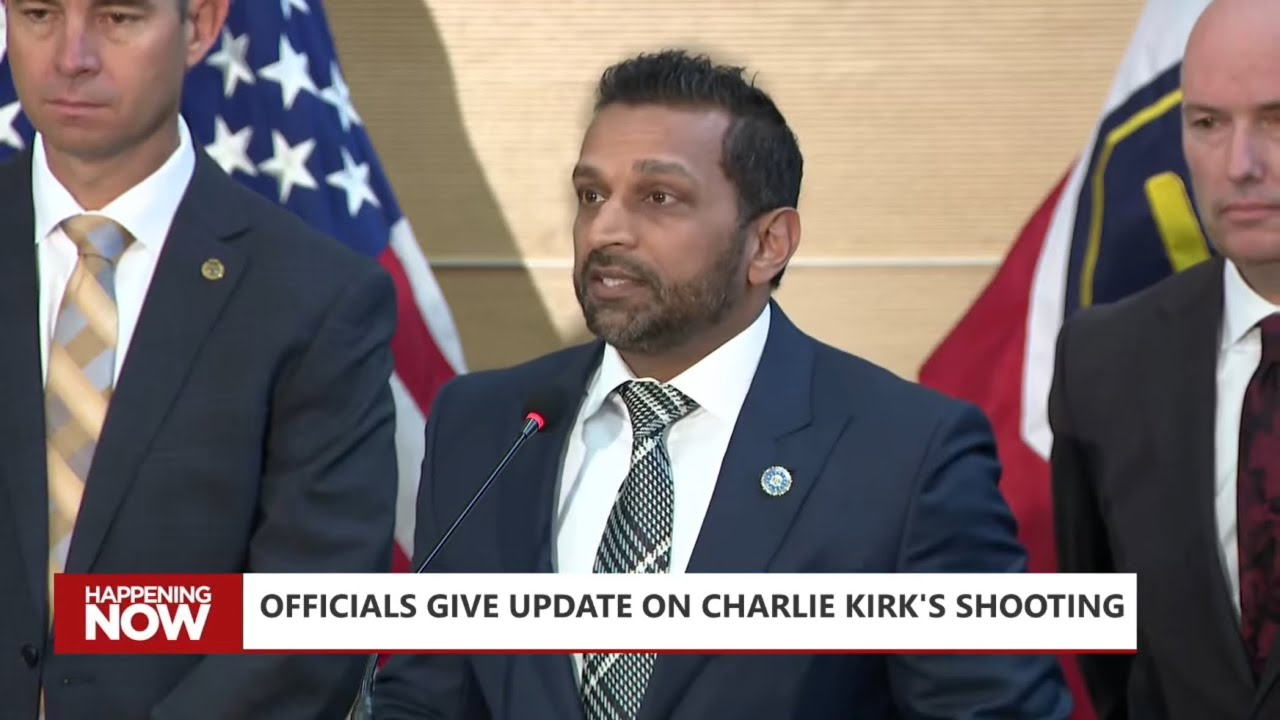
FBI Director Kash Patel and Utah Governor Announce Arrest in Charlie Kirk Assassination at Utah Valley University

FBI Director Kash Patel and Utah Governor Announce Arrest in Charlie Kirk Assassination at Utah Valley University

4:31:53

FBI Director Kash Patel and Utah Governor Spencer Cox Announce Arrest in Charlie Kirk Assassination Investigation

FBI Director Kash Patel and Utah Governor Spencer Cox Announce Arrest in Charlie Kirk Assassination Investigation

32:41

True Crime Rocket Science Examines Tyler Robinson Case and Online Radicalization of Young Men

Categories: Analysis
September 29, 2025

Nick van der Leek from True Crime Rocket Science examines the Tyler Robinson case, exploring how the alleged UVU shooter was apprehended wearing the same clothes seen in surveillance footage days earlier. The analysis goes beyond the surface details to investigate the darker mechanics of online radicalization, particularly among vulnerable young men aged 18-34. Drawing parallels to ancient assassinations and modern toxic political discourse, van der Leek reveals how character assassination in political rhetoric can metastasize into actual violence. He addresses widespread conspiracy theories about doctored footage, explains the technical aspects of security camera systems, and uncovers a critical insight: radicalization doesn't happen through violent video games themselves, but through the communication channels and chat rooms surrounding gaming platforms where vulnerable individuals are gradually exposed to dehumanizing rhetoric and extremist ideologies.

The Arrest and Surveillance Evidence

According to the Washington County Sheriff's Office investigation, a family member of Tyler Robinson reached out to a family friend who then contacted authorities with information that Robinson had confessed to or implied his involvement in the incident. Investigators reviewed additional surveillance footage from Utah Valley University and identified Robinson arriving on campus in a gray Dodge Challenger at approximately 8:29 a.m. on September 10th. The footage showed him wearing a plain maroon t-shirt, light colored shorts, a black hat with a white logo, and light colored shoes.

When investigators encountered Robinson in Washington County on September 12th in the early morning hours, he was observed wearing clothing consistent with those surveillance images. Governor Cox's reference to the surveillance images pertains to the maroon shirt and shorts, not the black shirt and jeans that some news outlets mistakenly displayed during his statements. This detail mirrors cases like JonBenét Ramsey, where Patsy Ramsey was also seen the next morning by police wearing the same clothes she had worn the night before at the White's Christmas party.

Understanding Criminal Psychology

These are the quirks of criminal investigations, things that happen in a case that just don't seem to make sense from an outsider's perspective. The real question in true crime is never how or why something doesn't make sense to observers, but how or why it makes sense to the perpetrator. When examining criminal psychology, the goal isn't to justify, rationalize, or sympathize with a killer's motive, but simply to understand the process, the mechanism, and the psychological framework.

Investigators interviewed a family member of Robinson who stated that Robinson had become more political in recent years. This detail becomes central to understanding the mechanism of online radicalization, a phenomenon that extends far beyond this single case and affects society broadly.

The Mechanics of Online Radicalization

According to CNN, the nearly undetectable threat of snipers has security professionals sounding the alarm as age-old tactics of assassination become the tool of choice for modern killers, often fueled by ubiquitous streams of online hate. While sniper tactics have been used for centuries, security experts emphasize that the current toxic United States political climate, coupled with the threat of rapid online radicalization and easy access to guns, requires an especially urgent adjustment to address this emerging form of deadly violence.

The progression from character assassination in toxic political discourse to actual assassination represents a dangerous evolution. When character assassination is allowed to metastasize through social media channels, it morphs into actual violence. This reflects a regression in civilization, as algorithms tap into tribal instincts that once prevented civilizations from flourishing in ancient times.

Addressing Conspiracy Theories About Footage

Many people have become suspicious of the surveillance footage, questioning why there's no footage of the sniper taking a shot or how the camera appears to zoom while recording. These concerns reflect a broader issue of people anchoring themselves in fictional narratives rather than reality. The zoom function seen in the footage is simply a feature in most security camera systems, similar to zooming in on a photo on a phone after it's been taken.

The original wide-angle frame from the security camera includes the entire view area from the sniper's position on the far left to the point where he dropped down on the grass and left a shoe impression, to the area on the far right where he was walking along the road. The zoom effect is achieved either by using another camera to zoom in on the original footage displayed on screen, or by using the tools within the security system itself. The zoom is necessary because the figure is barely visible in the original widescreen format.

As for why there's no footage of the sniper taking the shot, the answer is straightforward: the weapon was on the far side, directed away from the camera. From that angle, you might be able to see the soles of his shoes or slight movement, but you wouldn't see the shot being fired.

The Role of Gaming Platforms

The global video game market has an estimated value of almost $300 billion in 2024, with more than three billion gamers worldwide. The largest percentage consists of young adults aged 18 to 34, many of whom are vulnerable young men. This age group, particularly men aged 18 to 22, is vulnerable because they are still discovering their identity, testing beliefs and ideas about themselves and how the world works. This is a period when men can either gain or lose agency.

Extremist activists have long recognized this demographic as ripe for radicalization. While there has been perennial debate about the link between playing violent video games and real-world violence, research reveals a critical insight: most radicalization takes place not through playing video games themselves, but through gaming platform communication channels.

In 2020, researchers studied more than 9 million posts from the gaming platform Steam and found evidence of radicalization occurring through communication channels such as team voice channels. Players establish connections with one another and can use these connections for political recruitment. The radicalization of vulnerable users is not instantaneous. Once extremists have connected with potential targets, they invite them into other platforms such as Discord or private chat rooms. These spaces allow for meme and image sharing as well as ongoing voice and video conversations.

The Recruitment Process

Skillful recruiters play to a target's specific grievances, which may be personal, psychosexual (such as being unable to gain love or approval), or related to divisive issues such as employment, housing, or gender roles. The recruit is initiated into a fast-changing set of cynical in-jokes and in-group terms. These may include mocking self-designations such as the Pepe the Frog meme used by the far-right to ironically embrace their political incorrectness. They also use derogatory terms for enemies such as woke, social justice warriors, soy boys, fascists, and cultural Marxists.

Gradually, the new recruit becomes accustomed to the casual denigration and dehumanization of perceived enemies. Social isolation and mental illness are among the factors online extremists exploit when luring vulnerable individuals. This radicalization can occur on any platform, including YouTube, where content creators figure out who their audience is, what they want to hear, and then create content that meets those expectations.

The Robinson Family Dinner Conversation

A family member referenced an incident prior to September 10th when Robinson came to dinner. In conversation with another family member, Robinson mentioned that Charlie Kirk was coming to UVU. They talked about why they didn't like him and the viewpoints he held. The family member stated that Kirk was full of hate and spreading hate. Robinson also referenced hate in his text exchange, demonstrating how repeated themes in conversation can manifest in action. Thought begets action, and what people say repeatedly, particularly what they say every day, matters.

The Path Forward

In an increasingly online world, the best way to keep young people safe from online radicalization is to maintain constructive offline conversations. Meeting people face to face in the real world, having coffee, walking dogs, exercising, traveling, cooking, and engaging in activities away from the keyboard all help anchor individuals in reality rather than allowing them to escape into dream worlds or fictional narratives.

The case reflects the extent to which society is anchored in reality versus anchored in fictions and ideas derived from reality but not reality itself. All gaming and online immersion represents an effort to escape a certain kind of reality, particularly for those who feel they don't have much agency in the real world or who find the real world hasn't been kind to them. Understanding this mechanism is essential for preventing future tragedies.

Comments

Be the first to comment on this video.

Video Transcript

[00:00] A family member of Tyler Robinson

[00:02] reached out to a family friend who

[00:04] contacted the Washington County

[00:06] Sheriff's Office with information that

[00:08] Robinson had confessed to them or

[00:10] implied that he had committed the

[00:12] incident. Investigators reviewed

[00:14] additional foot video footage from UVU

[00:17] surveillance and identified Robinson

[00:19] arriving on UVU campus in a grade Dodge

[00:22] Challenger at approximately 8:29 a.m. on

[00:26] September 10th.

[00:29] in which he is observed on video in a

[00:32] plain maroon t-shirt, light colored

[00:34] shorts, a black hat with a white logo,

[00:37] and light colored shoes. When

[00:39] encountered in person by investigators

[00:41] in Washington County on September 12th

[00:43] in the early morning hours, Robinson was

[00:45] observed in consistent clothing with

[00:48] those surveillance images.

[00:50] >> Wow, that's incredible. So, when the

[00:51] cops apprehended Robinson in the early

[00:54] hours of September 12th, the alleged

[00:56] assassin was actually still wearing the

[00:59] clothes he was seen wearing in that CCTV

[01:03] footage.

[01:06] I got nightmares in my head. I feel

[01:14] my minds

[01:17] and it haunts me so much deeper. I got

[01:21] nightmares in my head.

[01:26] >> Hello and welcome to True Crime Rocket

[01:28] Science. When Governor Cox refers to

[01:30] those surveillance images, I think he's

[01:33] referring to the maroon shirt and

[01:35] shorts, not the black shirt and jeans

[01:38] that ABC News places on screen when Cox

[01:42] is talking. This is another good example

[01:44] of how false inferences are made, often

[01:47] by mistake. It's like Paty Ramsay all

[01:50] over again. She was also seen the next

[01:52] morning by police wearing the same

[01:54] clothes she'd worn the night before at

[01:56] the White's Christmas party. It's one of

[01:58] those quirks of the trade, things that

[02:00] happen in a case that just don't seem to

[02:03] make sense. We wouldn't do it, but it's

[02:05] not really about us. It's about whether

[02:07] this person did it. Of course, someone

[02:09] assassinating someone else doesn't make

[02:11] sense either. The real question in true

[02:13] crime is never how or why it doesn't

[02:16] make sense to you or me, but how or why

[02:19] it does make sense to them. When we do

[02:23] this, we aren't trying to justify,

[02:24] rationalize, or sympathize with a

[02:26] killer's motive. We're simply trying to

[02:28] understand the process, the mechanism,

[02:31] the criminal psychology. That's

[02:33] certainly an area I'm very interested

[02:35] in. So, what is the mechanism in this

[02:38] case? Where did the criminal psychology

[02:41] come from? What swed the seed? Where and

[02:45] how?

[02:46] >> Investigators interviewed a family

[02:48] member of Robinson who stated that

[02:49] Robinson had become more political in

[02:52] recent years. idea

[03:00] small.

[03:09] In this analysis, I want to talk about

[03:11] the idea, the mechanism really of online

[03:14] radicalization.

[03:15] By the way, if you think it only applies

[03:17] to this person in this case, it's

[03:20] actually happening in a in a sense to

[03:22] all of us. And so it's really important

[03:24] that we do understand it and take stock

[03:27] of what is happening. I also want to

[03:29] address a few ideas surrounding the

[03:31] footage that I've heard that has led to

[03:34] so many being suspicious of it, such as

[03:36] why there's no footage of the sniper

[03:39] taking a shot. Personally, I find this

[03:42] case really interesting, quite troubling

[03:44] really because it reflects, I think, on

[03:47] how to what extent we are anchored in

[03:50] reality or to what extent we are

[03:53] anchored in fictions and things that

[03:55] aren't real, in ideas that are derived

[03:59] from reality but not reality itself. But

[04:02] before we get to that, if you haven't

[04:03] subscribed to the channel, please do.

[04:05] Just a quick shout out to David who

[04:08] says, "Very well done video. I I like

[04:10] your intro and outro music. Often in the

[04:12] outro, I play boots on the ground

[04:15] footage, including where I was in Utah,

[04:17] so look out for that. He says, "I like

[04:19] your style. You seem to be talking about

[04:21] things I have not heard from in the

[04:24] general zeitgeist, which is refreshing."

[04:26] So, thanks very much for that, David.

[04:28] Thanks also to Charles Bllythefield who

[04:32] said, "If you're a new subscriber to

[04:33] TCRS, as a longtime sub, I can tell you

[04:36] that you'll learn a lot about crime and

[04:38] human nature and that you might be

[04:40] challenged on occasion. Nick respects

[04:42] your intelligence, but he doesn't mince

[04:44] words. He tells it like it is. I watch

[04:47] most of what he makes because this

[04:48] channel truly has improved my critical

[04:51] thinking skills. And because Nick works

[04:53] very hard to make these videos, for

[04:55] example, he goes the extra mile, puts

[04:57] boots on the ground to visit the

[04:59] locations of crimes. I could say much

[05:01] more, but we'll leave it at that. If you

[05:03] are new, watch his videos to the end. By

[05:05] the way, the outro music is cool and

[05:08] reflective and perfect for the subject.

[05:10] Well, thanks very much, Charles, for

[05:12] that. If you're finding this analysis

[05:13] worthwhile, please do hit the thanks

[05:15] button and let's get started.

[05:30] That's from the movie Inception, a very

[05:32] powerful film about reality and being in

[05:34] a dream world. And the truth that she

[05:37] had chosen to forget was that her world

[05:38] was a dream and death was the only way

[05:41] to escape it. to think about those words

[05:44] in the context of this case that the

[05:46] only way to escape the issues that Tyler

[05:49] Robinson felt that he was facing was

[05:51] through death in this case someone

[05:53] else's death that's the dream

[05:54] essentially the nightmare that that's

[05:56] the idea that took seed in his mind in

[05:59] his heart in his psychology

[06:03] [Music]

[06:07] it's one thing to know this

[06:08] intellectually but how does the process

[06:11] actually work. How does this actually

[06:13] happen practically? Well, let's try to

[06:15] connect the dots. Toxic politics

[06:17] includes character assassination. That's

[06:20] where it starts. Allowed to metastasize,

[06:23] which is what is happening in the s of

[06:26] social media and it morphs into what we

[06:28] have now. Actual assassinations starts

[06:31] with character assassination, ends with

[06:34] actual assassinations. According to CNN,

[06:37] the nearly undetectable threat of

[06:39] snipers has security professionals

[06:41] sounding the alarm as age-old tactics of

[06:44] assassination become the tool of choice

[06:47] for modern killers often fueled by

[06:49] ubiquitous streams of online hate. I do

[06:52] think that, you know, you talk about

[06:54] age-old tactics of assassination. This

[06:56] is what was done in ancient history.

[06:58] Think about Caesar. Caesar was stabbed

[07:00] by Brutus etu brute 2,000 years ago. And

[07:05] it does feel like we are regressing in

[07:07] terms of our civilization. Why? Well,

[07:10] because the algorithm really um grabs us

[07:16] at the roots of ourselves, our

[07:18] tribalism. And that tribalism is what

[07:20] ruled civilization a long time ago. In a

[07:23] way, prevented civilization from from

[07:26] manifesting.

[07:28] According to CNN, snipers have been a

[07:30] potential threat for centuries. That's

[07:31] absolutely true. But security experts

[07:34] say that the current toxic United States

[07:36] political climate, coupled with a threat

[07:38] of rapid online radicalization and easy

[07:42] access to guns, requires an especially

[07:44] urgent adjustment to an emerging form of

[07:47] deadly violence. Now, I have actually

[07:50] visited Rome and Greece as well, and

[07:52] there's a lot of assassinations in Greek

[07:55] history and Roman history. You can

[07:57] imagine how that basically prevents

[08:01] civilization from getting its start and

[08:04] also a civilization that's already

[08:06] gotten its start. What that does, it

[08:09] just is so self-limiting.

[08:10] >> I choose the Matrix.

[08:12] >> The Matrix isn't real.

[08:14] >> I disagree, Trinity. I think the Matrix

[08:18] can be more real than this world.

[08:21] And often whether by hook or by crook,

[08:24] consciously or unconsciously, we try to

[08:27] escape reality, the predicament we find

[08:30] ourselves in by cheating, by going out

[08:32] of it, by going into fantasy, by going

[08:35] into ideas, unrealistic ideas, untrue

[08:39] ideas. As you see in the movie

[08:41] Inception, ideas about reality can be

[08:44] more real than reality itself. A dream

[08:47] world can often feel more real than the

[08:50] real world. And I have to say I'm seeing

[08:52] that more and more as I cover one

[08:54] high-profile case after another. In this

[08:56] case, a popular idea is that the CCTV

[08:59] footage of the alleged shooter is

[09:01] docked. They don't understand how a

[09:03] static CCTV camera can zoom in while

[09:06] watching a passive recording on screen.

[09:08] But this happens to be a feature in most

[09:11] security camera systems. Zoom, I mean,

[09:13] just like it is on your phone. And you

[09:15] know when you take a photo, you want to

[09:17] zoom in on a photo. Well, you do that

[09:19] after you've taken it. It's not zooming

[09:21] in while it's recording. In a recent

[09:24] episode of News Nation, a YouTuber

[09:26] describes how he is zooming in on the

[09:28] original footage.

[09:29] >> The camera is coming from the chef store

[09:32] and I'm the one that's zooming it

[09:34] around. Um, just making a little bit

[09:36] clear

[09:36] >> and that's why you zoom in to make it

[09:38] clearer. Sorry, I thought that sort of

[09:40] thing is obvious, but I guess it's not

[09:42] obvious to everyone. Here's the original

[09:44] wide-angle frame, which is common in

[09:46] these sorts of cameras. You can see the

[09:49] original angle includes the entire view

[09:51] area from the sniper's position on the

[09:53] far left to the point where he dropped

[09:55] down on the grass and left a shoe

[09:58] impression to the area on the far right

[10:00] where he's walking along the road. How

[10:02] and why this is zoomed in is that you

[10:05] simply have another camera zooming in on

[10:07] the original footage which is on screen.

[10:10] Um, why it's zoomed in is because you

[10:12] can barely see the figure moving in the

[10:14] original widescreen format. Another way

[10:16] to zoom in is actually using the tools

[10:19] of the actual security system. So, why

[10:23] is there no footage of the sniper taking

[10:25] a shot? Anyone know? Anyone thought

[10:28] critically about that? Well, I'll circle

[10:30] back to this, but I'd be interested to

[10:32] see if you can draw the correct

[10:34] inference from what we know or if your

[10:37] default is to it's a conspiracy and

[10:40] footage is docked, which is like quickly

[10:43] choosing the dream world, quickly

[10:45] choosing an idea simply because you

[10:48] can't explain reality. Now, I want to

[10:51] deal with online radicalization and I

[10:53] have to say I learned something here.

[10:56] According to the conversation, the

[10:58] global video game market is enormous

[11:00] with an estimated value of almost $300

[11:03] billion in 2024. Of the more than three

[11:07] billion gamers, that's almost a third

[11:10] more than a third of the population of

[11:12] this planet, the largest percentage is

[11:15] made up of young adults aged 18 to 34.

[11:18] Many of these are vulnerable young men.

[11:21] 18 to 22 year old men are vulnerable

[11:23] because why? Well, they are still

[11:25] finding out who they are. They're still

[11:27] becoming who they are. They're still

[11:29] testing out beliefs and ideas about who

[11:32] they are and how the world works. And

[11:34] often in this is a period when men can

[11:37] either gain or feel that they are losing

[11:39] agency. Think about Charlie Kirk gaining

[11:42] agency. Think about Charlie Kirk gaining

[11:45] agency and and giving some of that to

[11:47] the president, allowing him to gain

[11:49] agency, you know, and win the election.

[11:52] huge realworld crowds attending Kirk's

[11:55] campaigns. These were only eclipsed by

[11:58] crowds online numbering in the millions.

[12:01] And think about a male who loses his

[12:03] scholarship falls out of favor with his

[12:05] family. Meanwhile, an idea starts

[12:07] brewing in his mind. An idea born in the

[12:10] the the arena of sniper themed video

[12:14] games. And what is the what is behind

[12:17] all of this? It's a young male who is

[12:19] losing his agency and he's trying to get

[12:21] it back. Now, according to the

[12:23] conversation, the extremist activists

[12:25] have long recognized this group as a

[12:27] demographic ripe for radicalization. I

[12:30] covered that with the Boston Bombers in

[12:32] a book that I wrote called Slaughter.

[12:34] These groups have produced

[12:36] ethnationalist themed games in which

[12:38] players defend the white race against

[12:40] Islamist, immigrants, LGBTQ,

[12:44] uh, Jews, and more. But the interesting

[12:46] insight here isn't that the game itself

[12:49] is the inspiration. According to the

[12:51] conversation, for many, the Kirk

[12:53] shooting has resurfaced the perennial

[12:55] question about the link or lack thereof

[12:58] between playing violent video games and

[13:00] realworld violence. Now, remember what I

[13:02] said about character assassination,

[13:04] which is an idea of how to deal with

[13:06] your opponent and real assassination.

[13:09] Thought begets action. Be careful what

[13:12] you think because those thoughts on

[13:14] repeat manifest in reality. Be careful

[13:16] also what you say and take note

[13:19] especially of what you say every day.

[13:21] >> The family member referenced a recent

[13:23] incident in which Robinson came to

[13:25] dinner prior to September 10th. And in

[13:28] the conversation with another family

[13:30] member, Robinson mentioned Charlie Kirk

[13:33] was coming to UVU.

[13:35] >> Well, what more than that?

[13:36] >> They talked about why they didn't like

[13:38] him and the viewpoints that he had. The

[13:40] family member also stated Kirk was full

[13:42] of hate and spreading hate. And

[13:45] remember, Tyler Robinson also referenced

[13:48] hate in his text exchange. And now

[13:51] here's the insight. Here's the number

[13:53] three clue we all missed. According to

[13:55] the conversation, while this is an

[13:58] important line of inquiry, this whole

[13:59] study of violent computer games, the

[14:02] evidence suggests most radicalization

[14:04] takes place not through playing video

[14:06] games themselves, but through gaming

[14:09] platform communication channels. Let's

[14:12] put those words on screen. gaming

[14:15] platform, communication channels. So,

[14:18] it's not the game itself, but it's the

[14:20] game platform

[14:22] and in theory also just communication

[14:25] channels associated with gaming

[14:27] channels. In other words, it's the

[14:29] chatter around these games.

[14:32] >> What a mind you have.

[14:35] >> What happens when you get caught up in

[14:37] these games and in these scenarios, you

[14:40] know, that are being that are on repeat?

[14:42] What happens?

[14:55] All of this gaming is an effort to

[14:57] escape a certain kind of reality. And

[14:59] that that reality might be I don't have

[15:01] much agency in the real world. I don't

[15:03] know how to handle the real world. The

[15:05] real world hasn't been very nice to me.

[15:07] The real world isn't very nice to me.

[15:09] According to the conversation, in 2020,

[15:12] my colleagues and I studied an

[15:14] extraordinary data dump of more than 9

[15:16] million posts from the gaming platform

[15:19] Steam, which I've actually used to

[15:21] understand this process. We found

[15:23] evidence of radicalization occurring

[15:25] through communication channels such as

[15:28] team voice channels. Here, players

[15:30] establish connections with one another

[15:32] and can leverage these connections for

[15:34] political recruitment. The

[15:36] radicalization of vulnerable users is

[15:38] not instantaneous. Once extremists have

[15:40] connected with potential targets, they

[15:42] invite them into other platforms such as

[15:45] Discord or private chat rooms. These

[15:47] spaces allow for meme and image sharing

[15:50] as well as ongoing voice and video

[15:52] conversations. Skillful recruiters will

[15:54] play to a target specific grievances.

[15:56] These may be personal, psychosexual such

[15:59] as being unable to gain love or approval

[16:02] or else otherwise related to divisive

[16:04] issues such as employment, housing or

[16:07] gender roles. Now, I must say I see the

[16:09] same thing happening on YouTube. The

[16:11] other recruiters are content creators

[16:13] often who aren't trying to tell the

[16:15] truth. They're trying to sucker you into

[16:17] watching their video by both figuring

[16:18] out who you are, what you want to hear,

[16:21] and then just coming up with an angle

[16:23] that meets those expectations. According

[16:26] to the conversation, the recruit is

[16:28] initiated into a fastchanging set of

[16:30] cynical in jokes and in-group terms.

[16:33] These may include mocking self-d

[16:35] designation such as the peppy the frog

[16:37] meme used by the farright to ironically

[16:40] embrace their ugly political

[16:42] incorrectness. They also use derogatory

[16:44] terms for enemies such as woke social

[16:47] justice warriors, soy boys, fascists,

[16:49] and cultural Marxists. In the same way,

[16:52] you can have online radicalization just

[16:54] online on any platform. According to the

[16:57] conversation, gradually the new recruit

[16:59] becomes accustomed to the casual

[17:01] denigration and dehumanization of the

[17:04] enemies. Social isolation and mental

[17:06] illness are some of the factors online

[17:08] extremists use to exploit when luring

[17:12] vulnerable individuals. Of course, what

[17:14] we're dealing with here isn't somebody

[17:15] else recruiting and someone else

[17:18] radicalizing. It's someone who's

[17:20] radicalizing themselves. There's

[17:22] something in a in an environment where

[17:25] there's a lot of this dehumanization

[17:27] taking place, denigration taking place.

[17:30] And of course, it's in an atmosphere of

[17:33] denigration. The other side is also

[17:35] denigrating. The other side is also

[17:37] dehumanizing. I mean, from the

[17:39] perpetrator's perspective. According to

[17:42] the conversation, ultimately in an

[17:44] increasingly online world, the best way

[17:46] to keep young people safe from online

[17:48] radicalization is what? Well, to keep

[17:52] having constructive offline

[17:54] conversations for people to meet in the

[17:57] real world, have coffee face to face,

[17:59] and do things away from the keyboard.

[18:01] What else can you do offline that's

[18:03] enjoyable? Well, walk your dog,

[18:05] exercise, travel, cook, well, whatever

[18:08] blows your hair back. Meanwhile, what is

[18:10] missing in this analysis? It's a good

[18:12] analysis, but there's a vital thing

[18:14] missing from it. What's missing in this

[18:16] analysis of young men being changed,

[18:18] influenced, radicalized online? What is

[18:21] a key ingredient in male online

[18:23] consumption that's less key, for

[18:25] example, with female audiences? And

[18:28] we'll deal with that in the next

[18:30] episode. Now, I did say I would circle

[18:31] back to this question of why there's no

[18:34] footage of the sniper taking a shot.

[18:36] Well, it's because the weapon is on the

[18:38] far side. It's on the opposite side.

[18:41] It's directed away from the camera. So,

[18:44] if you did see the sniper there, you

[18:46] might be able to see the soles of his

[18:48] shoes or a slight movement, but from

[18:50] this angle, you won't see the shot being

[18:52] fired. Does that make sense? I've posted

[18:54] a little bit of a extended postcript on

[18:56] this whole issue of the video footage.

[18:59] I'll put a link to the Patreon post in

[19:01] the description, so check it out. Also

[19:03] want to invite you to join the most

[19:05] authentic community in true crime on

[19:08] Patreon. There are over 6,000 posts over

[19:11] 1,300 members as well. So if you want

[19:14] more personal interaction with me, head

[19:16] to patreon.com/tcrs.

[19:19] Thank you for listening and I'll see you

[19:20] guys next time.

[19:25] [Music]

[19:29] Heat. Heat.

[19:30] [Music]

[20:07] Heat. Heat.

[20:09] [Music]

[20:24] Heat.

Link copied to clipboard!