
Up Next

Mike Rowe Reflects on the Tragic Assassination of His Friend Charlie Kirk at Age 31
17:08

Voices Rise in Defense of Charlie Kirk After Widespread Mourning and Social Media Backlash
25:41

Douglas Murray on Charlie Kirk: Words Are Not Violence, But Silence Can Be
17:37
Related Books
View All






Brandon Herrera Reflects on Charlie Kirk's Assassination and the Hatred That Silenced Him
Brandon Herrera processes the shocking assassination of Charlie Kirk at Utah Valley University on September 10th. Kirk, the 31-year-old founder of Turning Point USA, husband, and father of two, was shot in the neck while answering questions during a campus event. Herrera examines the disturbing celebration of Kirk's death across social media and in public spaces, the breakdown of civil discourse in America, and why he refuses to be silenced. In this deeply personal reflection, Herrera shares his own connection to Turning Point USA, addresses demands for an assassination recreation video, and explains why continuing Kirk's mission of bold, unapologetic dialogue is more critical than ever.
When Dialogue Dies, Violence Follows
When people stop talking, catastrophic consequences follow. Marriages that stop communicating end in divorce. Civilizations that abandon dialogue descend into civil war. When human connection dissolves between those who disagree, violence becomes frighteningly easy to justify. Brandon Herrera opens with this sobering reality—a reality that became devastatingly personal when Charlie Kirk was assassinated at Utah Valley University on September 10th.
Herrera admits he hadn't planned to make this video. Like many others, when he fully grasped what had happened, he felt angry and sad. His channel typically focuses on lighter, educational content, but certain moments demand a different response. This was one of those moments—something he felt compelled to address, both because of his connection to Kirk and his own campaign, and because of what Kirk's death reveals about the state of America.
Who Was Charlie Kirk?
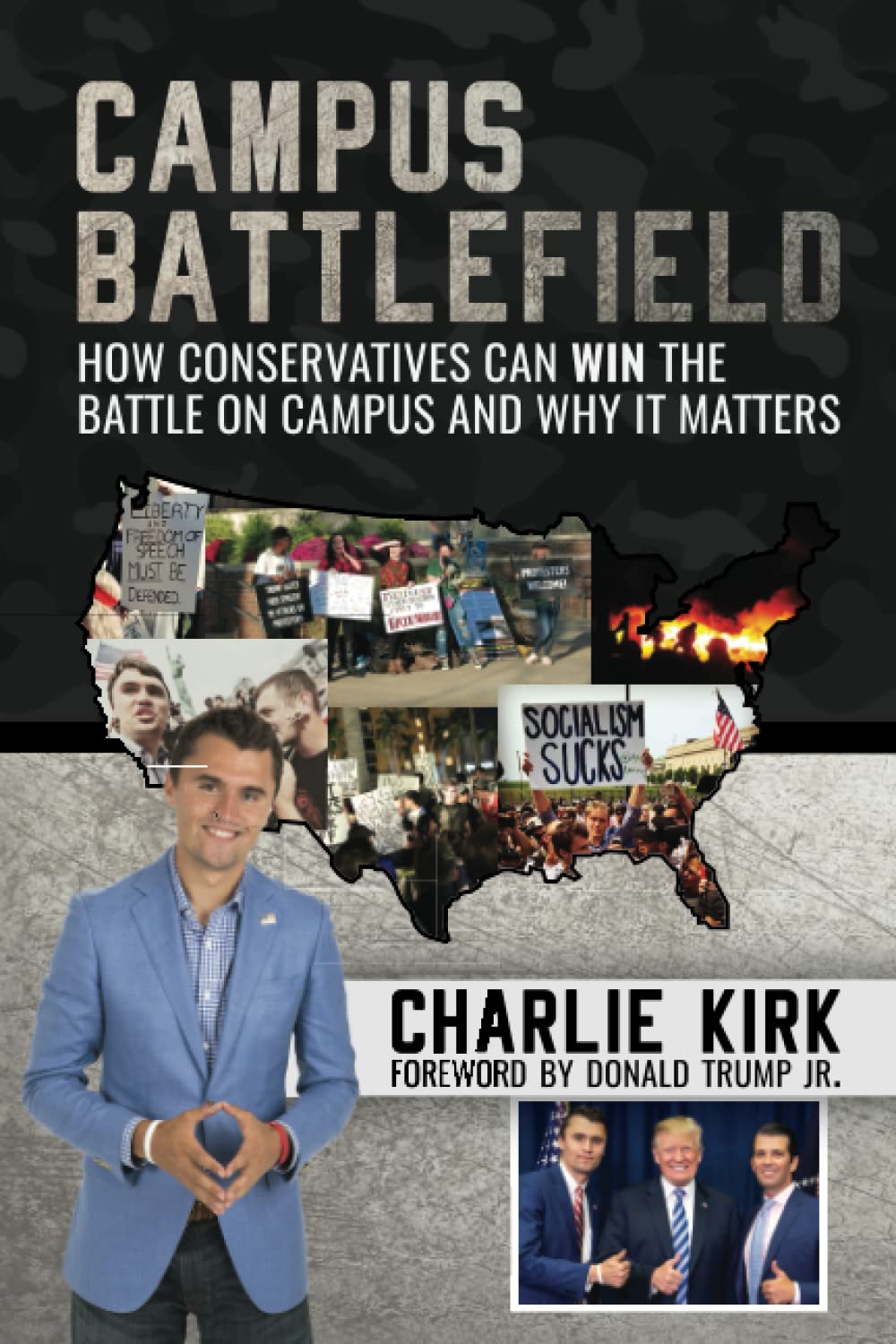
Charlie Kirk founded Turning Point USA, an organization that establishes chapters on college campuses across the country to give conservative students a voice. College campuses often feel like one-sided echo chambers, and Turning Point worked to help young conservatives feel comfortable expressing their political beliefs. Kirk became well known for speaking on college campuses and hosting debates, using dialogue to reach American college students and giving them resources to get active in their communities.
Herrera has a personal connection to this mission. When he was in college—as brief as that stint was—he phonebanked for Turning Point USA. The organization helped him get involved in something he believed in when he didn't know where to start. He credits Turning Point with giving him that beginning when he was young and uncertain.
Kirk was widely recognized as a principled conservative, a man of God, and most importantly, someone willing to engage in dialogue with anyone. He respectfully debated issues not with hatred, but with facts and, as Herrera notes, more compassion than he himself feels capable of. Kirk was also a husband and the father of two very young children.
The Assassination at Utah Valley University
On September 10th, in the middle of answering someone's question at Utah Valley University, Charlie Kirk was shot in the neck with a .306 rifle and was essentially instantly killed. The shooter disagreed with what Kirk had to say. Unable to find a way to silence him through argument or debate, they killed him instead.
Herrera describes the dark cloud that has hung over many people since Kirk's death. He's careful not to overstate his relationship with Kirk—they weren't super close—but he has good friends who knew Kirk well. One friend told Herrera immediately after the assassination that "Charlie Kirk saved my life." Nobody Herrera knows who knew Kirk had anything bad to say about him.
At conservative events, Herrera has observed people who talk about God and principles on stage but don't always live by those principles when the cameras are off. Kirk wasn't that guy. From what Herrera could tell, Kirk genuinely lived what he preached. He talked the talk and walked the walk, embodying what he spoke about—something Herrera acknowledges is more rare than it should be.
The Disturbing Celebration of Violence
While most reasonable people would agree that killing someone for having a different opinion is objectively wrong, that's not the reaction Herrera witnessed. Social media flooded with people on the left saying Kirk deserved it, that he had it coming, that they didn't know what took so long. The prevailing opinion from many on the left was happiness that this had happened.
This wasn't limited to Reddit or Twitter. About 30 minutes after the assassination, Herrera and Cody met up for lunch to talk about what was happening. At a nearby table, two men whose political persuasion Herrera could guess learned about Kirk being shot in real time. Immediately, they started laughing and celebrating. One of them said something that burned into Herrera's mind: "That'll wipe that smug smile off his face."
Herrera considers himself a calm and measured person who tries to keep his emotions in check. That moment made him physically angry. Regardless of political beliefs, how can anyone applaud a 31-year-old father being killed because they disagree with what he says?
Charlie Kirk Was Not a Radical
For those who might have a problem with Charlie Kirk, Herrera wants to be clear: Kirk was not a radical by any means. He was a peaceful, mild-mannered traditional conservative. He didn't hate anyone, regardless of where they were coming from. He didn't spew hate—he asked questions and engaged in dialogue. People might not agree with what he said, and that's fine, but at no point was he trying to sow seeds of hatred. Herrera is willing to bet that those who think otherwise haven't actually watched any of Kirk's content.
Herrera acknowledges some will hate him or unsubscribe because of this video, and he's fine with that. He probably won't miss them because, frankly, if he were killed tomorrow, they'd probably be celebrating too. But the truth is that Kirk was not an extremist. Herrera considers himself more extreme than Kirk was. If anything, regarding the boundaries of right-wing thought, Kirk was a principled moderate.
The Radical Left's Dangerous Ideology
What has become unfortunately clear to Herrera over the past few days is that the radical left—whatever label makes sense for that group—doesn't care about who people really are. They don't wish to know you. They have an idea built about you in their own heads, and that's who they hate. Not who you really are, but the version of you they've constructed that they've deemed worthy of killing.
The scary part is that Kirk's beliefs aligned with roughly half the country—obviously not all of his beliefs, but a significant portion. And a large part of the other half seems to think it's not only okay but actively good that people who believe those things get killed.
Herrera calls himself naive or optimistic, but that was the part of this whole situation that shocked him most: the sheer volume of people in this country who think that Kirk, Herrera, or people who believe what they do should be killed because of the beliefs they hold, or who would at least celebrate if somebody else killed them for those beliefs.
First Amendment Under Attack
America has a First Amendment right to freedom of speech, protected by the Constitution. Nobody should be killed for speech. On the flip side, people have a right to say they hate Charlie Kirk—Herrera may not agree with that, but they have the right. However, he's also allowed to read the tea leaves regarding what it says about this country when people celebrate that Kirk was murdered in front of his wife and children.
Herrera doesn't want to be overly dramatic, but he feels like the country woke up different after this. Many people are starting to wake up to the idea that certain groups hate them and want them dead. The goal is to make conservatives afraid of getting killed when they go to events so they look to their leadership to turn down the temperature.
When your enemy tells you who they are, believe them. But it's sad. This isn't the America the Founders built. It's not the America that generations of better men died for. But if anyone thinks that killing an innocent man will silence conservatives, or that this is doing anything other than lighting a fire in millions of Americans, they're mistaken.
No Assassination Recreation Video
Over the past few days, Herrera has received hundreds, if not thousands, of comments and direct messages asking if he'll do an assassination recreation video. For those unfamiliar, that's something he does on his channel—mostly historic assassinations, things with conspiracy theories around them. But the volume of people asking for this particular one, especially how crassly they asked, sickened him.
His answer is overwhelmingly clear: No. He will not create such a video. He knew the answer was no immediately, but he thought about it extensively and identified three main reasons:
- It would be in horrifically bad taste. A 31-year-old father of two hasn't even been buried yet. Creating such content would be disgusting.
- There's no valuable purpose. Usually when creating assassination recreation videos, the goal is discussing or dispelling conspiracy theories, learning historical context, or exploring history in an engaging way. For more recent events like the Shinzo Abe assassination, he focused on gun control implications and rebuilding the homemade pipe gun rather than recreating the assassination itself. For the United Healthcare CEO video, he addressed media speculation about the weapon used without using a dummy for the target. With Kirk's assassination, there's nothing he wants to discuss. While some speculation exists about the round potentially deflecting off a plate, he doesn't have enough details to make a video more insightful than what people could find online. He simply doesn't want to create that content.
- High-quality footage already exists. For the first time in any of these cases, extremely high-quality video exists from multiple angles, including very graphic close-ups. There's nothing he could add. Recreating it would just be gore porn. If people want to see what happened, the videos are out there. Everyone saw what happened in graphic detail. He's seen the videos dozens of times and he's tired.
The Campaign Will Continue
Many people have asked Herrera about his campaign trail in light of Kirk's assassination. Will he continue doing public events? Will there still be rallies? His answer: He will absolutely not cancel a single thing.
These cowards want to silence conservatives, and the last thing they can do is let them win. Herrera will not cancel any events. In fact, he's looking forward to adding even more than originally planned. Safety is obviously a concern that will be taken into account going forward, but evil cannot be allowed to prosper because people are afraid. Backing down is not only not the right thing to do—it's not what Charlie would have done, and it's not what Herrera is going to do.
The Dark Irony of "Turning Point"
Herrera has been thinking extensively about one particular topic over the past few days: the dark irony of the name Turning Point. Over 10 years ago, when Charlie started TPUSA—before it grew into probably the biggest young conservative group in the entire country—he named it Turning Point because he believed the youth of this country would be the turning point. He had no way of knowing the foreshadowing behind that name, that it would actually be his death that would be the turning point.
Herrera brings this up to make a point: Things feel dark right now. Everyone is feeling a lot of things, and there doesn't seem to be an obvious direction to put those emotions. Conservatives must take this anger—this righteous anger and sadness and whatever else they're feeling—and turn it into resolve. They must go the extra mile not only to refuse silence, but to be louder and bolder in their beliefs than ever before. They have to be the ones to pick up the microphone that Charlie dropped. That's what Herrera plans to do, and he hopes others are willing to carry the weight of that responsibility with him.
A Missed Opportunity and a Final Lesson
The last time Herrera saw Charlie Kirk was at a party in Washington, D.C., right before the inauguration. Kirk was a few feet away in a group of high-profile people, and Herrera thought about going over to talk with him. He didn't, thinking those people were way out of his league. He decided he'd wait and talk to Kirk about some things later, so he walked away.
Herrera never imagined that would be the last time he would ever see Charlie Kirk. He's been thinking about that moment a lot. If he can leave people with anything, it's this: Don't miss an opportunity to talk to people in your life that matter to you. You'll never know when it's the last time.
In a clip from an interview, Kirk was asked how he wanted to be remembered, what he wanted to be associated with if everything went away. His answer was simple: He wanted to be remembered for courage and for his faith. That, he said, would be the most important thing. The most important thing in his life was his faith.


Comments
Be the first to comment on this video.