Up Next
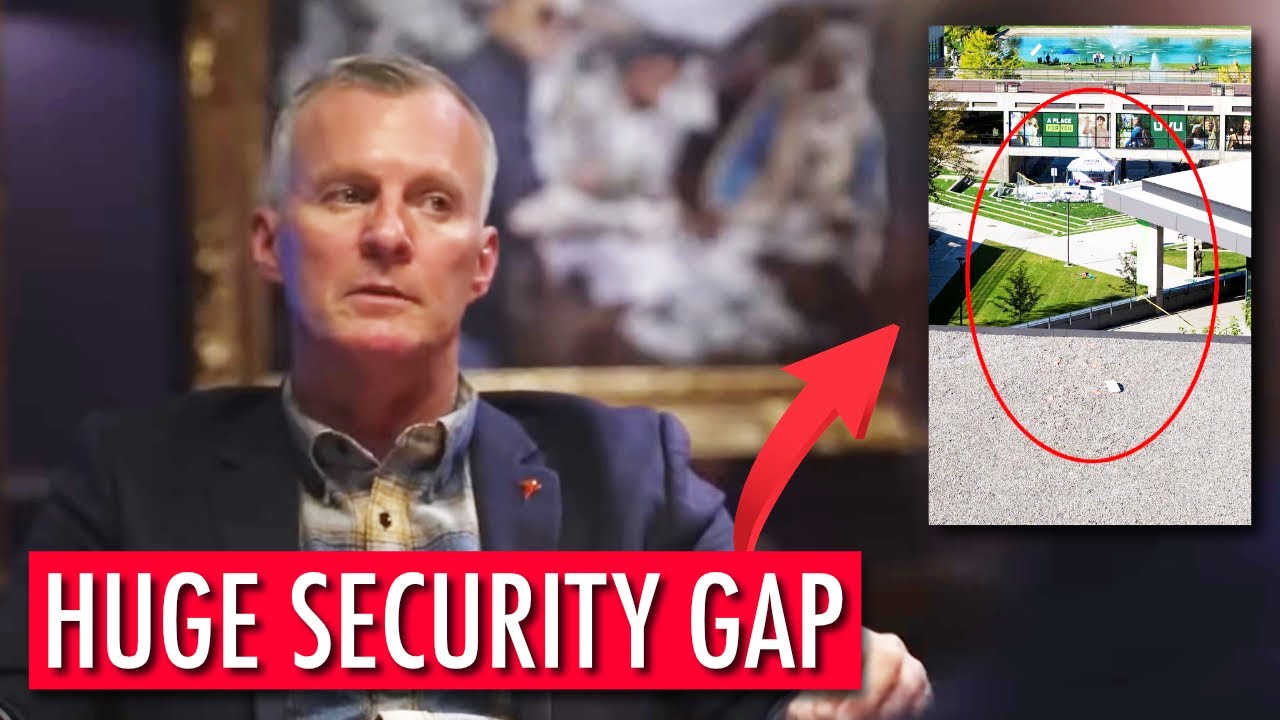
Brian Harpole's Shawn Ryan Interview: Integrity Security Reveals What Happened During Charlie Kirk's Final Moments
32:39
Daniel Davis Investigates Charlie Kirk Shooting Crime Scene With Forensic Evidence Challenging Official FBI Narrative
45:02

Gary Melton Interviews Henry Dells, Eyewitness to Charlie Kirk Assassination at Utah Valley University
18:40
Brian Harpole Breaks Silence on Charlie Kirk Assassination: Security Chief Reveals What Really Happened That Day
Brian Harpole served as head of security for Charlie Kirk for seven years before Kirk's assassination on September 10th. Two months after the tragedy that shocked the nation, Harpole comes forward with answers to mounting questions about security failures, threat assessments, and coordination with law enforcement at Utah Valley University. With conspiracy theories swirling and accusations targeting his elite security team, Harpole provides a detailed account of the protection detail that day, revealing troubling communications with UVU Police Chief Long about rooftop access, explaining why standard security measures like drones and overwatch were denied, and addressing allegations of foreign intelligence ties. This is the first major interview from someone who had their hands in the wound, offering clarity on what happened when a conservative leader was killed during a public speech.
Breaking the Silence
Brian Harpole carried a weight few could understand. For seven years, he protected Charlie Kirk as head of his security detail through Integrity Security Solutions. Now, two months and one day after Kirk's assassination at Utah Valley University, Harpole sat down to break his silence on what really happened that September day.
"I've been really quiet about this matter because so many people are out there on it and it just got to be so much that I just did not trust my own eyes, ears, what I was reading, what I was watching," Harpole explained. "A lot of people have sensationalized this and that is a real shame and it makes it impossible to find the truth."
The security veteran with 14 years in Texas law enforcement and experience across five continents as a global private security contractor knew his team was taking massive criticism. But watching accusations pile up against men he trusted with his life pushed him to speak out. "Really that's kind of what drove me to come here," he said. "The team is here and that's the big deal. I'm representing them all."
Who is Brian Harpole?
Brian Harpole is a highly decorated law enforcement veteran who served as a police officer in Texas for 14 years. His specialty was finding bad guys before they could act. "I had the ability to go out and find bad guys," Harpole explained. "Seeing the physiological movements of people in crowds or even in cars and the way they walk. You notice it, you recognize it."
He credited phenomenal mentors throughout his career, starting with his father who was a cop for 47 years. "My dad was a worker. He is still a worker, you know, and he was kind of like a role model for that." Other mentors included Jerry Venom, Bill Wurn, and Keith Lane who "slapped me when I needed it and we all need it sometimes."
Harpole's law enforcement career included being shot at multiple times. He vividly recalled one incident: "A guy shot at me with a shotgun and I remember seeing his hair puff up because the gun was so short. I remember seeing the wading come over my head." That intimate knowledge of violence under fire would later inform his approach to executive protection.
In 2008, Harpole transitioned to private security as operations manager for an elite Texas-based security firm specializing in executive and personal protection. Three years ago, he founded Integrity Security Solutions, taking most of his team with him. The company operates across five continents on missions ranging from protecting high-profile clients to dangerous work with NGOs fighting human trafficking.
Integrity's Unconventional Vetting Process
What sets Integrity Security Solutions apart is its unique selection and training process. Unlike typical security firms that hire based on resumes and credentials, Integrity requires something deeper.
"A guy that wants to come work for us, he has to get sponsored in by one of those people that are already here," Harpole explained. "Somebody vouches for him and then he comes to our training facility."
The training facility operates every Wednesday for team members not working details. Training covers defensive tactics, emergency medicine, personal security detail techniques, and firearms. New candidates train with the team for an undisclosed period. "Some guys it's a month and a half, two months. Some guys it's six, seven months. There's no timeline."
At the end of that training period, the entire team votes. Thumbs up or thumbs down. Only after getting team approval does the formal vetting process begin, examining employment history, character, and whether the person is a good father and human being.
"It's not skills," Harpole emphasized. "We have guys that come to us that the skills are not what they need to be. But we as a team can collectively teach that. But what we can't teach is if you're not a jackass. Can you work well with a team? Can you think of people besides yourself? Sometimes that can't be taught."
The team includes combat-proven Marines, Navy SEALs with 22 years of service, world-renowned jiu-jitsu practitioners, 22-year SWAT veterans, professional athletes with tactical careers, and 30-year cops and SWAT commanders. But Harpole maintains a crucial philosophy: "Your past achievements or affiliation are not equal to your current capability. Make sure your skills match your ego."
Training Standards That Exceed Industry Norms
Integrity Security Solutions requires 40 hours of annual training minimum, with 20 hours internal and 20 hours that can be external. But most team members far exceed that minimum.
"I did the averages and most guys get around 200. Some of the guys are getting 400 hours of training a year," Harpole revealed. "It's advanced level. It's not sitting around like in cop days where you're watching videos of how to get along better with people that don't think like you. It's real things that are applicable to what we're out there doing right now today and how we can raise the next level."
The training isn't just tactical. Harpole mentioned bringing in etiquette instructors to teach team members which fork to use at formal dinners, recognizing that executive protection means operating in elite social circles where blending in matters.
Team members who don't maintain training hours get laid off or furloughed. "I'd tell them and they were good people that just timelines couldn't line up or things going on at home and so they had to get laid off and told hey when you come back the process started over."
The cohesiveness this creates is profound. "We have a saying that once you've made it through those steps and you're on the team and you've put that effort out and shown you truly can think about everybody—the client, the team, the big picture, what we're believing in—then the team gets together and they authorize them to get the tattoo. Brothers in Christ for eternity."
Harpole added, "We vacation together, we Christmas party together. It's a brotherhood."
Addressing the Conspiracy Theories
In the two months since Kirk's assassination, conspiracy theories proliferated. Was it a right-wing extremist? Left-wing activist? Israeli intelligence? A trans person or their boyfriend? Each theory had vocal proponents online.
Harpole addressed the most persistent allegation directly: "Do any of your guys have any ties to any foreign intelligence agencies, more specifically Mossad?"
"No," Harpole stated flatly. "I've been in 39 countries in this world and I've never been to Israel. I'm a firm Christian. I ask our guys, are you believers? We have no ties to Israel or Mossad or any other one. We're Americans, period. We believe in what we're afforded to do here. We believe in our system. To say that we're Mossad or attached to any type of foreign entity, it's crap when it's best day."
He emphasized the impossibility of such duplicity within his tight-knit team: "We're in each other's business. A lot of these guys are on the road 250 days a year with Charlie. We know what each other does. We know their kids' names and their spouses. If they're doing something, they wouldn't have time for us not to notice."
Harpole spoke about the deeper bonds that make betrayal unthinkable: "You took an oath. I've taken an oath. Most of my guys have taken an oath. In the security industry, you're not taking an oath for your client, but you are taking an oath to each other. They wouldn't do that to the client, but they really wouldn't do it to me or to their coworker."
When asked if anyone on the team could be tied to an extreme political party planning assassinations, Harpole responded with absolute certainty: "To my death, no."
Threat Assessment and Pre-Planning
The advance work for the Utah Valley University event began on the 24th of the month prior—more than two weeks before the assassination. "That was with the hard conversations, meetings," Harpole explained. "It started before that with the intelligence gathering and all that, but the hard conversations, the sharing of information, the conference calls, the data sheets."
Integrity uses a decentralized command model where all intelligence goes into an app accessible to every team member on the job. "When I get it, they get it. When whoever's gathering that intel gets it, there's no hold, there's no power hold on it."
The app contains comprehensive information: site plans, points of contact, emergency fallback locations, hard rooms, arrival points, hospitals, fire departments, jurisdictional authorities. "Any guy can get it at any time they want to and we can share it out anytime. It also timestamps our due diligence."
Regarding specific threats Charlie Kirk had expressed, Harpole clarified the chain of information: "Dan works for Turning Point as their security guy. Dan feeds down to us. Nothing had ever come from Dan, from Charlie down to us about specific threats from Israel or other organizations."
However, Harpole acknowledged the reality of the current environment: "You got to look at the world we live in. It's a reality that an organization whether it be a hate group of any type could want to hurt anybody. We look at probabilities and possibilities. The possibilities are infinite. The probabilities are that the people that want to hurt him are the people that are there screaming things at him in front of us half the time."
The team received threats routinely. Harpole recounted one particularly disturbing example: "I can't wait till you come to this town so that I hope somebody shoots you in the head and we can pee in the hole. Where do you get this kind of stuff, man?"
The team had to assess which threats were protected First Amendment speech versus actual dangers. "Am I going to spend an exorbitant amount of time with a possibility that I don't have any tangible intel on or am I going to put my eggs into this basket that is a probability right here?"
The Security Setup at Utah Valley University
The amphitheater at UVU presented significant tactical challenges. "If you're somewhere and you're covered from an elevated position from 180 degrees, that's horrible," Harpole explained. "That's where we were."
Critics later questioned why the event was held there. Harpole's response was direct: "That's where they told us we had to have it. We weren't optioned out anywhere else. There's a permit you have to get. The school says, nope, this is where you have to have it. We don't get to argue with them."
Moreover, Charlie Kirk preferred the open format despite security concerns. "Charlie liked it. It wasn't ticketing. You didn't have gates. People, regular people showed up. We had spoke to him about it before. It's like, man, this is getting dangerous. His response was, I know."
Kirk's reasoning centered on his mission: "If you ticket it and make people jump through hoops to come in or pay or go through magnetometers, then the people with opposing views don't show up and then there's no conversation. When there's no conversation, there's more division. His goal was to have less division through conversation."
The team had faced worse. Harpole mentioned San Francisco where they had "a street takeover and people trying to climb over fences and our primary and secondary exfill got compromised." In New Mexico, they had "no law enforcement assistance and we ended up physically just fighting our way out of there."
For the UVU event, Integrity increased manpower from the usual eight to nine agents up to twelve, with a thirteenth arriving in the drive party. "We upped it based on nothing, just the current world situation. We're in a kind of a place where we don't want to be. We're expecting a big crowd. It's the first one. We don't want to get behind the eight ball."
The Rooftop Access Revelation
Perhaps the most explosive revelation from Harpole's interview involved communications with UVU Police Chief Long about rooftop access near where Kirk would be speaking.
On the Monday before the event, Harpole received a message that students had roof access close to where Kirk would be set up. The Sorenson Center, the building in front of the Losee Center amphitheater, had staircases going up to walkways on the roofs.
Harpole messaged Chief Long: "I was told students have access above us. If this is true it would be nice to either have it controlled access or allow one of my guys to be there as well if possible."
Chief Long's response was brief: "I got you covered."
"What else am I to do when a command level person from an accredited police department says, 'I've got this area'?" Harpole asked, his frustration evident. "I got guys that are 10 times more qualified than what he could have produced for us. Literally all they had to do is post anybody at that stairwell or put a drone up or let us do our job."
Harpole has called Chief Long multiple times since the assassination. "He's never called us back."
The security chief's anger was palpable: "Why this hadn't come out and why he won't stand up like a man and admit this, I don't know. But he's watching a bunch of men lose their careers and he's okay with it."
Denied Security Resources
Multiple standard security measures were unavailable or denied for the UVU event, creating gaps in coverage that would later prove fatal.
Regarding drone surveillance, Harpole explained the restrictions: "I spent thousands of dollars on drones last year and got the guys licensed. But if the area lies in the Provo, Utah airspace, I can't fly it. I can't go in and break the rules. There's laws for a reason."
However, the local Orem Police Department had a professional drone unit. The problem was jurisdictional: "Orem PD has a drone unit, active and professional. That police department is awesome. They get it. They were there. They helped both on the soft side and the hard side."
But Orem PD was only there because they were asked directly. "I started asking questions like, 'You guys have a drone unit?' Yeah. 'Do you have an MOU or mutual aid agreement with this school?' Yeah. 'Did they call you and ask for assistance?' No."
The failure to request available resources baffled Harpole: "Why wouldn't you call? I can't make my guys break the law. I can't go in and do something that would jeopardize them. Did you ask this awesome PD that would probably help you in a heartbeat? Did you even ask them? The answer was, we didn't get asked."
Regarding sniper overwatch, Harpole noted similar jurisdictional limitations: "Overwatch, snipers on roofs. I got guys that are qualified. That's their career. But this is not a State Department job. I don't have an ITAR and this isn't Iraq. This is Utah. I can't go in and set up observation points with snipers. That's against the law. That's their job. Our job is the close protection bubble."
UVU Police had mutual aid agreements with Orem PD for SWAT capabilities including overwatch. "Capability and they have an MOU for SWAT for that through Orem. Not utilized. Don't know. That's a question for them to ask. Why didn't you call? Why didn't you ask for assistance? Especially when this crowd grew and grew and grew."
The manpower discrepancy was stark: "Good police tactics. If you're out and you have six guys that show up and all of a sudden this thing goes from 1,500 to 2,000 to 3,000 people, you go, 'Hey, we need some help.' I took 12 guys there. I had double the amount of people there that the PD had. We're only responsible for the first 30 meters in movement and advance in and receiving and out. And we had 12 guys. They gave me six for the rest of the campus."
The Security Detail Breakdown
Harpole provided a detailed explanation of how his team was positioned using concentric circles of security theory adapted to the specific environment.
"You have zones and you have a permeable zone, a semi-permeable zone, and a non-permeable zone," he explained. "Charlie's tent was right in the middle and then we start building from the very back."
The outermost zone used caution tape across the arrival section. "All it is is caution tape, but it's just to keep good people good. We know that. It's just to let people know we know people won't come in there so if somebody's doing something bad, they stick out."
Inside that zone, vehicles were positioned strategically behind where Charlie would speak. "It's called CPTED, crime prevention through environmental design. A worry was that somebody would come down that same driveway and just run him over from the back or run people over. So you stack those vehicles like big Hesco barriers."
Hard bike racks came next, linked together across the back creating the non-permeable zone. "Those bike racks keep people from coming in and out unless they're vetted." A team member was posted there specifically for back cover, ensuring the right people could access the area while preventing unauthorized entry. A UVU police officer also held a position on the far left side.
The heart of the security setup was around Charlie's speaking position. "Number one rule of protection detail work is evade and escape. If we can evade or escape any threat without having to confront it, it's a win."
Dan, who worked for Turning Point USA, was positioned directly next to Charlie. "Dan's only job is exfill. When Charlie got shot, within two seconds, Dan had his hands on him to push him down to the ground. Within five seconds, I was on top of Charlie."
The team ran double presidential-style barricades. "The first layer just lets everybody know, hey, you can't cross this. If somebody comes over the top, you can see it from the mere elevation change." A secondary row created a gap in the middle which Charlie preferred because "there's nothing between us. Let's carry out this conversation."
Two team members covered that gap. "One of them's a measure of a man who has physical capabilities that are incredible. The one on the right side is a jiu-jitsu guy, world-renowned professor. Their job is if somebody tries to press through that gap or get close to him, they're going to hold them up."
Just off their flanks were two more agents. "Their sole job is to control access into that alley. If somebody tries to breach the integrity of those two guys, they're there to apply violence so that we won't weaken our stance."
Additional team members worked in the crowd in plain clothes. "They're looking for walkups. Military age males that aren't having social contact with other people. They got prey gaze on the guy who's talking. No blinking or excessive blinking. That's a good tell right there of a pre-incident indicator of violence."
Scott worked the flank area making sure people from the elevated bridge walkway above couldn't throw rocks down on Charlie or the crowd. Chris assisted him. The team had discovered during the morning walk-through that large decorative rocks were placed around the area for architectural design that could be weaponized.
"We did a temporary criminal trespass zone right above him on that bridge walkway so that people couldn't come in and throw rocks down. We had to get PD units in here to take that area responsibility because it's a tape line. You need statutory authority under Utah law to say, 'Hey, you can't come in or you can be arrested.'"
The Experience Factor
Harpole emphasized that the team members working the outer perimeter weren't random contractors. "These are seasoned guys. Thirty-year cops that have shown—not cops that are just in there checking boxes. These are guys that went to work every day and were like, 'My job is to catch bad guys.' How do you catch bad guys? By doing work. They're work finders."
He continued: "That's why I put them out there because they know how to go out and find work. They're not going to wait for work to come to them because it's too late."
The team operated without radio communications when the shooting occurred. "Not one radio comm came out. It's unneeded. They all know their jobs." The rehearsed response showed the team collapsing back on top of Charlie, each member executing their designated role without having to be told.
Harpole noted that team members rotated as needed during the event. "We had people coming in and pushing up signs, chanting, creating distraction and making problems. So we pushed a couple guys over just to keep an eye on that. Those guys are doing direct reporting. 'Hey, it's 14 of them' or 'They're just doing signs.' They're giving us real intel in real time."
The Dangerous Work Behind the Resume
During the interview, Harpole revealed some of the most dangerous private security work he and his team had undertaken, work that made law enforcement "pale in comparison."
"I worked cameras inside of cartel houses in Juarez. We were looking where kids were being trafficked and we acted like we went in to shop for children and we were capturing that footage."
The operation was for an NGO based out of Dallas that specializes in helping trafficking victims. Harpole was providing security for reporters documenting the surge of people crossing the border when intel came in about a hotel in Juarez where children were being warehoused.
"We ended up going over and posed as shoppers basically and the guy gave us a tour. We went into this room that was about 50 feet long but only probably 10 feet wide. You can tell it was just bed, bed, bed, bed. These guys were—I guess that's where you go in and shop. Nobody was in there, weren't any children in there at the time."
The operation nearly went sideways: "We went back downstairs and we're in the lobby talking to the guy behind the desk. I saw a guy look through the window from outside and with his head he counted us and then he picked up the phone. I told them, 'Hey man, we just got made.'"
The team had to exfiltrate through an alternate route, leaving through New Mexico instead of their planned Texas crossing.
In another operation in Piedras Negras, Harpole wore a camera showing "how people would come back across and be screened. You have to pay a fee to leave Mexico and then you get checked in the middle of the border and then you get interdicted. 'Why were you there? What did you do? What did you eat?' So I'm getting interviewed, but at the same time, the camera crew was filming literally hundreds of people just walking across unabated."
These experiences shaped Harpole's approach to threat assessment and security work. "There's good work to be done," he said simply.
A Prayer and a Purpose
The interview began with a prayer, something Harpole believes in deeply. "The power of prayer is unbelievable. I received prayers from people from all over the world and texts. I would tell them they're heard and felt and they are."
The stated goals were clear: bring answers to unanswered questions, clear Harpole's team of accusations and conspiracies, clear the air and get rid of confusion, and pray for Charlie and his family while hoping the rise in political violence comes to an end.
Throughout the interview, Harpole returned to core principles that guide his work: "In the security industry, it's a prevention industry not a response industry. It should be a prevention industry. In the prevention model, you have to be that much better every single time you step on a job."
He also emphasized the zero-fail nature of executive protection: "Back when we were cops, if something happened in your beat—10 cars got stolen or 50 mailboxes got bashed—you went out and were just like sorry and took the report and went back to work. You got paid the same. In this industry, if something happens by no fault of your own even, you're done with that client. There are people in the woodwork that'll come right back in and do it for cheaper probably."
That reality makes the training, vetting, and preparation essential. "It has to be that mentality that we have to be that much better. It's 110 percent, but it's 110 percent of something that has to be for the benefit, the big picture, not yourself. Everything, the whole job, the detail."
The Brotherhood Under Fire
The assassination of Charlie Kirk didn't just take a client from Integrity Security Solutions. It took someone the team had protected for seven years, someone they'd traveled with to 39 countries, someone who ate sushi off Harpole's plate in Tokyo while laughing about finding someone taller than him in Japan.
"That time in Japan, we had finished a backbreaking tour of South Korea, went to the DMZ, did a lot of stuff around there. Then we went to Japan, Tokyo. Charlie just loved Japan. We had a bet, a game that if we could find somebody in Japan taller than him. We're already on guard, scanning, but then you got this secondary thing like, are you going to find some guy that's as tall as this guy, which is absolutely hard to do."
After speeches, they went to dinner. "We were eating sushi and laughing and having a good time. It was a safe environment. The access was controlled. It was these goofy things like you were sitting around a table in high school with a bunch of guys that you were cutting it up with. He really loved the sushi and he was like, 'Brian, you going to eat that?' And I was like, 'No.' And he just starts eating it off my plate. This is it. It was cool."
Kirk had never been to Japan before and got to see really cool stuff. "He was just on a high about it and so he was not Charlie Kirk. He was just a guy. It was a very cool experience."
Now that same team faces career destruction from accusations and conspiracy theories while the man who assured them he had rooftop security covered won't return phone calls.
"Why he won't stand up like a man and admit this, I don't know," Harpole said. "But he's watching a bunch of men lose their careers and he's okay with it."
The interview ended with Harpole's commitment to his team standing firm: "The truth's like a lion. You set it free and it'll fight for itself."
Video Transcript
[music] Brian Harpool, welcome to the show. >> Pleasure, Sean. Thank you for letting me be here. >> Thank you for coming, man. So, um, very heavy interview today and, um, so you were in charge of the security detail and the company um, when [gasps] Charlie Kirk was assassinated exactly 2 months and one day ago. >> Yes, sir. And um you know, I've been really quiet about this matter because so many people are out there on it and it just it's a real shame, but it just got to be so much that I just did not trust my own eyes, ears, what I was reading, what I was watching. And um I think a lot of people have sensationalized this and um [clears throat] and that is a real [ __ ] shame and it makes it impossible to find the truth. It is and it's not a word but um you said sensationalized but it's like advantilalized right just to take advantage of it it it it's almost like sickening and it has been and really that's kind of what drove me to come here. Well, Brian, I I know you and and and your team um are taking a lot of flack and um you know, and I I just I commend you for the for the courage to come out and and and talk today on the show and and um I just want you to know, I mean, you know, I'm not a combative interviewer. I do have some tough questions uh that will be at the end that questions that I've seen all throughout the internet, questions that people have, questions that I have. [clears throat] Some of them may seem a little absurd, but I I think it is I think it's important to, you know, just address all the major ones, at least all the ones that are on my radar. And um and um so I just once again want to thank you for coming. nothing's if it's nothing's out of bounds except for something that may be covered in the NDA that I did for a specific incident for them. And so if that's true, I would just say that. But literally, um that's the big thing is that it it's I'm sitting here, but the team is here and and that's the big deal. And uh representing them all. I want to um and I also just want to say um you know one rest in peace to Charlie Kirk and God bless his family and um number two [sighs] I've lost friends and um I'm familiar with those type of scenarios and uh I just want to say that I'm really sorry for what you and your guys are going through [clears throat] with losing your friend >> and um and also with everything that's coming along with that. So, >> yes, sir. >> But everybody starts off with an introduction here. Brian Harpole, a highly decorated law enforcement veteran who served as a police officer in Texas for 14 years. In 2008, you entered the private security world, is operations manager for an elite Texas-based security firm where you specialized in executive and personal protection. >> [sighs] >> Now you are a global private security contractor and trainer running your own company Integrity Security Solutions across five continents. A graduate of Columbia College, you earned a master peace officer license from the state of Texas along with graduating from the International Law Enforcement School of Police supervision in South in Southern Methodist University's Cape Intelligence Program. Most importantly, you are on the stage with Charlie Kirk as the head of his contracted security detail on September 10th when he was assassinated. It's been 2 months since this tragedy and there are a lot of unanswered questions and um people are starving for some answers. I know a lot of people are going to be very interested in in in in what you have to say today, but you know, I want I just kind of want to give it to you right now and and and and give you the opportunity on why why you've decided to come out. >> Um you you you hit it. It's uh there's so much out there and and and there's so much out there that's not true. And um I I was talking to your staff earlier says is I'm I'm older, right? And uh I have guys on my team that or our team that are younger and if the truth doesn't get out there, it could hurt their you know 20 more years of work and that's not fair. >> Yeah. >> And these are stellar individuals. >> Yeah. These these guys are stellar and uh uh you know I we've worked with just about every agency and police department across the nation and in the larger government you know FBI secret service and I've got guys will come up to me like where did you get your guys where did you get these people and um the only response I've ever been able to make sense is I I just tell them and I prayed them in and and and they came in, you know, and our our our selection process is unique. Uh unparalleled. Um we'll get into that. >> Yeah. And >> I like that cross on your on your jacket. >> Yeah. I thought it I thought it would um I thought it'd be good to start this episode with a prayer. >> Absolutely. >> You okay with that? >> It's what we all should do. >> All right. Yeah. It's going to be super simple here. Jesus, I just want to thank you for for having Brian here today and we have just a couple of goals today with this interview and that we ask that you be here with us in this interview and we just want to bring some answers to unanswered questions here today and avenge Brian's team of his of uh these accusations and and conspiracies. And we basically just want to clear the air and um and get rid of the confusion. And then we hope this helps. And we also just want to pray for for Charlie and his family. And we hope that this rise in political violence comes to an end real fast. Amen. >> Amen. Thank you. My pleasure. >> I believe in that power of prayer is unbelievable. >> Me too. >> We uh I I received prayers from people from all over the world and and uh text and and I I would tell them they they're heard and felt and they are they are >> good, man. >> Yeah. >> Well, we got a couple of things to get through. Man, this seems like >> I don't even want to give this to you, but it everybody gets one, so I got to do it. >> What's that? >> But uh >> Oh, no. Everybody gets a bag of jelly bears. >> I uh I uh um was looking forward to it uh for a couple reasons. Uh one, my fiance uh uh loves uh this type of candy and so I'll definitely share it with her >> and and uh they're known for that. And so >> um I I appreciate it. Thank you. Thank you very much. >> You're welcome. You're welcome. And uh I have a Patreon account. It's a subscription account. uh they've been with me since the very beginning when I started this in the attic of my house and um it's turned into one hell of a community. And so one thing I do is I just offer them the opportunity to ask every guest a question. And so this is from Amber. What is your favorite memory with Charlie? Man, um it it's odd. It was uh recently I believe it or not. Um and uh it it it it kind of made me feel like I was just hanging out with him instead of working. And um we were in Japan and um we had finished I mean it was a like a backbreaking tour of uh uh South Korea. Went to the DMZ uh and then did a lot of stuff around there. And then we had went to Japan, Tokyo. He did some speeches and um a couple of us had went to a dinner afterwards and Charlie just loved uh Japan. Uh and um he was like, "Man, something we had a bet and we were playing a game that if we could find somebody in Japan taller than him." [laughter] >> Yeah. And so we were all like, you know, we're already like on guard uh looking, scanning, but then then you you got this secondary thing behind you like that, you know, are you going to find some guy that's as tall as this guy, which is absolutely hard to do. And uh and then afterwards, we went to dinner and um we were he was just eating sushi and and uh we were laughing and and having a good time and it was a safe environment. So, um, the access was controlled and and it was just these goofy things like you were sitting around a table in high school with a a bunch of guys that you were cutting it up with. And I just remember he was like, um, he really loved the sushi and he was like, "Brian, you going to eat that?" And I was like, "No." And he just starts eating it off my plate. And and and [laughter] I'm like, "This is Yeah. Yeah. And it was just like, man, this is it was cool." Well, you know, he he had never been to Japan before and and and and he got to see some of the really cool stuff there and then he was just on a high about it and and so he was not Charlie Kirk. He was just a guy and and then so it it was a it was a very cool experience. >> That's cool, man. >> It was >> that's cool. >> Yeah. Well, Brian, like I said in the interview, I want to really clear the air um with a lot of things and it's going to be some uncomfortable questions and but you know, I I've thought a lot about how I I would do this interview and um I think it it is probably most similar to the Blackwater one that I've done. And um so one of the things you know I'd like to talk a little bit about your background, your company, the training that's involved in your company, and then we'll get into some actions on and stuff. But you know, I mean this is just this is just so wild. I mean we've heard we have heard it was a right-wing nut, a left-wing nut, Israel, a trans person, a trans person's boyfriend. I mean, it it and and at the time there were compelling arguments for every single one of those avenues, you know, and um I think, you know, there's a lot of people that don't believe that this uh Tyler Robinson kid is the shooter. But I just, you know, we'll dissect all of this stuff as we go on. And then at the end I want to ask what questions you have um you know from somebody that was being there somebody that that had their hands the first ones to have their hands in the wound. But [clears throat] um so let's let's start with you know let's start with a little bit of your background in law enforcement and what qualified you to get into this type of thing. >> Yeah. Um I I came from a a law enforcement family and my dad was a cop for 47 years. Um and uh uh he was a worker. He he said he is still a worker, you know, and he was kind of like a role model for that. And so um I was kind of hellbent when I was in my early 20s that I that's not what I was going to do. And then just kind of got uh gleaned into that, recruited into that. And um uh [sighs] did uh 14 years at that. And kind of my area of of specialty was I I I had the ability to to go out and find bad guys. And um that was kind of what I did, whether it just um you know, seeing the physiological movements of people in crowds or even in cars and and then or the way they walk and and so you notice it, you recognize it and how you can um look at the way they act when they see you or they're trying not for you to see them. And so you can couple that and use that to make contact conversation with people and and and then you find a lot of bad guys and and so um I kind of specialized in that. and then also did emergency medicine. Uh um and so there were I had some really great mentors like I said my dad um a guy named Jerry Venom uh Bill Wurn um Keith Lane just uh a phenomenal um mentors in law enforcement that uh just kind of took me under their wing and or slapped me when I needed it and we all need it sometimes. Have you ever exchanged gunfire? Uh, >> I've been shot at and then shot guys uh with a a lot of the times with non-lethal shotgun rounds. >> You have? So, you know what it's like to be shot at. >> Sure. Sure. Um uh we uh you you you feel it. you I mean I was close enough one time I remember um a guy shot at me with a shotgun and [clears throat] uh you don't I remember that this kind of sounds weird but um you see I remember seeing his hair puff up because the gun was so the shotgun was so short. >> Wow. >> And so I remember seeing the uh uh wading come over my head. >> No kidding. >> Yeah. And so I was like, "Ah, that means he missed, you know, cuz wings after the bullets and you know, but >> um >> man, I got shot out with a shotgun one time." >> Yeah. >> In Yemen and I thought they were I thought a [ __ ] kid was holding a sparkler at towards me. >> Turns out it was a shotgun. >> You You feel Yeah. This guy [laughter] >> This guy was >> luckily I was in an armored vehicle >> a little over 40 something feet away. And so you you know you feel it. You feel the blast, right? Yeah. >> And so, grace of God, he missed. And um but um that that career it it you know I kind of like I said had some really good guidance and uh um starting with my dad all the way up to um these other mentors and uh and there was an expectation of work back then uh where you went out and produced uh you know in integratized work and you went out and found bad guys and then when you did that you kind of got a skill uh developed a skill we called it you know you you started you're sharpening your own sword. And um and then that kind of helped me transition over into this field where um it's about prevention and seeing it before it happens, right? And um and so that was able to really help me in this field go out and work and even in austere places. And I've done some work in in on the private security side that um makes law enforcement the most dangerous stuff I did in law enforcement pale in comparison. I mean we I worked cameras inside of um cartel houses in Warz. >> Wow. >> Yeah. and and and and we were uh looking where kids were being trafficked and we act like we went in to shop for children and we were capturing that footage. >> [ __ ] >> And we got made inside and and then >> that was as a civilian. >> Yeah. >> Yep. >> Yeah. >> Wow. >> And then um I did [clears throat] uh same deal. >> Can I hear more about that? >> Sure. Sure. you you were >> you were on a civilian contract to go into cartel homes. Well, it was it was an NGO based out of Dallas that um that specializes in helping people that are trafficked and um we were in El Paso working during the surge of people coming over to document that and um I was providing uh security for the people that were reporting it. And then I don't know how they came on the intel but um inside of Mexico in Wares there was a a hotel that um they found out that where the kids get warehoused and so they were like this would be great footage and I was like this is horrible you know and so um uh we uh we ended up going over and posed as shoppers basically and the guy gave us a tour and we went into this room that was about [sighs] 50 ft long but only probably 10 ft wide and you can tell like that it was just bed bed bed bed and um these guys were I guess that's where you go in and shop I don't know but nobody was in there weren't any children in there at the time and then we went back downstairs and we're in the lobby and kind of talking to the guy behind the desk and you can tell he's like the the I guess the front for it And I saw a guy look um look through the window from outside and and with his head he he counted us like that and then he picked up the phone and he said that into the phone and I told him, "Hey man, we just got made shit." >> And so we ended up um uh going out of uh Morz at a secondary Xfill location and we ended up having to go out in New Mexico instead of uh Texas. and uh so uh just got some great footage. But then we did other ones where I went to Pierce Negras and uh wore a camera and uh showed how um people would come back across and I won't say be harassed but be screened. Uh you have to pay a fee to leave Mexico and then you get checked when you come to the border the middle of it and then you get interdicted. Why were you there? What did you do? What did you eat? And then so I'm getting interviewed, but at the same time, uh, the camera crew was filming literally hundreds of people just walking across unabated. And so you got to see both of those at the same time. And >> Wow. >> Yeah. And and things like that. Uh, really good missions in South Africa. Um, doing things uh, same deal. And, um, so there's there's good work to be done. >> So you got a lot of experience. Um I mean experiences uh I have been ex gotten experienced through experiences and and so um uh and I've had it's really a gift a luxury and and I'm I'm I'm I'm happy to have it. >> How long have you had your company? Um, we started uh, Integrity 3 years ago and uh, we actually worked for another company prior to that with Charlie. Uh, and um, um, there was a uh, in 2022 is when we started it and started doing that. We worked for him for the other company prior to that. And there's some conjecture out there on the >> for Charlie. >> Yes, for Charlie and other accounts. >> How long have you been working for Charlie? Um since I believe it's 18. >> 20. >> Since 18. >> 18. Yeah. >> So seven been seven years. >> Seven years. Almost eight years. Yeah. >> Wow. >> Yeah. So >> So when you started the company, was it did you take the the the this is it the original detail that started in 2018? >> Pretty much the same guys. Yeah. >> You guys have been together for a long Yeah, we're uh we've added obviously and and uh and lost a few uh you know, not um different company. We lost that company lead or that company for reasons that we couldn't stomach that were going on. >> Um but um and that's why we started it, this company, and that's why we named it Integrity. Um you know, we named things and it was a it's a we company. Tell me about the vetting process to get into your company. What does it what does it take to become a security contractor for Integrity? What kind of people are you looking for? >> Yeah, it's a weird uh for the industry. It's kind of weird. Um, we have a group of guys that are either from the original, uh, we we call them the OG guys and then so and then we have the add-ons and and that have come in. And then so a guy that wants to come to work uh for us um he has to get sponsored in by one of those people that are already here. And so this, you know, I'd like to come to work for you. And um so somebody vouches for him and then so then he comes to our training facility and um we train if you're in town not working a detail we train every Wednesday and um so it's you know defensive tactics emergency medicine um techniques you know PSB techniques firearms uh and so that's every Wednesday and um so they come out and they train with us for an undescript amount of time. Some guys it's a month and a half, two months. Some guys it's six, seven months. Um, you know, there's no timeline. And at the end of that time, um, uh, the team gets together and they give them the thumbs up or thumbs down. And then if they get the thumbs up, then they start the vetting process of, uh, you know, um, what did you do? Uh, are you a good dad? Um, are you a good person? Are you a uh were you a good previous employee employee? You start the just the normal vetting process after that. >> So you go through all of the skills. >> It's not skills. Um we we we have guys that come to us that uh the skills are are not what they need to be. But um and but we we as a team can collectively teach that. But what we can't teach is if you're not a jackass. >> Yeah. like can you work well with a team? Can can you think of people besides yourself? And some sometimes that can't be taught. Sometimes it can, >> but um and so that's important. Those those those physical skills, the hard skills and the soft skills can be taught and and we have quite a collection of guys that that that do that. Man, you know, we have some statements from your guys here and and uh I don't I don't know if you want me to read any names, but I will >> Well, they said they're fine with the as long as just first names. >> I mean, here's just, [clears throat] you know, Blake combat proven marine pers more talent than everyone else. I mean, you have Seals, worldrenowned jiu-jitsu people, 22 years on SWAT, professional athletes with tactical careers. I mean, 22 years as a Navy Seal, Marine and 30-year cop and SWAT commander. I mean, these guys know what the [ __ ] they're doing, and they're no stranger to dangerous work. >> No. and and they they come in with that. But we have a saying that says um uh cuz they come in with that kind of pedigree and they're vouched in based on that a lot of the time. But um we [clears throat] have a saying that um your past achievements or affiliation are not equal to your current capability. >> Mhm. >> So that's why they still have to come show that they can do that stuff still and still have the hard set but still have the soft set. Make sure your skills match your ego. >> Right. Right. And or your your resume. >> Yeah. >> And so, um, it's a and and that also builds cohesiveness and, uh, um, I've never, uh, in my years as a cop, years as a cop or or until we started this group, even at the prior company, we didn't have it. It was a it was a weird relationship between the team and the guy who owned it. Um, but this one we got grown ass men when we finish training telling each other they love them and then we leave. >> Nice. >> What I mean what is the what is the ongoing training look like at Integrity? It's it it's a mandatory I mean I um the guys are required to do it by our written policy 40 hours a year and so um but 20 of it has to be internally and 20 of it has to be ex can be externally most of the guys I did the averages and I sent in our training logs and we keep them electronically so that they're not they can see that they're time date stamped with what we did what why we did it. And most guys get around 200. Some of the guys are getting 400 hours of training a year. >> Wow. >> Yeah. And it's it's advanced level. It's not sitting around like in cop days where you're watching videos of um you know, how to get along better with people that don't think like you, you know. It's it's it's it's real things that are applicable to what we're out there doing right now today and in and how we can raise the next level. And then it's ongoing. There's an expectation for it. And we've lost guys because they didn't keep the hours and and I'd tell them and they were good they were good humans. I mean good people that just timelines couldn't line up or you know things going on at home and and so they they had to get you know laid off or furoughed and told hey when you come back and and start all over but the process started over all over you know. So I would like you I would like to I mean we had a little conversation before we jumped in on the interview and the way and when you told me you know the the process that you developed you know to to to to be vouched for to work for integrity the actual training pipeline the the the um you know all the guys on the detail have to give a thumbs up or a thumbs down. I mean I think that's a phenomenal way to hire for a security firm. On top of that, I mean the ongoing training. I mean, you had brought up medical when we were chatting upstairs. You brought up obviously firearms train. I mean, you even you even brought up etiquette classes that you would bring people on to the range and ask them what fork they're going to use. >> Yes. >> So, that I mean, so you are very very detailoriented. >> You have to be. [clears throat] Um um you're in kind of a a zero fail and you know we see that now of work here is I used to I tell guys that come in from the law enforcement side it's like man back back when we were cops if somebody got something happened to them and and they're in your beat or 10 cars got stolen or uh you know uh 50 mailboxes got bashed um you went out and you were just like sorry and took the report and you went back to work. You got paid the same. Mhm. >> You know, in this industry, if something happens by no fault of your own even and like that, you're done, you know, with that client, um, and there are people in the woodwork that'll come right back in and and and do it >> for cheaper probably. And so, it has to be that mentality that we have to be that much better every single time you step on a job. You have to, it's, you know, people say that 100 110% rule, and I'm like, it is. It's 110% but it's 110% of something that has to be the benefit, the big picture, not yourself. Everything, the whole job, the detail. And you get guys together and you put them through that mess to get on the team and and you've developed something that can't be replicated. I mean, we vacation together, we Christmas party together. >> It's a brotherhood. >> It is. It is. And once um once you there's another step to it is um it's so close that once you've made it through those steps and you're on the team and then you still have to put that kind of effort out and then and then once you've put that effort out and shown all right even on jobs that um you [sighs] you you truly can think about everybody the client, the team, the big picture. um what what we're believing in. Then the team gets together and then they authorize them to get the tattoo and then they get to get a tattoo and that you know brothers in Christ for eternity. >> Wow. >> And so >> you guys are tight. >> Yeah. It's it's it's what it should be. >> You guys are tight. Buckle up because the biggest Black Ops ever is available now. Call of Duty Black Ops 7. With three epic game modes across co-op, campaign, multiplayer, and zombies, it's pushing the franchise into bold new territory. The allnew co-op campaign lets you play solo or with friends as you infiltrate Avalon, a high-tech stronghold on the brink. At launch, jump into 18 explosive multiplayer maps with exciting fast-paced movement. If you're looking for some undead action, the roundbased zombies mode is back again with a twist. You'll fight through hordes of zombies as you drive the new wonder vehicle named Old Tessie and wield a brand new wonder weapon. Black Ops 7 doesn't just evolve, it reinvents. If you thought you knew Call of Duty, get ready for something even bigger. Call of Duty Black Ops 7 available now. Rated M for mature. The holidays will be here before you know it. And for many families, that means excitement and a little stress. Between gifts, travel, and higher prices, it's easy to feel overwhelmed, especially if you're already relying on credit cards to cover the basics. If that debt is piling up, you're not alone. If you're a homeowner, you might have considered reaching out to American Financing, but hesitated because you don't want to give up your low mortgage rate. That's why American Financing created the Smart Equity Loan. A simple, smart way to get your finances back on track without giving up your low mortgage rate. Unlike a HELOC, which can fluctuate with the market, the smart equity loan offers a fixed rate, so you'll have one predictable monthly payment. It lets you use your home's equity to pay off highinterest debt, free up your cash flow, and still keep your existing mortgage intact. Call 866781-8900 to get started. That's 8667818900 or go to americanfancing.net/srs. Heat. [music] Heat. [music] >> [music] [music] >> Heat. Heat. >> [music] [music] >> when you're screening your employees or or or the guys. I have to ask this question. I have to ask it, >> of course. Do any of your guys have any ties to any foreign intelligence agencies, more specifically MSAD? >> No. And and I I've seen that and heard that and um you know, I've been in 39 countries in this world and I've never been to Israel. Um I'm a firm Christian. Um I ask our guys, are you believers? Um We have no ties to to Israel or MSAD or any other one. We're Americans, period. We We believe in what we're afforded to do here. We're we believe in our our system. And to say that we're MSAD or attached to any type of um foreign entity, it's it's one of those it's crap when it's best day. Do you have anybody on your team that you think could be tied to an extreme political party who is planning assassinations? >> No. One, um, uh, we're in each other's business. Where they have the time for it, I wouldn't know. >> But, um, >> yeah, you had mentioned some of these guys are on the road 250 days a year. Yeah. >> With Charlie. man, just working and and it's not just that. It's I mean um a lot we do a team trip every year down to an an undisclosed location and um uh some of the guys are there now. Um uh some of the guys left yesterday after that job ended. I'll be going down the night before. I mean uh tomorrow. Um so we we know what each other does. we we know their kids' names and and their spouses and it's like um if they're doing it and they're not um they wouldn't have time for us not to notice and then you're the heart of these men that are going to pour this out. It's like we all you took an oath. I've taken an oath. Um most of my guys have taken an oath and it's different in the security industry. you know, you're not taking an oath for your client, but you are taking an oath to each other. >> Mhm. >> And so, they wouldn't do that to the client, but they really wouldn't do it to me or to their coworker. >> Mhm. >> And so, that's one of those things. It's like, no, that if you know us, those allegations become even more idiotic. >> Yeah. And >> and you you you say this with a 100% certainty. to my death. >> Roger that. >> To my death. >> Let's move into the threat assessment and the pre-planning for the event. >> Absolutely. >> How many days prior were you guys there? >> We generally uh the permitting process and all that goes on behind the scenes. Uh and then there's a questionnaires that are filled out that we used to there was a lot of busy work and then so you know kind of like in the military what you did we create forms that hey let's get this information upfront >> and so [clears throat] that we uh have a duplication process so that we can confirm it and so we started our first uh before that one um the 24th of the month prior and so um and that was with the the hard conversations uh meetings. >> You started that on the 24th. >> Mhm. >> Right. It it and we do >> two weeks >> at least. No. Well, it it started before that with the the intelligence gathering and and all that, but the hard conversations, the sharing of information, the conference calls, uh the the data sheets. Um, and and we put that in a timeline uh on on a on a on on an app so that this all goes up and every guy that's on that job uh can see all the intel that comes in. It's a decentralized command model for the company. And so anybody can make command decisions for the betterment of the client or the team. And so everything goes on that app. And so when I get it, they get it. And when whoever's gathering that intel, it gets it. There's no hold. there's no power hold on it. And so that first uh information came in on the 24th and then the information share starts where um we're walking through you know everything that you need for a detail um the site plan uh point of contacts uh emergency uh uh fallback locations hard rooms uh arrival points hospital you name it. uh fire department, jurisdictional authorities, all that comes in on an intel sheet and gathered and then it's in that quick reference app. So any guy can get it at any time they want to and then we can share it out anytime. We can add people into it, take people out of it. And so we found also that we utilize that format and it it shows that we do it can timestamp our due diligence also. And so that's why we use that as opposed to just, you know, sharing it back and forth or doing it on a whippet pad. So we we have that in real time. And so that starts then. What what kind of I mean at the beginning when I was kind of looking into this before before I realized I'm never going to find any answers. We've seen a lot of of Charlie's friends, um, people that are in the media, you know, come out and say Charlie had very specific concerns about Israel and that his his opinions were changing about Israel and that he had expressed concerns about this to various media personalities. You know, my question is, is the man that owns the company that's in charge of his security detail and you are the head guy on his security detail? Were there any concerns about that or any other organization, political party, foreign nation? Did he express any of those concerns to you? >> No. Mhm. [clears throat] And and we Dan Dan works for Turning Point as their security guy. And so Dan feeds down that to us to um to our contract to security, which is us for integrity. >> Mhm. >> And so nothing had ever come now from from from Dan from Charlie down to us about that. Now at the same time, you got to look at the world we live in. >> Mhm. [clears throat] >> And that's a reality. It's a reality that that it an organization whether it be a hate group of any type could want to hurt anybody. Not not necessarily Israel, but we look at mathematics too and there's probabilities and possibilities, right? And I look at the probabilities. The possibilities are infinite. And the probabilities are that it's not the probabilities are the people that want to hurt him are the people that are there screaming things at him in front of us half the time. [clears throat] >> And and so we have to look at those probabilities and the mathematics. We look at the possibilities, too. And those possibilities, I'm sure, are out there, but we've never got any detail or intel to show that that yet we should look into this deeper. I mean, it's just it is very interesting that if he was that concerned about foreign nations or or or opposite political affiliations. I mean, if he was that concerned, I don't know why that wouldn't have been disseminated down to the security detail. I mean, I have a security detail and if I feel that there is a threat, even if it's just a feeling, that's the first people that I tell is my security detail. We looked at, you know, we look at all that and and you you can go back and look at his speeches and and and Charlie was a an [clears throat] an absolute supporter of Israel and and then he would say and they would ask him why. And then so, you know, we're in those things and we're we're listening, but at the same time, you're looking, but you hear these things and you hear them over and I can remember him saying, you know, he was a supporter of it because one, a nation should be able to defend itself under after they've been attacked. Uh, [snorts] two, Charlie was a devout Christian and to the point that he gave his life for it. And um, he he referenced this and I heard him reference it where um, those places that are our holy land uh, are being taken away from us and not being able to visit and that you can't go there. And so that protection of Israel was important to him and those holy sites and he'd been there and so he had talked about being there and how it changed his life and so that's why those sites in that area was important for him to protect. Now [clears throat] how you can derive Israeli hitmen out of that I have no idea. Um uh but um we have never received anything from the FBI which they were pretty good about sharing information, Secret Service because of the um you know the Charlie Circle and we had never received anything from anybody that was credible that was saying that um groups of that that entity um was a threat to him. We received other one other threats all the time. >> Mhm. >> You know, they come in all the time and and so you got to look at them. Are they first amendment? Are they actual threats? >> Mhm. >> And uh and so, you know, first amendment threats would come in and these people are have disgusting. They like Charlie, I can't wait till you come to, you know, um it was somewhere on the West Coast. I can't remember what town it was, but I can't wait till you come to this town so that I hope somebody shoot you in the head and we can pee in the hole. >> You know what? >> Yeah. Yeah. It's like >> where where do you where do you get this kind of stuff, man? >> And and and so where do you and where do you where are you benefiting from it? Right. And so, am I am I going to am I going to spend an exorbitant amount of time with a a possibility that I don't have any tangible intel on and I haven't received any or am I going to put my eggs into this basket? That is it is a probability right here. >> Mhm. you know, and so it's probable these these people were doing it with bomb threats routinely, uh, physical, you know, threats to person and and so you got to look at all these things and work those angles and, you know, Dan did that meticulously and he shared that information with us. And so, um, uh, it if that came in, we got it and we never got anything that no mad or nothing that was never, not once, you know. I mean, did anybody I mean, you know, I've interviewed a lot of war fighters. I'm a war fighter. A lot of times, somebody on the team will have some type of a feeling or a premonition or, you know, hey, we shouldn't be here right now or something's about to happen. I don't have a good feeling about this. Did anybody here on your team or Charlie, anybody express any concerns about that day? on that day. For us personally, when you walk in and and you know, we talk about workup, right? So, we start the back work up and then um we're a little different also as far as um our guys don't just get to show up. The team goes out and we physically build all of our prevention model. So, they don't show up and just see it. They physically build it and we walk through at each other and we make sure things are done right. And so our guys are pulling bike racks and putting them together and they're putting tape up and they're looking at places all around the bubble that our area of responsibility is. And and so you know they're looking around thinking, "God, this is horrible." You know, we're we're it's a beautiful amphitheater there at UVU, but um you know, you're you're a tactician. Um if if you're somewhere and you're covered from an elevated position from 180 degrees, that's horrible. Mhm. >> And and that's where we were, but that's come out. It's like, why why would they have it there? This is ignorance. You know, it's a security fail. And I'm like, well, one, that's where they told us we had to have it. We weren't optioned out anywhere else. There's a permit you have to get. And the school says, nope, this is where you have to have it. We don't get to argue with them, you know, we don't get to say, "No, but that's it. This is where you put this is where you have to do it." And then secondarily, Charlie liked it. There weren't it wasn't ticketing. You didn't have gates. Um people, regular people showed up. And we had spoke to him about it before. It's like, man, this is getting dangerous. You know, and his response was, I know. And so it's like, but if you ticket it and you make people jump through hoops to come in or pay or go through magnetrometers and then the people with opposing views don't show up and then there's no conversation. And when there's no conversation, there's more division. >> And his goal was to have less division through conversation. And so the easiest way to get that was to open it up. And so and that's not the first I mean UVU was a an open air, but we did San Francisco where we had a street takeover and people trying to climb over fences and you know our our primary and secondary uh xfill got compromised and and so it was it was bad. >> Wow. And so we've had um a New Mexico where we had no law enforcement assistance and that one not not last year, year before and we end up physically just fighting our way out of there. And so it's like we get it the risk but um his response and his you know his mentality was that um this is worth it. We're we're making gains here. In your coordination with UVU, I mean, did they offer any assistance, anything at all? >> Yeah. >> Did you ask them of anything? >> Absolutely. So, we come in and we start looking at things immediately like, man, where's our where are our risks, you know, where it's a risk assessment when we come in. That's why we get there. That's why we start doing the advance so early. We walk it, you know, we build it ourselves. And and so initially we we have I spent thousands of dollars on drones last year and 10 and got the guy's license, but if the area lies in the Provo, Utah airspace, I can't fly it. That's a 107B, the guy, we can't break the rules, right? And then you had secondary restrictions probably due to heavy foot traffic for the school, but I I can't go in and break the rules. There's laws for a reason. And then and so now the school could have flown drones, the PD, but they didn't have them, right? And then and then so but Oram PD has a an a drone unit active and professional. And that police department, I will tell you right now, is awesome. They are they get it. They they were there. They helped both on the soft side and the hard side. And so I started asking questions like, "You guys have a drone unit?" Yeah. Yeah. Yeah. Yeah, good, good. Do you have anouou or a mutual aid agreement with this school? And they're like, yeah. I said, did they call you and ask for assistance? No. I'm like, why why wouldn't you call? And then, so, you know, that's one. So, just I can't go in and break the law. I can't make my guys break the law. I can't go in and do something that would jeopardize their >> Do you have any idea why they would say no? I mean, did they did they Was this malicious? Was this Was this being malicious towards >> I don't know if he knows the right one. I would say, did you ask did you did you ask this awesome PD that would would probably help you in a heartbeat? Did you have anou with did you even ask them? And and the answer was um from them we didn't get asked. We didn't get asked. And then so so table the drones which would been awesome. Absolutely. Uh I believe in them but I can't break the law to do it. we're out there not only protecting them physically, but I [clears throat] have to protect the reputation of the client also, and that's a whole separate thing of protection. So, um, the drones would have been awesome, but I can't break the law. They could have used them. They chose not to. Um, and you got Overwatch, you know. Uh, yeah, snipers on roofs. I got guys that are qualified. That's that's their career. But um uh this is not a State Department job. I don't have an ITAR and this is in Iraq. >> This is Utah. I I can't go in and and set up, you know, observation points with snipers. That that's against the law. I can't break federal and state law to do what we need to accomplish. Um the So that's that's their job. Our our job is the close protection bubble. And there's a saying on this and and there's areas of responsibility and we cut up the areas of responsibility in this um in this preme or you know when we start doing the advance we've got this you've got this and so um you know they have that that overwatch it's like capability and they have anou for SWAT for that through ORM not utilized don't know Huh? That's a question for them to ask. Why didn't you call? Why didn't you ask for assistance? Especially when this crowd grew and grew and grew. I mean, good good police tactics. If you're out and you have six guys that show up and all of a sudden this thing goes from 1,500 to 2,000 to 3,000 people, you go, "Hey, we need some help." >> Mhm. >> Follow your pride or whatever it is. We need some help. I took 12 guys there. I I had double the amount of people there that the PD had. And we're only responsible for the first 30 meters in movement in and advance in and receiving and out. And we had 12 guys. They gave me six for the rest of the campus. >> Jeez. Yeah. And so that's not the question for me to to say why didn't they? That's the question for them. And so there there was that one. The site, man, it's not it wasn't up to us. Two drones. I I I can't break the law to do something I want to do. Otherwise, I'd have showed up with the APC. Well, with the drones, I mean, you you were in coordination with local police department. Correct. >> Local. No, that the UVU has jurisdictional authority. It's their campus. Oram is the outside city. They weren't there because they hadn't asked. They hadn't been asked to come by and we can't ask them to come. I can't call ORMPD and say, "Man, send me 10 guys. I I can't do that. I don't have the the authority to do that or the budget." >> Mhm. And then But the city, I mean, the school PD has anou or mutual aid agreement with them. Why not just call them say, "Hey, can you guys send us 10 guys over here for overwatch all that?" And and I say that only because um we had previously uh talked about areas of responsibility >> and [clears throat] then the areas of responsibility and and I had a and guys all have not only an area of responsibility but there's a job in a job. So you have your area and you have a job for that area, but then you also know the guy's area and job next to you in case he goes down or something you have to backfill him. >> And then we have the bubble around the protecty. And mathematically 2,000 people are in front of you. Where's mathematically the threat coming from? >> The front, >> right? And so we're looking for walkups. uh uh you know, people walk up, sending down a package, walking away, displaying a firearm. Uh everything from uh throwing balloons full of piss to muratic acid. Uh we've had all kind of stuff thrown on us over the years. And then and so there's a reason why those things are set up that way and there's a reason why those guys that day were set up around there. Every guy has a job. Every guy has a detail. Every guy knows the guy's job next to him. And so um we have that set and then we other people have areas of responsibility. Well the at the Monday before the event we were still working through the arrival and so we have concerns with rooftops. It's it's I mean >> Mhm. >> we got a location that we're not keen with. Um, we we know what our responsibility is. We know what our statutory authority is. We know that we can't go up and set up our our our guys in in cyber observer positions. It's not going to be allowed. And so, we have some correspondence with the chief of the school uh on that day on Monday before Charlie was killed. And why this hadn't come out and why he won't stand up like a man and admit this, I don't know. But he's watching a bunch of men lose their careers and he's okay with it. On Monday before this correspondence went to Chief Long. Hello, Chief Long. We received this message today from the student group. Um there is a student roof access pretty close to where CK will be set up at the Utah Valley. Uh the Sorenson uh center has a couple of staircases that go up to walkways on the roofs. He comes back and the s for edification the Sorenson Center was the building in front of the Lucy center. And so he and he comes back he says you want uh access to the roof and [snorts] came back and said uh I was told students have access above us. If this is true it would be nice to either have it controlled access or allow one of my guys to be there as well if possible. He comes back and his last correspondence was, "I got you covered." What else am I to do when a command level uh person from an accredited police department says, "I've got this area." Jeez. Have you been in con? Who was that? That was the chief of police for the UVU Police Department. We've called him. He's never called us back. >> Holy [ __ ] >> Does he have a name? >> Chief Long. >> Chief Long. >> And And I didn't know if it said deputy in that or not cuz in in the uh in the uh correspond or in his stuff on the website, it says deputy chief long, but we just called him Chief Long. So, so it's like, yeah, I I got guys that are 10 times more qualified than what he could have produced for us. Probably >> literally all they had to do is post anybody at that stairwell. stairwell roof. >> Put a drone up or >> or let us >> let you do your job >> or let us, you know, we we we we our our team is built. >> Would it be okay if we put that >> screenshot of that text up for everybody to see so they know it's real? >> Yeah, absolutely. And do a foyer for his phone. >> What? >> It's a good idea. >> Do a foyer. do a foyer for his phone and and and have those records put out so everybody can see them. Do a foyer for the communications for days leading up to it. Do [clears throat] it. And the truth's like a lion. You set it free and it'll fight for itself. One of my favorite sayings. [sighs] [snorts] Last question before we take a break. I just want to ask, were you understaffed or or I mean, was anybody sick? Did you have what you needed? >> Yeah, we we usually had been the same as every other event. >> No, no, we upped it. Yeah, >> you upped it. >> Yeah, we upped it. Um, we usually would run eight to nine depending on how many movements and and and how much movement inside and and so um based on no uh articulable threat. Uh but just the the current world situation prior prior to that day. um we upped the manpower uh to to 12 and then we had actually a 13 there that came in the in the drive party and so uh but yeah, we upped it based on nothing because it's like all right that we're in a kind of a a place where we don't want to be. Um we're uh expecting a big crowd. It's the first one. Uh we don't want to get behind the eightball. Um we in security industry it's a prevention industry not a response industry. It is a response industry but it should be a prevention industry. So they're in the prevention model. And so um you can see if you pull the schematic up the placement I I I put for the our guys and and on that day thank goodness we had them because where the tent was that Charlie was under there was a giant walkway above him. And um when we were doing the walk uh in the that morning, one of the things that didn't come out in our advance was there was giant rocks um that they use for architectural design all around there. And and so we're seeing these rocks on the ground and it's like, oh, people can come by and pick up these rocks and then throw them down on us and throw them down on Charlie. And so we did a a temporary criminal trespass zone right above him on that bridge walkway so that people couldn't come in it and throw rocks down on them. And and and so but um the problem is that we had to get PD units in here to uh take that area responsibility and and we told them, hey, just like out there, we need you here to have oversight coverage because one, it's a tape line. It's not a hard, you know, law or anything. And so, you need statutory authority under Utah law to say, "Hey, you can't come in or you can be arrested." >> And so, the PD came and did that. >> And then we had one, uh, Scott that did a hellacious job on making sure they stayed there and did their job. And so, thank goodness we brought extra people. >> Mhm. >> And so, we upped our manpower for that one. Due diligence was done. Um, you know, we had it's weird in the security industry. I get calls all the time and they're like, "Hey, we want to uh run a security detail and we want, you know, 10 guys that are former SEALs and operators and SWAT guys and we want up arors and and this and this and then I'm like, "All right, you know, here's what it's going to cost." And they'll call back, "All right, we want one guy and a Toyota Sienna, you know, and so and so it's it's budget's a factor." Yeah. >> And and and and we eat a lot of money uh every year based on, you know, hey, last minute nonapproval of people, but let's bring them in just to save our asses. >> Mhm. >> And that's a regular thing. And and and so yeah, we we had we had people for our assignment and and our assignment and our people's assignment was carry out meticulously. I mean, you had Dan next to Charlie and Dan's only job is Xville. And you can see when Charlie got shot, within two seconds, Dan had his hands on him to push him down to the ground. And then within um you break it down forensically, like within 5 seconds, I was on top of Charlie. And then you saw our team actually doing exactly uh falling back on top of him and and collapsing back on top of him. Not one radio comms came out. It's unneeded. They all know their jobs. Let's take let's take a quick break and when we come back we'll get into actions on >> Okay, >> perfect. Yeah. >> Sore arches, pinched toes, and aching knees. Does that sound familiar? Brunt designed to end all of that. These aren't sneakers pretending to be work boots. They're built tough with real protection that stands up to the demands of the job. Brunt lets you try the boots on the job with free shipping on every product. And it's not just boots. Brunt also makes high performance work wear like durable pants and weatherresistant jackets to keep you protected and productive in any conditions. Join over 500,000 hardworking people who've already made the switch. With temps dropping and the holidays coming up, it's time to treat yourself or the hardworking man in your life to real comfort. Skip the throwaway gifts and get him something built to last. Brunt Workware. Our listeners get $10 off their entire order with code SRS at checkout. That's bruntwork.com and use code SRS. Order today and let them know you heard it here on the show. Now that the weather is turning and cold and flu season is here, my best defense is a good night's sleep with a Helix mattress. This time of year is non-stop. So, prioritizing sleep isn't optional, it's essential. And Helix makes it easy for me to rest, recover, and wake up ready. With Helix, you're not just cozying up. You're upgrading to an award-winning mattress that's built to support your body and help with issues like back pain and night sweats. Take Helix's sleep quiz to find your perfect match tailored to your unique sleep style. They'll deliver it straight to your door with free shipping in the US. And with the happy with Helix guarantee, you get seamless returns and exchanges and a risk-free customer first experience to ensure you're completely satisfied with your new Helix mattress. So, what are you waiting for? Your best sleep is just a quiz away. For an exclusive offer, go to helixleleep.comsrs for 27% off sitewide. That's helixleep.comsrs for 27% off sitewide. Make sure you enter our show name into the post-purchase survey so they know we sent you. helixleep.com/srs. If you're like me, health and wellness is extremely important to you. But how do you know who to trust when it comes to the supplement industry? We have all these companies. They pop up every other day. They're all selling snake oil. How do you know who to trust? Well, here's the most important question. Who wants to take the biggest, most massive [ __ ] of your entire life? Bubs is a company I've used and trusted for a long time. They make great products, have rigorous quality standards, and they are a longtime supporter of this show. And they have the recipe for the biggest [ __ ] of your entire life. I love their collagen peptides. This isn't just any collagen. It is a benchmark of trust and performance. It's crafted with integrity and backed by NSF for sports certification, giving you their assurance of its purity and potency. Bub's collagen peptides help support your joints, help enhance recovery, and help revitalize your hair and skin. And yes, it will help you stay regular. Bubs was founded in honor of Navy Seal Glenn Bub Dhy. And every product supports veterans with 10% of all profits going to help military men and women transition back into civilian life. And now for the recipe for the biggest and best [ __ ] of your entire life. Bubs collagen peptides mixed with Bubs apple cider vinegar gummies and you have a recipe for success every day. Bub's Collagen Peptides. Bubs Apple Cider Vinegar Gummies. Ready to upgrade your life? Visit bubsnaturals.com today and use promo code shan for 20% off your order. bubsnaturals.com/shan. All right, Brian, we're back from the break. We're getting ready to cover timeline and security during the event actions on and um so could you could you walk me through the security setup for the event? >> Sure. >> Who's placed where, what you guys were seeing? >> Yeah. So we we come in and uh we start we look at setup in the mornings and like I said earlier uh the guys are all part of it. So there's intimate knowledge. Every guy has intimate knowledge of the setup. So we come in, we do the placement of where Charlie's going to speak from and that's kind of like the ground zero. And then we build out from that and people in the security industry, you know, you have this thing called the concentric circle of security theory, right? It doesn't have to be a circle. It could be a line or a moving box or however you want to work it. And you have zones and you have a a permiss permeable zone, a semi-permeable zone, and a non-permeable zone. And so you can you can come in on the fly and and and set up uh these zones and then and so we come in and we set this up. So Charlie's uh tent and and was on that right in the middle and then we start so you want to start at the very back. [snorts] And so we started with a a non-permeable zone, but it was it was one of those ones where it's mainly visual and it's just tape across this arrival section. And all it is is caution tape, but it's just to keep good people good. That's it. We know that. And so, uh, but and then and so that's just to let people the foot traffic out that we know people won't come in there so if somebody's doing something bad, they stick out. >> Mhm. >> And then and then inside that zone, we place our vehicles. And you can kind of see it on the aerial or you can see it uh uh when you see the footage. We we put those vehicles behind Charlie's where he's speaking for a reason that day. It's called SEPTED, crime prevention through environmental design. A worry was that somebody would come down that same driveway and just run us run him over from the back or run us run people over. So you stack those vehicles so that um the vehicles are being used kind of like big hesos or something. Barricades. >> Yeah, barricades. And so >> that people can't get get to them that way. And then and then we then we start then technically that's you know semi-permeable. We still cover it's like hey people could walk through there but they have to be known and then and they went with hard bike racks. So hard bike racks then that come all the way across the back and they're linked together and and so and and so those bike racks keep people from coming in and out unless they're vetted and that's where you you would start the the the non-permeable zone. And then we put a guy there and he physically is there to watch that. his job, that's his area of responsibility is he's he's back cover. Uh he's making sure people aren't coming up from behind us. Uh he's making sure that the right people can come in and out. They don't didn't have to be back there. And we're not talking about a large area. We're talking an area that was maybe 100 ft across, maybe more. And then there was also a police officer back there. Um we didn't request him to be there, but he showed up. And so we're like, "Hey, might as well utilize you." And so he just held the position on the far left side. And then you got where the tent is. And then that's kind of where it gets into the meat and potatoes of it. Because um number one rule of uh protection detail work is evade and escape. It is if we can evade or escape any threat without having uh to confront it, it's a win. >> Mhm. >> Um I told you that time about um getting shot at with a shotgun. Um, I was pissed cuz I didn't get to shoot the guy back and went back to the PD and I'm throwing [ __ ] and whatever. And and my sergeant said, "Hey man, you won. You didn't get shot at or you didn't get shot. He's in jail. You won." Well, that's kind of the way you have to look at that stuff in protection works like, "Hey, let's let's evade an escape." And so things are set up that way. And so you have where Charlie sits and then you have a guy right next to him. And that person's solely responsible for in times of need pushing him, moving him, getting him out of that that line of fire or that uh um that those actions, you know, escaping evade, throwing him into that Xville vehicle that's parked right behind where we're at. And then um you'll see we ran two double double barricades. And those barricades were presidential style barricades. They're hooked in the same kind you see the Secret Service use. And so, uh, we have an outer layer. And that first layer is just let everybody know, hey, you can't cross this. And they're physically, you know, keeps them from and from pushing over them. And if somebody comes over the top of them, you can see it just from the mere elevation change. And then we create a secondary row of them with a gap in the middle of it. And that gap in the middle, though, we didn't like it. He liked that because that was able to show, hey, there's nothing between us, right? There's nothing between us. Let's carry out this conversation. But so I have two guys that are at that gap when they come up and one of them's a measure of a man who has physical capabilities that that are incredible. And um and then the one on the right side is a jiu-jitsu guy, worldrenowned professor. And and so their job is if somebody tries to press through that gap or get close to him, then um they're going to hold them up. And then just off their flanks are two other guys and Blake and Blake. And those guys sole job is to control access into that alley. And also if somebody tries to breach the integrity of those two guys, they're there to apply violence so that they can hold that and not not we we won't weaken our stance. So those jobs a response to apply violence on those people that are trying to weaken our stance and then they're also access control into that little alley we've created. That alley creates a secondary gap, but it also allows us to vet people, make sure no you can't bring packages in, uh, no water bottles, uh, you know, make check for protrusions, all that. And so when they come through there, and they're the gatekeeper there, right? So on that one side, he comes in, he makes sure, and then they come down, they passes off to the next guy, and he comes up to the microphone and speaks. And then when he's done, he goes out the other side and that guy makes sure he moves on. Uh, and then the guy Blake on the other side make sure he goes all the way out. And so they they have those those guys are dual rolled where they're there. If these guys have problems, they're going in to apply violence so that we don't lose any integrity of our protection so we can facilitate escape. And then they're also gatekeepers. >> Mhm. And then you get deeper in the crowd and there's uh the guys that what they're looking for is walkups. The the guys that are walking up close. >> They're in the crowd. >> They're in the crowd. They're working clothes. >> Yeah. They're playing clothes. They're working in the crowd. >> And um uh Rick's over there. Rick's Rick's job is to watch what's going on here and then turn and apply and look at the line. >> [snorts] >> And you won't you look for things like military age males that aren't having social contact with other people, >> right? You know, so they're up there, but there's no looking around. There's no talking. They got prey gaze on on on the guy who's talking. Uh no blinking. Uh uh so there's there's a hard prey gaze, no blinking or when you get close to excessive blinking. And so that's a good tell right there of a pre-inccident indicator of violence. These guys are out there doing that. All of them are doing it in real time. And so, and you're looking for that. >> And how many of those guys are there? >> Uh, we have in that, right? So far, we've gone through uh one, two, three, four, five, six. >> Six. >> All right. And then, so then we got those guys out in the crowd. We got Scott working it over on the flank to make sure people uh from above are not throwing rocks down on people. Chris is over there with them. You got uh Justin and Alex holding that hard line. You got response to violence guys right here. You got intel gather a guy out here and making sure there's no walkups andor people that would walk up and physically want to apply violence in close proximity. And then you start getting we had to rotate some guys uh because we had people coming in and exactly doing that. started pushing up signs, uh started uh chanting, started creating distraction and and and making problems. So, we pushed a couple guys over just to keep an eye on that. And and [gasps and laughter] those are guys are doing direct reporting. So, they're the ones that are saying, "Hey, uh it's 14 of them or you know, they're just doing signs." And so, they're giving us real intel in real time. And and these are also the guys that they're working the outfield. And the the these guys are se they're out there for a reason. These are seasoned guys. These 30-year cops that have had have shown and not cops that are just in there checking boxes. These are guys that went to work every day and they're like, "My job is to catch bad guys." How do you catch bad guys? By doing work. They're they're work finders. And so that's why I put them out there because they know how to go out and find work. They're not going to wait for work to come to them because it's too late. Then an example of that was um befor
Related Books
Browse Conservative Books