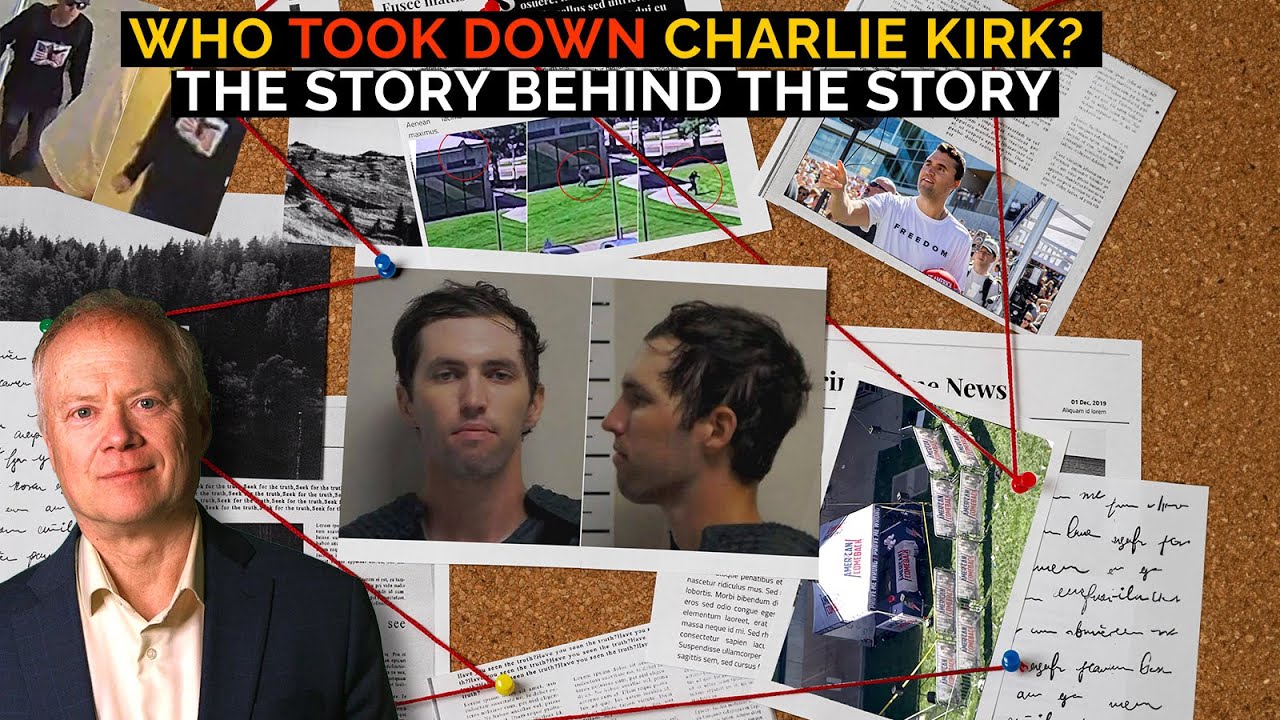
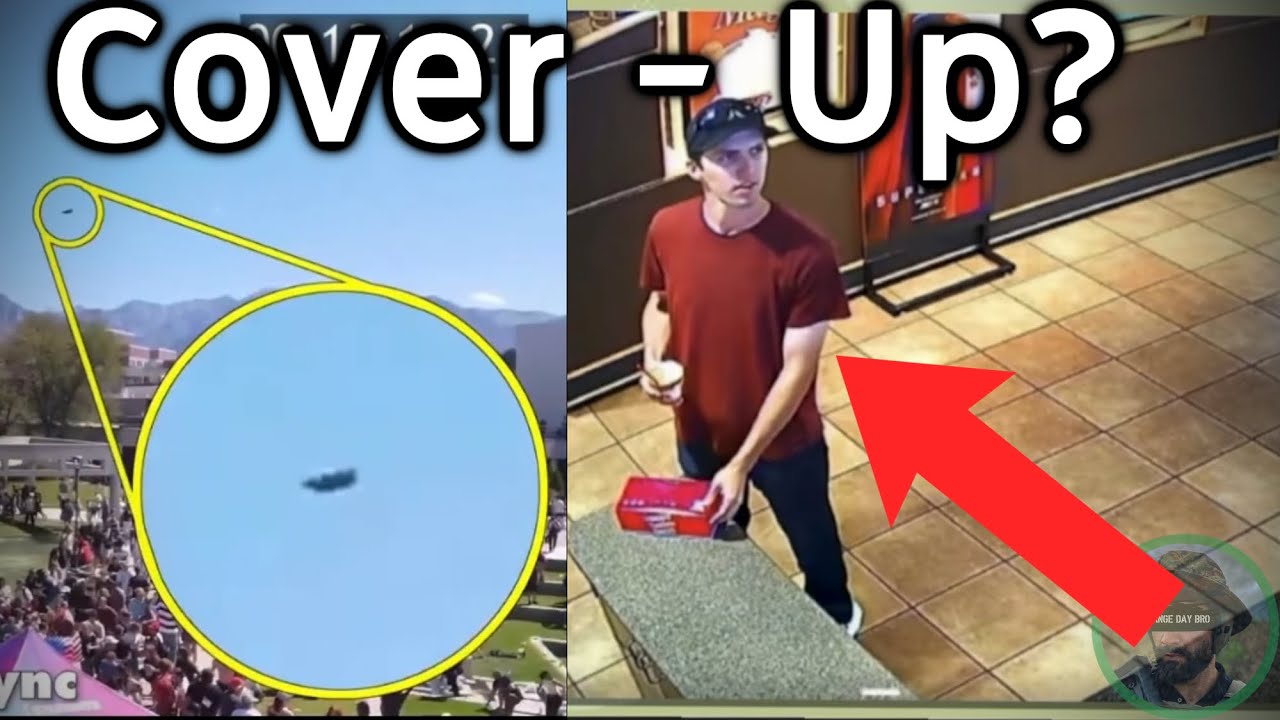
Welcome back everyone. This is Matt with Trigger and today we're going to talk about some of the outstanding Charlie Kirk theories. The most interesting one recently is Stephven Gardner basically backing the official FBI story. We're going to look into that and a few other interesting things that happened this week. So many of you know this gentleman. This is Vajala VFT. He has a great channel. Go check him out. Make sure you follow him. But this video here, he specifically covers the topic of the 306 bullet. So, let's say the FBI narrative is correct, and we'll be exploring that here shortly with some Steven Gardner clips. The biggest question most people have is the 306 because in most cases, you would think it would just have blown right through him. It would have left an exit wound or exploded his neck or his head. Now, I have had some of you contact me and say that you've hunted before with a 306 and found the bullet inside the deer or the elk or whatever you shot. So, that is a possibility, but you have to remember an elk or a deer has a significantly higher amount of mass to their body. This hit Charlie in the neck. But let's go ahead and listen to his conclusion. He goes into some pretty good detail here. So, I definitely recommend watching the whole video. He covers various different types of round, but we're just going to listen to the conclusion of combination and situation where this is what we set out to do at the start of the video. we could find. 30 O 6 was used. No exit wound was produced and an entire round was found inside Charlie Kirk's body. Um, no. I I can't make it work. I have to change what we know about the medical examiner's report. I have to not have a round be inside his body. I have to have a different gun used. Um, I've got to change things to make it work. Just what we know with the official narrative, 30 odd six, all the different combinations with the medical examiner's report, no exit wound. I personally can't make it work. >> So, I would tend to agree with this. I've never seen a 300 6 not fly through anything you shoot it at unless it's thick steel. So, it's pretty interesting that if this did happen, let's say theoretically 306 hits Charlie in the neck and doesn't go through and doesn't explode his neck or his head. That's a one in several million chance that that would happen. Now, some of you have actually contacted me, mostly through comments, and said that you've hit elk or deer or something similar with a 30 six and later found the bullet inside. There was no exit wound. So, there maybe there's something to that theory that it did stay in. Maybe it's not as rare as people think. But the only issue with that is an elk or a deer or especially bears in larger game like that, there's significantly more mass and thicker bones than a human being. All right, let's go ahead and get into the Steven Gardner stuff where he's basically backing the official FBI narrative. All right, so here we have Steven Gardner and Mario Nofl. Mario does a great job of asking really good questions and if you get a chance, check him out and subscribe. And of course, Steven Gardner, subscribe to him as well. He has a very large channel. So, what he did is he went on the ground to UVU. I think he went twice officially and he's also consulted many experts that he's interviewed and talked to outside of UVU and outside the government. and he's basically come to the conclusion, it seems like that the FBI narrative is plausible. >> So, as I got there, I I had only been there for maybe 10 minutes, and I figured out how to get onto the roof where the shot came from in about 10 seconds. So, now remember, one of the original narratives that people were saying against the FBI story was that how would he get on the roof? There has to be a fence or some kind of security or a door with a lock or something similar according to Steven Gardner. And I also believe that Paramount Tactical went out there as well. You can just walk right onto the roof. There's nothing stopping you. And then on this part, he's actually talking about the hand scrapes and apparently the scrape of the gun. So based on the size of the scrapes, he's saying that the FBI narrative could be correct. in the dust coming off the roof where he jumps off. Uh there was also a measurement tape there. Uh and you can see what looks like something about 36 to 40 in long that scrapes that dust uh on the edge of the building. So until I actually went there, I was relying a lot on articles. So, if you hear what he just said, he's saying something 36 to 40 in scraped the dust and then there were very prominent finger scrapes or finger swipes or whatever you want to call it, which we'll see in another video here in a second. Now, that scrape could have been anything. That could have been his backpack sliding horizontal across. That could have been his body. But here, Steven Gardner is saying that it was probably or possibly the gun. >> Oh my gosh. Yes. They're trying to measure if it's the length of a gun because some people have said there's no way he has a gun. You can't jump off of a building with a gun. And others have gone frame by frame and even though it's blurry and pixelated, you can see something very stiff inside of what looks like a dark gray or a black towel. So, I personally >> So, I have not personally gone in and looked that close at that specific video, but the length of this gun, there would be no doubt. Either he has a gun with him or he doesn't. You'd have a gun length towel if it was wrapped in a towel. So, does he have something 3 and 1 half to 4 feet with him or not? Clearly, that's not going to fit in his backpack. believe they were trying to measure did this guy have a gun from his handprint to where that final scrape was and it does look to be the length of a of a rifle. >> Okay. So, Steven Gardner saying that based on the FBI research and the fact that they had some kind of measurement tape or something up there on the building where this scrape was that it was a guniz scrape. >> So, uh I think that they have moved from crime scene to conviction. The other thing that was really interesting that a lot of YouTubers and and creators are missing is it it's really easy to think that Tik Tok has all truth, right? Like, okay, he shot somebody at So now just notice here he's saying creators and then he says Tik Tok has all truth. So he's assuming I'm assuming here that he's lumping all creators into dumb asses on Tik Tok. So let's keep listening. Point USA is taking an SD card. There's a gentleman that sneaks in the crime scene and steals a Charlie Kirk hat and then next thing you know they're ripping out the grass and everything goes away, right? But if you go to local news channels in Utah, KJZ, KUTV, KSL, others, and you just search Charlie Kirk crime scene, there's hundreds of photos. This place was crawling with police, crawling with investigators, people in military fatigue, SWAT team. They're clearing out the the the area. So, uh and and right before I was uh asked to leave the campus by the police on Wednesday, we asked the guy, "Hey, uh are are you you know, how many days were they here investigating? Three or four?" He and he shakes his head and he goes, "I'm not allowed to say." Right? So, his body language is confirming yes, they were here for days. We asked him, you know, were they using lasers, measurements, sound device, and he's like, I'm not allowed to say, but he's shaking his head. Yes. You know, so, and I I didn't film the interaction. So, according to him, they did a very thorough investigation, including audio analysis, laser measurements. Obviously, they're going to be dusting for prints and gunpowder residue and those type of things and trying to match the fingerprints of the alleged killer to the gun and those type of things. So, he's saying all of that was thoroughly done and they have the information that they need. >> Uh, like how does someone get shot in the neck with a 300 6 uh supersonic high power rifle and it doesn't blast through the back of them? But >> now that's the question everyone had and will still have even if the FBI says this is 100% the one and they show evidence of him shooting from the roof recorded on video, there will still be a question of if it was a 30 6. But at the same time, my own eyes were like, "Okay, I've sadly watched Charlie Kirk die probably 50 times. There's no mist. There's no blood splatter. There's no hole through the banner behind him." And then Candace Owens comes out and says, "I was able to watch the video. There's no blood. There's no bullet hole." And I go, "Okay, that confirms what I believed that he wasn't shot from behind." Then that week, every vid, >> by the way, none of what he says confirms that he wasn't shot from behind. Well, let's keep going. >> Video going viral is him being shot from behind. I was able to debunk most of those pretty quickly based on location, based on that data I shared and talking with Turning Point USA. Um, then I started just looking at different aspects of the crime. I was able to debunk most of those pretty quickly based on location, based on that data I shared and talking with Turning Point USA. Um then I started just looking at different aspects of the crime. >> Now this part is really interesting. So now remember he went on the ground there. So he's basically going to tell us that there's only one location you can shoot from to hit Charlie. >> Okay. Uh are there any other areas where you could have shot Charlie Kirk from? Pretty much determined it was just that location. Uh, >> so with all the roof space angles beside him and in front of him, multiple buildings and multiple spots you could sit, he's saying there's only that one building, that one spot that you could shoot from. What kind of what kind of gun could it be? Is it the guy, you know, tugging at his shirt and it's a palm gun? No, it's too loud. It's too much force from the front. Uh, is >> a lot of you are commenting on that, but let's talk about the palm gun really quick. He just says that's too much power from the front. So you're telling me that a pistol caliber round from a short barrel palm pistol is going to have more force than a 306 at 140 yards. Is there a a a wound from behind? Is this an exit wound or an entrance wound? Uh and and then I started reaching out to those experts. Um, so I I just started eliminating the stuff that sounded cool but didn't really make a lot of sense. >> Yeah. >> Yeah. >> So all the theories sound cool but they don't make any sense. So again, he's going along with the FBI narrative. So so far he hasn't questioned any of it. >> So the the first thing that I did I've got to remember it all cuz I've looked at so much footage. the the first thing that I looked at uh was when I was watching those videos from other creators was that the he he does not put an earpiece on. And so I was like, "Okay, that eliminates the earpiece." And then it was like, "Oh, he was shot right behind the ear, but I have video footage from people here in Utah and there is no bullet hole in the back of his head." H. >> Now, just to be clear, just because he gets shot in the back of the head doesn't mean there's going to be a wide gaping obvious hole, especially if it went into his hair. So, let's keep going. The other thing is when you zoom in and you've got these uh snipers and gun range experts, and I'm sure they're great at what they do, but when you see that thing come out, >> so he basically just discounted everyone he just said that they're great at what they do in his mind. if you zoom in, there's zero red pixelation in the photo. So I'm like, that can't be blood. Um, and so then I started looking from different angles and I realized, oh, wait a minute. the necklace that Charlie is wearing with a crucifix that blasts off. And then I was able to find a video where I slowed it down and then I screen grabbed it and then I slowed it down again and you can actually see the chain and it comes around the back of So now we've shown all of that on this channel. We had a couple different videos. There was a theory from Kelly Cougall that the crucifix either goes into or slices the veins or arteries in the neck, but it pretty clearly shows in those videos that it was his chain flying around his body of his neck. Some people are saying that's blood. Some are saying that's an earpiece. Some are saying that's the bullet dummy. It it's his necklace. So, I threw that out. I didn't do a video. I didn't even do a debunking video. I just kept with the truth. I should have. Yeah, I think so as well. Um, and there's people talking about an exploding mic. That's why the shirt kind of flew off and why the the necklace flew off. Um, now I've interviewed Chris Martinson. I've had Matt Tario on as well. We've, you know, talked about these different theories. The exploding mic doesn't make sense. You know, the mic is too small. There is no residue. Um, the sound does not align with an exploding mic. >> So, first question is, how does he know there's no residue? Um, secondly, I don't necessarily agree with the exploding mic theory because the shirt also would have had burn marks and tears and things like that if the explosive was that strong. And if it was a lighter, easier explosive, how would it go from this side where it exploded and come out the other side over here or go into that side over there? It doesn't make any sense. Even if it went across and got in this side, it would have blown out the side of the back. So, you would have seen two holes, entry and exit. So, moving on. Um, so that was one of the theories that was floating around as well. I'm not sure if you've looked into it. Um, there's no burns. The the clothing does not even tear. And the the shirt, you know, a lot of people talk about the shirt that kind of kind of puffs up. Why does that happen? Essentially, it's a cavitation. You know, you've got a high powered rifle causes cavitation. Chris Martinson talked about that causes cavitation. That's pretty common for the shirt to do this. Um, any other points on these two? >> So, it's pretty common. I would love to see other videos where someone's shirt puffs out from cavitation when they get shot. >> The cavitation makes a lot of sense. When I talked to Andrew Kvette at Turning Point, I'm one of the only people that I think he's done an interview with outside of the Charlie Kirk show. He told me uh about all of the damage to the neck and where they found the bullet. The fact that there were >> All right. So, here's a question I have for Steven Gardner and anyone else saying that the C2 through the C7 were basically destroyed. So, if he gets shot, he shot below all of them, right? Because the bullet has to come down from the building. Steven even said himself that you're basically shooting down into a pit, right? So, the building's two or three stories up and you're shooting down way down into this little cove. So, if that's the case, that means that bullet is coming down. So, if it's coming down and it goes in here, it's still going down. It's going to hit and go in below the C7. So, how did it destroy from C2 down to C7 when the supposed entry wound is below C7 at a downward angle? Now, cavitation, sure. Does cavitation instantly destroy in the way that they're saying it was supposedly destroyed all of those vertebrae? I don't know. there were fragments and about the cavitation, you know, destroying his heart and all of his neck and all. All all of that makes a lot of sense to me. I think Chris Martinson did um some really good uh uh investigation on that. The one thing, and I've told him this myself, he believes that the the shooter was further to the left on the cafeteria building and that he shot between two trees. Now, with Chris Martinson's theory, that would go against what Steven said earlier. Steven said that from what he saw being there on the ground twice, there was only that one spot on that one building that would have been a good shot. But that the roof there is pure white. You it's on an angle. You would literally he would have had to hang over the roof. I I think the shooter would have been seen. And also the audio analysis shows the gun further back. So um for me uh the cavitation makes sense. the exploding mic and the different shooting location do not. >> Yeah, you mentioned about >> All right, so let's talk about the audio. There are a few YouTube channels and a few experts that have taken supposedly cell phone footage and taken the audio out of various different ones in different locations and they've basically pinpointed it exactly on the location where the alleged shooter was. Now, how accurate that stuff is going to be, I don't know. And if you know anything about this location, there would have been a ton of echoes. it would have been bouncing off hundreds or thousands of different surfaces. How accurate is that going to be? >> The posts as well before the shooting, there were posts on Twitter. Um, and those were interesting for me. I'm not sure if you've seen them. Um, people predicting the assassination, the FBI is investigating them. >> Now, if you don't know anything about that, they're talking about some posts. It wasn't just Twitter. It was various places. There was actually a forum or something that was also taken down by the people that owned it. um that had several messages with the date and Charlie Kirk being murdered or assassinated said they were looking forward to it. Said it was going to be a great day. So clearly this is not just one person acting alone. How did all those people know about it ahead of time? The FBI is investigating them. There's one here says on September 11th they said it'd be funny if someone like Charlie Kirk got shot on September 10th. Laugh my ass off. Um that was September 3rd. Sorry. You've got another one here. September on 6th of August says September 10th will be a very interesting day. Um and one of them was followed by the partner of the shooter. So do you think those are coincidences? Have you looked into them at all? They are being investigated by the FBI. So we may hear more about them. >> Yeah, I I think there could be um some intelligence or coordination behind the scenes in in my video I put out that you watched. I I said twice on that video, um, you know, I could see him pulling this off and executing the plan, but as far as planning this, it seems like this was very thought through. Where to come in, how to hide the gun, how to get on the roof, how much time you had, how to jump off the roof, hiding in the trees, all of that seems very planned out. Uh, someone would have had to have known the UVU campus. they would have had to walk it. They You couldn't plan. >> Now, another thing that's interesting is I just heard that no one, not even Charlie Kirk, necessarily knew that he was going to be at UVU until the very short time period before that. It sounds like a lot of these posts and everything were coming out before they even knew about that. That that also doesn't make sense to me. If you know or if you know the timeline, can you put that down below, please? that they're real, but I think they also could have been pre-planned in order to make Lance Twig look innocent. Oh, I had no idea that my lover was going to go kill this guy, you know, like I'm just as shocked as the rest of the world, right? So, I believe they're real. And the forensic expert I talked to, he said, "Stephen, most people don't realize this, but Tyler Robinson's cell phone is going to be the second most important piece of evidence next to the gun itself." And I was like, "Really?" And he said, "They're going to be able to track whether he went on the week before. They're going to track every movement second by second of him coming on." >> And this is very true. They're going to know when he went to the bathroom, which stall he pooped in, and everything. So, if they have that evidence, we're not going to see it before court. They're going to show it in court and use that to convict him. >> I'm trying to think if there's Oh. Oh. Uh, another one uh that um Candace put out there. She said, "We now know with 100% certainty that he was not shot and killed with a 30 six because it's not on the death certificate." Well, I reach out to the number one forensic expert, the guy that used to run the medical examiner office for Atlanta, Georgia. I ask him. He said, "Stephen, there's never been a death certificate where they put the type of bullet that killed somebody." They might say gunshot wound, uh, bled to death from gunshot wound, hemorrhaged from gunshot wound, shot in the head from gunshot wound, but they will never say that it was uh a 9 mm bullet or that it was a 20, you know, a a a rifle or or something like that. So >> So if that's the case, then where' the 306 idea come from? So, um, one one thing that that forensic expert told me is he said, "Stephen, the the dust on the rocks, because that roof is covered in in like pebbles, rocks, right?" He said that's going to have a unique uh signature. So, it's going to be on his clothes. It's going to be on the gun. Um, it's going to be on his shoes. So, he said his shoes are a major part of this investigation. >> So, that's all very true. If that's a unique signature up there, then they should be able to put all those traces all over him, his shoes, his clothes, his car, anywhere he went. Unless he changed clothes, but even then it's still going to be on his shoes and it maybe on his hands and his hair. Who knows? But that stuff is going to be fairly easily traceable. So, there is a chance that they have a ton of very incriminating evidence, including video footage from the roof, the residue from the roof, the 30 6. Maybe they actually have the bullet and everything and they saw where it impacted with through the X-rays and everything else he's talking about and they can say that it was a one in 10 million chance that it stayed inside of his body. I mean, what do you think about this? Put it down in the comments. Do you think that there's any legitimacy to any of this or do you think this is just more uh charades to trying to push the FBI narrative? Because we know Cash Patel just recently called all of us YouTubers and anyone on social media, he called us anarchists. So, do you think this is just a push by these type of people to discredit any other theories or anyone else talking about it? You know, there's a huge gag order out for thousands of people from that judge. So, is this just another step trying to kind of reinforce the narrative? And now here we have Steven Gardner doing the rounds on various different channels I've never heard of. Um, you know, pushing his his uh detective work. Let's see. >> Well, you have done some fantastic investigative work on the story of what happened to my good friend, your friend Charlie Kirk. You actually went to Utah Valley University campus and you >> Charlie has a lot of good friends all over the place. did a lot of gum shoe on the ground reporting there in Utah of what happened to Charlie. You took a lot of the u you know a lot of the different theories and alternate theories out there and you really put them to the test and I think you did a fantastic video that I want everyone to go watch. And before we get into it, I've got a clip of it that I want to play for everyone right now. >> I'm here uh at the spot where Tyler Robinson jumps off the roof. I'm here with Gray Hughes. Investigate. >> Now, this is where he actually shows the handprints and the finger sliding. Let's check this out. And actually, if you can see it, I haven't seen it yet, but the mark is supposed to be the gun like 36 to 40 in. >> And uh he's got this camera >> that is on a big uh telescope rod. >> Yeah. It's extension. >> And uh when you put it up there, what did you see? Well, when you put it up right where he came down, there's actually four fingerprints that drag off and then another spot where maybe there's a towel or something like what you know. I don't know what else was there. Maybe his foot was still up there and then another mark as well. So, there's three marks in a really >> All right. So, there it looks like we're seeing four fingers. A random mark here. I don't know what they're talking about with this towel thing. I didn't see anywhere that looks like a towel. >> Thick dust. And it's still there. still there. >> Okay. >> I don't know a reason why they would actually get rid of it. >> Yeah. >> And you're not going to wipe it away, right? >> Yeah. >> It's >> See, now that looks like possibly his other hand, right? Two hands going down. So, where's this 36 to 40 inch mark? That looks like a gun wrapped in a towel. Where's that >> That is strange. Yeah. And then I've got uh Gary right here from Paramount Tactical. He's just showing his audience. And a lot of you know that Gary was out there from Paramount Tactical as well. And then here they're just kind of debunking where the person disappears. People saying it's like doctorred footage. There's it's it basically goes down. So once the person walked behind that tree, then they went down a path and that's why they disappear. That's what they talk about here. I I've been very skeptical with everything that's happened with the FBI. So, I'm I'm just trying to use my own brain, my own journalism skills to go and look for cameras, look for evidence clues to try to back up the the narrative that we're being told, but also to make sure that I can hold them accountable with truth. What it looks like is everyone's seen the famous FBI footage where uh Tyler Robinson is running across the Losi building towards the north and then he gets down on his legs and he's kind of holding on to the roof and then he jumps off and then he heads off into the wooded area. Well, while I was there, uh, looking at how to get on the roof, uh, the the time it would take, what cameras would have captured stuff, uh, I was speaking with another investigative journalist. And what you see is when he gets down, uh, and he's getting ready to jump off. And now, this is the part that I want you to see. I will probably zoom in on this during this video, but watch this area. So you'll see it looks like there's a towel or something hanging down. And as I go frame by frame, you will see what looks like possibly a gun right there. Looks like a gun or something inside of a towel. Do you see that? And it's See, and you can see it even better there. And it's keeping its long form. So I know originally they were saying that no one could see a gun. There's no way a gun could fit inside of his backpack and all these different things. Looking at this, according to what I'm seeing here, it looks like there's something that's definitely long and keeping its rigid form. >> He gets down uh and he's getting ready to jump off the building. Uh there's you can see scrap. >> You can see it again. [clears throat] So, if we go back now, you can see it again here. It's sticking up there. And watch as I go frame by frame. You'll see it right there and you see when it falls right there. And now here in this part he talks about the audio analysis from different phones. >> Uh sound and noise analysis. I can't remember his last name. I believe his first name is Matt. But u basic >> so he's quoting a guy who he doesn't know personally. He doesn't know their last name but he knows her name is Matt. That's who he's quoting for the sound analysis. That's 100% definitive to him. >> What he did is he took uh different people's cell phones and the noise and he was able to create a map and then the the the map when you start running it through AI and different software, it'll start it'll start using um ma mathematical formulas to pinpoint where the noise came from. And there's there there were three big rings that went out and wouldn't you know it all three the only time that they cross over is right on the Losi building where we know somebody was laying in a prone position with a rifle and took a shot. Now, >> so now according to this analysis from this person, Matt, which I assume is a YouTube channel who does audio analysis or something similar, says that based on I don't know what footage, I don't know whose phones, he said iPhone footage, I don't know, maybe he just took random people's stuff that submitted to him or something. And based on that, there's three rings that go out and they just happen to land exactly where Tyler Robinson was supposedly shooting. Now, uh, from everything that I have seen, it looks like it's it looks like, uh, it's the story that the FBI is telling us. So, the sound is M. >> So, Steven Gardner, and again, I'm not knocking Steven Gardner because he has a lot of resources. He has money, he has experts that he's talked to. He's been on the ground there more than once. So, he probably has some great info. So he just said based on everything that he has seen personally and the experts he's talked to that the FBI story is plausible. So obviously the next step would be to try to convict Tyler Robinson in court. Matching up the direction of the bullet. Sadly Charlie Kirk takes a tremendous amount of energy from the front. um that bullet uh you know destroys his neck, gets lodged uh in his uh T1 thoracic vertebrae, but you you start lining that up. Now, a couple of big things that were pointed out to me and I started to pick up on this and it was nice to have a forensic expert confirm this, but he said to me, "Next to the gun and the bullet, the most important piece of evidence against Tyler Robinson will be his cell phone data." Cell phones are able to track you [music] to within a couple of inches of where you are. >> Now, we've talked about all this before. Um, this was in the other video. He talks about the cell phone tracking him. >> Take the shot, jump off the Losi building, run into the woods, and then I started seeing all of these conspiracy videos that uh they were able to find him on a little caf's uh security system. You can. >> Now, I just want to point something out here. The term conspiracy or conspiracy theory that was created and used by the government to discount anything that opposed the mainstream narrative. So, when he comes and he calls these conspiracy theories, that always raises some red flags. But I get it. You know, anything that's might seem like it's out there a little crazy. Like a lot of people think the pendant theory and being shot from behind are crazy conspiracy theories. They're just ideas, right? It's just analysis. It's alternative ideas to the mainstream narrative. So, let's keep listening. >> Can barely see his car, but you can see it. And you had all these conspiracy people saying, "How does a guy kill Charlie Kirk and 20 minutes later he's uh in his car in a parking lot? That's not consistent with what a murderer would do." Well, you don't know how a murderer thinks, right? He might be sitting in that car amped up on adrenaline, but how did how did the cafe owner know that he was caught on his security camera? Cuz unless somebody breaks in, you don't just go review, you know, 24 hours worth of video footage. It's cuz the FBI tracked him to that location. The next morning, 7:15 a.m. Cedar City Maverick gas station. How do they know it's him? He swipes a credit card and they follow his phone. They know when he goes home. They know if he goes to visit Lance. When he goes over to his parents, they've got >> Okay. So, say if that's the case, then why did he turn himself in? If the FBI knew exactly where he was at, they had all this information. They're tracking him real time. And he's saying the footage and things came from those locations because the FBI knew about it. Then why did his neighbor convince him to turn himself in? And he turned himself in. the FBI didn't go pick him up. Just seems kind of strange. Like if if that is the case, it's just a very strange situation. >> That really threw me. Um the other thing when you start looking at the uh the sound analysis, uh he's shooting down into a bowl. That's why you're picking up echoes. So some some people that aren't as sophisticated uh in their forensic, they say, "Oh, there there was probably two shots." Well, no. Uh it it's coming down. So, less sophisticated people than the person he's using named Matt, who he doesn't know his last name or know him personally. But also, this is interesting because he's saying he's acknowledging that there are strange echoes and reverb and reflections that are happening. And that's why people thought there was more than one shot. That could also make it so that the audio analysis that this Matt person did would also not be accurate. So, as you can see here, this is the rings that they're talking about. These are the different audio rings that converge around that position that Tyler was supposedly shooting from. I recommend watching this video. There's a lot more here than what I showed. And I think that overall, could this be convincing that the official narrative is there? Possibly. There's still the 306 issue. So, based on everything you've seen from these videos from Steven Gardner and him being on the ground and him working with these experts, do you still buy the official narrative that Tyler Robinson shot from that roof on that one spot, jumped down, threw his gun into a forest, and then eventually just turned himself in? Very interesting. But I definitely want to hear in the comments what do you think? Is it plausible? And also of all the other theories, if the official narrative one is not correct, which one do you actually believe? Because I hear in the comments, I've seen probably dozens or if not over 100 different theories. Time will tell what's true. I've gotten to the point now where some of each theory seems like it could possibly be plausible, and there's other pieces where you're like, there's no way that that is possible. So, the piece of the FBI narrative that seems like it's not possible or very, very, very rare is a 306 not blowing up his neck and his head. But, like I said, there have been some people, some of you who have told me that you've hunted and you've shot a deer or an elk or something similar and you found a 30 out 6 bullet inside of it. So, we'll see. As always, like, subscribe, and share this around and I'll see you on the next one.