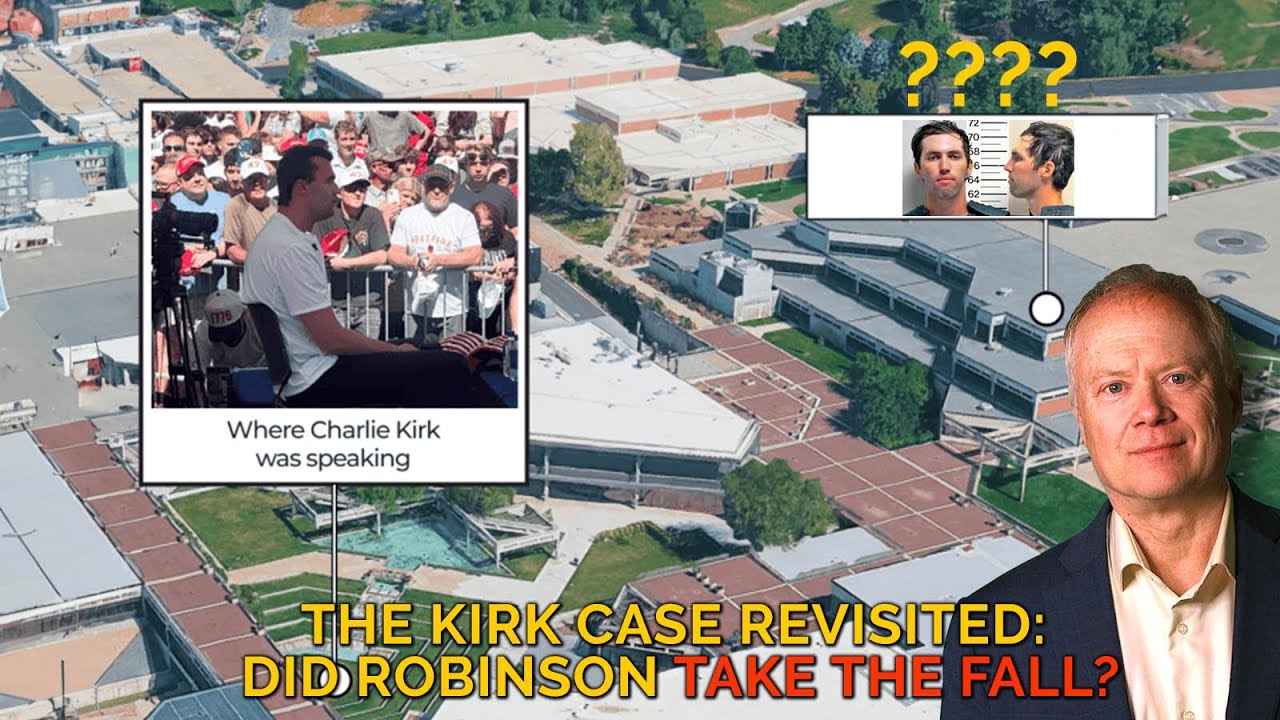
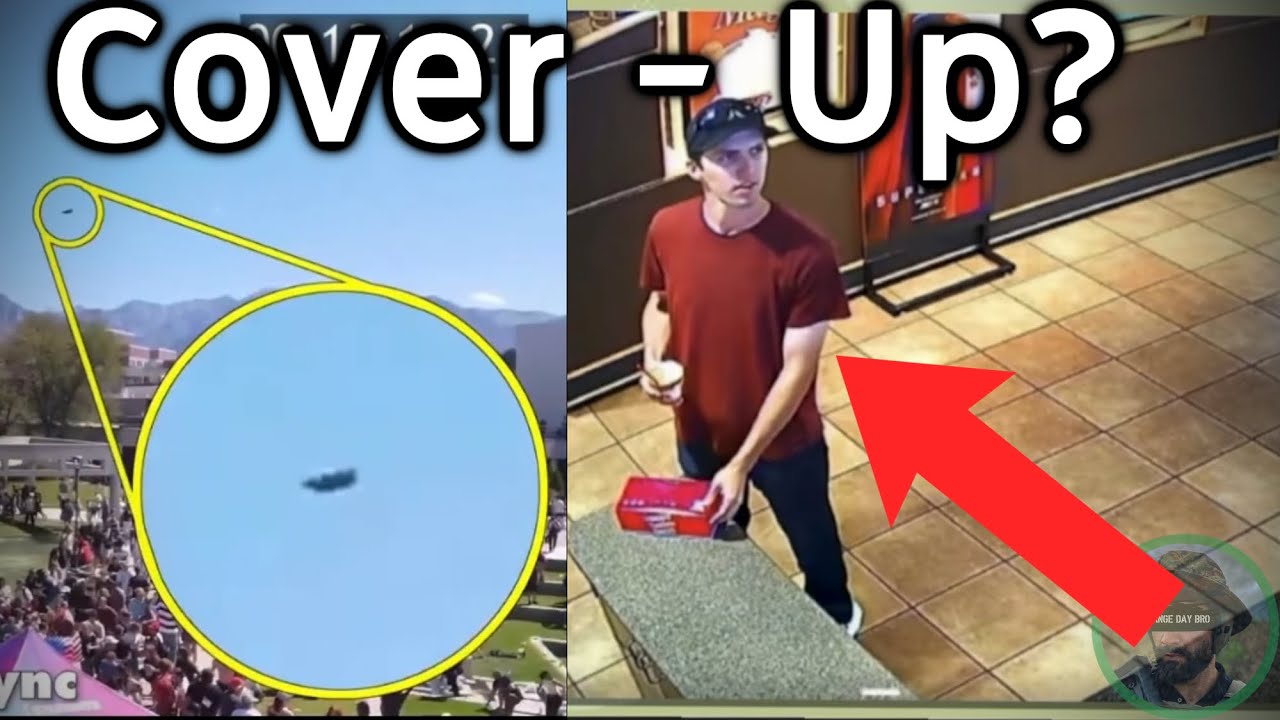
The official story so far, the narrative around Charlie Kirk's murder and the [music] alleged suspect Tyler Robinson is not holding water is beginning to fall apart and we're going to have to look into that as well as [music] we're going to clear up a few mysteries here today that have been obviously bothering a lot of people. We'll get right to it. >> In America over the last years [music] [music] Hello everyone, Dr. Chris Martinson of Peak Prosperity here. Thank you so much for tuning in. As you know, we like to get to the bottom of things, get to the truth. We use data as much as we possibly can. We are still missing a lot of valuable data. We are going to call again on TPUSA to release the footage and the microphone recordings that were there obviously ringed around Charlie because that's going to be some of the most valuable footage that we could possibly see. We need the autopsy report still and we would love to see the cartridges that were allegedly used in the 30 six that the FBI found in Bushes. Without that hard data, we're going to have to get just a little bit softer here today and look at some things. But I think we've got some actually really interesting findings here again for you. So, let's start right here. This is what we're going to do today. Recap the last episode very quickly. Clear up a few of these mysteries. Track Robinson's alleged movements. And we're going to have to track this person we're calling roof guy. First the scene just so that everybody's on board. Remember Charlie was sitting right under the peak of that tent in this courtyard area at UVU. And this was the shooter's alleged perch. You can if you squint a little you can see some evidence tags and things right there. That is at the corner of what's called the Losi building. L O S E. And this would have been the actual shooting perch. Now you can see the indents here that were tagged by the evidence teams and this would have been the shot about 140 yards about a 10°ree downs slope and that's the story we're supposed to believe. Now we have a few problems and note here that these are some fairly light indents. That's just roof gravel up there. Imagine if somebody gets up and starts moving quickly. Like if you had to like get out of your uh you're lying down on the beach and you just want to get up and start trucking. You're probably going to leave some pretty big indents as you do that. These look like pretty light indents, but we wouldn't know more unless we got up there and actually felt the firmness of that material. I'm just saying those are so those are kind of subtle uh imprints right there. And that comes into play in just a minute in this particular episode. So, we have problems with the shooting angle. This is what we covered in last episode. In particular, this 10° downs slope 10° offaxis. meaning if you were shooting straight, this person was shooting just a little off to the side. Um, if this is the uh actual shooting spot, we have our doubts that it really is, and we'll tell you why in just a second. So, it was 10° down and just about 10° off axis there. Okay, given that, you can easily see Charlie is sitting here very, very orthogonal to the overall venue that he was at. So, it's pretty easy to track stuff. This is right about where that throat wound appeared. If that was a 300 6 entering that throat wound, it would have passed mostly entirely through fleshy stuff. It could possibly have nicked the scapula on the way out back here. Depending if it was far enough over to the side, but it wasn't. It entered right here in a little 10°ree down angle. And as we can see here, that's missing every bone that we can roughly calculate here. And as well we can see the this would have entered the other side of his neck as we're on Charlie's right side here. We can also see that this is passing mainly just through neck. And when it does it does it's going to be really missing everything. No bones are going to get involved. And it entered right about here which we estimate with the down angle coming somewhere between the C7 vertebrae and the T1 vertebrae there. uh seventh cervical and the first thoracic vertebrae if that's the direction it actually took. Now from above with that 10° offaxis angle there we can see that the placement this would have been Charlie's head the big red thing. The blue thing is kind of an approximation of his throat area because your throat is not as big as your head. And if we put that hole in his throat just about about halfway across the whole thing which is about where it was with a 10 degree off axis it would have come out here. It would not have hit the spine. And it just would not have done that. I mean, never say never, but the chance of a bullet has several characteristics to it. When it's it's first fired, it has an initial velocity. Over time, it just begins to lose velocity. So, it's going to have an initial velocity out of the gun, and then it's going to have an actual initial velocity when it first struck Charlie's neck at 140 yards out. If it was a 300 6, that thing is going to have somewhere between 2,200 and 3,000 foot pounds of energy. Again, meaning that if you drop 2,200B block, a foot, the amount of force that has, that's how much force it's going to have. Things that are traveling in a direction have inertia and they have an amount of force and they're going to keep going in that exact direction unless they're acted upon by a force large enough to stop or deflect that motion. For that bullet to have entered here and to have deflected down sharply into his body is an impossibility. Never say impossible, but it's pretty close to an impossibility because it's going to take time for that to deflect. I know a lot of you told me, "Hey Chris, bullets do weird things and soft tissues." Sort of true, but that's over the entire lifetime of that bullet. Once it goes in, say a bullet enters somebody's shoulder, comes into their body, can do all kinds of goofy stuff once it gets in there. Martin Luther King shot in the neck, didn't come out the back of his neck. Not true. He was shot in the jaw. Your jawbone is actually a really hard, for obvious reasons, use it all the time. Your jawbone is very hard. He was struck in the jaw and the bullet fragmented into his body. um it was not he was not struck in the throat. He was struck right about here on his jaw. It glanced and exploded down into his body. So that's what we have to work with. And so we had trouble with the physics. Here's a a cross-section of a human neck at about the C7 vertebral vertebral area there. And you can see here if this is the entrance wound at a 10°ree angle, it's missing everything. This is bone of course, but those are the little wings on your vertebrae. They're called tubacles and and they're very soft bones. So, they would not in any meaningful way um do anything to alter this bullet's trajectory. That's how we see it. Now, all right, we have a mystery that I have not yet accounted for. The fact that he's in a pugilist pose, a couple doctors got a hold of me right away on the last episode to remind me and inform me that unless there's a very specific brain injury, you won't see this this so-called decorticate posturing. It is a mystery. I'm still working with these doctors behind the scenes. We're trying to figure out how a shot here could have resulted in a wound to the midbrain without also just turning him into jellyfish because because all the all the rest of the nerves in between the neck and the brain got disrupted. If your spinal column gets transected, if it if it gets smashed, if there's this huge over pressure and things are pushing up into the head area enough to cause this sort of an injury, you might also expect that well the nerves get cut, the wiring gets cut, in which case you don't see this anymore. You just see this, right? It just you become floppy. All right, mystery not yet solved. So if anybody has more ideas about that, please get a hold of me and we'll resolve those. We did come to the conclusion in the last episode that a bullet was fired and it did stop in Charlie's body. We resolved that because we have this frame off of one of the video recordings that clearly shows this is the exact same uh shape down here. Just copy paste it in exactly the same location and you can clearly see this huge over pressure event where his whole body is swelled up. And of course that's a cavitation event which we saw after shooting bullets into um gel media things like that. So these are just those two frames not shot. First frame of being shot. Not shot. First frame of being shot. Look at that big puffing. Now we're going to get into this cuz some people said this is evidence of an explosion. They interpreted all that puffing of the of the um of the t-shirt as evidence of an explosion. And I could see that because you could say, "Oh, it looks like that that's like air expanding very rapidly." And so my explanation for that is that you can see his uh whole chest expand. That cavitation is a very very rapid event. Okay? It happens really quickly, thousandth of a second. So what we probably caught here in this one frame to the next frame where you see that over pressure event, you can see little gap under his uh t-shirt there. You see that? See there's a little gap under there. Best guess is the chest expanded, but it's liquid, so it expands and collapses very, very rapidly. And the shirt though carries on in that same direction for a little while. It gets thrown. The same thing. We also see his chain come up around his neck, but also the seems the cross of the pendant pushes really high up into his t-shirt at one point in time just a couple frames later. So there's a lot of momentum. Everything that sort of got expanded in that cavitation event is now in motion. That's his mic. That's his chain. That's his shirt. Anything that could move is just moving along uh because of that. All right. So, carrying on, we saw this temporary cavitation event, right? And it just looks like this. Boom. You see that big explosion right there? That's over very, very rapidly. And I didn't want to go live with this, but now that we have that other frame, this was what first made me think that we were looking at a cavitation event. Unfortunately, this is from a side camera, might as well have been a potato cam. But here, we can watch this. This is slowed down. So, this is uh slowed down so we can maybe track along. This is just a few frames from right before he gets struck by a bullet, then being initially struck. And here's what we can see. Well, just take a look first. Share this together. Okay, this bullet strikes right about there. Boom. Chain flies off. Everything goes up and around and he peels off to the left. Okay. So, what we also saw might have noted here, there's not a significant amount of rear rearward movement of his head and torso upon being struck like this. Boom. He's not thrown back violently. There is a little, but it's mostly more of a down and up like this. So, how do we interpret that? Well, let's take a look here. This is the frame right before he struck. And here's the one right after he struck. The very first thing we can see is a little outpouching of his shirt right here. So, how do we interpret that? I'm going to think that when he was struck, one of the first places to begin that cavitation expansion must have been the skin under the left side of his neck here under that orange arrow. I put a couple of frame boxes of reference. So, this is uh obviously the strike has happened. You can see zero change of his his head is not moved backwards. Also down here we can see like a very uh uh obvious pattern of a red shirt right here and a little white thing. What? Probably another shirt, little black triangle, a little grreyness right there. None of that's changed here either. So this very very first frame caught it very early on in the strike. Nothing has shifted anywhere else in this story. >> [clears throat] >> But when we go past here, here's that first out pouching. This is the next frame after that, the third frame into this. So this is we'll call that frame zero. Frame one, frame two. By two frames in, we already see this thing flying up off and around. That's been interpreted as his chain. I think Candace Owens had confirmed that it fits with everything I know. It's got the right color. It's very light. Some people have called it an earpiece, but I can't see any earpiece earlier in this. There's no actual obvious earpiece. No obvious. There should be a cord somewhere that comes down. It maybe comes down around the back of his neck, but certainly from here, there has to be a cord. If there was going to be a cord coming down, there's no cord here. No cord here. But we do see this thing suddenly flying up. Makes sense. Chains are heavy. If you have this expansion, it's going to throw things. And one of the things it might have done is thrown that chain up and around. And you can see it here in the next frame. But notice what else we're seeing here visually. See how thin his neck is here compared to look how thick we are here. This is all outpouched back here. Very much a much broader, thicker neck here. Now, we can see it's really fat here. But I can't be clear. And this is why I didn't go live with this one. I can't be clear if that's his chin coming down. Maybe that's his chin. This is such a potato cam. I'm not totally sure. But it's not inconsistent with that cavitation event like that. Um, I just can't be totally positive. This would be the frame that would convince me that maybe that's what we were looking at. Maybe this one too because of how fat his overall neck is. And uh you can see here his t-shirt is has a little bit of a little slack to it. And here it's like all pulled up. It's like has just it's like you know pulled up tight. So I think this explains the physics that we're seeing. Some high energy round of some form came into his neck, expended its energy in his body cavity and upper neck and that all expanded like that. All right. So again, if you just want to watch that one last time like that, you can see the expansion and the chain fly off and all of that. So I think that's what we're seeing. Um, that's best guess we have at this point in time. Pretty high confidence in in that explanation. Notice when I say high confidence, I'm not saying 100% confidence. I never have 100% confidence in anything except for steel frame buildings do not fall at freefall speed without something removing all of the structural mass below them because I'm a big believer in physics and things like the law of conservation of momentum things like that. Okay. Was he wearing body armor? We talked about it last time. Let's just make sure we're clear about this. We can see the cross necklace. I believe this explains the thing that's seen pushing up in a couple of later frames. About five frames after he's shot. There's this thing that shoots up. That would be consistent with the chain being pulled on violently because it's being expanded and it throws and pulls, does all of that. But we can clearly see across his back, there's no seams, there's no straps, there's nothing. Body armor doesn't just sort of glue to your chest. It even if you're wearing a what's called a compression shirt, it fits in a sleeve. That shirt itself has seams. It has things. This is a very light t-shirt. We can clearly see that he was not wearing body armor. Now, another thing that I had a lot of people come to my site also on Twitter X saying, "Oh, could it have been an exploding mic? This could have been a very fancy thing, right? John Bray came out with this idea pretty early on, uh, saying here based solely on my analysis of the two angles of the events on September 10th. I've come to the conclusion that this is the object that struck Charlie Kirk in the neck." And so, that's a magnet that holds that mic on. So, it's a magnet and the mic clips to the magnet, but you would get it up some shirt, put the magnet on one side and the mic on the other and it would hold it there. Okay. So, you can clearly see that right here. And Scorp said uh just on the 27th, so 10 full days later, says the um the official FBI story is falling apart. The FBI keep trying to push the narrative, but the online videos of the shooting are exposing the lies. A modified lapel mic was the weapon that killed him. Detonated by his bodyguard, much like the Israeli pager bombs used in Lebanon attack last year. It was an inside Mossad hit. So that's a lot of speculation, a lot of conjecture. You have to imagine some things like I I see a bodyguard. I see him pressing a detonator. This thing exploded just like the pager bombs used in the Lebanon attack last year. Now I'm old enough to remember those pager bombs. Um and we'll look at some pictures. It's not consistent. Short answer, was this an exploding lapel mic? Answer is no. So, here from the front here, we're seeing this is two frames after the the shot, you can see that huge upward deflection of his t-shirt here we talked about before. Look, look that that thing that John Bray said that's what killed him is still attached to his shirt. So, how does something explode and stay attached after the explosion event? It can't. Here's the thing. Any explosion you're going to use in a small pager mic is probably going to be C4, a type of explosive. It's like saying 7X or TNT C4 or equivalent. Small, very high powerful, high explosive. That stuff when it explodes expands at 26,550 ft per second. These video frames are 130th of a second. So, how can you explode in a 30th of a second later, the thing that exploded is still attached? Uh, obviously it can't. Um, but just just editorially when I put these counter ideas out, allegedly I have 20 whatever 20 some odd thousand followers on Twitter, I'll get like no I'll get nothing. I'll I and I just pulled this this morning. So So that's a full 24 hours after I posted that 476 people. But for some reason, X isn't too interested in in uh getting the counter to the exploding mic narrative out there. Now, here are some pictures from those exploding mics and the exploding phones from the Lebanon adventure. What do you notice? When explosions happen, they don't just go bang. They have a huge amount of heat is liberated in that moment. That's why often people who are near explosions suffer burns. It is a not only a very fast event that blows apart and ruins things with um sheer force, but it also creates burns as well. So, here you can see a sofa or a cushion of some kind. The cell phone blew up on that and it it made a hole, but it also made burn marks. This was an exploding pager here and you can clearly see it shredded this person's entire area down there where the pager was stored possibly in a pants pocket and it shredded the leg and it blew out. Here's the thing about explosions. They go in all directions. Now, you can create a shape charge and it'll try and push more of it in one direction or concentrate some of the explosion, but it can't do all of it. Obviously, when an explosion happens, it blows up in all directions. If you can get a little more of it to go this way, there's has to be an equal and offsetting amount of motion the other direction because that's Newtonian physics. For every force, there is an equal and opposite force. For every action, there's an equal and opposite reaction. It's not possible to have an explosion that just goes one direction and nothing else happens. This would include if that little lapel mic had a little cartridge in it and it shot a bullet, which was some other people had that idea. But again, you can't shoot a bullet out of something that probably weighs I'll make a number up. an ounce and have that bullet have any force whatsoever without that thing that shot it going the other direction aka recoil. It's an awesome piece of physics. Now, finally, um I will say that every single audio recording we have from that day of Charlie Kirk's murder on September 10th has a signature what's called a crack thump. That's a crack thump of a supersonic bullet and then the gun report. The supersonic bullet traveling faster than the speed of sound arrives first, makes this very signature crack here. I know exactly what these look like after the all the Butler analysis I did. And then later, after some time, there is this thump that shows up over here. An explosion from an exploding mic would have been a single sound with some echoes. We would have just heard a not a crack thump. Um, so every piece of data we have is consistent with a rifle round. None of it is consistent with the idea of an exploding mic. So, I think we can put that one to bed. This one really bothered me because this one came up a lot. We heard, "Oh, the gun was disassembled. The gun was disassembled. He disassembled the gun. He reassembled the gun. They found a screwdriver with DNA on it because that's what he used to disassemble the gun to reassemble the gun. Where did that come from?" I was really I I searched all over the Utah Department of Public Safety's website. I searched every FBI. I couldn't find that disassembling thing. And by the way, this was the picture that was released on September 11th by the New York Post. And this is the gun recovered, they say, in the Charlie Kirk assassination. And we're going to This is a model 98 mouser and chambered in 306. We're going to notice that a this scope is set really too far back. Like maybe somebody dropped it and this uh scout the the mounting rings were not tight enough and it slammed back. It also looks just by eye a little off axis. These things are normally very square to the barrel like perfect. This thing looks a little tipped maybe. Um, it's still chambered or cocked in this position with the bolt thrown forward. But notice what you do not see. You don't see any pins. You don't see any possible way you could easily fold or take this gun apart. That's going to be important because I did find the source of where it started. This whole idea that the gun was disassembled and it started with gun expert Steve Wolf. Let's listen in. market accessories that would allow you to break this gun down. U he selected a boltaction because this is typically the the choice for for a long range sniper. A bolt action uh looks like this. It has very few moving pieces. Uh when you put the bolt forward and engage around, it locks in place. And because nothing happens after you pull the trigger except the click, the amount of gas pressure in the barrel remains consistent. And that's why this type of gun is preferred for long range shots. >> And it doesn't expel the cartridge either, which I learned. Uh so he took that cartridge with him and it was found inside the gun according to some reports along with some others in a magazine. How quickly uh if it is broken down cuz it doesn't look like he's jumping with a long rifle. um tucked in his leg. It looks like it's got to be in that backpack. So, how quickly could he break it down if he needed to break it down? >> A second or two. >> What? >> What? >> Literally just push a button and wrap it around. Push another button, wrap it back. Uh they're designed to be able to be put into full length mode or compact mode extremely quickly. You know, I know guns pretty well, and I will tell you this, I don't see anything that looks like a takedown kit on this. So, I ended up calling um my good friend, Mr. Guns & Gear, to tell me more about this. But uh before we talk about what he told me, let's just uh Who is Steve Wolf? Well, turns out he's worked on hundreds of movies and TV shows, including The Firm, The Client, The Jungle Book, America's Most Wanted. D. his entertainment clients include Paramount, Disney, Fox, Warner Brothers, ABC, NBC, CBS, PBS, MTV, HBO, and Discovery. Like, okay, a Hollywood guy with a lot of media stuff. I mean, if Okay, he may or may not be a true gun expert, but he botched this one really, really badly. Did he do it on purpose? Well, we could make up some scenarios about why he might do that because you could imagine the kinds of people who are running um disinformation central down there would be interested in having a disinformation story come out. So, it ran hard and fast, but this is what I chased it back to. There's his Twitter handling. Um he's not followed by anyone I'm following. Not surprised. So, I talked to Mr. guns and gear over here, Mike. And uh we looked at the picture together and he said to his knowledge, there is no such thing as a takedown kit, a button kit for a old relic mouser model 98. But more to the point, you can just look at the gun and see that it does not have a takedown kit on it. This is the gun. Again, you have to imagine there's a button you can push where the whole thing will swivel and this part, the stock, is going to come apart from the barrel into two pieces. He says, "Oh, you just fold it around." Well, even if you did fold it around a a magic pivot point here, which we can't see because there isn't one. Uh it would still be however long it was once it was folded. So, we can still make some guesses off of that. But this is what a folding gun might look like. This is the Keltech 2000. And here you can clearly see the pivot points, right? There is a button you can push on this thing. There's a little lever here. And indeed, the barrel will swing all the way around and fold back on itself. But you can see the pivot point right there. You see that? That's what it's pivoting on right there. Just comes up and and over. Or you might look at say the Ruger uh 1022 with a takedown kit. Again, you're going to see a very obvious way here for this thing to be taken apart because there has to be extra gear and pieces of equipment involved in that. One does not just take guns apart. But in case you wanted to just have this put completely to bed, let's go over here to Flying Lead Ranch for the Wind. Fairly similar. Not an exact same rifle, but similar enough. This is what's involved. Well, you guys asked for it. So, here we go. Let's see how long this takes. Got the bolt out. Good move. Oh, some screws. This would explain the screwdriver. Yeah, you got to get in there. Now remember, Tyler, of course, the puditive shooter is going to be all jittery after doing some big game hunting, as they call it. He's not gonna This is about as smooth as you could possibly go for. Okay, got that one out. Got those two. Oh, shoot. Now we're going to have to change the tip because we got to go to a different type of screw. Yep. Got to get that one out there because now we got to take the trigger guard assembly off. Uh, what else can we do here? Let's see. Okay, got that out. Okay. Can pull this out. One more turns of the screw here. Okay. Oh, look at all the the magazine and the box spring for the magazine coming out. >> There you go. I'll try to put the time stamp below there. >> 43 seconds. >> Now, will this fit in a regular size backpack? No. Maybe a longer backpack. Would that fit down a person's pants? Sure. Now, it will fit down a person's pants, but I think you can imagine that's going to make a little bit of an outline. That'll be important when we come to the next section. So, let's now turn to tracking Tyler's alleged movements. I mean, I think we can just say we put this takedown. Look, the gun was not disassembled. It didn't have a takedown kit. Probably was not disassembled in the heat of the moment. I'm going to prove to you that it wasn't. If we are using the alleged shooter coming off of the Losi building, there's not a chance in the world the gun had a chance to be disassembled while it was on the roof. You saw how much time it takes to sort of unscrew one of these things. All right, let's track Tyler's alleged Tyler Robinson's alleged movements. Now, here's what we know. They say, okay, they say at 8:29 a.m. Tyler Robinson, somehow they know it's him, is seen on surveillance footage arriving on Utah Valley University's campus in a gray Dodge Challenger. He's wearing a maroon t-shirt, light colored shorts, and shoes. At 11:52, investigators are later able to track Robinson's movements on campus, they say, through stairwells and up to the roof of a building some 150 yards away from the courtyard tent where Kirk was scheduled to speak at noon. Utah Department of Public Safety Commissioner Bo Miss says the Mason said the suspect at this point wearing dark clothing can be seen moving across the roof to a shooting location. So here's look what they're establishing here. It was him. We know what clothes he was wearing and we are tracking him to the roof spot. Now how do we know it's him? That's the thing we have to question here. So these are the pictures that were released. You can see on the link down there. This is in the FBI's website as of this morning. Still there. Here we see uh this guy coming up the stairwell. And we're supposed we're led to believe that they tracked him. He went up this stairwell. He's in dark clothing. He's got a backpack, which we now know can't fit a disassembled mouser rifle. Can't do it. It's not It's just not going to fit in there. But maybe he had it in his pant legs. So So let's Well, what do we notice here? Well, can't be down his left pant leg because there's no bulge, no outline. And the knee is bent. Can't be down his right pant leg because there's no bulge and the knee is bent. And we know it's not in his backpack cuz that sucker ain't going to fit. So, it wasn't these images. So, why don't they release to us the images showing him arriving on the roof? But let's ask some questions as well. These are uh his booking photos for Tyler Robinson. And here's the guy in the stairwell. I'm going to ask you to notice something. You see how his ears are smooth here? Cuz the ears never lie in these stories. See how this is a smooth thing? I can't totally tell. There's a little something going on right here, but you can see looks like there's a fold across the ear. Some people have that or he has an injury on that, but we don't see it in his booking photo. Um, his ears come all the way down and then they attach this person's ears. I can't totally tell cuz these again potato camera stuff. If they would release the live video, maybe we could figure some stuff out, but what we can tell is that maybe this ear doesn't it's I can't tell. It's not a good match for what we're seeing as well. Here they released this picture like, oh, he's got these bugeyed glasses. You can see the bugeye glasses. He's got a hat with a little V thing on it. It's got Oh, that's totally different hat, but it's got a different different shape on there. But the bugeye glasses are suggestive cuz they kind of look the same. I can't totally tell if they are. So, we're going to have to say I don't know. But this would be something that I think is is really critical here, which is well, why don't they just release an image from one of the other cameras? So, this is the potato cam in the stairwell that he's coming up. So, again, let's see the whole footage right there. I assume they have more frames than the ones they gave us. Again, this is the Losi center where he was supposed to have shot from up in that corner that you see up over there. There's a camera. Oh, there's one. There's one over here. I would love to see those anyway because that one's pointing in the direction where potentially we'd want to make sure nobody was on the roof doing anything. This is the area that got repaved completely. Not just the grass got torn up, but the whole interior of the place where Charlie Kirk was shot has now been completely redone. Totally not suspicious, but um it has been redone. And under here, there's another camera towards the back. It looks like right up in that corner up there. So, hm. I'm not positive that's a camera, but it'd be a strange place to put a set of outlets. I'm not totally clear what that is. Um be interested to know what that one is. And let's see. Carrying on. We're over here. Is that a camera? M don't know. Carrying on a little bit more. Camera up in that building corner. Camera up in that building corner. We got cameras over there. We got cameras there. We got cameras everywhere. Um so I've Please please can you just show us all of these uh camera angles? That that that'd be that'd be that'd be swell. All right. Um let's track roof guy now. So the idea that we were told is, hey, this is the subject we're looking for. And to get there, I want to just really call out Jack Henson and also Chris Fel for doing really good work on this. They alerted me on this whole line of of thinking. And it begins with this idea. Charlie was shot at 12:23. But 12:23 and what now? Only place I could find. If you have original footage on your camera, if you were there and you just recorded maybe not the actual shot itself on Charlie, don't need that, but if you could if you recorded the sound of the shot, can you please get hold of me and let me know from the metadata? Go to the properties on your video exactly what moment time does your does your phone say that happened? Down to the second, please. Down to the part of a second. 12 23 in this case 34. Now this got pulled off of um MSN because they were uh I believe actually tracking there was a live stream going on at this point in time and so they were able to track that. Now I don't know if there's a time delay between how live streams put up. Often when I'm live streaming there's a 15-second delay. So I'm I'm not clear what this really counts for but maybe it's relevant, maybe not. All we need is I need at least one of you out there who was there to give me the metadata off of that moment when the shot rang out. I just need that time. We just need to know for sure. At any rate, um if it was 12334, we have a lot of problems in the official story, and we'll show you that in a second. Hinsson over here shows the shooter was already up and running then when the shot was fired. Huh. So, what does that mean? The FBI released this video and they don't show us the shot being taken. For whatever reason, they start their video at 12:234 and the subject is already up and running. 15 seconds later, the subject manages to make it all the way over onto this whitish roof area. Weirdly, without a shadow, but people have told me that potentially that's a video artifact uh because of how this particular camera processes information. It's possible. um as well just to place it. You can see here the subject is running past this big domey thing. That's the big domey thing. This is where the alleged shooting position was. So at a minimum this person has just moved from here to here. And we might suggest that takes a few seconds at least to get from here to here. Just you're down in a shooting position. You take the shot, maybe look for a second to see if you hit anything. half a second. You got to get out of the shoot, disengage from the gun, get up, grab the gun because it has to come with you now. Don't forget, in an assembled format, and start running. Okay. At any rate, we might imagine that would be a few seconds to go from here to all the way past this thing, even if he was an Olympic track star, which he wasn't. So, now we we let's just let's just watch this here video together. This is what the FBI released. Here is that subject running across the roof. He comes around this other side right here. And you can clearly see when he does, takes a little bit of time, there's a shadow. You can see that shadow. Uh, a little blip of the shadow, but then it's gone. And then here's where it gets weird. Do you see a gun? Do you see a long gun? Um, he puts something down. Whoever this subject is, we're calling him roof guy, pulls that thing off, jumps. It's not down his pant legs cuz both legs bend right there. And he has this thing that's flopping around. So now we have to imagine that somehow there's a gun. It's contained in that thing he just put down which looks very light. Don't forget guns are heavy-ish. He's holding. Now he has to grab that with one hand. Jump down, not lose hold of it. And it's still could be hard to say. Hard to say for sure what's actually happening in that moment. But for one thing I can tell you is I don't for sure see a gun. We don't see that. What we see is something that might be covering a gun. We're supposed to imagine that's a towel, I guess. Um, I do believe that this person is wearing a backpack because I think later on we can more clearly see that backpack. Um, and here they are running. Again, I don't see a long gun. It's not No, nothing's held out. So, it would have to be held by the barrel with a towel somehow around it and somehow it's not slipping out. um if it's being held at all. I'm not real clear, but they haven't showed us anything to suggest how he got a gun on the roof. And here they're trying to tell us that maybe he got that gun off the roof. Obviously, not in a disassembled format because the shot was taken very, very quickly. He was up and running immediately, not 43 seconds of disassembly time later. So again, just to really hone in on this, do you see a gun? So something's getting like right there, you could go, okay, maybe. But um here we have a hand that's on this end and I can't tell if that's just an artifact cuz he's putting down a towel or a jacket or something and it just sort of fell in that shape cuz it's as it as it creeps along. You I think you can see it goes it just sort of slump the rest of it just slumps down. Again, very hard to tell. Nothing definitive in here one way or the other. Eh, doesn't look quite right. You'll see his arm come up and off as he comes around. He grabs that thing, jumps down, picks something up, but not a gun, not a long rifle, and then runs. Interestingly, he has a shadow everywhere else he moves. Also, interestingly, this person here just doesn't show up again. So, maybe they went that way. I guess it's possible. I don't see anything either in the reflection. I don't see anything to suggest he's actually got a gun here. If you can see it, let me know. Um, but I don't see it at this point. I would have to say on balance I'm leaning towards no gun here, although there could be one. Kind of medium confidence. I'm not seeing a gun here. Mostly because of right there. When you watch him jump, watch that thing he's holding sort of flap around right there. It's just sort of flapping. It's not like there's a gun wrapped in there. Um, but maybe hard to say. The alleged shooter, of course, as we know, was visible on the roof of the Losi building right before a shot rang out. These people were filming. They noticed somebody right there. This is that little out pouching on the Losi building. That's right where all those evidence tags are. It's somebody in very dark clothing. It's again just a little suggestion of something, but it's clearly a form of some kind. And these people were filming, they're like, "Huh, that's weird." And they stopped right before the shot rang out. So again, we don't have uh that confirming moment. So, let's go and continue tracking roof guy real quick here because this really important video which was shot from inside what's called the Hall of Flags which is a big long glass uh walkway area that was just behind Charlie's tent. So, if you could if you were in this Hall of Flags, you were inside. The windows don't open. You're looking out and here's the courtyard. And so, first up, tell me what you see here. again. Let's take a close look and keep your eye this time >> up here. >> See that? >> All right, we're going to have to break this video down because it's super important and it gives us uh some pretty critical information. So, just so you're oriented, this is the Hall of Flags. It's under this uh reddish roof structure right here. The best I can place it, this person who took the video was standing right about here because they were just a little bit to Charlie's left. You could see this whole amphitheater full of people right here. And you could see from just to the left that there's two trees here. You could see just to the left of this tree all the way sort of to the point of this building right here when they first start uh shooting. Here's those two trees. And here's the point of that other building is this this big one up here. There's a point here and they see almost to the edge of that point right there. So this was the initial field of angle and of course this is the shooting position right here. So they're just just just missing getting roof guy in the picture and they by when they're filming they just started filming literally within a quarter second best guess of when the shot must have rang out. I'll show you the evidence for that in just a second. But anyway, that's where this camera was just so you're oriented. We're looking out now again. I'm going to ask you what do you notice here? We took the time to give this uh really slow this down a lot um and sort of chew into this. There's two big parts I want to look at. One is how fast roof guy is moving. And also the second is the audience reaction because I think there's a little something we can interpret from that. Um again, please just release the the proper videos TPUSA. We need them. All right, that's the original video. Now, now we're doing a 1.5x zoom or zoomed in a little, >> operating a little slower, and it's been stabilized. Do you see that? Now, you can see roof guy more clearly because what we've done here, what Barry has done for us is pull the video so that we can actually see again roof guy. This is at full speed. It's stabilized around roof guy's uh motions. Okay, let's slow this down a little bit and go in a little bit tighter. And we're going now at half speed. And let's watch what happens. Roof guy, you can see him staying up, running, and gone. So notice he's gone within less than about well about 2 seconds. We can get an actual time on this. So the whole film video here is only 5 seconds. Now a 6x zoom. Let's go in real tight here. Okay, we haven't quite seen him yet. We're only 16 frames in. So these things are counting off not seconds. They're counting off frames. 30 frames to a second. The rest of that 0.0000.0. That's hours and minutes and seconds. But the 16 17 18 numbers like that are counting frames. 30 frames a second. We're about a half second into this video at this point in time. Now we're 17 frames in. Here we are at 20 frames. And I think what we're seeing here is somebody who's just starting to get stand up. It looks bent over to me and now running again. Can't make out a rifle. Can't see anything. But within 2 seconds of this video being started, that that figure stands and is out of frame. And off we go. Now, we're going to really slow it down. 12% speed. Let's watch what happens here. We're 10 frames. We're 12. We're 15. We're 18. We're 20 frames in. Now, we're just looking at the crowd reaction here. I think there's something really significant in this crowd reaction. And I want to talk it over with you. See if we can agree on this. So, people will flinch. Not everybody, but when you have a really loud noise, a lot of people will actively flinch. Some of them will do it at a much faster reaction speed than saying, "Oh, I heard a loud noise." and you flinch consciously, the unconscious flinch reaction time takes a tenth to a quarter of a second. It's very, very fast. It's a it's an instinctive flinching that just happens. So, as we look at this, I think it's possible to notice something pretty interesting. All right, but before we go there, this is our first view of of roof guy. 19 frames in. That's about 63 seconds. Maybe bent over. I don't know. We're kind of squinting at at little little [ __ ] blobs, but already standing for sure, not lying down. And whether he's still in the process of standing up or all the way stood up or already stood up before and bending over to pick something up, we don't know. But that that's what we got. Now, this is why it gets interesting. So, if you ask Rock, hey, how long does it take for a fit 22-year-old to get up and get moving? They say here, let's break it down into a couple stages. First, you you have to disengage from the shooting position. you're prepared to rise. That's going to take a half a second to a second. All right, that includes shifting weight off of the rifle, removing the eye from the scope, maybe setting the safety if needed. Probably that wasn't done in this case, initiating the push-up motion from the prone position. Even for a fit person, this is quick and fluid as they can leverage upper body strength, begin lifting the torso without delay. No forward movement here. Rising from prone to standing, it's going to be one and one and a half seconds total. Um, so you have to push up from the arms, bring knees and legs. You still have to pick up the rifle because the rifle adds some minor complexity, right? You can't tangle or drop it, but doesn't significantly slow the process if held securely, but it's going to take you maybe two to 2 and 1/2 seconds, 1 and a half to 2 and 1/2 seconds to get up and get moving. Now, here's where it gets interesting for me. So, let's look here and first just notice the crowd reaction. Forget about roof guy for a minute. Notice the crowd reaction. Tell me what you see here. I'm going to run that over and over again for you. What do you see before I tell you what I see? Make sure I'm not making something up. Don't want to plant any ideas that aren't right. All right. So, we just loop that over a few times. So, tell you what I see. I see the people up in this section react first and it sort of spreads as a wave as we go up this way. Now, it could be that some people are just reacting to other people reacting. That's still that's a little bit more conscious. That takes a little bit of processing time. We're talking a second or two in that. So, I think we're going to by the time we're swung over significantly, what we're going to see is people who are reacting to people reacting. But the first people I see reacting are here in this zone right here. And it spreads up and out. And that may provide a clue as to where we would go to look for the shooter because ostensibly these people are closer to the sound. If the sound has to propagate through air at 1141 ft per second, which is approximately what it would have been that day there uh for the speed of sound, then if these people are 800 ft further away for or 500 ft further away, it's going to be a full half a second for the sound to get from here to here. If the explosion was here, if the boom was there, this is very suggestive. I don't like this kind of stuff. I really wish that we had um harder data and and more video evidence, but do you see that where the this sort of spreads this way. Just watch it over and over. Tell me tell me where you think you think the first people reacting are. Again, again, again, and again, again. I'll tell you what I see. I see the people on on that side reacting before the people on that side. Make of that what you will. Um, you know, it it may it may or may not um pan out that way. But we here we have another place to sort of judge the reactions. This is from this the uh a very very short video which is just a very few frames long. And I want you to watch this guy here. He reacts. And Red Hat girl here. They react. And you could see other people reacting too. These two are very visibly obviously reacting to the sound of the shot. Watch. Watch. Just watch. Just watch this red-haired girl here. I'll press it a few times. Red hat. Oh. Oh. Right. Oh, she throws her hand up in the air. Watch this guy lift his arm up here. Whoa. That flinch, right? Whoa. This guy doesn't react at all. So, some people react quickly. This guy just nothing. No flinching. No nothing going on. Ooh. So this the first the first time you can see both of these uh two individuals reacting is eight frames after the shot. So uh that's about a quarter of a second. So fast reactors are are startling at least in a way that we don't have to interpret. We're positive they've reacted within eight frames. And so that tells us it takes about a quarter of a second. So back to this back to this idea. If we see these people reacting in a wave like that, we know that we're within the first second of that shot being taken, right? I think that by the time I really wish this started a half a second earlier, this particular video, but it is what we got. And uh thank you for taking it, whoever did this um because it gives us incredible information. But when we watch this is as it first starts, there's already a little bit of reaction, but you can see the reaction is spreading. So that's gonna that isolates this video as having started within a second of this shot having been taken wherever the shot was taken from. But within 63 seconds of this video starting, roof guy is already up and on the move. Now this is all very suggestive. It's not the kind best kind of analysis, but I have some questions here. We have to know exactly when that shot was taken. If we can coordinate that now, we can get to understand and we can line that up with the so-called FBI video. make sure that time stamp was correct on that that that doesn't have some sort of sync error on its clock. Some investigative work to be done. But what I would be doing if I was investigating this as part of the the authorities or the defense team, I'd be want to know I'd want to get an exact time signature of when the shot happened, where it was recorded across all the different devices that are out there exactly when so that we could begin to lock this crime scene down. Because I got to tell you, I'm doing a lot of audio analysis on this just like I did for Butler, and it's just not lining up with the official story at present. It is just not doing that. So, that's what I have for you today. A I can't guarantee that those pictures they said were Tyler Robinson. They set they set that precedence. Oh, here's subject coming off the roof from the place of the shot being taken. Hey, that person dropped a towel, we think, or or dropped a screwdriver for some reason. And um and that screwdriver matched his DNA, uh Tyler Robinson. Now, again, we all know about crime scene stuff. It's possible for somebody to plant evidence, somebody to take a screwdriver that he owned and put it up on the roof. It's possible for somebody to borrowed a towel of his and have planted that and wrapped it around a gun he had. There's a lot of ways as a defense attorney, you could begin saying, "I got some doubts." Right? But what we care about is finding out who actually killed Charlie Kirk. And right now I am still leaning away from roof guy because that roof shooting position is totally inconsistent with the kind of wound we saw. And that shot probably had to be taken from over to Charlie's left somewhere. And I know that we've got um uh Ian Carol is out there and he's doing a lot of great videoing and he said, "Wow, this is kind of problematic, Chris, because you know, look at at the at the roof lines out here. You can see you can see them all. It's like all different levels. There's really no great place to hide there. If you had somebody at a higher position, they could just like, you know, see you there. So, we have questions. But if the physical evidence does not comport with the actual position where they tell us the shooter was, then we have a problem. Why aren't they showing us videos of the shooter getting into that position bringing the gun? Because that guy in the stairwell with a backpack in both legs bending didn't have a gun on him. So, that wasn't it. Did he bring a gun there earlier in the day? Well, they still have video cameras. Let's see the footage. You have to show us the footage of that gun getting onto that roof or no bueno. It ju that story just doesn't hold water. Do I believe it's possible that Tyler Robinson was in that position up there? Sure, that's possible. It's possible he was that guy in the stairwell. It's possible. It's also possible it wasn't and he's being completely set up. That's possible, too. The only way we'll know for sure is if they release all the evidence so we can see it. Now, I get it. Um, you know, there going to be investigations where they're not going to want to release the evidence. They're not going to want to taint jury pools. They're not going to want to give things away. Um, maybe the investigation is still ongoing. Maybe there's more people are going to be hauled in from the transfer community or maybe something else we haven't thought of yet entirely. I don't know for sure, but I will tell you that the best data we have right now says that the story they've given us about that shooting position being the place that Tyler Robinson was hanging out with a gun and that that gun may have been disassembled or maybe not. It's a bunch of junk. And I will also tell you this editorially, some of the worst ideas and hypotheses out there, hey listen, we're all scrambling around and we're coming up with ideas and I love the scrum of ideas out there. But I have noticed something which is some of the ideas that make the least physical sense are the ones that are getting the most heavily promoted across social media by the algorithms. Now, why would the algorithms be interested in promoting the least viable uh physical arguments? I don't know. Maybe it's just more outrage stuff. Or maybe somebody's in there poisoning the well. Maybe somebody's in there flooding the zone with crap information. So, I'm going to keep chewing at this the way I do. We're going to do this together. We're going to be very logical. Please push back. Tell me where these things just don't make sense. I don't like having to make guesses about things because people are flinching or not. Not my style. But I thought that that was interesting to add at least some reasonable doubt to this idea that roof guy took the shot. People are still in the process of flinching and he's already up and moving. It just doesn't track with how I think these things probably actually work. All right, that's all I have for today. Thanks very much for listening. We'll keep at it. Please send me any videos you have, particularly stuff with metadata. We need it. [music] We need it really badly to start piecing this together. Until next time, thanks much. I'm Chris Martinson of Peak Prosperity. >> [music]