Up Next
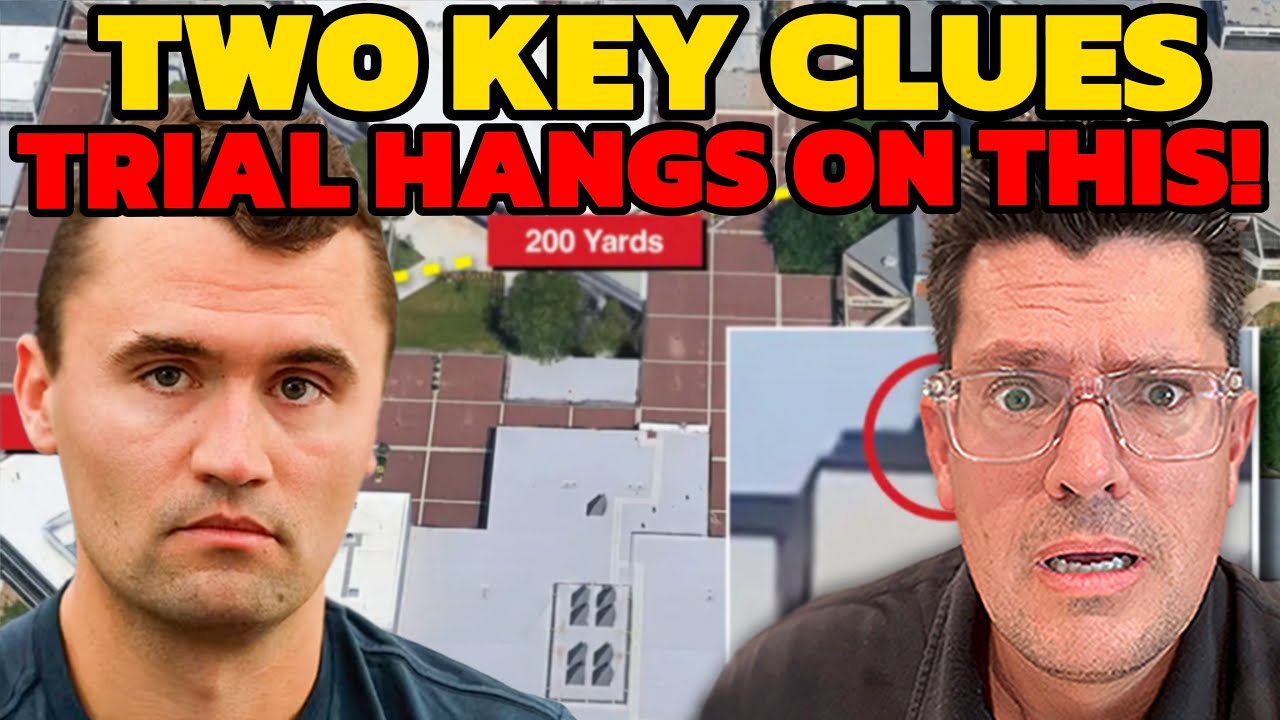
Jack Posobiec and Stephen Gardner Investigate Charlie Kirk Murder Scene at Utah Valley University Campus
18:46

Stephen Gardner Investigates Charlie Kirk Murder Scene: Fingerprints, Sound Analysis, and FBI Evidence at Utah Valley University
11:00

Brian Entin Reports From Tyler Robinson Court Hearing: DNA Evidence, Confessions, and Defense Strategy to Delay Trial
35:16
Gray Hughes and Gary Melton Discuss On-Site Investigation of Tyler Robinson's Attack on Charlie Kirk
Gray Hughes and Gary Melton traveled to Utah Valley University to conduct a firsthand investigation of the Tyler Robinson case. The pair walked the exact routes Robinson took, secured never-before-seen surveillance footage from a local resident, examined the rooftop where the shot was fired, and analyzed the terrain that made the attack devastatingly easy to execute. Their investigation reveals critical details about access points, line of sight, escape routes, and planning that contradict many online narratives. They discuss UVU's denial of TPUSA's security requests, the culpability of the university, and how misinformation has plagued the case from conspiracy theories to false claims about the investigation.
Firsthand Investigation at Utah Valley University
Gray Hughes Investigates and Gary recently traveled to Utah Valley University to conduct an on-site investigation of the Tyler Robinson attack on Charlie Kirk. Their investigation included walking the exact routes Robinson took, examining the rooftop where the shot was fired, and analyzing the terrain and access points. Gray arrived on Sunday and spent Monday walking Tyler Robinson's route twice, logging approximately 16,000 steps that day.
One of the most significant discoveries came when Gray knocked on a door in the neighborhood and was invited inside by a resident who provided previously unreleased surveillance footage. The homeowner loaded multiple clips onto a thumb drive and even took Gray to various locations around the neighborhood, including the construction house area. This footage later appeared on TMZ and other outlets without any attribution to Gray, who was the original source.
The Rooftop Access and Line of Sight
The investigation revealed just how easy it was for Robinson to access the roof of the Losee Building. The route involved walking through a tunnel, entering a parking garage, walking down a utility road, entering the Losee Building, exiting the back, and climbing a set of stairs to reach the roof. From there, Robinson only needed to step over a three-foot wall to reach his shooting position.
Gray discovered finger marks still visible on the roof where Robinson had jumped up. These marks matched evidence stickers visible in earlier photographs from day two of the investigation, confirming they had remained undisturbed. Gray also identified a two-inch evidence sticker on a ledge where Robinson's footprint was likely collected.
The most critical aspect requiring planning was confirming line of sight from the rooftop to where Charlie Kirk would be speaking under the tent. While Google Earth could provide some indication, definitively knowing there would be a clear shot would have required Robinson to physically visit the location. The proximity of everything at the scene was far closer than aerial views suggested, making the successful execution of the attack disturbingly straightforward.
Surveillance Footage Timeline
The investigation pieced together a comprehensive timeline based on multiple surveillance cameras. Gray obtained footage showing a vehicle at 8:23 AM and Robinson walking with a maroon shirt at 9:58 AM. Through shadow analysis using 3D Studio Max and a daylight system, Gray determined that footage initially timestamped as 8:08 AM was actually from 10:08 AM, likely due to a two-hour offset in the camera's time settings.
Gray timed his own walk from the house with surveillance footage and found it took exactly 10 minutes, matching the intervals between Robinson's appearances on various cameras. This suggests Robinson walked through the tunnel at approximately 10:14 AM during what appears to have been a dry run. Later surveillance shows Robinson at 12:02 PM entering the parking garage, with cameras capturing him on the stairs at three or four different points. At 12:15 PM, he was seen on the roof, and at 12:17 PM, he climbed over the wall. Approximately five minutes later, he stood up and ran to the corner where the shot was fired at approximately 12:23-12:25 PM.
The Escape Route
Surveillance footage captured Robinson's entire escape. After firing the shot, he ran across the roof, jumped off into a wooded area, and disappeared from view. Because cameras showed he did not continue down the road, law enforcement knew he had entered the woods, where they subsequently found the rifle and black towel. Robinson had changed clothes during this time.
Gray identified two potential parking locations where Robinson could have left his vehicle. Both spots offered concealment behind fences and trees with minimal camera coverage. The first location was near the house that provided the surveillance footage, positioned where Robinson could have changed clothes behind an open passenger door without being seen. The second location was closer to the final attack route, which would have made more sense if he had moved his vehicle after the dry run.
The terrain proved hillier than Google Earth suggested, raising questions about how Robinson navigated back to his vehicle through unfamiliar neighborhoods and construction areas. Text messages indicated he had been planning the attack for over a week, though it remains unclear how much time he spent physically surveying the area versus using Google Earth.
The Different Backpacks
Analysis of the surveillance footage revealed what appears to be two different backpacks. In the earlier footage, Robinson appears to be carrying a blue or different-colored backpack, while later footage shows a black backpack. While lighting conditions could account for the color difference, the shape also appeared different. The explanation could be that Robinson used one backpack for reconnaissance containing water or other supplies, and a separate operational backpack pre-packed with the change of clothing, towel, and other items needed for the attack.
UVU's Denied Security Requests
A significant revelation came from a video released by Turning Point USA stating that they had requested permission to use their own drones for security surveillance and requested to provide security for the rooftops. Utah Valley University denied both requests and claimed they would cover the rooftops themselves. This denial raises serious questions about UVU's culpability in the attack.
The walkway where Robinson positioned himself extends back to the computer science building. Anyone on that walkway or looking out windows from the computer science building would have had a clear view of someone lying in the prone position at the edge of the roof. The fact that this area was not covered by law enforcement, especially after denying TPUSA's security requests, represents a significant security failure. No normal pedestrian in areas accessible to the public could see Charlie Kirk from those locations, which is likely why Robinson chose that specific position.
The Crime Scene and Construction
One persistent source of controversy involves the construction that took place at the amphitheater shortly after the attack. According to Stephen Gardner, hundreds of law enforcement personnel processed the crime scene. The scene was held for three full days (September 10-13), with construction beginning on September 14, a Sunday.
Following NIJI standards for processing high-traffic crime scenes, the work needed to be completed quickly and efficiently because it was an active university. Once law enforcement released the crime scene, it was no longer officially a crime scene but rather a location with blood and traumatic reminders for students. The decision to renovate the area appears to have been motivated by returning the space to normal for students by Monday, not destroying evidence or covering anything up.
The amphitheater area held the least potential for evidence compared to other locations like the rooftop, the wooded area where the rifle was found, and the routes Robinson traveled. Arguments that the jury would need to visit the exact crime scene ignore practical realities—maintaining a crime scene indefinitely while cases work through years of trials and appeals is neither reasonable nor standard practice.
Addressing Misinformation
The investigation consistently encountered misinformation circulating online. Claims included that Robinson's parents said the person in surveillance footage was not their son (no official source supports this), that Robinson had a congenital defect causing a limp (no evidence exists), and that special keys and access were required to reach the rooftops (demonstrably false, as the investigators easily accessed the roof).
Gray emphasized that approximately 98% of misinformation surrounding the case has come from private individuals online rather than from government sources. While healthy skepticism of official narratives is warranted, the investigation found that conspiracy theories about camera guns, hidden snipers, palm guns, and other alternative explanations had no evidentiary support.
The approach emphasized starting with available evidence rather than forming a preferred narrative and then searching for supporting evidence. Probable cause documents, charging documents, and surveillance footage formed the foundation of the analysis. Text messages between Robinson and Lance Twiggs, while appearing somewhat contrived, indicated prior knowledge and planning discussions, though many messages were redacted from public release.
The Strength of the Case
Gray, who has covered thousands of cases, described this as one of the strongest cases he has ever seen from an evidentiary standpoint. The surveillance footage timeline, physical evidence, witness statements, and Robinson's own actions create approximately 30 strong evidentiary points. Dismissing the case requires attacking each of these points with conspiracy theories.
The only remaining significant question involves ballistics—specifically why the bullet did not exit Charlie Kirk's neck. This represents the primary gap in publicly available information, though it does not undermine the overall strength of the case against Robinson.
Security Considerations and Charlie Kirk's Role
Discussion of security failures must account for the dynamic between security personnel and their clients. While the security team clearly lost their protectee, the full context of what recommendations they made and which Charlie Kirk accepted or rejected remains unknown. Similar to diplomatic security situations where ambassadors and dignitaries sometimes override security recommendations, civilian clients have even more control over their security arrangements.
Charlie Kirk consistently received death threats and understood he was assuming significant risk by continuing to speak at events. The investigation suggests he likely would have proceeded with the event regardless of security restrictions, viewing it as refusing to give in to terrorism. This does not excuse security failures, but it provides context for understanding the decisions made.
The security personnel involved will likely find it difficult to continue in that profession after losing a client, regardless of other circumstances. However, the most significant failure appears to be UVU's denial of additional security measures requested by TPUSA and their failure to adequately cover the rooftops they claimed they would secure.
The Broader Impact
The case has had ripple effects beyond the immediate investigation. Narratives promoted by Candace Owens and others suggesting Israeli involvement have created division within the Republican Party, which has historically been supportive of Israel. Combined with existing criticism from the left, these theories have created what some describe as a precarious situation for Jewish people who may feel they have diminishing support from either political side.
While criticism of Israel and its government is legitimate and necessary, especially regarding U.S. foreign aid when the country carries $37-38 trillion in debt, the specific conspiracy theories around this case lack evidentiary foundation. The investigation found no credible evidence linking Israel or any foreign government to the attack.
The emphasis throughout remains on examining evidence objectively, avoiding both unquestioning acceptance of government narratives and reflexive embrace of alternative theories promoted online. The physical investigation at the scene, combined with analysis of surveillance footage and official documents, provides the most reliable foundation for understanding what occurred.
Video Transcript
If you are weak and your beliefs are fragile, you should leave now. Prepare yourself. We are now live on the Dangerous Liberty Podcast. [Music] All right, folks. Happy Saturday and welcome to the Dangerous Liberty Podcast where we know that safety at the expense of liberty is slavery. We got a great show for you tonight. Hope everyone's having a good weekend. everybody's being safe out there. Uh we got a lot of stuff to go over and recap and yeah, it's going to be a lot of fun. I want to say hi to everybody over in the uh the the comment section already. We're going to say hi to Sandy Shirley SSI anti anti malware Annie Oakley uh let's see here who else we got over there. Jason TG sponsor Mr. Ken aka Chiller uh and many many Jim8 triate and many many more. Uh anyways, I'm gonna go ahead and bring on uh Gray in just a minute and we'll talk a little bit. Then we'll go over the uh the rules of the chat and how we conduct this thing. Uh and then we'll take it from there. We'll let everybody It always takes about 5 10 minutes to for everybody to trickle in. But I hope everybody is having a great weekend and I'm excited about this show. And without further ado, I'm going to go ahead and bring on my good friend Gray Hughes Investigates. Gray, what's happening, buddy? >> Oh, not much. Just putting out the the fires of conspiracies on a daily basis. >> I uh was telling everybody the other day, man, it was great meeting you in person and uh I had a lot of fun hanging out with you. Uh yeah, I don't think uh >> yeah, you know, you're you're you're a pretty funny dude in person. I mean, you're a pretty funny guy when we talk anyhow on the phone or whatever else. But, uh, it was good hanging out with you. A lot of fun. We spent a lot of time at IHOP. >> Yeah. Nick, uh, at least two or three times there for sure. >> So, you actually got there Well, I don't want to get too deep into it, but you actually got there the the day before, right? >> Yeah, I got there on Sunday. See, I'd been planning on going there at somewhat soon, but then when you said that you were going there, I was like, "Okay, maybe maybe I could time it where I'm there at the same time." That was just kind of like my window. So I drove all the way there on Sunday and then had all Monday by myself there. And I walked the whole route that um Tyler Robinson walked twice, you know. I mean that was a lot of steps. I think 16,000 that day. >> That was a big one. >> Got some exercise in. I think uh we should have the 3D modeling uh program done by either tomorrow or Monday. I've already got uh there's a couple of folks helping me out. I really appreciate and I should have wrote the names down but I know there's few of you guys that are working on making sure that we had a good representation of the 3D tent so we can put that into the model itself. Um so anyways I I just really appreciate everybody that has stepped up and helped us out with this um in many different ways from views from shares to you know super chats and all the rest. Uh I just really appreciate it and it's because of you guys that allow us me and Gray to be able to get these things done. So, it is very much appreciated. >> So, what's the weather like over in there? Like, you got to be you're you're in the Portland area. You got to be having Why aren't you attending the No Kings protest? You got to be having a good one out there. >> Yeah, it was pretty pretty big going on over there. I don't know. I I just I think I'd get so angry just listening to these idiots. I don't know if I could do it. So, um you know, it's just it's embarrassing. You know, I Oregon's a really beautiful state, but uh the politics and the people that live in Portland and Eugene are just absolute nut jobs. So, I don't really know, you know, I just try to stay away from there as much as possible, the downtown area. >> Now, did you grow up in that area? Uh, well, I was, you know, I was born in Los Angeles, but I've lived in Oregon for since like 197 two or three or something like that. So, long time before you were probably even born. >> It was about eight years before I was born. >> My 1980s. >> Yeah. Well, that's cool, man. No, Portland. You know, I had spent some time I was stationed in the uh Seattle area and actually went down to a little south of the Portland area. I had some friends down there. But Seattle, Portland, that whole area, some of the most Well, I'll say this. It's the most beautiful place you can go just about anywhere. About two months a year. Other than that, I was like, "Man, send me to Iraq or Afghanistan. I couldn't take the weather in uh Seattle." >> Yeah, it's a little bit better now. I would say like from April until late September, early October, it's pretty sunny and warm. I guess, you know, it's a little different. When I was young, we'd have ice storms and crazy things, but you know, no, it's not global warming. Global climate change. There we go. There we go. That one works for everybody. >> All right, folks. We're going to go ahead and get into this. But, uh, real quick, just so everybody knows, the rules are the same every single time that we do this show. Uh, discuss and disagree with respect. No all caps. All right. If you start name calling or anything like that, we're just going to boot you. you're going to get maybe one warning depending on how my uh how my moderators are feeling today. Uh this is for adults. We want to be able to discuss those things and I welcome disagreements. I welcome you guys to challenge us on anything that we say. I want that. Right. We've had many people on this show that completely disagree with me. I I'm all about hearing this stuff and listening to it and then whether they want to challenge me and kind of go back and forth, but iron sharpens iron and that's what I believe. So we can discuss all these different theories and different aspects of it which is almost never ending. Um strangely enough I think there's some elements of this story that I just don't even think has been have been explored. And one of those things is the culpability of UVU in all of this. I think that's I would like to think that TPUSA is gearing up to sue the Jesus out of UVU. I don't know if that's true or not, but that uh there's there definitely seems to be a case for that. Um, also I wanted to let you guys know if you have any if you want to email us with anything like that, email us at dlodcast@paramonttackle.com. And then lastly, make sure you go down in the description below. Number one, all of Gray Hughes social media, his YouTube page, his ex, go follow him there. and then RX account as well as our other social media accounts, Instagram, Facebook. I don't do that much on Facebook anymore to be honest with you. Uh so anyways, let's go ahead and get started. Gray, so you know what? I'm going to just kind of give you the reigns, man. I know you got a lot of content. And I do want to say folks, you know, I was with Gray the the day that I got there. We were running around the neighborhood. He was like, "Hey, man. You know, I met this guy at this house who's we were literally outside the house." He's like, he gave me all the security footage. Um, you know, Gray was Gray had built some rapport with him. End up getting footage that has never been seen before. And now I've seen it on TMZ. I've seen it on a bunch of other places that he just put that out without us so much as a uh, you know, attribute attributing it to him or a shout out to him or anything else. So, you know, that makes me a little angry in the fact that there's all these people out there making this content that aren't out there, you know, going places like we did and actually putting some effort into this. They just sit behind the keyboard and just steal this stuff. Um, and then sometimes present it properly and sometimes not. But anyways, uh, I appreciate Gray and anybody else out there. Steven Gardner was another one that was out there. uh we met up with him and there's been a few other people that have went out to the site uh and are actually doing some good old-fashioned detective work. So, you know, I appreciate that and uh so if you guys see that footage, you know, tag Gray in it, tell people to go follow the guy that actually put that out there to begin with. But take it take it away, Gray. >> Uh well, just talk about the What do you want me to talk about? I mean, the whole thing. I mean, it's pretty crazy. Uh, I mean, like he was uh just saying, Gary was just saying, I was walking I was walking Tyler Robinson's route and then I just decided I'm just going to go walk up to that house and knocked on the door. The guy answered, he came in. He just said, "Hey, you want to come in and see?" I mean, it was like so quickly like he was just really nice and asked me, you know, if I wanted to come in and wa watch the surveillance footage and then uh I didn't have any storage device. So, at one point I even said, "You wouldn't have to have an extra thumb drive, would you?" And he goes, "Oh, yeah. I've got these other." And he loaded up all the clips on there. It was pretty amazing. And then he took me around to all the different uh places like, you know, in the neighborhood there where the construction house was. He sort of just snuck us, you know, I don't know. He He was smooth. He said, "Yeah, yeah, we're just going to The construction guy wasn't going to let us go back there." And he goes, "Oh, I you know, I just live over here. We're just going to go down here." here. And he goes, "Oh, okay." I mean, I don't know why he changed his mind, the guy, the construction guy, but we just walked right down. And then he goes, "We're just going to go right here." And as soon as the guy said, "Sure." We went way down and around and, you know, didn't even come close to uh, you know, minimizing it like he said, but, you know, he he showed these other places where like people that um actually go to school there know of these parking spots and little trails. And obviously it s sort of appears like the way that Tyler Robinson's walking around that he wasn't aware of these paths because he doesn't he's not from there, you know, >> right? >> So yeah, I mean that first day I was just literally um just walk the routes and then that's when I stuck my camera up where he jumped and when I went back to the room to look at I was like, "Holy crap, those finger marks are up there." I mean, it was just wild that that's still sitting there. And then yesterday there's there's people on Twitter that say, "Oh, come on. So, you just they just happen to be still sitting there." And so, then I went on um and searched online for images with the ladder and so forth. And then there it is. I mean, you can literally see the marks on the roof from a distance exactly in the same spots with little uh measurement stickers next to them. I put it on Twitter if you guys haven't seen it. And uh those those were there from day two. So they've literally been sitting there that whole time exactly the same way. And I think that the footprint is going to be um on that ledge that he steps on and then jumps. That's where they're going to get the footprint from because I found another 2-in sticker on that ledge right where his foot would have been had he stepped down. So that's pretty interesting. Um, and then you know, we both walked over to uh when you guys got there, I didn't even go down to where he was shot the uh first day. I just walked around. I I wanted to get all the surveillance shots that are known, etc. Uh, but when you go there, I think you probably agree. What did you think? What was your take of uh you know walking the whole route that we did you through the parking area uh you know not parking through the tunnel up into the parking area and around and then up on the roof. What did you think of that? you know, the whole thing, the whole experience was surreal. And the biggest thing that I whether it was the the walking route, whether it was in the amphitheater and everything else, like folks, everything is two to three times closer in proximity than than what you think it is, what your perception is. And again, you know, I was just even even looking at the distances on Google Google Maps and everything like I have. I've poured over all that stuff. You know, I've spent, you know, hundreds of hours. It's got to be close to that at this point. I mean, every day I I've put six to eight hours into this just about every single day in one form or another since since this went off. And like I felt like I had a real good perception of of what was happening. But when you get there, just everything like the route wasn't that long. Uh the escape route wasn't what I thought it was. um how close everything is in the amphitheater is is nuts. And I hope that especially if you're you're you're investigating this or you have theories about all this or whatever else, I hope at some time if if nothing else other than to pay respect to Charlie, you guys get to go there because like some of the theories that are out there of where supposed shots come from, if you're standing there, I don't think the average reasonable person, if you look at this objective, like to me there was like whether especially like we're talking about a shot from like the the 4:00 clock coming from the like folks I can't even explain to you how close that is. There is no possibility that somebody was either on that ledge where the you know inf now infamous bush was or even on top of that roof. They were able to get a shot off with everybody there. I don't care if they had the most silent gun ever. There's almost zero chance how close everything is that they would have been able to do any of that stuff without being seen, without us having very clear footage of them or anything else. So, I think that was my biggest takeaway and the thing that surprised me the most. >> Yeah. I think I think you also mentioned too, like I did, how easy it is. >> Yeah. >> It's like the easiest damn thing in the world. I I mean, I think I think that's the sort of the main thing, you know. Again, Yeah. Everything's really close. When you start walking it, you're like, "Oh." But that's part of what makes it easy, too. >> Yeah. It's like you literally just walk through the tunnel, go up into the parking garage, come out, walk down a little utility road, walk right up to the Losi building, walk into the Losi building, go out the back of the Losi building, walk up a set of stairs, you're on the roof, and then you just step over a wall, lay down, put the rifle together, run to the corner, shoot Charlie Kirk, and then get the hell off the roof into the woods, and you're out. I mean, it's like, you know, it seems like he had to have planned this because it it was so well executed, even though, you know, the outcome sucks. But I'm just saying, you got to admit like >> it was >> I think there's zero chance that there wasn't I don't even know I don't even want to know if I don't even know if I want to say like significant planning, but a it it it took some planning to confirm some of those things. And one of the things that you and I were just talking about right before we jumped on here, it's one thing to know that you can go right up to the roof and all those other things. The thing that you were talking about and we were discussing right before we went live was knowing for a fact that he had a line of sight from the edge of that building. That is one component of of this that I mean he he almost would have had to have gone out there at some point onto that roof into that exact spot to be able to confirm that for sure. You can definitely look and you can definitely see from Google Earth. I think you can get an idea that you're going to have a line of sight. >> If you want, you can throw me on there. I can just >> Yeah. Yeah. Yeah. >> Yeah. So, like right here, uh, this is where the door is that you go into the Losi building. Then you come up the stairs and there's a fence right here now, but you can just jump right over. That's where he built put the rifle together. And then right from over here, I think right around like 12:23 25 >> from right in this position. You just go like about like that. >> And then, you know, Charlie Kirk was right here under the tent, you know, right there. So, it's really um you know, how did he know like if you the thing is if if Charlie Kirk was set up like 10 feet to the the right, you might not he I guess he could have still moved over right to the edge of this thing, you know. So, from right there there's still a little bit >> Yeah. >> You know. >> Yeah. >> It's It's crazy though. But like, you know, if he'd laid down that's probably why he shimmyed over too. Like he gets over there and he shimmyed over they said in the documents. So, he kind of went like that. Um low crawled I think they called it. Is that a military term? >> Yeah. Well, I mean it's that's technically not low crawling, but >> right what they said though. >> Whatever. >> Yeah. Okay. >> Was in the prone and he moved laterally to his left. We'll just call it that. >> Uhhuh. Yeah. So, like, you know, using Google Earth, he could have done all of the stuff that we're looking at here and then maybe even could see that there's stairs, you know, from right right over here. You know, he was like, "Oh, there's stairs that go up there. Hm." and then sort of planned it out. And then he goes there early, maybe 8:30 in the morning, and goes around and looks at things and then does a dry run that I I think because we originally we were told, remember that one footage with the maroon shirt that that was at 8:08 in the morning when he's walking um in the TMZ surveillance footage shots. Yeah, >> they said it was 808, but it's really 1008 because I I did a shadow analysis using 3D Studio Max and a daylight system and it absolutely matched up and I think it's 10:08 and they're just off by two hours. Maybe that's what it said on the camera. And then uh yesterday on my show, I actually timed myself from the house with the surveillance footage and walked all when I got right there, it was 10 minutes. I mean, it was literally exactly the same. And then even timing uh Tyler Robinson's walk to a certain point, we calculated how long it would have taken to get to that camera. And again, it was 10 minutes. So it's like um I I I I was suspicious that he walked by that camera at about 10 10 like it was after the first one uh at I think it's at 9:57 at that house. So you know it makes sense. And when you walk down there down that street, there's nowhere to go other than through the tunnel to get out of there. >> Yeah. >> I mean, you could turn around and come back, but we don't have that footage. But I think he went through the tunnel. I think there's going to be footage of him in that tunnel at probably 10:14. There's going to be a shot of him wearing the maroon shirt going down there. Then there probably have him going up the stairs. They just didn't show us some of this stuff. uh you know maybe they got out the im and this and they probably found that later, right? So the image that they have of um you know the one that they gave out and the family recognized. >> Yeah. >> That was just like right away like oh okay we got him. They worked backwards and found him going in and I bet you days later they got the one where he's going into the tunnel uh wearing the maroon shirt a different time, you know, doing more investigative work. >> And they they very well could have had it then too. I I don't I don't doubt that. Um, one thing I I did think was interesting about the footage that you got from that gentleman, it does look like, and maybe it's just lighting issue, but it does look like he's wearing a different color backpack. What's your thought on that? >> Yeah, I mean, sometimes just having I mean, a good way to compare, I guess, would be go to pull the video that he is walking by at 10:10 and see if it sort of looks blue in that one, too. Um, but it could, you know, it could be lighting. I mean, uh, we haven't really seen when he's going up the stairs in the security in the parking garage. Did it look black in that one, too? >> It look black. >> Yeah. And I will I will say I will say this, >> like it almost looks like a different backpack. And it may just be because it's fuller. I think when he's running, when he has, you know, and it's not inconceivable that he didn't have one backpack for one thing and then another backpack for another. I don't think that's a big deal, but I just thought it was interesting. I do I am inclined to think that it's a different backpack. It looks it looks like a different color to me. And when I even compared some other images, like you can see blues and black in some of those, like enough that I would think that you'd be able to distinguish the difference. I mean, you know, those those security cameras are pretty trash when it comes to the overall image quality, but uh it did look like he had a different it even the shape of it and everything else to me looked different. >> Yeah. Like he's going to have on this final run, he's going to have the black towel, a change of clothing. Yeah. >> And u you know, whatever else he was bringing along. And maybe the first one doesn't have that. Maybe like he changed his clothes. He has a different color backpack to walk around to do. Um I mean I'm what's weird is uh people are making I'm not sure what the when they're pointing that out what they're trying to imply like again hey it's not the same guy or or what you know. >> No I look I I think anyone and and to some degree rightfully so. I think I think the details matter, right? So, I think if it's it's an interesting point, I don't think it's super material to the case one way or the other. I mean, he could have very well had a backpack that was already set up with the clothing that he wanted it. We'll just call it his operational backpack versus, you know, his walking around backpack that might had some water or something stupid in it, right? I don't know. But the point is is I I do think I do tend to think with what I've seen so far, those look like two separate different backpacks. Um I don't know that it's significant one way or the other. >> And folks, one of the things I did uh forget to mention how we normally run this. If you haven't joined us before, you know, we're typically going to talk and cover all the stuff that we want to cover. Uh and then we will definitely start answering some questions and throwing up your comments. We will prioritize the super chats. I mean, you know, at the end of the day, the people that want to support us, that are willing to pay to hear their question answered or just show support or whatever else, we are going to prioritize those, but I will do the best I can to get to as many of the live questions and comments as well. So, uh, bear with us on that. We will we will get to you over in the chat. Um, what were some of the other significant things that you feel like made a difference in your perception of things or uh some of the newer things that you found out that you didn't know before you went there? >> Well, I I kind of had perception that it was hilly out there, but it seemed hillier, a little bit more terrain than you kind of picture on Google Earth. You know, you're going up, you know, a lot more hills and uh I don't know. I I think it was also when I was looking around for where he may have parked, you know, that's one of the things that's still a mystery, but there's really only two spots that I found driving around the whole neighborhood and they're right there. I mean, they're right in I don't know if you want me to show you those spots, but >> Yeah. Yeah, >> I can show them to you. I think you'll find it pretty interesting. Okay, here we go. I got it. Yeah. So, one person is one of them was mentioned on one of my shows. Uh but where I parked was right here when I went to this is the house with the surveillance footage on it right here. Right in the upper right hand corner and you know remember uh he came from that direction and the car drove that direction but it probably went on campus at that point. >> But I think if you look at this spot right here it's crazy. Look at that. Uh right here I was parked by this fence underneath that tree. There's like no way anybody's going to see over there. There's a fence over here with a um that whole house there with no camera on it. And then that's all you got that direction. There's there's no coverage. And then let's say he was parked there and he had his door open the passenger side and then he's over there on the front passenger side and he's just changing in putting the gun down his pants. Nobody would see anything. I mean, it's unbelievable. Uh so like but everywhere else you go like right here's terrible. Everywhere is terrible. But then the other spot which makes more sense like he moved it after the dry run perhaps right down to here. And this is the spot somebody mentioned in the show. And look at this one. You got the fence there, a fence here. And if you face that direction and you're standing behind an open passenger side, that's the only possible view of any kind. Uh look at this. All these trees blocking everything. But as soon as you start going down here, all the houses, maybe there's cameras, you wouldn't feel safe doing that. But look at that right there again more exposed, >> right? And I went everywhere else and there's nothing else that has anything close to those two spots. And they're right where you would. So let's say he moved to here um for the final run. And then look at how this works out. So, he's right there and then he comes out here and then he walks down the street and that's where he's filmed walking by that jagged wall down this direction, >> right? >> And turns left down the final street right here. >> So, I mean, I think that's a really I mean, at the end when he's running this direction, he pro he's going to go back up this way again. Right. >> Right. >> So, then he goes here and then he probably goes back to a car that was parked there. I just couldn't find any other spots. Go go go go go back to the the sandy lot for a second there, Greg. >> Yeah. >> Is there any Can he cross into that street? We actually pulled in that street more than once. Uh that sandy lot that he went through to the right. Go back toward Nope. Nope. The other way. I'm sorry. >> Oh, wait. I'm not sure how we're delayed. Where do you want me to go from now? >> Uh toward the back of that lot. >> Oh, like this. >> So, if he was parked, can he That is a open area right there to that street. I just wonder if he was parked over there. Why wouldn't he go through that area? >> Well, the thing is there's there's actually a you talking about this street. >> Yeah. Yeah. Yeah. >> There's a fence right there. >> Oh, is there a fence? Okay. >> Yeah. It's weird. Yeah. I thought the same thing originally, but watch this. See, there's a there's actually like a a wire fence and that'd be pretty hard to, you know, >> negotiate without sort of, you know, getting something caught on it, I think. Uh, I mean, he could have done it, but >> uh, you know, but he came running from right over here and then cut down and then went back out probably to the street the street there. But yeah, you're thinking that same thing like, man, why didn't he just go down that street and then I looked and I was like, oh, that that explains it. >> Although he he must have climbed over other fences, though. That's the thing. I mean, so I I don't know why. Maybe that one just appeared different to him. Seemed different. Or maybe he just didn't think of it. Don't know. >> And And why do you think that he climbed over other fences? I know we were talking about that walking that route. >> Yeah. So I think that like he went in here and that's where he put the rifle >> and the towel. And this doesn't look like this anymore. There's just a a driveway that goes all the way up and around. And I think u and this is a house that had con has construction. So, if I go on Google Earth and just look at it from um June of this year, June 25th, uh this isn't even there anymore, but you can see that it was under construction. >> Like a big dirt lot where people are construction folks and yeah, I think even school people are parking, >> right? This is from like a couple years ago. So, uh, but I think I think he came up here up this steep little street right here or not street a slope there and because he went back behind here and a excavator saw driver saw him. So then he probably jumped over maybe a fence or so right in here this area. >> Mhm. >> And then this is the ROC building. And then from right here you can walk that direction. So, it's also possible though that from over here, but they do say he went an excavator saw him. So, let's say he walked up over here and then he went out to the street because he's wearing different clothing at this point, >> right? >> And just a backpack and then he goes right up here like this and then onto this little uh path. And I actually walked to here. I don't know if you want to see that. I have it on video. It's pretty interesting. I made it to right there. I didn't realize where I was at the time. I might have actually kept going >> video. Let's play it. >> All right, let's see. It's this one right here. >> So, here's the ROC. >> That's the ROC building, right? That's I'm in that lot that we were just looking at. So, I'll flip it back over to here just so you can get the perspective. >> Mhm. >> Right there. I'm standing right in that spot. And then I >> And apparently he came down through here. So, the constru >> Yeah. And I just kind of walked. Let me just move it forward. So, just kind of >> started walking down here, but I didn't realize exactly where I was walking at the time >> because I I didn't have my map. >> I want to go under these people's property. >> I was going to stop, but then I kept going. >> Nice face. Uh, let's see. Keep >> area right through here. >> Yeah. So then I go through here and you can even see this little structure on Google Earth which is um >> like a chicken coop or something >> right right there. See that? >> Yep. And then some of these homes are the ones that you see where he he's running uh coming up near the end of where I walk is the dirt area. >> I'll show you on the map right after that. >> I'm just going to assume this is like an easement here. All right. And So this is where he was locking. >> So this might be the spot right through here. >> And so I stopped here because then then this neighbor over here didn't seem like he liked being asked questions. So from right here, like I tried to talk to him, but he like walked the other way. So uh that is right here. So I just walked down this little path and it was right there. Okay. So the video that you see him in the dirt area is basically right near if I had just walked across here, I'd show up on that same video. >> And it comes from that house right there on the bottom of the screen. Right. >> This one. Yeah, that one. And then this is the other camera that doesn't have time on it. It doesn't tell us what time it is. Uh but then he came running down this direction. And then I think because earlier he was walking this direction, he thus has to head back up that same direction to where his car is. And then it sort of makes sense that it would be right there. You know, some of these other neighborhoods are they're so packed with homes. You see that? I mean, just really hard. And I don't how far do you think you'd want to walk with a gun down your pants? >> Yeah. >> You know, anyways, you can throw me back on there if you want. I don't have any. >> Yeah, I mean that uh >> I mean I think that's how he got out of there. I think it was just pretty kind of simple. I don't I think he sort of had it planned a little bit. Maybe just went up the uh the that little slope and jumped over and you know maybe that's that is kind of interesting like how did he know where he was? You know, like if I went there and I had never seen anything on a map, >> how would you know where you were to get back to your car? Like when he's in that dirt area, how does he even know anything? >> Yeah. >> You know what I mean? Like that's weird. >> No. And I'll tell you too, like even one of the things that we're we're kind of touching on indirectly is you can you can look at all this stuff on the map in Google Earth and you feel like you know the terrain, but when you get there, it is and you know, again, I've done a lot of land navigation. Um, it is so different than what you realize. And you're right, like that terrain out there is is is much more hilly than you than you actually think it is. Uh, just to give you guys an idea here. Um, the let me share this screen real quick. Uh if you look at I gota You know what? Your your your screen's already up there. Uh show that house again that was being remodeled that we ended up we actually ended up flying the drone from there. >> Oh yeah. Right. Right here. >> Yeah. >> Oh. Where did you fly the drone from? Right over here. >> Literally in the backyard of that thing. Yeah. Like right where your person just was. No, there's that. Uh >> Oh, right here. right here. >> Nope. The solar panel in the back. >> Oh, really? Wow. >> Like literally right off that. >> So, you went right in the backyard. >> No, no, no, no. The other the other solar solar panel. There's a deck right there. So, just to give you guys an idea of the terrain from that spot. I shot a short from there. And folks, you can see the entire campus from that spot. Like, that is significantly higher in elevation than the campus. As you scroll back around real quick, just do like a 180 gray where you can see the campus in the background. >> Yeah. >> Yeah. So, from that spot, you can literally see all the rooftops and everything else. >> So, from this even from this 3D map, I mean, here you can get an idea, >> but from a from a 2D map that you're looking at or whatever else like you don't realize how high that elevation actually is. And from there, we were able to fly the drone. Peter was able to keep in a line of sight on that drone the entire time and all those good things. So, uh, the terrain is terrain is confusing to say the least. And you're right. I mean, I think he just his path and the way that he moved and how quickly he got to and from, he clearly had a very he was very familiar with that area one way or the another. I like I don't know. >> Yeah. It's just sort of interesting that he knew like he must have known that this little path was here and how he was trying to get over here, but it seems like if you're in there, you wouldn't unless you'd been there a bunch of times. Like I've seen it on a map um many times. So I when I went out there I was actually pretty I mean I literally that's what I do is just mapping mapping map you know like that's uh kind of what I I when I work through cases. So when I got there, I knew where I was, but it was so much hillier than you you pictured. >> Well, I mean, if you take if you are willing to accept the text messages, I mean, he talks about that that he was planning it over a week. So, I mean, we don't know how much time he spent in that area. >> Um, and I don't know what that means. Was he in that area for a week? Was he driving back and forth? Did he do it all from Google Earth? Uh, was that the first day that he was there, but he was able to walk around? Um, you know, again, we have some of this footage coming from surveillance. We don't know what else is out there and and uh who else caught him, but maybe the FBI or um Utah uh investigators have, but it's interesting to say the least. Um, I I do think I I do think that there's almost well I I don't think there's any chance that his his Lance Twigs didn't know about this. We don't know what other roles that he may or may not have had in this. Uh, as well as, you know, potentially other people in his Discord chat or whatever else. So that is the big piece to me that seems the most odd or that would take the most planning is that line of sight from that particular rooftop. Knowing that you can get there easily and then knowing that you would definitively have a line of sight to Charlie like that didn't happen by accident. And you know maybe he is just smart enough. I mean it's not it's not crazy to think that he wasn't intelligent enough to figure that out. But at the same time, I think that is the one thing in all of this that indicates a level of planning that I probably wouldn't have expected out of him. >> Yeah. Um, let me just show the map where all the different surveillance footage is that we have just so people can see it. >> Um, you have to switch me over. >> Yep. I got you. >> All right. So, this is uh the surveillance that I got the extra footage from right over here. There's a shot of the vehicle at 8:23 and then Tyler Robinson walking with a maroon shirt at 958. And then Tyler Robinson walks around like this. And then the next shot we have is on this street right here. Uh but not when he's wearing the maroon shirt. Okay. So I bet you that exists though. Um but I think you walk just like this because I timed it. Same speed. And then these two homes right here both have surveillance and they show um on his dry run wearing the maroon shirt on this camera. I'm sure he walks by this one too, but we don't have that footage. Um but he walks this direction and then he goes over this little bridge and then this tunnel right here. There's a camera right at the top here that films him going into the tunnel. Then there's a camera underneath in the tunnel right around in this area right by the end of the tunnel that films him near the end of Yeah. >> real quick back up to the beginning of that tunnel because this came up the other night and I just want to clarify for everybody. You can kind of see I I think you can even kind of see the shadow in here but for those of you that are wondering well why did he just keep walking straight. There is a fence along the road right there >> that >> right now uh it doesn't look like it's actually there in that shot, but right now there's a fence that blocks that path across >> and it channelizes anybody. Yep, there it is. >> U so it channelizes you and forces you to go through that tunnel. Just so people are clear on that. >> Uhhuh. >> Yeah. So, uh, I mean, so that means when he walks by at 10:08, I think that's why it's a dry run at that point. I think he's doing the same thing, even he even uh appears to be walking like this and head in this direction. And, you know, but to be honest, he he could have walked down these stairs that time because he doesn't have the rifle in his pants. So, he comes down and there's no way where else out of here other than going through the tunnel and then that takes you underground to over here. This is the parking garage. And then he uh while he's going up the stairs in there, he's on three different uh I think they take one, two, four different shots or three on the stairs going up to right here. And then there's no other uh shots that we're aware of. I'm sure there might be something else that filmed him until he gets over here. And then at 12:02, a camera that's right up in this area. I actually have a u a drone shot of exactly what you could see. I made a video with that in it. And he comes around. You'll see it on video. He comes around, walks over there. He's on camera this whole time. Then goes into the building. Then we don't see him for like 10 minutes. And then he comes up these stairs, and then he's seen on camera again at 12:15 uh over in, you know, up on the roof. And then at 12:17, he climbs over this wall. And then he sits there for five minutes and then you'll see on camera him get up and run over to here and they're going to know law enforcement knows exactly what time the shot was taken. I think it was 12:23 25 something like that. >> Yeah. >> Yeah. And and I think what they're going to know is exactly when the shot was. They're going to uh link it up to the surveillance time code and he's going to stand up right after the shot happens and then he's going to run this direction off the roof. You see it all on camera. He jumps off and it's even on camera when he's over here going into the wooded area, you know, and that's why they were able to go and um you know, that's why they knew he went into the woods. So, they go in there and then they find the rifle and the towel and he had changed clothes and he was going to go back and pick it up according to the text messages, you know. So, I don't know. I mean I my thing is I don't the text messages while I see some parts are odd. I don't know if that's a scheming text message to protect anybody. I think it was like he was feeling vulnerable, kind of alone. Now he's done and now he didn't realize he'd feel the way he feels after killing somebody and he's like reaching out trying to get a hold of you know the one person that might care and um you know he said some things and then told him to delete it at the end but I don't know. >> Yeah. I don't know. Like, at a minimum, it feels contrived, but I don't know. They I I don't necessarily think that it was contrived by law enforcement. I know that's what a lot of people think. I I I do think it's odd at how it's it can that goes through and basically exonerates uh to some extent, but it also implicates Lance Twigs in other parts of it as well. Like it it it it infers some some some discussions that they may or may not have had. At least that's my take. That's that's the impression that I get. Yeah, it did. It did seem like that, but they also removed a lot of um text from the text conversation. >> Yeah. >> So, they could have even mentioned stuff in there that would make more sense of why he knew something, >> you know. Those were all specifically released geared around the firearm itself. It had >> it wasn't it wasn't a complete listing of of all the the chatter back and forth. >> Yeah. And and by the way, the on the last surveillance thing, um they actually show him running in the dirt area after he goes into the wooded area to get rid of the rifle. He runs into the wooded area. And that's the last that's why it's pretty decent speculation that he goes right back to his car right at that point. And because actually at 12:45 he shows up on surveillance at that shopping mall which is um 14 minutes 15 minutes or so after he's seen in a dirt area. So there's a lot of surveillance out there. >> Yeah. And for those of you who haven't seen this, I'm just going to go ahead and play. I made a short clip today uh that I put on Twitter of just the walkway up to the stairs. >> So easy. >> All right, folks. So, here's the stairs that go to the roof. >> Wow. >> That was your first time up there, right? >> Yeah. >> Yeah. That's exactly I think I probably said the same thing like and look how low this wall is over here by the way everybody. I mean you could stand next to it, fling your leg up and just go over it. Just >> All right. So again, this wall is about maybe three feet tall. This is where we think if he did any reassembly of the firearm, right behind this wall is where he did it. And and folks, if you look right there on the forward left, you you'll see a air vent. Just to the left of that, um, is where the shot came from. And even that distance in this camera is deceptive. Like, it's so much closer than you realize it is. Um, I mean, it it's a short short distance. And that's the crazy thing about this whole thing too is is that walkway extends all the way back to the uh the computer science building behind us. The the fact that that area wasn't covered by police that there wasn't just happened to some be somebody up there like anybody in the computer science building that was happen to be looking out a window. I don't even know how many windows are on that side or anybody that was on that walkway would have seen him clearly laying in the prone even from the opposite end of it which it's probably I don't know 150 ft that walkway something like that >> you definitely see a person up there for sure. >> Yeah. >> Um >> but I think most of but I think they were just looking at the crowd you know for sure. >> Oh there we go. So >> all right folks so here's the right there. I'm gonna start at the beginning. So right there, anybody on that walkway, >> anybody on that walkway right there, if they were standing anywhere there, they would have had a full view of anyone laying in the prone right there at the end. Um, >> yeah, and that's why it's I think he used the Charlie Kirk event. I mean, it just sort of helped himself out because of that because nobody's walking up there if they're there to see Charlie Kirk. >> You know what I mean? Like they're all you can't see Charlie Kirk at all from here or even on the roof until you get to the edge. >> Yeah. >> I mean that's what's another >> any place over in that area where a normal pedestrian would be walking around. You can't see Charlie Cook from that area. And why they didn't have law enforcement over in that area I I think is is the question of the day for me for sure. >> Hey, you want to see I've got on my screen what the actual surveillance would look like. >> Yep. >> Okay. So, check this out. I mean, my drone is hovering right above. Here's that little joint. Right. Right there is the camera right below the >> Yep. >> Right below it. All right. So, look at this. This is what they're going to be able to see. I mean, it looks just like this. They can see all the way over to there. Hell, maybe even behind them over there, but they're going to just see over here. They're going to see him coming up those stairs right over there. See that? And they'll be able to follow him all the way over to the corner of the roof back there. And you see him get up and run. He's going to go around, jump off, and then when he's running through that grassy area over there, across the street, and then look, it's going to look like that. You're going to see him cross over there, but he's not going to continue up the road over there. So, you're going to know that he went into the wooded area. See that? >> Yeah. >> I don't know if it's working. Is it Are you caught up on the screen? Are we I don't know. Your screen seems to be different than what I'm looking at. >> No, I'm I mean, I'm I see your cursor and everything. I don't know what you're I don't That's so weird. Okay. Yeah, I can see your cursor and everything. >> Is it moving around the screen though? >> It was. Yeah, >> the screen isn't moving, but your cursor is. >> That's really weird. How about if we go to this one instead? Okay, there we go. I don't know why that wasn't working full screen, but All right. So, let's do this. Uh, here's where the steps are. So, you'll be able to see all of that, then all the way to the corner back there. And then, uh, you know, you'll see them running around like we already see. So, that's what they're doing in those videos. They're just recording it by moving it around and then they sort of stop it over here and we don't get to see anymore. But from there he runs across into the wooded area and then because he doesn't continue up the road over there, they know he went into the wooded area. Sorry, I had to repeat that, but I I noticed that it wasn't moving on the screen. That's crazy. So, you know, so that's why they went into those woods because he went into there and they didn't um see him go anywhere else because you would see him walking over there, right? >> And you would see him in this area moving along >> and they didn't see it. So, they go into the woods and that's where they found the rifle and the towel. Uh but anyways, you were a minute ago you were talking about the culpability of the like what what do you think the main thing like they should have had somebody looking on? >> I think ultimately with now the release statement from UVU uh from TPUSA saying that they requested drone uh requested to have their own drones there and requested that TPUSA provide security for the rooftops. And UVU denied both of those requests and said that they were gonna they were going to cover the rooftops. >> Yeah. I mean, is that a fact those kind of things or >> Yeah, that is I mean I have the it was a video released by TPUSA. >> Okay. So, they were supposed to cover and that that whole drone thing like they said they were going to have drones or they wanted to use a drone but they wouldn't let them. They said we'd cover it. Right. >> That's correct. Yeah. >> Right. Yeah. Okay. >> Yeah. >> Well, that's not good. She's, you know, I guess that would be something that you look at. I'm not sure like uh you know what the suit would I mean what maybe would help fund the TPSU for a little bit. I guess >> I don't even know. I don't even know if they're going to have a lawsuit, but I would say that they clearly have a claim and, you know, again, they they took responsibility for that and clearly failed with that. So, I mean, that's I mean, I don't know what to say about that. I mean, that that seems pretty cut and dry. >> Yeah. Not good. It's not good there. It's uh I mean, it I don't know. I mean, my original thought was, I mean, this is a sort of a guy speaking on a campus. Is it really something where, uh, you know, uh, that you're going to have Overwatch and all these different things going on, you know, snipers, you know, stuff like that. I mean, I you know, >> I I think I think you're right in that people people out there are unrealistically thinking that something equivalent to a presidential secret service detail >> is what was expected. There's two two elements there. Number one, I because he was constantly getting death threats and things like that, I understand of I understand that they should definitely be considering additional security measures. The other part of this is I I think almost no matter what security restrictions that the college that the university put on Charlie, I think he would have still went out there. I think Charlie understood that he was he was assuming a lot of risk anytime that he went out. I I think that's just part of what he did. And quite frankly, I think that was was I would do the same thing or at least I would like to think that I would do the same thing. Like I'm not going to let because that's what these people are. They're terrorists, right? people that are sending you death threats, saying that, you know, whatever the threats are and the insinuation is. So, you know, while he had security and was taking those things seriously, I think at the end of the day, he was assuming a lot of risk and and that's another thing that I don't know that I don't know that we have an answer to. You know, a lot of people are wanting to put a lot of blame on the security themselves, and I understand that. And ultimately, ultimately, I think these guys are not going to find work and probably going to find another line of work almost no matter what because they clearly lost their protectee. Uh, but we also don't know what conversations and things happen behind the scenes, right? what suggestions what uh what what the security team was telling telling Charlie Kirk what he should do and then out of those recommendations what he decided to take or not take. So I think that's part of it and that's the one thing that people need to realize is like there's now reports saying that Charlie Kirk owned the security company that that comp that they work for. Regardless, he is the he is the client, he is the customer. Um and they're going to have to do whatever whatever he tells him. And folks, I I've worked uh security. I have with uh the Department of State, diplomatic security, and I can tell you right now there their ambassadors, there are other dignitaries and things like that that dictated what was going to take place to the security team. That happens all the time. You know, the security team, they want to go high-profile. They're in a high threat area where they want to have long guns. They want to be they want to have chest rigs with their suits or whatever that they're wearing and the ambassador and or other uh ranking official tells them, "No, this is what you're going to do. You're not going to keep bring any guns." As a matter of fact, when we go into this other embassy or this meeting place or whatever else, I don't want to see any guns anywhere. That happens all the time. Uh and the same and and they you're going to have even more control over that when you are a civilian and you've hired civilian security. So, you know, I don't know what conversations happened behind the scenes. I don't know what recommendations that the security team gave Charlie and and which ones he took and the ones that he rejected. And nobody out there does either. Um, they could have all been telling him, "Hey, you know what? I don't think we should do this venue." And he's like, "No." I mean, I don't think anybody out there is reasonable enough to anybody that's reasonable would suggest that Charlie would be like, "You know what? You're right. We're just not going to do this. we're going to go ahead and cancel this event because I'm worried about security. I'm worried about death threats or whatever else. I don't I don't know that I don't believe that he would do that. I think that's part of what we need to consider. >> Now, we get a lot of people that always up here that always ask why no video of him doing this and this and this and it's like you guys listen, he live the Tyler Robinson's alive. He's been arrested in the state of Utah. He's going to be going to trial. We're not going to get the same information that we're going to get, right? Like like when Char um let's see, was it Thomas Krooks was killed, the FBI put out everything that they had, you know, in terms of surveillance footage, body camera footage was made available. And uh we just get that question all the time as if there's something nefarious about the video they're not going to share because, you know, uh I keep I'm reading the comments about that. I get those every single What's what do you get the most of? Like it seems like it's just so repetitive, you know? It's always It's usually the 30 odds, the ballistics. >> I guess the only the Yeah, I mean, there's some repetitive comments. The the one that bothers me, I guess, that I see so much that it irritates me a little bit is the whole thing about they they destroyed the crime scene. They paved it over. >> And folks, I just disagree with that premise completely. Um, we talked to the UVU police there. We talked to several people there. like that place. Uh, according to Steven Gardner, he said there were literally hundreds of personnel there, law enforcement personnel that were processing that entire area. I don't know if that was an exaggeration, but I don't doubt and again if you look at NIJJ standards when it comes to processing hightra crime scenes of what they expect and the timelines that they expect to work like it needs to be done quickly, efficiently because again it's a it's an active university and you can't hold on to that place forever. So number one, the moment that they release that crime scene, it's no longer a crime scene. It's just another place and now they have blood. They have other things going on there. And I think there's a real there there is a justifiable and reasonable argument that's like, hey, let's do a little bit of a makeover down there so it's not as traumatic for the students and things like that. I think that's reasonable. Um, I know people have talked about somebody saying that that it was like uh or or U claimed that it was scheduled construction. I don't believe that's true at all. Um, I don't think it was scheduled. I think they wanted to kind of do get it cleaned up and get a redo and get things back to normal for UVU students. That's what I think. And again, they didn't damage a crime scene. All right. The crime scene is done with the moment that they release and they say, "Hey, you know what? We've we've done everything that we need to do." They had it for three full days, three and a half if you consider. So they had it on the 10th, the 11th, the 12th, the 13th of September. 14th is when that construction took place. And yes, it was a Sunday. And again, I think they wanted it back to normal by Monday. That's if I was an administrator and that was my call to make, that's probably the if if I had the resource like, yeah, let's let's kind of make that place over >> because they they had to tear up they had to tear up the saw and do some damage anyhow. >> There's going to be arguments where people go, but it's it's not there anymore for the jury to go to, you know, and it's the same thing like I don't know if you remember Brian Coberger case, right? >> No, I don't I didn't follow that at all. >> Okay. Yeah. He but anyways he plead guilty um you know recently but he um you know that house was up for a year this house that was just a massacre in there with blood all over the place and it was up for a year and then eventually you know they got the pharaoh scans and all that they decided to tear it down and you know it's on campus basically u and everybody's like oh man how could they tear it down it needs to be there for trial really I mean who the hell knows when the trial is going to be right if it's in seven you know five years from now, you're going to still have this house sitting there and then then there's an appeal. You still have to have the house sitting there. >> It just it isn't like that, you know, and in this case, it's a campus and you want like blood stains sitting on the ground when people are walking around. I mean, it's just ridiculous, you know. >> Yeah. And I'll tell you, when it comes to an evidence standpoint, that area had the least amount of potential for evidence. Um, you know, I I mean, I I don't know what people expect to be done with that to be honest with you. I think I think people's expectations on this and look, I get it. And I am with everybody. I I'm not interested in I'm not interested in taking the government at their word. That's what we're here to do. We're here to go through this stuff, look at it, and and look at the evidence, and whatever narrative comes about, that's the narrative that comes about. I'm not interested in what the government says. I'm sure as hell not interested in what these different conspiracy theorists say or whatever else or just people coming up with alternatives. I don't I don't like I don't even like the term conspiracy theorist because I that is kind of a porative, right? But I mean, at the end of the day, we have to look at what's going on here. And there's definitely misinformation. The whole reason that I put out that video that I just showed you guys of me going to the roof is because I constantly see on on Twitter and I was literally replying and retweeted a comment of someone saying, "My friend used to work at UVU and you had to have special access and special keys to even get to the roof." And stuff like that has been going all throughout Twitter and all throughout, you know, the internet since the beginning of this. Just nonsense. And I'm like, "No, whoever told you that is either lying or don't know what they're talking about." I mean, at the end of the day, there's only one narrative that can be true. And it's sure not the the camera gun narrative. It's not the, you know, [ __ ] snipers popping out of hatches narrative. It's not, you know, the palm gun narrative. >> It's height challenge. Hey, listen. It's height challenged. Okay. >> Height challenge. >> I don't know. >> No, they're they're bitter because they've never ridden a roller coaster. Um, what I can tell you for sure is while I don't think we've gotten as much information as people clearly would like from the government, 98% of all the misinformation that I've seen has come from the private sector. And I don't know what that's about. I don't know if that's just people grifting. I don't know if it is um, you know, just just so chaos. I don't know if it's coming from the left to divide the right because they're doing a good job on that right now. Um, you know, so like like we all need to be discerning, think about what's going on, use some critical thinking, and look at the evidence because the biggest problem that I see people is they're latching on to narratives and then they're trying to find the evidence to support that narrative. That's a problem and that's not how you could approach any of this stuff. That is that is not first principles. That's not just objective analysis of anything like you're like you know what I like the camera gun idea or whatever else or what and then you're like I'm gonna find like you are creating a problem and searching for the evidence to back that problem. >> So I think it's a backward way to look at this. >> See the way the way I do it um and people think that somehow it means I'm buying into some narrative. See, I don't really consider like the factual like when when a prosecutor puts something out, I don't really look at it like, oh, it's a you know, the word narrative has become sort of negative sounding to me, like a story somebody's inventing. >> So, what I do is >> What's that? >> It's become like a pjorative for sure. Like, >> right. Exactly. >> Negative term. So, I've I um you know what I do is I take the information that's in probable cause documents and this one had probable cause and a charging document that had some competing information and and some cor you know most of it was the same but uh you know you put that together and you you see if it matches what you're seeing >> in the surveillance footage etc. And I I I mean I'm just being honest here. I haven't seen a damn thing other than, you know, the the at the very end people say, "How come the bullet didn't exit the neck?" That's really the only question to me. This is one of these cases where it's so um it's one of the strongest cases I've ever seen. I'm not even I'm making I've covered thousands of cases literally. It's crazy. And this case is so strong. and but then to make it not strong, you have to attack every single one of the 30 points that are so powerful um with some kind of conspiracy of why that's not the the case. You know, all of a sudden now his parents didn't say that was our kid in the surveillance footage. Really? >> And folks, there's there is nothing out there, not a single report. people are conflating internet myth and these narratives started on the internet and in YouTube and and Tik Tok is a big source of it uh of these things people are putting out there but you can't match them up to any corroborating official source. There's no one saying that his parents actually said that it's not his. That's another thing. The other the other one that just recently came out I've heard is oh well Tyler uh Tyler Robinson had uh some congenital defect or whatever that he had a limp. Like there's no evidence of that whatsoever. >> And this in the key here for me is like I don't want to be tricked by the government but I also don't want to be tricked by some loser behind a keyboard either. Like that's just making stuff up. and and for whatever whatever his motivation is, whether it's to sew dissension amongst the right or just to sew dension amongst our country. I I think some of this stuff is is foreignbased, whether it's from China or if you know from Israel or whatever else. I don't I don't think Israel has a in that this this element that the narratives that have formed around this have been more detrimental to Israel. And that's what I mean. And I don't think they're trying to sew additional >> information in here. Uh because I mean h for whether it's true or not, Israel has definitely lost a big chunk of the Republican party because of the accusations of saying that Israel is somehow involved with behind this. >> I think it's really dangerous actually for Jewish people because you know we already got the left that doesn't like Israel at all. They are always attacking and and you know, ironically, Jewish people are usually Democrats. And then you've got the Republican party that's always supportive of Israel, but now there's this huge swath of people. They're like, "Oh man, they had something to do with Charlie." Mainly because of Candace Owens and some other people now jumping on her bandwagon. And it's just uh it's kind of must be a scary time for Jewish people because there what where's the peace side, you know? I mean the side that you might feel I don't know it's just kind of freaky. >> Well and and that is look I will be the first to tell you like look it is absolutely right and justified to criticize Israel its government all this other stuff >> and I'm all about that like like we definitely need to quit supporting other countries. We are what 37 38 trillion in debt and that's not even our actual debt. like we don't have the money to be a a welfare for the entire world. And I'm of the belief like if you can't if you're a country that can't make it on its own two feet without significant
Related Books
Browse Conservative Books