Up Next

Candace Owens Reveals New Evidence on Charlie Kirk Investigation: Dairy Queen Stop and Car Wash Mystery
55:05

Baron Coleman Exposes Major Flaws in Tyler Robinson Preliminary Hearing: No Mountain of Evidence
3:54:23

Candace Owens Reveals FBI Pressure to Close Charlie Kirk Case as Lone Gunman Amid Growing Evidence
47:35
Baron Coleman Uncovers Disturbing Google Trends Evidence Before Charlie Kirk Assassination That Could Implicate Washington Insiders
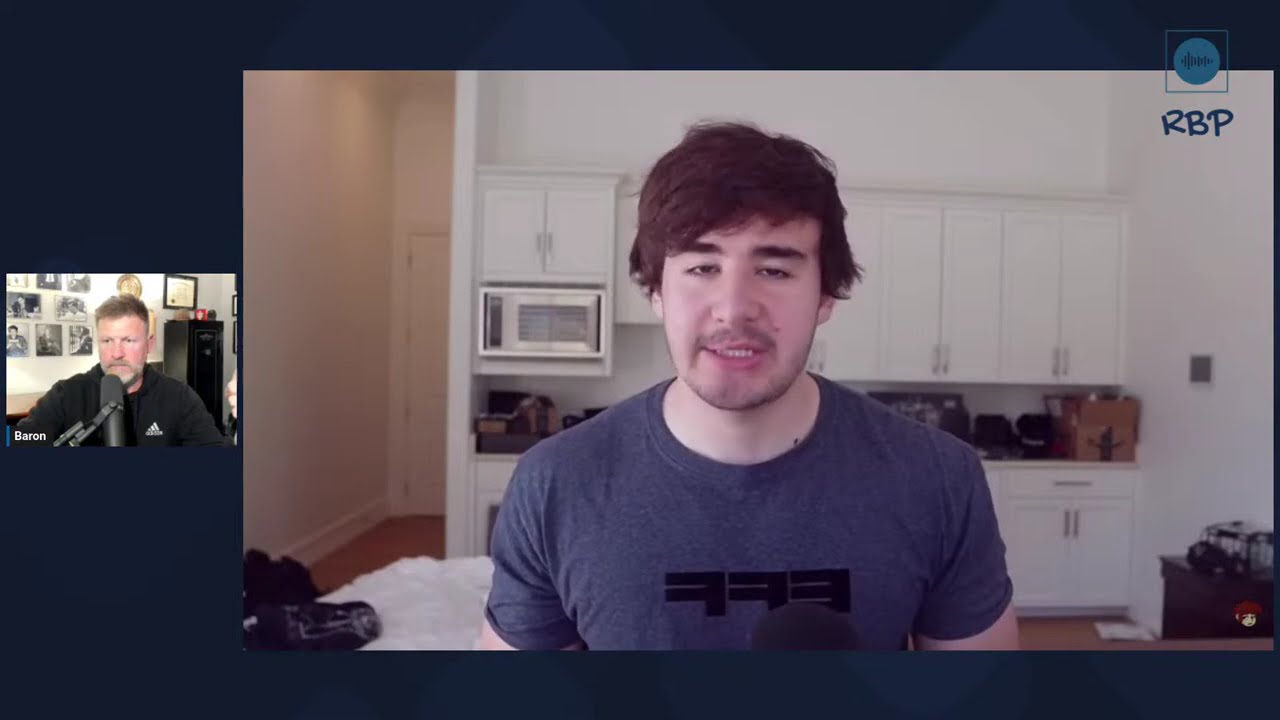
Baron Coleman returned from months away to reveal troubling patterns in Google search data. Using Google Trends functionality most people don't know exists, Coleman discovered that specific names, locations, and details connected to the Charlie Kirk assassination were being searched in Washington DC and Huntsville, Alabama days and even months before the shooting occurred. The searches included the shooter Tyler James Robinson, his roommate Lance Twiggs, the plane owner Derek Maxfield, the Losee Building building, and the weapon used. Coleman walks through each discovery methodically, showing how these searches appeared in only two locations: the DC metro area and Huntsville, Alabama—home to major FBI facilities. While carefully avoiding definitive conclusions, Coleman presents the data and lets viewers draw their own disturbing inferences about who might have had foreknowledge of the assassination.
An Unexpected Return With Disturbing Findings
Baron Coleman had no plans to return to podcasting after months away. He hadn't prepared his settings, hadn't planned the content, and certainly hadn't expected to stumble upon information so troubling it would compel him back on air. After consulting with several high-profile political figures—including household names who have advised presidents—Coleman decided the information was too important to keep private. What he discovered using a little-known Google search function could potentially reveal foreknowledge of the Charlie Kirk assassination by parties in Washington DC and Huntsville, Alabama.
Coleman emphasizes from the start that he's presenting facts, not drawing conclusions. He's sharing what the data shows and allowing his audience to form their own interpretations. But the patterns he uncovered are disturbing enough that even seasoned political operatives he consulted had never heard of the search functionality he used.
How Google Trends Works
Coleman begins by explaining Google Trends, a search function he first learned about years ago while advising for a grocery store chain. The tool allows users to see when people searched for specific terms, where those searches originated geographically, and the relative volume of searches over time. The data is indexed to 100, meaning the peak search moment in any given timeframe registers as 100, with all other moments shown as a percentage of that peak.
To demonstrate, Coleman searches "Atlanta Braves" and shows how interest spikes and falls over days and weeks. He can narrow results to specific states, metro areas, or even individual cities. He can set custom date ranges and exclude certain periods. This functionality becomes critical when examining searches related to the Charlie Kirk assassination.
First Application: The Butler Shooting
Coleman first used Google Trends for a nationally prominent story after the Donald Trump assassination attempt in Butler, Pennsylvania. He searched for Thomas Matthew Crooks, the alleged shooter, and found exactly what you'd expect: no interest in that unusual name until the day of the shooting, when searches exploded nationwide.
But Coleman went deeper. He ran custom date ranges excluding the shooting date and searched specific geographic regions. He discovered something odd: in the year leading up to the Butler shooting, searches for Thomas Matthew Crooks appeared in only two locations in the entire United States—Washington DC and Huntsville, Alabama.
Coleman tested other large states: California, Pennsylvania, Texas, Florida, New York, Ohio. Nothing. But Washington DC and Huntsville, Alabama kept showing hits. The connection? Both locations house major FBI facilities. The FBI headquarters is in Washington DC, and they operate a massive facility in Huntsville, Alabama. Coleman notes this could be remarkable—suggesting someone in the FBI was searching Thomas Matthew Crooks before the Trump shooting—but acknowledges it's just one data point. "If something happens once, it's a random occurrence. Twice is a coincidence. Three times is a pattern."
The Charlie Kirk Searches Begin
When the Charlie Kirk assassination occurred on September 10th, Coleman initially hesitated. Did he really want to be armed with this information? Did he want to know what the data might reveal? After internal debate, he began his searches.
The shooter was identified as Tyler James Robinson. Coleman searched the full name nationally over seven days and noticed a small blip on September 9th at 7 PM—the day before the shooting. Someone in the United States searched Tyler James Robinson's full first, middle, and last name the day before the assassination.
Coleman notes he hasn't seen the shooter listed anywhere as "Tyler James Robinson"—mostly just "Tyler Robinson." He had to do considerable searching to confirm the middle name was James. Yet someone searched that complete, specific name the evening before the shooting.
The Washington DC Connection Emerges
Coleman narrowed his search to the Washington DC metro area. At 11 AM on September 9th—the day before Charlie Kirk was assassinated—someone in the DC metro area searched Tyler James Robinson. You can clearly see in the Google Trends data when news broke and the name became public, creating the expected spike. But why was someone searching that name the day before?
Then Coleman remembered: it wasn't just Washington DC in the Thomas Matthew Crooks searches. It was also Huntsville, Alabama. He pulled up Huntsville for Tyler James Robinson. At 4 PM on September 9th—the day before the Charlie Kirk shooting—someone in Huntsville, Alabama searched Tyler James Robinson.
Coleman then drilled down specifically to the District of Columbia itself, excluding Maryland and Virginia suburbs. The signal on the night before the assassination was even stronger—strong enough to register significantly on the index in a concentrated geographic area.
The Plane Owner: Derek Maxfield
About an hour after the assassination, reports flooded social media about a plane that had allegedly turned off its transponder. The plane was owned by an LLC associated with a man named Derek Maxfield, and it had taken off from Provo, Utah, appearing to head toward Arizona before the transponder allegedly went dark.
Coleman makes clear he's not accusing Derek Maxfield of anything. He's simply reporting what Google Trends shows. When Coleman searched Derek Maxfield in the Washington DC metro area, he found searches on September 7th—three days before the shooting—and then nothing again until the name broke publicly with the plane incident.
Then Coleman checked Huntsville, Alabama. Again, a hit appeared. At 10 AM the day before the shooting, someone in Huntsville searched Derek Maxfield. Coleman also found searches in Utah on September 8th (two days before the shooting) and September 9th (the day before).
On the morning of the shooting, about three hours before Charlie Kirk was killed, there was another hit for Derek Maxfield in the District of Columbia.
The Plane's Tail Number
Coleman searched the plane's tail number: N8KG (November Eight Kilo Golf). Again, you can see where news broke the evening of September 10th and searches spiked. But in the weeks before, there were hits in Utah (where the plane was based) and in Arizona (where the plane appeared to be headed) days before the shooting.
Coleman then did something methodical: he excluded everything after September 1st to eliminate statistical noise from the shooting coverage. Looking back over 13 months in the Washington DC area, there was zero interest in this plane's tail number—until the week and a half before the shooting, when searches suddenly appeared.
He ran the same parameters for Utah: no data for 13 months leading up to the shooting, excluding the 10 days before. The exact same pattern. Then, disturbingly, Coleman noted on his live recording that when he checked the Washington DC data again, the hits appeared to have disappeared—raising questions about whether data was being cleaned up in real time.
Utah Valley University Searches
Charlie Kirk was assassinated at Utah Valley University. Coleman searched for the school in the Washington DC metro area over the three weeks leading up to the shooting. On September 2nd, someone searched Utah Valley University. On September 3rd, more interest. On September 7th—four days before the shooting—peak interest appeared. The next day, a little more interest, then it dropped back down.
Coleman finds this odd. It's probably a fine school with a beautiful campus, but it's not nationally known. Why would someone in Washington DC suddenly become interested in Utah Valley University in the days before a assassination happened there?
The Roommate: Lance Twiggs
Initial reports said Tyler James Robinson lived with his parents—his father was the one who turned him in. But within days, news broke that Robinson actually had a roommate named Lance Twiggs. Coleman describes both Robinson and Twigs as allegedly being involved in radical leftist groups.
Coleman searched Lance Twiggs and found two hits in the Washington DC metro area—but not recent. The searches appeared in January 2023 (almost three years before the assassination) and again toward the end of 2023 (almost two years before). Someone's radar had blipped on the roommate of the eventual assassin years earlier.
Coleman acknowledges this could be innocent—maybe a cousin visiting DC, maybe someone who took a romantic interest. But it's notable that someone in the DC area had searched for Lance Twiggs multiple years before his roommate would assassinate Charlie Kirk.
The Losee Building Building
The alleged shooter allegedly positioned himself on a building called the Losee Building. It's an unusually named building. Coleman notes that if you search just "Losi" nationally, you get some hits in Nevada where there's apparently a city or road with that name, but the rest of the country shows little interest. "Losee Building" gets even fewer searches outside Utah.
But if you're planning an assassination and looking for good tactical positions, you might Google the buildings around your target location. Coleman found that in mid-to-late spring, someone in the Huntsville, Alabama area showed keen interest in the Losee Building. That was the only hit, and Coleman had excluded the days around the shooting to eliminate statistical noise.
Then came what Coleman describes as "probably the wildest search." On September 8th—two days before the shooting—someone in the Washington DC metro area searched the Losee Building. Coleman's voice rises as he asks: "Why? Why on September 8th, two days before the shooting, is someone searching the Losee Building? Why? What is it they wanted to know?"
The Weapon: Mauser 98
Coleman searched for the rifle reportedly used: a Mauser 98. Over the month leading up to the shooting, there was no interest nationally until August 31st, when there was a small blip, and then a significant hit on September 7th—three days before the shooting. He found this was concentrated in Pennsylvania.
Coleman then searched the District of Columbia specifically and found a hit on August 27th, 2025—the only time in the month it was searched there. He expanded the search back six months. Still only that one hit. Back to April. Still only two hits total.
Then Coleman checked Huntsville, Alabama. One hit appeared. He tested this against other medium and large states to see if this was just random statistical noise. Tennessee had one hit. Ohio had one hit. But Arizona, Colorado, and Utah showed nothing. Coleman concluded there might be some statistical noise here, but the pattern of DC and Huntsville appearing repeatedly was becoming harder to dismiss.
Frank Turek and Other Searches
Coleman also searched Frank Turek, one of Charlie Kirk's associates who was allegedly present and whom some conspiracy theorists online speculated might have been involved. Coleman makes clear he doesn't believe Turek was involved—he actually tries to clear Turek's name through the data.
But the searches show hits in the Washington DC area in the weeks before the shooting. Coleman finds no hits in Huntsville for Turek, which breaks the pattern. He searches other states randomly—Colorado shows nothing, Utah shows hits, Texas shows a few hits (Turek may have had connections there), California shows nothing, Arizona shows nothing.
Coleman also notes searches for "Utah death penalty" appeared in the District of Columbia in the days before the shooting, though he doubts anyone planning to assassinate a public figure like Charlie Kirk would be deterred by death penalty laws.
The Timeline Question: When Did They Know?
Coleman addresses a critical question: when would anyone have known Charlie Kirk would be at Utah Valley University on September 10th? He asked the AI tool Grok, which reported the university first announced it on September 1st or 2nd—just over a week before. Charlie Kirk's own website and social media first mentioned it around August 27th.
But Coleman, who has experience planning large events, explains this doesn't make sense with the search timeline. Planning a tour stop takes months. You have to contact university chapters, get responses, plan regional logistics, coordinate with the university administration, arrange security, obtain permits, and organize the physical equipment—Turning Point USA traveled with truckloads of audio and security equipment.
Coleman estimates it could be six to nine months from initial planning discussions to the actual event. At some point, emails would go back and forth mentioning: "We can get on the Utah Valley University campus. We'll be in the little courtyard." If someone had access to those emails—whether through an inside source, a security breach, or government surveillance programs—they could have known months in advance where Charlie Kirk would be, possibly before Charlie Kirk himself knew.
The Huntsville-DC Pattern
The recurring pattern throughout Coleman's investigation is undeniable: Washington DC and Huntsville, Alabama. These two locations repeatedly show searches for names, places, and details connected to the assassination before they became public.
Coleman notes both locations house major FBI facilities—headquarters in DC and a massive facility in Huntsville. But he's careful not to draw definitive conclusions. These could be FBI agents. They could be other government employees. They could be private contractors. They could be foreign actors. They could be completely unrelated individuals with innocent reasons for their searches.
But the pattern persists across multiple unconnected search terms: Tyler James Robinson, Derek Maxfield, the plane tail number, Utah Valley University, Lance Twiggs, the Losee Building, the Mauser 98, Orem Utah. Over and over, Washington DC and Huntsville appear in the days, weeks, and sometimes months before the assassination.
On Making This Information Public
Coleman explains he consulted with several people—including names his audience would recognize, people who have advised presidents on national matters—about whether to go public with this information. He knew he was potentially spoiling his ability to ever use this investigative technique again, since now people would know about it.
But he concluded the information was too important to keep private. Someone was searching these names and locations before the assassination. Whether they were government agents, state actors, private individuals, or something else, Coleman believes journalists and law enforcement should be asking questions.
If he were the FBI, he'd want to know who was making these searches. If he were Utah State Police, he'd want to know. If he were the families of Tyler James Robinson or Lance Twiggs or Derek Maxfield, he'd want to know. Even Derek Maxfield himself should want to know who was searching his name in DC and Huntsville in the days before the shooting—maybe someone was trying to frame him for something he didn't do.
Coleman's Personal Reflection on Charlie Kirk
Coleman makes a striking admission: he never listened to Charlie Kirk's podcast. Kirk wasn't his brand of conservatism. Coleman doesn't listen to Sean Hannity, doesn't listen to Bill O'Reilly anymore, doesn't listen to Megyn Kelly or most right-wing podcasters. He has limited time with work and family.
If someone had asked Coleman on September 9th what he thought of Charlie Kirk, he would have said, "Take him or leave him." He'd occasionally enjoyed seeing clips of Kirk debating college students on YouTube or TikTok, but had no strong feelings either way. He'd never been to an event, never wanted to meet him, never followed his work closely.
But after seeing the video of the assassination—particularly the close-up footage showing the massive quantity of blood and the look on Kirk's face—Coleman felt an almost supernatural connection to him. His eyes watered, which he admits is rare for him. He immediately called his sister and told her not to watch the video, that it was too horrific.
Coleman believes this visceral reaction explains much of the national outpouring. It's similar to the John F. Kennedy assassination—when you witness such a horrific public slaughter, you identify with that person in a way you never could before. Kennedy's approval ratings weren't exceptional before his assassination, but he became one of the most beloved presidents afterward, partly because people witnessed his death.
On Political Violence and Consequences
Coleman addresses the disturbing man-on-the-street interviews circulating online where people say Charlie Kirk "deserved it" or "somebody had to do it." He emphasizes he has no problem with liberals—he actually loves AOC, though he disagrees with her on almost everything and wouldn't want her as president. His concern isn't with political disagreement but with the consequences of a mentality that accepts political assassination.
"If your speech that someone disagrees with is a reason to die, that doesn't matter what the political point of view being espoused is," Coleman explains. If it's morally acceptable to kill someone because you disagree with their words, then logically it's also morally acceptable for them to kill you because they disagree with yours. That's not a world anyone should want to live in.
Coleman says he didn't like it when people on the right joked about or seriously discussed assassinating Obama, Biden, or Bill Clinton. He sees leftist commentators and podcasters who say horrible things, but he doesn't want them dead. If it's right that Charlie Kirk should die because leftists disagree with him, then it's right that leftists should die because Kirk or his followers disagree with them. That logic leads to societal collapse.
He also addresses foolish talk on the right since the assassination about "grabbing guns" and violent retaliation. "You don't want to live in that world," Coleman warns. "You don't want to live in the world where people are going door to door shooting each other, hunting you down like dogs." When everybody's fighting, nobody survives long. We're not in that world—people are still going to grocery stores, churches, gas stations, gyms. That's not the reality, and we shouldn't invite it.
What Coleman Thinks Should Happen Next
Coleman carefully avoids drawing definitive conclusions from his data. He presents facts and patterns, but he won't claim to know who made these searches or why. However, he believes the patterns are disturbing enough that journalists and law enforcement should investigate.
The Google Trends data shows someone was searching for the shooter's full name, the roommate's name, the building location, the university, the alleged getaway plane and its owner, and the weapon—all before the assassination became public. These searches concentrated in two specific locations: Washington DC and Huntsville, Alabama.
Coleman emphasizes that more information is better than less. It's very early in the investigation—normally four days into a homicide investigation, the file book hasn't even been opened yet. But this is different because it's Charlie Kirk. The public deserves to know who had this information before the shooting, and why.
Coleman's Return to Podcasting
Coleman concludes by addressing why he stopped podcasting months ago. He made all his previous episodes private and went silent. He says viewers could probably guess why, and that's all he'll say. He wants to return to regular podcasting but will take a different approach—maybe not everything that comes to mind needs to be said out loud.
This particular episode brought him out of retirement because the information was too important. Four of the eight portraits on the wall behind him are of people who were either assassinated or survived assassination attempts. John F. Kennedy's assassination remains the most shocking ever recorded, partly because it was videoed and widely distributed, creating an unprecedented connection between the public and the victim.
Coleman believes the same phenomenon is happening with Charlie Kirk. The close-up video of his death is circulating widely, and people who previously had no strong feelings about Kirk now feel a deep emotional connection to him. They witnessed something horrific, and it changed them. That's why the outrage is so intense, why the investigation matters so much, and why Coleman felt compelled to share what he discovered—even at the risk of never being able to use this investigative technique again.
Video Transcript
I have a gosh, I was not going to come back yet. I know I've been gone for weeks, uh, months maybe. Uh, and I was not going to come back yet. I don't have any of my settings right. Anyway, um, I've got something so disturbing tonight. And I've consulted with a number of people, including uh, Mrs. Baron podcast uh, and a number of other people. some of the some of the names you've you've almost assuredly heard of if you're listening to this. If you care enough about politics and my brand of politics, you've probably heard of some of the names of the people that I've consulted with on whether or not to discuss what [clears throat] I've found, what I've uncovered. So, I will get there. I promise you this is not I'm not teasing you. This is not a strip tease, but I will um kind of give you some background for it because I have been gone for a while. And [clears throat] as I give you the background, understand I'm not killing time. I don't want to make this any longer than it has to be. I don't want it to be painful. I want this as painless as possible. But I didn't know how else to get this information out into the public. And I think it is disturbing enough that it needs to be out in the public. It is uh frankly one of the more disturbing things I've run across. But let me give you the background of how I did this. There's a there's a search function in Google I learned about years ago. And everybody knows how to use go. You open google.com and you can you can uh you get a search window and you start typing in your stuff. A lot of it's a a lot of you have it as the default browser. So you just go up to your where you would normally type like uh baron.com or whatever. You would uh you go up there and you just start typing something, you know, uh closest grocery store and it'll pop up a Google search because Google is your default search engine. Uh but if you actually go to the Google.com page, it'll give you a search window. But there are a whole lot of functionality you can do in that search window that most people don't know about. And the reason I'm confident most people don't know about it is when I ran by several very sophisticated again household names in some instances uh names that have people that have advised presidents uh advised uh on on mega national matters and instances. [clears throat] And I said, "Hey, have you ever heard of this search functionality in Google called Google Trends?" And several of them were like, "No, never heard of it. What is it? What does it do?" Some of them were like, "I kind of heard of it, but I don't really know what it was." I first heard of it when I was advising for a grocery store chain decades and a half ago, probably a long time ago. [clears throat] And uh I was a very small member of a team, but I was part of a team. And the and the team had a very sophisticated guy on it. and he had discovered this functionality on Google where you could go and you could sort of view what it was people were searching and when and you could get trends related to it. And so I'll demonstrate that for you on something random, but it'll and I'll give you an idea of how it works. And then I'll explain where I first applied this to any sort of Breaking National story. And then I'll explain how I applied it to Charlie Kirk. And then I'll explain one of the most distur disturbing things I've come across in a very, very long time. A very long time. And I've discovered a lot of disturbing things. Uh, a quick Google search of my name will reveal some of the garbage I've been involved with over the course of my life. Um, [clears throat] but this is this potentially takes the cake. This potentially is one of the more disturbing things I've ever been involved in. So, let me show you briefly, and for those of you who already know, this is a little primer, but that's fine. Uh, I want to show you briefly how this search functionality works so that as I'm saying things, you guys understand what I'm talking about. If you go to up here, trends.google.com, you'll get this search window right here. And I can I can search anything. You can see I searched Broncos versus uh Atlanta Braves, right? I can search Atlanta Braves and I can click explore. Well, that's a terrible Oh, because I didn't put this. All right. Atlanta Braves and it gives me an index and this is set for over the last 24 hours. So I can see over the United States, that's what this is up here, over the last 24 hours in all categories of web searches when the Braves were searched the most over the geographically limited right here, the United States. And you can make it worldwide, you can make it uh anything you want. So let's start with the United States. Let's say the past week. Over the last week, the moment the Atlanta Braves were searched more than anything else was September 9th at 8:00 p.m. For whatever reason, September 9th at 8:00 p.m. across the United States, more people were interested in googling the Atlanta Braves than at any other time. You'll notice the waking and sleeping and all this and you probably some games in here or whatever. Um, but it is it's indexed at 100 being the most searches at any given time in the time frame you've referenced here. And again, I will explain why this is important and maybe you can already see where I'm going and you understand why this is so disturbing. It may be the most disturbing set of facts about the Charlie Kirk assassination that that I've come across. And if I broaden this out to 30 days, you'll notice that now it is August 23rd, 2025 was the was the day that the Atlanta Braves were the most searched of the last 30 days. And then as they have gone on a little bit of a losing streak or a slide, you can see interest in the Atlanta Braves has waned over time and it reached a low right here of 34 on September 12th. And what that means is only 34% of the searches were run on that day relative to the August 23rd peak of 100. It's indexed to 100. If you don't know what that means, that doesn't mean there were 100 searches on this day. It means there were some number of searches, but it's the most number of searches in the last 30 days. This doesn't mean there were 34 searches or 35 searches. It means there were 34% of the number of searches that were to the index of 100. That's how it works. That's across the United States. I can limit it to the Atlanta metro market and I'll get a different set of numbers. I can limit it to the state of Georgia and I'll get a another set of numbers. They look the same because interest sort of is across the board. I could probably go to uh let's say the state of New York for example and I could see here August 24th it was and there's a low of actually zero right here in the state of New York. They don't like the Atlanta Braves apparently on that particular day. That's how Google Trends works. Now, I first came across Google Trends as an item of national prominence or a n in the breaking of a nationally prominent story. Let me say it that way. Uh back in the wake of the Donald Trump assassination attempt in Butler, Pennsylvania, the guy's name that I was Google trend searching was Thomas Matthew Krooks. He was the alleged shooter that was on the uh ARG building. And when I did a Google trend search, I thought, well, that's really weird because I started doing it in um nationally. And of course, as you would imagine, there was no interest in Thomas Matthew Cooks nationally. And one day, 5 days, 7 days, 30 days, 1 year, 2 years, 5 years, no interest nationally in Thomas Matthew Krooks until the day of the Butler shooting. Because on that day, everybody learned his name. And what did he do? The same thing we all do. We all run to Google and we type in Thomas Matthew Krooks. And so on the day of the Butler shooting, there was a gigantic spike. And so I thought, let me drill down on this though with this search functionality. I can limit it to custom date ranges. I can do 2004 to present, basically all of Google's searches. I could do a custom range and I could cut it to any particular dates I want to. And so I started doing that. And I started doing custom ranges around particular geographic locations. And then news broke in the days after the Donald Trump assassination attempt in Butler, Pennsylvania. Whether credible or not, I don't know, but news broke that there were some cell phones that pinged at Thomas Matthew Cooks's house. Again, I don't know if that's true, but that was what the news was saying. And those cell phone pings were linked to Washington DC. They also pinged in Washington DC. So, I thought, let me do something. Let me do something random. Let me look and see if anyone in Washington DC had been searching Thomas Matthew Crooks before the shooting. So I pull up the dates and I exclude the shooting date. And lo and behold, there were hits. And I thought, that's weird. That's such an unusual name. There can't be a lot of Thomas Matthew Crooks. Why were they searching Thomas Matthew Krooks in the year or so? a few times, not every day, but a couple of hits in the Washington DC area. So, I thought, well, maybe that's just just happens. So, let me try some other jurisdictions. And I tried New York and I tried California and I tried Pennsylvania and I tried Texas and I tried Florida. I tried big states across the country and I got no hits. And I kept coming back to Washington DC and I thought, why would it be hitting in Washington DC? Obviously in Pennsylvania as well, but not hitting in any of these other states. Let me try Alabama. I had long contacts in Alabama. I lived there for 20 years. So, I tried Alabama and lo and behold, there were hits. And so, if you search, we'll just keep using the Alabama uh Atlanta Braves here for a second, but if you look up Alabama, you'll notice I can take Alabama and I can break it down by metro area. Birmingham, Columbus, Georgia, Dothan, Huntsville, Meridian, Mississippi. So, West Alabama, Mobile, the the Bay Area, um you know, central West Alabama, the Selma area, Montgomery. And so, I started clicking where are these searches coming from in Alabama? Who in Alabama is interested in Thomas Matthew Krooks? And what I found was the searches were limited to the Huntsville, Mobile, the Huntsville, Decatur, Florence area. Why would someone in Huntsville be worried about Thomas Matthew Crooks or be searching Thomas Matthew Krooks? And the only places on earth I could find who were searching Thomas Matthew Krooks before the Butler, Pennsylvania shooting were Washington DC and Huntsville, Alabama. And so my mind gets curious. What is the connection? And there needs there doesn't have to be a connection. But there probably is a connection. If it's not in California and it's not in Pennsylvania and it's not in Florida and it's not in Texas and it's not in Indiana and it's not in Ohio and it's not in New York, but it's in Huntsville, Alabama and Washington DC, what is the connection? And then I start to remember, wait a minute, the FBI has a headquarters in Washington DC, obviously, but they also have a massive facility in Huntsville, Alabama. H maybe that's the connection. Maybe someone in the FBI was searching Thomas Matthew Krooks before the Trump shooting, which would be remarkable, by the way. which would be remarkable, but I can't prove that. That's just one data point out of all the trillions of data points on Earth. That's just one. And I have a saying, if something happens once, it's a random occurrence. Twice is a coincidence. Three times is a pattern. Three times is a pattern. And I only had the one name to go by because there were no known accompllices or alleged accompllices. There were people speculating, oh, there was a second shooter or there was a third shooter or there was a team over here or there was a team over there. There were all these things. Someone must have been involved. Someone must have been helping him. But there were no names. I only had the one name to go on. And that's just a random occurrence. Even though it's little weird that it was in Washington DC and a little weird that it was in Huntsville, all I had to go on was that. And I've done this with other things. As school shooters have popped up, as mass casualty events have popped up, I have searched the names of the people and I don't usually get any hits. Most people, for whatever reason, just aren't searched that much. Now, maybe if you're on the radio or you're on television or you have a podcast or you're a sports figure or you're on a movie, Yeah. or you're a politician, your name probably does get searched some. But most people named, you know, William Francis Sanderson, he's probably not searched all that much. Not enough to show up at a blip in random cities. And then the Charlie Kirk shooting happened. And I kind of sat there for a while and I thought, do you want to do the Google Trend search for the shooter? Do you want to be armed with this information? Do you really Do you really want to know this? This is a good comment here. How stupid are the agents at the FBI? I don't know that these are agents at the FBI. I will draw no conclusions tonight. I'm only laying out facts. I will not say this is definitive proof someone at the I'm not doing that. What I'm doing is giving you the facts and you can draw your own conclusions. But incognito mode will not stop the Google Trends from showing up. It will not stop if you use incognito mode in Huntsville. Alabama, it will still show up as a Huntsville, Alabama search. Now, if you used a VPN and you set it to Albania, maybe, but how do most people do their jobs? And most people don't know this functionality exists. I'm probably spoiling it from ever being used again, frankly, in in a high-profile event, but I think this is important. That was one of the considerations I had with people as I talked about whether to go public with this information. Not that a trillion people are going to find out about this, but just in case. I probably am spoiling my ability to ever do this again, but I think it's that important because the information I found is that disturbing and I'm going to give it to you in a minute. It is that disturbing. Oh, you're telling me the shooter Hey, it's worse. Wait, boy. You're going to be shocked if you think it's just the shooter's name showing up in different locations. It It's bad. It's bad. So, let me show you. Let me show you what I'm talking about here. I got to get rid of the Atlanta Brave search because that's irrelevant. So, let me show you the first search I ran. Again, the shooter's name was identified on September 11th, late uh or maybe early September 12th, early September 12th. The shooter's name is identified. It was Tyler James Robinson. So, I did a search for Tyler James Robinson nationally over the entire United States for the past seven days, and you'll notice the gigantic spike right after the news broke. But I noticed right over here, there was a little blip on September 9th at 7 p.m. Damn, that's weird. And and and keep in mind, this is a blip large enough to show up on a on an index at a two. Now, granted, I'm going to keep going. You're going to be surprised by what I show you here in a few minutes. It's a blip large enough to show up as a two. The day before the Kirk shooting, the day before the Kirk shooting, someone in the United States searched Tyler James Robinson, the full name, first, middle, last name of the shooter. Now, what's interesting about that is I've not seen him listed anywhere as Tyler James Robinson. I've seen Tyler Robinson a lot. I've seen his name, his mom's name. I think her name was Amber or something. She didn't do anything. So, I'm not blaming her. I probably should have named her, but it's public. I've seen her dad's name. I've seen his dad's name. I've seen his roommate's name. I've seen all these other things, but I've not seen anywhere where it said Tyler James Robinson. I had to do some like soouththing to figure that out. But it showed up there the evening before the Kirk shooting. So, I thought, where's it coming from? Surely not. Surely it's not going to. So I go back to my notes. I go back to my notes and I look at where did the where were the two places that Thomas Matthew Crooks showed up in a Google trend search before the shooting. Well, there's Washington DC at 11:00 a.m. the day before the Charlie Kirk shooting. And you'll see here where the news finally broke that it was in fact Tyler James Robinson. But notice that that's weird. That's weird. That's going to be a recurring theme today. That's weird. You're telling me at 11 a.m. the day before the shooting the Now, keep in mind Charlie Kirk was assassinated on September 10th. Someone in Washington DC metro area is searching Tyler James Robinson the day before the shooting. Why? Why? You can see clearly when the news broke. Why were they searching the day before? I go back to my notes. I take notes when I do this kind of stuff. Just soothing around. I go back to my notes. Oh, it wasn't just Washington DC. I forgot it was also Huntsville. Surely not. I think to myself before I even do the search, you know, Baron, if this shows up in Huntsville, I'm going to start to panic. I will officially start to panic if this shows up in Oh, there it is. 400 p.m. the day before the Charlie Kirk shooting, Huntsville, Alabama, Tyler James Robinson. Again, I'm not drawing a conclusion. I'm not telling you that somebody worked at a particular place. What I am telling you is somebody searched him in Huntsville. A Huntsville IP searched for Tyler James Robinson about the same time a Washington DC metro area searched for Tyler James Robinson. Well, now we're really getting weird. Now we're really getting weird. Are you telling me there could be more, though? Is it possible? Well, let me drill down not just to the DC metro area, but the District of Columbia itself. Here again is where the news broke. Everybody on the planet went and searched Tyler Robinson. And you'll notice the third name searches kind of fell off the map. But look at that. Look how strong of a signal that is in Washington DC. The night before the Charlie Kirk assassination, the night before the Charlie Kirk assassination in Washington DC in the DC metro area and in Huntsville, you're getting this strong of a signal. Someone is searching the name Tyler James Robinson. Right there, Tyler James Robinson. Well, now this is just bananas, I tell myself. Surely it has to stop here. Surely it has to stop here. And I even put my computer down. I closed the clamshell on the MacBook and I thought, should I just stop? You know, there's a difference between what you can do and what you should do? Should I do any more searches? Because at this point, I'm getting a little suspicious about where these people or why these people might have been doing the searches. And again, I will not draw conclusions here. I can give you options. Maybe people work at government agencies. Maybe they work at private enterprise. Maybe they work for foreign states. Maybe they work. Who knows why they're doing the searches or who they work for when they're doing the searches? Maybe it's just somebody with a burning desire nine o'clock the day before a Charlie Kirk assassination to look up Tyler James Robinson for no apparent reason. Maybe. Maybe. Maybe. And then I get a weird piece of information. The night of the assassination, I start seeing everybody on Facebook saying, "Oh, there's a plane and its transponder went off." And I thought, "Nonsense. This is confirmation bias. Surely this is confirmation bias. They're listing the name of the guy who owns the plane. They're listing the tail number of the plane. They're listing the company the guy works for. And I'm thinking this cannot have anything to do with it. And I'll tell you the story real quickly. About an hour after the assassination, a random plane owned by a random guy takes off from Provo, Utah, about an hour away or 30 minutes away, however far away it is. And it and it flies south and it's looks like it's heading towards Arizona. Uh but before it gets to the Utah B Utah border, it turns it trans it looks to me like it turns it transponder off based on the flight pattern. Again, I cannot confirm all that. I wasn't on the plane and I am not an aviation professional going solely by what people were saying. But when I got those hits on Tyler James Robinson, I thought, I got to look. I got to look. I got to know, is it possible that the owner of the plane, a guy named Derek Maxfield, and I am not accusing him of anything, by the way. This is not an accusation. This is me simply telling you what is in Google Trends, just transmitting factual information. No opinion, no allegation of fact other than what I can show right here. A guy named Derek Maxfield is associated either owns the LLC or is associated with the LLC that allegedly owns the plane that allegedly turned his transponder off that allegedly caused people to freak out on Facebook and act like it could have something to do with it. No accusations, but I do the Google trend search anyway in Washington DC area and I see here where everybody starts freaking out saying that the transponder got turned off. I think what the hell is this? Why was someone in the Washington DC metro area searching for Derek Maxfield on September 7th and then not again until his the name breaks with the weird plane thing? That's just weird. That's just weird. But maybe it's just a coincidence. Maybe there's nothing more to it. You know what? Instead of popping off every time, I'm just going to do this. This is easier, I think. Well, that's just the Washington DC metro area, though. Maybe it's people in Maryland. Maybe it's So, let me drill down and see Huntsville, Alabama. Lo and behold, there's this Huntsville connection again. What the hell's going on in Huntsville, Alabama? Trust me, guys. I looked a lot of places. I didn't see any. I cannot tell you without a doubt, there's not a single hit prior to the shooting anywhere else. But I can tell you, I looked a lot of places. You see the hit here where it became public about it and then you see look back here and you think that that's just faking weird. This is 10:00 a.m. the day before in Huntsville, Alabama. Well, what about Utah? Okay. Well, here are the hits in Utah from where the news started breaking the night of September 10th and on the next few days. But why what is this? This is two days before the shooting at 8 am. Again, the day before the shooting at 10 a.m. What? What? And then I just drill it right down to the District of Columbia. I exclude all the other dates and the morning of the shooting, about 3 hours before the shooting, I get a hit there. Well, I think, well, maybe they're just looking for him. And again, I'm making no definitive conclusions by any of this. I wasn't making a definitive conclusion with Tyler James Robinson back here. And I'm not making a definitive conclusion here where you see a little blip days before the shooting in Washington DC. I don't know what it means. But the search continues. I have to know more. So I go to the tail number of the plane in 8 kg. November 8, Kilo Golf. And you can see here where the news breaks about the plane. The evening of September 10th, the evening after the shooting. You can see the news break here about the plane and everybody starts rushing to look at it as they come across it on their Facebook and Twitter feeds and all this. But what is the in Utah? Now granted, the plane's based in Utah, but why the interest in this plane? There was no other interest before And so I go to Arizona. Remember he was he looked like the plane was headed to Arizona and all of a sudden there's a hit there two days before the shooting. Three days. Yeah. Two days before the shooting. Utah was the day before the shooting. Oh, I'm getting ahead of myself. Again, no accusations, no allegations, just showing you what the Google Trends search show. I've downloaded all this data. I've saved all the screenshots. That may have no value. Maybe total coincidence. You know, if you're walking through the grocery store and you look and you see a penny on the floor and you pick it up, someone dropped a penny. But if you look up about 20 ft and there's another penny, you think, "Oh, someone dropped two pennies. That's weird." And you look up another 20 ft and there's another penny and you think three pennies all 20 ft apart? That's really weird. And you go around the corner and there's another penny and another penny and another penny and another. At some point someone's not just dropping pennies. But I don't know that for a fact. Maybe they have a hole in their pocket that very consistently allows one penny at a time to come out at the pace they're walking. I don't know that. Well, this took place on the campus of Oh, actually, I've got one more here, I think. Yeah. Yeah. Yeah. Okay. So, here's what I did here. This November triple 8 uh kilo golf here. I I I excluded, you'll notice the date here. I excluded everything after September one in the Washington DC area because I I I I I asked myself and I did this with several of the other ones and I can I can go through examples if you want me to just so you you can kind of see how this works. But I asked myself I is it possible I'm getting some kind of statistical noise around the shooting around the assassination attempt. So I take the plane. This is the first one I did it with. I took the plane. And I thought, okay, let me just exclude everything within a week of the shooting. The shooting took place on September 10th. I go back and I say arbitrarily, I'm going to just select September 1 for no reason whatsoever. And I'm going to go back a year and accidentally went back 13 months, whatever. And you'll notice in the Washington DC area for November 8 kilo golf, there is no interest whatsoever in this plane in that area. no statistically relevant interest until the week and a half before the shooting and all of a sudden there's keen interest in November 8 kilo golf in the Washington DC metro area. Now we could keep this same date range. I'll do this live and we could do Utah. Same date range, no data, meaning no statistically relevant quantity of searches on November AAA kilo golf in the 13 months leading up to the shooting, excluding the 10 days before the shooting, which was the exact same thing I did for the Washington DC metro area. I don't even know if I've done district of Columbia alone here. Let me try this live. We are we are researching live on air. Okay, not in District of Columbia, but if you go to the Washington DC metro area, it has changed. Are they cleaning it up on the fly? You guys saw it. It was there. You are kidding me. It is gone. It was there. I don't know what else to do it. I've already download the data, so it doesn't matter. Let's go to Utah Valley University, the sight of the scene. The Washington DC metro area. Again, I excluded the day of the shooting here because there was so much interest. It was messing up all the statistics. But in the 3 weeks leading up to the shooting, no interest in Utah Valley University in the Washington DC metro area. On September 2nd, all of a sudden, we have some interest. September 3rd, a little more interest. September 7th, peak interest. 4 days before, three days before the shooting. The next day, a little interest. and then back down. But I think maybe someone's going to college. It's I mean it's a probably a fine school. It looked beautiful on campus. The pictures I've seen on campus look stunning. I have no idea. I've never heard of it before. Well, let's let's get out of the Utah Valley University and let me go to what I think is the most stunning fact yet. the the fact I think that could put it all together for people who want to draw conclusions. I don't want to draw conclusions. But for those who feel compelled to draw conclusions, let me show you something pretty wild. For the first day or so after the shooting, we were told Tyler James Robinson, the alleged assassin, lived with his parents. In fact, his dad's the one that turned him in. But in the last couple of days, news has broken that no, in fact, he had a roommate. And the roommate's alleged roommate's name allegedly is Lance Twigs. I cannot put allegedly on this enough. The roommate's alleged name is Lance Twigs. TWWI GGS. Twigs. Lance. So, I thought, sure, let me see. Let me just search Lance Twigs. It's a weird enough name that if it popped up, someone's looking for that guy. Now, keep in mind, these people are alleged to be in radical, you know, uh, leftist groups and they're alleged to be doing radical things to their bodies. And I have no doubt if you're kind of wild and you're discussing on Discord allegedly shooting the assassination of a a beloved public figure, I'm guessing you probably the guy someone might want to search from time to time. So I pull up Lance Twigs and I get two hits in the Washington DC metro area, but they're not recent. No, no, they're not recent at all. This is from January of 2023. This is almost 3 years ago. And I get another little blip here towards the end of 2023, almost two years ago. Somebody's radar blipped in the Washington DC area on the roommate of the assassin. two and three years ago. Again, I don't know who it was. Might be a guy that took a fancy to the the roommate. Might be a girl that took a fancy to the roommate. Might be a cousin who was in town in Washington DC and thought, "I got to look up Lance Twigs." Now, Lance Twigs lives in Utah, presumably has for a long time, but somebody in the area took a keen interest on Lance Twigs several years ago. So, I start thinking, if if I'm if I'm doing all these searches in the Washington DC area, and I'm and I'm plotting an assassination, what else might I need to search? I looked up Utah Valley University. I looked up the alleged, you know, what some people were saying could possibly be a getaway vehicle. I looked up the owner of the said vehicle. I looked up the shooter. What else? Well, if you go to the scene of the crime, there was a very unusually named building that the shooter allegedly the alleged shooter allegedly perched on. I Let's just assume everything I say in this thing is alleged. It's called the Lowi Center. L O S E. Now, if you do a nationwide search for just the word Losi, you're going to get some hits in the uh Nevada area. I think there's a city or a road or something there named Losi. But the rest of the country is pretty stark when it comes to Losi. And if you go to Losi Center, very few people outside of the state of Utah have ever fancied what the Losi Center is. They've not Googled it if they have. But if you're planning to assassinate somebody and you're looking for good places to do the assassination and you want to know more about those places, you might Google them. You might and if you pull up a map of the little courtyard where Charlie Kirk was assassinated and you look around and you think, well, that might not be a bad spot because you could run right off the northern corner of the building there and you're you're home free. You got you got a getaway car. So I looked it up. Now this is a while ago. This was the Huntsville area. For some reason, mid to late spring, somebody takes a keen interest in the Losi Center in Huntsville, Alabama. And that's the only hit we get. Now granted, see here, I've excluded the days the day or two leading up to the shooting and the day of the shooting because it's again all the statistical noise just just ran all this stuff to basically zero. So if you want to see the index, you've got to exclude all that noise. And then I thought, surely not if they're in Huntsville, surely not in the Washington DC. Oh gosh, here we are. This is probably the wildest search that I was able to do. September 8th. You can see here where the shooting breaks. 3 p.m. he's shot. By 4 pm, everybody on the planet is searching Losi Center, including people in the Washington DC metro area. But I saw this blip and thought, why? Why on September 8th, 2 days before the shooting is someone searching the Losi Center? Why? Why? What is it they wanted to know? I'm not going to make the mistake I made a moment ago, but let me just give you an example here. I'm going to open a new tab. Well, I got to close my thing to open a new tab. Hold, please. Let me open a new tab and we'll do a Google search here. We'll do a trend search. Anybody want to name a topic? We'll do it together. If you name a topic, I'll do it. You got the comments here. Uh may need to do the search for Baron Coleman. I don't think that's smart. I could try it, but I'm not going to do that. Uh accusations none. If you want me to do a search, if you have any of these terms that have come up over the course of this investigation, you think I sure would like what to know what people are saying about this, I'll be happy to do the search live. If not, I'll do some myself. What about um what about a uh No, people aren't going to search a Mouser 98, are they? Was that was that what the shooting was? A a 98 model B M B M B M B M B M B M B M B M B M B Mouser. Let's try it. Mouser 98. Lots lots the last couple days. You'll see that lots of interest the last couple days. Let's go the last seven days. See, uh, very little interest the morning of. That's kind of weird, actually, because we have no interest and then we have a little Where's that interest coming from? Oh. Oh, I have to exclude this because obviously Utah, Wyoming, I don't Yeah. Okay. So, these are your It's a really fascinating tool, by the way. If you want to look in here, you can you can see what it is people are searching along with Mouser 98. 30 Springfield uh uh Tyler Robinson Foundation. I've never heard of that. Fascism. You know, all fascists carry a mouser 98 length, dimension, sniper, uh Tyler Robinson. So, you get all these uh uh you get all these searches here, but let's exclude some time, shall we? Let's just do this just for this. I've not done this one, by the way. We're going to have to go back in time, and we're going to have to do it from before the shooting. So, let's let's exclude it to November uh September 9th. And so, let's just do a national one. Let's do a month. Let's do uh April 10 to to November 9th. And let's just see. I don't know what this is going to show. It might show nothing or not enough information. This is I do not want to be like Haraldo ripping open the safe expecting to see great thing. I don't know what this is going to show. I ran a thousand searches. No, I didn't. I ran like 30 or 40 extra searches that you haven't seen. Some of them actually showed stuff. I just I got to I only I only wanted to be on an hour. Okay, so this is interesting. Over the United States in the month leading up, there was no interest in Mouser98s until August 31st and then there was a blip and we really got a good hit on September 7th, 3 days before the shooting. Now, this is in the entire United States and Pennsylvania. Somebody must have been really excited about a Mouser 98. No interest in Utah. We can look at other sub regions here. Uh so let's let's let's change the jurisdiction here. Let's do it in the District of Columbia. Again, not making any guarantees, but there is a hit right there. Mouser 98 on August 27th, 2025. And it's the only time in the month that it was searched. Let's expand the parameters from August 10 of 2025, cuz that's only a month. Let's expand it back uh 6 months. Still only that hit. And still only April 20th. And if you remember Losi Center, was it Losi Center that had the April hit? One of these had an April hit. What one was that? I already close it out. So in the District of Columbia, Mouser 98 has been searched on exactly two dates. There's not even enough co-correlating data here to to add up anything else. Well, let's go outside. Remember, our good friends in Huntsville like to search the same things as Yeah. Huntsville one. Now, granted, maybe maybe it's like that everywhere. So, let's try uh a medium-sized state. Let's do uh let's do Tennessee. That's a nice medium-sized state. Okay. So, one one day, let's do uh Ohio. That's a kind of a bigger state. Several metro areas. Got a hit there. Okay. So, maybe this is just statistical noise. Maybe there's nothing to it. Arizona. No. Uh, let's try Colorado. They hunt out there. No. Uh, let's try Utah. No. So, hey, maybe it's just statistical noise. That's not something I would have showed you had I done the research on that. What else could we look up? What else was it? What else was it about the shooting? Uh Frank Turk, that was one of his buddies. He was the guy that was allegedly given I think he was the guy allegedly given baseball signals. And I want to say right now, I don't believe that. I don't believe that. I don't believe he was involved. But I am going to tell you in a minute why I think someone on the Charlie Kirk team could have been involved or somebody had intel into the Charlie Kirk camp. Those are your two options. I don't believe that this assassination I said I wasn't going to do any conclusions. Never mind. Scratch that. Maybe that's another show. Let's do Frank Turk because I think this will clear his name. Frankly, was that his name? Frank Turk. Let me look this up. You guys are seeing uh research on the fly here. Yeah, Frank Turk. That's his name. Okay, so this is good because I have the date of the shooting excluded here. Everything starts before in Utah. There's no searching of Frank Turk. Let's go Washington DC metro area. Oh, there's Frank Turret. But maybe that's just something that happens. Let's do Huntsville, Alabama. Nothing. So, Washington DC metro area. So, let's just do the District of Columbia. Let's exclude Virginia and Maryland. Oh, that's what I was coming from there. I'm trying to exclude you, Frank. Colorado. Let's just do a random state in the middle of the country. Uh, did we try Utah yet? Is that where we started? Damn, Frank. Trying to help you out here, brother. Seem like a likable guy. Oh, here's a hit. Oh, Florida. Oh, great. The day before. Okay, so the day before the shooting, somebody in Florida searching Frank Turk. Let's try a big state. California. Surely we'll get Oh, no. Uh, Texas. a few hits. Is he from Texas? Let's try Arizona because isn't that where uh Charlie Kirk is from or has been living? No, nothing there. I wonder why the uh wonder why Texas. What's What's up with Texas? What else are they searching? Debate. Oh, he must have been involved in a debate there or something. Is he a debater? Is he a master debater? Um, I here's what I don't think I can do. I don't think this is um, let's just speculate. If you're planning the Charlie Kirk assassination and you're searching terms, would you search the term assassin or assassination? I mean, if you're searching the low C, I'm not suggesting anyone use Google to plan this. That's not it. I'm Please don't misunderstand what I'm saying. I'm just showing you the facts that are out there on Google Trends. If you want to draw conclusions, that's your business. But but but let's let's just run down that rabbit trail for a second. If you're if you're going to plan the Charlie Kirk assassination, what types of things would you want to Google search? You wouldn't want to Google search assassin. Oh, here's why I don't think Okay, let me You would have to assume that's something that people have in mind. I I I just had a thought. while we were I was talking. I want to do District of Columbia. I'll come back to that. I'm not ignoring you. I just don't want to forget to do this. I want to do Frank Turk, but I want to go back like three years in 6 months and see if that noise disappears. Yeah, I figured it would. Which means it wasn't a huge search. So, let's go back two. Let's go back a year in six months. Yeah. So, it's just a small search. And apparently there's an author named Frank Turk. I'll look it up. Yeah. Okay. I I'll play the game. Utah death penalty. But again again, let me tell you something. That's weird that Utah death penalty was searched in the District of Columbia the days leading up to it. But the um and in February at some time randomly, I don't think if you're going to assassinate a public figure of Charlie Kirk stature, and I don't mean to make him a president or a senator, although he's probably more famous than most senators. I I hear people's names sometimes and they're like, "Oh, he's a senator from Idaho." I'm like, "What? Really? This guy has power? I've never heard of him. I don't think anyone planning the assassination of a public figure is worried about the death penalty. I don't think it's an adequate deterrent. I don't think it's an adequate deterrent. But maybe. But maybe uh what's another thing I can search here? I I like doing this live on the fly. Actually, you know what I could do? I could expand some of the parameters around here. Maybe clear Derek Maxfield entirely. Let me do that because I I feel bad because I don't I I don't know that I believe that he was involved. I I just wanted to do the search because other people were suggesting they didn't buy the fact that he wasn't involved. So, I thought, let me clear his name. And then when I couldn't, I thought, all right, I'll go with it. But let me do this. I'm going to look up Derek Maxfield. I will expand some of these parameters, obviously, in the past day. So, let me get a custom time range. And let's let's exclude everything after the shooting. So, we'll go to September 9th. Actually, I need to go lower than that. Let's go to September 2nd because I have to clear the whole week leading up to the shooting. This is a good one. So, let me expand this a little bit back uh uh let's do six months again. So, in the United States, there's not enough information about Derek Maxfield in the weeks leading up to the the shooting, which is good. If I'm Derek Maxfield, that's a that's a a good uh a good fact for me. I'm happy with that fact. Now, let's go to the District of Columbia. Yep. So, so this is good. These are good facts for uh for Derek Maxfield, and I I figured they would be. There's one little blip in Arizona in May. Here's why the dates in the last 6 months to a year are irrelevant, though. Because because when would Charlie Kirk first have planned Let me Let me exit out of here for a second. When would Charlie Kirk first have planned that he was going to be I'm going to leave this. Uh I I'll come back to that. When would Charlie Kirk first have planned that he was going to be on Utah Valley University near the Losi Center on September 10th, 2025. Now, I asked Grock, I said, "Hey, Grock, when was the first public announcement of his appearance of the Charlie Kirk appearance?" And the answer was this university first announced it I think on September 1st or 2nd and he was there on September 10th. So they didn't give a lot of lead time, which would if that was the first public admission, it would kind of make everything before that pretty worthless. But then I thought, all right, Grock, was it on Charlie Kirk's website or X feed or Facebook page? So I ask it that. And it goes back and says the first mention on any of those sources was, I think, August 27th or something. Ah, okay. Interesting. A little earlier. But it doesn't really explain the the hits on the names that came the Losi Center and all that weeks or months ahead of time. But then I thought, wait a minute, that's nonsensical. I have been involved in planning large events. I've been to large events that have been planned. Especially on a tour, you don't just plan it the day before you announce it. You've got to contact the university, the chapter. You got to send out a note to your chapter. Hey, I'm going to do a fall tour. If you're interested in knowing to me, let me know. That probably happened. And then you get a bunch of responses and you sift through the responses. You try to sort of plan out maybe regionally, I'm going to start on the West Coast. I'm going to work my way east or I'm going to start in New York. I'm going to work my way to Los Angeles. And you start going through all this. And then you you sort of think, okay, well, let me uh I'll start reaching out to people. So, you reach out to the chapters. Hey, what dates do you have available? here are the dates I have available. And then you got to go to the university and you got to get a a sponsor and then you got to get a permission and you got to have a security plan and you got to have you might need a permit or something. I I don't know. I mean there there are things associated with it and then you have to line up your logistics. You saw what he took. I mean it's it's a truck. It's an 18-wheeler or more of stuff they bring in. their audio equipment. There's security equipment. Shouldn't have said that. I wish there had been better security equipment, though. I'm not sure anything could be done. I mean, short of putting up bulletproof glass everywhere you go. I mean, you some point you you just got to trust faith that you're not going to get shot and killed by a psycho. But it takes time. It's months. It could be upwards of six, nine months or more from the time you first think, "Hey team, let's plan a tour for the fall." And there'd be emails going back and forth. And at some point, there would be an email that went back and forth and said either to Charlie or Charlie's manager or the the logistics coordinator or the events coordinator or whatever it mean. This is a well-funded operation. tens of million dollars a year spent in this organization. This was not a fly by night guy just showing up. Charlie was well well made. I heard rumors of how much money was going through that. I don't know. But it was in the tens of millions of dollars annually. Well, you got a security team you travel with. You got to get So, at some point there would have been an email out and said, "Hey, we can get on the Utah Valley University campus. We'll be in the little courtyard." And then somebody if they saw that email could look and say this is where Charlie's going to be now. Whether they had an inside man that said hey here's Charlie's itinerary where he's going to be in the next 6 months or whether somebody had access to it. There was a weak point. Somebody infiltrated his email system or his text messages or somebody used a government program to look at his emails or text messages. We know that exists. We know that exists. There have been news items about that. Everybody tends to ignore it, but hundreds of millions of searches of your private information done by non-government employees. So, anybody could have looked at it, but you will uh inevitably discuss where you're going to be. So, if somebody wanted to look up Now, let's go back and see if this timeline makes sense. If somebody wanted to be where you were going to be, they might know 6 months ahead of time where you were going to be. They may have known before Charlie Kirk knew. They certainly could have known two days before. Again, assuming somebody in the Washington DC metro area, and this is Washington DC, I confirmed it is not Maryland or Virginia. Oh, that's weird. Did you catch that? I'm scared to scroll back down. How did I miss that before? Oh, because that's not excluding it. Okay, that makes sense. Shooting. I got scared there for a second. But somebody in Washington DC 2 days before the shooting searched the Losi Center. They certainly would have known two days ahead of time. Yeah, this comment is where I was headed. 6 months ahead for security reasons. Sure. I think there's at least a six-month lead time from where you know where you're going to be or at least your team knows where you're going to be until the actual date of the performance. I mean certainly the run of show had it before September 8th and your security team would have to have looked at a Google map and mapped it all out. This is the one I want to look at. Closest location for police department. Now, this is going to be an interesting search. And I I I am I do want to keep this to an hour and I'm I'm at 58 minutes. Oh, goodness gracious. Uh, let me do this. I'll use this one. Um, let's see here. What's the name of the county? Or Utah. Have we even searched Oram, Utah? Oh. Oh, that's includes that date. Let's go to So, this is a six-month look on ORM Utah. And then I'm going to look up the ORM Utah Police Department in just a second, but give me just a second. I want to engage a curiosity that just hit me. Or Utah. No search there. Yeah, there is a search for Oram Utah in Washington DC area before. Look at that right there. Between August 31 and September 6, someone in Washington DC searched Oram, Utah. Now, they may have a kid going to Utah Valley. Who knows? That's weird. Let's just try the District of Columbia itself. Maybe that will exclude it. Okay, that was the shooting. So, let's go. Oram, Utah police. Actually, you know what? Do we know where the ORM? It would be the campus police. Oh, it'd be the campus police, David. So, on this one right here, the closest police department is going to be on campus. So, that kind of screws up that whole search. That sounded interesting. I'm not I'm not opposed to that search, but uh there's just not much there because of the uh Thank you, Kevin. I thought so. Hey, this brought me out of retirement. This brought me out of retirement. I hadn't intended to do a podcast again anytime soon. Um and let me talk about that. I'll wrap up with this. M [clears throat] several months ago I stopped doing my weekly podcast. I was doing it on Sunday night at 7:00. I went at 6:00 today. Um and I I told you I would fill you back in and get started again one day. And I don't know if I was going to be regular from this point forward, but I I made everything private and all that. You [clears throat] could probably guess why. And that's all I'll say. You could probably guess why I made everything private and stopped stopped talking on on on air on on everything that came to my mind in a given week. Um, but I I I I do want to get back to it. I just need to take a perhaps different approach this time. Uh, maybe not everything that comes to mind needs to be said out loud. Maybe not everything that comes to mind needs to be said out loud. Oh, I just realized something. One, two, three of the eight people on the wall behind me were either or four four of the eight people on the wall behind me were either assassinated or shot in an assassination attempt. Four of the eight. John Kennedy prior to September 10th, 2025 was the most shocking assassination I think ever recorded. There probably been worse assassinations, but I mean assassination business goes back thousands of years. Julius Caesar was assassinated with a knife. Wasn't videoed, not on the internet. John Kennedy's assassination was. And I think that might be why he had such a connection with the people. I've gone back and looked at this. I've been fascinated with Kennedy for a long time. I think his portrait is so haunting. I think his his portrait is so haunting. His official portrait where he's staring down at the ground and you can't even hardly see his face. John Kennedy, very dark colors, natural colors, browns and golds and things. But if you go back and look, and I've done this, if you go back and look, his uh his approval numbers weren't that great before he got shot. Now, he's one of the most beloved presidents of all time now. But you wonder to what extent is a public slaughtering contributing to that? See, it's one thing if everybody just woke up to news the next morning. Hey, John Kennedy got assassinated last night. Did you hear? No, I didn't hear that. That's terrible. It's tragic. People are probably still crying. Even if you didn't like him. Like I I used to tell people I wish something happened to Barack Obama. No, you don't. No, you don't. You don't want to live in a country where people get assassinated. where presidents and political leaders get assass. You don't want to live in that country. You don't want to live in a country where political figures get assassinated like Charlie Kirk. You don't want to live in that country. It doesn't end well. And we've all been treated to the lefties and the lunatics on college campuses and in cities and on beaches and all this where people go around, they do the man on the street stuff. I'm not a big fan of those. But but you know, I'm a sucker for them. I watch them, but they go around, they do the man on the street stuff, and they say, "What do you think about Charlie Kirks getting assassinated?" Someone's like, "Somebody had to do it. Ah, he deserved it." We've all watched them. We've done our two-minut hate on them. We we shake our head at Gen Z or Gen Y or whatever they are and we we wonder how society came to this and I don't have a problem with liberals. I've already told you I love AOC. I do. I don't agree with her on hardly anything. Couple issues here and there. Most of the stuff I and I wouldn't want her to be president. I would take almost anyone else in the country over her. I mean, I would I honestly if it was like you get AOC or we're spinning the wheel and whoever it land we're going to put 350 million names in there. Legal people qualified. So, we'll put 200 million names in there. We're going to spin the wheel for everybody over the age of 35 under the age of let's say 70. I've got just as much a chance as most of you do. I would take the wheel over AOC, but I like her. So, it's not it's not liberals. I'm not saying that I don't like these man on the street things because of liberals. That's not it. It's the consequences of the mentality. It's the consequences of the mentality. If I could be assassinated, if someone would shoot me because of words that came out of my mouth that they disagreed with, then in theory, morally, if they're morally okay with that, then in theory, morally, they have to agree that it's okay if I kill them first for the words that come out of their mouth cuz I disagree with them. In other words, if your speech that someone disagrees with is a reason to die, that doesn't matter what the political point of view being espoused is. I hope I said that, Will. I hadn't planned to talk about this, so I didn't have anything written down. I hadn't thought through it, but it's the truth. if that's your mentality. And that's why I didn't like it when people used to either joke about it or say it seriously about people like Obama or Biden or even back in the day with Bill Clinton, George Bush. I didn't agree with any of these people, but I didn't want them to die. I see people on the left that drive me absolutely baddy commentators. I don't want them to die. I see lunatics on these Man on the Street interviews that say some of the most vicious, nasty things you've ever heard. I don't want them to die for it. These leftist podcasters that say some horrible things and oh, they're inciting. I don't want them to die for their thoughts. I don't want them to be assassinated, murdered, killed, whatever the word is. I don't want it. And the reason is, aside from it being morally wrong to kill people, it's the consequences of the mentality. If it's right that they should die because I disagree with them, then it's right that I should die because they disagree with me and vice versa. If their opinion is that Charlie Kirk should die because they disagree with them, then they should die if Charlie Kirk disagrees with them or anyone else. And that's not a world you want to live in. That's not it. I've heard a lot of foolish things on the right lately, too. Since this in the last four days. Oh, we're going to grab our guns. Stop it. You're not doing anything. Don't. A. Don't. But you're not going to. You don't want to live in that world. You don't want to live in the world where people are going door to door shooting each other, hunting you down like dogs like you're a damn squirrel and you're jumping tree to tree trying to dodge bullets or stay out of a hunt. You hear a snap of a twig and you go tearing off through the fort. You don't want to live in that world. Now, A, it's not right, but B, you won't make it very long. There's a lot of people out there. You remember the Royal Rumble? I don't know why I thought of this. Back in the 80s, early 90s, you'd watch the I don't even though maybe they still do the Royal Rumble, but they'd have like a 30man wrestling contest and they'd send people in there like one at a time and at some point there's 18 people and they're beating each other with chairs and they're elbowing each other and they're top roping each other, atomic elbow. It didn't last very long. People got cycled through pretty quick out of the Royal Rumble. People got cycled through pretty quick because when everybody's fighting, you don't have a chance. We're not in that world, buddy. We are not in that world. If you went to the grocery store today, if you went to church this morning, we are not in that world. We're not in that world. If you stopped and got gas, you go for a walk around your neighborhood, go to the gym, go to Burger King, go get a coffee, you are not in that world. Well, you edited it, but it's the same. I mean, we're not in that world. You don't want to live in that world, and we're not in that world. And I don't think people should be co so quick to blame everybody. Like I I'll admit some of those searches were pretty disturbing that we've covered tonight. And you could draw a lot of conclusions with that, but the reality is we don't have subpoena power over Google. We don't know who made those searches. I do think it's evidence that someone was searching and I think that's potentially very disturbing. that people are searching the names of these people in the days leading up to the shooting. That's that's disturbing. Honestly, it's just it's just bad. I don't know what it means. I don't know who it was. I don't know. Are they government employees? Are they state actors? Are they private people? Are they cousins? I don't know. It's weird. It's very disturbing. I think it bears some journalistic outfit looking into. Maybe even government agencies looking into. I do think that if I'm the FBI, I want to know who's searching those. If I'm the Utah State Police, I want to know who's making those searches. I just do. If I'm Tyler James Robinson's family, I want to know. Or Twig's Lance Twig's family, I want to know. Or if I'm Derek Maxfield, I want to know. Yes. If I'm Derek Maxfield, I want to know who is searching my name in the Washington DC and Huntsville metro areas in the days leading up to the shooting because maybe somebody was trying to pin something on me that I didn't have anything to do with. I would like to know that or could be worse. I mean, there's just a everyone should want to know. More information is better than less information. And I understand it's very early on in an investigation. And in a normal homicide investigation, 4 days in, they haven't even opened the file book yet. This is different because it's Charlie Kirk. But I want to add something here. I'll probably close with this. I don't know. Depends on if you guys comment anything good. Charlie was a good guy obviously. I mean stories come flooding in about how great of a human being he was. I never once listened to Charlie Kirk podcast. Not my brand of conservatism. I didn't have a problem with him. I don't listen to Sean Hannity. Don't necessarily have a problem with him. I don't listen to Bill O'Reilly anymore. I did 25 years ago. I don't listen to Megan Kelly. I don't listen to a lot of these right-wing podcasts everybody listens to. I only have so many hours in a day. I work. I got family. And Charlie was not one of the people I listen to. Now, I'll admit I did with great glee sometimes come across a YouTube or a Tik Tok video of Charlie just eviscerating some, you know, num poop on a college campus and it was fun, you know, watching him freeze in response to what he was saying. It was fun. It was, it was great. But I, you know, if someone came up to me the week before the assassination said, "What do you think of Charlie Kirk?" I'd say, "Take him or leave him." That is not It's not blasphemy. He's not a saint. He's not a, you know, he's not God. He was a great human being. There's no doubt about it. I'm not taking a thing away from him on that. Please do not misunderstand what I'm saying. He absolutely deserves tonight to be spending the night with his wife and his two children. He gets to He deserves to teach them to drive, to help them with their algebra, to walk them down the aisle, to hold his grandkids, to take a family vacation with everybody. He deserves that. And he lost it. It was stolen from him. And it was stolen from his wife and his kids. It's horrific. If you believe in the metaphysical world that Charlie Kirk believed in, you believe he's in heaven. He's in a better place. To die is gain, right? To live as Christ. To die is gain. That's that's the religion Charlie believed in. It's a religion his wife and kids well his wife believes in. His kids are probably too young to believe anything yet. But it doesn't mean that there aren't important things that take place here that he was that were stolen from him and his family. It doesn't mean there aren't important lessons to learn in this mortal coil. It doesn't mean you're better off dead, even though to die is gain. I've always thought that was trit when people say that. Oh, he's in a better place. Well, yeah. I mean, we believe that. That's true. But it doesn't mean that someone deserves to be cut down at 31 years old with a wife and two small children. But I think a lot of the connection to him, cuz I now feel a very emotional connection to him. I now feel a very emotional connection to Charlie Kirk that I did not feel on September 9th. again on September 9th, you come to me say, "Baron, what do you think of Charlie Kirk?" I just said, "He's all right. Do you listen to him?" Nope. You watch him? Nope. You ever been to an event? Nope. You want to meet him? Nope. You heard good things about him? Sure. Heard good things about a lot of people. I don't particularly care one way or the other about him, but now I feel a deep emotional connection to him. Why? I think the same reason a lot of people feel a deep emotional connection to John Kennedy. I think they're the same reason. When you watch such a horrific slaughter, you can identify with that person in a way you never could identify before. I got the text. I I mean I I really do believe and again this is someone who really could take or leave him 5 days ago. I got a text I think it was from my sister. I I know it was from my sister to a family group text. Oh my gosh, Charlie Kirk shot in the neck. WTF or something like that. I don't want to attribute foul language to my lovely sister, but I thought that's weird. Who would shoot Charlie Kirk of all people on the earth to get shot? Why him? So, I did what everybody does. I go to X. I search Charlie Kirk Shot. Notice nobody goes to CNN or MSNBC or Fox News or ABC or NBC or CBS or New York Times or Washington Post or AP or Reuters or UPI. Nobody goes there anymore. They go to their favorite podcaster. They go to their favorite ex people. And I went and I searched X Twitter and I searched Charlie Cook shot or something Charlie Cook shooting and I see the distant video, the distant video. And you hear the crack of the rifle, the boom thump pattern, so you know it's just one shot. I thought, man, one shot. Wow. and you see him slump over and I thought, man, I hope they just winged him. Like, I hope they just got him in the arm and it just knocked him down, right? You couldn't see anything from the far away video. Then I made a huge mistake. I went to the comments and someone had posted the close-up. You know the one. It's kind of from like 10:00 from where Charlie was sitting. And and stupidly I clicked it because I was trying to figure out was he just wounded? Is this something he's going to survive or is this something that's like did it hit him in the middle of the chest? Right. And I clicked on it and I saw the the next shot and the massive quantity of blood. I mean like a gallon of blood in a couple of seconds. I mean, it was a tremendous amount of blood and I saw the look on his face and the hands and the whole thing [snorts] and I was horrified and I wished I hadn't seen it. And I was on the phone with somebody. I said, "Don't look at it. If you find it, don't I think I was on with my sister maybe. They said, "If you find it, do not look at it. Do not go find that video. It's that bad. And I mean in that moment I had a welling of empathy in my soul that I never would have imagined I had for the man. I had a it was almost supernatural connection to him in in a second and I've had it ever since. I'm not a crier. I've cried, don't get me wrong, but I'm not a crier, but my eyes even watered up a little bit as I thought about it. I thought, I can't believe what I just witnessed. And I think there's a lot of that. I think that's a lot of the explanation for the for the shock and the outrage, the sending Air Force to the uh ABC News, ABC News. I didn't check the other channels.
Related Books
Browse Conservative Books