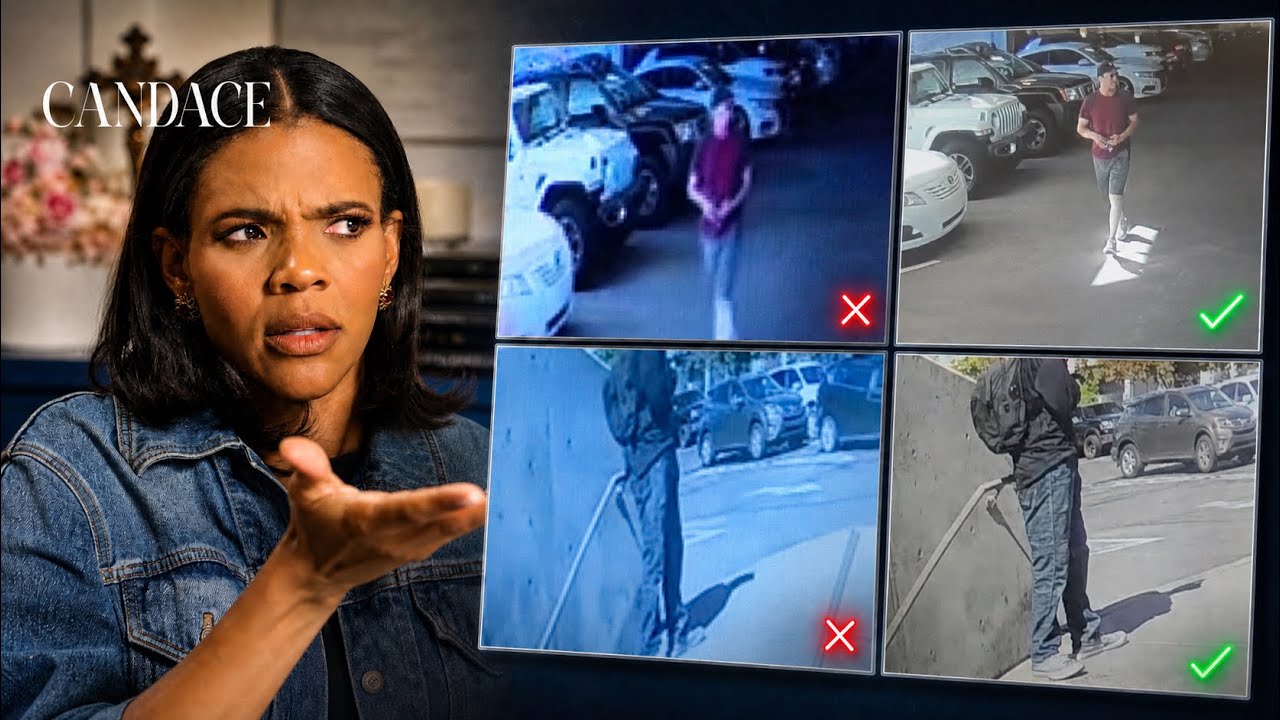
There's no way you released that guy immediately. It was top-of-the-line professional job. The only thing I left behind was the weapon with my prince on it. Two different people would be my thing. Two different people. One of those people is definitely individuals is definitely being protected. >> Candace Sons just explained why she believes the FBI is lying so brazenly about the assassination of Charlie Kirk. why she believes that the FBI narrative regarding the shooting and the shooter is totally off and why she believes more than one individual was involved in this heinous crime. So, let's get her take on this. Please like the video and subscribe to the channel. >> The text messages that were released yesterday in the indictment of Tyler Robinson make perfect sense if you don't think about them at all. Like literally, if you suspend all reason, all rationality, then they can make perfect sense. That's the only way. You just have to stop thinking. You got to get to that point where you're like, are we still talking about Jeffrey Epstein? No. To be fair, now we are more broadly considering how stupid the feds believe that we are. And the frankly obnoxious messages that someone strung together must clearly be for either our or their own entertainment. So, I want to hyperfocus on those. I want to actually hyperfocus on what exactly is wrong with these text messages between Lance and Tyler. Now, first and foremost, the obvious thing, there's no timestamps. Right away, major red flag. Very easy to say he sent the first message at this time. It's a part of your investigation, right? Everybody is on edge globally wanting to know what happened. And they just remove that. But don't worry you guys because like I told you, one of the things that me and Charlie always believed in was that we could work harder. And I got to tell you, these devils are working pretty hard, but we can work harder than them. Okay? And I decided to go back and on the basis of what Tyler Robinson allegedly write to his lover, I decided I could work them into the timeline. I could work out an approximate timeline at least for us to look at visually for when they had to have been sense sent on the basis of what he's saying. Right. >> Well, this was a wise idea and I agree with her regarding the timestamps. The fact that the FBI provided this transcript, the conversations between Tyler and his lover that was in the process of transitioning are interesting. They shed some light, but questions have been raised about them. And the number one way to guarantee that questions would be raised about them is to not include timestamps. So, I'm totally with her on that. I haven't heard that the FBI has said we refuse to provide timestamps, but they haven't provided them in the first place. That only invites questions. And you know what we're getting is no answers so far. So, I hope that happens. But what I will say is the reason why she's so adamant about this is because he makes reference to things and if he had fornowledge about those things before they were reported that would raise serious red flags about his associations with say George Zinn the guy that they apprehended right away and we've covered on this channel. >> He says certain things that were not revealed to the public at a certain time. So we're going to do that. I also want to point out the fact that the language, which many people said online, somebody actually left a very funny comment. It's like borderline poetic. He's got commas in there. It's like perfect English. And that's actually a striking contrast compared to what's inscribed on the casings, right? He goes through all of these memes that he's written. And I'm not hip to the lingo. Okay? You got to be real deep internet and hip. But for whatever reason, when he's writing these messages, he's very proper, extremely proper, right? What really wants to make sure he gets the punctuation correct. Anyways, uh let's just dive right back into the timeline. Let's dive right back into this this conversation. And we're at first going to focus on the third message. Um and >> before she gets into that, all I'm going to say is that there's plausible reason why you'd have a different kind of style and how you present yourself in different contexts. If I'm memeing, I don't put punctuation in my meme. But if I'm writing a paper, I would put punctuation in my paper. Some people text with it, some people won't. But if she's saying they're falsifying these text messages, that's the thing that he can work with his legal team on throwing the case out on that basis. If the FBI really did release false text messages, that's his get out of jail free card. Beyond that, that's his get out of death penalty free card. if he's found the fact that the FBI has planted this evidence, the defense team's going to have subpoena power, too. They're gonna have to share these documents and discovery, and the moment that Tyler sees an inconsistency with what he actually said, he can raise that. And that's liable to jeopardize the entire case. So, I'm going to be honest. I think that that and stylistically and the things that would be abnormal compared to someone's vantage point about Tyler and what he could have or couldn't have said without really knowing them or comparing it to handwriting samples of, you know, his past or things like that is not really going to provide answers. I do think there are odd things that the FBI is covering up. I just think that this is, you know, likely to be a nothing burger. And don't forget, just to lead up into this, they are telling us that at no time that we're allowed to know, on September 10th, after Charlie Kirk was shot, the roommate, that's Lance, received a text message from Robinson which said, "Drop what you are doing. Look under my keyboard." And so Lance, I don't know what he does all day, but he's he can do that. He knows he's home. And Lance then runs, I'm saying he ran Francis, who knows? and looks and he sees this note. And to be clear, we're never going to be able to see that note because the feds have since told us that the note was destroyed. But even though he destroyed the note, he took a picture of it. Yeah, that makes sense because if you're going to destroy something, the best thing to do is to take a picture of it. The Fed saw the picture, but we're not going to be able to see either anyways. Don't think about it if you >> Yeah, I hope they release that. This is a legitimate concern if they haven't released that picture, by the way. or compared it to handwriting samples of him. You know, that would be appropriate. I have no reason to believe that he didn't write that at this time, but that's something that you want to be forthcoming about. >> You want it to make sense. Then we find out that Lance, I guess, decided to take a picture and then text uh Tyler back. And here is where he asks him. Lance says, "Tyler, what? You're joking, right?" cuz you know the note said, "I had the opportunity to take out Charlie Kirk and I'm going to take it." So Lance is like, "What? You're joking." And Robinson says to him, Tyler says, "I'm still okay, my love, but I am stuck in Orum, that's the town, okay, that UVU is at, for a little while longer yet." So poetic, "A little while longer yet." I'm going to look that up on my phone later. It shouldn't be long until I can come home, but I got to grab my rifle still. To be honest, I had hoped to keep this secret till I died of old age. I'm sorry to involve you. Now, I want to jump to this next message because it gives us a timeline. He says to him, I assume right away, Lance says, "You weren't the one who did it, right?" And Robin says, Robinson says, "I am. I'm sorry." And the roommate says, "I thought they caught the person." Okay. And Robinson responds, "No, they grabbed some crazy old dude, then interrogated someone in similar clothing. I had planned to grab my rifle from my drop point shortly after, but most of that side of town got locked down. It's quiet, almost enough to get out, but there's one vehicle lingering. Okay, so >> so I think that it's very appropriate to focus on this. I'm glad Candace is about this fact about this old dude. We've talked about him in other videos. George Zinn, the guy that proclaimed that he was the shooter and then told authorities after he was apprehended that he was working to help the actual shooter. I've seen no linkage to, you know, link the two together, but that is crazy. And this is why she wants timelines so much. If we have the timestamp next to that statement, we can compare it to any reporting that was said about someone being arrested with similar clothing. I mean, that's a fact that he just throws in there. If that's before that was reported, it would show, you know, potential for knowledge. That's an important point here >> that lets us actually be able to drop that into the timeline pretty simply. Uh why? Because we know, we can pull up this timeline that uh they at first thought it was George Zen. So that's who he's referencing, some crazy old dude. And on the timeline, Skyler, if you want to pull that up so we can go through it. What time Charlie gets shot at? 12:23 p.m. Scroll down a bit. George Zinn, we learn about about 30 minutes after that, George Zinn, the decoy boy, that's when it's announced that he that there he's a suspect in custody by the Utah police. Uh, but it's not until, by the way, 5:30 p.m. cuz he mentioned that second suspect and he curiously says in that correspondence that he's wearing similar clothing, which I find to be strange. We don't know what that sec second suspect is wearing until 5:30 p.m. the when Governor Cox 12 minutes into a press conference, the press conference began at 5:30 p.m. mentions that the second suspect who is a person of interest is wearing all dark clothing. >> Yes. So, this is interesting. That second suspect, who's getting very little play, very little attention in this did have dark clothing. So, he's probably not talking about George Zinn. But the fact remains about why the time stamp is very important here. I'm really glad she is following this. You know, regarding some of the other things she's saying about the text, whether they're false or true or not, I think it would be hard for you to make the case that they're false. Otherwise, this case is probably going to get thrown out. If they're trying to frame this guy and he didn't send these texts, the defense can conduct a legal strategy for that to deal with that and free this guy. I really think that, you know, this isn't like, you know, planting evidence that can't really be substantiated by contacting AT&T or Verizon or something like that. Like you plant a bloody glove in someone's lawn. You know, those old us old enough uh to remember the OJ Simpson case. Remember that it's not really possible when you have digital records that can be verified whether or not they were true or not. If they're not true, the defense will raise that. I promise you. So, the earliest that that message could have been sent out is after 5:30 p.m. I think it's unlikely because I I think again this is all made up these messages because he says wearing similar clothing. Okay, he tells us dark clothing. What's similar about that? This guy allegedly when he did this was wearing black jeans. I was wearing um pardon me dark jeans and a black shirt. So that's like everyone on campus. Okay. Nobody in the press conference says uh we picked him up because he was wearing something similar to the shooter. So that language right there is actually a mistake from the feds. But again, it allows us to be able to plot it into the timeline. So that's good. Okay. >> We don't know that's a mistake by the feds. He could have written that whether he had fornowledge or not. It might not be a mistake. And again, if it's a mistake, the defense is going to latch into this and use it. You know, if they if she's saying they planted it, I'm sorry. That's not going to fly for a case that's not jeopardized by falsification. >> Okay, timeline is back up here. And we then know Cash Patel tweets that the subject in custody has been released. Our investigation continues. That was a mistake. The guy in the darker clothing, we don't know who that is. And then it's after, again, like I said, that these correspondences then had had to take place. So, we're talking about late in the evening. Okay. 6 hours on. I'm wondering what it is that Tyler Robinson is doing throughout this entire time. Skyler, you can keep this up because I want to keep scrolling. Okay. What he's doing throughout this entire time, cuz that's a very long time for him to be just around campus. But then luckily, he's going to let us know what he's doing, right? He's going to jump right in here and he's telling us that he's close to the scene. We know in this conversation that he then says to uh T he then says to Lance that he's looking to get that rifle, right? He says, "I'm wishing I had circled back and grabbed it as soon as I got to my vehicle. I'm worried what my old man would do if I didn't bring it back." Oh, I'm sorry. Let's actually go earlier. He then tells us his alibi, which is amazing, right? He's he's saying, "I'm lingering around there. I'm trying to get the vehicle." And then of course, as you always do when you're trying to clean up things, you then spell out your alibi, right? He asks him, Lance asks him, "Why did you do this?" And Robinson says, "I had enough of his hatred. Some hate cannot be negotiated out if I am able to grab my rifle unseen." Like, I'm trying to clean up the scene, but also I'm telling you exactly what my motive is here. >> That's the saddest part of this whole thing. You know, he shot him for supposed hate. He wouldn't debate the guy. You know, the guy sat under a sign that said, "Prove me wrong." Classically so, debating people such that, and he explained this several times in various videos, Charlie Kirk did, that he debated people so society doesn't have to come to violence against each other. Well, that happened regardless. And that's the saddest part of this entire thing. Not only did they rob him of his life, they robbed two very young children that won't remember him because of this. So, just want to interject with that because it's important to note. I will have left no evidence. I'm going to attempt to retrieve it again. Hopefully, they have moved on. I haven't seen anything about them finding it. Okay, so we are now late in the evening. He's still hanging around. The roommate then comes and says, "How long have you been planning this?" He says, "A bit over a week, I believe. I can get close to it. Still trying to get close to that rifle." So, I'm wondering if maybe the feds might drop us some footage. Right. We should be able to see some footage. He's got to be idling in his car. You've been speaking about how he has this car. I'm assuming he's not just uh sitting in the woods or sitting on a sidewalk. Everybody's This is This is a a quote unquote manhunt. So, where is he casually sitting, lingering, loitering? I don't know. But that would be some pretty good footage that they could release if they don't want us all to become a conspiracy theorist. Okay. >> Agreed. if they have that kind of footage, if they have footage, you know, facing where his car happened to be at that time and they've confirmed that and they know the location. Doesn't sound like he's being cooperative with authorities, but they if they do have cameras, and apparently there are cameras all around this place, it's possible that none was facing in that direction. Some may have be panning. They did have cameras capturing him at other locations, but it's possible that they don't have footage of that. And but I haven't heard one way or the another on this. If they do have it, I totally agree with Candace. Definitely release it. >> It was topofthe- line professional job. The only thing I left behind was the weapon with my prints on it. Oh my gosh. Right. Like that's that's kind of amazing. Okay. Then he of course explains, "Remember how I was engraving the bullets? The effing messages are mostly a big meme. I know I speak proper here, but it's it's just a meme that I was writing. I wrote notices bulge on Fox News, I might have a stroke if they say that. Right. If I If I see notices bulge on Fox News, I might have a stroke. All right. I'm going to have to leave it. That really effing sucks. It's almost perfect. Okay. So, >> all right. With the gun, totally agree. I mean, why leave that alone behind? But we know there's many historical examples of criminals doing stupid things in the execution of their crimes. Certainly. So, it wouldn't be the first case. And it is weird that he said in his text message the thing he was worried most about is his dad because he wouldn't be returning the rifle that he stole. Apparently it was his grandfather's rifle. And that was his biggest concern at this point. That's very weird, too. No matter who you are, is it possible that that's the case? Yeah, I tend to agree with this script. And if your view is that those inscriptions were planted by the FBI to, you know, throw people against each other, you know, encourage violence against each other while the feds run an operation or something like that, which by the way isn't unheard of in US history. We talked a lot about that. If this roommate is going to corroborate that to authorities, which it sounds like almost everyone around this kid is cooperating with authorities, it doesn't really match the narrative that that was planted or his DNA on the towel wrapping the gun. >> He then ends this message. This is all from the day. This is all we have from September 10th. Okay. Judging from today, I'd say grandpa's gun. Want to make make it very clear. This is grandpa's gun. Okay. Nobody should question this narrative because he has put it all here. I'd say grandpa's gun does just fine. I don't know. I think that was a $2,000 scope. Okay. So, that ends that u exchange. Now, I have a couple of notes here that I I I put here at the end of day one as we worked in this correspondence, which all had to happen um let's call it 700 p.m. earliest. As I say here, uh, which I want to be clear, the campus is 4 hours, 3 to 4 hours away from where Tyler and Lance live together. We have a map here to show you that. So, he's just loitering, loitering until, like I said, earliest. He's signifying around like 7:00 p.m. that he's still very close to campus. That's a long day. That's a real long day. Just waiting to see when you can go in there. And there's a manhunt. And he's chill. He's chill because he's changed his outfit. How do we know he changed his outfit? Because he made it very clear that he changed he dropped the clothes, his shooting clothes right there. He got changed. He he didn't have time to take the white the rifle that was in the um that he he put in the towel, but he did have time to change. That that totally makes sense. And then for whatever reason, he he you know, he had to leave the rifle with the prints on it. Okay. Well, it would make sense if he chose to change rather than to do that if he had a limited time constraint. Certainly so potentially, but I think the timing is more pertinent when it comes to the Fed's narrative is that he dropped on the roof at 12:15. That's only 8 minutes prior to the shot being fired. And according to the new narrative is he took the rifle disassembled in his backpack or whatever he had with him and assembled it on the rooftop with that screwdriver that they have his DNA on in 8 minutes. I've seen some people weigh into this. Some expert, you know, firearm afficionado say that that gun, a 306 mouser, I believe it is. It'd be very hard for someone even familiar with that gun to assemble it in 8 minutes and fire it. And you know, it also, you know, gets into the fact that when he jumped off the roof, which we do have footage of, some people swear that they can't see that he has a rifle. I think it's ambiguous. I think it's nebulous. It's hard to tell one way or the other. He definitely has something. Whether or not it's the rifle, you know, that's the Fed's narrative. That seems more plausible than the original Fed narrative because if you remember at the beginning the FBI said that he carried the rifle, disassembled it, and then reassembled it before discarding it in the forest. So that there were two assembly/disassembly phases. And that just does not make sense whatsoever. And we haven't heard from the feds why they've changed on that, by the way. And I'd like to hear that, too. What's interesting about that though is like you know we should recognize that curiously what they've removed from this indictment again relevant to the clothes was the fact that and the governor's going to say it that we are told that he at first enters campus on this day at 8:07 a.m. TMZ shows us the footage, remember, of the man wearing a maroon t-shirt and shorts. That's how this day begins. That is walking through a neighborhood just outside of university grounds. The Governor Cox has confirmed this is him not mentioning the indictment. That's curious. Seems very relevant. Surely like I mean you you guys should be mentioning that the outfit. What did he do? By the way, from 8:07 a.m. when he walked onto campus to when he is then seen walking back onto campus at 11:51, that's it's about 4 hours. Something else the feds could release to dispel any conspiracy theories would be him walking back to his car. You're telling us he then goes back to campus and he's in a different outfit. Can we get him leaving campus? We know the place is covered with cameras. That would make me feel better if you showed us him leaving campus and then we see him coming back in a different outfit. Again, not clear why he couldn't just wear the outfit he was going to wear since I would imagine you've got thousands and thousands of students that are wearing something as casual as a black t-shirt and blue jeans, >> but not something where you could capture the logo. when he did have a shirt with a logo that would differentiate a black shirt and blue jeans from someone else wearing it compared to his with that weird flag on it. We've all seen the photos from that. But it is true, I'm with her, that I don't think that they mentioned the maroon clothing in the indictment. What happened with that that narrative that he kind of cased the place ahead of time. I don't think that they're going with that in the information that they released. I don't know if they discarded it. it's going to be part of their case or not. We haven't really heard answers on that. So, I'm with Candace to some extent on that. Although, I think there's a plausible reason as to why, you know, you'd be able to be differentiated between people in other types of black shirts. >> I don't understand a need for a change if you're in like, you know, a sniper outfit or if you're wearing like, I don't know, a Barney costume. You know, if you if you're showed up if you showed up and you're wearing like a full Halloween costume, then yeah, maybe you should change. But this is just an average college kid outfit, you know? This is just what you expect to see on campus. Just >> Yeah, but he's the only guy with that shirt probably in that crowd. I mean, it would be an insane coincidence if someone else had that same shirt design at the same time. It's possible that's happened. You know, it's a joke among females if they wear the same outfit, you know, they get pissed right at each other. It's possible, but it's not that plausible. And they got him on camera with that shirt, with that logo. It's >> what boys wear anyways. Like I said, those would be my points from day one. The the feds can release that. And also, I'm wondering where did Tyler spend the night. Can they clarify that where he couldn't he certainly couldn't have made it out of a rent and back there and back to his home? I'm coming home soon. Would have been the wee hours of the morning. This would have been a good time, by the way, if you're really trying to get away with this to tell your lover to delete the text messages. But he doesn't do that. He's not going to tell him to delete the text messages on this night. Presumably, he saw him. They didn't say he went home to his parents house. So, what happened overnight? When did he get home? Uh, he's been so thorough in describing that cleanup job. And by the way, we know that Discord is going to later say that those messages were not coordinated on their server, which I would say was definitely a part of the broader plan. Okay. You should have footage of him in that Dodge Challenger just waiting and salivating. He kept checking. He said, "Oh, here I am. Right here, just waiting to get that rifle back. I'm waiting to get that rifle back. Where's the footage? You were on a manhunt. Where is the footage?" Surely during a manhunt, you use drones. I feel like we are tech capable enough that during a manhunt after a murderer of a college student uh decides to take out Charlie Kirk, who has been a friend of the feds, right? I think probably not a good idea to be friends with these people, but whatever. He's been a friend of the feds. Surely this is a big issue. And to to put to rest any conspiracies, you're going to show us that drone footage and we're going to see the Dodge Challenger just sitting there for hours and hours and hours. >> All right. So, it's possible number one, he's not cooperating with the feds, and it's possible that they don't know where he was. He doesn't describe it in total detail. leaves some breadcrumbs of hints in that text message trail, but he doesn't specify it exactly. So, it's possible that the cops don't know from him where it is. They could look if they did have footage from a drone or a camera to see cars matching that description, that make, and that model, but we don't know that a camera would have been set up in the correct angle to capture that. I'm presuming that, yeah, this campus had cameras all over. We don't know that one was facing that car. So, if they have it, I'm with her 100%. I'm not so sure based on the information we have that they have that footage for sure. >> And we're maybe even going to be able to see cuz I'm sure at that point like cops maybe set up some barricades or something to see he was going in and out and then he decided he's going to leave. Show us the footage. Like I said, every inch of that campus is covered. So, we should be able to see he's wearing maroon and you're telling us that he went back to his car and he changed. show us him leaving campus before uh he returns back to campus around 11:30. Just show us the footage. >> Yeah, you'd think if they do had the footage of him in the maroon clothing heading toward campus, they'd have it coming back. You know, there were cameras all around and we have seen the footage of him supposedly going to campus to case it out with the maroon clothing. I think that this is a much more reasonable ask unless there's some explanation that the footage they captured of him walking along the road that we do see that has been released wasn't recording at that time or something or he took a different trail back. That's possible, I guess, but you know, we haven't heard explanations on that. >> Okay, I'm demanding it. You know why? Cuz I need to be able to fit things into my timeline if that's okay with you. So I would discern that we are looking just vibe again two different people would be my thing. Two different people one of those people is definitely individuals is definitely being protected. Um and separately we can definitely make out that for whatever reason Lance is being protected. There's no way you release that guy. Okay? There's no way you release that guy immediately. There's no way that you intentionally purge him out of these messages. Okay? The excuse he's being cooperative doesn't work. you can be cooperative while you're still being detained at least 24 hours before you would say I felt good to clear him as a suspect especially when you haven't even raided his home yet. They released him instantly and they said job done. So I would like more information about Lance Twigs. Okay. I already don't like that mom um received a bachelor of science from Stanford University in psychology. It seems to be a running theme in these Fed ops that there's always psychology somewhere. >> But how is that evidence that he didn't do the killing? That his mom had a psychology background and that's involved in fed operations. Would it be impossible for someone to do that killing then? And with his roommate, you know, we have that trail and they have to have, you know, probable cause to arrest this guy and hold him unless he's being totally willing. He was cooperative and apparently the feds got what they wanted out of him and released him. Now, could he hold more clues? Could he have been involved? Sure. But unless they have evidence suggesting that he was involved, they can't really charge him. They can't really hold him, especially if he has legal representation. And these messages seem to indicate that he was very surprised that his friend had done this. I shouldn't say friend, his lover, not really knowing and, you know, being extremely surprised when his, you know, lover had told him the truth about what he had done. So, I don't know. I don't think you can leap to that conclusion that there had to be two people involved. But I think the George thing uh the George Zinn thing is really fishy. If there were two people involved, it seems much more likely that George Zinn was for saying that he was helping the perpetrator get out of the crime and then he pointed to police to his phone. Check my phone. They found child porn there. He got a charge for that. And I think he got a charge for obstructing justice. But that is way more weird than what I see out of Briggs. Just my sentiments here >> in the family. And I want to be very clear. I'm not saying his mom has anything to do with anything. But I am saying that I feel this kid for some reason, some unknown reason, is being protected. And I'm not the only one. His family feels that way. Okay? His family thinks it's odd. Like I said yesterday, I spoke to them today. I spoke to them yesterday. They think it's odd that the feds moved on from him so quickly and that the feds were being dishonest and they felt about everything when they first came out with information. So why are we all feeling that way? We absolutely need to get to the bottom of it. >> Well, I'm all for it. And I'm seeing some holes in the FBI narrative, some things that aren't easily explained. To me, it's the gun assembly in 8 minutes and then taking that shot on the roof, you know, ve in a very constrained time. I'm not a firearm afficionado with this rifle. You know, I do shoot. You guys see me wearing the Ruger hat a lot, but I don't have this rifle. I don't know what it's like to assemble or disassemble it or whether it'd be reasonable to say that a guy like this that, you know, had this firearm would have been able to do it and take the shot successfully. That's interesting to me, as is the George Zen thing. I think those are the two things that warrant more uh attention and not necessarily the text messages that if fabricated would destroy the state's case against this kid and likely get it thrown out. But that's where we are here. I think I referred to his lover as Briggs. It's actually Twig Lance Twig. So, apologies for that. I think that was my mistake. But hey, what I want to say about this is despite my differences in opinion with Candace on this in some regards and some of these topics, I really appreciate her thirst for the truth here, her sincere desire to get to the bottom of the death of her close friend Charlie Kirk. I think it's admirable. We need to ask questions when the FBI is, you know, untransparent about certain elements of this thing. And, you know, not releasing footage of him on the stairwell. That is not releasing timestamps is the most egregious to me. I'm totally with her on that. I just don't see reason to doubt the text messages unless he or someone close to him are saying that there's problems there. But that's where we're at here. I know a lot of people in the comments section are going to say, "Obvious, Paty. He didn't do it. He definitely didn't take the shot." And a lot of those people won't suggest an alternative shooter. They won't point us in a different direction, by the way. And you know, they'll say, uh, you know, he's not saying he's a psy because he feels threatened. Well, guess what? He's facing the death penalty right now. He's being threatened by the state. And you know, to say that he feels threatened so he can't tell the truth, it's the opposite of what people say about Lee Harvey Oswald. He was a psy because he said he was a psy. He said he didn't shoot Kennedy, so that's why he was a psy. And by the way, I I have no reason to doubt a lot of the theories involving the CIA in the JFK assassination. Robert F. Kennedy Jr. thinks that. We know that the CIA surveiled Oswald in many cases including on a trip to Mexico where he reached out to Soviet liaison and we know that they didn't provide that to the Warren Commission but at least there we had linkage and yeah it took some time to get that but I don't know about jumping into this narrative that he's an obvious psy involved in this and if you are so hellbent on believing he wasn't provide us an alternative narrative who was involved. And you know, hey, I think that there's holes in this FBI story. Certainly so. And I've noted them in this program. But if you're going to be so dead set on an alternative narrative, present the facts. Don't just say it can't be this kid, even though he's clearly admitting it in text messages that if falsified would throw this this out and get this guy released. And hey, maybe that'll happen. Maybe that'll happen. But if you're going to say that there's no reasonable explanation about any other scenario, it's on you to demonstrate that. And I haven't seen that. I haven't seen any linkages between him and someone else committing this crime. Will we get that day four or five or whatever it is? We likely won't. But that just means that it's wise to be more skeptical about any narrative in any direction. And that's I think the safest position here. But I do want to hear what you guys have to say. Let me know down below. Am I off on this? Is Candace Owens right? Are the text messages falsified? And if you do think that, how will this case not be thrown out against this kid? Let me know down below. Please also like the video, subscribe to the channel, subscribe to Candace Owens, and please consider joining my uh YouTube as a member by clicking the join button below. You can get access to all my videos before they go live to the general public on YouTube. And until I see you guys next time, no more war, no more debt, no more inflation, and no more empire. Peace out, guys.