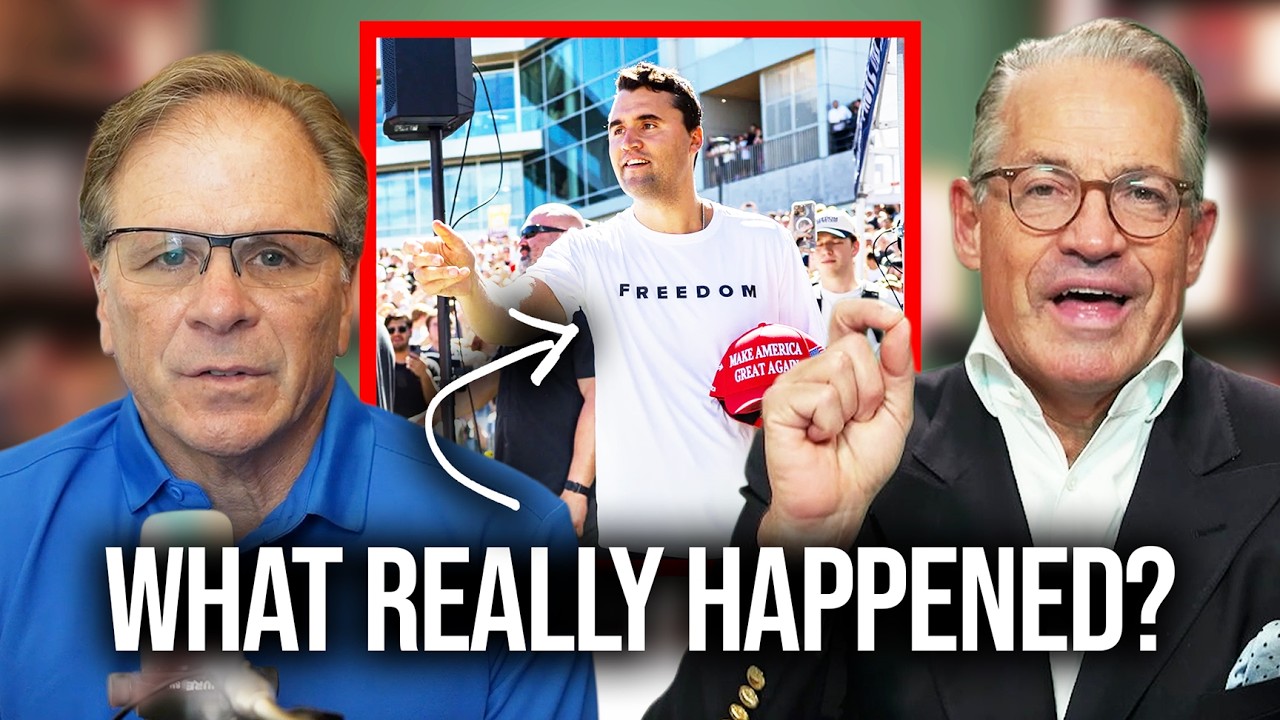
I don't see there's any reason TPUSA or the surgeon would lie about the situation, but it's just that when you put the totality, you know, in the fact that cash legitimated it and then it's a question here, it just seems all a bit odd. So, there is still a lot of weird stuff. And if you are a conspiracy theorist on this, I don't blame you because the way the government has handled has been a disaster. >> Yeah. Breaking Points just destroyed the FBI's investigation of the Charlie Kirk assassination and here points to several things suggesting that you just can't trust the FBI regardless of who you think's culpable in this murder, how many people you think were culpable and other factors. This one's going to be interesting. I haven't heard their take yet, but let's get into it. Please like the video and subscribe to the channel. >> Turning now to Cash Patel and some of the questions about the uh Charlie Kirk assassination. Our whole debate was predicated that we know everything. But to be honest, uh, you know, up to this, I'm not so sure. So, let's go and put this up there on the screen. I I got to be honest, this is one of the craziest things I've ever seen from an FBI director. And the reason why is in some ways it legitimates many of the quote conspiracy theories around the assassination and actually makes me think, wow, the fact that they're talking like this means some of this [ __ ] may be true. So, let me keep it up there, guys, so I can read from it. Quote, "As the director of the FBI, I am committed to ensuring the investigation into Charlie Kirk's assassination is thorough and exhaustive, pursuing every lead to its conclusion. The full weight of America's law enforcement agencies are actively following the evidence that has emerged, but our efforts extend beyond initial findings. We are examining every facet of this assassination. We are meticulously investigating theories and questions, including the location from where the shot was taken, the possibility of accompllices, the text message confession and related con uh conversations, discord chats, the angle of the shot and bullet impact, how the weapon was transported, hand gestures observed as potential signals near Charlie at the time of his assassination, and visitors to the alleged shooter residence in the hours and days leading up to September 10th. So he he lays out every single question that has been raised basically with some currency on the internet. Then he goes on, "Some details are known today. While others are being pursued to ensure every possibility is considered, our primary focus is to complete this investigation and deliver justice to >> I think it's interesting and Sager might have been hitting on something earlier when he said that the fact that he's talking about this openly in the tweet means that the FBI is trying to get in front of a narrative where one of these things or maybe two or something like that at least some of them might be true. So the FBI can, you know, basically sell that is, hey, you know, we were looking into that. You know, there were rumblings about it and we discovered it. In retrospect, you know, if you go back and do that, it looks more weird. It looks more like you're never entertaining those options. But man, there are some weird things in this. I think the George Zinn thing and the thing regarding the bullet, the 306 round, which some accounts have being in the throat. The surgeon told the TPUSA spokesman that it was recovered from his throat. And then other sources have reported that they haven't recovered a bullet. So, not sure what to think on that. But if that's the case, that Cash is putting this out there because they already know that, you know, one or some of these things are true, that's interesting. To protect the integrity of the investigation and subsequent prosecution, we cannot release every piece of information we have to the public. Right now, we will ensure every question is addressed at the appropriate moment. Regarding specific details such as questions about the plane that allegedly turned off a transponder after departing from the airport assassination site, we can share updates when answers are confirmed. After interviews with the pilot, consultation with the FAA, we determined transponder was not turned off. Incomplete flight data in rural areas caused the apparent gap. The entire FBI mourns the loss of Charlie Kirk. We will not rest until justice is served and our investigation into this assassination will continue until every question is answered. And uh the fact that he laid out every single one of those, did not dispute any of them, effectively gives them currency, and like I said, legitimates it. And the only one that he can potentially strike down is this one about the plane in the FAA, which by the way was known within, I don't know, hours after the assassination. I saw an aviation expert hours after just come out and be like, "Guys, it's a typical area. The transponder wasn't off. It's just that this is like one particular airspace where it will go out every once in a while. It's don't read too much into it." >> Yeah, I agree with that one. On the plane, and the owner of the plane has weighed in on this publicly to say the same, too. You know, that one I think is more or less a red herring. People are talking about the text messages. I've talked about why I think that's a red herring in other videos. If you're going to falsify text messages, it's the shest way to let this guy walk. It's going to destroy your entire case because the defense is going to have subpoena power. And yeah, that counts. Even if this doesn't go to trial, they'll have subpoena pile power. And if this guy gets killed mysteriously in some fashion, the defense team will still have subpoena power to show, you know, that this guy's name should be cleared. If this really was doctorred or falsified, they don't have any other real evidence on him. Of course, they're claiming they have, you know, uh, DNA on the screwdriver and on the towel wrapping the weapon, etc. But, you know, that disrupts the psy narrative that they want this guy to go down. He's not the real killer, but if we're going to falsify his text, that's the shest way this guy walks. So, I think this is interesting. The fact that, you know, Cash is talking about some of this stuff openly indeed, like it does give it like an a veneer of legitimacy, like it's being entertained by the FBI, whether or not it is, whether or not they're going to investigate it because they told us a lot about how they're going to investigate the Epstein case, right, and divulge the truth regarding that. How can you trust this FBI? You can't >> as a result. So, I don't know. What did you think? Because there's two options. One is this guy is so chronically online, he wants to ensure that the internet doesn't turn against him. So, he's going to list out every single thing and try to take it seriously and I guess slowly try to dispel it in the future. But the counter is like, okay, if these are so legitimate that the FBI is actually investigating it, that really makes my eyebrows raise, especially because if look, Robinson as of right now is not cooperating with authorities, right? So presumably he may plead not guilty. Well, couldn't you use that tweet at trial and being like, "Hey, look at all of these legitimate questions raised here about from the defense from the FBI director and now all of that, you know, by the way, the FBI will have to make sure that they meticulously go through like he claims and actually provide an explanation for each one of those." >> Yeah, absolutely. And also the fact that they've changed their narrative on the gun assembly and disassembly to some extent. Originally it was that the gun was disassembled then assembled then disassembled again before it was discarded in the forest. They dropped that narrative now saying only like they had he had separated the stock from the barrel, brought it up to the roof, shot Charlie Kirk, and then um uh just discarded it in an assembled form in the forest nearby. That replaced their original narrative that they had publicly said at that press conference and talking about how he was casing the area in different clothing. They didn't mention that in the indictment information. So, some of this stuff might disrupt their case regardless of whatever you think about the text. And yeah, the fact that they're talking about this is at least interesting because, you know, you they could just shoot all this down as, you know, kooky conspiracy theories. They could say that or they could just not touch it at all. But the fact that they're talking about it does lead me to believe that they're trying to get ahead of at least one of these things here that yeah, maybe there is something to that. >> So, that Robins's defense cannot present that to a jury at trial. Presumably it were if if it goes that direction. We don't know yet. So I thought it was insane. It's basically crazy no matter. >> Absolutely insane. I mean I think it definitely has to do with like Cash Mattel is an internet influencer. Like that's what he actually is. And so he's seeing all of these theories floating and he already knows that people hate him because of how he handled the Epstein stuff and he doesn't want to catch any more heat from his like listening and viewing audience. >> Good luck Cash. Good luck on that one man. Good luck on that one after this investigation. >> So he's trying, oh guys, like I'm totally I'm with you on the conspiracies. I'm looking into it. I'm on it. I think that's probably a lot of what's going on. But to your point, like dude, we already have a charging document from Tyler Robinson. you've laid out the government has laid out a quite complete and specific theory of the case and it does not involve like oh maybe the shot was taken somewhere else maybe there were accompllices maybe there was you know maybe these text me like he even seems to allude to the text messages being fake which is like this is your evidence so he's undercutting dramatically the government's story of what happened on that day and >> yeah I totally agree with this I don't always agree with Crystal as much to sager. In fact, almost never do. But I think she's right about this. They've already laid out, you know, their narrative in that indictment document. So, how thoroughly can they actually even investigate some of these things? The the other way I think about it here is that, hey, maybe they are trying to get in front of something, but is this serious? Can this be taken seriously? They've already laid out their general narrative that did shift in some ways. Certainly. though. So, if you contravene that by investigating some of these things, that could jeopardize your case, too, because I promise you the defense will bring that up. You know, alternative theories, how the FBI couldn't stick to a single theory. >> It's crazy. Another one he mentions here, how the weapon was transported. Again, we're being told from the government like, "Here's how the weapon was transported. Here's what the weapon was. Here's where the shot was taken from." And now the FBI director is saying, "Well, actually, we're not really too sure about any of this." Yeah. >> Uh, he didn't exactly say that. He's he said they're investigating it. It's not the same as like we're not sure about it. It It's opening the door. I can see the similarity in how she's trying to portray this or verbalize this, but it's not quite the same in my estimation. >> That's mana from heaven for Tyler Robinson's defense team. There's no doubt about it. And it's completely insane. Like, dude, you're not an influencer anymore. You are the government. You are in the deep state. Like, that's who you are now. You have asserted a very specific theory of the case, and now you're going in and saying, "Well, we don't really know. We're still looking into it. We'll get back to you." Crazy stuff. Absolutely crazy. >> It's not super super precise their theory. Like, they haven't included the timestamps and other evidence that they presumably would bring to trial would be part of discovery. you know, actual additional video footage, including footage of the shooter on the stairwell, which they have pictures of. They haven't distributed actual video, though, and any other surveillance. Apparently, the place had cameras all over the place, and we've only seen very short segments of video and things such as that. This is not going to be all the evidence they produce. But even lacking the timestamps, that's the way a lot of people have been, you know, looking at this and saying, "Hey, there's something wrong with this. My eyebrows are raising because you're not even providing timestamps in which time-sensitive things were revealed in that transcript, like the fact that they arrested some other guy in similar clothes to Tyler." Well, when did Tyler say that? Because depending on when he said that, that could indicate fornowledge. Of course, that was, you know, reported pretty soon after that and there were rumblings on Twitter about that afterward, uh, almost immediately after the shot from my recollections following the story. But those are some of the important details that people want to know and lacking that information. They're just going to, you know, be skeptical. I don't blame them for that. I don't believe that's reason to like dig your heels in and be convinced that like the CIA killed them or Mossad killed them then because they're inconsistent in this narrative or there's abnormalities or some of these things just don't line up. But at the same time, you're just inviting that by your narrative and by the inconsistencies. >> Fits also with this next part here. Let's put it up here on the screen. Uh there is a new claim from the surgeon uh actually who operated on Charlie in the immediate aftermath of his killing where they say quote Charlie Kirk's body stopped a bullet that would typically quote just go through everything and it was quote an absolute miracle that nobody else was killed. His surgeon told TPUSA. So by the way this is secondhand information. It's from TPUSA about the bullet. There have been some questions about the bullet and whether it would have passed through Charlie. I mean, I'm I'm generally open, you know, giving the benefit. I don't see there's any reason TPUSA or the surgeon would lie about the situation, but >> it's just that when you put the totality, you know, in the fact that cash legitimated it and then it's a question here, it just seems all a bit odd. I almost think in that case, it's like it would have been better to just like in a way there's too much transparency right now. >> Yeah. I mean, this comes from Andrew Kulvit. He's a spokesman for TPUSA. In fact, I think he's like their chief spokesman. And he reported this. You know, this presumably is from the surgeon. Not even presumably. That's what he says. This is from the surgeon that operated on Charlie Kirk. His bone was so healthy and the density was so impressive that he's like a man of steel. It should have just gone through him. It likely would have. And killed those behind him, too. Like, I'm sorry. Okay. I'm not an expert at this this type of round, this type of gun. I have shot a 30 six before and just seeing the size of that round. It is considerable that round. It's hard for me to believe that this could not go through someone and several marksmen, several firearm afficionados have remarked to that same thing. But I've also seen other reports that they didn't, you know, recover a bullet. So, what are we to think here? Is there a bullet? Is there not? This has been reported both ways and you know it's just like we haven't seen an autopsy. We that might not be made public. The family can decide on that. I hope it is released because of public interest in this and this is one of the highest profile political murders of all time. So I hope we see that. You know I defer to some extent to the family and what they want to choose regarding that. I think they ultimately have the rights but I'd like to have the right of the public to see that too. So, we'll have to see where this goes, man. The autopsy, we'll have to see what it says. Lots of theories about exit wounds and entry wounds and whether the bullet came from behind. Some people have seen footage from behind, including Candace Sons on her show saying that she didn't see any visible blood from behind, but also people saying that um there wasn't necessarily like a visible entry wound from behind, too. That video might be made public at some point. She's said it and she's trying to get it to be public, but TPUSA has said they turned over that footage to investigators right away. That was in dispute for a while. So, again, let's see where this goes. >> You know, from the TPS and cash and all them are like, well, they're like every single claim ever made, whether Charlie made $150 million from Netanyahu or was offered that or something. It's like guys, you know, in a certain way, that's why I just I really felt crushed for Erica Kirk because she apparently is going to give an interview soon addressing all let this lady be. Please, please. I mean, I don't know. I just think >> or or for her like nobody's saying that she had to come out and do it, but the fact that she feels compelled to, I have complicated feelings about it. >> Yeah. And very few people are saying, "Well, let's at least listen to what she has to say." Knew Charlie more than anyone. knew the pressures he was going through, you know, can probably corroborate either corroborate or disclaim the claims that have been made from people like Tucker Carlson and Max Blumenthal the Grey Zone reporting on this. By the way, I think Max is a total hero. I defend his journalism 100%. How could he not report the story he did on this? But I think some difference and some respect has to be given to her and what she thinks about this and which of these theories she thinks is compelling too because she was privy to his inner thoughts. And a lot of people sleuththing around this including myself and others just don't know him the way she did and she would have, you know, that alarm in her head to know, you know, more certainly than many of us whether or not some of this stuff could have been true. >> Like I just want this I want this woman to have peace. She seems like such a wonderful soul. You know, her and her kids like I just I don't know. I I I think it's it's not good that this amount apparently, you know, TPUSA people, this was a report. I I don't I I'm not Never mind. I'm not going to say it. But my point is just that I think TPUSA people are getting hounded about this. I mean, they just lost their leader, you know, their friend in a in a lot of cases. So, it's it's difficult. It's difficult situation. >> Yeah. And the this information from the surgeon originally came from the EP of the Charlie Kirk show, Andrew Kulvit, is that how you say his last name? >> And um I mean they're just look, they are asking the public to believe a lot. I mean, even Cash apparently recognizes that there's a lot that they're asking the public to believe. And this is one of the things that is extraordinary. Um you know, if if true that uh the surgeon said that Charlie's bone was so healthy and the density was so impressive, he's like the man of steel. It should have just gone through and through. It likely would have killed those standing behind him, too. In the end, the corner did find the bullet just beneath the skin. Even in death, Charlie managed to save the lives of those around him. Remarkable, miraculous, and you know, I don't know anything about like the kind of bullets or whatever. I know people are looking at that who do know something are pretty skeptical of this claim. And the other piece that's, you know, again, it's like where was this information previously? Because previously it seemed like they didn't have the bullet >> and um and now you know here we are 10 a number of days later and they're like oh no we do have the bullet. It's beneath his skin. It's just like miraculously he's the man of steel so it didn't go through. >> Yeah the bullet thing man it was widely reported they hadn't recovered that at first. So this is interesting. You know can they run ballistics on that bullet that's been recovered from him? Like that's what a lot of people are going to want to see too and we don't have much information on that. That could be something that the FBI talks about >> maybe, but it's again you're you're asking people to to accept a lot here. >> The other reason why is that may not have even been the explanation. That may have been what the surgeon told TPUSA and then let's say something else comes out at trial. Then people will be like, wait, but you said this, right? So >> this that's what I'm saying. There's almost too much right now about people who are coming out. And I mean, look, we do have to be on there's a lot of weird stuff. It remains, you know, even with the official narrative with this. By the way, the outfit change, uh, it seems to have been validated. Candace released that photo of Robinson at Dairy Queen like 18 minutes after he shot Charlie Kirk. >> Nope. >> No, it was about 6 hours after. It was like 6:38 local time and the shot took place at 12:23 local time. So, it's not 19 minutes. I don't know where he's gotten that, but we talked about that in a different program. It was timestamped and it was about 6 hours later which apparently this guy had been hanging around the area, you know, flirting with the idea of going back and trying to recover the rifle. But this was 6 hours later. >> It was hours. Sorry. >> Yeah, it was it was like at 6:30 after Kirk had been shot somewhere in the noon hour. >> Oh, no. He apparently changed. That's what it was. But he was in that different outfit, you know, in that photo, which psychotic. >> Well, he was in a mix of the two outfits. >> Yeah. Yeah, he was. She's right about that. He had black pants and the maroon shirt. And when he did the murder, he had the darker pants. I shouldn't say black. It was the darker pants and that shirt with the weird logo in the middle. But then he changed the shirt only. It seems like when he went into that Dairy Queen and remember the feds were maintaining he cased the place earlier in maroon clothing. And from the video you see it's him walking by presumably with a maroon shirt and I think white shorts. So she's right. This is kind of like a hybrid of the two outfits. If that's, you know, you believe that the first guy that was casing it really was Tyler. >> He was in the maroon shirt and the black pants. And it's Yeah, I don't know. And I I mean, I'm not even I can't even say for sure that that photo is real. So, >> you know, it's possible it was from another day. It looked like Oh, it looked like him. It could be AI. It could be from another day. I don't really know. But, um, you know, she she asserts that it is, but Candace is not also like a traditional journalist. >> Yes, that's fair. All right, last thing uh we'll put up here. This was a final thing report from the New York Post uh which uh actually kind of makes sense if you take Robinson's text to be real. It said that the gun that killed Kirk is quote a war world war I era rifle that may be untraceable. Uh what they describe in his text Robinson called it grandpa's rifle in that it's a decades old Germanmade gun that was used in both world wars. Uh but I think the point around it was it may be that he actually did select the rifle uh either because of uh the serial number. By the way, they're saying maybe untraceable because we don't know the official model or anything that of the weapon. And we still by the way, one reason why I'm inclined to take this more seriously is remember they had the rifle very early uh in the investigation the day of, but they didn't have Robinson very early. Whereas if it was traceable or if it was easily connectable to the person who bought it, the grandpa, that's not that difficult. Like, oh, okay, this person, family tree, boom, from public records, Tyler Robinson. That's >> Yeah, this is true. I've looked into this a little bit, too. And the marksman and firearm experts that talk about this type of rifle and it had been reported as a Mouser 306 before they say that this kind of rifle is a sort of rifle like the mainly the only place you'd see this is collectors or people that had like grandparents or great-grandparents that served in the Great War and this is the kind of gun they had. It was easy to kind of acquire this type of firearm back then. If you have more information on that, leave me the a note down below in the comments. But that's what I gather from, you know, virtually all the firearm people that talk about this rifle. I don't know that much about it, but that's all I hear about it is that it's like that generation prevalent. it would have been that style and maybe it would be untraceable in that way >> easy way >> because I mean and it came those weapons were available prior to the 1934 NFA that set in motion really the first you know regulatory firearm legislation at a federal level >> to go there until Robinson turned himself in after his father basically turned you know used him or forced him to with the sheriff or whatever that was they were family friends with they were nowhere the night before Robinson was caught they literally were nowhere according to law enforcement. So, I'm inclined to take this a little bit seriously, which is part of what makes it weird because the thing is with Robinson is again if you accept that the texts are in some way real, which I do think they are real. Maybe that, you know, is cringe of me, but I just not quite at the point where I think we're fabricating stuff in court documents that are eventually going to go to trial. >> Me, too. This I I agree with Sager, man. And you're going to say, "Oh, I guess I'm covering for Israel then, right?" Some people have done that after 300 videos calling Israel a vile criminal reprehensive rogue state. But that's what I believe just because I'm not willing to believe that the Fed is willing to just completely eviscerate their narrative and risk this guy walking free. It's too easy to get that information from a subpoena. Whether or not it goes to trial, whether or not this guy gets mysteriously killed, it's not the sort of thing you can falsify like, you know, planting a bloody, you know, leaf or something like that. It's just not. So, I'm with Sager here, man. Are we the two only ones? I don't know. Maybe we are. And this is not to give any faith in the rest of the narrative as I have my own questions. I've been raising them. But this part I do think is a red herring. >> Trust me. Uh maybe I have too much faith in the system. >> Cash is investigating it. Sorry, Cash. I I'm just saying like I mean think about that that would that that means like all of America's jurist prudence is fake including the state of Utah. I'm like maybe it's definitely possible. Uh but if we accept their real he did want to get away with it which is like why did he turn himself in at the end of the day? I mean went to great lengths you know from those text messages. Maybe it was planned you know you know in in terms of the weird rhetoric and vernacular that he used which we talked about previously on the show. So, >> what we do know is no one close to him or him has said that they're fabricated or that they're falsified, too. Maybe the defense will argue that in trial if if they really are, if there's something to this, but we haven't heard anyone close to him saying that, including his roommate who authorities did contact, did talk to his parents who did essentially turn him in, talked to him before that they all agreed that he was going to be turned in. None of them have questioned that these are fabricated texts or at least if they haven't that's not been reported by anyone and that would be a blockbuster story. By the way, there is still a lot of weird stuff and if you are a conspiracy theorist on this I don't blame you because the way the government is handled has been a disaster. >> Yeah, you have no reason to believe this government especially led by Cash Mattel who as I've said before is not only political apparachic but he is also incompetent fool. So there are any number of reasons why you should, you know, be skeptical of the claims here. And I don't even think like I don't think it's fair even to call you conspiracy theorist at this point if you're looking into some of these holes. That's like the job. I mean I think that's part of the job of a journalist is to not just take at face value the government's claims to say, "Okay, well these pieces don't really add up. What have you got for me there? How how did he transport the why don't we see it in any of these photos?" You know, those sorts of things. um I think are all like reasonable and non conspiratorial questions to ask. >> Well, right. Yeah, absolutely. I mean, there's different degrees of conspiracy theorists, by the way. And let's be honest, they'll call all dissident conspiracy theorists on everything. We were conspiracy theorists for thinking that the state and the three-letter agencies collaborated to ban certain people off social media. Check. We know that's true because of, you know, the Twitter files. We were told that the Hunter Biden laptop story was just a conspiracy theory. Well, check. That turned out to be a conspiracy theory. We were told that the Wuhan lab theory of the leak of COVID 19 was a complete conspiracy theory, a complete hoax. Check. That one's aged pretty well, too. Time and time again, they're always going to call us conspiracy theories for theorists for questioning the traditional narrative. I don't even take this as like a slight anymore because too many people have awakened to the fact that, you know, a lot of the government narratives on a lot of things is a lie. Does that mean like, hey, if I burn myself on the stove and I'm, oh, that's the CIA. The CIA just burned me. No, that's just irresponsible. If I trip over a sidewalk, oh, that's Mossad. It had to have been Mossad. That'd be irresponsible, too. But that doesn't mean you can trust the government. There has to be a medium here where we can poke poke holes through absurdities in the story. Whether or not we believe that even changes, you know, what we think about who's culpable, who's responsible, was the there a conspiracy, foreign involvement, whatever. I've, you know, made my thoughts on this pretty clear. I'm very skeptical of the FBI narrative. I do trust the text messages. Sorry. I think the guy's walking free if they're if they're falsified. And if you're saying, well, yeah, they don't want him to go down for this. Well, then that disrupts the patchy narrative that people have that are saying, well, these text messages falsified, that's why they want to take him out. No, if they want to take him out, they can't falsify the text messages. But that doesn't answer a lot of the other questions, right? To me, the two I presented at the beginning of the thing was the George Zinn arrest. They arrested this old guy right after the shot. They arrested another guy, too. But this guy was a political gadfly with lots of past. He was convicted of trespassing, threatening to put bombs at the end of the Salt Lake City Marathon, etc. And you know, he told authorities, "I tried to help the real shooter escape." He He literally told them that. I haven't seen anyone make a real connection between the two yet, but we know he told them that. And they also put him on uh child porn charges that they found on his phone. That one is is too weird for me. It's it's it's hard for me to believe, man, that this guy is going to admit to that. Maybe he has mental illness. He does have a past of injecting himself into some like big stories in the past, including that Salt Lake City Marathon, which bombing, which, you know, he threatened. It looked like it was going to be a copycat of the Boston Marathon bombing that happened in April 2013. that and man this 30 six round that I I I have a hard time believing it doesn't go through a person. But I can't wait to see if we get an autopsy what that says about this. You know, there's other angles of this, too. What do you guys think is the most interesting? Let me know down below. Is Sager and Crystal right about their skepticism of this narrative? Let me know down below. Please like the video, subscribe to the channel, subscribe to Breaking Points. Great job, guys. Also, consider becoming a YouTube member. If you click join below, you can help support the channel. And in return, I'll give you access to all of my membersonly videos. Those are the ones that before they go live to the general public on my channel. And until I see you guys next time, no more war, no more debt, no more inflation, and no more empire. Peace out, guys. Catch in the next one.