Tucker Carlson Reveals Charlie Kirk's True Feelings About Benjamin Netanyahu Before His Death
Enjoying this? Share it with someone who needs to see it.
Up Next
Brandon Tatum Defends Charlie Kirk Against Anti-Semitic Conspiracy Theories and Netanyahu Bribery Claims
27:27
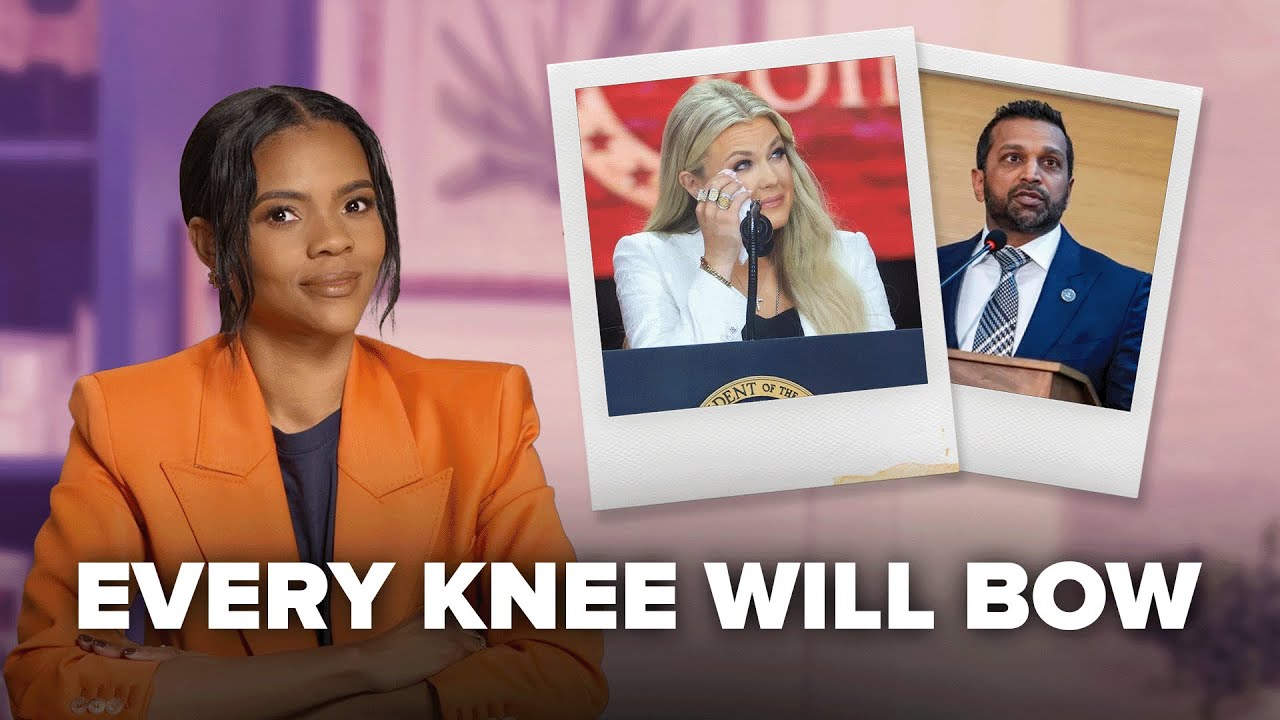
Candace Owens Investigates Charlie Kirk Assassination After Erika Kirk's Powerful Forgiveness Speech and Kash Patel Statement
1:00:21
Douglas MacGregor Explains Why He Believes Charlie Kirk Was Assassinated Over Foreign Policy Views
19:40
Tucker Carlson Reveals Charlie Kirk's True Feelings About Benjamin Netanyahu Before His Death
Tucker Carlson shares personal conversations with Charlie Kirk about the Turning Point USA founder's evolving views on Israel, Benjamin Netanyahu, and US foreign policy. Kirk faced intense donor pressure after inviting Tucker to speak, losing a $2 million donation just days before his death. According to Carlson, Kirk was deeply troubled by Netanyahu's influence over American foreign policy and the neoconservative push for regime change wars. Despite attacks labeling him an anti-semite, Kirk maintained his Christian faith-driven convictions about avoiding another forever war. Carlson also criticizes Netanyahu's immediate response to Kirk's death as an attempt to hijack grief for political purposes, revealing that Kirk had privately expressed strong reservations about the Israeli Prime Minister to multiple people.
Tucker Carlson's Personal Account of Charlie Kirk's Final Months
Tucker Carlson has provided candid insights into Charlie Kirk's evolving views on Israel and US foreign policy during the final months before Kirk's death. According to Carlson, Kirk had grown increasingly vocal in his criticism of Benjamin Netanyahu and the neoconservative push for regime change wars in the Middle East.
Carlson explains that Kirk's views were primarily informed by his Christian faith and his extensive conversations with young people across America. Kirk believed that the war on terror had been a net loss for the United States, causing incalculable economic, physical, and spiritual damage to the country. He was determined not to see America drawn into another forever war, particularly with Iran.
The Backstage Conversation That Changed Everything
Before Carlson's speech at a Turning Point USA event in July, the two had a significant backstage conversation. Carlson was preparing to discuss the neoconservative effort to draw America into war with Iran and the Jeffrey Epstein case, including Epstein's connections to intelligence agencies. Concerned about causing problems for Kirk with his donors, Carlson initially hesitated to address these controversial topics.
Kirk's response was unequivocal. Looking directly at Carlson, he said, "Go all the way. Do it. Go all the way." Despite knowing the backlash it would cause among his donor base, Kirk encouraged Carlson to speak freely about these sensitive subjects.
This aligns with Kirk's documented actions during the escalation of tensions with Iran, when he personally went to President Trump to plead against bombing Iran or pursuing regime change operations.
The Donor Backlash and Financial Consequences
Following Carlson's speech, Kirk faced severe consequences from his donor base. A small but intense group of donors tormented Kirk until the day he died, according to Carlson. The American Jewish Committee issued a statement calling Charlie Kirk an "anti-semite" and "dangerous," labels that deeply wounded Kirk despite his long history of supporting Israel and having many Jewish friends.
The financial impact was substantial. Carlson revealed that two days before Kirk's death, he lost a $2 million donation because he had publicly pledged to bring Carlson back to the next Turning Point conference in December. Kirk regularly texted Carlson over the following months, saying "Man, I'm really taking a lot of heat for this and people are really mad."
Despite this pressure, Kirk maintained his commitment to free speech and his principles. Every time Kirk expressed concern about the backlash, Carlson offered to step away from the speaking engagement. Kirk refused, insisting it was a matter of principle and that Carlson should be there.
Kirk's True Feelings About Benjamin Netanyahu
Carlson was emphatic that Kirk did not hate Jews or Israel. Kirk loved going to Israel, had many Jewish friends, and supported the state of Israel. However, Kirk strongly disliked Benjamin Netanyahu personally and expressed this sentiment to Carlson and others many times.
According to Carlson, Kirk felt that Netanyahu was a very destructive force. He was appalled by what was happening in Gaza and, above all, resented that Netanyahu was using the United States to prosecute his wars for the benefit of his country. Kirk viewed this as shameful, embarrassing, and bad for the United States.
Carlson emphasized that enough text messages exist to verify these claims and that Kirk's feelings about Netanyahu are documented facts, not speculation.
Netanyahu's Response to Kirk's Death
Carlson expressed disgust at Netanyahu's immediate response to Kirk's death, describing it as "ghoulish and really repulsive." He accused Netanyahu of trying to take the energy, sadness, and grief people felt over Kirk's murder and redirect it toward support for his own political projects.
Netanyahu immediately blamed "Islamists" for Kirk's death, implying an Islamist killed Kirk, and attempted to portray Kirk as a steadfast Netanyahu supporter. Carlson noted that Netanyahu held up the last note Kirk had sent him and read a small passage from it, a gesture that others, including Candace Owens, have questioned as potentially misrepresenting Kirk's actual views.
Carlson stated he had never seen anything lower than Netanyahu's attempt to hijack Kirk's memory and use it for his own political ends, particularly because what Netanyahu said was "completely untrue."
The Broader Pattern of Suppressing Dissent
Carlson highlighted a disturbing trend in American political discourse: people with power don't want to hear disagreement or be challenged. He noted that even prominent figures who built their reputations on defending free speech, such as Seth Dillon of the Babylon Bee, were demanding that Kirk remove Carlson from the speaker roster because of statements Netanyahu or his supporters didn't like.
Carlson found this particularly ironic given that Dillon had famously faced his own cancellation and free speech challenges. He also noted that he had supported Dillon during those difficulties, hosting him on his show and having dinner with him.
The pressure campaign against Kirk represented a fundamental violation of free speech principles. As Carlson put it, he felt his views were "pretty moderate" — he had never been an Israel hater or anti-semite, he simply didn't want more wars and didn't want a foreign country humiliating America and dictating what American laws should be. This struck him as "pretty basic America first stuff," and Kirk agreed.
Corroboration from Other Sources
Carlson's account aligns with reporting from Max Blumenthal's Greyzone, which cited an unnamed source close to Kirk describing similar pressure and Kirk's growing concerns about Netanyahu's influence. The source told Blumenthal that Kirk believed Netanyahu was trying to cow him into silence as he began to publicly question Israel's overwhelming influence in Washington.
This corroboration from multiple independent sources lends credibility to the narrative that Kirk was indeed experiencing significant pressure over his evolving foreign policy views and his willingness to platform speakers critical of Israeli government policies.
Kirk's Complex Position as a Bridge Figure
Kirk occupied a unique position within the conservative movement as a bridge between a predominantly Zionist donor class and a younger activist base with very different views on Israel. Polling shows that older conservatives overwhelmingly support Israel, with approval ratings around 75-80%, while only about 25% of young conservatives are strongly pro-Israel.
This demographic divide created tension that Kirk had to navigate carefully to maintain his organization. He had to balance the expectations of wealthy donors who demanded unwavering support for Israel with the views of young activists who were increasingly skeptical of American foreign policy in the Middle East.
What Remains Unknown
Carlson was careful to note that much remains unknown about who murdered Charlie Kirk and why. He explicitly stated he was not accusing anyone of involvement in the murder or trying to imply anything without evidence. However, he felt it was important to establish the truth about Kirk's actual views and the pressure he faced, especially given the efforts by Netanyahu and others to distort that truth.
The case continues to raise questions, including the strange circumstances around George Zinn, who was initially arrested after proclaiming himself the shooter and telling authorities he was trying to allow the actual culprit to get away. While Tyler Robinson has been charged with the shooting, various oddities in the case remain unexplained.
The Importance of Truth and Kirk's Legacy
Carlson concluded by emphasizing that he wanted to share this information because many liars, with Benjamin Netanyahu number one among them, were trying to distort the truth about who Charlie Kirk was and what he believed. Carlson stated he knows these facts and can prove them.
Kirk's legacy, according to Carlson, should be that of someone who loved people and was a purveyor of peace, not someone who was dangerous or anti-semitic. Kirk was someone who put principle above financial pressure, who encouraged free speech even when it cost him personally, and who was willing to evolve his thinking based on his Christian faith and his conversations with young Americans about what was best for their country.