Up Next
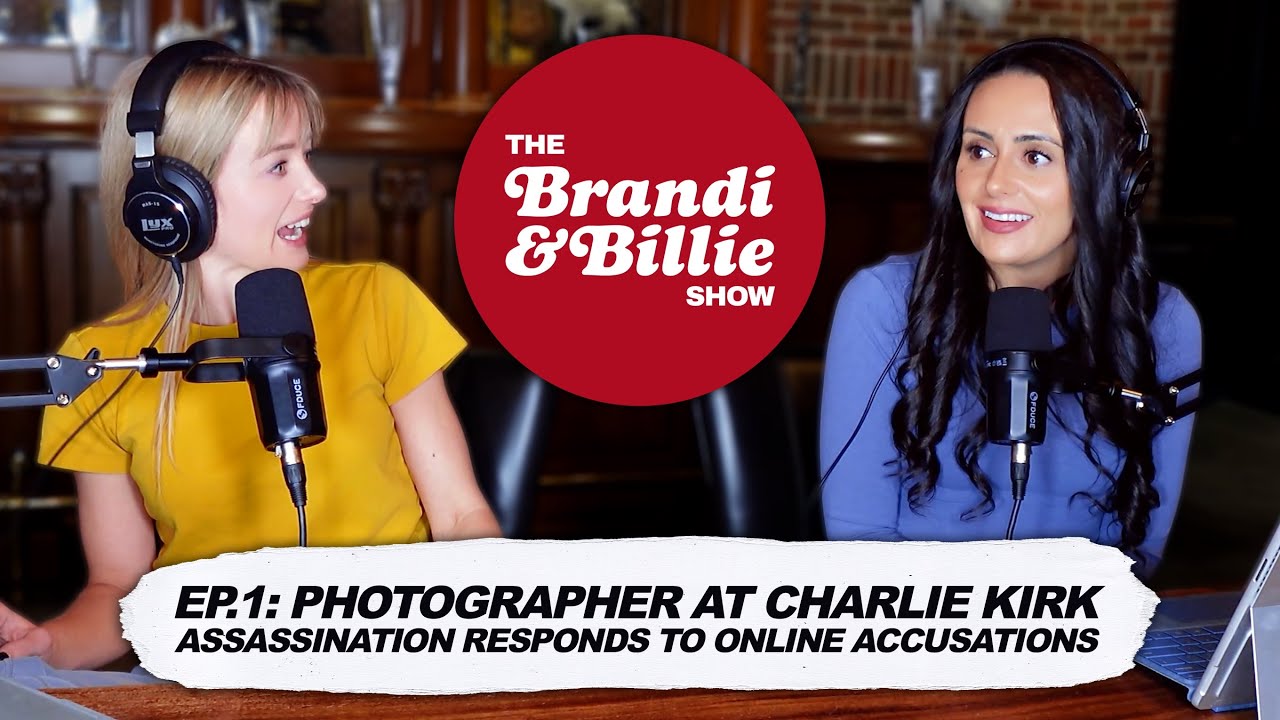
Brandi and Billie Expose Shocking Conflicts of Interest in Charlie Kirk Investigation
1:38:44
Baron Coleman Uncovers Disturbing Google Trends Before Charlie Kirk Assassination Linked to Israel and DC
14:20

Baron Coleman Uncovers Disturbing Google Trends Evidence Before Charlie Kirk Assassination That Could Implicate Washington Insiders
1:40:09
Baron Coleman Uncovers Disturbing Google Trends Pattern Before Charlie Kirk Assassination in Orem Utah
Baron Coleman presents extensive Google Trends research revealing searches from Washington DC and Israel weeks before Charlie Kirk's death in Orem, Utah on September 10th. The analysis examines searches for George Zinn, surgeons at Timpanogos Regional Hospital, the Sorenson Center at Utah Valley University, and a mysterious surveillance plane. Baron compares his methodology using two recent shootings, the Grand Blanc, Michigan church attack by Thomas Jacob Sanford and the Southport, North Carolina shooting by Nigel Edge, demonstrating how suspects, locations, and even exact addresses appeared in searches from Washington DC before events occurred. The investigation identifies patterns around July 20th and questions involving medical examiner Diedra Amaro, FBI personnel changes, and Hunter Kozak.
Introduction: A Pattern of Disturbing Searches
Baron begins by acknowledging time constraints but emphasizes the importance of presenting findings from weeks of research using Google Trends. He has uncovered what appears to be a disturbing pattern of searches originating before Charlie Kirk was taken from this life on September 10th in Orem, Utah. These searches span days, weeks, and months leading up to that fateful day.
Google Trends purports to reflect what searches were conducted, where, and when. Baron takes this data at face value, though he lacks access to underlying data supporting the results. He reminds viewers he draws no conclusions from what he finds, only presenting what appears in the Google Trends tool at the time searches are run. He has noticed a pattern where results sometimes change, and has run a series of tests comparing searches from other current news events outside the Charlie Kirk event. Those terms don't tend to disappear at nearly the pace that terms associated with Charlie Kirk's story tend to disappear after coverage.
Methodology Demonstration: Two Recent Shootings
To demonstrate his methodology, Baron examines two recent stories involving shocking violence. The first involves Thomas Jacob Sanford, who drove his vehicle through the front doors of a Church of Jesus Christ of Latter-day Saints building in Grand Blanc, Michigan. Baron searches the suspect's full name in Google Trends for the District of Columbia, finding searches on the week of April 27 to May 3, 2025, and again three weeks ago in Washington DC—all before the shooting occurred.
Baron then searches for Grand Blanc, Michigan, finding searches a few weeks ago around the first week of September when Thomas Jacob Sanford was being searched in Washington DC. He drills further, searching the street address of the church: 4285 Macandal Road. Within the past seven days, on September 24, 2025, in the District of Columbia—far from Grand Blanc, Michigan—this specific address was searched. Baron confirms this is indeed the address of the Church of Jesus Christ of Latter-day Saints where the tragedy took place.
Baron also finds Thomas Jacob Sanford's home address, 4156 East Atherton Road, was searched in the District of Columbia in the last week. He cautions viewers not to harass anyone but emphasizes the pedagogical purpose of demonstrating that even specific home addresses were searched before the event.
The Southport North Carolina Shooting
The second case involves Nigel Edge, who committed what authorities called a highly premeditated attack on a North Carolina waterfront bar called the American Fish Company, leaving three dead and five wounded. He reportedly pulled up on a boat and opened fire. Baron searches Nigel Edge in the District of Columbia for the past 30 days, finding searches on September 26th—a day before the shooting that took place on September 27th.
Baron then searches for the American Fish Company, finding searches from the District of Columbia on September 22nd, five days before the shooting. He pulls the address, 150 Yacht Basin Drive, Southport, North Carolina, and discovers searches from the District of Columbia hours before the shooting—five or six hours prior to the event.
Possible Conclusions From The Pattern
Baron outlines possible conclusions one could draw from these patterns. First, suspects may have popped up on law enforcement radars, and curious law enforcement personnel wondered what Google had on these individuals—checking for disturbed behavior, mental illness, social media posts under their own names. Baron notes this is his own first resource when researching, though he uses specialized websites beyond Google for finding current addresses.
A second, more disturbing possibility is that individuals either popped up on someone's radar or were made known to someone in the District of Columbia and then were cultivated or recruited. Baron cites evidence this happens, referencing the Gretchen Whitmer kidnapping case in Michigan where most participants turned out to be FBI informants or agents. He mentions another case involving a man who didn't want to commit violence but was baited online by someone he thought loved him, who turned out to be an FBI informant.
The third possibility is coincidence, though Baron notes the more individual facts accumulated over time, the harder it becomes to believe coincidence. He emphasizes he's simply reporting facts without drawing definitive conclusions.
Charlie Kirk Investigation: George Zinn
Baron transitions to Charlie Kirk searches, starting with George Zinn (spelled Z-I-N-N), the elderly man arrested immediately after the assassination. Baron recalls being on the phone with a friend when they learned someone was arrested, both pulling up pictures of the little old man. This is the person who stood up within seconds of Charlie Kirk being assassinated, yelling "I did it, I shot him," and whose pants fell down as they dragged him away while he shouted "Shoot me."
Searching for George Hodgson Zinn (the full name) in the District of Columbia, Baron finds a blip on September 10th—likely people racing to learn who was arrested. But more significantly, there's a search on July 20th. Baron emphasizes July 20th as an anchor date, noting the amount of coincidences between a week before and after July 20th becomes very difficult to disregard.
Timpanogos Regional Hospital Searches
Baron wonders if anybody searched for the hospital where Charlie Kirk was taken—Timpanogos Regional Hospital in Orem, Utah. Searches show spikes on September 10th and 11th as people looked for where they took Charlie Kirk. But there's also a spike of interest from DC with no interest for two solid months before the shooting. Keeping the July 20th anchor date in mind, searches appear on July 16, 2025, July 3rd, and June 28th. Most significantly, the day before the shooting, someone in the District of Columbia searched Timpanogos Regional Hospital.
Medical Examiner and Law Enforcement Searches
Baron investigates who the medical examiner is in Utah, finding Diedra Amaro. Notably, she was searched not in the District of Columbia but from an IP address originating in Israel on June 30, 2025. Baron checks DC and Utah, finding no searches there, emphasizing this is not a common search term.
He then examines Bo Mason, Commissioner of the Utah Department of Public Safety. Mason was appointed to that position on July 17th, replacing someone who resigned. Searches for Bo Mason from the District of Columbia appear on July 16th—right in that window around July 20th. Baron acknowledges this could be explained as someone checking who the new Department of Public Safety head would be in Utah.
The Surveillance Plane: November 1098 Lima
Baron discusses research by John Cullen regarding a Bombardier Global 6500 with tail number November 1098 Lima (N1098L). On the day Charlie Kirk died, this plane made two interesting flights and deviations. The plane can reach 51,000 feet cruising altitude and is essentially a US spy plane. On the day of the shooting, it descended from 30-50,000 feet down to 203-204 feet off the ground, flying at nearly stall speed—113-118 knots.
The first time occurred heading north toward Montana, deviating from its flight plan to fly within two miles of Utah Valley University campus at 204 feet. It then ascended. Twenty-four to twenty-five minutes after Kirk was assassinated, it came back through the Orem, Utah area, descending again to 203-204 feet at nearly the exact same speed. Baron emphasizes how dangerous this is—a gust of wind could have knocked the plane from the sky.
This plane has the capacity to deploy drones according to news articles and videos Baron has seen. Searching November 1098 Lima, he finds searches from an IP address originating in Israel on August 8th—a month and two days before the shooting, thirty-two days before this plane performed very unusual low-altitude flybys.
FBI Personnel Changes
Baron examines the controversy when the left blamed Donald Trump and Kash Patel for trading out the special agent in charge in Salt Lake City. He searches for the old special agent in charge, Mahtab Sayed, finding searches from Israel (not District of Columbia) on July 9th—about ten or eleven days before that July 20 anchor date. He adds the middle initial and checks Israel again, finding searches on August 10th.
For the replacement, Robert Bulls, Baron finds searches from an IP address originating in Israel on September 1st. He checks DC finding no interest there, emphasizing someone from Israel took keen interest in who the special agent in charge was in Utah, then took interest in the new person when that position changed in weeks leading up to the assassination.
Hunter Kozak: The Questioner
Baron addresses how quickly people abandoned the idea that the question asked when Charlie Kirk was assassinated could be related. Hunter Kozak asked about transgender gun violence. Baron notes Kozak stated he pre-screened this question with Charlie Kirk's team, who approved it—not catching Kirk unaware. The team reviewed the question and questioner, determining he could ask it live at the American Comeback Tour event in Orem, Utah at the UVU courtyard.
Initially people thought the question must be related—too convenient, especially with transgender terms on bullets. The shooter was reportedly living with someone who may or may not be transitioning from male to female and may or may not wear puppy dog costumes. Baron searches Hunter Kozak (K-O-Z-A-K), finding searches from Israel on August 3, 2025. Checking District of Columbia shows no searches. Checking Utah shows searches only after the shooting. But someone on the other side of the world took interest in this individual beforehand.
The Surgeon Investigation
Baron becomes curious when the Turning Point USA spokesperson said they spoke to the surgeon but didn't give the surgeon's name. The spokesperson relayed the message from the surgeon that "Charlie's made of steel" and this bullet would normally go through almost anybody, but not Charlie. Baron notes they didn't do an autopsy according to street news, which he finds shocking since an autopsy could reveal bullet angle, path, bullet type, organ damage, and other injuries.
Baron obtains a list of all surgeons at the Orem branch of Timpanogos Regional Hospital, eliminating specialists like breast reconstruction surgeons, focusing on general surgeons, emergency surgeons, and those performing minor surgery. He finds multiple surgeons searched from an IP address originating in Israel around July 20th:
- Steven Neilman - July 18th
- Robert Patterson, MD - July 23rd and 24th (only one searched twice, two days in a row)
- Lee Troder - around July 20th timeline
- Lee Patterson - July 19th
- Brian Gill - July 22nd
- Richard Rasmussen - July 14th
- William Pugh - July 30th (about ten days after July 20th)
Baron emphasizes that if he were FBI or Utah State Police, he would call Google demanding IP addresses, wanting to know if this is a VPN or the same IP address searching all these surgeons. He would want to know who is so curious about surgeons in the local hospital, especially related to an assassination where the body was rushed there, a surgeon declared Charlie Kirk a "Superman," claimed to find the bullet, signed the death certificate, and there was no autopsy.
The Sorenson Center Connection
Baron examines video footage frame by frame, identifying a man with what appears to be a Nikon camera (possibly D7000) based on the black and yellow strap and clockwise zoom direction. This man appears in Getty Images photos and video 25 seconds before Charlie Kirk is assassinated. Baron calls him "Lanyard Man."
In the video, Lanyard Man is positioned behind the stage with a highly zoomed camera looking backstage. Baron questions what he's photographing since there wasn't much happening back there—just a couple SUVs and people standing around. The man appears to have an earpiece, though Baron acknowledges it could be an earring or hearing aid.
Baron traces Lanyard Man's actions: looking backstage with zoomed telephoto lens, putting camera down, leaning in as if getting someone's attention under the tent, then looking up at Charlie Kirk's 9:30-10:00 position with a thousand-yard stare. Very coolly and calmly, without looking down, he flips his white lanyard to the black side. Six seconds before Charlie Kirk dies, something grabs his attention in the distance. Three seconds before death, the camera goes up and he starts zooming the telephoto lens hard.
After the shot, Baron observes people in the crowd not looking toward the Losee Center (the official shooter location at Charlie's 12 o'clock) but instead looking at Charlie's 10:30-11:00 position—toward the Sorenson Center. A woman looks that direction within seconds. A man in a red shirt points that way. Baron identifies a "blue shirt guy" sitting arms folded, completely unfazed while everyone else panics.
Armed with information that the Sorenson Center may be of interest, Baron searches Google Trends. He finds searches for the Sorenson Center from the District of Columbia on August 28th—twelve days before Charlie Kirk's death. On the exact same day, an IP address originating in Israel also searched the Sorenson Center. They had also searched it four days before.
Baron's Hypothesis
Baron presents his hypothesis: Lanyard Boy might know more than we think. Dozens of people on the ground may have been aware of what was happening. This was planned weeks in advance, long before the campus tour was announced in late August. There may have been someone on the inside at UVU, Turning Point USA, or the security team. Somehow highly advanced teams were on the ground that day and Charlie didn't know it.
Baron theorizes Tyler Robinson was told to drop a gun at that location so his fingerprints would be on it and evidence could be planted to act like they recovered the murder weapon. He doesn't believe Charlie was shot with a 30-06 from the claimed 8-9 degree angle, stating it would have blown out the back of his neck where there's only meat, no bone. For the surgeon's claim about "bones of steel" to make sense, the shot would need to come from approximately a 35-degree angle or more—consistent with a shot from the Sorenson Center direction, not the Losee Center.
Baron emphasizes he's 100% certain Tyler didn't do it, never been more certain of anything related to this case. He believes this was a highly coordinated operation planned well in advance with multiple parties involved.
Video Transcript
All right, guys. Um, hey, we've got a lot to do today. We've got a lot to do today, and I don't have a ton of time to do it. So, I hope you hang with me here for a little bit. Um, and just know that I am going to be uh apologize for getting all the setup. I had to take care of do some kid duty stuff a few minutes ago. Um, but I am going to uh let me start this way. Let me start this way. I want to get I want to really get right into it today because I don't have a ton of time to kill. Um, probably a bad choice of words. [snorts] All right. Uh, let me say this. For the last couple weeks, I have um I've used this platform to to look at what I think appears on its face to be uh a disturbing pattern of searches that I uncovered using the Google Trends tool uh on the Google platform. And and the searches we reviewed, most of them, I think I I might be able to say all of them originate from before Charlie Kirk was was taken from this life. and they they span the days, the weeks, and the months leading up to that uh fateful day in uh in Oram, Utah on September 10th. And and what Google Trends does is if you're not familiar with it, you've missed the last couple of weeks, but if you're not familiar with it, what Google Trends does is um it purports to reflect what searches were conducted and where and when those searches were conducted. And I take that at face value. I don't have access to the underlying data the results get that that support the results. And so I'll remind you what I've said the last couple weeks. I draw no conclusions from what I find. I draw no conclusions from what I choose to present here. I cannot present everything I found. It's too numerous, too voluminous. It would take so many hours. You wouldn't watch it and I wouldn't do it. Uh but what I am doing is presenting to you what appears to be um fact what appears in the Google Trends tool at the time I run the searches. I've noticed a pattern that sometimes the results change. And because of that, I've run a series of tests, believe it or not, and and I've gotten kind of detailed in how I document these. A test of search terms from other current news events outside of the Charlie Kirk event in uh in Orm, Utah. And [snorts] I notice those terms don't tend to disappear, at least not nearly at the pace that the terms associated with Charlie Kirk's story tend to disappear after I cover them. So tonight, I want to walk you uh through a couple of examples of current stories breaking in America, both involving the shocking use of violence, much like we saw with Charlie Kirk. Um, and I want to share this for a couple reasons. One is to to to demonstrate, I guess, what it is that I do and how I do it when stories like these break so that you can see what I'm doing and and you can have confidence in and what it is I present here. And another goal is to verify whether everything I cover disappears in the days uh weeks and months. Nice. [laughter] uh to verify if everything that I uh that I cover disappears after I cover it. And again, I just want to clarify a couple of things. Google Trends searches that I have not discussed with other people, not friends, not family, that I just do on my own and I haven't shared on this channel, they tend not to disappear. Google trend searches I do share with others that we talk about we trade text messages and I cover on the channel. They have a bad habit of disappearing and I'll leave bit for you to decide what that means. But but please know I'm tracking this in real time. Which ones I cover, which ones I share with other people, which ones disappear. And with that, let me take you to two horrific stories that have unfolded in the last 24 hours because I I'll demonstrate what I do with these types of stories and how I analyze them. And after that, I'll show you close to 20 searches you have never seen relative to Charlie Kirk. And searches you didn't frankly think of. And I know you didn't think of them because on this channel, I asked you guys, give me some other search terms. I'll look them up right now live on air. And I got some suggestions. I did get some suggestions, but when I really started grinding the gears and talking with some friends, um, we came up with some additional search terms and the results are shocking. Probably, I would say, in some instances, vastly more shocking than anything we've covered today. Vastly more shocking than anything we've covered today. [snorts] Did I get your text from earlier in the day? I You probably texted someone else, Cter. I don't think I still have the same number that you have. Um, but I have your number, so I'll reach out to you. Uh, my phone number tends to change. Cter, I'm not hiding from CTER. No, sir. I wouldn't do that to you. Okay, let me let me let me uh let me find it first. Where is it? Here we go. Uh, news story broke today. The two major news stories broke. One is probably more wellknown than others, so maybe I'll start there. Uh, one is a shooting at a Church of Latter-day Saints, a Mormon church in Michigan. And I'll share this on the screen real quickly just so you can see the news. Man drove his vehicle through the front doors of a Church of Jesus Christ Latter-day Saints building. Man, that's a mouthful. I love our Mormon friends, but that is such a mouthful. Church of Jesus Christ of Latter-day Saints. um in Grand Blanc, Michigan. All this is relevant as I'm going to walk through this with you. Suspect been identified again by three names. Thomas Jacob Sanford. So, let me go through a few things here [snorts] so you can see in real time what it is I do um when I'm confronted with a story like this because it's going to give more credibility to what I'm talking about with the uh with the Charlie Kirk thing. Oh gosh, I got too many windows open to ever be able to figure this out. Let me do this. Sorry guys. Let me pull this one up. So, I go to Thomas Jacob Sanford. That's the shooter's name, isn't it? I look in the District of Columbia because that's where I get awfully suspicious with these crazy shooters that appear out of nowhere taking innocent lives in mass quantities. If you'll notice here, Thomas Jacob Sanford was searched the na this phrase was searched on a machine with an IP address originating in Washington DC once the week of April 27th to May 3rd, 2025 and again three weeks ago in Washington DC. Thomas Jacob Sanford in the District of Columbia. That's what you see up here. Past 12 months. So I do the whole year just to get an idea and I did this at 90 days, 30 days, 7 days, but I wanted this is the one I like. It's the whole year. You can see there's no random searches. Then all of a sudden one, you know, one day where it pops up with some modest amount of uh of searching and then it goes away for a period of months and then it pops up again a few weeks ago. Thomas Jacob Sanford. Now I don't draw conclusions on what that means. And this dotted line here obviously is leading up to today where it just goes crazy. >> [snorts] >> I don't I am not drawing conclusions on this program right now on what that means. But you think, well, that's that could be a coincidence. Yeah, it could. It could. Um, what about Grand Blanc, Michigan? I mean, has anybody ever searched for Grand Blanc, Michigan? Yeah, as a matter of fact, they do because that's where the shooting took place. And you'll see right here a few weeks ago about the if you remember it was about the first week of September when Thomas James Sanford was being searched in Washington DC in the District of Columbia the actual district itself not Maryland not Virginia and you got Grand Blanc Michigan but but hey people could be vacationing there I don't know maybe it's a hot spot so we drill down further we go even further how about the street address of the Mormon church. How about the street address of the Mormon church, which happens to be 4285 Mandal Road. Lest you think this is something that gets s Have you ever heard the word Macandal in your life? I have not. Today was the first. [snorts] And lo and behold, in the past seven days, September 24th, 2025, in the District of Columbia, a long way from Grand Blanc, Michigan. A long way from Grand Blanc, Michigan. Am I saying that right? Grandlank, Grand Blanc. It sounds like it should be Grancer. We don't call it Perrier, right? We get We give things that look obviously French. We give it a a little French accent to it. Gro Mcandalis Road, 4285 Mandalas Road. I can assure you, I could prove it here if I have to. I can assure you that's the address of the Church of Jesus Christ of Latter-day Saints. I can promise you it is. But lest you doubt me, lest you doubt me, I will show you. I actually have it pulled up for you guys to see in all its glory. the Church of Jesus Christ of Latter-day Saints where the tragedy today took place 4285 Mandalas Road Grlanc Michigan. So to recap, we have the guy's full name searched in Washington DC in the last three weeks and before that a few months before that and then no at no time in between. Thomas James Sanford. We have Grlanc, Michigan searched about the same time that Thomas James Sanford's name was searched the second time in the Washington DC area. We have the street address of the Church of Jesus Christ of Latter-day Saints in Grand Blanc, Michigan. Maybe they were searching a different Thomas James Sanford. Thomas Jacob Sanford. Excuse me. Thomas Jacob Sanford. I've been saying James. Thomas Jacob Sanford. Well, maybe. But I found his home address. It's 4156 East Athetherton Road. Do not go looking it up. Don't harass these people. Stay away from there. But I'm doing this for pedagogical purposes. So that you can see that even in the District of Columbia, Thomas Jacob Sanford's home address of 4156 East Athetherton Road was searched in the last week now. Could all be a giant coincidence. Could all be a giant coincidence. We could we could be we could be going on about nothing right now. We could be wasting everybody's time who tunes into this program. Ah, we don't care about the Mormons. I do. They're good people. They're good people. I don't care about this lone crazy shooter. I do. I'm getting good data out of this. Getting really good data about what was searched and when and where. I find it shocking. I find it shocking. [snorts] I found Well, I probably shouldn't show this. I found his wife's Facebook page or I maybe his ex-wife. I'm I'm having trouble figuring out if they're still married or in the process of getting divorced or whatever, but I found his wife's Facebook page and I I just started going through the pictures. They look normal. [snorts] They look like a normal family. They've got pictures together going back years with their kids with I'm not going to show these. This is probably not right, [snorts] but it is public. I mean, I got a picture of them holding it a baby up with some flowers nine years ago, almost 10 years ago. Apart from having bad facial hair, he looks pretty normal. >> [snorts] >> That is not true. [snorts] I don't want to get into all the conspiracy theories, but I do want to dissuade you of this notion right away. This is not true. I know what you're going to say. Oh, this is owned by some security company. No, it's not. I know who owns it. I looked. I pulled a deed [laughter] cuz I'm crazy. Um, it's owned by an LLC that's owned by a nicely owned couple, presumably the couple who lives in the house. Um, it is, if you watched that video, then you got duped. And here's how you got duped. I'll go back to the other story in a second. Here's how you got duped. They took the name, the three numbers of the address. I think it was 983. And then they took the street and they changed the street name out when they flipped it over and showed you that some security company owed that LLC. That's that's that's how it worked. It's not true. So, don't get too carried away on stuff like that. All right. SO, THAT WAS STORY number one. I want to do this quickly. I don't have a ton of time tonight. That was story number one. Then there is story number two. Nigel Edge. You guys familiar with this one? guy named Nigel Edge commit a highly premeditated attack on a North Carolina waterfront bar, leaving three dead and five wounded. He pulls up, I think, if I understand the story correctly, he pulls up on a boat and just opened fire into some either bar, restaurant, bar and grill, maybe both, bar and restaurant. They're calling it a highly premeditated I don't know how they know that. Highly premeditated attack. They've confirmed he's a lone gunman. all this stuff. It's the American Fish Company and it's in a little beach town. I'll show you all this in just a second. He's a resident of Oak Island. Um, but his name's Nigel Edge. And you think, surely Nigel Edge has never been searched in our good District of Columbia prior to today, right? Well, you'd be wrong. Because if you look up Nigel Edge in the District of Columbia in the past 30 days, right here, two days before the shooting or a day before the shooting, Nigel Edge was searched. This shooting took place last night on September 27th. You'll notice on September 26th, somebody within the District of Columbia or with an IP address originating in the District of Colombia says, "Wonder what's up with Nigel Edge?" Oh. Oh, that's probably Yes. Yes. Yes. That is probably a coincidence. That's probably a coincidence. Yeah. Maybe. Maybe. So, I trudge on. I look further. I noticed the shooting took place at the American Fish Company out of curiosity. How the last week has anybody looked up the American Fish Company inside the District of Columbia? Lo and behold, they have September 22nd. 5 days before the shooting, someone looked up the American Fish Company. Bam. Bam. That's a pretty generic sounding name. You're right. It is. It is. So, I do what any person in my shoes would do. I pull the address of the American Fish Company, and I notice it's right here, 150 Yacht Basin Drive, Southport, North Carolina. You can zoom in and out, and you can see exactly where in North Carolina it is. is near that pointy part. I call this the pointy part of North Carolina. [snorts] How would you like to live in bald head island? [snorts] I wonder if you have to have no hair. But anyway, uh American Fish Company right here again, 150 Yacht Basin Drive. So you think to yourself, I assume Baron's telling me that for a reason. I assume he's telling me that for a reason. I assume he's probably going to show up a search in a moment out of Washington DC, out of the District of Columbia for 150 Yacht Yacht Basin Drive. 150 Yacht Basin Drive. District of Columbia before the shooting. Hours before the shooting. Five or six hours before the shooting. [snorts] And I do that not to draw any conclusions from any of these things, but to show you what I do when these stories break. I tend to do this with school shooters, mass shooters, and I will tell you it's about 50/50. From what I can tell over the last however long I've been doing this, couple years, it's about 50/50. Half of them are pretty well documented in the Google trend searches out of the District of Columbia. Half appear to show up out of nowhere. Now, you could draw conclusions from that. There's I will run through a number of conclusions you might be able to draw and then I'll get into the Charlie Kirk stuff, which is pretty shocking. I mean, pretty shocking on a on a on a type of shocking, but we'll get to it in a second. Let me go through the possible conclusions you could draw. Conclusion one, [snorts] Nigel Edge and Thomas Jacob Sanford popped up on law enforcement radars and some nosy law enforcement types thought, "I wonder what's on Google for these guys. Do they look disturbed? Do they look mentally ill? Do they look like the kind of people we need to keep an eye on? Are they posting crazy stuff under their own name? Can I find their Facebook page, Instagram, Snapchat? What can I find on these guys? Do they have YouTube accounts? Do they go through Google Trend searches on YouTube? Uh, I mean, that's a conclusion you could draw that they pop up on law enforcement radar and somebody gets curious and wonder what the Google machine has to say about this. It's the same thing I do anytime I look at something. The very first resources I look at are Google. I have some other websites that are very trustworthy that I go to. It's how I found the address of Thomas James Sanford. It's how I found the address of Nigel Edge. It's not Google because Google is often uh not most upto-date with respect to um current people's addresses. And I don't want to tell you what website I use for a very simple reason. very simple reason because I don't want them taking it down. [laughter] I like [snorts] to use it. I like to use it. I was actually shown this particular website that I use. I actually used to use a different source and it wasn't as good. I was shown this one by a very good friend in law enforcement who said, "Hey, I want to show you something." And he he pulls his phone out and he punch he does and he says, "Hey, did you used to live at and he gave an address?" I thought, "Yeah, did you live there from 2004?" Yeah. Go on. Are you related to And he starts naming relatives that I don't even think about. Yeah. And he named like 10 addresses. One or two of them were wrong, but most of them were right. And a few of the relatives are wrong, but most of them are right. And it was shocking. It was shocking. And so that's the website I use now. Uh, and I don't want to tell you because I don't want them taking it down or making it more difficult to use or charging or something. That's actually a free website. Okay. Now, I want to get into Oh. Oh. So, conclusion one is you can conclude that they just jump up on people's radar. Conclusion two is a little scarier or a little more disturbing potential. potentially conclusion two is they they either popped up on somebody's radar or they were made known to someone in the District of Columbia somehow and then they were cultivated. They were cultivated. They were recruited. They were and we have evidence this happens. We have evidence this happens. I take you back to Michigan during the last election cycle. Do you remember Gretchen Whitmer and the kidnapping case against Gretchen Whitmer? And there were some people who probably were radicals or whatever and they but the I think their court testimony was they didn't want to kidnap Whitmer and and that the people there with them kept telling you got to kidnap Whitmer. You got we got to do this. We got to pull it off. It's going to be great. It's going to be amazing. We're going to start. And these guys were like I don't want to do it. I think there were like 14 or 16 people in the group or whatever. And it turns out all but except the two of them were FBI informants or agents. So we have evidence this happens. And it's not the only case. We have other evidence where I remember there was a Muslim guy, I think he was a maybe a little um a few sandwiches short of a picnic, a Tylenol American maybe you would call him, and he um he didn't want to commit violence, but he was talking to someone online that he thought loved him, and they just kept baiting him and baiting him and baiting him and baiting him into this violent act. And he finally goes and gets a gun because the person's like, "Oh, you got to do it for me. You got" and and he goes and gets a gun and [snorts] and it turns out that when they arrested him, he's like, "I didn't want to do this." And and the person he was talking to wasn't someone in love with him at all. It was an FBI informant or agent or something. It was a hit they were a sting they were running. So, this happens. This happens. I think I'm see I I you can one could conclude you're seeing evidence of this in the Google trend searches. That's the possibility too. Possibility three, it's all a big coincidence. The more individual facts you get over time, the less it becomes a coincidencable. I made that word up, but I'm using it. Coincidencable. It's harder to believe it's a coincidence. Just realized you can see those papers. I'm hoping they don't can't see them too well. So, with that said, [snorts] let me do away with the Which one do I want to start with? I think I want to start with this one. This is probably the one I can't believe I didn't run first. The very first thing after Charlie Kirk was shot, the very first thing that happened, I was actually on the phone with a good friend of mine that I've known for a decade and a half or longer, maybe been a long time now. I'm on the phone with him. We're discussing Kurt getting assassinated. Both of us just completely in shock. My friend actually knew him um pretty well. And I mean, we're going through who could have done this. And I said, "Hey, they've arrested somebody." And we both pull up the pictures and we're looking at it and they've arrested a little old man named George Zen. You remember George Zen? Not Zynn like the the nicotine pouches. Z I not zen like enlightenment and peace. No, we're talking ZN, which I don't even know what that means. Apparently means wackadoodle. So, I go and I search George Zinn. You can see here where George Zinn was arrested. There's a little blip on September 10th in the District of Columbia. I'm I'm assuming this is everybody racing to the uh computer to figure out who is the guy they just arrested. I don't know what this is. Maybe a few days later people go. But look here. July 20th. Now, this July 20 is going to become very important tonight. the week of round July 20th is going to become exceedingly important and the the amount of coincidences that take place between like a week before and a week after July 20 and all that time in between becomes very difficult to um to set aside to disregard. So, the fact that this this was the first thing I looked up during this go around of searches. George Hodgson Zen, that's the full name of the guy that they first arrested. You remember this is the old guy who stands up within seconds of Charlie Kirk being assassinated. I did it. I did it. I shot him. I shot him. And then as they're dragging him away, his pants fall down. He's like, "Shoot me. Shoot me. Shoot me." That's George Hodgegson Zen. and he was searched or this name, this term was searched according to Google with an IP address originating in the District of Columbia on July 21, 2025. And again I tell you keep the anchor date around July 20 in head tonight in your mind tonight because after I did that I thought I wonder if anybody googled the hospital where they took Charlie Kirk. Wonder if anybody googled the hospital where they took Charlie Kirk. They took him to Temponogos Regional Hospital. That's there in the district I mean that's there in uh Utah. They have I think a campus in Oram Utah. So I go District of Columbia. Here is where again on September 10th 11th right there you see the searches for Tempanog's Regional Hospital. People looking for where they took Charlie Kirk. But you'll see this spike of interest in Tempanog's Regional Hospital out of DC and then no interest for two solid months before the shooting. But again, keep in mind that July 20 anchor date. Here we have a July 16, 2025. And then we have a July 3 and we have a June 28. And if you go out 12 months, you'll notice you even had one back then and then this all kind of goes out. So something's going on here at the Tempenogos Regional Hospital search. And then right the day before the shooting, somebody in the District of Columbia says, "We should really make sure we know what the Tempanoo Regional Hospital is. We really should make sure we know the day before he gets shot." So you had that July 20 anchor date, the time around there. You had a time way back. That could be anything. And then the day before somebody zeros in and says, "We need to we need to look up Tempanog Regional Hospital." Maybe they're looking up an address. Maybe they're looking up. Who knows? Who knows? But again, I'm just reporting the facts. I'm just reporting the facts. I'm not drawing conclusions tonight. I could give you possible conclusions. You could draw and you could draw your own conclusions or you could just sit back and look and learn like I did. [snorts] Because after Temponogos Regional Hospital, I thought, I wonder who the I wonder who the medical examiner is in Utah. I wonder who the medical examiner is in Utah because they it it appears it appears to me based on everything I've looked at that Charlie Kirk may not have had an autopsy, which I find shocking. shocking because an autopsy could give you a lot of things such as what angle did the bullet come in, where did the bullet go, what type of bullet was it, what damages were done to the organs, were there any other injuries, and this is going to come up in a minute. Were there any other injuries anywhere else in the body? [snorts] And so I wondered who the medical examiner was there in Utah. And I looked her up. She's a woman named Dedra Amaro and she was looked up at this time not in the District of Columbia but in Israel which I thought was very strange. June 30th of 2025. In Israel. June 30th, 2025. An IP address originating in Israel. Again, we talked last week about the ways IP addresses can end up somewhere. But Diedra Amaro, the medical examiner there in Utah, somebody with an IP address originating in Israel, decided they were very interested in Dedra Amaro. Unless you think I didn't check, the reason I'm not showing you others, go to the District of Columbia, for example, not there. You can even go to Utah and see not there. So if it's not in the District of Columbia and it's not in Utah, this is not a very common search is what I'm pointing out here. Not a very common search at all. But there it was in Israel. So I thought that's weird. That's weird. So I press on. I [snorts] wonder. Well, I'll skip that one. Oh, now I go see if I can find him here. Guy named Bo Mason. You guys ever heard of Bo Mason? Bo [snorts] Mason is the commissioner of the Utah Department of Public Safety. In other words, a high-ranking law enforcement official there in Utah, Bo Mason. Now, I noticed Bo Mason got appointed to that position on July 17th. Again, that anchor right around July 20th. He was appointed a few weeks before that. He took the role on July 17th replacing a guy named Jess something Jess L something who resigned. I can't remember it off the top of my head but again District of Columbia Bo Mason you can say hey he's a he's a law enforcement official. Notice how close that is to July 20th. Again we got it right in that same window where I told you really watch that time period. Really watch that time period right around July 20th tonight. something something caused a lot of these searches to take place right in a very narrow band of time. But again, this one could be explained away as, hey, he well, he got appointed the very next day. He got appointed on July 17th there in Utah. So maybe on July 16th, someone says we need to look at who the new uh Department of Public Safety head is going to be in Utah. Maybe. Maybe. Now, I want to show you a very interesting story. that was I found and was just absolutely baffled by this story. This is a guy named John Cullen. Think of him what you will. A lot of people have strong opinions about him, but he's a one of these what I call used to call a Twitter terrorist. A guy who posts all the time on on what now called X, the new platform X. He discovered or somebody pointed out to him and he's really been covering it that there was a plane, this plane here, um, a Bombardier Global 6500 with the tail number November 1098 Lima. And on the day Charlie Kirk was died, it made two very interesting flights and deviations from flights. It had booked a flight or it had flight plans from I think New Mexico to Montana which would take it right near Oram, Utah, the site of the rally. This was not an unusual flight for this plane. But on the day of the shooting, it actually dropped. This plane can go up to 51,000 ft cruising altitude. It's a it's a US spy plane basically. And on the day of the shooting, it comes all the way down to 203 or 204 feet off the deck, off the ground, and it's flying at nearly stall speed. The first time it did that was heading north on its path to um Montana. It deviates from its flight plan. It comes down to from 30 to 50,000 ft in the air. comes all the way down to 204 ft and it flies within 2 mi of the campus of Utah Valley University at 204t. You know how low that is in the air? 204t nearly stall speed, like 113 knots or 118 knots. I can't remember. This right here says 129 knots where they picked it up. And then on the way back and then it goes back up. And on the way back 24 25 minutes after Kirk was assassinated, it comes back through the Oram, Utah area, back down to 203 or 204 ft. The exact same height it flew before at nearly the exact same speed 25 minutes after Kirk was assassinated. Nearly stall speed. A gust of wind could have knocked that plane out of the sky. And then it goes back up and on its way. Well, I thought, remember this tail number here, N1098L, November 1098 Lima. So, I think that's a weird thing. I mean, that's that's unusual. So, let's look it up. Let's look up November 1098 Lima. And let's see, just for the sake of argument, is there anybody in the world who is curious about this plane at this time? And in fact, I did find somebody. In fact, I did find somebody. And if I can find the dad gum tab, I'll tell you who it was. What did I do with it? Ah, there it is. [snorts] That was supposed to be really quick and cool transition and then it wasn't. I found 1098 uh November 1098 Lima. It was searched again out of Israel in the weeks leading up to the shooting. August 8th, a month and two days before the shooting, a month and two days before this plane does a very weird 200 ft flyby of the campus at nearly stall speed. Now, we've learned since that this plane has the capacity to deploy drones. I've seen news articles. I've seen videos. This plane, this jet is a US government contracted spy plane. It has the ability to deploy drones. somebody with an IP address originating in Israel. And again, we talked about all the ways that can happen took an interest in this particular tail number about 32 days before Charlie Kirk was assassinated. Maybe it's related, maybe it's not. So, we press on. Do you remember the stink? One of the major things the left did as soon as Charlie Kirk was assassinated. I mean, his body wasn't even cool yet. And they're already blaming Donald Trump and Cash Patel for it because, well, they traded out the the uh special agent in charge there in Salt Lake City like a bunch of cowboys. They just going around firing people. Well, maybe we look into that. Has anyone in the world taken an interest in the old special agent in charge there in Salt Lake City? Yes. July 9th. Remember about 10 or 11 days before that July 20 date I tell you to keep anchoring on on July 9th somebody looks up the old special agent in charge Matab sayed unless you think that's kind of a a name that well maybe that's just that's just a particular hey I even added the middle initial Matab as again Israel again August 10th What about the new guy? Who replaced him? Robert BS replaced him. Well, let's look up Robert BS. Anybody in the world looking at Robert BS? Yeah, our friends in Israel or an IP address originating in Israel, September 1st. [snorts] So they took a someone with an IP address originating in Israel took a keen interest in the special agent in charge in Utah. And then when it changed when that special agent in charge changed in the weeks leading up to the assassination, they took a keen interest in the new guy. And again, lest you think this is just a name that gets searched all the time, not in DC, this is the special agent in charge of the Salt Lake. No one in District of Columbia was interested in it. Israel was. What about Matab? Sayed any interest in the District of Colombia there? No. No interest. But Israel took an interest for whatever reason in who the special agent in charge was. Now, finally, I've got this is not finally, but this is probably I'm I'm I'm at the scene right now. We're we're we're at the scene. We're leading up to it. I was particularly struck by how quickly people gave up on the idea that the question that was asked when Charlie Kirk was assassinated could have anything to do with it. It was like too perfect of a coincidence. They was talking about transgender gun violence. [snorts] It was a um a lefty. I think he has a podcast. He's I think he's rel I don't I don't know. I don't want to get I don't want to speak out of turn. Guy's name is Hunter Kak. Hunter Kak. [snorts] Hunter Kak goes to the stage. Now, I have heard where he said out of his mouth he pre-screened this question with Charlie Kirk's team. They were fine with him asking this question. It's not like he caught Charlie Kirk unaware with this question. The team reviewed the question, reviewed the questioner, and determined, yes, you may ask this question live to Charlie Kirk at the American Comeback Tour event in Oram, Utah, Utah Valley University in the UVU courtyard. And and initially people came up and said, "Oh, that question has to be related. It's just too convenient." You know, they had the little transgender terms on the bullets, for example. And this guy uh was living with someone who may or may not be transitioning from male to female and and may or may not wear puppy dog costumes and think he's a dog or I don't know what the facts are. Not my culture. Not making fun of it. Just telling you I have limitations on my ability to discuss it. But his name was Hunter Kak. Ko Z a K. And I thought to myself, self actually someone recommended this one. I would love to take credit for searching this one, but a friend of mine recommended this one. Lo and behold, our friends in Israel were searching the name Hunter Kak or someone with an IP address originating in Israel were searching the name Hunter Kak on 3 August 2025. Again, look at it again. Just I don't want you to lose it because I'm going to switch it over to District of Columbia in a second. I might even switch it to Utah. I had I don't know if I've done Utah yet, but on August 3, 2025, Hunter Kak searched with an IP address originating in Israel. Now, let's do the District of Columbia. Anyone within our nation's capital curious about this guy? No. Anybody inside the state of Utah curious about this guy? Only after the shooting. Only after the shooting. But our friends on the other side of the world for some reason took an interest in this guy. [snorts] So I press on. Believe it or not, I'm not done. I'm going to try to wrap this up in an hour today, but I can't guarantee it. Cannot guarantee it. Okay. So, let me move on from We've done George Zen. We've done Tempan Tempanog Regional Hospital. We've done Dietra Omaro. Uh, we've done Bo Mason, we've done November 1098 Lima, we've done Matab Sayed, we've done Matab Asied, we've done Robert Bulls, and we've done Hunter Kak. Now, one could argue all of this is just some strange coincidence. They could Sorry if that was disgusting. >> [snorts] >> Oh man, bring in the receipts. I wish this could picked up by someone with a bigger mic. I know you probably prefer to stay low key. I do prefer to stay low-key. I do not want any credit for any of this, but I will say this. There's a reason people with bigger mics don't pick this up. Now, there might be more than one reason, but there's at least one reason they don't pick this up. [snorts] All right, this one gets a little deep. This one, if you have a five-point safety harness in your seat, you might want to go ahead and fasten it. You will have full access to your entire seat. You will only need the front edge for this one. This one took a little research. [gasps] I was very curious when the Talking Points USA spokesperson came out and said they had spoken to the surgeon, but didn't give the surgeon's name. So, I thought, who's the surgeon? Again, this is the surgeon who looked, according to the Talking Points USA uh spokesperson, who seems like a nice guy, not knocking him at all, only relaying doing his job, relaying the message that he was given from the surgeon, just letting the world know about it, fine with it. This is the guy who said, "Hey, Charlie's made of steel." This bullet would have normally gone through almost anybody, but Charlie, not Charlie. He's made of steel. But he didn't give the surgeon's name. And again, remember Dedra Amora? They didn't do an autopsy. I don't think at least that's the news on the street. They didn't do an autopsy. So, I go and I get a list of all the surgeons I can find at the ORM branch of Tempanago's Regional Hospital. And I think, could anyone have looked up any of these people? The [snorts] first seed surgeon I could find was a guy named Steven Neilman. Steven Neilman. Remember that date? July 20. This is July 18th. This is July 18th. Steven Neilman. [snorts] July 18th, 2025. This was that of our friends on the other side of the planet over there. Very curious about the surgeons in Utah. You'll find out. I go to the next one. I could find Robert Patterson. I found a lot, so I added an MD to it. Robert Patterson, MD, July 23 and 24. This may have been the only one that was searched twice, two days in a row. Uh, July 23 and 24, Robert Patterson, MD. Again, I just find online a list of surgeons at Temponogos. I eliminate people like the breast reconstruction surgeons because I didn't think that was necessary to look up. Actually, I might have looked up one of them. Uh, but I found the general surgeons, the emergency surgeons, all the people who who uh minor surgery. I looked them all up. I go to the next one. Lee Troder. Has anyone looked up Lee Troder? Again, notice the date. Notice the date. This is right in that July 20 area, that July 20 timeline. Someone with an IP address originating in Israel looking up Surgeon Lee Troder near about that same July 20 time period. Are there other surgeons in the area? Yeah, as a matter of fact, there is. There's a guy named Lee Patterson. So, I look up Lee Patterson. Notice the date, July 19th. Somebody with an IP address originating in Israel in the week of July 20, that week on either side of July 20, was very interested in all the people who practice surgery at Tempenogos Regional Hospital in Orum, Utah. there was a lot of interest from an IP address originating there. Now, let's just, you know, we talked about the different Let's say someone's using a a a uh a VPN at this point. If I'm the FBI or I'm the Utah State Police, I think this is still a Utah State Police matter, by the way. This didn't cross jurisdictional lines. I don't think if I'm the Utah State Police, I'm calling Google and saying, "I need to know the IP addresses that hit this. I need to know if this is belongs to a VPN. Does it belong to this? Is it the same IP address that looked up all the different surgeons in my county?" Because there's more. By the way, there's a guy named Brian Gil, probably a very talented surgeon. July 22, IP address originating in Israel. What about Richard Rasmusen? I'm sure he's a fine surgeon, a nice guy, probably a pillar of the community. Also searched July 14th. IP address originating in Israel. Richard Rasmusen. Again, if I'm the state police, if I'm the FBI, I have real concerns that my surgeons are being searched within a very narrow time window, like 7 to 10 days of each other, and I want to know, is it the same IP address looking at all of them? Because I want to know who the hell is so curious about my surgeons in my local hospital. If I'm the FBI, I might ask, is this related to an assassination where they rushed the body there and there was a surgeon that declared Charlie Kirk a Superman and claims he found the bullet and then signed the death certificate and there was no autopsy. And people may have been searching these surgeons. What about William Pew? He's a fine surgeon, I'm sure. July 30th, about 10 days after July 20th, but by July 30th, there's still someone over there still searching surgeons. Now, it's possible there are even more surgeons that I couldn't find. That's possible. There are more surgeons that I couldn't find. There might be dozens of surgeons. I don't know how big of a hospital this is. I don't know how many beds it has. I don't know how many surgeries it does on a normal basis. I don't know how many emergency surgeries it does. And so I can't tell if I got them all, but I do know this. I had one, two, three, four, five, six, seven surgeons at Temponogos General Hospital, Regional Hospital, and they were all searched by an IP address originating in Israel within about a two-eek period, a couple of months before Charlie Kirk was assassinated. I do know that. I know that much. That's a fact, Jack. That's a fact. [snorts] So, I I key in on this IP address or this this could be like I guess it could be a VPN, but if it's a VPN, I think the FBI or the state police That's a good question I'll get to in a second. If it's a VPN, I think the the state police or the FBI could go to the VPN and say, "Who's IP address connected to this?" But if it's not a VPN and there's someone in a foreign country searching up all the surgeons in my jurisdiction right before there's a high-profile assassination, I'm very curious what the is going on. like very curious, like angrily curious what's going on. And I don't care if it was Iran, if it was Russia, if it was China, if it was Afghanistan, if it was New Zealand, if it was Canada. I don't care. I don't care if it's Kansas. I want to know. Just so happened that it was the country that it was Israel, but that could have been anybody. But since we were there looking at surgeons, I figured, let's look around the campus. Let's see what else there is. And I I watched a zillion videos. I'm going to show you one of them. I watched I watched a zillion videos. I looked at a campus map and I thought, I need to actually I'm going to do this. I'm going to pull this map up. I think this you need to see this map. because it I'm going to reference it now and then I'm going to show you in a little bit why I'm referencing it. Here's the school map, the campus map of Utah Valley University. If you zoom in, you'll see you'll recognize this is the courtyard where Charlie Kirk uh had his final moments. You you recognize this, right? This is the this the tent was right here. Uh we're told the shooter was in this posture in this position right here taking this shot uh slightly offc center shot. I don't know what the angle is maybe 5 degrees I don't know 5 8 degrees maybe uh off of that shot right there. Um and then because this is the sor this is the Losi center excuse me the Losi center here. Uh then you have the Sorenson Center here. I'll be I'll be coming back to that in a moment. Uh, and you have the library here, the Fulton Library, and you have the Clark building. These are all going to be important to us in just a moment. Yeah. Okay. So, let me get rid of this map now that you kind of situated yourself with the uh community here. I pull up a picture. Getty Images picture. Will I be able to find it? There it is. I pull up a Getty Images picture. This is Charlie Kirk and he's pointing at the crowd. Obviously, this is before the shooting. And there's all these people um and oh, sorry. and they're all looking out uh out at the way here. But I zero in on this guy right here, this guy with a camera because I couldn't remember why I'd seen him before, but but he stuck out to me. He has what appears to be a Nikon camera, maybe a a D7000, potentially Nikon camera. I know it's a Nikon because a it's got that black and yellow strap and when he zooms, he goes clockwise. That's uh unusual for cameras. A lot of cameras go counterclockwise. is there's only a couple I think Sony and Nikon are the only two that go um that go clockwise when you zoom most of the lenses. And so anyway, I'm looking at this picture. I zoom in. Uh a couple reasons. One is you can you can put the body armor thing to rest there. He's not wearing body armor. Uh but two, I noticed that guy and I think where have I seen that guy before? And I remember this video. I remember this video. This is going to come in. I'm not going to do this. Uh, I'm not I do not want to do this uh gore thing. So, I'm going to try to stop this before there's any blood. So, if you if you have a stomach issue, uh please know I'm not going to try to show the blood. There's my guy right here. See him up here? You remember the Getty picture I just showed you a second ago? Was the guy that's his Nikon camera? Look how zoomed it is. Look how zoomed it is. I could go back if you want me to. I could go back to the other image and I could show you that it is very much not zoomed like that. You can tell it's the thing. So, he is looking right now. This guy is positioned behind the stage. Behind the stage. Now, there's a walkway. There's that hall of flags. By now, we're all positioned with the campus. This is all going to be very important in a second. Trust me. Right now, this guy is positioned looking behind Kirk. This is 25 seconds before Charlie Kirk is assassinated. 25 seconds before Charlie Kirk is assassinated. Charlie Kirk has just taken a few questions. He's sitting down. And this guy that I'm looking at here, I want you to keep an eye on this guy for just a minute. Just a minute. [snorts] Cuz right now, again, his camera is zoomed and he's looking backstage. If you remember, after the hubhub and commotion, there wasn't much going on back there. There wasn't much going on back there at all. There were a couple of SUVs. There were some people standing around, but there was no like nothing that I could see where you would want to take an image backstage. What is this? I believe a gentleman by the name of Chris something determined a 90° angle. I'm willing to accept nine degree. What did I say? five to seven, something like that. I'll give you a nine. I didn't get out the square and compass, but I'll uh I I will allow that it was nine degrees. I have no reason to doubt our good friend Chris. I wish I knew who Chris was cuz that sounds like the type of video I would like to watch. Okay, I'm going to roll this forward slowly. I want you to notice a couple of things. My friend here with the hat and glasses with the uh Nikon, I believe D7000, but I could be wrong about that. His lanyard is white. He is looking backstage with a very zoomed in camera. I want to scroll forward here. I want to scroll forward. He looking looking looking. This is not me moving it left and right. This is the camera moves left and right. So this is the zero. You'll see down here zero. I roll forward. Two seconds. He's done shooting back there, but he's still looking back there. Got a little ponytail here. Um, I can't tell if he has on uh an earring or he's wearing an earpiece. Oh goodness. Oh, glad that didn't pop up. Um, but I will show you what I'm talking about. You see that? Is that an earring or an earpiece? It look like an earring, right? that right there. This is the guy I'm interested in this video. Now, if I am looking carefully, this is an earlobe. That is an earlobe right here. Comes around the top. Does that look like an earpiece or an earring? because I'm changing my mind actually on the fly. Uh if this is his earlobe right here, that's an earpiece right there. But anyway, he's looking back again. He caught my he caught my eye when I saw I was flipping through Getty Images. By the way, let me do a quick aside on this. Getty Images has a fantastic collection of images from the day. If you are interested in the Charlie Kirk case, I highly recommend you go to the Getty website and search Charlie Kirk, Utah Valley University, however you look it up, and there will have hundreds of images, very high quality images. And when I was watching when I saw that image, I thought, man, this guy looks familiar. Who is that? I thought it might be someone I know. Yeah, I'm with you, Lisa. That looks like an earpiece. And this is gonna come in handy in a second. even handier because my original philos my original thought here was it might be an earring that doubled as an earpiece because of the way he acts because I've gone back and watched this many times but okay so here's the opening of the video again we zoom in a little bit dang it zoom the wrong thing okay I'm zooming the wrong screen there we go so we zoom in. We zoom in. We zoom in. And this Hey, take it from me. A guy who wears hearing aids. That looks like an earpiece. But I'm willing to give you earring. But I want to I want you to watch this guy. I'm not I'm going to stop it before 25 seconds when the shot fires. [snorts] He's looking back there. He's got a zoomed-in camera. He puts the camera down. He's still looking back there. I want you to go back. When he's looking back there, notice his lanyard is white and he's wearing a black shirt. That lanyard just pops off that shirt. He's looking behind there. Then he leans in. He leans in at this point. He's this guy right here. So again, to back up, he's looking back with a very zoomed in telephoto lens behind the stage with what I believe is an earpiece. He sees whatever it is he wants to see back there. He puts the camera down and then he leans in as if to get the attention of somebody under the state under the under the uh tent. I don't know whose attention he's getting. Might not be getting anyone's attention. His back might hurt. He might be doing a quasimoto impression right here. But something's going on with this guy. So we lose him for a second. We go back here. We have him back here. Now, where is he looking? He's no longer looking behind the stage. He's no longer looking under the tent. It's been 8 seconds since the video started. Now, his Watch what he's about to do with his lanyard here. The lanyard goes from white to black. Did you catch it? Go back to the beginning here. He's looking behind the stage. He puts the camera down. He leans in to make eye contact or look and see something under the stage somehow under the uh tent rather. Now he looks up across as if he's looking almost at us at camera view and the lanyard goes from white to black. Now I'm going to zoom in on this so you can see precisely what I'm talking about here. He is not looking at Charlie Kirk who is conducting a question and answer session with our friend Hunter Kak over here. He's not looking at Kirk. He's no longer looking behind the tent. He's no longer looking under the tent. He's looking a thousand yard stare into the distance at Charlie Kirk's 9:30, 10:00, 9:00, 9:30, we'll call it. [snorts] And again, his lanyard goes I zoomed in, so it's going to be a little tighter. But right here, he's up here in the top left. Notice the lanyard now will go from white to black. Very cooly, very calmly. Doesn't even look down at it. Lanyard goes from white to black. I'm looking backstage to my left. If I'm this guy, I've got my telephoto lens all the way out. I'm looking backstage. I put my camera down. I look under the tent intently, pardon the pun. I look under the tent. I look up. I look at Charlie Kirk's 10:00 way into the distance. And very cooly and calmly, I flip my lanyard around so as not to not to draw attention to myself. Now watch this. He's not done with the camera. Notice he's not They're clapping. See all these people clapping in the background? Charlie or the uh Hunter Kak, somebody said something. Cameraman's paying no attention. Lanyard van's paying no attention to the clapping. He's looking off into the distance. He is staring way out there, paying no attention to what's going on around him. We're now at 16 seconds. takes a glance back into the tent. We are 8 seconds left in Charlie Kirk's life. Now, who's he looking at? Who's he looking at? 6 seconds before Charlie Kirk dies, he all of a sudden something grabs his attention in the distance. All of a sudden, something grabs his attention in the distance. Again, thousand yard stare. I'm looking off into the distance. I'm looking off into the distance. What was that? What is he looking at? What is he looking at now? He's like at Charlie's 11. Is this a guy acting normal to you? I do not want to defame this guy or slander to this guy. This guy may be the guy producing all the great Getty images. I don't know. But man, he was suspicious as hell to me when I watched this after seeing him in the Getty image and thought, "Where have I seen that guy?" And then I pull this high quality video back up and I think, "Oh, that's where I saw him." I won't tell you why he drew my attention. He looks like someone I know. He looks off in the distance. 6 seconds left in Charlie Kirk's life. Again, from the beginning here. There goes the lanyard looking off in the distance. Quick look to his right with about six seconds left in Charlie Kirk's life. I mean a real fast look to the right. I can play it in real time. Now he sees whatever it is he sees on the right. Now watch what he does with the camera. 3 seconds left in Charlie Kirk's life. Camera goes up. 2 seconds left in Charlie Kirk's life. He starts zooming that telephoto lens real hard. Zooming. Zooming. Zooming. And then one second later, Charlie Kirk would leave this earth. Oh, I know. He flipped it. He flipped the uh he flipped the lanyard. I'm just saying, is this look normal to you? Does this look like normal behavior? Because it doesn't to me. Especially when I zoom in and it looks like he has a dadgum earpiece in. Zoom in again. See if you can see what I see. That's That kind of looks more like an earring actually. That's I think that's the angle I had before. Maybe not cuz this is his lobe down here. Let me go back to the other angle I had a little further on when he was looking under the tent here. Boom. Right there. Right. I don't know, guys. I would want to know who this guy is. I would want to know who this guy is. [snorts] What I call lanyard man. Now I [snorts] am not going to go in and indulge the conspiracy theory that all these people moved. And I want to just point out Can I get past Hang on just a sec. I'm going to stop sharing for a second cuz I I don't want to show the blood and guts, but I want to show you some of the people in the background after the blood and guts if I can do it without I'm going to have to zoom in tight to get this. So, the shot has gone off. We are now uh 28. So, 3 seconds have passed. There we go. All right, I'm gonna pull this out. I'm gonna do my best not to go backwards on this. I did not know I was going into all this tonight. I'm going to do my best not to go backwards because there's a dying Charlie Kirk from that has been shot for 3 seconds just off here to the right. So, I'm going to try to stay forward here. What's this guy looking at right here? This the shot was two seconds ago. This guy's looking that way. Let me scroll up a little bit. Oh, don't go backwards. Don't go backwards. Don't go backwards. Don't go backwards. All right, we have more reaction going on. More reaction going on. What's she looking at right here? See her right there? What's she looking at? Again, Charlie Kirk's over here to the right. The gunshot supposedly came from her direct right, but she's looking straight ahead. The gunshot should have come over the crowd from over here and flew over the crowd this way and hit Charlie Kirk. That's the official story we're being told. What's she looking at now? It could be anything. There's total chaos going on, right? What's this guy pointing at? He's pointing the same way that girl was just looking. And finally, we have a guy I like to call blue shirt guy. Where is blue shirt guy? Look at blue shirt guy. Cool as a cucumber. Everyone in the building is on the deck or panicking. This guy is sitting there arms folded looking at the stage like he is unfazed. This guy is unfazed. Oh, blue shirt guy. Blue shirt guy. Now, I in order to show you the reaction of our cameraman that we were following a minute ago, I would have to show you the blood and guts, which I don't want to do. Which I don't want to do. Now, why do I bring all that up? [snorts] Yeah. So, Lisa asked the question. What did he do immediately after the shot? He went like this. Why do I bring all that up? That cameraman may have nothing to do with it. Lanyard guy, but if there was an assassination of a highlevel political figure and there's somebody in the crowd looking behind, looking in under the tent, looking off into the distance, changing a lanyard around, going back up. I don't want to know who he's talking to. Maybe he has an earpiece in. I want to know what the hell's going on. That's all. Now I wear hearing aids. Maybe he wears hearing aids. Maybe he wears hearing aids. Maybe he can't hear well. I don't. And if somebody saw me, they say, "Oh, he's wearing an earpiece." No, I got I got an a hearing aid. I got a prescription for that. [snorts] But I would want to know. See if I can find his immediate after reaction without there being the blood and guts. Um. Oh. Oh. Oh. Oh. I do have to show it. I do have to show it. I have to show it. I gotta I gotta find a way to zoom in so you guys can see this without the blood and guts. And if it it happens to pan over there, I'm sorry. So, at this moment is the very first scene where Charlie Kirk has been where you can see the open wound in Charlie's neck. I'm not going to show it, but just trust me. The time he got shot at 25 seconds in this video. This is at 21 seconds. Nikon boy is really zoomed in on something way off into the distance. You see people starting to react. Look at this guy right here. You see people just starting to react. This guy is looking dead at Charlie and hadn't even had a chance to react yet. That's how fast it is. Let me try to roll forward without you seeing Charlie here. So this guy, this is his reaction. He goes down. Camera goes down. Look m more mouths opening in the background. Camera goes down. Look where he looks. Look where he looks. He does not look back at the Losi center. Look where he looks. back to Charlie's 11. Back to his 10:30 or 11. He has not looked at Charlie's 12 where the Losi center is. Boom. Shot. Get down. Look where he looks. Shot. Boom. You can see everybody. Watch everybody in the background. rise. They felt it. They heard it. Camera goes down. Boom. Look where he looks. He's looking at somebody. I have thought people were involved in things on a lot less suspicious behavior than this guy. [snorts] And then chaos erupts. But again, he looks there. Camera goes down and he looks there. That's what he did afterwards. Lisa now. What is he looking at? What is he looking at? Cuz we already saw the Losi center. We know the Losi center is not what everyone's looking at. The people who are looking for shots, wondering where the noise came from. Let me go back to my campus map. The people looking at shots are not turning around craning their neck to look at the Losi center. That would require all these people to look far over their right shoulder back here to the Losi center. No, no, no, no, no. My friends, my guy was right here and he looks here. He looks up here at this area. The lady right here who was immediately looking within a second or two of the shot, she's looking here. My guy who's pointing here in the red shirt, he's pointing here. They're all looking the same way. They're all looking here. This building is called the Sorenson Center. So, armed with that information, you'll never guess what I did. I went back to Google Trends. Armed with the information that the Sorenson Center may be a search of interest, you'll never believe what I found. You'll never believe that I won't be able to find it either because it's buried in these zillions of tabs I have up here. Ah, here it is. You'll never believe what I found. Notice everybody's turned and looked at the Sorenson Center. District of Columbia, August 28th, 12 days before Charlie Kirk fatally lost his life. Someone in the District of Columbia has a keen interest on looking at the Sorenson Center. Someone has a keen interest in looking at the Sorenson Center out of the District of Columbia 12 days before Charlie loses his life. Is that it? Is that all you could find on the Sorenson Center? Sadly, no. Sadly, no. Because also about the exact same day. In fact, on the same day in Israel, we have an IP address originating in Israel. On the exact same day that the District of Columbia was looking at the Sorenson Center, someone in Israel is looking at the Sorenson Center. They'd also been looking at it 4 days before. So, just think like come up with possibilities. A again, VPN coincidence, things happen. Eventually, you run out of opportunities to explain coincidence, but possibly. Or you could think somebody scouted a good location, talk to their buddies about it. They decided to both look it up together. Check out the Sorenson Center. Check out the Sorenson Center. Now, the reason I raised this lanyard boy put me on to this Sorenson Center and I'm not going to pull up pull up the blood and gore video, but I want you to pull up the blood and gore video if you are so inclined and I want to show you what this looks like from Google Earth. And you tell me if this doesn't make more sense than what we've been told. Where the hell am I? Oh, there we go. I've got this or uh wrong. Okay, so let me pull up Google Earth here real fast. Let me get rid of the Sorenson Center. Pull up Google Earth. Share screen. Google Earth. All right, look with me, friends. Look with me. This is Charlie Kirk sitting here just below where this Hall of Flags tag is. This is where we're told he was shot. Remember, I think I said 5 to 7°, something like that. Someone else chimed in and said 9°. I'll give you nine. I don't know. But it's it's this right here. It's from here to here. Does that look like 9°? 8°? 7? Yeah, whatever. He was shot on this side of his neck. And there's no bone behind at that degree from over here. It would just shoot out the back of his neck. Now, square it with what the surgeon told us. Charlie had bones of steel. Well, there's no bones on this half of your neck. No, no, no. Friends, you would have to be shot at an angle looking something like this in order to hit bone from here, right? Bone from here and it would go in that way. Now you hit the neck. If you buy the story that he has neck of steel, now you hit the neck. Whatever that angle is, what's that look like? 35 maybe. Maybe a little more. Well, what's it look like on Google Earth? Let's get a little tilt action here. Let's flip it around. Let's pull it back and let's get down here and see what is it that they would see from this area here on Google Earth. Now we're cooking with grease. Huh? Now we're cooking with grease. Now what is Lanyard Boy looking at? Now, what is Lanyard Boy looking at? Lanyard boys looking to Charlie's 10:30, right? That's right here, boys and girls. Red shirt pointer is pointing to Charlie's 10:30. That's right here, boys and girls. I've got a hypothesis. I've got a hypothesis. You know why? Hold on. What does this say? Chris Martinson, I believe he said he was a PhD in pathology. Is that on YouTube? I want to see that. Is that on uh in YouTube? Candace Owen said Tyler didn't do it. Evidence drops tomorrow. Oh, I believe that. I guarantee you Tyler didn't do it. I am 100% certain Tyler didn't do it. As I sit here right now, I've never been more certain of anything related to this case. I'll give you my hypothesis. Here's what I think happened. I think Lanyard Boy might know more than we think he does. I think there were dozens of people on the ground who were aware of what was happening. I think this was planned weeks in advance. I think this whole thing was planned long before the campus tour was announced in late August. Long before the campus tour was announced in late August. This whole thing was planned. [snorts] I don't know whether you had somebody on the inside at UVU, somebody on the inside at Talking Points USA, somebody on the inside of a security team. Thank you, Ian. I just saw that link you saying. I'm going to make a uh make a point of that watching that cuz this is right up my alley. I love this [snorts] stuff. I don't know how it got out where he was going to be, but it had to be somebody on the inside of something or it had to be somebody surveilling the campaign and the campaign let it out without knowing they let it out. But somehow highly advanced teams were on the ground that day and Charlie didn't know it. I think Tyler Robinson was told to drop a gun at that location so his fingerprints would be on it and that the evidence could be planted there to act like they recovered the murder weapon. He wasn't shot with a 30 six, not from 8° or 9°, whatever they're saying it was. It doesn't make sense. It would have blown out the back of his neck. I'm just telling you there's meat there. There's no bone. I think while he was there, Charlie, let me go back up. I want to show you one thing that makes this the most plausible scenario. I didn't think I was going to go back to Google Earth.
Related Books
Browse Conservative Books