Up Next

Charlie Kirk Security Chief Fails: Brian Harpole Admits Critical Mistakes Before Assassination
11:52
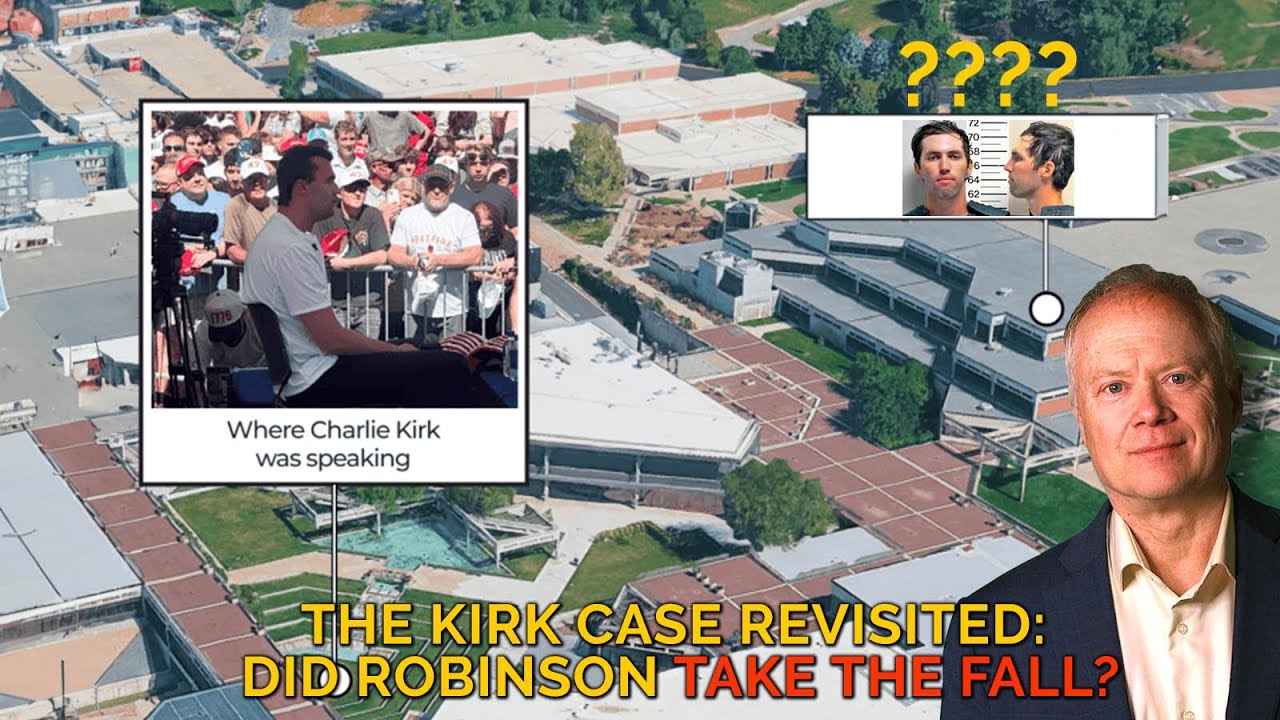
Dr. Chris Martinson Reveals Why Tyler Robinson Could Not Have Fired the Fatal Shot That Killed Charlie Kirk
1:09:53

Charlie Kirk Debates LDS Convert Henry Dells on Historical Accuracy of Mormonism Versus Protestantism at Turning Point Event
2:12
Henry Dells Witnessed Charlie Kirk's Final Moments Just 15 Feet Away at Utah Valley University
Henry Dells, a construction worker and LDS member from Texas, stood just feet from Charlie Kirk when tragedy struck at Utah Valley University on September 10th. In this detailed account, Henry describes the tense atmosphere before the event, his religious debate with Charlie moments before the shooting, and what he witnessed in those chaotic seconds when the shot rang out. From hearing protesters cheer after Charlie was hit to dealing with FBI interviews and conspiracy theories, Henry shares his firsthand perspective on one of the most significant political events in recent history. This conversation explores security failures, acoustic anomalies, and the disturbing coincidences surrounding George Zinn and Hunter Kozak that continue to raise questions about what really happened that day.
Introduction and Background
Henry Dells, originally from East Texas, never imagined his move to Utah would place him at the center of a national tragedy. A country boy who grew up hunting and fishing, Henry runs a construction abatement company that brought him to Utah just six to seven months before the events of September 10th. An atheist for most of his life, Henry converted to the LDS church at age 21 after a near-death experience in a car accident shifted his worldview. His interest in political and religious debate, influenced heavily by Charlie Kirk, led him to clear his schedule when he heard Charlie would be speaking at Utah Valley University.
Henry's friend who was part of the TPUSA chapter at UVU let him know about the debate, and he was excited to test his debate skills against someone he admired. Little did he know that his decision to attend that day would make him one of the closest eyewitnesses to Charlie Kirk's final moments.
The Growing LGBTQ Movement in Utah
When discussing the atmosphere in Utah, Henry noted a significant shift in the state's political and social landscape. While Utah maintains its reputation as a conservative, religious state with clean cities and friendly people, the LGBTQ movement has been growing substantially, particularly in the past few years. Salt Lake City, like most major urban centers, has become very blue and progressive. Henry recalled that when he first visited Utah years ago while dating a girl in Logan, the presence of pride flags and LGBTQ activism was minimal compared to what he witnessed upon moving there. The movement's growth coincided roughly with the COVID period, transforming Salt Lake into a very different place than the Utah of old.
Arriving at the Event: Tension in the Air
Henry arrived at UVU excited but quickly sensed something was off. Walking down the liberal arts building toward the amphitheater where Charlie would speak, the tension was palpable. People were already discussing Charlie Kirk's arrival, with some clearly affiliated with certain ideological groups calling him a racist, homophobic fascist who wasn't for freedom of speech. The irony wasn't lost on Henry—these same people were protesting someone literally offering them a microphone to express their beliefs.
What struck Henry most was the complete lack of security. He was just a regular construction worker coming off the street, walking through the hallways, and nobody was checking if people were students or had any right to be there. There was no security presence, no one prepping for the rally despite Charlie Kirk's prominence. This disbelief at the lack of preparation would prove tragically prescient.
George Zinn: An Ominous Presence
About an hour before the event started, before the crowd grew large, Henry encountered George Zinn—a figure who would later play a controversial role in the aftermath of the shooting. Zinn was going around trying to stir up trouble with TPUSA volunteers and people wearing MAGA hats. He was pressing the point that Charlie Kirk was a terrible person with harmful ideologies, and that if anything harmful happened to him, it's what any conservative deserves because they have hateful and harmful speech.
This encounter made Henry uneasy. The time window was narrowing before Charlie's arrival, everyone was streaming into the amphitheater, and Henry still hadn't seen any security or anyone being checked. There were tons of backpacks, tons of roofs with sightlines to the amphitheater, and besides one cop on what appeared to be a second story layer, Henry saw no security presence. They all showed up when Charlie showed up. Nothing was being checked.
Henry later learned that Zinn has a strange history of appearing at significant events—911, a marathon bombing in Utah, and he was even featured in a documentary about 911, though his actual presence at some events remains disputed. Zinn is also very active in Utah politics, not as a Democrat but as a peculiar agitator who seems to show up at political events to stir contention regardless of whether they're conservative or liberal.
The Religious Debate with Charlie Kirk
Initially, Henry planned to ask Charlie a political question about immigration and visa renewals for construction workers. However, about 10-15 minutes before the event started, he got an impression to change his question. He texted his friend Chandler that he wanted to ask Charlie about religion instead. Henry had recently watched a video of Charlie and Michael Knowles having a dialogue about their different religious perspectives, and he wanted a similar conversation.
As someone who had studied extensively from pre-exilic Judaism through second temple Judaism to early Christianity, Henry told Charlie he believed Mormonism was more historically accurate regarding the theological concepts of that time period than Protestantism. At the end of his question, remembering this was a "prove me wrong" booth, Henry said, "prove me wrong."
Charlie laughed and began by praising the LDS community, the church, and its members. He talked about how many people who work for TPUSA are Mormons and reflected on his positive relationships with LDS members. It was a respectful exchange. Then, as Henry noted, Charlie completely ignored the theological question and shifted to archaeological evidence instead. Henry thought to himself, "Okay, Charlie, let's shift the goalpost. Why don't you go straight into archaeological evidence even though I asked you a theological question?"
Henry plans to address Charlie's response on his religious page once things settle down, out of respect for Charlie. He posts a lot of historical religious content and feels he needs to correct what Charlie said, but he wants to let the situation die down first.
How Henry Got to Ask the First Question
Henry's question got priority through one of the TPUSA chapter heads at UVU. She was going around asking people what questions they had and liked Henry's question a lot. She took it to Charlie's manager, who okayed it to go first, and they put Henry at the front of the line. The questions weren't heavily screened—the woman seemed to go off what she thought would be interesting to kick off the event with. Most people were asking the same recycled questions Charlie had confronted before at college events—why do you hate gay people, why do you hate trans people, why are you racist, questions about DEI and the Civil Rights Act.
Henry's religious question was different and timely, as Charlie had been engaging more in religious dialogues lately. Being in Utah with a Mormon asking the question added to the appeal. It made sense they'd want something fresh to start with.
The Moment of the Shooting
After his exchange with Charlie, Henry moved off to the side, to Charlie's left, the right side of the stage. He stood about 15-20 feet from Charlie, just to the left of a PVC pipe. Hunter Kozak came up to ask his question. Henry was trying to get out because it was so crowded—they hadn't created a pathway for speakers to exit, and the crowd was pressed shoulder-to-shoulder against the gate with no room to move.
While looking in Charlie's direction and giving his name and information to a Deseret News reporter for a paper they were publishing, Henry heard the shot. In person, it didn't sound like what the audio recordings make it sound like. When you listen to the audio, it clearly sounds like a gunshot, making people wonder how anyone could mistake it for a firecracker. But in person, it sounded exactly like a firecracker. You can see in the crowd footage that people were confused at first. They didn't realize it was a gunshot until they saw Charlie.
After a few seconds, Henry looked up and saw Charlie leaning over with blood pouring from his neck. It was terrible—something he wouldn't wish for anyone to see in person. He crouched slightly and started scanning the roofs in the direction he heard the gunshot come from. He didn't see anyone, though he looked pretty close and hard. From other footage, it's clear that shortly after the shot was taken, the shooter had already fled.
Henry kept scanning, listening to see if more gunshots would go off. He didn't hear anything. People were trying to get down because no one could get out due to the crowding. Not wanting to jump and suffocate people, Henry jumped into the little fountain area in the amphitheater, got soaked, waited for a pathway to clear, then jumped over the rail and exited toward the front where the fountains are.
The Direction of the Shot
Henry perceived the shot to come from directly in front of where Charlie was facing, toward the back where the Losee Building is or anywhere to the left of it—possibly on that building straight behind the waterfall or on the backside over to the left. There's footage of people standing on the upper level where Henry later gave his interview, and when the shot went off, they looked off to their right as if it came from that direction as well, which helped validate Henry's perception.
Henry felt people were gaslighting him when they tried to say the shot came from the crowd. He believes people were probably just in too much shock to really retain accurate information from those moments. The acoustics of that entire area are extremely unusual—sound bounces off everything in weird ways. Additionally, the gun's audio was redirected through Charlie's microphone and back through the PA system, adding another layer of acoustic confusion.
Questions About the Caliber
One thing Henry was certain about: it didn't sound like a 30-caliber round. He's shot hunting rifles his whole life, including the 30-06, and those produce a much deeper, louder sound rather than a higher-pitched crack. When he heard it was supposedly a 30-06, his mind immediately went to how Charlie could even have a neck left. The discussion about ballistics and possible explanations helped make it more plausible as a possibility, but initially, it seemed inconsistent with what he knew about that caliber.
The Disturbing Aftermath
While Henry was crouching and waiting to get out, he heard people on the upper levels talking. He looked up and heard them saying, "Oh, Charlie got shot." He saw some of them give each other high fives. Some ran away, too scared. There were people cheering. One person said, "Oh, that was a good shot."
This tipped Henry off badly. He wanted to go to authorities and tell them they needed to question those people because they instantly started cheering after it happened. If they're trying to find motive and people are cheering the assassination of Charlie Kirk, they should be questioned. It disgusted Henry and showed him just how evil elements of the left can be. While he doesn't want to put all leftists in that box because some are good people, seeing people celebrate someone getting shot who was trying to give them a voice was deeply hypocritical.
Police Response and Aftermath
After exiting through the tunnel area by the little ponds, Henry and others ran to some thin trees planted outside. Knowing that law enforcement would want testimonies from people at the front, they huddled around those trees and waited. When authorities arrived, they took everyone into the building adjacent to the amphitheater to the right—the building that connects via hallway right into that area.
Authorities took information and statements from people. At that time, most people didn't know Charlie's condition. Henry, being only 15 feet away, had already assumed by the time Charlie hit the floor that he was dead based on what he saw. When people tried to say Charlie was shot in the chest, Henry knew that was wrong—he was 15 feet away and saw everything clearly. Even when reports came that Charlie had a pulse or showed signs of life, Henry believed that even if that were somehow true, there would probably be no consciousness there.
The police response took about 10 minutes. Two cops out of about six stayed at the scene. A few rushed off and escorted the vehicle with Charlie to Timpanogos Hospital. They were pretty close, and helicopters arrived quickly, but by the time they took Charlie out and started heading to the hospital, some time had already passed. Around 10 minutes after the shooting, medical personnel and security detail started showing up in large numbers.
FBI Interviews
Henry sat down with the FBI for a few days and they called him multiple times after the event. They asked if he had any additional footage beyond what he'd already posted on his social media pages, which had been picked up and used by various media outlets. Henry told them he didn't have any additional footage. Interestingly, they never asked him to testify, which Henry now finds strange considering he was there early, had been gauging the environment by asking people how they felt about Charlie Kirk coming, and witnessed the shooting from 15 feet away.
Security Assessment
Henry firmly believes Charlie's security team was completely loyal and did everything they could. He spoke with Alex, a former UFC fighter on the security detail, and found him to be sincere and dedicated to Charlie. Many of Charlie's security detail had been with him for years and loved him—Henry can't see any motive for betrayal.
Conspiracy theories about Charlie's photographer Andrew, his videographers, or his Christian mentor and pastor Frank Turek being involved are absolutely ridiculous to Henry. People claiming Frank Turek touching his hat was signaling the shooter is absurd. Henry believes the security team was very sincere about protecting Charlie from what they could protect him from—anyone trying to come up to him or any near-distance threats.
The security team likely couldn't protect against a distant sniper, especially when UVU denied them roof coverage and drone surveillance. Henry doesn't understand why UVU thinks they have authority over airspace when they don't. If the security team was worried for Charlie and knew the law about airspace, they should have flown the drone anyway regardless of what UVU said. In retrospect, they should have known UVU couldn't tell them not to fly a drone over their airspace to double-check the roofs.
The George Zinn Diversion
After the shot went off and Charlie was hit, George Zinn made a ruckus that diverted all attention to him. Zinn started screaming from the crowd, saying "I did it" and "take me" or "shoot me," which caused law enforcement to focus their attention on the supposed closer threat rather than where the gunshot came from. This is just common sense—you take care of the closer threat first.
This diversion allowed whoever was on the roof to escape. It took 33 hours for authorities to supposedly figure out who the shooter was. Henry thought the whole sequence of events was very suspicious—the tensions he felt leading up to the event, how George Zinn acted beforehand and took credit afterward, and the sequence of how Hunter Kozak asked his questions when Charlie got shot. Henry initially wondered if George Zinn was a decoy or tied in with the shooter, though he's careful not to say anything definitively until the investigation is complete.
The Hunter Kozak Situation
Hunter Kozak, the person asking Charlie a question when he was shot, later got angry at Henry for giving interviews about his suspicions. Kozak tried to blame Henry for him being questioned by the FBI. Henry found this hilarious—Kozak was going to be questioned by the FBI regardless of what Henry said in interviews because of what Kozak himself said and his position at the moment of the shooting.
Within a day or two, Kozak's name was public knowledge. The whole situation with both Kozak and Zinn involves a lot of weird coincidences that can be added to any conspiracy theory about who shot Charlie or what happened. Henry has heard that Kozak was affiliated with some radical left group that Destiny oversees or is connected to—the same Destiny who praised the killing of the firefighter at Butler and shows no remorse toward Charlie Kirk, even suggesting the world is a better place without him. While Henry won't state this definitively until it's fact-checked, videos supposedly showing this connection have circulated widely.
There's also supposedly video of Kozak practicing his reaction before the event happened, though Henry hadn't seen it yet at the time of this interview. All of these elements only add to the conspiracy and make people think there's more to the story.
Lessons and Reforms Needed
When Congressman Kennedy invited Henry over to his house to get his opinion on preventing future incidents, Henry's advice was simple and what he considers common sense: Don't deny drones. Don't deny checking roofs. These should be standard security measures.
Henry believes UVU will be in the spotlight forever after this event, and there will likely be significant reforms. He also thinks TPUSA probably has a good lawsuit against UVU if they choose to pursue it. UVU denied them the ability to fly drones, which they didn't have the authority to do since they don't own their airspace, and they didn't follow through on sufficient roof coverage.
The tension between following university rules to maintain good relationships for future events versus taking security measures that might violate those rules is real. TPUSA was trying to be a good partner so they could return in the future, as universities can deny access or make it harder to come back. In retrospect, it's easy to say security should have been more aggressive, but at the time, they were balancing multiple concerns while likely taking UVU at their word that they would provide adequate roof coverage.
Charlie's Character and Choices
Many have questioned why Charlie went ahead with the event given the security concerns. The reality is that it was ultimately Charlie's decision. None of us know what conversations happened in the background prior to the event. Charlie was well aware of the risks. He could have used bulletproof glass or taken other precautions. The speculation is that even if someone had told Charlie definitively that he would be shot the next day and needed bulletproof glass, he would have been very resistant to do so.
Charlie was known for interacting with the crowd. Turning events into super highly secure affairs with bulletproof glass would change the entire nature of what he was trying to accomplish. The suspicion is that many of Charlie's decisions about security—not just at this event but probably at many in the past—went against advice his security team gave him. He likely decided to face whatever was coming if he felt this was his mission in life and what he was supposed to be doing. That's what men do. Whatever was going to happen was going to happen, and Charlie wasn't going to let fear stop him from his mission.
The Ongoing Investigation
The acoustic anomalies, the coincidences surrounding George Zinn and Hunter Kozak, the security failures, and the 33 hours it took to identify the shooter all raise questions that hopefully the FBI is investigating thoroughly. The fact that protesters were on roofs and upper levels surrounding the amphitheater, that George Zinn was making provocative statements before the event and then created a diversion immediately after, and that Hunter Kozak was asking his question at the exact moment of the shooting—these are all elements that cannot be ignored regardless of what theory anyone holds about what happened.
Henry's perspective from 15 feet away, combined with his observations before, during, and after the event, provides crucial eyewitness testimony to one of the most significant political events in recent history. His willingness to speak openly about what he saw, what he heard, and what he suspects—while being careful to distinguish between what he knows and what he's speculating about—offers important insights into the tragedy that took Charlie Kirk's life.
Video Transcript
[Music] You are now entering a dangerous liberty zone where god-given natural rights are held sacred and exercised. This is your warning. Tyranny, fascism, and censorship will not be tolerated. Ideas will be exchanged freely. Rigorous debate and open discourse is encouraged. If you are weak and your beliefs are fragile, you should leave now. Prepare yourself. We are now live on the Dangerous Liberty podcast. [Music] All right, folks. Happy Friday, everybody. Hope everybody's going into a great weekend. I look forward to this show. We got a great guest on. I think you guys can uh uh I don't know, definitely hear a perspective that that you definitely haven't heard before. So, uh want to say hi to everybody over in the chat. We got uh there's a bunch over there already. So we got Elizabeth Mat, Lori Matthews, Deborah Davis, Brett K, Jeff Johnson, Old Guy Wise, Jim 8, Try Eight, and a whole bunch more. Uh Disney up, Boiler Up, always good to see you. Uh Lori Matthews, always good to see you. All right, folks. So we'll give everybody just a few minutes to trickle in here. Nobody's on time in 2025 anymore. Uh, we'll just go ahead and hit the we'll just go ahead and hit the uh the rules. You know what? Treat everybody in the chat with respect. Uh, don't type in all caps. I'm just going to ignore you and uh let's just be adults and have adult conversations and kind of explore all the different options. Listen to what Henry has to say. I've thought of many more. And I I'm not a good interviewer. I'll just tell you that right now. So, you know, I knew when I got up there and uh ran into him and then talk to him, I'd have 50 more questions. And then what I love about doing these lives is you guys fill in all my brain gaps. Uh because any of you guys are 10 times smarter than me and you have the right questions. I also was just looking at some of the comments and things like that of the video I posted of my interview with him. Uh and there's definitely some things in there that I want to address. some good comments and I think there's some good answers to some questions in there. But uh we'll get into all that tonight. But anyways, without further ado, let's go ahead and bring Henry on. Henry, what's happening, man? Welcome to the show. >> Good, dude. How are you? >> I'm doing great, man. >> Thanks for having me. >> No, glad to have you. Oh, folks, uh what we'll do like we normally do is we're going to have a normal podcast. Henry and I are going to talk and then we will definitely try to get to your comments. Not try, we will get to your comments. We will prioritize the super chats, but I will try to get to as many of the live chats questions as possible. So, Henry, I guess let's start off first things first. First of all, just introduce yourself everybody. Tell us a little bit about yourself, your background, and then um then we'll get into everything that happened on uh September 10th and we'll kind of take it from there. >> Yeah, of course. No problem. Yeah. So, I'm uh I'm originally from Texas. I had I think it's quite funny. I grew up in East Texas, country boy out in the middle of nowhere, you know, average hunting, fishing, all that stuff, all the country loving stuff that us. And so, uh, I actually worked, uh, I work in construction. I run a construction abatement company, which brought me out to Utah. And, uh, I I've only been out here maybe six, seven months. And uh you know it kind of led to uh this whole this whole thing where you know I'm just trying to live the American dream, follow the things that you know everyone like Charlie Kirk stood for in regards to like you know the minorities and stuff like that in the country. And I thought it was so crazy whenever uh I came to Utah and met a lot of uh the people over here that I kind of known from a distance. Uh, and um, I ironically am also LDS. And so that's one of the things that was really cool about moving to Utah. But I had some friends that uh, that run or a part of the TPUSA chapter there at UVU. And some of them let me know that Charlie was coming to town one week. And I was like, I'm I'm clearing a couple hours of my schedule. I was fixing to fixing to go to that that debate and debate Charlie on something to test my debate skills because he's really influenced me to do political debate and religious debate on my on my platform. So it's been it's been really cool. It's a little bit about me. >> That's awesome, man. So now before you moved to Utah, you you grew up in Texas as LDS. >> Um yeah, primarily primarily I was an atheist p most of my life actually. So I only converted to the uh LDS uh LDS church. Uh, I think whenever I just turned 21. So, uh, when I turned 21, I converted. Um, lived a few more years in Texas and I moved out here. >> Interesting. All right. Interesting. >> So, let's kind of get into So, you you know, you've gotten into a political slashreligious debate. And by the way, folks, make sure you guys go follow Henry. His uh all his social media links are down in the description below. Um, so you kind of got into politics and and religion. Uh, it's always fun to mix those, especially at dinnertime and especially um, but I think they're so intertwined and I don't I don't think they were ever meant to not be to be honest with you. you know, taken that view and I think that was one of the things that I really agreed with Charlie Kirk on, you know, talking about how religion was part of the founding of this country regardless of what people try to turn into, you know, they try to point to the Danbury Baptist, which is just this letter talking specifically that how religion, how religion is not going to be molested by government. And that's been turned into something that was never intended to be, but I digress. So, let's talk a little bit about how you ended up there that day. And, you know, you ended up asking him the very first question. Um, man, it's it's got to be I'm just I constantly try to think about it from your point of view of of what took place and what happened and it's it's it's surreal to me thinking about that, but it has to be even more so to you. >> Yeah, dude. It was surreal for a while. At first, you know, like I've always been a very big debater and stuff. So, like I was actually excited to go and meet Charlie and I was I was telling everyone leading up to uh me the UVU event uh you like, yo, I'm going to try to debate Charlie Kirk uh on September 10th, all this stuff. Like, pull up all this stuff. It's an open open public discourse uh type thing. And um I was I was really really excited. And then I got to UVU and I was when I started walking down the liberal arts building to head to the amphitheater where they were going to hold it. It was it was tense. I could tell people were like uh already discussing the fact that Charlie Kirk was fixing to come that day. There were people that you could clearly tell were affiliated with a certain ideology and certain group and uh they were they were kind of just like telling people in the hallways just like oh this is so stupid. this is like, you know, Charter Kirk's coming and he's just a terrible man. He's a racist, homophobic, fascist, all these things and he's just he's not for freedom of speech. And I was like, okay. Yeah. Not like he's trying to have you come up to the mic and like express your beliefs, but that's cool. But um I Yeah, I don't know. I kind of I kind of ran into early just walking towards to the event. um a very very tense tense nature in the in the school and um I was just a regular you know construction construction working guy who came off the street walking through the hallways and there's nothing like there's no security like anyone can go through like no one was asking you if you were you you went to school there or anything like that it was just kind of it was kind of weird when I got there cuz I figured there'd be people already there prepping for the rally especially with how big Charlie Kirk was. So to me it was a little bit of disbelief. >> Let me ask you about the LGBTQ movement in Utah because you know the other day when I went folks for those you don't know I was there got there Monday night was there all day Tuesday and then left Wednesday morning. It was the only window of opportunity that I had with my other business schedule and everything else. But I wanted to get out there and obviously get that 3D scan. And by the way, we should have that tomorrow. And hopefully I'll be able to publish something on on all that and and give that out to everybody. Um, you know, the only other time I've been to Utah, we just drove through driving from Washington State over here to West Virginia when we moved from there. And obviously, beautiful, beautiful state. I want to get back there. The other thing is I have this idea of what Utah is, a fairly conservative state. Um, very simple in the best ways. I don't mean that in any derogatory way, but a simple way of life. And I think that was confirmed while I was there. I mean, just beautiful state. Everybody was nice. One of the cleanest, like every bathroom I went, that was one thing that stood out to me. I ended up stopping in several gas station bathrooms and every single ba bathroom was so clean, I couldn't believe it. So, beautiful state, beautiful people, obviously a very religious uh tradition and heritage. like how big and active is the LGBT commu community there in Utah? >> It's uh it's it's growing and it's actually been growing the past few years. Um cuz even from whenever I converted to the faith of the LDS church, uh I remember coming and visiting Utah cuz I was dating a girl up in Cash Valley in uh Logan and um and Salt Lake was not as LGBTQ or Utah County. It was not as LGBTQ then as it is now. Now, I mean, they just had this whole ban that went on with the whole, you know, pride flag and stuff, but when I first got here, like six, seven months ago, they were they were everywhere on houses. Like I I drove through Salt Lake and I could not believe how big the movement has gotten to Salt Lake. Like Salt Lake, like most major cities around the around the country, very very blue, very progressive. But it did not used to be that way. It's only happened since I would say around the time CO started. >> And you know, so how big was the presence there when when you got there? Because obviously there was we could even see um we could even see from the different footage there, there was quite a quite a few protesters. I don't I don't know if it gave us a a clear representation of what was actually there or not, but we definitely saw some. >> Mhm. Well, I mean, so in regards to the people that were like LGBTQ, like there was a number of them there. Some of them were actually in line, but they weren't like the they weren't like they weren't the ones that had hatred that I would say for like Charlie or they weren't like the ones that were up top all on the on the roofs and stuff like that or the different levels around surrounding the amphitheater. That's where most of them were that had like real a lot of hatred for them that would just curse at conservatives, spit, do all this stuff. But um there was quite a few that were there was quite a few that were >> dying. They were actively doing that that day. >> Yeah. Well, my buddy David like they were flipping off my buddy David and and spitting and stuff like that. Like he was he was down by kind of where the waterfall was and uh they were calling them out, getting them on videos and stuff like that when Charlie was uh coming out. And yeah, they were just they were they were going just crazy, just being stupid. >> Yeah. >> All right. So, anything else that you think is worth mentioning before we get to you you going up and talking debating with Charlie directly that you can think of. >> So, there there's there's this thing. I already talked about how the tensions were pretty high when we were there, but like uh what was that guy's name? Is it George Zen? The the crazy old guy that was there. >> Yeah. He was he was like an hour before the whole event started before it got really crowded and some of the people were kind of already aligning kind of asking people from TPUSA like you know how do you ask a question all this stuff. He was going around and he was just like he was really trying to stir up some stuff with uh with all these TPUSA people like volunteers that helped put the show on and just people that were kind of like standing around in mega hats, >> right? And uh he was like trying to press for some reason like like you know uh that Charlie was terrible dude that um a lot of his ideologies are harmful and like if anything harmful happened to him type stuff like it like it's it's what any conservative deserves because they're they have just hateful speech and harmful speech. I thought that was very interesting because like around that time like it was it's n it was the time window was narrowing down to when Charlie was about to arrive and everyone was starting to come into the amphitheater and I'd yet seen any type of uh any security or anything or anyone getting checked and I was thinking to myself I was like at that moment is where I got kind of a little bit uneasy excited but uneasy because I was going to meet Charlie Kirk but uh I was getting uneasy just because there's tons of backpacks there there's tons of you know there's tons of roofs Um, kind of like you said and corrected yourself the other day. We were talking about how that there was probably that one cop that was on the roof, but it was actually just the the that second story or layer. Um, dude, besides that, like I didn't see no one there. Like they all showed up when Charlie showed up. Like nothing was being checked. So that kind of had me a little bit uncomfortable after hearing what George Zen was saying. And then uh I already knew a little bit about him just because uh me and uh Congressman Kennedy uh his son and I are good friends. He served his mission back in East Texas where I converted. Um and he's been at so many different things like historical events, 911, you know, the I think he was at the uh the marathon thing they had there in Utah where there was explosion and stuff like I think technically because I looked into this too, he was in a documentary about 911. I don't think that him actually being there proved to be true, but he does seem to be >> strangely pop up. I also have heard that he's been very active in Utah politics. Isn't that correct? And and he's like and he's not a Democrat, but he's like he's like this weird thing where I I I don't know if he's like a groper. I I don't know what he is, but he definitely sounds like a agent provocator. >> Yeah, he's he seems to just show up to these political events to stir contention, whether or not it's the like a a a conservative event or or a liberal event. He just seems to stir up contention. Well, he I've never seen him show up to a liberal event or whatever or Democratic event, but like these conservative ones that he supposedly affiliates himself with, he's like criticizes them left and right. So, like I don't know. And it's just so weird after hearing kind of like his background and his story about like uh I guess like the document documentary thing or the the all these other things he's done interviews for or supposedly was that when it came to these historical events and stuff. It's just it's it was weird to me whenever he said that you know conservatives who speak like this have something coming to them that threw that's what really threw me off and it had me a little bit uneasy. Uh because when I got in line to talk to Charlie, I uh I was wanting to ask and I think anyone could understand this, right? I was wanting to ask his security if like, yo, did anyone check the check this perimeter, the the the roofs or anything, but at the same time, I didn't, which I feel bad because if I did, and then that person was up there, who are they gonna go back to? Oh, you randomly asked that question out of nowhere, huh? And so like, yeah, I know. So it it just I felt uneasy about it. And when that happened, it definitely like just shot through my mind and I sat down with FBI for for a few days and um it called me multiple times just, you know, after that whole event happened. But yeah, >> the questions I meant to ask you or I thought about again, you know, I went through when I got back to the hotel, I didn't have time to like produce the content and edit and everything, but I just wanted to listen to it real quick and I was thinking of all the the multiple questions I meant to ask you and didn't. Did they ask you if you had any footage or video or anything like that? And did they uh did you give them any video or footage? Yeah. So, the footage, they asked me if I had any additional footage because I told them the footage that I I already had. Um, I had posted on my social media pages and a lot of the a lot of the media, you know, would would take it and use it for their for their like introductions to stuff like that. And so, it was already out there and it was already spreading throughout social media and stuff like that. So, I told them I really didn't have any additional additional footage. >> Interesting. But they did ask. >> Did they ask you they talk to you about contacting you to testify or anything like that? >> No. No, they haven't. Actually, not not to testify or anything like that, which is uh uh honestly, now that I think about it, kind of strange. Uh because you you would assume that someone who was kind of there earlier kind of just was asking people how they felt about Charlie Kirk coming because I was kind of trying to just gauge the gauge the I guess you could say the environments and how it felt and stuff like that and that's when I started realizing that was pretty tense. Um, but uh, yeah, I don't know. I think I think they practically any all the interviews that I did and all that stuff. I'm pretty sure they're going to use that if if anything, but they haven't asked me. So, >> interesting. All right. So, you go up, you actually talk to one of Charlie's guys and talk to him about possibly asking him a question. You end up being the first person up there kind of you have a religious discussion. Um, how did that go? What led up to that? Yeah. Well, at at first, you know, at first it was uh I was actually going to ask him I was going to ask him at first uh a political question in regards to like uh immigration and like visas and stuff like that cuz um I had a whole issue with like how how long visas take to get renewed and stuff like that, especially for like construction companies, hard labor companies that have a lot of like u immigrants that come on visas to work for them and then the company starts struggling because when they run out of visas, they have to send them back. So, I was going to ask him something about that, but um about 10 15 minutes before it started, I got the impression I texted my friend uh Chandler that was there with me. I was like, "Yo, dude, I think I want to ask him about religion." I don't know why I feel like asking him about religion. Um because it's he talks about mostly politics and stuff like that and policies. Uh, but I was like, I want to I want to ask him about religion because I I just watched this video with him and Michael Nolles Nolles kind of like uh having a little dialogue on their differences with their perspect perceptions of religion and stuff like that, perspectives and uh and I was like I kind of want to have a similar thing because I want to know what he thinks about the LDS like church and community and people and stuff like that. And so my thing as an atheist is which which kind of led me to the ODS church is understanding a lot of the history that I had studied within uh you know pre-exilic period Judaism all the way up to second temple period Judaism uh to early Christianity and understanding what they taught. And I told Charlie I like Charlie I think that Mormonism is more historically accurate in regards to the theological concepts that they believed at the time than Protestantism. And uh it was a prove me wrong booth and they made that clear right before like anyone went up there. They were like this is a prove me wrong table. And so at the end of my question I was like prove me wrong. That's when he started he had a little laugh and giggle and it was good man. I mean like he we didn't go straight into it cuz he obviously went into uh praising the LDS community and the church and and members of the church and bragged about how like a lot of people that work for TPUSA are or Mormons and stuff like that. And it was really cool to to see him reflect on um his relationships with people that he knew were were LDS members and how great they were and how great the community and the church can do or is and can be. So, uh that was cool. And then then that talked talked to him about some some things we could debate and then he completely ignored it and went into something else. And I was like I was like, "Okay, Charlie." I was like, "Let's shift the goalpost. Why don't you go straight into archaeological evidence?" Even though I asked you a theological question, that's fine. But um I'll probably end up I I got my religious page for a reason, but I'm going to let it die down because I respect Charlie a lot. But um I I am I I do post a lot of historical religious stuff, so I'll have to correct him on what he says wrong or what he said wrong. >> Well, I do I do think that would be an interesting discussion. I'd like to hear a little bit of more about your perspective of the LDS church, its history, and I think that would be a great follow- on podcast at some point. Oh, >> yeah. >> So, you were this atheist, and I'm getting off track a little bit, >> and I don't want to take this path down too far. So, you were an atheist, >> and then you found the LDS. Like, it seems like a a >> that's an odd path to take, I would say, especially in Southeast Texas, right? Like, >> yeah. >> Uh, Southeast Texas, Texas in general is not like this huge I mean, there's clearly Mormons there, right? Uh but it's not it's not there's lots of other places that much have much larger communities and obviously there's evangelicals. I grew up UPC United Pentecostal. Uh there's a huge element of Pentecostals down in Texas. Um so how did how did that work? Like what changed your mind from an atheist to LDS? So it it was it was the mixed theological and religious beliefs in my household because I had a dad who's Catholic and my mom was Pentecostal and uh so kind of getting those conflicting beliefs and saying that these are all true and all this stuff and and really the fear-mongering of religion whenever I was growing up in the south with I guess you could say really the Baptist kind of just like preaching this hellfire and stuff like that on you. >> Um >> yeah, Pentecostals do too. I just don't like that. If my mom sees it, she's gonna be like, "Why are you being so rude?" >> But uh but yeah. No, >> but uh no. So like that kind of steered me away from religion for a while because uh uh it made me seem like it made it seem like uh you know there if there's objective truth to this then um we would we wouldn't have such division in Christianity. And so for me, I I steered away from it and I had a struggle with uh morals and stuff like that in the Bible and story certain stories and narratives in the Bible as well. Um you know a lot with the genocide genocides of stuff and stories of like for instance like the city of Jericho and all that stuff and what God commanded uh his people to do. Um, but honestly it was a it was a weird shift after um I myself and this is kind of like I guess cliche I guess you say but like some people would be like oh of course it's a near-death experience story but it kind of it does shift your it does shift your ideological thinking though. Uh where I I almost passed away in a car accident. Uh, I woke up from a coma after a while and I started re rethinking uh my perception of the world and whether or not it was a product of randomness or a product of design. Um, what that designer was or how that was designed. That was the philosophical question. Uh, and I came to reading a quote from Marcus Aurelius that said, um, if there are gods and they are just, um, they won't care about how devout you've been to them, but they'll judge you, um, by the virtues of how you lived your life. Uh, and if there are gods and they aren't just, then you shouldn't want to worship them anyways. And then he says, if there are no gods, um, then you you would have lived a good and noble life living on the memories of your loved ones. And I kind of use that as the blueprint for for what church or institution I would affiliate myself with based off of their their theological dogmas and positions. And ironically enough, I went through, you know, Presbyterian, studied Orthodoxy, Catholicism, my dad was Catholic, uh, Pentecostal, my mom was Pentecostal, Baptist, Methodist, non-denominational, went through all these things. And they all had like a very similar and very different in some in some instances aspect of us being creations, us being um just basically like a a product of God that it doesn't really have true value to him because if you don't do his will, he just throws you away like a like a failed I guess you could say project. Um and for me that wasn't who I think God would be. Uh, and I came across the LDS church and some missionaries. And I looked into their faith and I was like, "This makes sense to me." And it kind of reflects a lot of what early Judaism talked about too in regards to us kind of being eternal spirits that have always existed and we were a product of a of a a godly father and stuff like that, but like a true father. So, it uh it it it shifted and it it hit deeper with me rather than just thinking I was a a product that God designed and that he could just throw away if I don't do his will or fall short or something. So, it that's that's kind of how I ended up in the ODS church. >> Interesting. So, you you talked to you ended up talking to um one of Charlie's producers, I guess. Was he a producer or just somebody? >> Uh, so it was the TPUSA, one of the the I guess you could say like heads for the the chapter at UVU and she talked to his manager. Um, whenever she asked she goes she started asking people like, "Yo, like what questions you have?" Um, and uh, that's how I kind of got my question pushed up to the front cuz she liked my question a lot. She went to his he and his manager and he okayed the question to go first and they put me at the front of the line. >> Now, were your were your questions screened at all? I mean, obvious were did you just tell them what you were going to ask them? How did that work? >> Yeah. So, like they just kind of I don't know like they didn't screen it. I guess they from what the lady seemed to do was just go off of what she thought would be very interesting um to kick off the the event with. And I think the fact that everyone kind of that was telling them the questions that they wanted to ask him was a lot of the same things that Charlie had already confronted before at college events. Um I think that was a big reason why mine got pushed to the front because it wasn't necessarily a political question. It was a religious question and I'm pretty sure it's something what well it's something that Charlie's been engaging more in lately leading up to that point where uh religious you know dialogues and stuff like that and his perspective of religion and so I told him how I wanted to do something and engage in that since he was doing that and they were like yes like we'll do that we'll kick it off with that something a little bit different and I'm sure he'll get a kick out of it because we're in Utah and you're a Mormon. So, >> so yeah, I think that's why they did that. >> Yeah. I mean, at the look, I I've watched a lot of Charlie Kirk's campus content, and you can kind of I don't know, there's about 25 questions or so that are just kind of recycled. They're the same ones, you know, why do you hate gay people? Why do you hate trans? >> You know, it's it's the same questions kind of, you know, why are you racist? You know, I heard you don't like DEI. I heard you wanted to get rid of the Civil Rights Act. It's kind of all the same thing. It's just recycled and said in different ways. So, >> yeah, >> I'm sure that your question that makes sense that your question appealed to them and they put you right at right right at the front of the the list. So, >> you asked the question, you have this discussion with Charlie and then you kind of move off to the side. You move off to the right side of the stage, Charlie's left. Um, for those of you guys watched the v video that I uh released today of of me and Henry's interview, um, I show you exactly where he told me he was standing. It was just to the left of that PVC pipe a couple feet. So, you know, you're you're like 15, maybe 20 feet from Charlie at that point. Is that accurate? >> Yeah. No. Yeah. 100%. So Hunter Kak comes up, he comes up, he starts his question and you know I think we all know what happens from there. So the shot goes off and I asked you I asked you during that interview but I'd like you to kind of expand on a little bit. So immediately when you first heard the shot, did you immediately make the connection that Charlie was shot? Like how did that work? What was going through your mind at that point? >> No. So, uh, during the time like whenever I was standing there, I was, uh, one trying to get out cuz it was so crowded and they actually didn't have a pathway for after the speakers got done to be able to exit because the crowd was up against the gate. >> Um, and they couldn't move. They were all shoulderto-shoulder all like condensed and stuff like this. And um I uh was looking at the direction towards Charlie. Um kind of like looking up and down because during the time when the shot went off, I was giving my name and information to a Desireette news girl that was there that was running to get my name for a paper that they were going to publish. And um and that's when we heard the shot go off. And at first it like I told you kind of like in the interview uh that at at the campus um it didn't sound like what the audio makes it clearly sound like. You could like when you listen to the audio it's like how does someone mistake that for a firecracker? No. In person it sounded like a firecracker. Like cuz you can even look at the crowd and at first they're confused. They didn't re they didn't you know uh think that it was a gunshot that went off. it didn't resonate with them until they saw Charlie and then everyone really started getting down or running out out of the way. And so, uh, once I looked up after a few seconds and saw Charlie kind of at this point, uh, after he had got shot and he was kind of leaning over and seeing all this blood come out of his neck, one, wouldn't wish for anyone to see that in person. That was terrible. Um, but second, I kind of crouched a little bit and I just started looking at like at the roofs around me from the direction that I heard the gunshot come and I didn't see anyone and I looked pretty close and pretty pretty hard. Um, but clearly from other footage that we can see, shortly after that shot was taken, that dude booked it. So, after the few seconds after it took me to resonate that it was a gunshot, he was already gone or supposedly whoever the person was was already gone. So, um I just kept scanning for a while to see if there was gonna trying to listen and see if there was more gunshots that were going to go off. Uh and I didn't hear anything. And at that point, um people were just trying to like get down cuz no one could really get out cuz it was so crowded. Um and I didn't really want to jump and suffocate people. So, I jumped into like the little fountain area right there um in the amphitheater and um got all soaked and stuff, but waited for for like a pathway to clear out and then jumped over the rail. um out towards the front where the the fountains are that are shooting out in the front of EVU and and uh just exited from there. But um I >> you went you went through you went through the underpass essentially that that basically they took Charlie through as well, right? >> Yes. So, if you remember there, remember uh in your little uh short clip um after we had done our interview, you went kind of up that ramp and you you took your video and posted it on on your channel and uh kind of pointed where I was was standing at the at the PVC pipe behind you. There was that open that open area where you can just you jump over it and it falls down, right? is kind of like a um I guess I don't know if they used it as a way to like drain that fountain or something like that. Um but um >> I jumped over that cuz everyone was running down that ramp that you were standing on. Um so I jumped over that hit hit the bottom. I slipped because I was all wet and ran out. But during this >> it's it's the opposite direction of the underpass. Is that what you're saying? >> No. So the underpass. No. So like it's like u exactly if you're facing towards Charlie, >> you're running you're running out that way. >> Yeah. >> You're running out into the open. Yeah. So uh it's just um it's like I'm running down the I'm running down outside the ramp. >> Um but yeah. >> Okay. But during that whole time, that's whenever um well during the time whenever I was like crouching and waiting to get out, that's when you heard people like the people that were on top and they're like, "Oh, Charlie Charlie got shot." And you could just look up and hear them talking and like I saw some of them like give give each other high fives and some kind of ran away that were like too scared. Um and there was there was like people cheering like that one freaking guy and there was like someone that was like, "Oh, that was a good shot." And it it tipped me off. It tipped me off so bad because I wanted to uh I wanted to go to authorities and be like, "You need to go question them because they instantly just started cheering after it happened for some reason." And obviously they're trying to find motive still. And like if if I saw someone cheering the assassination of Charlie Kirk, I would question them about it. You know what I mean? So, um it it tips me off. It it made me it made me think just just how evil um the left can be. But I don't want to I don't want to I don't want to I guess you could say put them all in that box or that bubble because there there are some people that are that are good people, right? But >> but um >> yeah, 100%. But it it just disgusted me because how how how can you say that you want to be heard but then shoot someone who's trying to give you a voice? It's a little bit hypocritical. So, um, it it made a lot of us, uh, really frustrated whenever that happened. >> Well, I do think that there's been a little bit of a a downplaying of how much there's certain elements in our country actually hated Charlie. Right. And I'm fine with entertaining these other theories and I want to get to the truth and we'll look for evidence wherever it is. I'll have anybody on here. We can talk about whatever. But I do think in the midst of all that, you know, the idea for anyone to like completely discount the idea that there's somebody that hates Charlie enough and has been radicalized enough to actually go out and shoot Charlie, I think if you just can completely dismiss that, I think there's a problem there, too. Because just like you said, I mean, when there's people that immediately high-five each other and are cheering that Charlie's been shot, I don't know if that time they realized he was killed. I don't know what was going through their mind, obviously, but there is a uh I don't know, there's a there's elements of the left that seem like they have no humanity to offer. And >> yeah, >> you know, I think that needs to be whatever happens, whatever ends up being true like like we can't lose sight of that because there is there is a very hateful element in our country and again I see it primarily on the left. I'm sure there are instances of it on the right. I'm not here to play around with this false equivalency nonsense. >> Oh yeah, 100%. But but what we see at a again with even in government even in you know local governments you go to different area you know these leftist bastions you know you can't walk around some of these places with a MAGA hat on right I mean we we all know that that's that's legitimate but you could walk around any Republican town with a Joe Biden shirt or Camel Camela Harris shirt or whatever like there's a big difference >> in the will and the the will to commit violence. There is a big difference from the left to the right and I don't think we can we don't need to underplay that and that that needs to be that needs to be part of it. All right. So the shot goes off and I know we talked about this there but just for viewers that haven't watched our interview yet again you were facing Charlie immediately. Where did it sound like that shot went off? Where do you Where was your perception that it went off from? >> Um, I perceived it to come from directly in front of where Charlie would have been facing kind of towards the back from where the Lucy building is or anywhere to the left of it. So, even maybe up on that building uh straight behind where that waterfall was. Got Um, so I thought it would it came from either somewhere in the center or off to the left because that's what it sounded like to me. >> Oh, it was facing the Losi building basically right there or on the back side of it over here further left. >> Okay. >> Yeah, exactly. And that's exactly where it sounded like it came from. And you know what? It seems like there's there's footage of people that were standing up where we took our interview at. Um, there's footage there of whenever the shot went off and even they looked whenever the shot went off. You can see they looked off to the right of them as if it came from that direction as well. >> So, uh, that was something that helped validate me cuz people I felt like people were gaslighting me trying to say that it came from uh, it came from the crowd. uh which I mentioned in the in our interview like obviously that I felt like people were probably just uh um too much in a shock phase to really retain uh the information from from those moments when it happened. >> Yeah. No, and again even while I was there it was more so than I thought. Like the acoustics of that entire place is are freaking nuts. It is so weird the way the sound bounces off of everything over there. And then the other thing that hasn't been discussed enough is the fact that that that gun going off, that audio was actually redirected through Charlie's microphone and back to the PA system. So, I think there's some elements of that when you're hearing that gun uh report go off and come back through those that stereo system. I think that's a real element of it, too. So, but one thing I I did did think was very interesting. You did not feel like it sounded like a 30 caliber round. >> No. No. And that's thing that's exactly what we were talking about. Like I I said, I've I've shot hunting rifles my whole life, including the 300 6. And it's it's a way more uh deeper, louder sound uh than it than rather than a crack, like a higher pitched crack. And so for me, um, I thought it was crazy just because thinking it was a it was a 3006 just because, um, I felt like I was being lied to or gas lit. And then obviously if you if you've shot in a 3006 before, your your mind goes to like how the heck does he even have a neck? And we were talking about that, too. And then you you you gave me some examples of how it could possibly have worked. And we talked about that. I'm not sure if he talked about it in a recent video or not, but it made it makes more sense now um as a possibility too. >> Yeah. No, what he's talking about and we we were just discussing this a little bit. I do think folks, you know, this is pure speculation. I'd love to get somebody on here that is super smart with audio and things like that because I did end up interviewing multiple people out there, three or four other people that were at the event. And I thought it was interesting of the different perceptions based on where they were um and how they kind of perceived what took place. Number one, the one thing I will say all the people that I interviewed said they pointed basically right at the lossy buildings like, "Hey, I thought that round that shot came from there." That's what it sounded like to me. >> Um, what I will say, and we can kind of look at I'm going to pull up Google Earth real quick for everybody. >> Uh, because I was thinking about this, and again, this is this is just me speculating. I'm not a freaking aiologist or anything else. So, take it take it for what it is. But, as we uh let me orient myself to the map here. when we look at when we look at what's going on here, one thing I do want us to look at and let me make sure that we are got this up here. All right. So, when we look at Google Earth here and too far and we look at where that shot allegedly came from, right? And it's going to be right here. And like there's a very narrow window for a line of sight in between the lossi building and this building. I forget what this building's called, but basically what this is, this whole area is like a big cafeteria. There's a bunch of different uh restaurants and things like this in there. >> But there is a very narrow pathway between here. What I did think was interesting was that now when when the the shot went off, Henry was right here. He was right about here. was on the left side over here. Uh, and I do want to talk about these these these hatches, whatever you want to call them. These are utility basically. So, I think that something that needs to be discussed, >> but my theory on this is is when we have a shot that goes off here, there's no line of sight between this and the left side. So, that that sound is bouncing off of all of this stuff and it doesn't have a direct path to where Henry is. whereas it does have a direct path to people over here. I talked to somebody that was up on top over here um that was an eyewitness and I talked to somebody down here and then another person was I think they were in this building and then I think another person was over here. >> Both of these people that I talked to over here said it did sound like it was a big boom. Um and then obviously, you know, Henry said it didn't sound like a big boom over here. And I'm just wondering how having all of this stuff in between, you know, basically the the alleged location of the gun and Henry's ears, how much how much that affects that and how much it filters out different tones of the sound and things like that. So, >> I don't know. You guys take that for what it is. But, you know, that's my that's my theory because what I will say is when we look at when we look at the footage that came from um what was his name? Uh Adam Bartholomew, we look at his footage, his his audio is the only one that sounds robust. It sounds like a big boom. And because everybody else is everybody else is filming from phones, uh you know, the audio is not going to be very good on there. So, and and so far I've only heard one shot. Uh I'm sure there's people that heard echoes and everything else. Um we're gonna have Matt, I can't think of his last name right now, but he did a good audio analysis on this. We'll have him on. He's convinced that it's the only place that that shot could have come from. And I would be happy to have other people on that would would um you know, propose something different as well. But all right, so the shot goes off. One of the things I asked you about and I know there's still a lot of debate on the roles, responsibilities and ultimately the the effectiveness even postshot of the security and and ultimately, you know, are they in on it? That was one of the things that I asked you. Did you feel like that there was any indication that security was in on it? Uh did you feel like they were making half measures to save him? you know, what was your perception of security after the shot? >> I I think security was all for Charlie. I I think what I've been hearing about um you know, all these conspiracy theorists saying that there his security detail was in on it and all this stuff like I find it hard because at least from the one person I did speak to, uh Alex who was there, he was super cool and I figured out who he was because he was a former UFC fighter. I think we talked about that, but they love Charlie and like a lot of his security detail have been with him for years and um I can't see why any of them would have any motive to to go or turn against him or betray him and stuff like that. Um the same thing with his his one of his his photographer that he hired to be there, Andrew. man, everyone's starting to say that he has something to do with it or that his videographers have something to do with it or that u his his his uh his mentor, his pastor, Christian mentor, Frank Turk, who is a Christian apologist, um I I think he's wrong on multiple things, but uh him him touching his hat and saying, "Oh, he's singling the shooter." They tried to say he had something to do with it. And I think it's just abs absolutely ridiculous. I mean, I I I think that his his security team was very sincere with um protecting Charlie and protecting them from what they could protect him from, which was anyone trying to come up to him or any near distance type of threats or anything like that. >> Yeah, I I I mean, I agree with that. Look, there was a lot of comments in the video of people saying, "Well, once they realized regardless if because I in that video I I played uh the video from TPUSA where they stated, hey, look, we tried to get uh roof coverage, we tried to get drone coverage, and we were denied that by UVU." Um, and a lot of people were saying, well, you know, once security realized that there was no or didn't see anybody covering the roofs, they should have decided that Charlie wasn't going to do the event. or postponed it a little bit >> or postponed it, right? That ultimately that's Charlie's decision. Um I don't know, none of us do. None of us know what conversations went on in the background prior to the show, prior to the event. Um I think ultimately Charlie was well aware of the risks and I'm sure he could have went out there with bulletproof glass and all those things. I don't think if it was if it was I imagine, and you guys tell me if I'm wrong, but I imagine that if somebody came to Charlie and said, "Tomorrow, Charlie, you're going to get shot." Uh, we need to put up bulletproof glass. I think even knowing something that definitive, I think he would be very resistant to do so. I'm just speculating, talking out of my ass. I'll just tell you that right now. But I think that Charlie was well aware of the risks that he was taking and well aware of what's going on. He did it anyway. And that's what men do. Um I think that Charlie was known for interacting with the crowd and I think there is an element that you know if we start putting up bulletproof glass, we turn this into this super highly secure event, things like that. My suspicion is that a lot of these decisions were made directly by Charlie. My suspicion is that, and I'm speculating just like the rest of you, anybody out there that's speculating about whatever theories about other shooters, whatever else, right now, we're we're on equal footing. I could be completely wrong. But my my my suspicion is that I think his security guards probably not not even in this one, but probably at many in the past, I bet you they had given him different advice and he decided to do something completely different. I I got nothing to back that up. That's pure speculation. So, take it for what it is. But I do think that's the kind of person Charlie is. And I'd like to think that that'd be the kind of person I am. I I you know that I would go out there and face whatever's coming if I felt this was my mission in life and this is what I was supposed to be doing. Well, whatever's going to happen is going to happen. So, we'll take that. All right. So, all that happens. Um I was getting ready to ask you another question. I lost I lost Oh, the So after everything calms down there, where did you go a after you made it through that tunnel area? >> Yeah. So, uh, if you the the little tunnel exit out the amphitheater, um, kind of next to those, uh, the little ponds and stuff like that, do um, do you remember those like little thin trees that were planted outside right there? So, we all kind of ran and a bunch of the u well when law enforcement showed up um cuz I knew myself being at the front that they were going to want some testimonies from people. Um a bunch of us kind of huddled around uh those trees. Um and we waited for authorities to show up and when they did uh we had they had taken us into the building adjacent to uh where the amphitheater was to the right. So if you're outside looking into the amphitheater from the ponds, it's the building directly to the right that connects to it. The the hallway connects right into that building. um they had taken us in there and they uh got a bunch of our information and took a took some statements from people and um that's at that time like we still didn't know the the condition of of Charlie. So uh well most people didn't know the condition from Charlie because they were kind of further away. Uh, I much like we talked about Gary, what I already assumed by the time he hit the floor, he was already dead just based off what I saw from like 20 ft away. Uh, cuz there were people that were trying to say he got shot in the chest and I was like, unfortunately, I'm sorry, no, he got shot in the neck. Um, you were like 50 feet away. I was 15t away. Uh, and I saw everything. So I uh whenever they we talked about this whenever they were like saying oh he has a pulse or he has something else and I was thinking much like what you said well even if he does for some reason it's not Charlie and it's not him and he's not him fully or anything. Uh there would probably be no consciousness consciousness there. So >> how long did it take for police to show up and secure that area? Um, so there was I think two cops that were out of the like six or something that were there, two of them stayed. Um, a few of them rushed and followed um and kind of like uh escorted like the the vehicle with uh with Charlie to the Tempogus Hospital. Uh >> it didn't take that long. It really didn't take that long. I think maybe maybe by the time like everyone started showing up five to no h about maybe 10 minutes five like six to 10 minutes it was they're pretty close like there was a lot of people that started just pulling in out of nowhere and you instantly had helicopters and stuff like that but like from the by the time that they took off they took Charlie out and started heading to the hospital though you already had some time that passed by and this is just me gauging by the time I got the trees um outside the amphitheater. So around 10 minutes or so like they really a bunch of um medical uh and security detail and all them started showing up and they started showing up pretty fast. So >> interesting. Yeah. You know, that was one of the things that you and I talked about and observed, you know, just when we were there on campus. There was cops all over the place when we were there. >> Um >> but >> which is temporary. Yeah, >> based off what they said. >> Yeah. Uh but again, it would have been nice to have that that kind of a law enforcement presence the the day of. There's no doubt about it. >> Um what else what else do you want people to know, I guess, from that event? What are some other takeaways that maybe you and I didn't talk about? Well, I mean, for me, I I obviously would like to understand why for some reason, and it's like what you said and what we talked about, uh, Gary, UVU doesn't have um any word or say when it comes to the um whether or not you can fly a drone above the school and stuff like that. >> They think they do. >> Yeah. >> Yeah. So, one of my things was is that like I would I don't understand and like you said this might this might be a thing with the the I guess you could say the ignorance or the naivveness of his security detail not knowing the law uh precisely to that extent. Uh, but if they were worried for Charlie, um, I would have figured that they would have known the fact that UVU can't tell you not to fly a drone over over their airspace to double check the roofs. >> Yeah. One of the I what I do think is a valid statement, one of the things that the guy that gave that statement for UVU, I don't I don't know his name. He's a black guy. Um, and that was retweeted by Andrew Kovvelt. So that's my point of saying that it definitely came from TPU. It doesn't even say TPUSA um um in that in that post. But clearly it was retweeted by Andrew Kovelt. So I think it's clearly from TPUSA. One of the things he talked about though is and even when we went there I did the same thing. What you're you are trying to do is make a do have a good relationship with them, right? And follow their rules and and and not just flagrantly >> break rapport with them. With that being said, and you know, hindsight being 2020, you know, it's like, yeah, they should have flown that drone. And and there's really nothing that they could have done with it. And that's what we ended up doing, too. They tried to stop us from flying a drone. They told us we had to fill out this paperwork. We had to get approvals and we were like, nope. I'm here one day. I'm going off I'm going off campus and I'm going to fly this drone on campus. Whether you like it or not, you have no control over your airsp space. And that is the rules from the FAA. It's not really laws, but the FA does make rules >> a lot like ATF rules, which should account for nothing for no one. Anyway, >> agreed. Agreed. >> But, you know, so I do understand between them taking them at their word that, hey, they're going to cover they're going to cover the roof and on top of that, you know, just trying to be a good partner and so that they can come back in the future, right? Because what they can do is they can either deny them access in the future or make it at least harder for them to come and revisit again. And I know everybody in the comments are like, "Yeah, that doesn't matter. You know, he's dead now." In retrospect, it's easy to look like that. But I'm sure that was >> some of their policies or some of the way that they acted was go along to get along to make sure that we could have these events and do all the things working with these colleges and universities that already trying to control things to begin with. one way or the other. So, yeah. >> Yeah. I just think I Well, one I it's like you said that, you know, taking them by their word, uh was one of the things that I think they're going to get criticized for because now they're going to look towards the integrity of UVU. Uh and they're they're forever going to be in the spotlight after this event and stuff like that. So, um I'm I I can only imagine there's going to be great reform, but you know what's there's you know what's also uh quite hilarious from this whole event? Um, clearly after something like this, I was going to do interviews to uh let people know kind of what was happening, especially with everything going on in X on X that I saw with people asking questions and stuff like that. Um, you know who got pissed off at me? >> Who's that? >> Hun Hunter. >> Hunter Kak, huh? >> Hunter Kak was going to ask you earlier. I I want to get your take on on that in just a second, but go ahead and continue. >> So, yeah. Well, it's like my thing was is that that was another thing that after the event happened, I was very skeptical of because one, I'm not trying to point the finger at anyone if nothing happens or whatever, right? Um, but the sequence of the tensions that I felt leading on to up to the whole event and um then the sequence of how he asked his questions when he got shot and then seeing uh George Zen do what he did and take credibility for what happened. My gosh, I only thought like one, I know this came from behind me. That was a decoy. I don't know if this also was a decoy. So, I put out my opinion on an interview about how, you know, like I thought the whole sequence of what led up to that was very suspicious. >> When you say decoy, you're talking about George Zen being a decoy. >> George Zin also for >> being a decoy or tied in with the shooter >> tied in. Well, I mean, that was my my opinion and presupposition after what happened, right? Obviously, I'm trying to draw any sort of conclusion leading up to what happened because now I because one, I know the shot came from behind me. George then doing what he's doing took all the law enforcement that was there and allowed for whoever was on the roof to get to get off and escape, which took 33 hours for them to figure out who it was supposedly. I'm not going to say anything definitively until this is all over, but um >> hold on. I'll stop you right there real quick. So, so the shot goes off and then George Zen makes a ruckus and all attention is diverted to him. That's what you're saying. >> Yes, 100%. Yeah. I mean, because like uh well, it's not like anyone else knew at the time and like you said, the amphitheater echoes and like you know, it may not have sounded like it echoed whenever it went off to me at the time. Uh but also, it's not like I go through that experience all the time either. I was I a little bit more was I a little bit more composed than most people uh when that happened? Yes. Uh but at the same time whenever someone else is screaming from the crowd saying I did it whatever then you know take me take me oh shoot me shoot me or whatever um obviously uh the law enforcement is not going to take that lightly and after what just happened they're going to focus their attention towards the supposed threat versus um where wherever the gunshot came off or whatever because if there's a closer threat you're going to take care of the closer threat first. That's just common sense. So, um, but when that happened and I gave my whole interview and my opinion and stuff, Hunter tried to blame me for him being questioned by the FBI. I was like, "Cowboy, I don't know if you know this or I I don't know what your liberal mind is thinking, but you were fixing to get questioned whether or not I asked that question or gave that interview or not because of what you said." So, him trying to him trying to blame me, I thought was kind of hilarious um for why he got questioned by the FBI. Um but uh yeah, I just thought that was I thought that was kind of funny. Victim blaming, pointing the finger. >> Yeah. And and I'll just tell you folks, like within a day or two, we had that guy's name. We knew, you know, the the guy that was asked Hunter Kak's name. He was the one asking the question when Charlie got shot. and I found his name and I I reached out to him, you know, I told him, "Hey, I'd like to hear your perspective and see what happened, you know, and and really in my mind what I wanted to do was just kind of feel this guy out." And >> I think I think you're right. Like between him, George Zen, like that sure is a lot of weird coincidences. >> Um, >> you know, you can tie them in. I don't care what conspiracy, what thought, you know, who you think shot him or whatever else, like those two things right there added in any other, you can you can add that to the mix of any conspiracy that you think took place, right? Or any alternative shooter or whatever. It's strange. It's weird. It's >> it's it hopefully, and I don't doubt they are, that the FBI is is investigating that thoroughly. Um, and I'll tell you, I'll just leave it at that. That that the whole Hunter Kak thing is weird. And then and then now we have I haven't even looked at it yet. Um, I heard about the video of him supposedly like practicing his reaction, >> practicing his reaction before it happened. >> Yeah, I heard about that while I was in Utah. And folks, it's been a war since I got back. Yesterday, we had an event all day that that I had to get back for. I was out on the range shooting machine guns all day. It was it was it was fun and I needed a mental break from this and going back to shooting guns. >> Um so I haven't had a chance to look at that that video and I plan on it and I definitely want to kind of analyze that and go through that for sure. >> 100%. Well, I also heard something that um I I heard that he was affiliated with uh some some radical left uh group that Destiny uh kind of overseas or whatever. You remember you know who Destiny is? >> Yep. who the same guy who praised the unalivement of that firefighter at uh uh Butler. >> Like come on. He who who also shows no remorse towards Charlie Kirk too. >> Yeah. >> Uh like I mean >> I think he's went as far as saying that the world's a better place. Something along those lines since he's gone >> without Yep. >> Yep. And so like uh I I can't say this definitively, but I remember wa watching a ton of videos that came across my for you page that uh people who uh supposedly found out he was associated with uh this this group that Destiny ran with some uh with some radical leftists. And so um not going to until that's fact checked, I'm not going to say that's definitively true, but um it only adds on to the conspiracy uh obviously with the with the sequence of the events that led up to it. So, um, it it's going to make people think, for sure. >> Yeah. If they're not thinking, then I don't know what to tell you. You need to pull your head out of your ass. >> Yeah. >> Um, all right. We're going to get into some questions here. Uh, I'm going to throw this one up here first. Jim tried said, "I can't super chat, but I would love to know if Henry knows who the guy with the white beard and white hat was standing behind Frank in the security team." Do you? I I honestly don't even know who you're talking about. Jim 8. >> Let me go through my footage and see if I can figure it out. >> Okay. >> Uh or see if I recognize him real quick. >> He said with Frank Turk. >> Standing behind Frank Turk. >> Standing behind Frank Turk. Okay, let's look. >> White beard and white hat. >> You keep looking that up. I'll kind of go through some of these. Yeah, you're good. >> Great community here. JJ from Iowa. Thank you, JJ. Well, you know what? We're better because you're a part of it. That's that's the absolute truth. Uh, I wanted to hit this one. This is a great comment, I think. So, Frank Turk, the man who rode in the SUV with the security team after Charlie was shot, claimed that there was a drone in the air and that in a car ride to UVU that Charlie had drone footage live. So, I think that's going to end up being incorrect. There is footage of of a wide angle shot coming from that second story. And I think they have it on a pole camera. Folks, this is speculation, but it doesn't make sense that they had a drone up and what I can tell you is I've seen pictures of this footage. I haven't seen the footage, but I that's what I believe it actually that's what he was looking at. And so they had a camera up on a it might even mean a 360 camera or something like that up on a pole on that second story above Charlie. And if they had that out panning, really even a regular camera, if they were out there panning across there, I could see why they he thought it was drone footage, I don't think there was drones in the air that day. As a matter of fact, uh you're the great person to ask. Did you see any drones prior to Charlie getting there? >> No. No drones. Zero. And I think I was a group of us. Uh I'm in a huge group chat of people that were there. Uh and that question was brought up. Yo, did did anyone see any drones? because I was going to bring it up to Congressman Kennedy whenever he invited me over to his house. Um because he was wanting to get my opinion on a lot of stuff because he's known me for years and he knows the way I think and how I think very deeply and critically and stuff like that. So he was like, "What do you think we could do in the future and stuff like that to make sure we prevent stuff like this?" I was like, "Dude, don't deny don't deny drones. Don't deny checking roofs." Like, >> yeah, >> I feel like this is common sense. Well, I think I think it's very plausible that TPUSA is probably and and if they don't, it's only I don't know, out of kindness or something. Uh I think they would have a very good lawsuit against UVU. Um they denied them the ability to fly drones, which they didn't have the authority to do. They don't own their airspace. And then B, they didn't follow through on sufficient roof coverage. I think if they wanted to, TPUSA could obviously sue them. >> Uh, who is Kak with? Do you have an answ
Related Books
Browse Conservative Books