
Up Next
Charlie Kirk Challenges Conservative Parents on Education: Why Reading, Writing, and Arithmetic Isn't Enough
3:53

Charlie Kirk Confronts Military Member on Race, Choices, and the Dangerous Obsession with White Privilege
2:56

Charlie Kirk Exposes Socialism's Threat to College Campuses and America's Future Generation
15:34
Related Books
View All

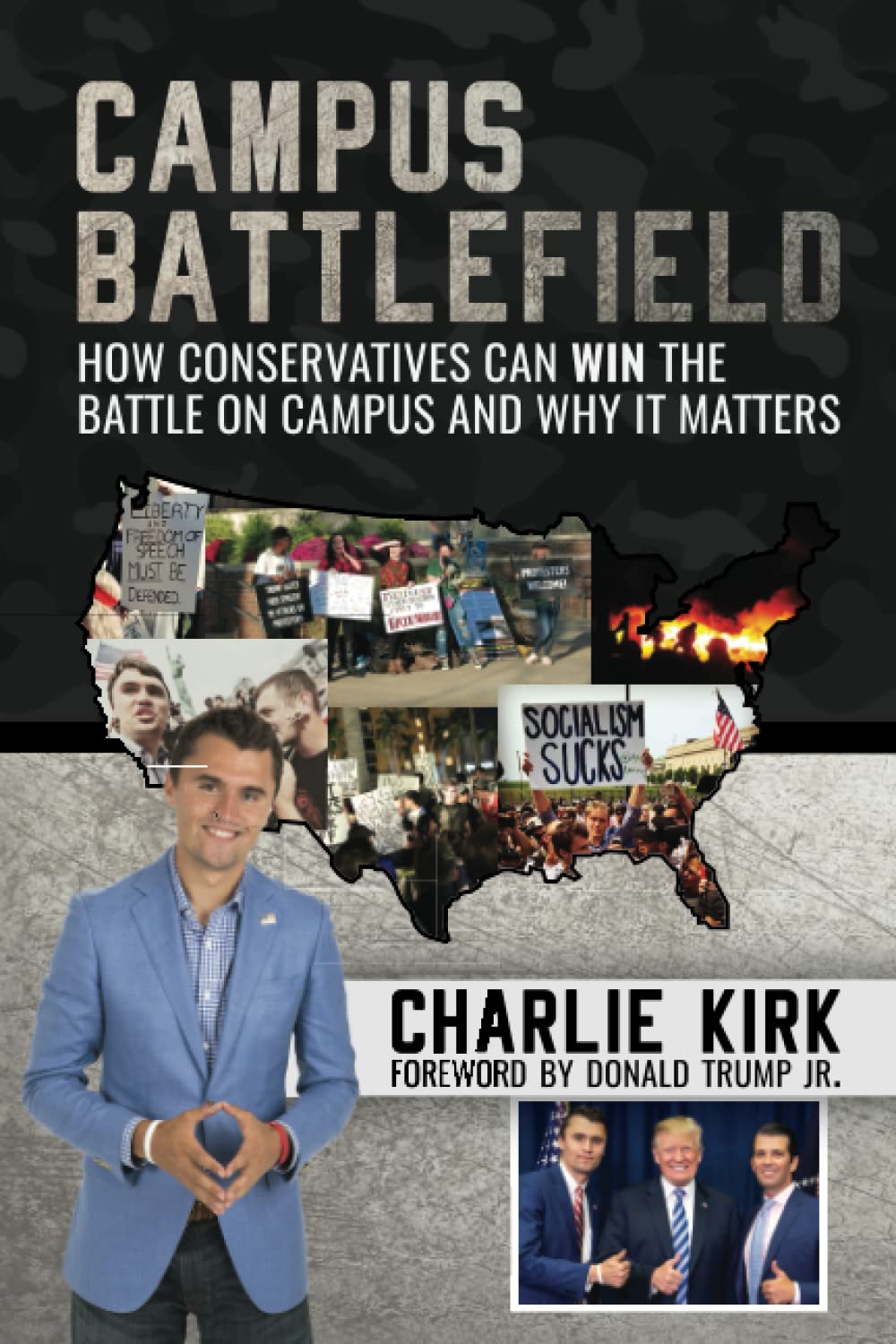


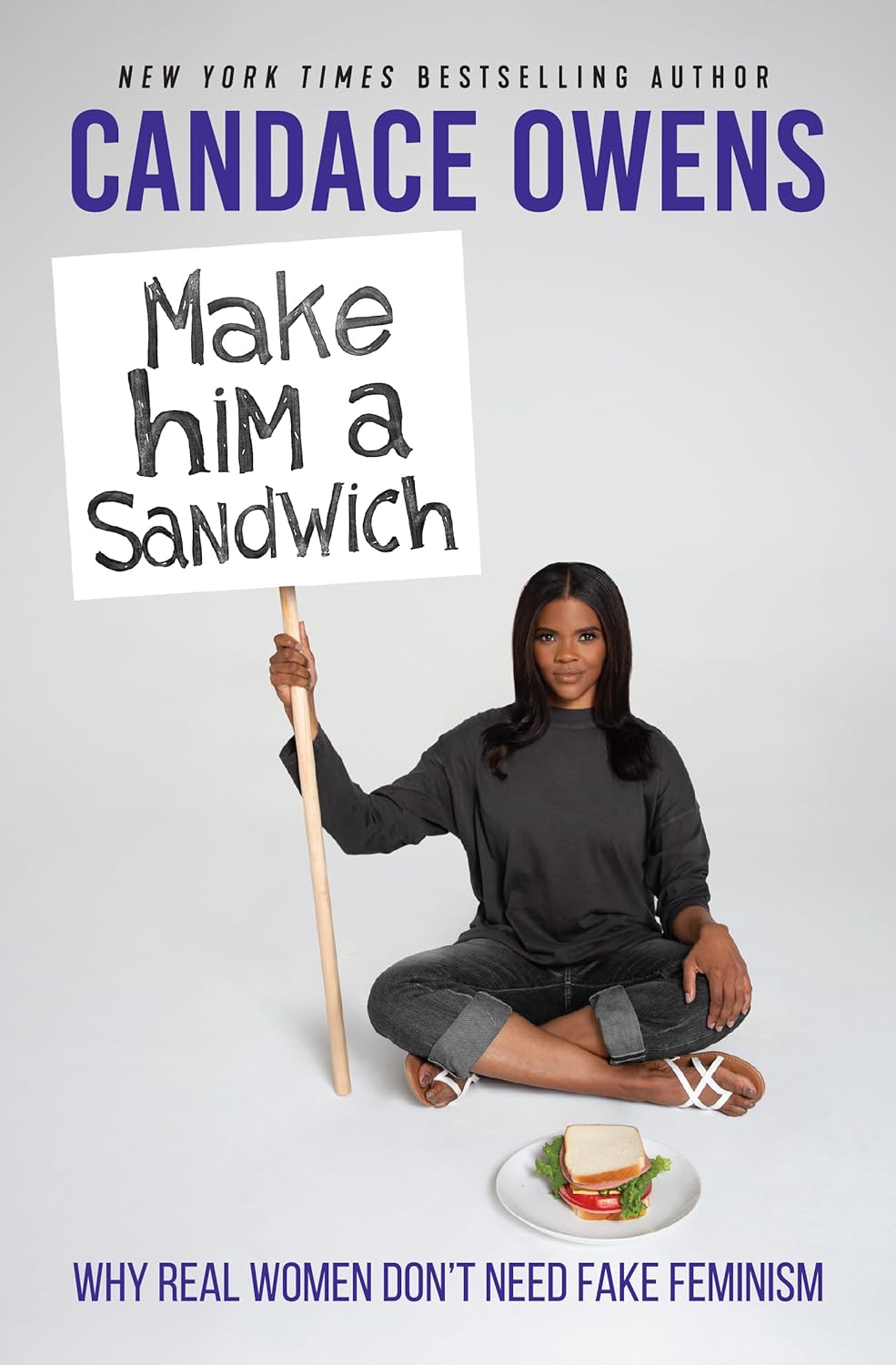



Charlie Kirk and Candace Owens on Conservative Movement, Free Speech, and Turning Point USA's Mission
Charlie Kirk and Candace Owens discuss the growing energy within the Republican base and the alignment between their ideas and Turning Point USA's mission. Owens shares powerful stories about her grandfather's refusal to be a victim despite facing KKK violence in the South, emphasizing how economic freedom and individual initiative set America apart. The conversation addresses attacks on free speech, the controversy surrounding conservative black voices, and why the Professor Watchlist matters. Kirk and Owens challenge identity politics while championing personal responsibility, the American Dream, and the three choices that research shows can lift people out of poverty.
The Republican Base and Suburban Shift
Charlie Kirk observes a remarkable transformation within the Republican base and among suburban voters. He notes that even those who previously felt conflicted—appreciating Trump's policies while questioning his rhetoric—have now become fully engaged. The data reflects this shift, showing increased enthusiasm and support across traditional and new conservative demographics.
Free Speech Under Attack
Kirk emphasizes that the First Amendment and the right to free speech face significant threats. This concern forms a central part of Turning Point USA's mission and the broader conservative movement's focus on protecting constitutional rights.
The Partnership Between Turning Point USA and Candace Owens
The collaboration between Turning Point USA and Candace Owens emerged from shared vision and values. When they first connected, Owens wasn't yet the prominent figure she is today, but she demonstrated great ideas and an exceptional ability to deliver them. The alignment between her principles and Charlie Kirk's vision for Turning Point USA created a natural partnership between two movements working toward similar goals.
Candace Owens on Economic Freedom and American Exceptionalism
Owens speaks passionately about why America stands apart from other nations: the embrace of economic freedom, private property rights, and individual initiative. She emphasizes that being born in poverty doesn't predetermine one's outcome in America, a stark contrast to many other societies.
Her Grandfather's Story: Refusing to Be a Victim
Owens shares a powerful family history that shaped her worldview. Her grandfather worked as a sharecropper in the South just a couple of generations ago. Despite facing violence from the KKK, who would shoot into his home, he refused to accept the role of victim. Owens recounts with admiration how her grandfather would tell these stories not with despair but with strength, saying things like "my daddy used to shoot back at them boys." He was always a winner, always championing the things he believed in.
This family legacy taught Owens that victimhood is a choice, not a destiny. Her father continued this tradition, teaching his children that "if you believe that you can't, you certainly won't; believe you most definitely will, and that's really when I go around talking."
The Controversy of Conservative Black Voices
Owens addresses the strange reality that her message somehow remains controversial. In an era focused intensely on identity politics, she faces constant criticism for her views. Critics question how she, as a black woman, can say positive things about Donald Trump or America. The implication is clear: Owens is not allowed to think what she thinks because it doesn't conform to prescribed ideological boundaries.
She challenges this notion directly, arguing that individuals should have the right to determine their own beliefs and values rather than having them dictated by their demographic characteristics. The controversy surrounding her viewpoints reveals the limitations and contradictions within identity politics.
The Professor Watchlist Debate
An audience member challenges Kirk about Turning Point USA's Professor Watchlist, which names instructors teaching what the organization considers harmful ideologies. The questioner suggests this contradicts free speech principles and represents political correctness for the conservative side.
Kirk responds directly: if professors are worried about what they're saying being made public, maybe they should be worried about what they're saying in the first place. He asks the audience how many have been graded differently because of their political views, receiving applause in response.
Challenging the Social Mobility Narrative
Another audience member presents data showing that America ranks lower than countries like Norway, Sweden, and Canada on social mobility measures. They note that people born to parents in the bottom fifth of income distribution have less opportunity to move up in America than in these more socialized countries.
Kirk addresses this by citing research from the Brookings Institution, a center-left think tank, which identified three choices that enable people to break out of the bottom 20 percent of income distribution: get married before having kids, graduate high school, and get a job—any job. This response emphasizes personal responsibility and choice over systemic explanations.
Answering the Call to Serve
Kirk shares his decision to step up and serve his country, updating something Trump said 20 years ago about being willing to serve if needed. He describes it as a happy coincidence that he was able to give an empowering speech to young conservatives, expressing hope that it inspires others who are considering taking action.
Video Transcript
[00:00] but now I see Republican base more fired
[00:02] up than ever before
[00:03] I see suburban voters that were kind of
[00:06] my dad I don't know the Trump thing I
[00:08] like what he's doing but I don't like
[00:10] what he's saying they are all and the
[00:12] data reflects but I find the First
[00:14] Amendment the right to speech is very
[00:18] much under attack reach out to it wasn't
[00:29] as big as he is now but we thought he
[00:31] had some great ideas he had a great way
[00:34] of delivering them and the RC use ideas
[00:37] align brightly with the turning point in
[00:39] Charlie's ideas so
[00:43] meet me two movements I'm very vocal are
[00:52] born in poverty you're probably gonna
[00:53] end up in from America is different
[00:55] because of our embrace of economic
[00:57] freedom private property rights
[00:58] individual initiative then canvas is a
[01:01] living embodiment that a couple
[01:02] generations ago her grandfather in the
[01:05] South was working on a sharecropping
[01:06] farmer he would mention the KKK and how
[01:09] they would shoot into his home at what's
[01:10] really funny is my grandfather was never
[01:11] a victim so he literally would tell us
[01:13] those stories
[01:14] says things like and my daddy used to
[01:16] shoot back at them boys he was always a
[01:17] winner championing the things that he
[01:19] went under my dad used to always say
[01:20] you're in luck if you believe that you
[01:22] can't you certainly won't believe you
[01:26] most definitely will and that's really
[01:28] when I go around talking one somehow
[01:29] that's very controversial eleven right
[01:32] now they're so focused on identity
[01:34] politics Candis is not allowed to think
[01:37] what she thinks read Candis
[01:39] they say Candice how dare you is a black
[01:41] woman say good things about Donald Trump
[01:44] or about America
[01:46] because we actually are that determined
[01:52] yourself but why that is an issue and
[01:56] why you need to define yourself research
[02:14] organizations like the turning-point USA
[02:16] has created professor watch list that
[02:19] list names of instructors and
[02:20] educational institutions of professors
[02:23] to teach harmful insane ideologies as
[02:25] Bill O'Reilly has stated in creating the
[02:28] professor watch lists are you not or
[02:30] saying professors to use approved
[02:31] language chocolates with discussion and
[02:33] essentially supporting political
[02:35] correctness for your side well they're
[02:37] so worried about what they want what
[02:39] they're saying be made public maybe they
[02:40] should be worried about what they're
[02:41] saying how many of you in this room have
[02:43] been graded differently because you're
[02:46] [Applause]
[03:07] ranked lower than several countries
[03:09] including say Norway Sweden Canada as
[03:11] far as social mobility goes like people
[03:14] born when their parents are in the
[03:15] bottom one fifth of the income they are
[03:17] much more likely in America than these
[03:19] countries so just wondering since these
[03:24] countries are more socialized in general
[03:26] how do you
[03:28] Brookings Institution which is a center
[03:30] level think-tank identified if you make
[03:34] three choices what you can do to break
[03:36] out of that bottom 20% those three
[03:38] choices are to get married before you
[03:40] have kids graduate high school and get a
[03:42] job any job that question but I decided
[03:54] to update it and say what Trump said 20
[03:56] years ago which is that if my country
[03:57] needed me I would slip up to the plate I
[04:00] would run and I would win it seems happy
[04:10] coincidence ii was able to give such an
[04:12] empowering speech Young Conservatives is
[04:15] 20 times and hopefully it inspires a few
[04:17] people who are playing on
[04:20] I'm sure you're all looking at my shoes
[04:21] I'll tell you one story about these
[04:23] shoes these are called easy
[04:26] [Applause]
[04:33] [Music]



Comments
Be the first to comment on this video.