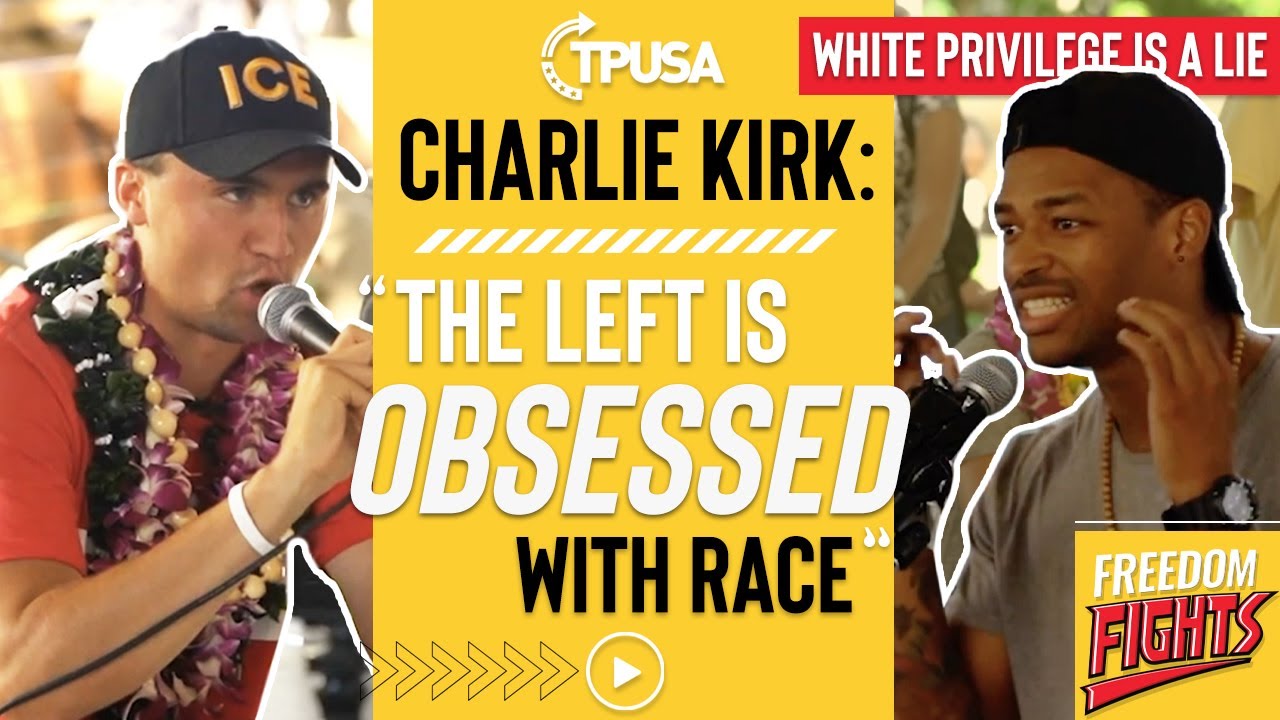
Charlie Kirk Confronts Military Member on Race, Choices, and the Dangerous Obsession with White Privilege
Enjoying this? Share it with someone who needs to see it.
Up Next
Charlie Kirk and Candace Owens Dismantle White Privilege Argument With Military Member at Campus Conversation Event
7:36
Charlie Kirk and Candace Owens Launch Turning Point UK Amid Protesters and Free Speech Crisis
1:51:23
Charlie Kirk Dismantles White Privilege Narrative with Asian American Success Data and Constitutional Merit
0:54
Charlie Kirk Confronts Military Member on Race, Choices, and the Dangerous Obsession with White Privilege
Charlie Kirk engages in a tense exchange with a military member who claims systemic racism held him back. Kirk dismantles the white privilege argument by focusing on personal choices and accountability, challenging the notion that skin color determines success. The conversation exposes how racial division is perpetuated when individuals attribute their failures to race rather than examining their own decisions. Kirk argues that viewing people through the lens of skin color rather than as individuals created by God is what truly divides America.
Charlie Kirk begins by establishing a fundamental premise: there is zero difference between him and the military member he's speaking with in terms of inherent human value. He challenges the focus on racial differences, arguing that perpetuating the idea that such differences matter is what truly divides the country. Kirk contends that when people start looking at each other based on skin color, it creates racist divisions rather than unity.
Challenging the Burden of Proof
When the military member suggests Kirk must prove he's not racist, Kirk flips the script. He questions why the assumption should be that he needs to prove anything about his racial attitudes. The military member claims to be a "living example" of something related to white privilege, but Kirk redirects the conversation to focus on the choices this individual has made.
Personal Choices Versus Skin Color
Kirk points to the military member's decision to join the military as evidence of making good choices—choices that require responsibility, discipline, and patriotism. He argues that if someone makes good choices, they will live a successful life regardless of skin color. When the military member responds with "not really" to the suggestion that he made good choices, Kirk seizes on this admission.
The Critical Revelation
The conversation reaches its turning point when Kirk suggests that perhaps the military member wasn't promoted because he made "not really good choices" rather than because of his skin color. The military member had previously attributed lack of advancement to white privilege and systemic racism, but Kirk demonstrates the logical inconsistency: if someone admits to not making really good choices, how can they definitively attribute their failures to race?
Stories Versus Accountability
When the military member mentions having "stories that can attest" to racial discrimination, Kirk has already made his point about personal accountability. The appeal to anecdotal stories doesn't address the fundamental question Kirk raised about the relationship between personal choices and outcomes.
Seeing People as Human Beings, Not Skin Colors
Kirk concludes by stating his perspective: he looks at people as human beings and as sons of God, not as skin colors. He delivers his final argument—that the left is obsessed with race. This obsession, Kirk argues, is what perpetuates division rather than the actual existence of systemic barriers based on skin color.