Charlie Kirk and Candace Owens on Why Germans Insult Each Other More Than Americans Despite Stricter Speech Laws
Enjoying this? Share it with someone who needs to see it.
Up Next
Charlie Kirk Debates Kamala Harris Supporters on Trump, Democracy, and the Border Crisis
15:22
Charlie Kirk on Why Young Americans Can't Afford Homes and What Must Change Now
4:07
Charlie Kirk on President Trump's Executive Order Protecting Free Speech on College Campuses
6:38
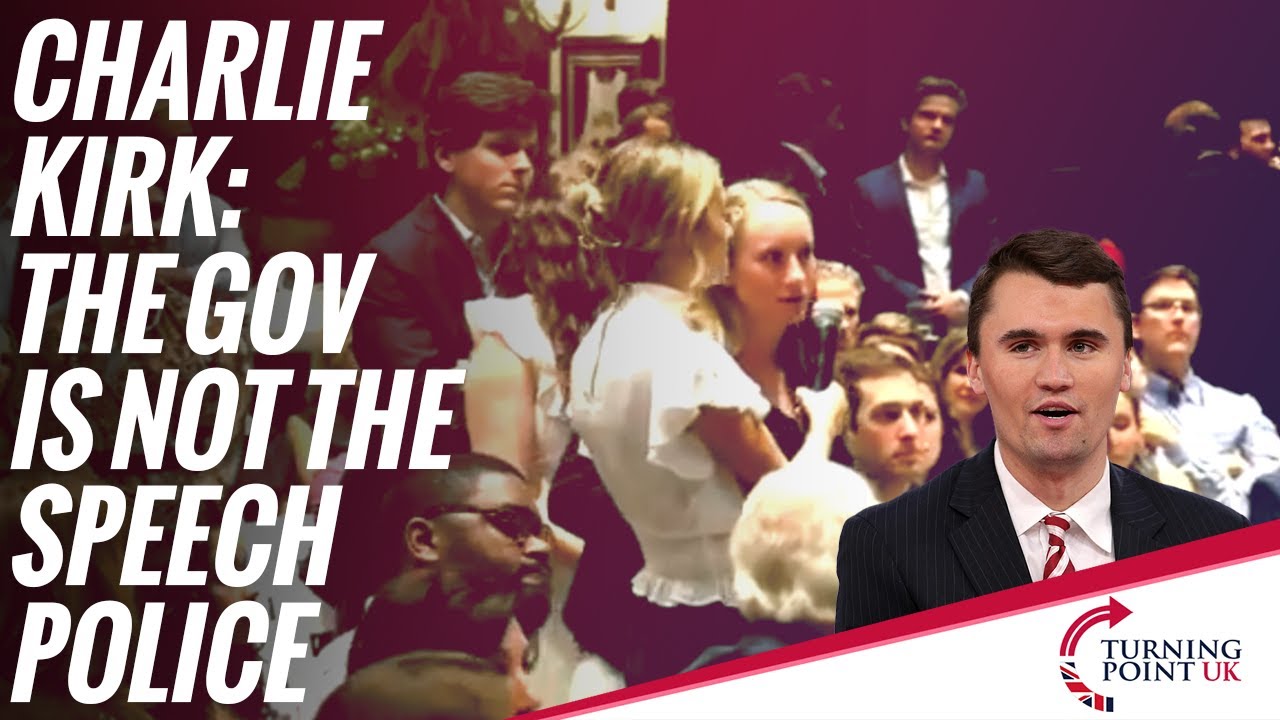
Charlie Kirk and Candace Owens on Why Germans Insult Each Other More Than Americans Despite Stricter Speech Laws
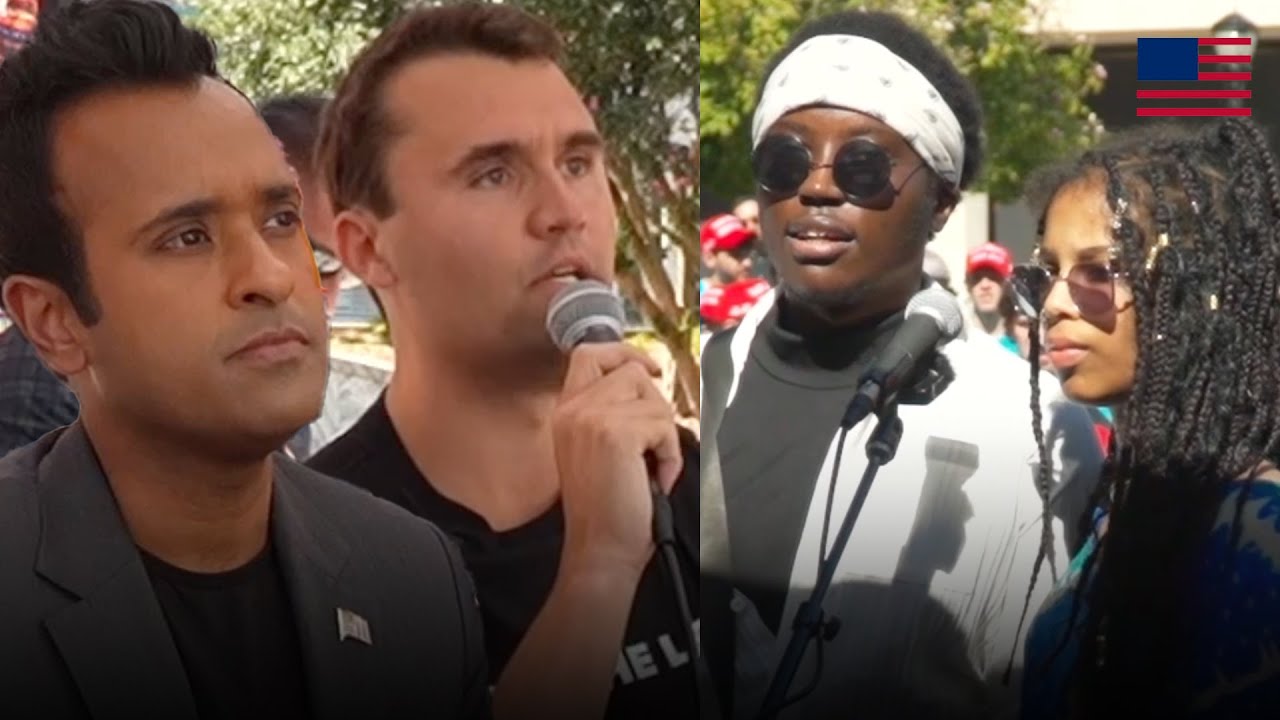
A German immigrant shares a striking observation with Charlie Kirk and Candace Owens: in Germany, where insulting someone can result in government fines, people regularly hurled insults at him on the street. But in New York City, where free speech is protected, strangers greet him warmly instead. Kirk examines this paradox, arguing that when governments regulate speech and human interaction, basic decency erodes. The conversation explores how political correctness creates psychological rebellion, why Trump's blunt style resonated with Americans, and what happens when the answer to bad speech isn't more speech, but government censorship.
Nico, a German immigrant who spent 35 years in Germany before moving to the United States, presented Charlie Kirk with one of the most thought-provoking questions about free speech and human behavior. His observation was striking: in Germany, where speech is heavily regulated and insulting someone can result in government fines, he was regularly insulted on the street. But in New York City, where free speech is constitutionally protected and such insults carry no legal penalty, strangers greet him warmly when he makes eye contact.
Nico explained his experience in Germany, where he developed a habit of observing people and looking them in the face. This simple act of making eye contact repeatedly resulted in hostile reactions. People would demand to know why he was looking at them, and insults would follow. This happened consistently throughout his 35 years living there, long before the recent influx of Syrian refugees that has dominated political discussions about Germany.
The contrast with America couldn't be more stark. Since moving to the United States three years ago, Nico has not been insulted on the street. Instead, when he looks people in the face in New York City, they greet him. This cultural difference prompted him to question everything he thought he knew about speech regulation and human interaction.
Germany's Government-Regulated Insults
Nico revealed that Germany maintains an official government list of insults that are illegal to use. If someone files a complaint, these insults carry specific fines. For example, calling someone "what do you want, you bird" can cost 500 euros if the person sues. Calling someone a "stupid cow" might cost 300 euros. Despite these legal prohibitions and financial penalties, Nico was insulted regularly throughout his decades in Germany.
This paradox raises fundamental questions about the effectiveness of speech regulation. If the purpose of criminalizing insults is to create a more civil society, why does the opposite seem to occur? Why would a society with strict speech laws produce more street-level hostility than one that protects even offensive speech?
The Psychology of Prohibition
Kirk approached the question from a psychological perspective, acknowledging that Jordan Peterson might be better equipped to fully analyze the phenomenon. However, he offered an important insight: when you tell people they can't do something, it often makes them want to do it more. This is a basic principle of human psychology that parents observe in children constantly. When a child is told not to touch something or not to look somewhere, that becomes exactly what they want to do.
Kirk suggested that the repressive nature of speech regulation in Germany might actually be causing these outbursts of insults. The very act of criminalizing certain words and expressions may create a psychological rebellion against those restrictions. People may feel compelled to use the forbidden language precisely because it's forbidden, creating a perverse incentive structure that undermines the stated goal of the regulations.
Europe's Speech Censorship Experiment
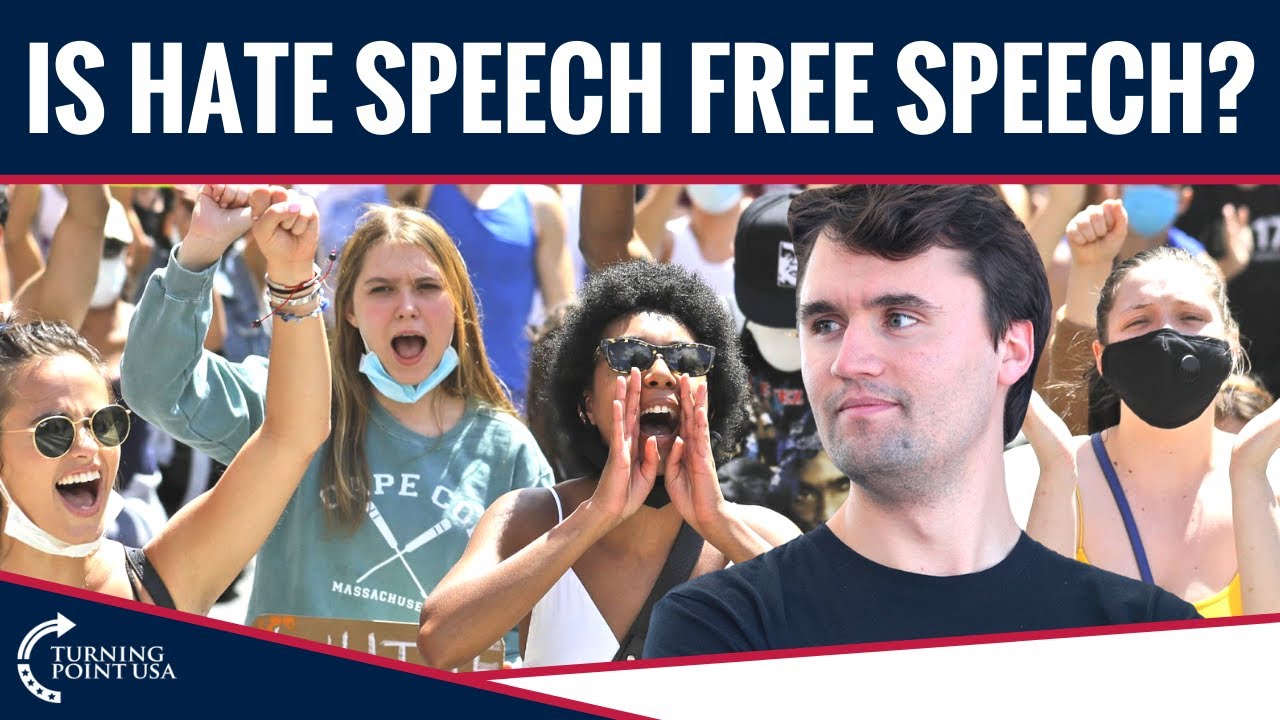
Kirk framed the situation as a natural experiment comparing two approaches to speech. Europe, with Germany as a prime example, has embraced the idea that speech must be censored and regulated, with the government playing on the side of victims. America, by contrast, has aggressively maintained the First Amendment, even when that means protecting uncomfortable or offensive speech.
A concrete example of this difference is the treatment of Nazi symbols. In Germany, it is illegal to display the swastika, with historical reasons both supporting and questioning this prohibition. In America, this exact issue has been debated and decided by the Supreme Court, which ruled that no matter how uncomfortable or offensive a symbol might be, citizens still have the right to display it. The American approach holds that the answer to bad ideas is not to silence them by force, but to counter them with better ideas. The solution is always more speech, not less.
When Government Gets Too Big, Decency Erodes
Kirk argued that Nico's experience of Germans insulting each other despite legal prohibitions demonstrates exactly what happens when government becomes too large and intrusive. People stop talking to each other. Individual philanthropy and charity completely erode. Human decency itself begins to break down.
Many legal immigrants and visitors to America observe that Americans look people in the eye and ask how they can help. While America certainly has its share of impolite people, there's something qualitatively different about a society built on free expression versus one built on speech regulation. When government starts regulating what people can and cannot say, and when people stop genuinely communicating with each other, basic human courtesy seems to vanish almost entirely. This happens despite the legal penalties, or perhaps because of them, creating what Kirk described as a natural rebellion.
Trump, Political Correctness, and the Return to Truth
Kirk connected this analysis to the American political climate and the rise of Donald Trump. When Trump entered the political stage saying things like "lock her up" and creating nicknames for his opponents, people responded with tremendous excitement. This wasn't random or inexplicable. It happened because Americans had grown tired of fake, dishonest politicians who were lying to them.
The country was experiencing an overreach of political correctness in American society. When Trump spoke in blunt, unfiltered terms, it created a release of repressed feelings. People felt they could finally say "yes, that's what I really think" without the usual political filtering. Politicians on the inside had become extremely fake and dishonest, and Trump represented a return to speaking plainly, even crudely at times.
This was why Trump was able to build such a following. It represented a return to truth, or at least to honest expression of what people were thinking. In terms of political correctness, Kirk argued, excessive restriction almost inspires an undercurrent of truth to rise up in rebellion. Just as Germans say forbidden insults despite legal consequences, Americans embraced Trump's politically incorrect style precisely because it violated the unspoken rules that had been constraining public discourse.
The Case for Unrestricted Free Speech
The conversation ultimately makes a case for the American approach to free speech over the European model. When speech is regulated, human behavior doesn't necessarily improve. In fact, it may worsen in unexpected ways. People may become less civil, not more. They may stop genuinely communicating and instead engage in hostile outbursts that violate the very regulations meant to prevent them.
By contrast, when speech is protected even when offensive, a different dynamic emerges. People seem to exercise more voluntary restraint. Social norms develop organically rather than being imposed from above. The result, paradoxically, may be a more genuinely civil society where strangers greet each other on the street rather than hurling insults.
Kirk concluded by encouraging Nico's journey, expressing hope that he would one day become an American citizen. His observation about the difference between German and American street-level interactions provides powerful real-world evidence for the practical benefits of protecting free speech, even when that speech makes us uncomfortable.