2,422 videos 1,389,747,653 views US Joined Aug 30, 2018
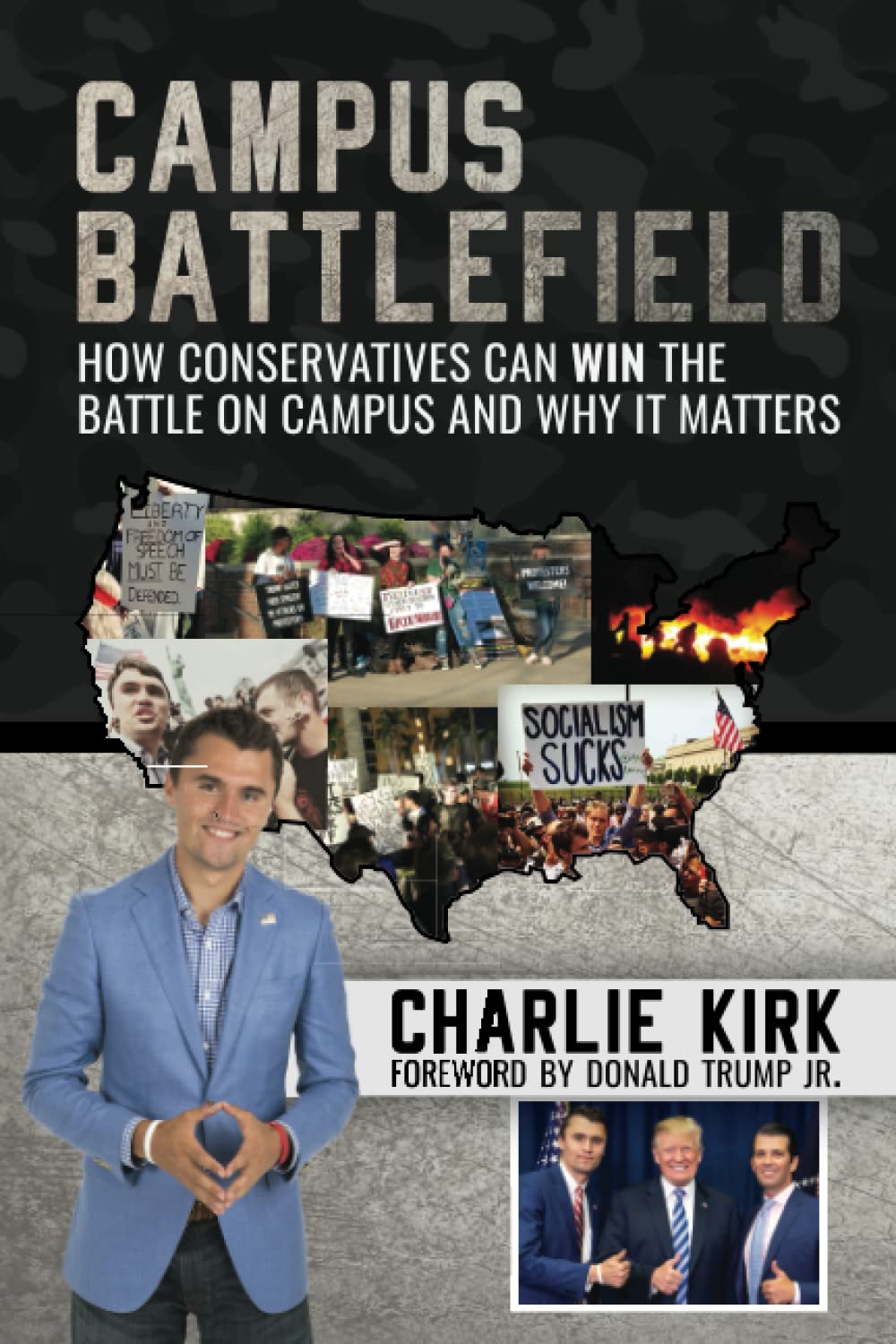
Charlie Kirk is the Founder and President of Turning Point USA, the largest and fastest growing conservative youth activist organization in the country with over 250,000 student members, over 150 full-time staff, and a presence on over 2,000 high school and college campuses nationwide. Charlie is also the Chairman of Students for Trump, which aims to activate one million new college voters on campuses in battleground states in the lead up to the 2020 presidential election. His social media reaches over 100 million people per month and according to Axios, he is one of the "top 10 most engaged" Twitter handles in the world. He is also the host of “The Charlie Kirk Show,” which regularly ranks among the top news shows on Apple podcast charts.
Charlie Kirk's Billion View TikTok Compilation Reveals Campus Conversations That Shaped the Election
Charlie Kirk reflects on the viral campus dialogues that generated over 1 billion views on TikTok. Through unfiltered conversations with college students and voters, Kirk confronts perspectives on abortion, borders, economics, and media narratives. From students who cannot name a single Kamala Harris accomplishment to those grappling with inflation wiping out their family savings, these exchanges reveal a generation wrestling with fundamental questions about America's direction. Kirk maintains that speaking directly to young voters, who will determine the future of Western civilization, is not about debating unprepared students, but about engaging the next generation on issues that matter most.
The Viral Phenomenon That Reached a Billion People
Charlie Kirk opens by celebrating a record-breaking year on TikTok, with over 1.8 billion total views. The compilation viewers are about to witness represents the cream of that content—videos that alone garnered more than 1 billion views. Kirk emphasizes the magnitude: 1 billion people saw these exchanges, potentially influencing both the election and the broader trajectory of civilization.
Confronting America's Critics
The exchanges begin with a student who refuses to give his name but freely admits he hates America. When Kirk asks if he plans to leave the country, the student says no. Kirk's response cuts to the heart of American exceptionalism: "America is the only country where even those who hate it refuse to leave. That's how you know you live in a great country."
This pattern repeats throughout the compilation—students expressing passionate political views while struggling to articulate specific reasoning or evidence. One Kamala Harris supporter cannot name a single accomplishment of the vice president, eventually admitting, "I cannot." When pressed further, the student manages only to cite Harris fighting insurance companies as California Attorney General, but cannot identify anything significant she has done as vice president.
Defending Pro-Life Arguments Beyond Religion
A particularly substantive exchange occurs with a student named Archer, who comes prepared with concerns about Kirk imposing religious beliefs through legislation. Kirk clarifies his position: while his personal convictions stem from the Bible, his political views on abortion are defensible using reason and Western tradition alone. He argues that eliminating abortion is simply the logical extension of murder laws already existing in American society—applying to unborn life the same protections granted to born life.
Archer appreciates the clarification, having prepared an entire argument based on the assumption Kirk was advocating for biblically-based legislation. The exchange ends with Kirk expressing hope that Christianity might one day earn back Archer's support, acknowledging that the church may have failed in its witness. Kirk affirms there is a God who made and loves Archer, sending His son to die for him—a moment of evangelism amid political debate.
The Economic Reality Hitting Home
One of the most compelling testimonies comes from a voter explaining why he supports Trump despite personal reservations about the former president's character. As a Christian, he acknowledges not agreeing with Trump's multiple marriages and personal conduct. However, under the Trump administration, his family—long-time renters—had been saving successfully for a house. Over the past four years, inflation wiped out those savings entirely. They are back to renting and uncertain if they will ever retire.
This voter concludes that based purely on economic concerns, he must vote for Trump. Kirk validates this reasoning, emphasizing how policy impacts real families and futures.
Winning Over Undecided Liberals
When a self-described liberal expresses being torn on the election, Kirk seizes the opportunity to present three key arguments for Trump from a liberal perspective. First, home ownership: under current conditions, a person would need to make $125,000 annually just to qualify for a mortgage, compared to $75,000 during Trump's presidency—a result of $6-7 trillion in unnecessary federal spending that inflated asset prices.
Second, the border: under Trump, the southern border was the most secure in American history, while under Harris, 10 million people have crossed with unknown identities entering communities nationwide.
Third, war: Trump was the first president in 40 years to start no new wars. Kirk points out that Harris is endorsed by Dick Cheney, Leon Panetta, and Liz Cheney—the warmongers of two decades ago. Meanwhile, card-carrying Democrats like Bobby Kennedy, Elon Musk, and Tulsi Gabbard are supporting Trump because the Democratic Party has become the party of censorship, war, and open borders—against traditional liberal values.
The student agrees and asks for a hat.
Defending the Campus Tour Format
Multiple students challenge Kirk on the format itself, questioning whether it's fair for him as a "professional pundit" to debate unprepared college students. Kirk's response is multifaceted. First, he reframes the conversation: he's not debating students, he's talking to voters who will determine the future of Western civilization. This audience might be drafted into World War III and is being used as pawns by politicians pushing radical agendas.
Second, Kirk emphasizes it's an open mic format—anyone can come up, and students can bring professors if they wish. He notes he didn't attend college himself, so five PhD professors against him would be a fair fight. Third, and most importantly, Kirk rejects the premise of "talking down" to college kids. They are voters, they matter, and it's time to start talking to the next generation, not talking down to them.
When accused of editing content to make people look bad, Kirk points out they post unedited content and maintains full transparency.
Unpacking Talking Points and Media Narratives
Throughout the compilation, Kirk methodically dismantles common talking points by asking for specifics. When students claim Trump is racist, Kirk asks them to define racism and provide clear examples. They struggle, often unable to produce any concrete instances. Kirk suggests the media has told them Trump is racist, and they've accepted it without evidence.
On the subject of police brutality, Kirk challenges a student's assumption that over 50% of police killings involve unarmed black people. The actual number from a Washington Post national crime survey: 15 people per year in a country of 350 million. Kirk explains this is why the issue seems so prevalent on social media—targeted, emotional videoing creates the perception of widespread occurrence when data shows otherwise. Meanwhile, over 100,000 drug overdose deaths occur annually with far less attention.
When discussing illegal immigration, Kirk uses an analogy: if someone breaks into your dorm room uninvited but does dishes and laundry, should they be allowed to stay? One student actually answers yes, as long as they don't commit murder. Kirk's reaction captures the absurdity of the position.
The "First Female President" Fallacy
Multiple female students express enthusiasm for Harris potentially becoming the first female president. Kirk and the students he speaks with push back on this reasoning. One young woman voting for Trump states plainly: "I do not care. Her policies are just not—I don't like them at all." Another adds, "Why should we vote for a woman just because she's a woman?" Kirk highlights the irony: Democrats want people to vote for a woman but cannot even define what a woman is.
Addressing Poverty, Crime, and Government Assistance
When a student argues that black men commit crimes out of poverty and necessity, Kirk systematically lists available assistance: food stamps, subsidized housing, Medicaid, and welfare cash. America has an obesity problem, not a starvation problem. Any homeless person on State Street could go to a local church and be fed. Kirk dismantles the narrative that crime is inevitable due to lack of resources.
The Adoption Alternative
On abortion, Kirk points out that two million people are on adoption waiting lists in America—twice the number of annual abortions. When challenged about support for children after birth, Kirk asks how many in the audience were adopted. Multiple hands go up. He celebrates these "miracles of adoption," praising God that their mothers had the courage to choose life and allow others to raise them. Kirk frames the divide starkly: "We are the Crusaders of Life. The Democrats are the cult of death."
The Bottom Line: A Billion Views and a Message
The compilation represents more than viral content—it captures a snapshot of a generation grappling with propaganda versus reality, emotion versus evidence, and identity politics versus policy substance. Kirk's method is simple: ask for specifics, demand definitions, and let the conversation reveal truth. Whether viewers agree or disagree with his positions, the exchanges demonstrate the power of direct dialogue in an age of curated narratives and algorithmic echo chambers.
With 1 billion views, these conversations reached an audience larger than any traditional media outlet could dream of, potentially shaping electoral outcomes and the future direction of America itself.