Up Next

Charlie Kirk's Billion View TikTok Compilation Reveals Campus Conversations That Shaped the Election
25:10
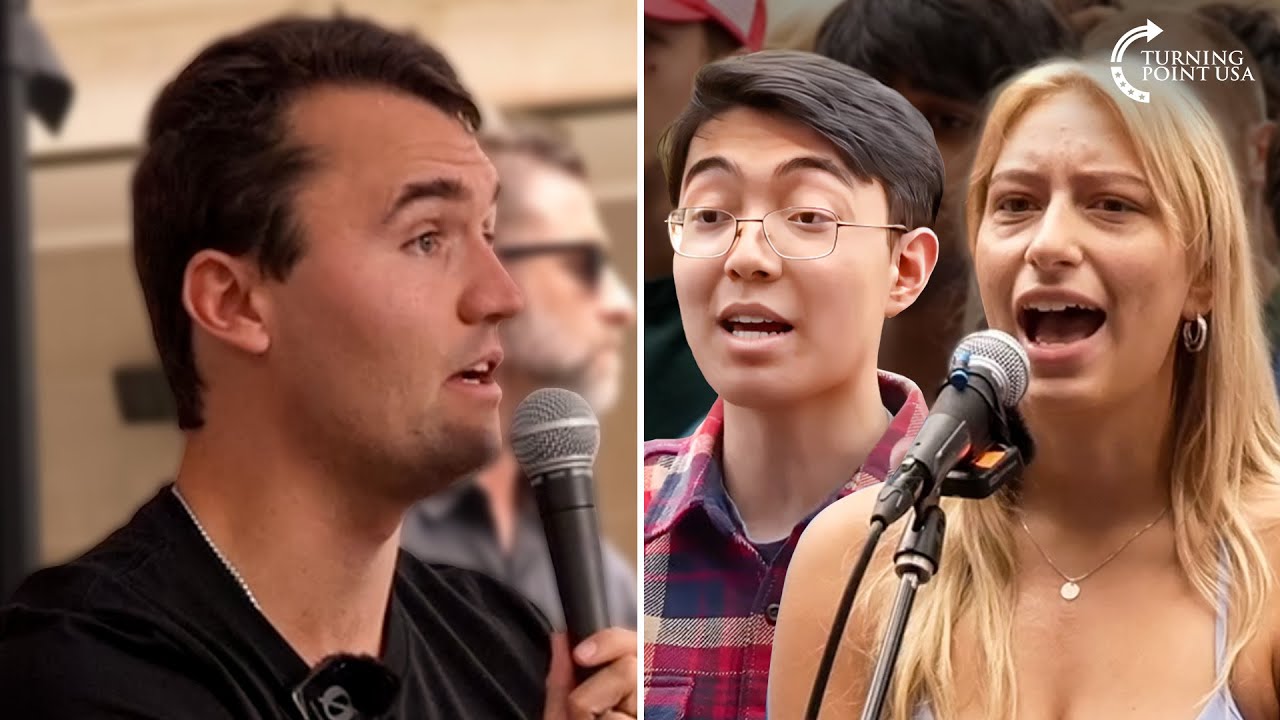
Charlie Kirk Confronts Immigration, Social Work, and Veganism Debates with College Students at University of Pittsburgh
19:58

Charlie Kirk on Georgia's Historic Political Realignment and the Battle for America's Future
15:03


Charlie Kirk is the Founder and President of Turning Point USA, the largest and fastest growing conservative youth activist organization in the country with over 250,000 student members, over 150 full-time staff, and a presence on over 2,000 high school and college campuses nationwide. Charlie is also the Chairman of Students for Trump, which aims to activate one million new college voters on campuses in battleground states in the lead up to the 2020 presidential election. His social media reaches over 100 million people per month and according to Axios, he is one of the "top 10 most engaged" Twitter handles in the world. He is also the host of “The Charlie Kirk Show,” which regularly ranks among the top news shows on Apple podcast charts.
Subscribe on YouTubeCharlie Kirk on Immigration, Family Breakdown, and Confronting Progressive Ideology at College Campuses Across America
Charlie Kirk faces challenging questions from students on Republican values in social work, immigration policy, the southern border crisis, affirmative action in engineering and medicine, and the breakdown of the nuclear family in Black America. Through open dialogue at universities, Kirk argues for merit-based systems, secure borders, and traditional family structures while debating students who challenge his positions on systemic racism, gender differences, and cultural values. The conversations reveal deep ideological divides on fundamental questions about government obligations, immigration rights, and what truly lifts communities out of poverty.
Republican Values in Social Work
A University of Pittsburgh social work major named Aaron opened the conversation expressing concern about the apparent conflict between conservative values and the social work profession. Kirk immediately identified the core tension: the social work industry views poverty as a permanent station rather than a series of choices that can be changed.
Kirk pointed to the Great Society programs from Lyndon Johnson, arguing these policies designed to help underprivileged communities actually hurt the very people they were supposed to help by creating government dependence. He explained how the mathematics of federal aid programs often pay single mothers more money not to have a man in the house, creating perverse incentives that work against family formation.
The conservative movement cares about lifting people from poverty through actual results rather than just talking about it, Kirk argued. The fundamental difference lies in understanding that poverty stems primarily from values rather than lack of resources. Kirk recommended reading "Life at the Bottom" by Theodore Dalrymple, a social worker in the United Kingdom who discovered that value systems, not lack of housing or food stamps, kept people poor.
The Southern Border and Immigration Policy
Multiple students challenged Kirk on immigration, with one identifying as a third-generation American whose grandfather entered the country illegally from Mexico in the 1970s or 1980s. The student argued that political tyranny and drug problems left her grandfather with no choice but to move.
Kirk firmly rejected this framing, stating it is never the only choice to commit a crime. He insisted that immigration must occur through legal processes, and that breaking into a country uninvited is an insult to immigrants from Vietnam, Laos, Pakistan, and elsewhere who wait decades in line. According to Kirk, having an unstable country of origin does not justify illegal entry, as half the world's countries face instability.
The exchange became heated when Kirk asked whether the student believed she had a right to immigrate to America. He emphasized that no one has an inherent right to enter another country—it is a privilege, not a right. Immigration must be a net benefit for the American homeland and American citizens, Kirk argued, not simply an opportunity for anyone who wants a better life.
Kirk highlighted that the United States has brought in 10 million people over recent years, including 5% of Haiti's population. He questioned whether taking in such massive numbers makes sense when young Americans are the first generation to be worse off than their parents, with housing unaffordable, mental health crises accelerating, and birth rates collapsing.
Stereotypes and Criminal Definition
When the student raised concerns about stereotypes applied to Hispanic and Latino communities, Kirk insisted he was not stereotyping but simply stating that anyone who enters the country without proper documentation has, by definition, broken federal law and is therefore a criminal. He asked what punishment should exist for breaking into a country.
The conversation circled around whether people who work hard after entering illegally should be allowed to stay. Kirk used the analogy of someone breaking into a dorm room—if they do the dishes and laundry, can they stay? The student said yes if she wasn't going to do her own dishes, drawing laughter from the audience.
Kirk emphasized that 320,000 missing children have been sex trafficked across the southern border, each with a handler, meaning 320,000 sex traffickers have entered the country. When the student argued this represents only 3.2% of all illegal entrants, Kirk responded that 3.2% connected to sex slavery is actually an insane and serious number.
The exchange concluded with Kirk asking the student to define what a criminal is. When she hesitated, he pointed out that the left cannot define core terms like criminal, woman, racist, or democracy—a pattern he sees repeatedly on college campuses.
Diversity and American Ideals
One particularly contentious moment came when the student suggested that diversity and inclusion represent core American ideals. Kirk immediately challenged this, asking where in the Constitution or Declaration of Independence diversity and inclusion appear as foundational principles.
The student pointed to the pursuit of happiness, but Kirk clarified that this applies to Americans, not to opening the country to everyone across the world. He rejected the premise that diversity represents a founding American value, calling these "false ideals that are taught in school."
Kirk argued that America was established by people who came a long time ago and created a country with shared history, language, and culture. A country has ties that bind citizens together, while a colony simply consists of people from anywhere. The question became whether America should function as a country or a colony.
Presidential Election Arguments
When a student who leans liberal on most issues asked about the situation in Springfield, Ohio, Kirk used the opportunity to make his case for Donald Trump. He offered three main arguments for why liberals should vote for Trump.
First, home ownership: under Trump, someone needed to make $75,000 per year to afford a mortgage, whereas now it requires $125,000 annually. Kirk attributed this to unnecessary federal spending of six to seven trillion dollars by the Biden-Harris administration that inflated asset prices.
Second, war and peace: Trump was the first president in 40 years with no new wars—no Iraq war, no Syrian war, no Russia-Ukraine conflict. Under Biden and Harris, the Russian-Ukrainian war has cost $250 billion, and the Israel-Gaza situation represents significant human suffering that didn't occur under Trump. Trump brought peace to the Middle East through the Abraham Accords.
Third, border security: under Trump, the southern border saw the lowest crossings in American history. Under Harris, 10 million people entered the country with unknown identities, increasing crime in communities nationwide.
Kirk emphasized that the people endorsing Harris—Dick Cheney, Leon Panetta, Liz Cheney—are the warmongers who got America into failed wars 20 years ago. He noted that traditional Democrats like Bobby Kennedy, Elon Musk, and Tulsi Gabbard now support Trump because the Democratic Party has become a party of censorship, war, and open borders.
Affirmative Action in Engineering and Medicine
A female computer engineering student about to graduate from the University of Wisconsin-Madison challenged Kirk on affirmative action, arguing that diversity in engineering and medical fields has brought benefits. She cited examples like endometriosis being understudied due to few women in medicine, and car seat belts being designed only for male bodies, putting women at higher risk in crashes.
Kirk responded that a true meritocracy would solve these problems without racial or gender preferences. He argued that affirmative action means telling three white men that someone else deserves a position more based on characteristics other than merit. Studies show that affirmative action at Harvard resulted in admitted students of color having test scores nearly 40% lower than white and Asian counterparts.
The student suggested that lower test scores for people of color result from lower socioeconomic backgrounds that don't prioritize education. Kirk agreed but argued that the solution is fixing those socioeconomic problems, not penalizing qualified white males and making institutions less excellent.
Kirk used the Secret Service as an example, noting they aim for 30% female agents despite women having lower fitness criteria—fewer pull-ups, fewer push-ups, slower mile times. When the student objected that women will never be as strong as men genetically, Kirk asked how that's different from other fields requiring different capabilities.
Gender Differences and Societal Norms
The conversation took an interesting turn when Kirk argued that male and female brains are wired differently. He claimed men will never be as good at counseling, psychology, nursing, or elementary education as women, while women are less naturally inclined toward macro topics like building skyscrapers or discussing geopolitics.
The engineering student pushed back hard, insisting there's no inherent brain wiring that channels people toward specific interests. She argued that societal norms over generations, not biology, explain why men prefer contact sports like football and UFC.
Kirk challenged this by pointing out that women take longer getting ready, wear makeup, and engage in different social behaviors than men. When he suggested women typically discuss relationships and friendships while men discuss politics and sports, the student rejected this as a false generalization.
The exchange revealed a fundamental disagreement about whether biological sex differences extend beyond physical attributes to behavioral tendencies and preferences. Kirk insisted these represent general truths with exceptions, while the student maintained that social conditioning, not biology, explains observed differences.
Marriage and Family Structure
A Jewish student questioned why marriage cannot be allowed between two men or two women. Kirk explained his classical view: marriage has always meant two separate parts coming together in union for a lifelong partnership to raise children and become better versions of themselves through the attraction of opposites.
When the student defined marriage as simply two adults who love each other getting tax advantages, Kirk expressed disappointment. He believes marriage is holy—not just religiously, but in the sense of being elevated and separate. Marriage should be celebrated as something where two people make a lifelong covenant to learn about each other and grow together.
Kirk noted that traditional rabbinic Judaism and Islam, not just Christianity, do not recognize homosexual marriage. The student acknowledged this, agreeing these represent Abrahamic traditions.
The conversation shifted to fatherhood when the student revealed she grew up without a father and felt she turned out fine. Kirk asked if there was ever a time she wished for a masculine figure, perhaps when a boyfriend broke up with her and she wanted someone other than her mom to say she was beautiful.
The student saw no difference between her mother and a hypothetical father saying she was beautiful. Kirk described the unique bond between fathers and daughters—a type of love he called "storge" where the father's task is to shepherd his vulnerable daughter through life until the marriage aisle, then hand her off to another man because women are worthy of protection.
Crime, Poverty, and the Black Community
The conversation became most heated when discussing crime rates in the Black community. Kirk stated that Black Americans represent 13% of the population but commit 50-56% of murders, crimes, and carjackings. When the student suggested systemic racism explained this disparity, Kirk challenged her to name what she as a white American can do that Black Americans cannot.
The student offered examples like not being followed in stores and being less likely to be stopped or shot by police. Kirk dismissed these as "probabilities" and asked about legal codes—what does systemic racism mean in actual laws? The student mentioned housing codes and lending practices stemming from historical redlining.
Kirk argued that loans are now given favorably to Black Americans in certain cities over white Americans due to DEI and affirmative action. He also noted that twice as many white Americans live in poverty as Black Americans, yet white Americans in poverty commit far fewer crimes than Black Americans in poverty.
The student suggested the War on Drugs explained the disparity, arguing that drug dealing becomes one of the main jobs available in poverty-stricken areas with no other employment. Kirk called this "making excuses for criminals" and an insult to poor immigrants who worked two or three jobs rather than dealing drugs.
The student shared that her father, a white immigrant from Poland, committed crimes and went to jail. Kirk welcomed this as evidence against her systemic racism argument—if white immigrants can go to jail, the system isn't rigged only against Black people.
The Breakdown of the Black Family
Kirk identified the biggest problem in Black America as the lack of fathers, not racism. When fathers are present, children flourish. He noted that Barack Obama made rebuilding the Black family a central campaign theme in 2012, drawing 100,000 people to this very campus to discuss putting dads back in Black families.
The student argued that systemic racism creates family problems by taking Black people away from their families through incarceration. Kirk countered that not every Black person ends up in jail, yet there's huge child abandonment because of cultural expectations. In Black America, it's culturally acceptable to impregnate a woman and abandon her in ways that would be stigmatized in white upper-middle-class culture.
Kirk pointed to scholars like Thomas Sowell and Shelby Steele who have analyzed how Black culture doesn't treat child abandonment as a stigma the way other cultures do. He argued this is glorified by rap culture rather than challenged.
The student defended rap culture as artists sharing life experiences people relate to, not promoting abandonment as the greatest thing. Kirk clarified he wasn't judging rap as good or bad but noting that the ethos doesn't center on quitting drinking and drugs, getting married, and having children. Instead, it glorifies sleeping with many women and gang violence.
The student explained that rap shares what people have been through—gang violence happens in their neighborhoods and feels like the only option. Kirk responded that culture should elevate individuals to virtue and goodness rather than bringing them down to their lowest parts.
In the conversation's final moment, Kirk asked the student whether a young Black child should have Kendrick Lamar or Clarence Thomas as a role model. The student chose Kendrick Lamar, rejecting the Black Supreme Court Justice because she believed he was trying to ban interracial marriage—despite Thomas himself being in an interracial marriage with a white woman.
Video Transcript
hi oh my name is Aaron I'm a really big fan and I'm really excited to see both of you um I'm a little stressed because I feel like I could ask about you know gun violence I could ask about anti-Semitism on campus but I feel like with a opportunity like this I would really um appreciate some personal advice I'm here at the University of Pittsburgh as a social work major and I'm really passionate about it however I have found um that I'm leaning a little bit more Republican and I feel like I come at a standstill with that and I I really just want to get your advice moving forward for myself there's some obvious things I think you can think that would conflict obviously um I guess that's kind of my question what advice do you have for me as a republican aspiring social worker what would conflict I don't know like how to say it properly I I think I can help it the the social work industry is very much about a perspective generally of that people in poverty are there permanently and not trying to break people out of poverty into the middle class or higher levels right and that's why the Democrat Party and social work are very intertwined right exactly they view poverty not as a series of choices but as a um as a station in life that is immovable largely is that fair to say that is fair to say that's why my personal focus is on um the children in underprivileged communities because I personally feel like they they don't choose to be put in that position but I'm having a little bit of a difficult time empathizing with um the older generation of underprivileged and not in every Community but I I don't I don't know how to I don't know like how to not sound bad I know you are great at not sounding bad when you say stuff but I don't want to say something that'll get me in trouble well here's here's one way to look at it and Char that was helpful actually the Great Society from Lynden Johnson it was a series of policies that were designed to help underprivileged communities right they hurt the very people they were supposed to help how well the reality is it created dependence on government so you have a lot of single mothers for example that are paid more money not to have a man in the house than to have a man in the house because of the way the math of these Aid programs what do you mean well often you the way the math of the aid is calculated is if you have an earning husband in the household that actually causes you to disqualify for forms of Federal Aid that were designed to help you right but actually the best way to get kids in your own household ahead is in a two parent household because if you're raised in a two parent household you're less likely to end up in jail less likely to end up in poverty more likely to graduate from high school so one of the ways that if you're asking for advice I would say for the people around you even who might lean left you can recognize their intentions come from a good place absolutely but the policies of their leaders have actually betrayed the very people they were supposed to help and you can let them know cuz I believe this is genuinely true not just the Republican party but our conservative Movement we care about lifting people up from poverty we just care about actually doing it rather than talking about it what I would say the other thing I'll say is that we as conservatives believe that if you're in poverty it's largely because of values not because of lack of stuff like what values um not saving money uh spending all of your money in your paycheck as you get it for example um abandoning your spouse after uh impregnating them um not uh not spending all of your money on alcohol and drugs and instead opening a 401K um so values are the number one predictor of entering the middle class and there's a great book called life at the bottom you should read it by Theodore Dal rmle who is a social worker in the United Kingdom it's called life at the bottom where he got into Social Work CU he wanted to help people and he realized it was not a lack of stuff it wasn't lack of housing lack of food stamps it was that their value system was one that kept them poor so yeah really quick get to next question I'm just struggling because in all of my social work classes right now they're talking about all of those things and they're wrong so what do I do I'm trying to learn about what I want to do I I I think you need to stay in social work because you're called to do it but there's an amazing amount of literature from Thomas soul to Shelby steel to Theodore Dal rmle that get down to actual root causes of poverty which is not lack of stuff but is worldview and I think that'd be super helpful thank you so much God bless you Trump 2024 yes that you want to hat great thank you according to the way that the Asylum laws are written the entire nation of Mexico applies under Asylum do you think that you have a right to immigrate to America is diversity and inclusion really an American ideal are you okay with deporting every illegal person that's here do you think that the American government should first have a obligation to Citizens before foreigners nobody is asking these questions we're just saying if you want to come in you can come in do you see anything wrong with I don't know taking in 5% of the population of Haiti if someone comes into your dorm room Uninvited and they do the dishes and laundry they can stay if I'm not going to do my own dishes heck yeah hi all right hello oh hi um I'm going to start off by saying I'm a political science student I'm a second year here at K State um and I'm a first generation student try to turn it up turn it up a little bit yeah perfect great thank you and what's your your name again um Alandra Al yeah um so so I just had a question because you talk a lot about like protecting and securing our Southern borders um but as the granddaughter of immigrants I think that we get into a lot of complicated disputes with the idea that um immigrants are criminals or drug dealers and things like that so I just want to hear what your opinion is on those expectations or those um what do you call it those stereotypes that are put on Hispanic communities Latino communities and how they change the way people perceive immigration sure so um thank you for the question so you said you're the first generation student or first generation American I'm a first generation student cool great second generation American did I hear that right um third generation American on my mom's side U second on my dad when your uh your grandparents then is that right came to this country did they do so through the the legal process that was in front of them um so my father got married to my mother so he is a legal resident of the United States she's been here her entire life but did she did she enter leg my great she did she's she's born here yeah got it um my grandpa on my dad's side entered in illegally okay so um I'm not here to like insult your grandpa right but yeah yeah but I I I we must be very clear that the type of immigration that we support is when you follow our rules and you come on our terms and that you do not break into a country Uninvited and you try to cut can I add something to that the reason why he left and a lot of people in Mexico do is because of the political State especially in the 70s and 80s when they decided to move um they have a government that isn't supportive of their constituents and because of drug problems their their only choice was to move I totally sympathize that's not true it's never the only choice to commit a crime and we should not put up with it and so it is a it is an insult to other immigrants from Vietnam and la and Pakistan that have to wait decades in line to morally equivalate people that come in and just break in oh I have an unstable country like half of the world's countries are unstable yeah but that's why we have the Asylum Seekers program which is heavily abused and we're talking two different things Asylum Seekers and walking into the country illegally are similar but different things right and so you so we have millions of Goda ways of people that we have no idea who they are they're not they're not declaring Asylum they just run across the bo because they can't the system doesn't allow other people to from Mexico specifically to assign themselves who they are the last couple years so we just have to be very clear with this is that if you come into the country on invited you have committed a crime and you are a criminal and we could decide that we're not going to enforce our laws or we can say that when you are a criminal you should then be punished for that crime AKA sent back to your country of origin because you were not invited and it is an insult again to the Poes and to the czechoslovakians and from the sagales and people all across the world that don't have the pro s to the luxury just to Walt into America you call it a luxury to leave a country that has political tyranny and come into a country with opportunity yes to live in Mexico to be able to go you know 100 miles north and break into America do you know how many people in Pakistan would kill to be on that border that's why we bring them in well well we shouldn't right that's the point and secondly do you do you think that you have a right to immigrate to America I think that I didn't have a choice my grandparents made that decision for I'm not trying to attack your grandparents but no one has a right to go to anybody else's country you are invited it is a privilege not a right to come into America so it's a privilege to live a life that requires you to have clean water clean food clean air of course it is and you have to fight for that yes it is not but we didn't hold on a sec well born here fight for that well my ancestors did fight for that actually and I'm a very thankful recipient of many generations of Americans that fought for the greatest ever coming here illegally what what wait what did my ancestors do they they came over here in 1620 fought in the Revolutionary War fought in the Civil War fought in World because my grandpa didn't come here in 1620 it gives him no right to have a good life he can fill out paperwork and wait in line like the rest of the world and then we can see we can see whether or not it's in our best interest to allow him to come in and so we have to weigh costs and benefits I'm not saying we should have no immigrants but immigration must be a net benefit for the American Homeland and for the American citizen we have brought in 10 million people in these last couple years we have now brought in 5% of the population of Haiti nobody is asking these questions we're just saying if you want to come in you can come in do you see anything wrong with I don't know taking in 5% of the population of Haiti not necessarily no if we have the land and the resources to house them it shouldn't be that big deal to bring in immigrants really so so you you do you think that the American government should first have a obligation to Citizens before foreigners okay I think we have here's the thing yeah we're obligated because we're citizens to have the rights that we have but that doesn't mean we can't open up our orders we have the process hold second you being a younger American and everyone in the audience is the first generation in American history to have it be worse off than your parents so the social and you agree with that social contract poor more expensive so wouldn't it be rational for the American government to say we're going to prioritize younger generation Americans that are American passport holders and citizens before those in another Nation I don't think I don't I don't want to say anything that offends people but no said it right I've already said it whatever I think that the way we're going about it is wrong and that if we don't have a clear path to citizenship we won't open up those opportunities for people to come and seek a good life but I also think that yeah we are required to have those right seeking a good life is fine it's a nice added benefit our government does not exist to improve the life of foreign citizens a government we should be open to the idea of accepting that of course we are if we have our own house in order we are in chaos right now we have the most depressed suicidal anxious generation history our birth rate is collapsing kids can't afford homes you guys are are are drowning in debt you have to compete against job you have to compete for jobs against foreigners our country is a mess right now and so when your country is a mess and your home is in dis R and bedum your own government should say time out I have a heart for the people of Haiti I have a heart for the people of every country but you're not coming here until this generation at least has it as good as their parents but it's The Stereotype that I'm given as a Mexican am to fulfill those standards that people have on immigration well I don't share that I haven't said that here today there's people from all the world that enter the southern border now there's 118 countries that come across the southern border but I don't care if you enter illegally from Bulgaria or from LA or from Mexico or from Nicaragua someone who does not have their paperwork when they come in is by definition breaking federal law yeah and so then what should we do with someone who breaks with federal law but does that mean that people including their children their grandchildren including myself have to live with the stereotype or the standard set upon me that I am a criminal I am a drug dealer I am a XYZ okay so I have I played into that stereotype I've heard heard it many many times not from you specifically today okay but then it's a little bit of a red herring right cuz we're not even talking about it I'm not well my original question was what do you think about it what do I think about stereotypes about The Stereotype given to immigrants right now and children of immigrants and people of color here I I I can't talk about something I don't believe in so I mean I don't want people to be stereotyped no different than when you look at a young white man on campus you think he's a rapist right which is no I don't well that's good no but that that is a stereotype that is pushed sometimes like oh if you see a young man on campus it's campus rape culture stereotyping is wrong it should not occur but we also must understand that the way that we constitute our immigration policy right now in this country is not in the benefit of the American per Citizen and it's we're act acting much more like a colony than a country and where a country is where you have Ties That B bind you together you have a shared history hopefully a shared language you have a shared culture where a colonies you come from anywhere across the world and so yeah but isn't that like the point of America diversity and inclusion and belonging where that's so that I'm so glad you brought that up where is that in the Constitution or the Declaration that diversity and inclusion these are false ideals that are taught in school they're I guess nice but is diversity and inclusion really an American ideal I think so where does it say that I think that everyone has the right to live out their own individuality their own lives in their own way but you say the American ideal where do you get that from purs of Happiness yeah Pursuit of Happiness for Americans you're right cuz that's what the Declaration for no that's fine does that mean I'm not valid here for having a diverse background no of course you are but I'm saying that what so can I not express that don't don't change the topic you said we should be able to open up the country for people from all across the world yeah why do we believe that is a core belief because we want to help people that's the point we we we came here a long long time ago we established a country a long long time ago and we want to have other people come in I think to live in the luxury that we live in now last question I are you okay with deporting every illegal person that's here no why because there's some people here that are not represented well by the media there's a lot of illegal immigrants here that are working their butts off for the life that they want I don't care if they're working hard but the point is what should the punishment be for break into a country depends on the crime you commit after you break into it okay that's it I'm not I'm talking about just the crime is breaking in what should the punishment be I break into somebody's home what should their punishment be do you can you repeat that oh so if you behave after you get here that's fine so to play that out if someone comes into your dorm room Uninvited and they do the dishes and laundry they can stay if I'm not going to do my own dishes heck yeah they're doing my dishes for me cool if they don't kill me I'm not dead it is what it is man well they they are killing a lot of Americans but you say they like they are like all illegal immigrants kill people crazy many illegals do actually the crime rate for illegals is far above that of native born Americans and even if it wasn't even if it wasn't it would not be there no but it's just interesting the punishment for the crime of breaking into a nation should be what it is in Switzerland land and Israel and Hungary every person who breaks into a nation Uninvited goes back to their country of origin period is there emphasis on the southern border because most people come illegally through the southern border 10 million people have come across the southern border and by the way do you have any concern for the 320,000 missing kids that have also been sex trafficked across the southern border of course I do but who's doing the sex trafficking a handful of people not everybody else 320,000 that's a lot the children yeah but each one of them has a Handler I'm just so and that means they 320,000 sex pimps are bringing in sex slaves to this country the point I'm trying to make is that we categorize all illegal immigrants under the same thing sex traffickers drug dealers by you saying all illegal immigrants have to be deported you're implying that all of them are doing these terrible and not a small percentage of them well it's not small actually 320,000 out of 10 million is not small actually that's a serious number that's 3.2% of all people that came into the country are connected to sex slavery in some way that's insane actually 3.2% are connected to sex slavery that's like a lot but anyway so let's just kind of I want to just make clear if if you come into a country Uninvited definitionally you are a criminal we're just not going to agree it's fine then final question what is a criminal what is a criminal no no what what is it would you agree with the definition that a criminal is someone who breaks the law here's where I'm thinking I don't here's the thing I don't I know how he's going to turn it and I don't fully agree it's not a matter of turning it it's a it's a very ABC sequence if they're not criminals then tell me what a criminal is and a criminal is obviously someone who breaks the law someone who comes across the southern border Broke Federal Law therefore they are a criminal okay then we can just disagree but you have to tell me what a criminal is though Trump oh Trump yeah yo you got to come up to the mic okay she's right behind me yeah have fun can't tell me what a criminal is yeah it's so sad it's because they if you want to really get down to it at the core and I she's a very sweet person who was there the the left cannot Define core terms criminal woman racist democra do you feel uh proud of yourself for debating college kids um who are unprepared to speak in front of an audience like yourself uh hold on hold on hold on um you're 30 years old we we can agree you're 30 years old right do you think that's a little bit silly are you a voter I am a voter I'm I vote and you vote so I'm talking to voters of this country that will determine the future of Western Civilization that's what I'm doing here to yeah wait hold on how is it any different than a professor talking to you than a professor talking to you who who are you well enough important enough for you to come up to a microphone she came with actually when I first saw this ad I thought it was like a like an improv comedy thing it looked so ridiculous that I didn't even think it was real um well no you could see look how popular Trump is on your campus how does that make you feel that that's not comedy that that is a five alarm fire for kamla Harris cuz she's probably going to lose Pennsylvania look but no I just want to be clear is there something wrong with talking to voters no there's nothing wrong with talking to that's what we're doing here today it's an open mic I think that you push a dangerous agenda such as your stance on uh abortion rights for example here we go okay so me let me ask a question what is what is your name Jean Jean and what is your understanding of the current Republican party's stance on federal intervention and abortion well I know that they want to bring it back to the states right so the so it sounds like you do know that the Republican party's current stance on abortion is they're against a federal ban on abortion I do and we're talking about a presidential election as the important election that we're talking about here I understand that yes great so again I I think this open dialogue is great I think it's great you're here challenging Charlie and I think it's great that he's willing to travel campuses across this country to talk to the Next Generation we need more conversation now where's the disagreement though on content cuz you could criticize style or why you're talking to people or dunk on someone personally but where do you actually disagree with I agree substance with the way that you edit content and specifically frame it so that people look bad talking to you you the way that you edit your content WE Post unedited content let me just let me just ask you one thing though cuz we could personal personal insults can fly in all directions where is an area where you have a disagreement with the conservative movement with Donald Trump with Charlie Kirk perhaps with myself I was a presidential candidate last year I think we need to talk about that more in the open and the more we do the stronger our country is going to be we got a long line of people but I want to hear from you one substantive area where you have an authentic disagreement and I'd be glad to address it I'm sure Charlie would too just in any anything any political relating up any political topic where you have a disagreement let's air it okay um I disagree with uh the some of the uh laws that are being pushed in Congress um that are against the lgbtq community and the trans Community okay so let's talk about that I'm going to give you my view and then I want to hear yours okay my view is that if you're a fully grown adult 18 or above you're free to live how you want dress how you want marry who you want if you want if you're over the age of 18 I agree but you are not free to indoctrinate children in schools who are not yet of the age of consent you are not free just as you're a 17-year-old or 15-year-old can't get a tattoo on their own I don't think that you should be a to go or until the age of 18 and so the lines that I draw here is that men are free to claim to be women and swim in swimming pools you're not to claim trophies in a women's sports competition you're not free to enter a women's locker room you're not free to change a language and you're not free to actually indoctrinate our children who are under the age of five in schools do we agree on the fact that adults should be able to live freely while still treating children differently if so we're on the same side of this issue listen I agree with the majority of what you said however I I don't think that you're understanding the um the implic of the laws that are trying to be passed look we got Head Start in the conversation we got a long line behind you but my only ask is forget the personal attacks or the stylistic attacks focus on substance the more we debate that the stronger we're going to be as a country thank you for coming thank you I don't think you're focusing on substance though that's the issue hold on he he intentionally tried to provoke substance out of you and you said well I'm worried about some laws Congress should pass I have to ask what laws are you talking about can you be specific I'm sorry I'm very nervous but uh this is what you do this is what you do you take people and you put them under the spotlight and you well hold on I I didn't I didn't ask or you to come up here you voluntarily came to the front of the line you didn't have to do that you're purposely antagonizing people on campus asking people to come up by spreading your weird agenda how what what agenda is I'm confus though so Charlie I'll I'll say this we'll we'll we'll end on this and we'll go to the next question when I was 18 and I'm not going to blame you for this I also took for granted a lot of the stuff that the media force fed me because that's what you know at the age of 18 you say there are some vague laws making their way through Congress in hosital trans Comm I don't think those laws actually exist but I don't blame you if that's what the cable media is feeding you but let's get to the specifics and then we're able to actually have an open dialogue and that's one of the things I've learned over the last 20 years I think that the issue is is we're getting our media from different sources both people are getting media from these skewed sources the facts that you're presenting are not always correct and that's why we're here with no TV screens between us so people who have policy based substantive disagreements we invite those I think that's how we're going to get our country back and as it relates to trans which you brought up 18 or above you're free to live how you want you're not free to force that onto somebody else or especially kids and if we agree on that we progress thank you disagreements yeah yes sir okay um so I tend to lean liberal on a lot of issues but specifically on immigration um when I hear about like the Haitians in Ohio um closer yeah um taking over uh cities and I mean the thing about eating people's pets I don't know if that's true it is true um but I was wondering if you could speak a little bit uh on that specifically and I'm kind of torn on the election so if you could also speak on um if we have more instances like that in the future if Kamal Aris gets voted yeah it's a great first of all thank you for coming up to the mic um and I want to try to win you over as a liberal for Donald Trump so you're going to give me a chance okay I will soon all right okay that that is a true open mind so I appreciate that uh number one we have we have accepted 5% of the Haitian population in this country in the last couple years I have nothing against Haitians I know some Haitians we can all agree when you accept 5% of any country's population in addition all the other Mass migration we have it's too much it's unsustainable and you must a government must start from this core premise it must have an obligation to fulfill a better life for its own citizens before it opens its border to non-citizens it's a very very basic fundamental thing and as I said earlier everybody in this audience is seeing their future worse off than their parents for the first time since George Washington that's a big deal usually at least kids are as good if not better better than their parents and we have that broken as far as Donald Trump goes um there are three things I want you to think about when voting for Trump number one home ownership I imagine you want to own a home sometime in your life right yes sir all right in order to own a home you would have to make $125,000 a year right now just to be able to get the the mortgage that doesn't count your medical expenses your student debt expenses your credit card expenses when Trump was President it was $75,000 a year we were building millions of new homes incomes were going up why is it that the housing prices have gone up so much because k har and Joe Biden have spent 6 to7 trillion dollar of unnecessary federal spending flooded The Zone with this these trillions of dollars which have inflated asset prices number two as a liberal I imagine you don't like War right you don't like endless war under Donald Trump it was the first president in 40 years where we had no new Wars no Iraq war no Syrian war no Russian Ukraine war under Joe Biden and KLA Harris we have the Russian Ukrainian war that we' spent $250 billion on we have the Terrible situation in Israel and Gaza I'm very pro-israel we can all agree though not a good situation right not favorable it's just bad a lot of human suffering not good witness under Donald Trump none of that happened in fact he brought peace to the Middle East we had the Abraham Accords and we had a stable we had a stable International uh um Circumstance the final thing is the border under Donald Trump the southern border was the most secure it was in American history with border crossings in an all-time low under kamla Harris 10 million people have come across the southern border into this country we have no idea who they are they're coming into our communities they are crime is increasing they're eating ducks and geese and cats in Springfield Ohio and that's just like a silly example it's totally true by the way why uh yeah go ahead why uh when I when I looked it up cuz the reason I'm asking you is cuz there's a lot of misinformation I feel like cuz uh when I first heard about your side of the story is what I heard and then after that um I was hearing that there's no proof of that so why why is that well there is proof I mean we have tons of video I could show you residents saying that cat was taken by a Haitian yesterday morning and was grilled on an open fire they won't accept it as a police report in I know way too much about Springfield Ohio police reports right now but they won't accept that as a police report because it's an animal control problem it's just again you have to just look at the residents either they're all lying and they're all in on it or there's something to this I'm not asking you to vote for Trump based on you know cats being kidnapped and grilled and barbecued I am saying though that it begs a question of can we sustain 10 million people I want you guys to understand how many 10 million people is 10 we have we have 10 million illegals that have come to the country which is the population of New Jersey okay that is an unsustainable amount under Donald Trump we had the border secure and will stay secure so those three things we had a great economy under Trump and it was easier for you guys to own homes we had no Wars and you guys are closer to World War III than ever before you guys that are all by the way military age I hope we don't get into World War II because you might be drafted under the current circumstance and you guys might laugh but think about who is endorsing KLA Harris Dick Cheney Leon Panetta Liz Cheney these are the warmongers of 20 years ago that got us into these wars so I I am not fearmongering here guys the people that got us into these failed Wars by the way this is 9/11 today and we remember what happened on 911 and then we remember our terrible reaction 911 when we decided to invade Iraq and Afghanistan let us never do that again let us never invade Sovereign countries amen and I I think you would sympathize with that I agree and I and and this is why we are seeing Bobby Kennedy Elon Musk Tulsi gabard people that are card caring Democrats vote for Trump and voice support for Trump because what's happening at the Democratic party is this very Sinister combination it's a party of censorship it's a party of War a party of open borders that is against actual traditional liberal values I agree so which way you leaning can I get a hat that's a good answer thanks God bless thank you thank you hi Charlie you are right um I will one sec yes ma'am yeah I just have a question kind of based on affirmative action um I'm a computer engineer here at W Madison about to graduate and there's a lot that I have found through research and just general um I guess my studies um not only does affirmative action like help you know minorities people of color but also women in general and there's a lot of facets of engineering the medical system and other factors that because of affirmative action have helped um I'll just go into something for example um let's say like in the medical field endometriosis something like that has not been studied in women due to so little women being in the medical field um also for example like cars um the seat Bel is made especially for the male body they're only tested with male mannequins so a lot of women are in risk of dying in car crashes at a higher rate um there's a lot of things that benefit from a diverse group of people both in engineering and medical fields and education and other facets of the systems um and I was just wondering without affirmative action how do you think uh we can bring these people in to bring a variety of opinions yeah I mean just have a meritocracy right so you have three white men around you you can see one two three so if one supports affir no it's okay if one supports affirmative action right it would mean that you would be okay turning to those three men and saying I deserve the position more than you based on something doesn't matter more than I feel like that's one facet of it that we're not also paying attention to is that people that are graduating are graduating from the same Schools they're graduating with the same degre with lower test scores though much lower every study affirmative action for example the Harvard case showed that it was nearly 40% lower test scores for people of color versus their white male counterparts and Asian counterparts and so is that is that like uh like why would that happen do you think yeah why what causes that do you think it's just because like people of color are more like stupid of course not people of color come from lower socioeconomic backgrounds that don't prioritize education how do we fix those socieconomic statuses that's that's an interesting point not should we try to penalize white males that are competent to go run our systems and our institutions so those are two different things so what we're doing is our institutions are now becoming less excellent our country is not working like it used to because we basically told people that are very qualified and very competent that sorry we're not going to put a position for you here for example the US Secret Service let me just give you one example okay we can all agree that protecting a president whether it's Donald Trump or KLA Harris is super important right but now the secret service has said that we want to have 30% of all our agents be women which by the way they have lower Fitness criteria so they have less pull-ups less push-ups slower mile time by oh yeah that's something that's due to like your hold on exactly yeah no no but that's this is this is affirmative action right and so therefore when well there's like Fields like for I I don't think that's a good um one second one second I just don't think that's a good example because like women will never be as strong as men at least gentically I think it should be something that's womic B will women be as good at engineering as men person for person uh not necessarily but okay well then how is that different than the Secret Service example well the problem is that because the male mind is wired different than the female Mind by the way men will never be as good hold on I'll prove it to you men will never be as good at counseling or psychology sessions as women men will never be good as at nursing or elementary school education as women we have certain gifting say our brain is wider a certain way women are far better gifted at micro topics so individual connection empathetic type conversations healing uh people that are past trauma and wound men are much better at macro topics right trying to build a building put a skyscraper up trying to talk geopolitics and I'll prove it to you when you go and you see five women eating lunch they're probably talking about micro topics conversations they had relationships friendships men they're talking about politics sports or the stock market that's not necessarily true oh yes you guys all agree right I mean there's a reason no no these are these are these are bodal General truths right of course there's exceptions but it's not a general truth though I feel like women have the cap the capability of having political conversation of course they do but it's not their it's not the general wiring or nature of women it's not there's no wiring for your brain to like Donald Trump like that's not a real thing I feel like wait a second but you do you think that men and women are made different in our brains in our our uh certain things but not necessarily it doesn't like Channel you to be a specific thing like what things well like there's like specific wirings to you know like produce certain types of hormones and that's like differences that are genetically so you don't you don't think that men are more likely to like contact Sports more likely to enjoy football UFC hunting I think that's because of a societal Norm in general like over well over a of Time come on you're smarter than that that's not true hold on so why is it there's women that play football so like you you can't just say that Course and there are but those are the those are not the the the general truth of it so let me just be clear you think that there's nothing within the female brain in its Constitution that makes young ladies more likely I mean being that I'm an engineer I don't think so no yeah really yeah I don't I mean I feel like there's so you think if you pick a random lady here that they'd be just as comfortable sitting and watching a 40 football game than they were to go get their hair done with their best girlfriend well I feel like that's kind of diminishing to say oh because you're a woman you will not be able to sit through a 4our football field is it diminishing to say a man wouldn't want to go get his hair done no no I'm sure you get your hair done right not really it's like 10 minutes in and out like Barber Shop but you still do it it's but the point again there are certain things that women will take more Ser for example women will take a lot longer getting ready for the day than men yeah right why because we're held to higher standards to look pretty for example your hair how short is your hair super short mine it takes it's going to take longer to dry do you wear makeup yeah why because you want to look pretty and it takes yeah that's not important to me cuz I'm a man oh right but who made you feel there something in your feel comfortable not wearing makeup because of a certain reason well but you wouldn't feel comfortable wearing makeup I can not wear makeup but why do you do it I mean like right now I'm not wearing like anything really no I know but that's the point is that at some point you wear makeup because there's something within your wiring that says I want to be presentable to the world and that wiring honestly is I want to find a mate to have children this question was a v affirmative action I think we're going no it's not actually really because I don't think there's any differences between races but I think that when it comes to affirmative action we're saying that there are differences that we're trying to say that things that don't matter should matter so I don't think Race Matters affirm action says race about like like women also in fields like that like what I explain I think that's even more dangerous to be honest with you if like we're going to say that women should be Secret Service agents protecting Trump not Secret Service I'm talking about medicine engineering that type of thing well hold on okay so should we try to have the same amount of female to male OBG YN I think it should be similar to the amount of like OBG like the general population hold on 85% of all OBG WIS are are female yeah so now should we have parity so that men I have an obgy that's a man that's not a problem that's not the point the point is should we have parity I think it should be similar to like whatever the okay so you're consistent so women studying in the OBGYN field will be actively discriminated against so a man can because we must have parody it's not about people in the obgy specifically it's about people in general were like for example women were not able to vote until like less than like 100 years ago basically right what does that to do with one second um so because of that a lot of the laws a lot of everything that's set in place was made by men was excluding women was creating like like like reforms and like certain legislations that would specifically you know support men rather than women because women don't support Society I don't think it was always about suppor well for example like like what about like what I what I brought up andrios so like the seat Bill accident like all those stuff is due because we taint to favor men and specific so I for I just don't believe that first of all because research will go where the money is and so if there was there money in endometriosis research not much because that's why so maybe it wasn't sexism maybe it was a monetary explanation well who has the like who has the money in a societ actually women control more money than men in the country like women weren't able like women weren't able to have bank accounts until like less than a 100 years ago so they can't really like you know build that generational wealth do you think it's been a better thing with women's Liberation the last 20 30 years yeah I would do you think that's interesting do you think women are happier in America today than they were 30 years ago yeah then why are why are they the most depressed group in the history of the species women are the most miserable they've ever been like why is that I don't think that's gen I don't think that's because we're allowed to have money no I'm asking I'm asking the but it's like more Liberation more college degrees more birth control less Mar I would argue otherwise I don't know where you you got that data everybody agrees that women are super miserable like as far as versus 30 years ago well it could be the fact that because women weren't able to go to psych like psychologists or like or maybe it's because they're not doing the one thing that they want to do which is to get married and have children yeah she said she's saying that no it's actually opposite it's saying that women actually says women Around the World Report higher levels of Life satisfaction than men but at the same time report more daily stress type in women anti-depressant use 2024 it is the highest ever but there's like more layers to it than that it can't just be that you have to look at why are women more likely to go and talk to that psyches there's there's the differences in that so but I I just I'm I'm just curious so do you think women are generally happier in 2024 than they were in 1964 okay thank you very much I just had the question of how would you want to fix that just like there's there's no problem to fix pure meritocracy no I'm just saying like how how do you bring people with diverse opinions oh yeah I mean like I don't care that much about I care about Excellence so like women like you be stud I'm talking about like being able to like look into those type of things like in materials is like all this stuff how do we make that safer for other people without bringing people that care about it not that important to me I want the country once head which was the greatest country ever where we put excellence and we put Superior intellect above like sensitive racial politics not interesting to me okay because it was a bunch of white men that were like running the country and all of a sudden we decided I'm not saying that's a bad thing I'm just saying no good like that's fine I mean but when we used to have a country that was based on Merit we were more successful and we were a better-run country and we're objectively not now we're country saying that in engineering can't protect the president from getting shot yeah there's a lot of there's a lot of parts in engineering that because we don't have a diverse look of opinions then we are putting them like we're putting certain people into more danger like women in cars that's like one example okay thank you that's okay all right thanks you're voting for Trump no yeah I was going to say I can't yeah well you lied to get a hat that show your Char I lie I said I would wear it you said if you wear it I said only if you vote but that's fine all right next question um hello hi I um about that well first question why can't marriage be allowed with two men or two women that that question got me yeah so I mean allowed and what it is are two different things so again just strictly from what marriage has always been is the idea of two separate parts coming in a union to be able to have hopefully a lifelong partnership to raise kids adopt kids or have kids um and to become better version of themselves it is the attraction of opposites and so if you want to redefine marriage that's fine that's your contention but I take a classical view of marriage um based on like what is that based on what the Bible the natural law is is that the Bible Well natural law is separate than the Bible but it's it's harmonic with the Bible that's correct okay um because what would you say What is the what is the what is the purpose of marriage marriage is like I love you you love me let's got it let get together can can a 25-year-old marry an 8-year-old no why because that 8-year-old is not ready like they got it so some point so then let's let's build out your definition more then love each other but also what what is the purpose what is the destination of marriage we are two adults we love each other fair enough okay we love each other end of story end of well what's give me another thing and maybe I'll add to it okay but is that it just is it about Union partnership friendship what is I think it's just like let's get our taxes good like you know let's just get married like I don't think there needs to be some big big crazy reason no I'm not attacking you I think marriage is Holy and by holy I don't just mean in a religious sense holy means separate meaning it should be elevated it should be celebrated it's something that is so Above the Rest and you just think it's a it's like a a tax advantage and that's fine because actually most Americans agree with you yeah um I I think marriage is something where we should drop everything like wow two separate parts have just made a lifelong Covenant with one another to learn about the other and to grow with each other and it's difficult and I think that we've lost that I mean I'm Jewish and like in Judaism there's the like Tor like there's like the when you get married the religious marriage and then there's the government marriage like you have to get married twice basically so I think what you're talking about is probably the religious marriage like with a priest I'm talking about govern marriage I'm even talking about I'm just saying traditionally our governmental marriage again I'm in the vast minority of opinion in the country this has been the classical view that it's a man and a woman coming together in something sacred and something holy or elevated again that's not that's I would say that's just a Christian marriage it's not necessarily Christian in Judaism in traditional rabinal Judaism Orthodox homosexual marriage is not recognized that is true so it's not Christian in Islam homosexual marriage is not recognized okay so it's not just Christian okay so it's abrahamic abrahamic all right we agree um why why do we care if there's no father like I like I grew up without a father I feel like I'm doing fine I'm doing great I'm in college like why why are we so towards the father why why does he need to be there so much it's so just looking at try to answer my question for me do you think what can of kind of is is there any time and you're you're being very vulnerable and I appreciate that when you were growing up maybe not where you said I wish I had a dad around my mom says I did wish for that once at wishing well but like I like I my mom was great I she supported me for sure no no I'm not not this not not an KN on Single Moms but was there ever a time maybe where a more masculine figure would have been helpful um I can't really not off the top of my head like what can you give me an example of when a masculine figure would be helpful in my life when a boyfriend might have broke up with you and you didn't want to talk to your mom because she just didn't get it and you wanted a strong stable man to say You're beautiful um I think I mean I I have if if my father was like you're beautiful I I that'd be cool but like if my mom was also like you're beautiful I don't really see a difference between like my mom saying it and my father saying it wow okay yeah that's I I I don't see the world that way um because there's a ve being a father to a daughter there's a very unique bond between a father and a daughter da where it's you kind of you fall in love again but not romantic love you fall in a different type of Greek love which is called sto which is a fatherdaughter love where you have such affection for this incredible being and your your task is to Shepherd that vulnerable innocent girl through life all the way up until the marriage aisle to kind of connect the two topics together right where then you hand it off to another man because women are worthy of protection so you're saying like there has to be a man in the woman's life the woman can't be like alone no there are exceptions but it is a beautiful ideal and when when that ideal falls apart now let's talk about the technical side in the black community when fathers no longer around crime goes up poverty goes up because you'll you'll understand this less and a man in the audience who grew up without a father will totally get this if it's just a mom in the house the dad is should come in and discipline the 14-year-old for acting like a brat the dad comes in and he says stop doing this you need to be able to outrank the 14-year-old brat with another masculine figure but don't you think that like there there's a reason that a lot of the black community isn't doesn't have a father and it's because of systemic racism it's because like black men are more likely to be in prison oh yeah so why do people go to prison for like a lot of the time it's because they're in poverty and they have no other way to get okay so they commit crimes because there's they yeah but so like wait wait so wait they be why do they why do they Crim in poverty we should give excuses for committing crimes yes because if they have no murder not M I did not say murder I said like I said I'm saying like if someone is stealing something because they have no money and there's no job that's so interesting so you think most crimes are crimes of necessity in the black community um I wouldn't I'm not saying most so like gang banging is like a crime of necessity that I literally never said that I'm saying you're making an argument of crime is a necessity like they're so hungry they can't handle it I'm talking about like crime that has to do with like getting food getting stuff that you need to live right but we have food stamps for anyone that needs it so that doesn't exist we have we have subsidized housing for anyone that needs it so that doesn't exist we have free health care for any poor person that wants to call Medicaid that doesn't exist we also have welfare cash for any that wants us that doesn't exist so what is it they're missing that they need to go sorry about that well the food like a a lot of food stamp like food stamps might not cover all of what they need and also housing is like there's not there's not unlimited housing a lot of people who are unhoused have to like go to shelters and then they get kicked out of shelters because there's a mandatory stay limit so it's not like you just get it's not a stuff thing though right it's like if you need stuff there's also tons of Charities out there that can provide assistance churches you will not go hungry in this country you will not starve in this country yes you will there we have an obesity problem we have an obesity problem not a starvation problem in this country what are you talking about in State Street if any one of those people went to the local Episcopalian Church or Methodist Church they will get fed I guarantee it if they go to a loc local food shelter they will get F okay but I'm talking okay housing okay for housing if if we have section 8 subsidized housing in this country right if you want to have a roof over your head you can have a roof over your head with like a thousands of rules and you can't do of course yes I mean it's not ideal but the point is this so let's just go back to the crime and necessity right so why do people commit crimes I'm not saying why all people commit crimes I'm saying there are people who commit crimes because they have no other choice got it so why is it that other people that are as poor as they are in separate racial groups don't commit crimes at the same rates for example blacks are 13% of the population and they commit over 50% of the crimes why is that um black black black people I would say not blacks but okay it's not I could say white so you wouldn't care so anyway hold on hold on I I right I can say Hispanics you wouldn't care so don't don't police my language whatever I'm I'm I'm not policing your language I'm just saying I would say black fair enough but the insinuation is that I'm being racist but that's fine okay that's your opinion um but so so black Americans are 133% of the population and commit anywhere between 50 to 56% of murders crimes carjackings why why is well what percentage of the white population is living in the same level of poverty got it so you know there's twice as many white Americans in poverty as black Americans not same percentage but still if you look at white Americans in poverty they far they commit far less crimes than black Americans in poverty why is that maybe it's because when you're in a store like they follow black people and they don't follow white people what about murder rural rural no but why is it that like this say murder why is it that black people commit so many more murders like that's not you're being followed in a story you commit more murders yeah you're making the rule or I'll get to you in a sec but that's not a good argument but let me just go back to one thing you said systemic racism right so the idea of systemic is that it's within our laws there are some black Americans here listening what can you as a white American do that the Black American cannot do um let's see I could go into a store and not get followed the police like the police could not track me down on like when I'm driving I'm not pro I'm less likely to get um shot and killed um while I'm driving I um there's a lot of things that I can do okay so just be clear so if you walk into a local CVS here how would you guys be treated differently well I would probably they would probably say hello and they would probably like just walk like let me in and like not follow me and then so these are a lot of probablies I don't believe you but I'm talking about laws right so what in the legal code of America can you as a white indiv idual do that the black indidual can't systemic means it's in our code right it's like it's for example like Jim Crow totally get it that's systemic racism what is systemically your advantage um maybe like housing codes because I know redlining isn't a thing anymore but there is um like isn't there people who um are white are more likely to be given loans because of like they have less um like I know that's just the like um back from redlining like it it's a lot of the same stuff I I I don't I don't buy into any of that so I just kind of go you don't buy into red lining or you don't buy buy into red lining I don't buy any of that stuff I have to say in fact it's the opposite loans are now given favorably to Black Americans in certain cities over white Americans okay but so we because of I I believe in I I know red lining existed I don't debate that of course I have but because of Dei and because affirmative action there's actually a preference given but so let's go back to fathers right okay let's go back to fathers something happened to Black America since 1965 so in 1965 so you mean the War on Drugs right well so if that's your contention that's fine so in order to again in order to go to jail for the War on Drugs you have to be dealing drugs right or you have to be caught with drugs so if you don't yeah which is one of like the main jobs that you can have in a like poverty stricken like if there's no jobs like you're you're going to do drugs I mean you're going to trade drugs because that's it's such a difference in worldview you're making excuses for criminals and what no what an insult to poor immigrants that came to this country that didn't commit crimes and work two or three jobs and work themselves out of poverty and didn't decide to go deal Coke well my father is a white immigrant from Poland and he committed crimes and he's fine now did he go to jail yeah he did I thought there was systemic racism I thought doesn't happen very much I I never said white people don't go to jail I said they go more and you're saying that white immigrants are fine and they don't far less actually I'm glad he went to jail he committed a crime I think that's think it's terrible so but the at the core of it we have a difference in worldview right my worldview is I'm not sympathetic to people that steal that loot and murder because that's a values problem and I don't like making excuses for people that do things that are obviously destructive secondly we have a problem in Black America the biggest problem is not racism it's the lack of dads if dads are around kids flourish and you know who agreed with me Barack Obama Barack Obama used to make this a central piece of his camp campaign he came to this campus back in 2012 Drew like a 100,000 person crowd and talked about how we need to rebuild the black family and put dads back why doesn't the Democrat Party talk about that anymore I'm I'm fine with having fathers there's I'm I'm not against having black dad for sure I'm saying but don't we agree has has anyone heard that mentioned on the national scale in the last 10 years um yeah I mean we we we've heard about not yeah and why there's bigger issues no there isn't see that's the issue is that in this is what makes us different and as a conservative I focus on if you have family breakdown don't worry about climate change don't worry about systemic racism all that stuff is like these crazy abstractions you create family problems systemic racism creates family problems if you take away black people from their families then they're going to have broken families okay so but that's interesting how are you taking them away aren't they leaving they're not staying with the women they're impregnating not so for example there there are there 133% of the population is black not every single person ends up in jail obviously and yet there's huge child abandonment because there's a cultural expectation that is different in Black America than in White America which is it's okay to impregnate a woman and abandon her in Black America it's not based on what what is what is that based on that's a good question where does it come from it's just based on no I'm saying what is that like your view of Black America not a view it's true I mean don't take my word for it look at Thomas soul and Shelby steel that have done amazing analysis on this it's that in Black Culture that is not considered to be a stigma in white upper middle class culture for those of you that grew up in wakashaw or Libertyville or grew up in Hinsdale or grew up in naville you guys all know those neighborhoods if you impregnate a girl a woman and you just like abandon her that's frowned upon that is a social stigma in upper middle- class white culture and it's not in Black Culture No in fact it's glorified by the rap culture it is I I think I think rap culture is ex showing what happened I don't think it's I think do you think that the songs that are the most popular in Black America Amica are uplifting Black America to be better versions of themselves I think the most popular like Nicki Minaj cardi B do you think that they're like empowering people to be great well I do think um cardi B and Nicki Minaj are empowering but when you talk about like like wow black um like let's go like Kendrick or whatever like they're talking about their life experiences and they're saying this is what happened to me and people relate to that because that's also what happened to them it's not saying this is the greatest thing in the entire world does it lift up the audience to become better I think so because it's like because it's saying we all relate to this we can all like this is our story this is we can be like better than this even though it's like I mean there's better there's not better it depends on what your world view is but I think that rap is good because it can like I'm not saying it's bad or good I'm saying like there just the the essence the core of the ethos is not exactly about like quitting drinking quitting drugs and getting married and having children no it's about what you have done not about like no but just like to be clear like in black rap culture is it generally glorified to go sleep with a lot of women I I mean that's your view of it I'm asking a question is it in black rap culture yes or no guys in black rap culture is glorify women to be able to sleep with a lot of women I mean I think that's one aspect yeah okay so let's just take that aspect because it's um a luxury that people can do and like it's one of the things that people can do and everyone can relate to or a lot of people can relate to ideally your culture try to elevate and try to challenge the individual to Virtue and goodness not try to bring them down to the lowest parts of their no who is no I'm again I'm not saying that they are bringing them down I'm saying that this is what they are doing and they are sharing their experiences they're not saying this is the best thing in the entire world they're saying this is what I have been through like sleeping with a lot of women yeah or like gang violence and you know I mean if that's what like a lot of people have been through gang violence because it that's what's happening in their neighborhoods that's the only that's they feel like that's the only option and you might know that that's not the only option but when you are living in that neighborhood and you don't see any jobs this is how your family was Raising you what like what other option do you have and once you're in it it's really hard to get out so got it you talk about systemic racism and that being a major dri of you know black America's Failure to Launch if you will we subsidize single motherhood this country so if you stay single as a single mother you get money from the federal government and you're it's basically subsidized if you will sure can we can we at least agree that if the nuclear family in Black America was stronger and Tighter knit that would be a good thing um in in a lot of cases yeah I think if but I think if they're like if the father is abusive I would not want him there so I think it really depends on like what family you're talking about I don't think you can generalize what percentage of fathers do you think are abusive I have no idea yeah I would say it's probably small right um not like I don't know I I have no idea I have not done research on what what percentage of fathers but generally it's good when Mom and Dad stays around and is raising the kid I would say if they are both healthy parents and they are both ready to have a child it's great my father not ready to have a child do not want him around me just one last question on Role Models let's say there's you know a black kid right now would you rather have that black kid have a role model be Kendrick Lamar or Clarence Thomas Kendrick obviously so not the not the black American on the United States Supreme Court no he's he's trying to ban interracial marriage he's trying to like do all wow he's he's in an interracial marriage he literally like he's married to a white woman yeah I know the roie Wade thing like goes against he's trying to ban his own marriage I thought i' s break it you so I I we we agree tha
Related Books
Browse Conservative Books