2,422 videos 1,389,747,653 views US Joined Aug 30, 2018
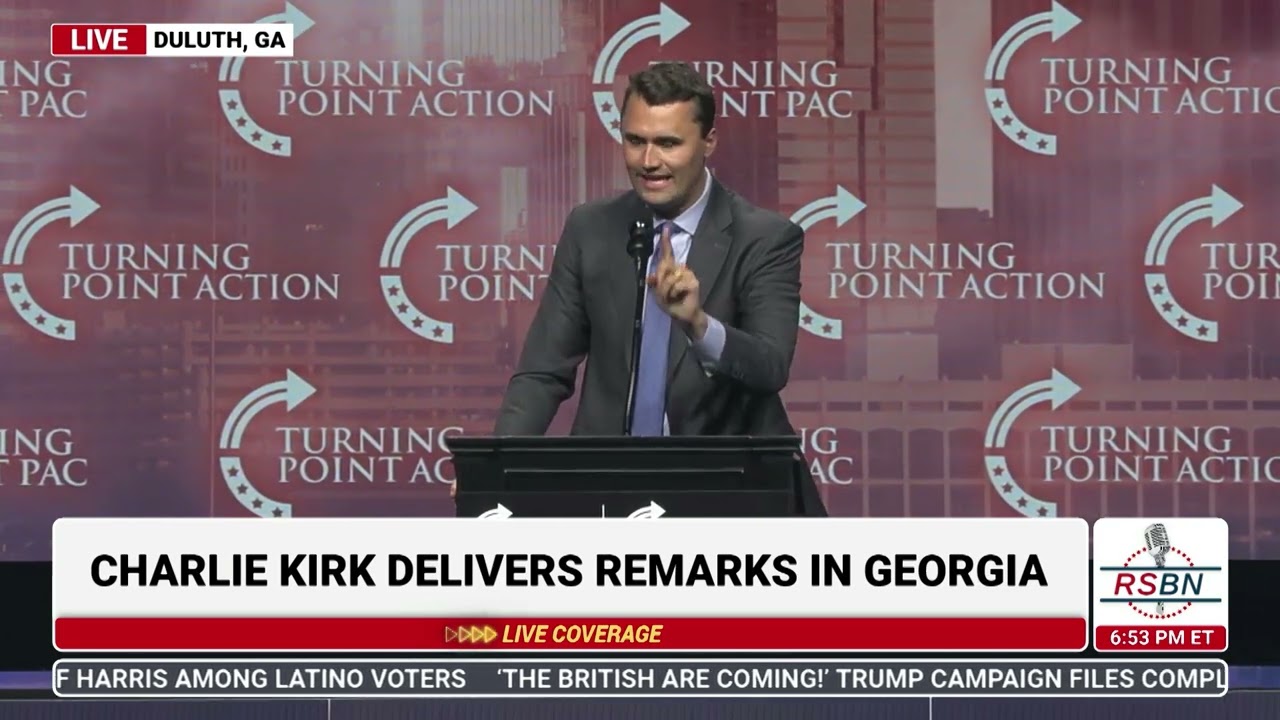
Charlie Kirk is the Founder and President of Turning Point USA, the largest and fastest growing conservative youth activist organization in the country with over 250,000 student members, over 150 full-time staff, and a presence on over 2,000 high school and college campuses nationwide. Charlie is also the Chairman of Students for Trump, which aims to activate one million new college voters on campuses in battleground states in the lead up to the 2020 presidential election. His social media reaches over 100 million people per month and according to Axios, he is one of the "top 10 most engaged" Twitter handles in the world. He is also the host of “The Charlie Kirk Show,” which regularly ranks among the top news shows on Apple podcast charts.
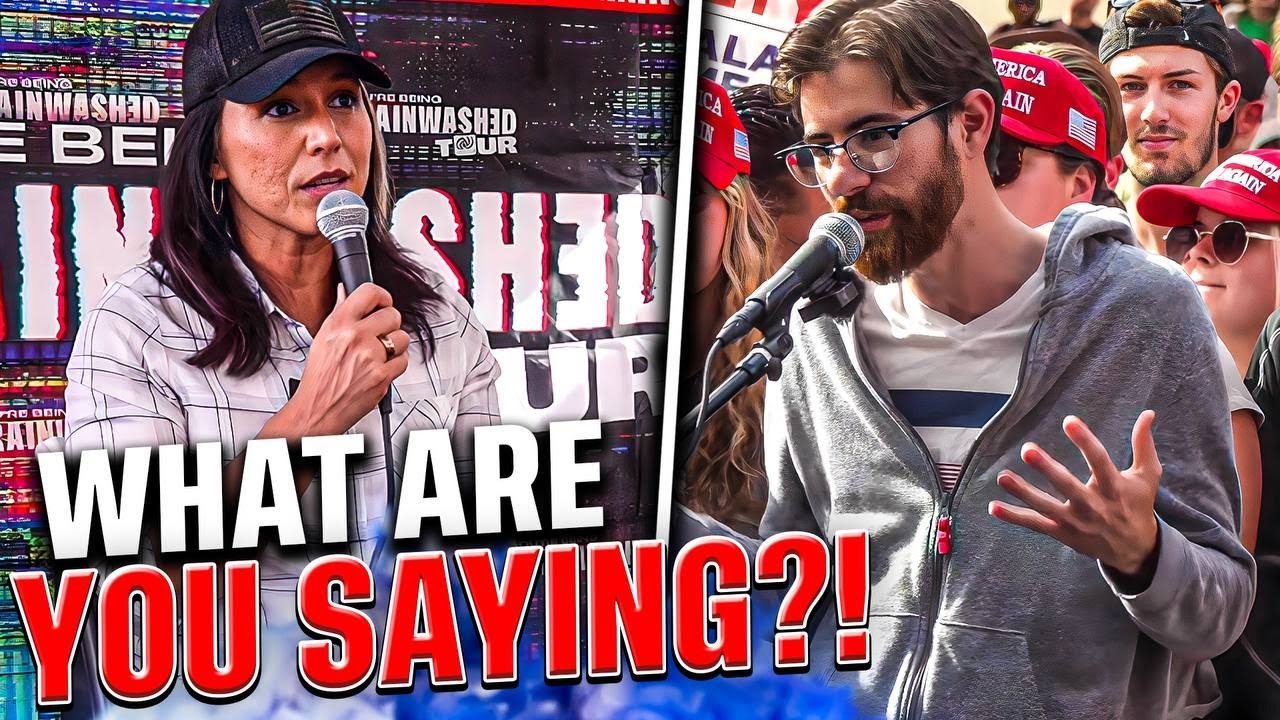
Charlie Kirk and Tulsi Gabbard Rally Tucson Crowd on Election Integrity, Foreign Policy, and America First
Charlie Kirk and Tulsi Gabbard hosted an open mic event at the University of Arizona in Tucson, fielding questions from students and community members about the upcoming election. The former Democratic presidential candidate and current Trump transition team member joined Kirk to discuss topics ranging from election integrity and 2020 controversies to military engagement abroad, corporate influence in politics, and the ongoing crisis in Western North Carolina following Hurricane Helene. The event showcased diverse perspectives as attendees challenged both speakers on foreign policy, Israel-Palestine, healthcare reform, and Trump's positions, while Kirk and Gabbard emphasized their support for an America First agenda that prioritizes peace through strength and ending government corruption.
Charlie Kirk and Tulsi Gabbard appeared together at the University of Arizona in Tucson for an open mic event focused on election-related questions. The format allowed students and community members to approach the microphone and engage directly with both speakers on a wide range of political topics. Kirk opened by acknowledging the surprising turnout of supporters in what he described as a liberal college campus environment, noting the sea of red hats in the audience.
Gabbard, a former Democratic presidential candidate and co-chair of the DNC who now serves on Trump's transition team, joined Kirk in fielding questions that ranged from serious policy inquiries to lighthearted moments. Kirk emphasized that the event represented a moment "bigger than politics" and "bigger than whether Charlie's a conservative or Tulsi was co-chair of the DNC," framing it instead as being about America and defeating forces threatening the country.
Faith and Optimism Amid Political Division
An early question from a young man named Jew, who identified as suffering from anxiety and OCD, asked how both speakers maintain optimism in a country filled with hatred and political division. Gabbard responded by explaining that she finds her hope in God and God's unconditional love. She stated that even in the darkest times, God's love is eternal and provides her with clarity and strength to do the right thing for the right reasons.
Kirk echoed this sentiment, directing the questioner to look around at the crowd as a source of hope. He emphasized the importance of understanding that "there is a God and we are not him" and that God has a plan. As a Christian, Kirk said this manifested in Jesus Christ, and those who give their lives to Christ should not grow tired of doing good and noble things. He corrected one point from the question, noting that the moment transcends conservative or liberal labels—it's about America.
Immigration and Border Security Concerns
A particularly emotional moment came when a U.S. citizen named Aiden, who was raised in Mexico, shared his story of having to drop out of college despite working over a year to secure scholarship funding. His parents want to return to the United States legally, and he came to study as a pathway for that goal. However, he expressed frustration that the school appears to offer more opportunities to those who come illegally than to him as a citizen who has been seeking employment for months.
Kirk called this situation "reprehensible and wrong," stating that people who come to America the right way are punished while those who break the law are rewarded. He explained that illegal immigrants get benefits including taxpayer-funded subsidies, flights to cities of their choosing, and luxury hotels, while Aiden followed the rules and is being punished. Kirk characterized this as a breakdown of justice and fairness, promising that Donald Trump will reward those who follow the rules and punish those who break them.
Gabbard encouraged Aiden to stay strong and keep fighting, assuring him he's doing the right thing in the right way and that he's not alone. Aiden concluded his time at the microphone by declaring his faith in Jesus Christ and predicting His return, having revealed that his entire family is Democrat but that he has "opened his eyes."
Heated Debate on 2020 Election Integrity
One of the most contentious exchanges occurred when a questioner challenged Gabbard on how she could endorse someone who "lost the last election fair and square." The questioner referenced Republican secretaries of state claiming the election was fair, Trump's phone call to Georgia Secretary of State Brad Raffensperger, and the events of January 6th when the Capitol was stormed for the first time since 1812.
Kirk responded by first establishing common ground, asking if the CIA should involve itself in American elections. When the questioner agreed it shouldn't, Kirk pointed to what he described as exactly that happening in 2020. He cited 50 current and former intelligence officials who signed a letter, led by Tony Blinken according to declassified emails, calling the Hunter Biden laptop Russian disinformation. Kirk argued this letter was used to censor discussion of the laptop on social media.
Kirk explained that he had his Twitter account restricted for 30 days and people were not allowed to mention the Hunter Biden laptop. He referenced the Twitter Files released by Elon Musk, which allegedly showed the FBI told Twitter the laptop could not be discussed on their platform. According to Kirk, the Media Research Center found that one out of four voters in swing states would have changed their vote if they had known about the laptop.
When the questioner insisted Trump lost by 7 million votes, Kirk corrected him, stating Trump lost by 42,000 votes across three states in the Electoral College system—approximately 10,000 in Arizona, 11,700 in Georgia, and 21,000 in Wisconsin. Kirk argued that when discussing a CIA and Department of Justice action that impacted information available to voters, this constituted election interference that affected the outcome.
Foreign Policy and Military Engagement
Multiple questions addressed U.S. foreign policy, particularly regarding military involvement abroad and the balance between supporting allies and prioritizing domestic needs. A questioner of Japanese descent expressed concern that Trump might abandon Japan if China becomes aggressive, noting reluctance among Japanese people to fully support Trump for this reason.
Gabbard responded by emphasizing the need for a president who will prevent war through direct diplomacy with both adversaries and allies. She contrasted Trump's approach with Kamala Harris, who Gabbard said has criticized Trump for engaging in direct diplomacy with dictators and adversaries. Gabbard argued this type of engagement is exactly how you prevent war, citing Presidents John F. Kennedy and Ronald Reagan as examples of leaders who successfully used such diplomacy.
Kirk added his position simply: "We should not send another dollar to Ukraine while our border is wide open. Period." This statement received applause from the audience and encapsulated what both speakers framed as the Trump campaign's America First foreign policy approach.
Regarding military service members in combat zones, Gabbard expressed personal frustration that Kamala Harris claimed during a debate that there are no active duty troops in any combat zone anywhere in the world for the first time in a century. As someone who still serves in the Army Reserve as a lieutenant colonel and battalion commander, and who has deployed to three different war zones over the last 20 years, Gabbard called this statement disqualifying for someone seeking to be commander-in-chief.
Corporate Money and Political Corruption
An undecided voter named Angelica raised concerns about corruption and corporate money in government, stating this was her primary issue. She noted that her research consistently shows money being sent to both political parties, and she wanted to hear the argument for Trump from a Republican perspective on this issue.
Gabbard responded by pointing to big pharma as an example, noting that pharmaceutical companies have captured the FDA and other agencies supposed to protect citizens. She stated that the amount of money given to Joe Biden and Kamala Harris from these industries far outweighs by multiples of ten what has been given to the Republican Party. Gabbard emphasized that Trump has spoken directly about this issue in his podcast with Theo Von, specifically regarding big pharma and his willingness to take them on.
Gabbard also pointed to Trump bringing Robert F. Kennedy Jr. into his campaign, noting Kennedy has dedicated his entire life to taking on big industries. She argued this demonstrates Trump is serious about taking government back and putting it into the hands of the people.
When Angelica pressed on the issue, noting that while big pharma gives more to Democrats, oil companies give significantly more to Republicans, Kirk provided additional context. He stated that Trump has said no lobbyists will be part of his transition team, which he characterized as very important. Kirk then pivoted to what he called one of the most important corporate influence issues: the war machine.
Kirk stated confidently that Kamala Harris is outraising Trump 10 to 1 from the war machine. He noted that Leon Panetta spoke at her convention, and Dick Cheney and Liz Cheney have endorsed her. Kirk characterized the "war mongers that gave us the Iraq War and the Afghanistan war" as Harris's senior advisers, arguing that on the issue of people getting rich off the suffering and death of others through wars, Harris is financing her campaign from Halliburton, Boeing, Lockheed Martin, and Northrop Grumman. Angelica acknowledged these were great points and said they would lean her toward the Republican Party despite identifying as a liberal.
Hurricane Helene Response and FEMA Failures
A particularly emotional question came from Ava, who grew up in North Carolina and has a grandmother from Asheville. She described how Asheville has been totally wiped out by Hurricane Helene, with FEMA saying everyone should get $750 to help, but no one she knows has been getting approved. She contrasted this with money going to Ukraine and Israel, questioning where the money is actually going when people can't get $750 from a hurricane disaster and are now without homes.
Gabbard said she was in Western North Carolina about a week and a half after Hurricane Helene went through, expressing that her heart is with Ava's grandmother and family in the area. She described finding people homeless with no clothes, no food, no access to clean water, and dead bodies still being recovered. The previous night, they had a blizzard warning in the mountains.
Gabbard stated that when this question was posed to the White House Press Secretary, the response was to call it "disinformation." She characterized this as them prioritizing other interests ahead of American citizens while criticizing those who dare to criticize their failed response. Gabbard argued this is what happens in dictatorships—those in power identify themselves as the country, and if you criticize them, they call you traitors who are dangerous. She framed this as why free speech and the First Amendment are so important.
Kirk added a pointed comparison: Ava's grandmother could fly to Mexicali, walk across the border, declare asylum, and receive a free cell phone, free luxury hotel, and $10,000, then rebuild her house with American taxpayer dollars while waiting for her asylum date. His point was that if you break into America, you're treated better than citizens who lost their homes in North Carolina, which he called "sick" and "wrong," promising it would end in November.
Healthcare Reform and Food Policy
When asked about Trump's proposed healthcare reform, particularly in comparison to other wealthy countries, Gabbard expressed excitement about the opportunity with President Trump winning because of the people he's chosen to surround himself with. She emphasized that there are no lobbyists for big pharma and big insurance sitting on the transition team to pick cabinet members, calling this a huge difference from any previous administration from either party.
Gabbard pointed to Robert F. Kennedy Jr. sitting in position and already starting to choose people who recognize how broken the "sick care system" is. She said Kennedy would bring about systemic change that puts health and well-being first, not just pushing pills to make big pharma richer, but dealing with root causes of why the country is so sick.
Kirk added that one reason Americans spend more per capita on healthcare is that "we're actively poisoning our kids" in cereal and food. He cited statistics showing that in Japan, 3% of kids at age 15 are chronically obese or overweight, compared to 50% of American kids. Kirk argued this isn't just because kids are moving less, but because of what's in food. He stated that red dye 22 and blue dye 5 should be illegal and are illegal in most other countries.
Kirk emphasized that if we're serious about healthcare, the number one focus should be food, which can be either medicine or poison and is currently poison in America. This creates type 2 diabetes, heart issues, coronary issues, and obesity. He outlined that fixing this requires addressing how studies are published, blowing up the food pyramid, and ensuring lobbies for companies like Kellogg's and Nestlé don't have backdoor access to the White House.
Israel and Middle East Policy Debates
Several questions addressed Israel and Middle East policy, with varying perspectives from audience members. One questioner asked how the speakers could support Trump's strong support for Israel when it seems opposed to American democratic values at times. Kirk clarified an important distinction, asking if the questioner believed in "America only" versus "America first." When the questioner confirmed he believes in America only, Kirk explained he disagrees with that position.
Kirk stated he doesn't believe in America only—he thinks the country should prioritize itself but there's a place for America to be involved in international relations, ending unnecessary wars, and engaging in diplomacy. He characterized Trump's position as America first, which doesn't mean not being involved in other countries, but rather that America comes first always, and then involvement in other countries and spheres of influence can follow.
Another questioner asked about the situation in Palestine, noting that what Hamas did on October 7th was an absolute tragedy that should never happen again, but questioning how anyone can support what Israel is doing in Palestine, particularly with 16,000 children reportedly dead and a whole generation being wiped out.
Kirk acknowledged they wouldn't agree on what Palestine is or where it is, and said he didn't want to spend too much time on the topic as he had debated it for hours recently. He stated that Donald Trump would never have allowed the situation to happen and has made very clear he will bring peace back to the region, pointing to the Abraham Accords between Israel, Saudi Arabia, and the United Arab Emirates during Trump's presidency.
Gabbard added that it's a very complicated topic but emphasized the need to understand the threat of Islamist terrorism, which leaders across the Arab region and in America can agree needs to be defeated. She said Trump showed how this is possible by bringing together different stakeholders, and that's what he'll do again through peace through strength.
In a related exchange, Kirk engaged in a theological and historical discussion about whether Israel is the ancestral homeland of the Jewish people. When a Catholic questioner said he didn't believe it was their ancestral homeland, Kirk asked where their ancestral homeland is then. The questioner said it's not defined and that Jewish history has been that of a wandering people. Kirk responded by referencing biblical history, asking about Joshua, Caleb, King David, King Solomon, Hezekiah, Zechariah, and Nehemiah, arguing that if the questioner was right, then the Bible would be wrong.
Women's Sports and Biological Males
Gabbard took the opportunity during one answer to give a shout out to women's volleyball players at the University of Nevada Reno. She described how these women are taking a stand against biological males in their sport by forfeiting a game. As a Division 1 team, they refused to play against San Jose State, which has a biological male on their team.
Gabbard praised the courage these women are demonstrating as an inspiration, noting they are doing so at their own peril and even against their own university leadership. She said she looks forward to many more teams taking this stand and doing what's right. The audience responded with applause to this statement.
Tax Policy and Inflation
When questioned about supporting middle class tax cuts while Trump allegedly promised billionaires and the top 1% a tax cut at everyone else's expense, Kirk called this untrue, characterizing it as a commercial that Kamala Harris keeps running. He stated that Trump has not promised billionaires a tax cut and in fact executed the largest middle-class tax cut in American history with the Economic Recovery Act of 2017.
Kirk then pivoted to what he called the "hidden tax" that everyone is paying: inflation. He explained that inflation is a tax no one voted for but everyone is experiencing, and it was at record lows under Trump. Kirk made a class-based argument about inflation, explaining that people who have money don't feel inflation because if you own assets—apartment buildings, condominiums, private jets, yachts, stocks and bonds—inflation actually boosts the value of your assets.
In contrast, Kirk argued, those who are renting or whose parents don't own a mortgage get crushed by inflation. He characterized reducing inflation as potentially the greatest tax cut in history because it would increase purchasing power for regular Americans.
Veterans and Homeless Crisis
The final question addressed the homeless population, particularly homeless veterans, and what Trump would do about this crisis that the questioner felt the Biden administration completely ignores. Gabbard responded that the homeless crisis is facing every big city and many small towns across the country.
Regarding veterans specifically, Gabbard said the Department of Veterans Affairs needs a complete overhaul, having become a "money gobbling bureaucracy" that doesn't serve the best needs of veterans, including homeless veterans. She stated that Trump will secure the border so resources go toward getting housing for homeless veterans rather than providing housing, money, and food directly for illegal immigrants.
Gabbard mentioned that Trump has within his first 100-day agenda plans to begin building more affordable housing across the country and deploying resources more toward local communities to decide how best to use them. She added that when you bring down inflation and the cost of energy and improve the economy, the rest of these challenges will have the opportunity to be solved.
Kirk added a moral perspective, stating that while there must be compassion for every American, "the streets are not your home," and a way must be found to treat all people without the streets becoming littered, more dangerous, and areas that depress rather than lift people up.
Video Transcript
how we doing everybody are we ready to make Trump the next president of the United States this November all right we're going to have some fun here and uh as you guys know it's an open mic and also joining us is Tulsi gabber today give it up helloha good to see everybody thanks for coming out look at that sea of Red Hats I love that everybody all right this conversation day we want to keep it focused on the election questions you guys have about that so we really want to stay f focus on that um as you guys know uh this is a lot of fun free speech is respected here on the right and I'll tell you this is pretty amazing to see in Tucson of all places everybody this is pretty great so uh we have a question here from somebody hi hi hi Charlie uh my name is Bryce um that's very loud I wasn't expecting this many people to come here but uh I recently just came out as they them um and I was talking to my guys over there at the white dudes for Harris um and uh we were talking about like who we were voting for and everything so obviously I'm going to be voting for KLA Harris because Taylor Swift is um but this is this was a question that I kind of wanted to ask more in private not in front of all these people but because I identify as they them does that mean I can vote multiple times well have you voted already no I have not well maybe since you that's a legitimate question actually it is tulsy do you want to take this um well I will I will tell you that uh since you haven't voted yet maybe as they them could vote for Trump Vance 2024 okay can I can I vote twice probably not okay then I'm not a they them anymore but I will say though that you can cancel out any of your support with kamla Harris by voting for Donald Trump I will be voting for Trump in 2024 thank you Bryce for your question give it up for Bryce [Applause] everybody all right now how the do I get out of here okay all right hello um first of all all right first of all wow it's crazy to see two of the most two of the most active uh conservatives here and uh uh thank you Mrs tulsy for your service I appreciate it a lot for I appreciate you for defending our country thank you and so um what's your name my name is Jew like the religion but I'm a Christian so uh do you have to say that a lot uh yeah I don't know it's kind of like a signature calling card but that's just me um so for context for my question I suffer from anxiety and obsessive compulsive disorder I've been through a lot in my life I've done done good things and I've done bad things and because of because of my life experiences I have a I have a very bad tendency to catastrophize a lot about a lot of things but more specifically our future and I look on social media and everywhere I go and admittedly fake news but I Go Everywhere I look everywhere and I see a lot of hatred and a lot of division going on from Mostly the left admittedly but it's overall it's just a lot of hatred and division going on and so the question I really want to ask you both is as men and women of America as as religious as religious people and as conser and as political figures what inspires you what inspires you to keep on going and to keep on and to keep on being optimistic in a country that seems to be so full of hate and political division right now first of all it's okay if I record right of course thank you I find my hope in God and God's unconditional love for every single one of us yeah so no matter how dark the days may seem and sometimes there are very dark days and we Face dark times in our future if we don't take action now and in this election but even in those darkest of times where I find strength where I find peace and where I find courage to to be a voice for common sense and the truth and freedom for the for all Americans uh it it comes from knowing that God's love is eternal and that he will give me that Clarity and strength to do the right thing for the right reasons thank you yeah and for me I mean look around you this should give you hope for the future I mean this is supposed to be on a liberal college campus and I I agree with Tuli um we must understand that there is a God and we are not him and that God has a plan and that God loves us and as a Christian I believe that that manifested in his son Jesus Christ and those who give their life to Jesus Christ um and so look we must not grow tired in doing good or Noble things and what an amazing thing and I'll only correct one thing you say Okay um because this is not about conservative or liberal today I consider myself a conservative Tulsi at one time ran for president as a Democrat everybody this is a moment that's bigger than politics that this is now bigger than whether Charlie's a conservative or Tulsi was co-chair of the DNC this is about a America and defeating the forces that want to destroy our country that is what this is all about let's go thank you very much I just want to say thank you for thank you for coming here today thank you J thank you who's up [Music] [Applause] next so uh first off I like to personally thank tossi Gabbert for destroying Harris's 2020 presidential run and so this is mainly towards Charlie cuz I sort of know your views obviously the topic of of uh like foreign involvement US foreign involvement in foreign countries a little contentious with conservatives right now how would you balance supporting our allies and supporting even if it unfortunately means we have to send troops in with how how would you balance that with also uh working on our internal supporting internal our our own people I I think this is actually a better question for Tulsi if that's okay uh this is one of her her passion topics so and Tulsi served and serves uh in our military and so tulsy you want to take that yeah sure I mean this is personal for a lot of reasons I still serve in the Army Reserve I'm a lieutenant colonel and a battalion Commander I've deployed to three different War zones at different times over the last 20 years I have friends who are deployed into combat zones today I know KL Harris is not aware of their existence which is a a a both a sad and disastrous State of Affairs that in and of itself disqualifies her to be our commanderin-chief but I was talking to a friend of mine the other day who lost both of his legs in combat and all of us who raise our hands and volunteer to serve in our military are willing to lay our lives down to ensure the safety security and freedom of the American people what we do not sign up for is politicians who care more about feeding the military-industrial complex and the war machine than they do about our lives but the Safety and Security of the American people's lives what we need what we need are leaders and this is why I've endorsed president Trump in this election who will always make those decisions in balancing you asked a very good question how do you balance uh the need for us to engage and stand with our allies and partners and and put the American people's interest first every decision has to be made within the the context of what serves the needs of the American people first period and that that includes our national security needs that includes our Liberty and our freedom which is often on the line when we are in a state of war the war machine takes advantage of that to try to take away more of our freedom and it has to do with our economic well-being as well if we have a President commander-in Chief who makes every decision about what's in the best interest of the American people we won't go wrong and I'll just say one thing we don't have to over complicate this we should not send another dollar to Ukraine while our border is wide open Period can yes please follow up with Tulsi but I that's my position in one sentence so the reason I asked that is is a little personal because I'm from Japan and obviously the China's been increasingly aggressive and there's a why a lot of Japanese people are reluctant to fully support Trump is they're afraid that you'll sort of throw us under the bus if China drags Japan into a war so uh here here's what I'd say to that and I understand the concern but we need a president who will prevent War right period but period I I agree and the opportunity is there with the right kind of leadership and this is a huge point of difference between President Trump and kamla Harris Kam Harris has criticized president Trump for doing what we should expect our leaders to do which is to engage in direct diplomacy whether it be with dictators or adversaries opposition as well as friends and partners because that's how you pre that that is how you prevent War yes it is strength it is peace through strength but that's not just through the buildup of military hardware and capability that's through engaging in the kind of leadership that we've seen in President John F Kennedy that we've seen in President Ronald Reagan and that we saw in president Trump's first Administration thank you so much God bless you thank you all right people who have election related questions disagreements for Tulsi and I come on to the front of line guys or just uh we can keep going so it's open mic thank you hello what's your name uh my name is aen um I I am a US citizen but I was raised in Mexico um I came here cuz my parents one day want to come back but legally you know they want to do it the in the right way and by coming here to school it was going to be an opportunity but the school looks like it's going to give more opportunity to people who don't come here legally instead of me who I I am a citizen and I am I've been working for a year over a year to get my scholarship nothing came back so today I had to drop out of college sadly and how is it possible that I have to go back to my parents in Mexico and trying to look for a job there when I've been looking for months here in the United States as a citizen to fight for my rights to get a job and get an income here just so my parents can come back in the right way and also my family is fully Democrat I am here opening up finally if they see me over there if they see me over there I'm sorry for you but I've opened my eyes I've opened my eyes you thank you I'd love your thoughts on this tulsy but I'll say this it is reprehensible and wrong that the people that come here the right way are punished and the people that come here the right the wrong way are rewarded that is wrong the people that cut in line get benefits they get taxpayer funded subsidies they get flights to the city they're choosing they get luxury hotels where you came here the right way you followed the rules and you are being punished it is a breakdown of justice and fairness and Donald Trump will not put up with that he will say if you follow the rules you'll be rewarded if you break the rules you will be punished that is what Trump will do as president thank you so much I just want want to encourage you and tell you to stay strong don't give up keep up the fight you are doing the right thing in the right way and know that you're not alone thank you one thing one thing Jesus Christ loves you all he will come back one [Applause] day God bless you what a great Soul okay uh I thought we had a disagreement maybe if not are we can just keep going no okay uh Jesus Christ is my Lord and Savior and uh my name is Christopher uh I had a lot of questions a lot of debates in the crowd uh today uh but my main question would be sorry would be um how do we start having conversations in the workplace without infringing on you know the rules of work but still be able to make it friendly because I used to work at a job where I would bring up you know uh conversations about border and and um immigration and uh abortion and stuff and I would make people aware would give them factual news information but then they all turned on me all of a sudden one day and I didn't understand how you could go from smiling in your face to stabbing you in the back the next day and how do we cultivate a more friendly atmosphere in our in our Workforce where we're mostly at majority of our life I mean the first amendment is the first amendment I think when you're having these conversations what I have found even when I meet with people who come into the convers ation ready for a fight M when you listen first and if they are communicating in good faith then you can have a true and real conversation that is based on respect you can respect where someone's coming from even if you disagree with them right and then share your own experience share your own thoughts share what's on your heart with them and again if it's a good faith conversation then it will it will flourish from there if they're not interested in having a conversation it's not worth confronting yeah yeah thank you so much appreciate it thank you God bless you thank [Applause] you hey so I'm currently undecided yeah just try to talk right in the mic okay gotcha so I'm currently undecided in the election and so my main issue that would be the turning point for me in voting for Trump over K Harris would be um essentially just corruption and corporate money in government which is my biggest issue by far and from all of the research I've done it seems to consistently point to the same of money being sent to both political parties so I'd like to hear your argument as a republican for voting for Trump in that regard I mean I can tell you uh I I don't have the actual numbers on the top of mind but I'll take big Pharma as one example their capture of the FDA and so many of these agencies that are supposed to be looking out for us are actually looking out for big Pharma and when you look at the amount of money that's been given to Joe Biden and KLA Harris it far outweighs by many multi IES of 10 how much has been given to the Republican Party first of all second of all Trump has spoken to this specific issue directly in his podcast with Theo Von specifically about big Pharma and his willingness uh to take them on President Trump isn't looking for handouts from Big corporations at all uh he's shown that he is ready to take on uh not only through his own actions by bringing people together like Bobby Kennedy who's who's dedicated his entire life to taking on these big industries that had that he is serious about taking our government back and and putting it back into the hands of the people right so um I understand that but to me there's just two sides to this from what I've seen it tends to be that yes like you said big Pharma does give a significantly larger money amount of money to the Democratic party but from what I've seen companies like oil companies for example will give a significantly larger amount to the Republican party so in my mind it honestly just seems like a choice between which corporations I'd rather win and I'm just not a big fan of that okay so let me a couple things though Trump has said that no lobbyist will be part of his transition team which is very important so the person you know who is Tulsi Gabbert is part of his transition team and I just want to brag on Tulsi for a second Tulsi ran for the president as ran for president as a Democrat and was the co-chair of the Democrat National Party um she wrote an amazing book that you got you should check out and read where she saw not just the corruption from corporations but how corporations have merged with government and then are repressing our Free Speech rights so you look look at what the Democrat Party has become they are Shameless in wanting the FBI and the Department of Justice to try to interfere on their behalf to try to get a specific result where Donald Trump is the victim of that sort of administrative State lawfare persecution secondly and I think this is a really important thing is and I'd ask you um what what issue would you say is the most important to make sure that corporate influence is diminished maybe foreign policy like War would probably be a big one right I could say confidently and it's not even close KLA Harris is outraising money 10 to1 from the War Machine versus Donald Trump she had Leon Panetta speak at her convention Dick Cheney and Liz Cheney have endorsed her the war mongers that gave us the Iraq War and the Afghanistan war are her senior advisers now of her Inner Circle and so I will say that you're never going to find a perfect candidate with the issue you care about because unfortunately you have to raise a lot of money to be able to compete however on the issue that I think is one of the most important are people getting rich off the Suffering The the death of others through declaring and invading Wars it's not even closed KLA Harris is financing her campaign from halberton from Boeing from locki Martin and northop Grumman right so I definitely understand that that's a great argument um I get that they do have to raise money and I would say that yeah my biggest issue would be in terms of war and big farmer specifically like she was talking about so yeah that would end up leaning me towards the Republican Party despite myself being a liberal so um yeah I think those are some great points thank you thank you you for thank you so much really appreciate it about questions thank you thank you give it up for him that was a great in faith question wasn't it was great okay uh disagreements or just questions in general yeah come on up uh anybody sure yeah good afternoon thank you for your service Miss gabard for anything um I just have one question related to the uh to the election for you how can you endorse someone who lost the last election fair and square there's no [Music] evidence let him finish guys Republican secretaries of State claimed it was fair Trump tried to leverage the Georgia Secretary estate Brad brensberger he to Def find me 11,700 votes he has no respect for losing in our system and it I mean what happened on January 6th happened on January 6th a disaster our Capital our Capital got stormed for the first time since 1812 you people claim the love America like how does that not fire you up you're brainwashed all right so let's it's it's a fair question so let's talk through a couple elements of this first um do you think the ca should involve itself in American elections no okay so it did in 2020 show me proof okay okay well tulsy gabard knows this you could tell you 50 Intel officials colluded led by Tony blinkin due to Declassified emails signing an open letter calling the hunter Biden laptop Russ why why weren't any of the lawsuits Su I did not inter on raised plenty of them hold on a second I didn't interrupt you right so let me finish 50 Intel officials current and former signed a letter that was used to censor on social media the fact that there is a laptop owned by Hunter Biden that showed very suspicious and criminal activity by both Hunter and Joe Biden according to the media Research Center one out of four voters in swing States would have changed their vote if they would have known about the hunter Biden lapt that's an utter ridiculous statement to make well I just I just cited it he lost by 7 million votes hold on no no he lost by 42,000 votes across three states hold on pal how much did he lose Arizona by okay no no hold on how much did he lose this state by it's it's not about the final score it's a winner and a loser he lost that's how our system works we have an electoral college system so so got the Al votes no of course Biden did but what was the margin in Arizona I don't know 10,000 not in the back of my head yeah so how how much in Georgia it was 11,700 that's they told grab to find them in Wisconsin Republican who denounces them and in Wisconsin it was 21,000 right so it was actually 42,000 not 7 million so when you're talking about the CIA and the Department of Justice signing a letter that was then used to I I did not have my Twitter account for 30 days we were not allowed to mention the hunter Biden laptop violated a private company's privacy well no actually I didn't actually no because of the Twitter files than Elon Musk we now know the FBI told Twitter to say you are not allowed to mention hunb laptop am I correct in this Tulsi that's correct so you don't trust the FBI at all people who have devoted their life to civil service that's a red herring I'm saying in that instance yoel Roth do you know who yoel Roth was I don't know who y Ro yoel Roth was the head of security trust and safety for Twitter that had a standing what's called a standing room meeting every Tuesday with the Federal Bureau of Investigation in San Francisco where they met about Russian threats to American interference of Elections and they said this laptop is not allowed to be discussed on your platform that impacted our election people made their decisions differently in 2020 not knowing the full picture that this laptop existed and that was the October surprise so you would agree that that's not a fair elction think the laptop would would have flipped the election for it well we're talking about 42,000 votes in three states and I already cited a study that one in four swing voters would have Chang study by who the media resch Thomas is WI a bagel buyer like who funds these I I just I just said by by the independent nonpartisan media Research Center where they said one out of four voters would have changed their opinion so I just want to make sure we're clear though you agree our government should not interfere with our elections well they they have to regulate them by Nature that's the states have to otherwise you wouldn't have an election because you need rules said interfere interfere so should the federal government be able to restrict our speech during elections have what happened in 2016 where Russian disinformation spreads all over Facebook and other platforms then you have a lie's not a lie it was not a lie read the Mueller report another Republican realized the Mueller report found that there was no tangible collusion between Donald Trump or the Russian it wasn't about but it wasn't just a collusion thing it's a 430 page report he find Common Ground here okay I want to try to find Common Ground can we agree that 2020 was decided by very few votes no CU it wasn't well 42,000 votes is very few right no so what is the percentage of 42 it's not it's not about George Bush and Al Gore were as close as ever in 2000 Al Gore conceded said you know what I lost there might be a challenge because he cared about the good of the country you know Al Gore brought it all the way up to the Supreme Court man and he said that Bush was not the do he and he could have gone further because how he go further than the Supreme Court the the Supreme the Supreme Court sent it back to judge in the Florida state supreme court again and Gore said no I'm not doing that just move on Bush as the president for the good of the country CU people used to care about about our country no and I of course are you trying to imply Trump doesn't care about the country yes that's absolutely what I'm implying you think bullet for the country you think you think he sits in his Gold Room in Trump Tower and thinks oh how can I make things better for Country every go so let me ask one thing and I'd love to have telsey just help me understand so his business Empire has been taken away from him he's facing he broke the law let me can I finish my thought he's finishing 7 he's facing 700 years in federal prison he's been shot once with multiple assassination attempts why keep running for president if he doesn't love the country because a 100 years from now in a history textbook it's going to say Donald Trump's name and that's what motivates narcissists [Applause] what okay look I I will say this I I hope you do some research because I've done my research you need to do your research you clearly have it man C look I I will say this as kindly as I can um one day I hope you open your eyes because you've been significantly brainwashed on this topic and and I guess the final question I'll ask is this if Donald Trump wins in 3 weeks will you accept that as a legitimate result yes okay I'll hold you that that's the difference between me and you okay was did Trump win in 2016 yes but you said that Russian interfered Russian interference had a role in the election but Trump won fair and square he had more votes and more and notice how Hillary notice how Hillary supporters didn't storm the hold on Hillary never conceded she yes she did she had a concession speech the day after the election I watched it middle SCH Hillary Clinton said Donald Trump was not the legitimate president United States that's one milked clip that is played all over the Internet yeah she had a concession speech when's the Trump concession speech in 2020 show to me let me ask one more question are you voting for KLA Harris yes I am proudly what what's her greatest accomplishment her greatest accomplishment um I would I would say that she's going to she's going to legalize marijuana federally something that's been overdue by 100 years marijuana she jailed people in marijuana she jailed thank you she said [Music] it I have a question I uh took one hour to listen to kamla Harris and my question is this the president of the United States has to make Command Decisions that's 80% of his job to or her job to make Command Decisions could you explained have you ever seen any evidence that Camila Harris excuse me vice president Harris I'm not sure what what the name is can make Command Decisions has anybody has any evidence that she can make Command Decision that's 80% of what the president of the United States does have a hat no no is the answer to that uh we we saw again I mentioned uh earlier it hit close to home when she looked into the cameras during that debate and spoke to tens of millions of Americans and made a statement about the fact that according according to her we have no active duty troops in any combat zone anywhere in the world for the first time in a century this is coming from a person who claims to sit in the situation room and be the last person in the room with Joe Biden in every major decision this is coming from a person who President Biden says that he delegates all domestic and foreign policy issues to her because of his confidence in her and yet our lives are not valuable enough to her for her to know how many men and women or that there are men and women in har way today who are serving our country I have seen zero proof over these last three and a year three and a half years that she is qualified and capable of leading our country as president commanderin-chief and if she's elected we will face World War III and potentially nuclear war McDonald yes uh uh I have a question about what's going on in the Middle East um you stated earlier that you want to stop sending money to Ukraine until we can fix what's going on in our country uh why what Will trump do to stop what's going on in Palestine obviously what happened on October 7th what Hamas did is an absolute tragedy it should not happen ever again but how can we stand here and support what Israel is doing in Palestine what it doesn't justify each other we can't say that oh it's because of what Hamas did cuz what Hamas did was inherently evil but isn't Israel doing the same thing uh there is you know there's so many hostages that have been taken by Hamas but 16,000 kids are dead in Palestine so it's like how can we how can we even say they're going after Hamas if there's a whole generation of people getting wiped out yeah I don't want to spend too much time on this I literally debated this for hours the other day but yeah a couple things um we're not going to agree on what Palestine is or where it is I don't want to get into that but we're not going to agree on that um Donald Trump would never have allowed it to happen and Donald Trump has very clear that he will bring peace back to the region cuz when he was president there was peace as we had the Abraham Accords between Israel Saudi Arabia and the United Arab Emirates no one wants to see kids die okay I don't want that you don't want that uh we want to see a quick and decisive reconciliation happen in the Middle East do you have thoughts there Tulsi it's a very complicated topic it is the the only thing I'll add to that is we have to take a step back and understand the threat of islamist terrorism and that is something that leaders across the Arab region and those of us in this country can agree needs to be defeated president Trump showed how that's possible by being able to bring together all of these different stakeholders and that's what he'll do again but like what in what way will he be able to tell Israel to stop or tell Hamas to stop well look again um exactly peace through strength what he exhibited as president is that look America gets what America wants in the world still and if we want peace the Middle East we're going to get it and we're the global Reserve currency status Saudi Arabia will do what we want here's what's happened though since um kamla Harris and Joe Biden never on the country we see we see the rise of bricks Nations we see America's strength actually erode and Fade Away we need to use the leverage that we have towards peace currently we use the leverage we have towards War thank you very much I appreciate it thank [Applause] [Music] you all right yes next hi my name is Ava and I've grew up most of my life in North Carolina and my grandma she's from Asheville and recently from Hurricane Helen Asheville has been totally wiped out no one's getting money and FEMA is saying that everyone's supposed to get $750 to help but everyone I know hasn't been getting approved but all this money is going to Ukraine Israel I just want to understand like where is this money going to and how come like we still have so much homeless population here our roads are horrible here but we can't get $750 from a hurricane disaster and now people out of homes so I would just like to know where that money is actually going I was there in uh Western North Carolina about a week and a half ago shortly after Helen uh went through there and my heart is with your grandmother and any of your family that still remain in the area I have friends who are both still actively serving and taking leave to go help out there as well as many veterans who are going to small towns that no government entity has touched yet last night they had a a a blizzard warning there in the mountains they've got got people who are homeless who have no clothes no food no access to clean water and dead bodies that are still being recovered unfortunately the headlines have moved on your question is the most important question when this was posed this very same question was posed to the White House Press Secretary you know what her response was this is disinformation the question is disinformation the problem with this is they are prioritizing other interests ahead of the interests of our fellow Americans your family and so many other friends and family who desperately need help right now and if we dare criticize their failed response that is resulting in people getting sick and potentially dying in the aftermath of Helen they criticize us for disinformation this is what happens in dictatorships those in power identify themselves as the country and if we dare criticize them they then call US traitors who are dangerous this is why free speech is so important this is what the first amendment is all about and this is why we it's up to us to hold them accountable otherwise they're they're going to continue to put the American people last and I I'll just close with this um you have family in Western North Carolina um my grandma grew up in Asheville and I've been there most my so there's an easy way she can get cash you ready she should fly to Mexicali walk across the border declare Asylum she can get a free cell phone free luxury hotel $10,000 $10,000 bucks and all the US taxpayer dollars and then she can rebuild her house with American taxpayer dollars while she waits for her Asylum date what I'm getting at is that if you break into America you're treated better than the citizens of this country who lost their homes in North Carolina it's sick it's wrong and it ends in November everybody [Music] yes in such a polarized political environment it feels like a real conversation has taken a backseat to Virtue signaling and winning the argument how do you think we can bring the focus back to meaningful debates where both sides listen and engage respectfully even when they disagree to I'd love to have you answer this because you dealt with the lack of the culture of freedom of speech on the way yeah come in and listen first uh I I have so many different examples I could give you but there's one in particular when I was running for president I was in a small town in Iowa and went to go meet with the newspaper editor there I did it in every town that I went through and I walked in knowing that he wanted to fight and the issue that he wanted to fight about was climate change he wanted to prove that he was right and I was wrong even though he didn't really know what my position was I listened to him I listen to his points and then I asked him do you care about clean water do you care about clean air he came from a long line of farmers I said do you care about having good soil quality so that your kids can continue to farm as your your father and grandfather did I care about those same things I never used the word climate change at all and we found Common Ground about these things that we uniquely cared about me growing up in Hawaii and him growing up in Iowa when we are willing to listen and engage in good faith we can find those moments of common ground that will allow us to have those meaningful conversations around the things that are most important to all of us God gave us two ears in one mouth we should listen more and hear what people have to say thank you thank you yes I want to invite any disagreements you guys more than welcome here uh thank you yes next question yeah hi i' first just like to give a huge uh welcome and thank you just thank you guys for being here uh on behalf of the University of Arizona thank you and all the students here as I represent a the student body right so um I just I I I watched the ovon last night and it was a podcast with with Bernie on that and he uh for the first like portion went over healthc care Reformation in our in our country uh with some comparative analysis to other countries that are in the same bracket of uh wealth and GDP so I just was wondering maybe because I have a poor understanding of um Trump's maybe uh proposed structure to optimize what I think is a necessary healthare Reformation I'll start yeah I'll start with this and this is where I see huge opportunity what I'm really excited one of the things I'm excited about with President Trump winning is because of the people that he's chosen to surround himself with number one as as Charlie said there are no lobbyists for big Pharma and big Insurance sitting on the transition team to pick who is going to fill his cabinet that's a huge difference from any previous administration from either party yeah they're the biggest LOB Kennedy who is sitting in position and already starting to choose people who recognize how broken Our Sick care system is and bring about the deeply uh the the systemic change that we need to see that will actually put our health and well-being first that's not just about pushing pills on people to make big farmer richer but actually dealing with the root causes of why our country is so sick and why how we can improve life for the American people tulsi's exactly right the re one of the reasons not the only reason we spend more per capita on Healthcare is that we're actively poisoning our kids in what we put in their cereal in their food and the corporations are poisoning us Donald Trump putting Bobby Kennedy into the administration and on the transition team will be one of the greatest steps forward in protecting American Health for example in Japan 3% of kids at age 15 are chronically obese or overweight 3% 50% of our kids are chronically obese or overweight by the time they're 15 and it's not because just they're moving less it's because what's in our food we red Dy 22 blue Dy five from what is in our food should be illegal and is illegal in most other countries so if we are serious about health care the number one thing we should focus on is the thing you put in your body more than anything else food food can either be medicine or poison and it's currently poison in our country which then creates type 2 diabetes heart issues coronary issues obesity overweight so how do we get that it's a long project you need to fix the literature on how we actually publish studies blow up the food pyramid and make the lobby for Kelloggs and Nestle not have a back door into the White House thank you thank you good all right hello thank you for having me my name is Luke Wilson uh I had a question since you guys seem to push Donald Trump's candidacy a lot uh especially because of his America First policies which I think we all agree with we're all tired in this country of uh feeling like we're getting pushed down uh my question was however is how do you guys reconcile with the fact that uh despite so many American first policies and sort of speeches he gives he still very adamantly supports Israel a country which at times seems to be opposed with our Democratic Values so uh this is the third Israel question I think we've exed question though yeah again but what did I say in the other two questions well what about it how you I'm not going to keep answer the same question I'm asking how do you reconcile with the fact that Donald Trump is so America first but at the same time he has a contradictory let me ask you a question is he is America First America only yes oh see I disagree I don't believe in America only you do yes okay so I disagree I don't believe in America only I think we should prioritize ourselves but I think there is a place for America to be involved in international relations I think there is a place for us to end Wars unnecessarily and be involved in diplomacy so you you believe in America only Donald Trump believes in America first so don't conflate the two America First does not mean we will not be involved in other countries other Affairs it means we come first always and then we can start involving ourselves in other countries in other areas and spheres of influence exactly but we can't we don't have we're not putting America first and then trying to help Israel okay but we agree Israel first I what Trump has said is he said you stop fornate until our own border is secure and our people at least have some stability and some way of life we've said that in the last couple questions okay now I will just ask a question about Israel though which I think is a moral clarifying issue do you think the Jewish people have a right to their ancestral Homeland I don't think it's their ancestral Homeland see so now okay so this is the reason why we have a disagreement where is their ancestral Homeland then uh it's not defined so it's not for for a long time their history has been wandering people okay so again the lion was given to them by Great Britain after World War II okay so that I'm not going to go into like do you know know Joshua and Caleb and what happened like 5,000 years ago yes okay so that's Canaan the land of milk and honey Jude and Samaria so in order for you to be right that means that the Bible is wrong so are you a Christian I'm Catholic yes okay so then do you believe the Bible yes well then is the Bible right or the Bible wrong the Bible is right okay so then hold on a was King Hezekiah where was he how about King David King Solomon I was how about Zechariah Nehemiah where did they operate the borders defined today were defined by Great Britain and well not necessarily actually because it says in the scriptures all the way to the north of Nazareth to the north touch of the Jordan River to the southern tip of what is now Mount Carmel so that's actually the border is very similar to Modern Israel we're not going to agree on this but I believe the Jewish people have a right to their ancestral Homeland you you don't even know where that is and so well if you whether or not we agree on that is not the issue it actually is the issue the my what I'm saying is is I could really care less it doesn't really affect peace in the Middle East does not affect America in the way that a lot of people does but if we if we must have it if we must have it Israel is not doing a good job in helping us with that as they're dragging us into a war with Iran instead of negotiating you're looking at two people that definitely don't want a war with Iran I just asked a simple moral clarifying question and we disagree and that's okay Donald Trump believes in America First not America only and that is a very important moral distinction thank you very much I appreciate it how we doing my name's my name is Matt um I just have a quick question um so going into the next election uh we're picking the lesser of two evils it's always been that way cuz Jesus Christ has never been on the ballot and um my question to you is what are some uh policies you can educate myself and everyone here with that Trump's going to put into place and what is your favorite policy uh I can start and then Tulsi can go um he will end the Russian Ukrainian War blessed are the peacemakers he will secure the southern border and restore sovereignty no tax on tips no tax on overtime no tax on social security no men and women sports establish energy and depend booming economy middle class tax cut and one of my favorites what I think is so incredibly important he will end the weaponization of government against political opponents and we will not live in a country where you go to jail just because you have different ideas those are just some off the top of my head and tsy can continue thank you I I think you covered the greatest hits Charlie I just want to take the opportunity to give a shout out I was in Reno last night uh at a University of Nevada Reno women's volleyball game these women are taking a step stand against biological males in their sport they are forfeiting a game they are a D1 team forfeiting a game because they refuse to play against San Jose state that has a biological male on their team the courage these women are demonstrating are an inspiration and we look forward to many more of these teams taking a stand even at their own Peril even against their own University leadership and standing up and doing what's right thank you and thank you so much and uh I'll just say one final thing it's very important that people of faith view the election the way you did it is a a lesser of two evils always but there is one that is better and that one that is better fit towards our worldview and that is Donald Trump thank you so much appreciate it Latinos for Trump hi I have a question for Charlie you said you support middle class tax cuts but Trump promised billionaires in the top 1% a tax cut inevitably at the expense of everyone else how does this not contradict your views okay thank you what's your name Angelica uh thank you for the question so that is not true that's just a commercial that kamla Harris keeps running and I'm and that's okay uh Donald Trump has not promised billionaires a tax cut in fact what he has done is he actually executed the largest middle- class tax cut in American history which was the economic Recovery Act of 2017 but more important than that what is the hidden tax that all of you guys are paying every single day inflation inflation is the tax that no one voted for but all of you guys are experiencing inflation was at record lows under Donald Trump how many of you guys are suffering under inflation right now and you are too and so inflation actually makes you poor but let me tell you people that have money they don't feel inflation you know why if you own assets inflation is actually very good for you if you own apartment buildings Condominiums private jets Yachts stocks and bonds inflation actually is a way to boost the value of your asset you know who gets crushed by inflation for those of you that are renting for those of you who parents that don't own a mortgage you guys get crushed by inflation so I love the question and I know that it's coming in good faith I will just say that it's not true When Donald Trump reduces inflation on day one it will actually be the greatest tax cut in history because you guys will have increased purchasing power thank you okay so first I want to thank you guys for coming out here I appreciate what you do thank you for your service tulsy um so I just want to ask right what I'm already voting for Donald Trump I'm just putting that out there but what is he going to do about the homeless population and especially with the veterans of this country I think it's terrible how the Biden Administration just ignores it completely you know you know what I mean so uh yeah I mean the the homeless the homeless crisis is facing I think every big city and and many small towns across the country um there's a few quick things I'll hit on you mentioned veterans specifically uh the Department of Veterans Affairs needs a complete overhaul it has become a uh money gobbling bureaucracy that does not serve all of the best needs of veterans including homeless veterans one of the things that Donald Trump will do is secure the border and make it so that resources go towards getting housing for homeless veterans rather than providing housing and money and food directly for illegal immigrants uh he has within his first 100 day agenda to begin to start to build more affordable housing across our country and deploying those resources more towards local communities to be able to decide how best to deploy those resources uh there's a lot of other things when you bring down inflation you bring down the cost of energy you improve the economy the rest of these challenges uh will provide the opportunity to be solved yeah and I'll just say one thing from a moral standpoint we must have compassion for every American with that being said this streets are not your home and we must find a way that we can treat all people without the streets of our cities becoming littered more dangerous and quite honestly uh areas that depress us not that lift us up thank you very much 100% can I get a hat thank you