A Message to the First Generation Facing Decline
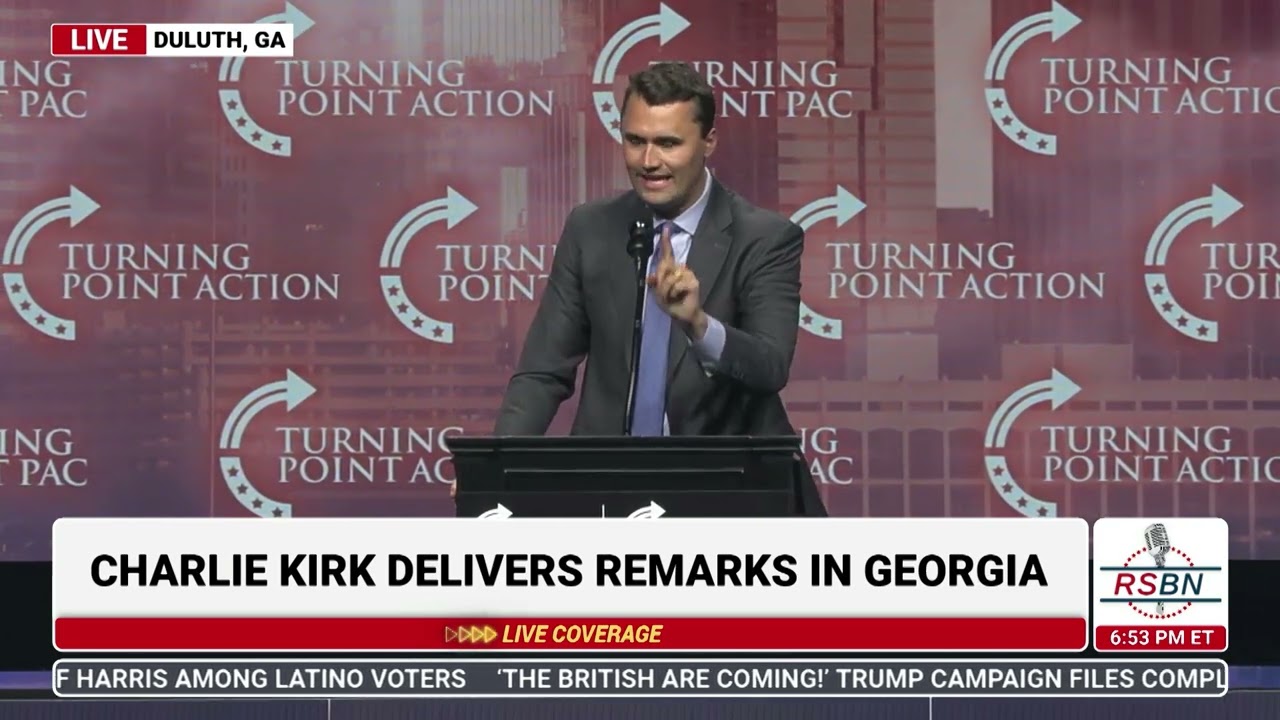
JD Vance opened his remarks at High Point University with a stark warning for the room full of college students: they should be angry. Not angry in an unfocused way, but specifically upset about being the first generation in American history unlikely to own homes, earn family-supporting wages, or accumulate wealth rather than debt. Speaking alongside Charlie Kirk at a Turning Point USA event, Vance argued that this dire situation wasn't inevitable—it was the result of deliberate policy choices made by a failed generation of political leadership.
The event came on a whirlwind day for Vance, who had just completed a nearly four-hour interview with Joe Rogan that was set to drop the same afternoon. Despite visiting three states in one day and maintaining a grueling campaign schedule, Vance took time to engage directly with students at High Point, a university in North Carolina—a state he noted has over 120 colleges and universities filled with Gen Z voters who will determine the election outcome.
Kamala Harris: An Empty Vessel for Failed Ideas
Vance drew a sharp contrast between Kamala Harris and even political opponents he disagreed with, like Barack Obama. While he had many policy disagreements with Obama, Vance acknowledged that Obama at least had genuine beliefs about how to govern America. Harris, he argued, does not. She represents an empty vessel for whatever prevailing ideas dominate Washington DC, and those ideas are particularly harmful to young people.
When asked about her policy proposals, Harris consistently deflects to talking about her middle-class upbringing rather than offering specific solutions. Vance pointed out that he too grew up in a working-class family, but that personal biography isn't a substitute for actual policy. The three prevailing Washington ideas that Harris embodies are especially damaging to young Americans: using them as "cannon fodder for foreign military misadventures," allowing millions of illegal immigrants to undercut their wages and compete for jobs, and pursuing policies that have driven housing prices up 45% in North Carolina alone.
The Housing Crisis and Illegal Immigration Connection
When student Rowan asked about the housing crisis and strict zoning regulations, Vance outlined a comprehensive approach to making homeownership affordable again. The solution involves multiple components: reducing energy costs through drilling, cutting federal regulations that make construction expensive, and fundamentally addressing illegal immigration.
Vance explained that no matter how many homes America builds, if the country continues allowing unlimited illegal immigration, those immigrants will occupy houses that should go to American citizens. This isn't theoretical—it's visible at both national and local levels. Where illegal immigration surges, housing prices spike. He contrasted this reality-based approach with Harris's proposal to give $25,000 to home buyers, which he argued would simply increase housing prices by $25,000 without increasing supply.
The Harris plan has an even more troubling detail: it would extend that $25,000 not just to American citizens but also to people in the country illegally. Meanwhile, her policies ensure that housing costs would rise by $35,000 to $50,000, meaning Americans would still lose even with the government check. Trump's approach focuses on actually lowering costs rather than covering them up with handouts.
Energy Policy as Economic Foundation
Vance repeatedly emphasized that energy costs drive virtually every other cost in the economy. When diesel fuel increases 45%, groceries delivered by trucks become more expensive. When gasoline costs more, lumber delivered to construction sites becomes pricier, making houses more expensive. The solution is straightforward: "drill baby drill."
This means reducing regulations on the energy sector, building pipelines to transport energy efficiently, and unleashing America's natural resources. The benefits are twofold: creating good-paying jobs in the energy sector while simultaneously making everything cheaper for consumers. Whether buying groceries, clothes, or homes, everything becomes more affordable when energy is abundant and cheap. This represents a core principle of Trump's economic policy that Harris fundamentally opposes.
Tariffs, Tax Policy, and Rebuilding American Manufacturing
When student Julia asked how the Trump administration would improve the economy for twenty-year-olds, Vance started with a joke about growing up in a working-class family before diving into specifics. The current American tax code rewards overseas investment while penalizing domestic investment, which means fewer factories and businesses built in America, less technological innovation, and lower wages for workers.
From the 1950s through the 1970s, American workers received consistent pay increases year after year. From 1980 onward, that stopped—with one four-year exception: 2017 to 2020, when Donald Trump was president. Trump made it easier to build in America and harder to build overseas, which is why workers finally saw real wage growth again.
Vance explained how tariffs actually work, countering the Harris campaign's claim that they're simply a tax. When an American business decides whether to build in China or America, China offers $3-per-day slave labor while America requires middle-class wages. Vance argued this is good because he wants Americans to earn good wages, but it requires penalizing companies that choose Chinese slave labor. A tariff is that penalty—when companies try bringing Chinese-made goods back into America, they pay a tariff. This protects middle-class American jobs and encourages domestic investment.
The Threat of World War III and the Draft
When student Brett asked about potential war with China and the possibility of a draft, Vance gave perhaps his most sobering answer of the event. He stated clearly that he doesn't believe it's an exaggeration to say America is sleepwalking toward World War III—a war that could require drafting people in that very room.
Looking at history, Vance noted that Russia invaded sovereign nations under George W. Bush, Barack Obama, and Biden-Harris, but not during Trump's four years. The reason wasn't just strength but also smart diplomacy. Trump was willing to engage with adversaries, even bad people, because effective diplomacy requires talking to everyone, not just allies. Despite media attacks, Trump sat down with North Korea's leader after North Korea threatened Hawaii with an ICBM in early 2017. After that meeting, the threats stopped completely.
Prevention is the best way to stop a war. In the South China Sea, that means making a Chinese invasion of Taiwan as costly as possible by ensuring Taiwan has enough weapons to defend itself. Unfortunately, Harris's policy of sending massive resources to Ukraine has depleted what's available for Taiwan, actually making Chinese invasion more likely. By defending Ukraine the way the administration has, they've made war with China more probable. Terrible world conflicts almost always come from incompetent leadership rather than evil leadership—people who don't think through second and third-order consequences.
Campus Safety and the Gang Takeover of American Communities
When Paige, a graduating senior considering moving to New York City, asked about safety for young women given illegal immigration levels, Vance gave blunt advice: don't move to New York City until after the election. He urged her to vote in North Carolina first, explaining that he'd be worried about moving to one-party states and cities where violent crime is moving in the wrong direction, largely due to massive illegal immigration.
While most illegal immigrants aren't criminals, enough are that criminal behavior has increased significantly. Vance recounted being asked by a reporter if Republicans were overstating gang activity since "only a handful of apartment complexes" had been taken over by criminal gangs. His response: are you hearing yourself? He doesn't want Paige or any American moving into a complex taken over by gangs while journalists minimize it as "only a handful."
The solution requires three major policy changes that Harris implemented and Trump will reverse. First, Harris dramatically cut deportations—if people know they'll never be deported, they keep coming illegally. Second, finish the border wall. Vance has visited the border more than "border czar" Harris, and at certain locations you can see border wall slabs lying in the dirt, rusting, because she stopped construction. Border patrol confirms that where the wall was built, illegal immigration dropped massively. Third, end catch-and-release. When someone claims asylum, Trump's policy kept them in Mexico during adjudication while Harris lets them roam America freely for 10 to 15 years.
The Coalition Realignment: From Cheneys to Tulsi and RFK
Charlie Kirk highlighted the remarkable political realignment occurring around the Trump campaign. On Harris's side stand warmongers who sent young Americans to unnecessary no-win wars: Liz Cheney, John Bolton, Leon Panetta. On Trump's side is what Vance called an "Avengers team": Vivek Ramaswamy, Elon Musk, Tulsi Gabbard, and Robert F. Kennedy Jr.—two people who ran for president as Democrats, a former co-chair of the Democratic Party, and the most successful entrepreneur of the modern era.
Vance wished he could travel back to 2003, when he enlisted in the Marine Corps as an 18-year-old high school senior, and warn his younger self: when a Cheney controls American foreign policy, bad things happen. He didn't know then that Cheney-led policy would lead to innocent deaths and foreign policy disasters. Today's young voters do know this, so they should vote accordingly—not rewarding the party of Liz Cheney, Dick Cheney, and Kamala Harris, but supporting Tulsi Gabbard, Elon Musk, and Donald Trump.
The trade of Liz Cheney for Tulsi Gabbard is one Vance celebrates enthusiastically. Tulsi essentially ended Harris's 2020 presidential campaign by pointing out that Harris built her career throwing innocent people in prison. Now Tulsi, a lifelong Democrat, supports Trump and has become a Republican. Bobby Kennedy, also a lifelong Democrat, now backs Trump. What changed? The Republican Party became the party of common sense: stopping unlimited illegal immigration, having schools that educate rather than indoctrinate, pursuing diplomacy and American strength rather than chaos and war. Americans don't have to agree on every issue, but if they think present-day America is too crazy and weird, they can throw the bums out and give the country the change it needs.
College Debt, University Accountability, and Price Transparency
Junior student Grant asked about keeping college loan interest rates low so students don't spend years in debt paying double or triple the original loan amount. Vance pointed out an often-overlooked fact: student debt in America has reached approximately $1.7 trillion, while university endowments and foundations have also collected about $1.7 trillion in wealth. The very universities putting students into lifetime debt servitude are overcharging them while not being honest about what students actually get from their education.
Two major changes are needed. First, real price transparency and honest disclosure about degree benefits. When Vance went to college, he had no idea what he was getting into. Students should know exactly what they're getting from each degree program, which means colleges must be more honest. Second, end lifetime debt servitude. Vance contrasted this with Harris's approach of shifting debt from one citizen group to another—having plumbers and electricians pay for college students' debt. That's irrational and unfair because plumbers and electricians aren't at fault for the college debt crisis; university administrators are.
The solution: college debt should not follow graduates for life. If someone accumulates significant debt and faces financial difficulty, colleges shouldn't be able to collect indefinitely, sometimes even garnishing wages before paychecks arrive. America has created a generation of debt servants, and that must change. Colleges must take accountability—not fellow citizens—for the debt crisis they created.
Faith, Ethics, and Listening to Ordinary People
Hayes, vice president of the campus Turning Point USA chapter and a political science major, asked how Vance's faith and ethics have been tested as a politician, and what advice he had for students entering the workforce. Vance emphasized that nice people can also be tough—kindness doesn't mean weakness. He encouraged students to be kind, virtuous, and generous in spirit, but always maintain toughness. Both qualities can coexist and both are useful.
His first major test came early in his Senate term during the East Palestine, Ohio train derailment. After the crash, authorities set off what amounted to a chemical bomb in this small town. Vance visited repeatedly over subsequent months, and poorer residents with less influence kept telling him things were wrong, particularly that creeks were contaminated despite official assurances of safety. He faced pressure to ignore them, to dismiss them as crazy people who didn't know what they were talking about.
But an inner voice told him this was his job: listening to people, especially the downtrodden that nobody else hears. He had his team drive him to a creek, stuck a stick in the water, and found an oil sheen—clearly not safe. He realized that always listening to media or people with fancy credentials is wrong. Sometimes those credentials are used to silence fellow citizens. Future leaders must listen to everyone, even when media or others say they shouldn't.
What helped Vance in that moment was thinking about his grandmother who raised him. She would never have dismissed a poor person from East Palestine saying the water wasn't safe. She would have listened. That's the most important leadership lesson: listen to people, even when they might be wrong, because you have to listen first. Biden calling half of America garbage for supporting Trump, and Harris and her running mate calling Trump supporters Nazis and fascists, is fundamentally about silencing people. Leaders must listen to everyone they serve, regardless of how they vote.
Government Spending, the Deficit, and Elon Musk's DOGE
Trinity, a freshman, asked about sticking to a budget given increased living costs and mounting national debt. Vance explained that these problems connect directly: when government spends more than it collects, it prints money, which shows up as inflation. The average North Carolina family is about $29,000 poorer because of Harris's inflation. They didn't see it in an IRS bill but in groceries, rent, and car payments. This inflation is a hidden tax from government overspending.
Cutting spending requires targeting specific areas. Illegal immigration costs America between $150 billion and $500 billion annually in housing, welfare, Social Security fraud, and Medicare fraud. Addressing immigration would produce massive savings. America is also still spending money from the COVID era unnecessarily. The pandemic is over—thank God—and the country should never return to those Draconian measures, but more importantly, should stop spending like it did during COVID. These two changes alone would significantly lower costs and put long-term budgets on sustainable paths.
This issue affects young people more than Vance's generation because they'll be paying off current debt far longer than current politicians. When Harris proposes new spending, students should ask if it's worth the lifetime of debt payments. Almost always, the answer is no. Vote for fiscal sanity by supporting Donald Trump.
Trump has created DOGE—the Department of Government Efficiency—to be run by Elon Musk. While the name is playful, Musk has a proven track record of cutting waste. The current budgeting process is absurd: Congress waits until the government nearly runs out of money, then passes a bill spending the same as last year plus inflation. It's like a household getting to credit card delinquency, then opening another card to avoid dealing with it for another year. Eventually the credit runs out.
Musk's approach is simple: bring private sector perspective to actually examine the budget line by line, asking how much is being spent on each program and how much should be spent. This basic questioning will likely find hundreds of billions, maybe trillions, in savings. This isn't money politicians decided to spend; it's money spent because they kicked the can down the road. DOGE will rationalize the federal budget for the first time in decades.
The Broken Social Contract and Generational Theft
Charlie Kirk framed the closing argument around an unrecognized breakdown in the social contract. Politics exists to ensure that children have better lives than their parents—that's the fundamental purpose. But generational theft has occurred. Vance, as the youngest vice presidential candidate in roughly 150 years and the first millennial on a major party ticket, can see what this generation experiences. They face challenges nobody has lived through before. When parents say "it was hard when we were younger," they faced fundamentally different circumstances.
The likelihood of renting rather than owning has increased dramatically for this generation. If current trends continue, this will be the first generation less prosperous than their parents—a reversal of American history.
Vance's closing argument was direct: young people should be pissed off. They're the first American generation unlikely to own homes, unlikely to earn family-supporting wages, and more likely to accumulate debt than wealth. They should be angry because this came from failed leadership. Older generations created an economy where young people incur debt rather than wealth, a college debt crisis that follows them for life, an economy where wages don't support families, and a housing market where buying homes is nearly impossible. This was a policy choice.
Different policy choices are possible, but only if young people get angry about their situation and vote for change. Donald Trump has been predicting since the 1980s and 1990s that America's path would create a generation of paupers in their own country. He was right. During his four years as president, he undid decades of damage, but one term isn't enough to fix everything. He needs another four years to undo more damage from career politicians, but he cannot do it without young people's help.
The choice is clear: more of the same broken promises, sloganeering politicians, and failed bureaucrats, or real change under Trump's leadership. Young people especially cannot reward those who want to make them paupers in their own country. Vance wants them to be owners of America, because the country will be stronger when that's true.















Comments
Be the first to comment on this video.