Charlie Kirk and Candace Owens Dismantle White Privilege Argument With Military Member at Campus Conversation Event
Enjoying this? Share it with someone who needs to see it.
Up Next
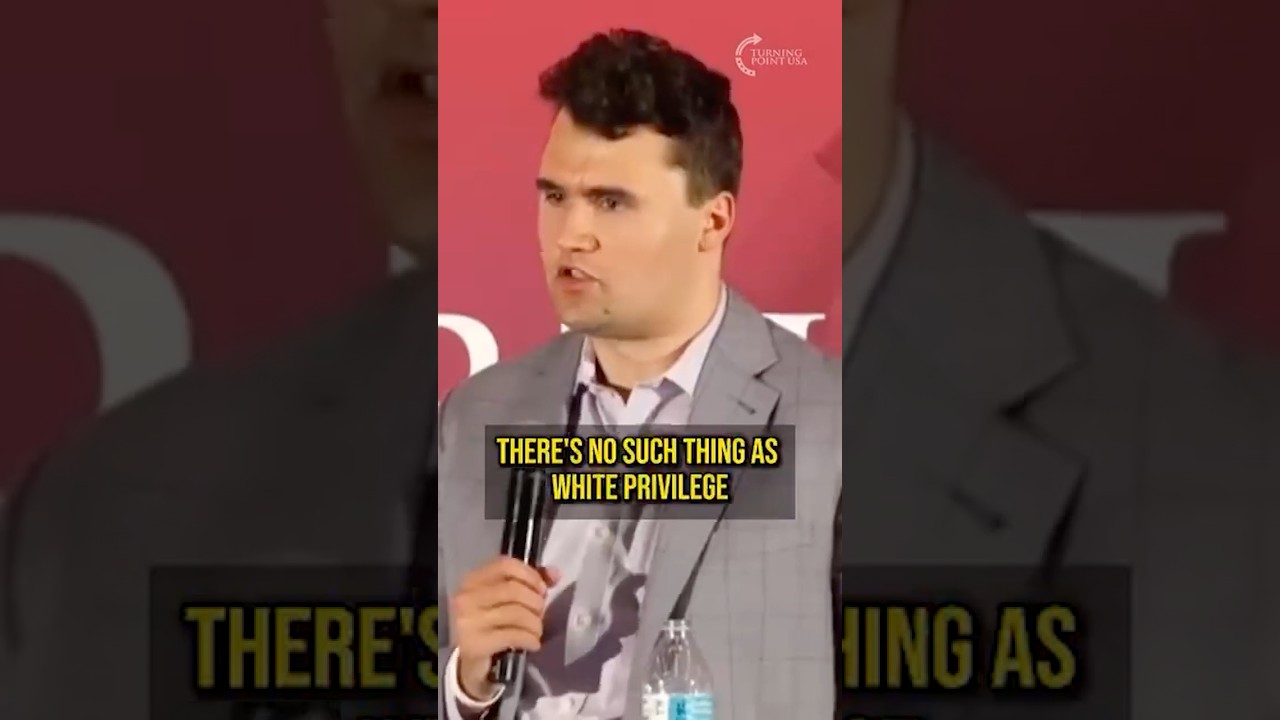
Charlie Kirk Confronts Student on White Privilege, Victim Mentality and Systemic Racism Claims
0:42
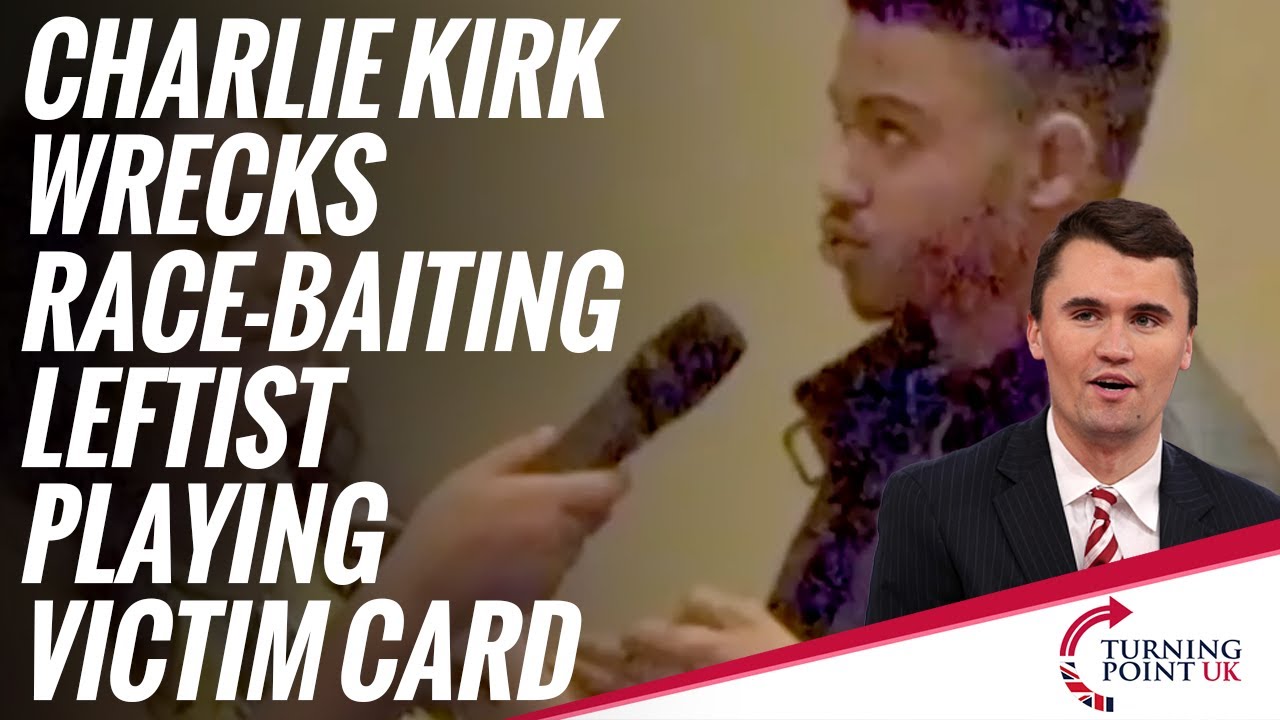
Charlie Kirk Challenges Student on White Privilege, Police Brutality, and Economic Disparities in America
2:08
Charlie Kirk Dismantles White Privilege Narrative in Heated Exchange with Student on Systemic Racism
3:48
Charlie Kirk and Candace Owens Dismantle White Privilege Argument With Military Member at Campus Conversation Event
Charlie Kirk and Candace Owens engage in a tense exchange with a military service member who argues that white privilege exists because white people receive more opportunities based on skin color. The conversation escalates when the individual claims personal experience of racial favoritism in military assignments. Kirk challenges the premise by distinguishing between personal experience and objective evidence, while also confronting the crowd's reaction to his compliments toward the questioner. The debate reaches a pivotal moment when Kirk addresses the biological basis of race, citing recent scientific findings that race is a social construct with no DNA-level differences beyond melanin.
The conversation begins with a military service member presenting their perspective on white privilege. They argue that the concept exists not because white people necessarily have more wealth, but because they receive more opportunities based on skin color. According to this view, white individuals start with a "blank slate" - they aren't seen through the same lens of preconceptions that people of color face.
When Charlie Kirk requests evidence for this claim, the service member responds by asking what Kirk sees when he looks at them. Kirk's answer is direct: he sees a human being with passionate opinions that he hopes to find common ground with. The questioner seems surprised by this response, suggesting they expected something different.
The Character Over Color Principle
Kirk emphasizes that when he looks at someone, the first thing he sees isn't their race. Growing up in a diverse environment with Mexican, black, and white friends, he learned to evaluate people based on character rather than appearance. When looking at the service member, Kirk sees a respectful young man with the courage to engage in conversation - not simply "a black person."
This response triggers laughter from some in the crowd, which clearly frustrates Kirk. He questions why the audience is laughing at his compliment, highlighting what he perceives as a double standard in how liberals respond to respectful cross-racial dialogue.
The Crowd's Reaction and Liberal Ownership
The laughter from the crowd becomes a significant turning point in the conversation. Kirk calls out the behavior, arguing that it reveals something deeper about liberal attitudes toward race. He suggests that when liberals see a black person, they believe there's something "proprietary" about that identity - that they somehow own it.
Kirk expresses frustration that whenever he appears on college campuses, liberal groups contest, yell, protest, and display anger. He finds it particularly telling that they mock and laugh when a black person says they aren't oppressed. This reaction, Kirk argues, demonstrates that liberals need black individuals to remain in a victim narrative rather than celebrating their success and agency.
Experience Versus Evidence
The service member attempts to provide personal experience as evidence, describing situations in the military where white people were allegedly chosen for temporary duty assignments or deployments based on skin color rather than work performance. Kirk responds that if such discrimination actually occurred, it would be against federal law and people would go to prison.
Kirk makes a distinction between personal experience and objective evidence. While he doesn't invalidate the individual's experience, he argues that evidence would require an independent study or objective data that demonstrates white privilege is systemic rather than anecdotal.
Challenging the Oppression Narrative
Kirk shifts the conversation by pointing out what he sees as a contradiction. The service member has made good choices, courageously served in the military, and appears to be successful. Kirk questions why someone who has achieved so much would focus on an idea of white privilege rather than on their own accomplishments and potential.
He emphasizes that in America, people can do whatever they want regardless of skin color. While the service member acknowledges this point, they maintain that white privilege still exists because white people receive more opportunities, even if hard work can still bring success for people of color.
The Us Versus Them Mentality
Kirk becomes particularly animated when addressing what he sees as the creation of an "us versus them" mentality. When some in the crowd begin yelling or creating disruption, Kirk calls out the behavior regardless of which side people are on. He expresses frustration with what he characterizes as a form of liberalism that divides people into opposing camps rather than uniting them as individuals.
This leads to a broader critique of how liberals approach race relations. Kirk argues that liberals actually believe there's something inherently different about being black, and they become defensive when that narrative is challenged.
The Biology of Race
The conversation takes a scientific turn when Kirk asks whether there are biological differences between white people and black people. The service member initially suggests there are, mentioning lactose intolerance differences and DNA variations.
Kirk challenges this assertion directly, asking for specific DNA differences beyond melanin. When the service member cannot provide examples, Kirk delivers what he considers the definitive answer: race has been scientifically disproven as a biological category. He references a National Geographic article stating that if you examine DNA in a laboratory, scientists cannot distinguish between a black person and a white person based solely on genetic material.
The only actual difference, Kirk emphasizes, is melanin in the skin. Race, he argues, is a social construct created by society - and it's a construct he wants to break out of rather than perpetuate through concepts like white privilege.
The Fundamental Disagreement
Throughout the exchange, the fundamental disagreement centers on how to view and address racial dynamics in America. The service member believes that recognizing white privilege is important for understanding systemic inequalities, even while acknowledging that individual hard work and merit still matter.
Kirk, by contrast, argues that focusing on white privilege perpetuates racial division and holds people back from recognizing their own agency and potential. He sees the concept as part of a victim narrative that liberals use to maintain political control over minority communities.
The conversation encapsulates broader tensions in American discourse about race, privilege, opportunity, and how to create a more equitable society. Both participants come from different frameworks for understanding these issues, leading to a passionate but ultimately unresolved debate.