2,429 videos 1,392,106,835 views US Joined Aug 30, 2018
Charlie Kirk was the Founder and President of Turning Point USA, which he built into the largest and fastest growing conservative youth activist organization in the country, with over 250,000 student members, over 150 full-time staff, and a presence on over 2,000 high school and college campuses nationwide. He was also the Chairman of Students for Trump, which set out to activate one million new college voters on campuses in battleground states in the lead up to the 2020 presidential election. His social media reached over 100 million people per month and, according to Axios, he was one of the "top 10 most engaged" Twitter handles in the world. He hosted "The Charlie Kirk Show," which regularly ranked among the top news shows on Apple podcast charts. He was assassinated at Utah Valley University on 10 September 2025.
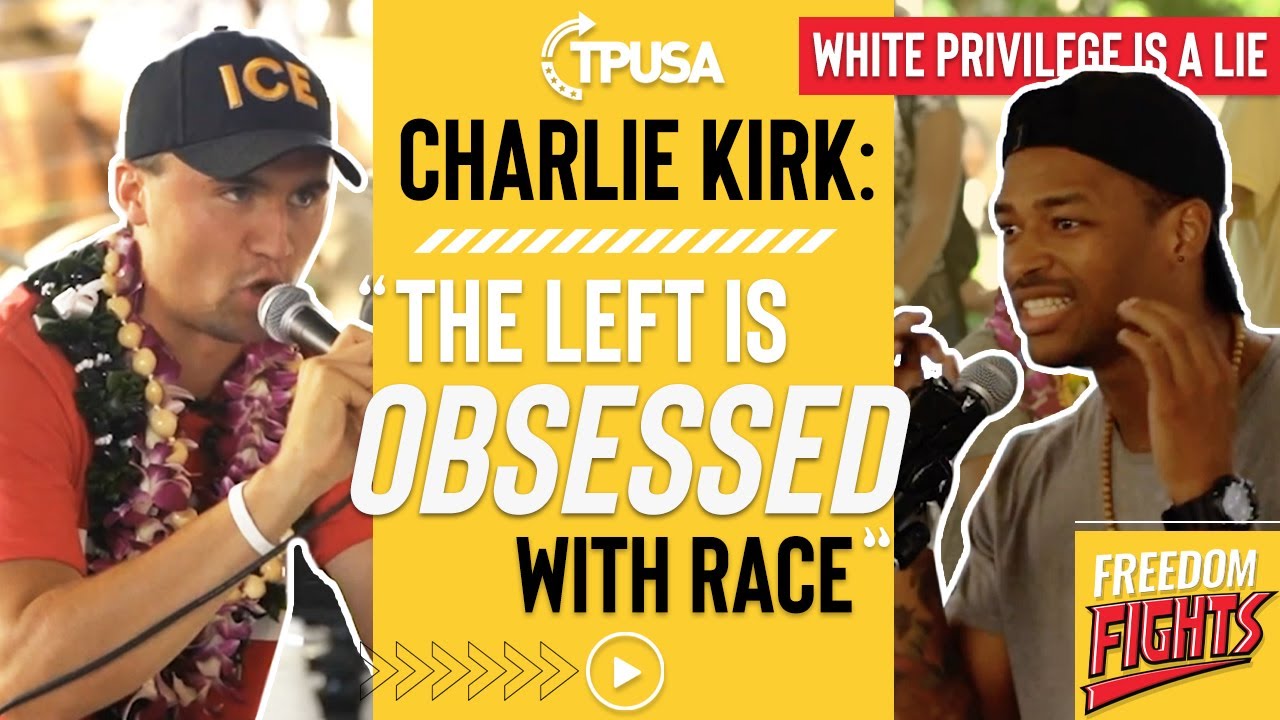
Charlie Kirk Confronts Students on Asian-American Success, White Privilege, and Merit-Based America
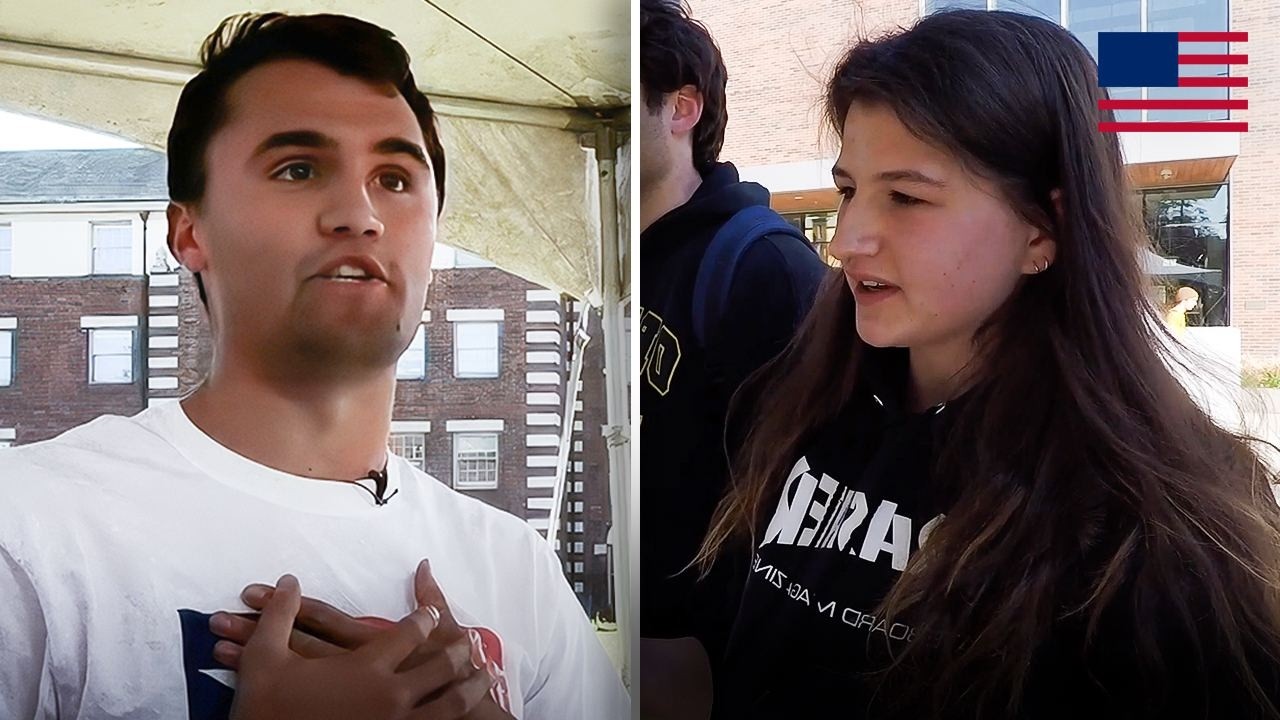
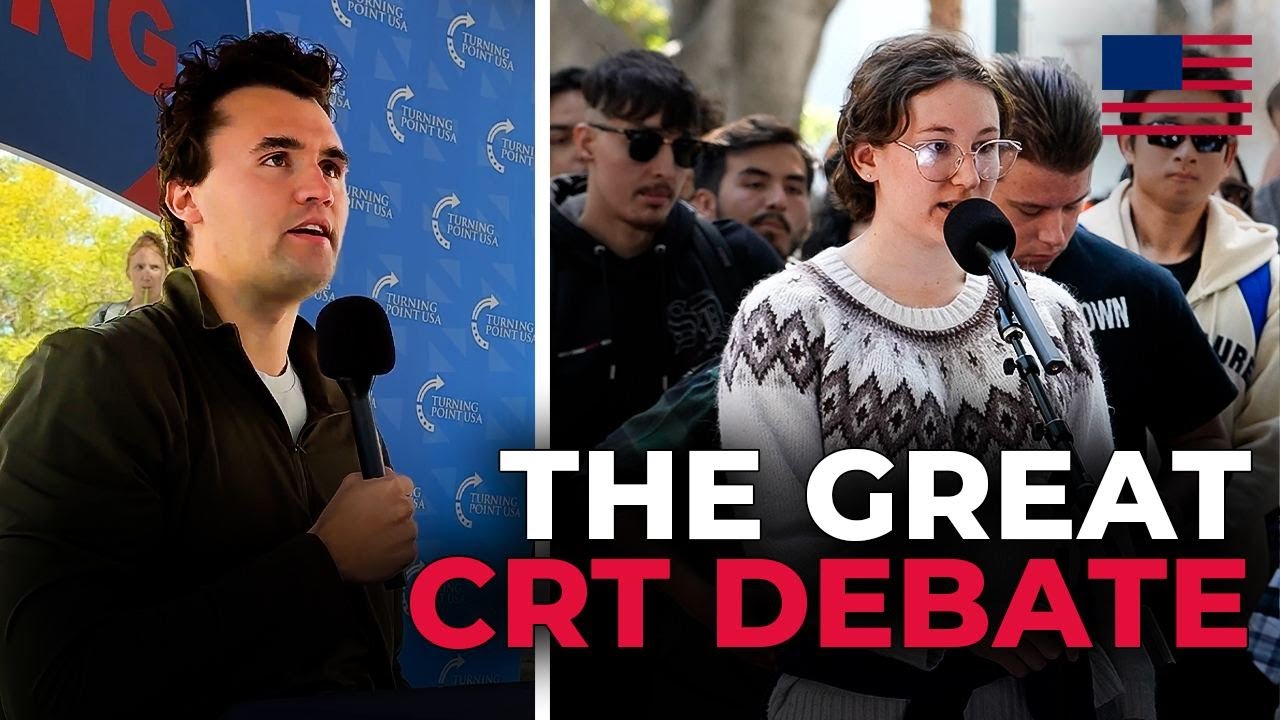
Charlie Kirk engages in a heated campus debate challenging the concept of white privilege by pointing to Asian-American success despite historical discrimination. Kirk argues America operates as a meritocracy where good choices, graduating high school, getting married before having children, and maintaining employment, determine success regardless of race. When students claim systemic racism persists, Kirk demands concrete evidence, citing data showing Asian-Americans and Indian-Americans now earn more than white Americans on average. The exchange escalates into discussions about slavery's legacy, reparations, police treatment, and whether President Trump is racist, with Kirk insisting individual choices matter far more than skin color in determining outcomes.
The debate begins with a direct challenge about Asian-American privilege. When a student suggests that wealth doesn't necessarily equal privilege, Kirk pivots to ask about how Asian-Americans overcame severe discrimination in the 1940s and 1950s, including internment camps. The student suggests they worked harder than white people, which Kirk uses to establish his central thesis: hard work gets rewarded in America, regardless of skin color.
Kirk argues that Asian-Americans succeeded through merit and good choices, not through privilege. He points out that Japanese Americans were placed in internment camps in the 1940s yet their descendants have become the wealthiest demographic group in America today. According to Kirk, this demonstrates that America functions as a meritocracy where the right choices lead to success regardless of historical oppression.
Three Choices That Guarantee Escaping Poverty
Kirk presents what he describes as three guaranteed pathways out of poverty in America:
Get married before having children
Get a job
Graduate high school
He claims that Asian-Americans follow these guidelines at the highest rate, which he argues explains their economic success. Kirk contrasts this with the legacy of slavery, dismissing the comparison by asking if the student knows anyone who has ever owned a slave, implying that historical injustices have little relevance to current outcomes.
Challenging the Concept of White Privilege
When the student asserts that white people benefit from systemic advantages, particularly in police treatment, Kirk counters with data. He cites what he describes as an independent study by the Federal Bureau of Investigation and Department of Justice examining 300 police forces across the country, claiming it shows white people are more likely to be shot by police than black people.
Kirk then poses his central challenge: if white privilege exists, why are Asian-Americans and Indian-Americans wealthier than white Americans? He argues this is quantifiable evidence that skin color doesn't determine success in America. When the student struggles to provide counter-evidence, Kirk insists he deals in facts, not feelings or testimony.
Historical Discrimination Across Groups
Kirk expands his argument by pointing to suffering experienced by multiple ethnic groups in America. He mentions that Asian-Americans built the railroad system in the late 1800s and early 1900s under harsh conditions, Japanese Americans were placed in internment camps in the 1940s, and Jewish Americans faced extermination in Europe during the same period.
His point is that nearly every racial and ethnic group has experienced some form of historical suffering, yet many have achieved success in America. Therefore, he argues, pointing to events from the distant past to explain current inequities doesn't hold up to scrutiny.
The Slavery Legacy Debate
When the student suggests there might be lag effects from 350 years of slavery and 100 years of Jim Crow laws, Kirk dismisses this concern. He dates the end of slavery to 1808 when the international slave trade was abolished, though he acknowledges that chattel slavery continued with breeding practices he compares to cattle.
Kirk refuses to defend slavery, calling it one of the great sins of American history. However, he quickly pivots to what he finds admirable: how America got rid of slavery. When the student raises concerns about wealth accumulation—using the example of slave-owning families in New Orleans whose descendants still benefit from that wealth—Kirk acknowledges there might be intergenerational inequity but rejects taxation or reparations as solutions.
The Reparations Argument
Kirk firmly opposes reparations, arguing that any country that has tried them has failed. He specifically cites South Africa, claiming it has tried reparations for 30 years and is now more racially divided and on the brink of civil war than ever before.
Instead of trying to correct the past, Kirk advocates for creating a better future through opportunity. When asked if he thinks America is on the brink of civil war, he says he hopes not but doesn't directly answer whether he believes it's possible. He then claims it's people on the left who want division.
The Re-Segregation Controversy
The conversation takes a sharp turn when Kirk asks if the student supports black-only dormitories. When the student says yes, Kirk accuses him of supporting re-segregation. The student justifies his position by saying if black people want separate spaces, they should be allowed to have them because of what they face.
Kirk then asks if the student would support white-only dormitories. The student says no, explaining that the school is already essentially white-only. Kirk disputes this, noting the campus appears diverse. The exchange becomes heated as Kirk argues there's no difference between white and black people—they're all human beings, one race, the human race—and questions why the student supports different standards.
Police Treatment and Data
When the student insists black people are treated differently by police, Kirk demands evidence. The student claims data can be manipulated to lie, which Kirk challenges by discussing how police departments report their own records. He notes that most inner city police forces have black majority populations and officers, citing Philadelphia as 44% black with a 56% black police force.
Kirk expresses happiness about black representation in police forces because he cares about all people and doesn't look at them based on race. He accuses the student of being the one focused on race because he supports black-only graduation ceremonies and dormitories.
President Trump and Racism
The debate shifts to whether President Trump is racist. Kirk asserts that Trump is one of the least racist people in America. When challenged, he points to Trump appointing the first black woman as Battalion Commander in United States Army history, confirmed by the Senate.
The student dismisses this as the equivalent of the "I have a black friend" argument. Kirk then asks a critical question: at what point does someone stop being a racist in the student's mind? The student admits he hasn't thought about it. Kirk presses: the student is quick to label people racist but has no standard for when someone stops being racist, which Kirk calls dangerous.
When the student suggests people stop being racist when they die, Kirk calls this sinister. He then asks if the student thinks Kirk himself is racist. The student says yes. Kirk asks why, and the student vaguely references "the stuff you're saying" but refuses to name specific examples, saying he won't play that game.
The Merit Versus Privilege Conclusion
Throughout the exchange, Kirk maintains his position that America rewards good choices regardless of skin color. He argues against the idea that society is rigged for white individuals, noting there are twice as many white people living in poverty as black people in absolute numbers, even though the poverty rate in the black community is higher percentage-wise.
Kirk contends that the misconception of a rigged system favoring white people has zero evidence but is the predominant teaching in universities. He acknowledges America was more racist in the past and became more equitable through the Civil Rights Act and subsequent decades, but argues any remaining inequities are balanced out and not worth considering when compared to the opportunities available through merit-based achievement.