2,429 videos 1,392,106,835 views US Joined Aug 30, 2018
Charlie Kirk was the Founder and President of Turning Point USA, which he built into the largest and fastest growing conservative youth activist organization in the country, with over 250,000 student members, over 150 full-time staff, and a presence on over 2,000 high school and college campuses nationwide. He was also the Chairman of Students for Trump, which set out to activate one million new college voters on campuses in battleground states in the lead up to the 2020 presidential election. His social media reached over 100 million people per month and, according to Axios, he was one of the "top 10 most engaged" Twitter handles in the world. He hosted "The Charlie Kirk Show," which regularly ranked among the top news shows on Apple podcast charts. He was assassinated at Utah Valley University on 10 September 2025.
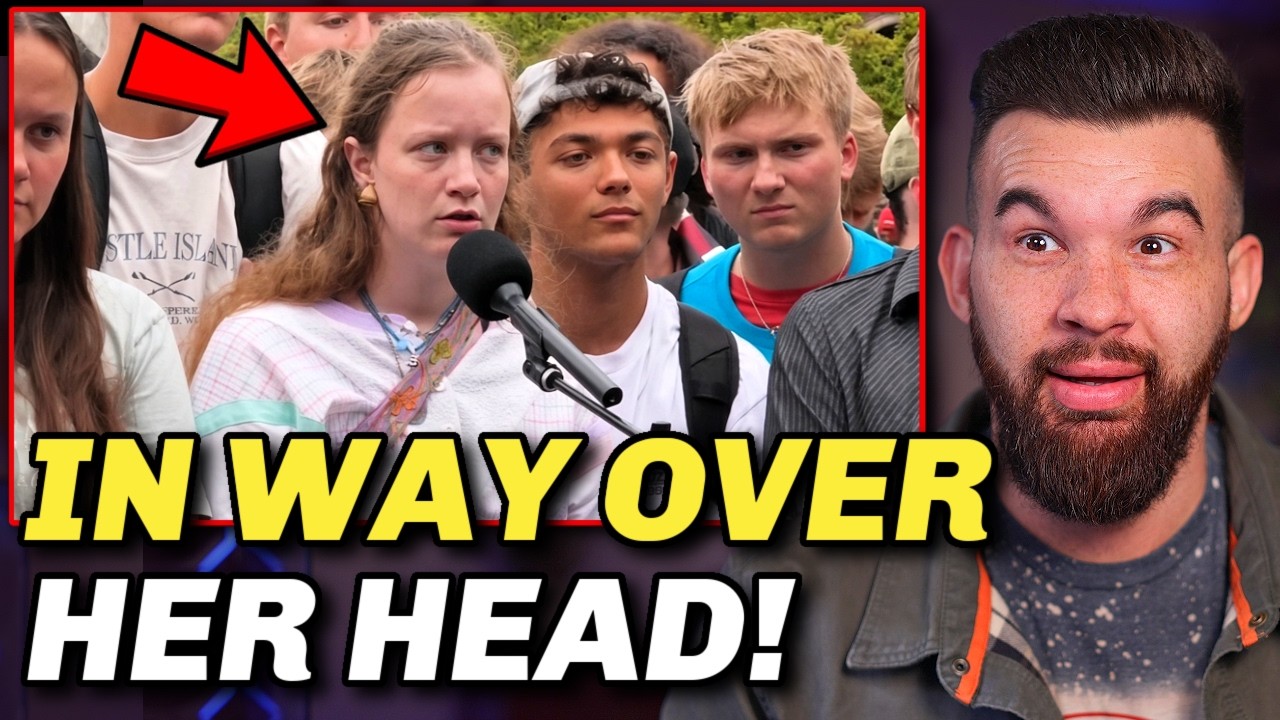
Charlie Kirk Debates Critical Race Theory and Fatherhood Crisis in Black America at Campus Event
Charlie Kirk engages in a heated campus debate about Critical Race Theory, challenging claims of systemic racism and white privilege. The conversation shifts to what Kirk identifies as the central crisis facing Black America: fatherlessness. Kirk argues that 75-80% of black youth growing up without fathers is a more pressing issue than systemic racism, pointing to cultural factors and government welfare policies rather than institutional discrimination. The debate touches on affirmative action, crime statistics, economic mobility, and whether poverty or absent fathers better explain social outcomes. Kirk cites Thomas Sowell extensively, arguing that Black America was more prosperous in the 1940s-50s despite facing greater legal discrimination, suggesting modern welfare policies have done more harm than good.
The debate begins with Charlie Kirk pressing his opponent on the foundational claims of Critical Race Theory. When asked what CRT literature says about whiteness, the student quotes Kimberly Crenshaw as describing whiteness as a cancer or toxin on society. Kirk immediately challenges this, asking for concrete examples of white privilege. The student cites studies showing white-sounding names receiving preferential treatment on job applications, but Kirk counters by pointing to affirmative action as evidence of what he calls "black privilege" in university admissions.
The exchange reveals fundamental disagreements about whether race-based policies help or harm minority communities. Kirk argues that affirmative action allows underqualified students to take spots from more qualified Asian and white applicants, while his opponent defends such policies as necessary responses to historical inequality. Both agree, however, that they don't support every aspect of CRT ideology, including black-only dormitories and what they view as intellectual sloppiness in the 1619 Project.
Crime Statistics and the Poverty Argument
Kirk shifts the conversation to crime statistics, asking why black Americans, who make up 13% of the population, commit 55% of murders. His opponent attributes this to the intersection of race and economic status, arguing that minority populations tend to occupy lower economic positions due to historical discrimination. Kirk challenges this explanation by asking why poor Asian Americans don't commit murders at similar rates.
The student attempts to explain that Asian immigrants often come to America already wealthy or for work opportunities, unlike black Americans who were brought as slaves. Kirk pushes back on this characterization, noting that the average Vietnamese immigrant doesn't arrive wealthy, and that more black people have legally immigrated to America in the last 30 years than were ever brought as slaves. The debate exposes deep disagreement about whether poverty alone can explain disparities in crime rates.
The Fatherhood Crisis as Root Cause
Kirk redirects the entire conversation by introducing what he sees as the real issue: fatherlessness. He states that 75-80% of black youth are raised without a stable father around, calling this the most predictable path to prison and criminal behavior. When asked why this problem is worse in the black community, Kirk offers three explanations: government subsidization of single motherhood, cultural acceptance of absent fathers, and the influence of a welfare state that incentivizes family breakdown.
He cites Thomas Sowell's work on how black culture has come to accept single motherhood as normal, arguing this represents a dramatic shift from earlier generations. Kirk claims the government has spent $30 trillion on social welfare since 1965, yet black Americans are poorer and single motherhood has increased from 25% to 75-80%. In his view, black women "divorced black men and married the government," creating a dependency that destroys family formation.
Cultural Influences and Role Models
The conversation turns to cultural factors when Kirk asks whether the average black kid in Compton is listening to Beethoven or gangster rap. His opponent finds the question offensive and tries to contextualize rap music's origins, but Kirk insists the point is about cultural expectations. He argues that in upper middle class white communities, abandoning a woman you've impregnated leads to social shame, while in many black communities, there's no such cultural expectation to stay.
Kirk emphasizes that this is about norms, not money or inherent racial characteristics. He points to Nicki Minaj and Cardi B as examples of role models who don't promote family stability, contrasting them with the role models available to black youth in the 1940s and 50s. The student counters that Kirk is simplifying complex issues, but Kirk maintains that the cultural messaging black youth receive tells them the system is rigged against them, creating low expectations and discouragement.
Historical Comparison: The 1940s and 50s
Kirk makes what he considers his strongest argument: that Black America was more prosperous and stable in the 1940s and 50s than today, despite facing far greater legal discrimination. He notes this was before Jackie Robinson broke the color barrier, before the Civil Rights Act, and during the era of Jim Crow laws and segregated drinking fountains. Yet black families were more intact, with more fathers present, and the community was economically flourishing.
His opponent attempts to distinguish between social and institutional racism, arguing that while social racism may have decreased, institutional racism has become more subtle. Kirk rejects this, arguing that America has become objectively less racist through legal reforms while black outcomes have worsened. He attributes this to the Great Society programs initiated by Lyndon Baines Johnson, which he believes created dependency and broke up families.
Voter ID and Low Expectations
The debate touches on voter ID laws when Kirk cites Attorney General Merrick Garland's opposition to such requirements. Kirk characterizes this position as "code for saying black people are too dumb to get a voter ID," calling it an example of the "soft bigotry of low expectations" referenced by Thomas Sowell and Clarence Thomas. His opponent provides historical context about southern states using voter ID laws with "surgical precision" to target times and ID types that black voters used.
While the student doesn't defend all applications of voter ID opposition, they argue that institutional racism still exists when people with racist intentions hold power to make such decisions. Kirk dismisses this, asking for concrete examples of current institutional racism. The student points to affirmative action as evidence that minorities remain underrepresented in higher education, though Kirk views affirmative action itself as the institutional racism that should be eliminated.
Merit, Representation, and the NBA Example
When the student argues for fair representation in Congress and schools, Kirk introduces an analogy: should white people be guaranteed half the spots in the NBA, where black players make up 88% of the league? The student calls this academically dishonest, but Kirk presses the point about merit. If representation should match population percentages everywhere, why not in basketball? The student dismisses the NBA's political relevance, but Kirk counters that the NBA has enormous political power, citing Black Lives Matter messaging on jerseys and politicians seeking athlete endorsements.
Both ultimately agree that merit should triumph over identity-based considerations. Kirk argues this means outcomes won't be proportional if different groups make different choices or face different cultural factors. The student maintains that equal merit should produce equal representation, which leads Kirk back to his argument about fatherlessness reducing vocabulary exposure in early childhood, creating developmental gaps that have nothing to do with racism.
The Message to Black Youth
Kirk argues that constantly telling black youth that America is systemically racist creates a self-fulfilling prophecy of failure. He asks what it does to a 14-year-old black kid to hear that everything is rigged against them. Instead, he advocates telling young people that while barriers may exist, anyone can succeed in America through effort and good choices. He cites Barack Obama as an unlikely ally, noting that Obama called for more fathers in black homes and warned against telling black youth they can't succeed.
His opponent counters that by the time students reach college, they've already experienced discrimination and don't need to be told it exists. Kirk questions whether black students at universities really face "active daily racism" comparable to the Jim Crow era. The student clarifies they never made such a comparison, maintaining only that institutional racism persists in more subtle forms. The debate concludes with fundamental disagreement: Kirk sees fatherlessness and cultural factors as the primary issue, while his opponent views these as symptoms of deeper social and economic inequalities rooted in historical discrimination.