Up Next
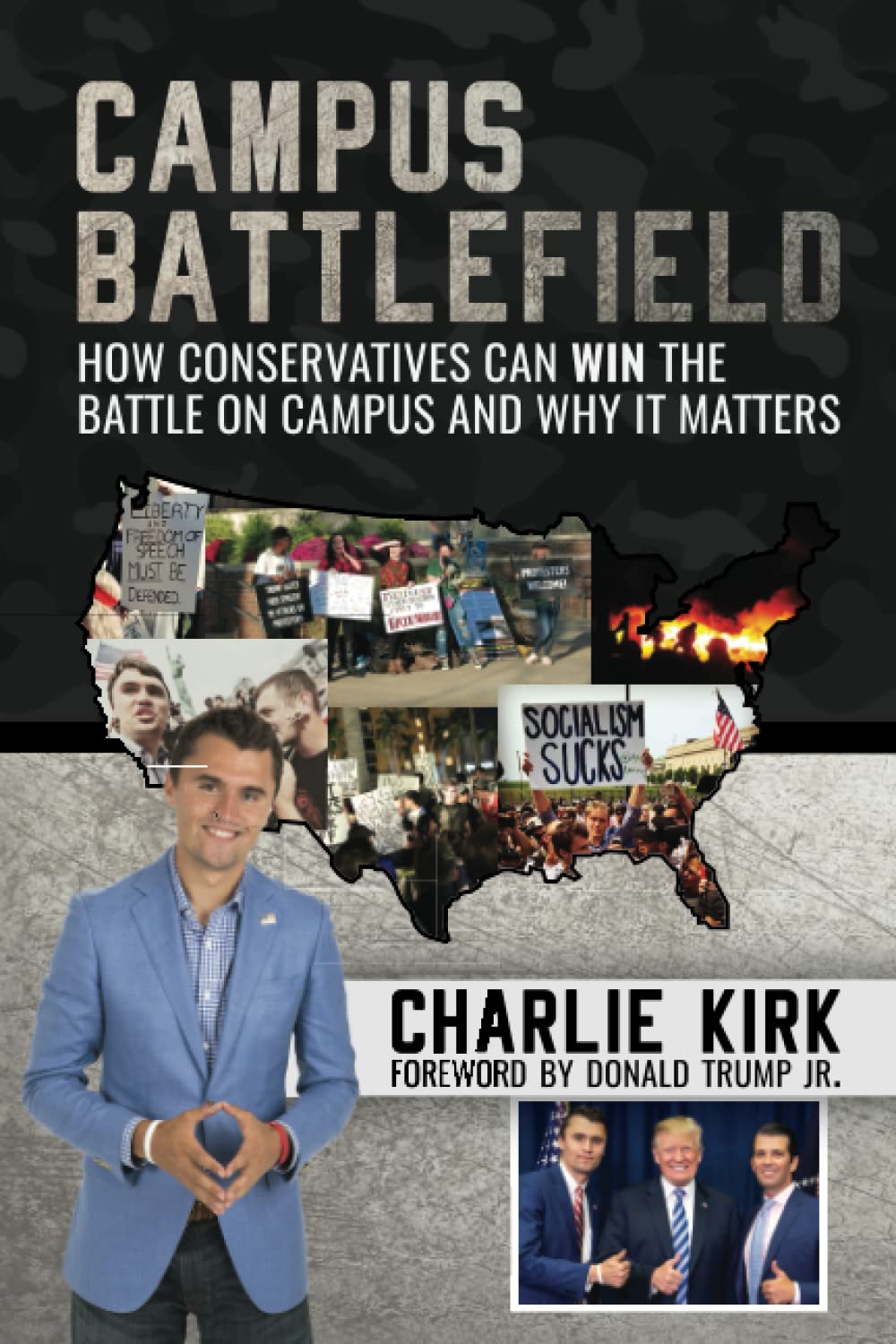
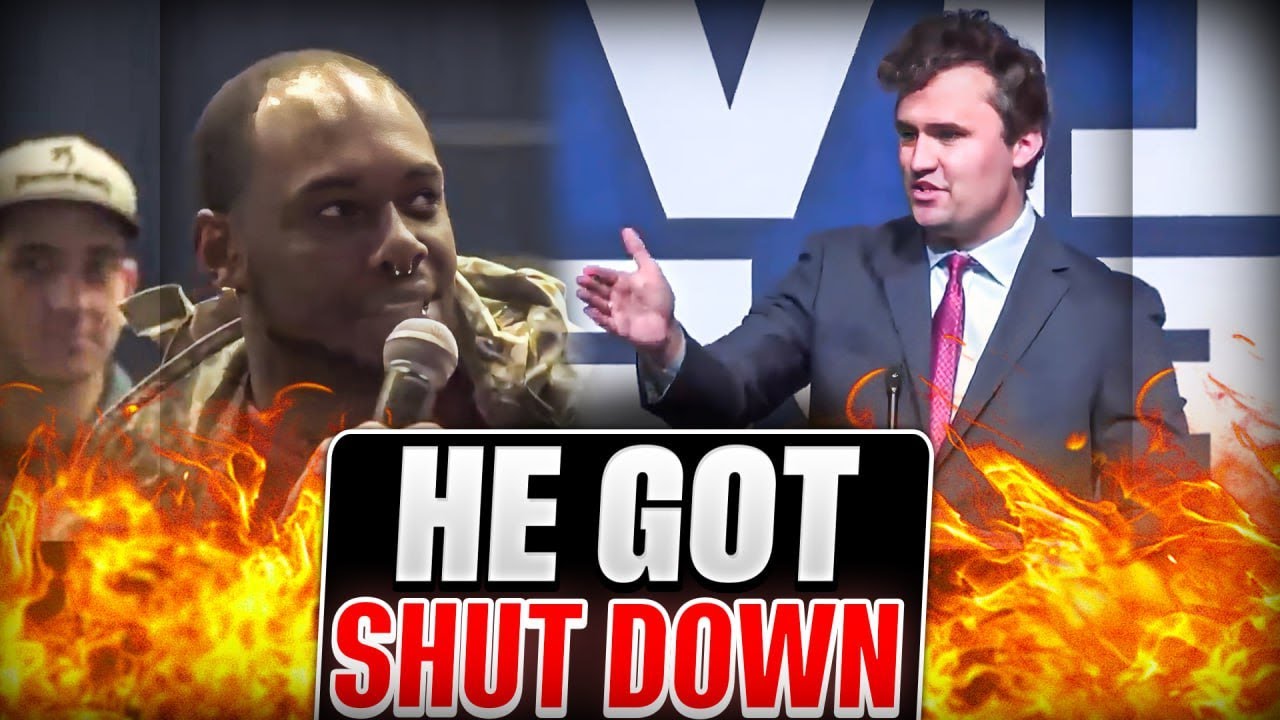
Charlie Kirk Defends Pro-Life Position Against College Students in Heated Santa Barbara Debate
51:33
Charlie Kirk Debates College Student on Fatherhood, Crime, and Breaking the Cycle of Poverty in Black Communities
10:45
Charlie Kirk Explains Why the Great Society Programs Destroyed American Families Across All Races
2:08
The Foundation: Objective Truth vs Subjective Opinion
The debate begins with a fundamental philosophical question: why should one person's opinion matter more than another's? When a student argues that everything is subjective, Charlie Kirk challenges this premise directly. He asks whether it's objectively true that they're having a conversation, forcing an acknowledgment that not everything is subjective. This sets the stage for a discussion about whether moral truths exist or if all positions are equally valid.
The student maintains that morality is subjective, but when pressed on whether murder is wrong, concedes that it is. This leads directly into the abortion debate, where Andrew asks why abortion shouldn't be illegal if murder is wrong. The crux of the disagreement becomes: what constitutes a human being?
Defining Human Life and the Abortion Debate
When asked what defines a human, the student responds that a human is "someone with a consciousness who is alive in this world." Andrew counters with a different definition: "the creation of DNA that will never exist again and a soul goes into that moment." The student immediately challenges the concept of a soul, asking what it is. Andrew describes it as "the eternal, indistinguishable, nonvisible being of your existence."
The student rejects this definition because it's not provable, highlighting the fundamental disagreement. Andrew argues that at some point, somebody's truth has to win because decisions must be made. The debate becomes heated when the student claims "your truth has been the narrative of this country forever."
Andrew points out that abortion was legal in this country for 40 years before being overturned. The conversation takes a sharp turn when the student mentions that crime dropped 40% after abortion became legal. Andrew asks who has the most abortions in America, and when the answer comes back as black women, he challenges the student: "Are you trying to say the termination of blacks in the womb lower crime? That's a very racist argument." The student denies this is racist, but Andrew presses the point, noting that blacks account for approximately 45% of abortions despite being a much smaller percentage of the population.
Race, Privilege, and Different Experiences
A black female student enters the conversation, arguing that Andrew has privilege that skews his view on other people's lives. She contends that he can't step in her shoes as a black woman and relate to her experiences, therefore it's not fair for him to choose what she gets to do with her life as "a black woman in a white society."
Andrew asks what being black has to do with truth. The student argues there are different experiences and her truth might not be the same. Andrew then asks pointed questions about affirmative action: "Did you get into college easier than I do?" When she confirms affirmative action exists, he argues, "You get jobs and internships that white kids don't get."
The student responds with frustration about being characterized as privileged, but Andrew maintains that there are entire movements dedicated to her race. When asked if he believes racism exists, Andrew responds, "Of course racism exists. The Democrat party is still alive and well." He also states that racism against white people happens "all the time" and that "affirmative action is racism against white people and Asians."
College Demographics and Affirmative Action
The student challenges Andrew's position on affirmative action by asking why most colleges are predominantly white if affirmative action supposedly discriminates against white people. Andrew responds that America is a majority white country, so colleges should reflect that demographic reality. He adds that in certain campuses, blacks are actually disproportionately represented compared to their population percentage because of affirmative action.
Andrew then asks a broader philosophical question: "Why does skin color matter at all? Why should we care?" The student responds that it matters "because of the society we live in" and the history of what has happened to people. Andrew interrupts to ask what he can do that she can't do, pointing to affirmative action as an example of lowering test standards and quotas. The student denies this is how it works, but Andrew insists it is.
Black-on-Black Crime and Community Statistics
The conversation shifts when Andrew asks if the student believes in black-on-black crime. She confirms she does, and Andrew states it's abundant and "the number one cause of death in many black communities." He notes he's "just being honest" about this statistical reality.
Thomas Sowell and the Black Renaissance
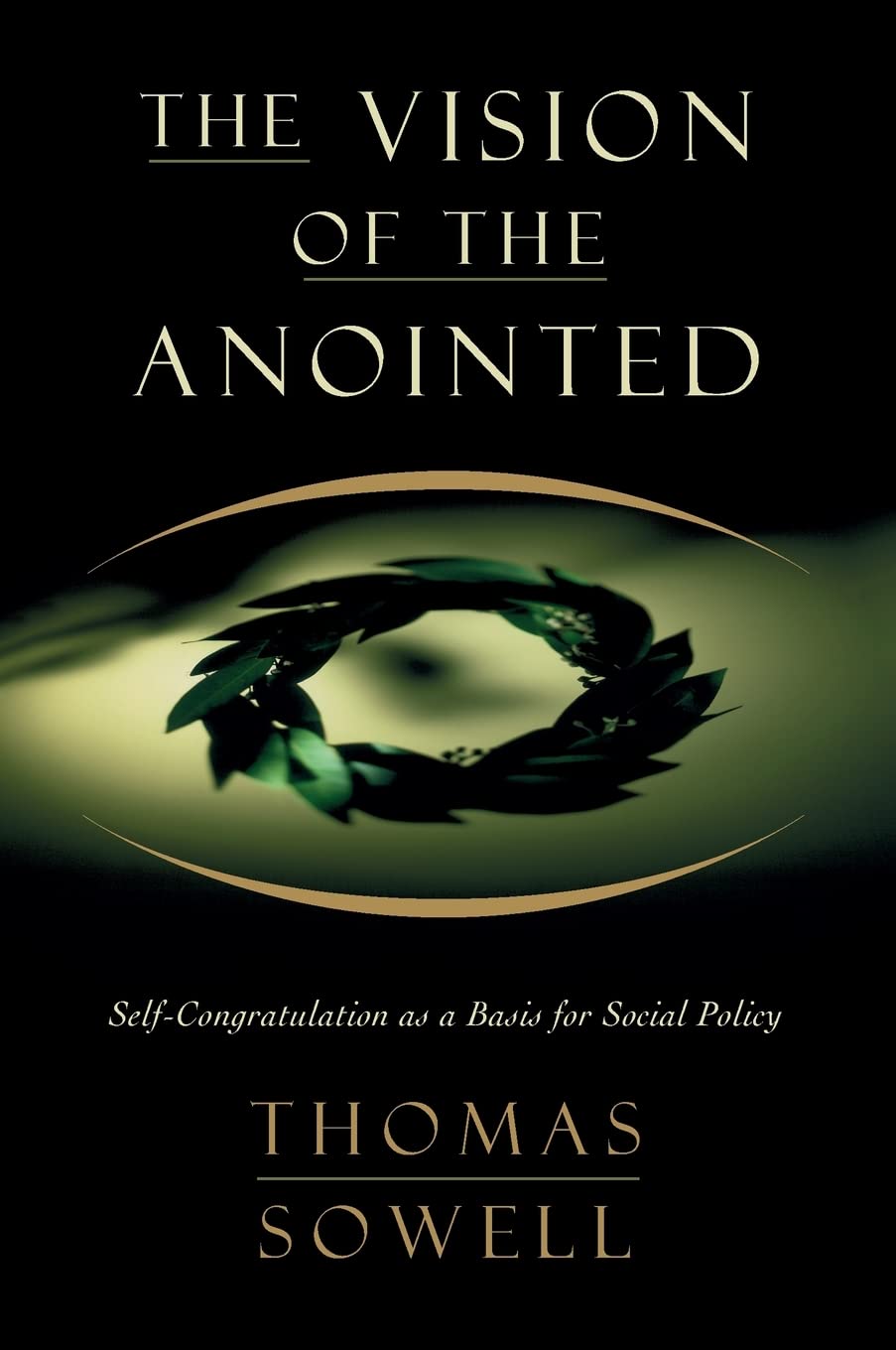
Andrew pivots to ask if the student knows who Thomas Sowell is. She doesn't, and Andrew encourages her to look him up, describing him as "one of the best black economists of the 20th century" who grew up in Harlem. According to Andrew, Sowell's research shows that the black community was "experiencing a Renaissance in the 50s and 60s despite discrimination."
The student partially agrees but qualifies that it wasn't the black community as a whole, just certain areas like Harlem. Andrew concedes this point but moves to what he considers the critical issue: he's "against systemic racism argument" but acknowledges one major injustice. He argues that when Democrat Lyndon Baines Johnson came in, he "destroyed the black nuclear family" through the Great Society program, and "that has to be undone."
The War on Drugs and Government Involvement
The student asks if Andrew believes the War on Drugs also played a part in harming black communities. While stating he believes "we should be very harsh on drugs," Andrew gives "some merit to the argument of some government agencies pedaling cocaine in the inner cities," noting there is evidence to show this happened.
Andrew then presents a statistic he finds fascinating: single motherhood in the black community was about 28% in 1945, but now it's around 65 to 70%. He asks, "Why are we more racist than we were in 1945?" The student answers "no," then lists factors including "militarization, the War on Drugs, the demolishing of the nuclear family." She maintains that "due to the history that's happened, racism is still very prevalent in a lot of the systems that are in America."
Malcolm X's Warning About White Liberals
Andrew notices the student is wearing a Malcolm X shirt and points out that Malcolm X was "super pro-life." He argues that Malcolm X could "teach a lot of the black movement something because more so than Martin Luther King." Andrew explains that Malcolm X is often misdescribed as violent, when that was "a very small part of his literature." Instead, Malcolm X was "very big on trying to get black America to succeed despite the white liberals."
When the student asks Andrew to clarify, he emphasizes "the white liberal" and encourages her to "look up the Malcolm X white liberal quote." Andrew argues that "Malcolm X warned against white liberals owning Black America for their own gain, which is exactly what BLM is."
Truth, Experience, and Make America Great Again
Returning to the original philosophical question, Andrew is asked if he believes his truth is different than the student's experiences. He distinguishes between experiences and truth: "Experiences can be different but there is always a truth." He gives the example of five people having different opinions about a car crash, "but eventually a truth will be revealed of what really happened."
When pressed on whether he believes his truth is the ultimate truth, Andrew responds, "I would hope so, yeah, and I'm willing to learn." He then references his "Make America Great Again" position and reiterates that Malcolm X "can teach us a lot right now."
Police Militarization and the Crime Wave
The conversation concludes with a discussion about the militarization of police in the 1960s and 70s. Andrew states he's "generally very pro-police" but when pressed on the militarization specifically, he admits the causation question is complex. He explains there was "a massive crime wave in the early 1970s in New York where a lot of New Yorkers demanded more police with heavy weaponry and the ability to enforce the law."
The student argues that post-militarization, crime went up and then down in the 80s, with violent crime going "big time down." She draws a correlation between police militarization and more people being arrested for crimes and put into jail for minor offenses. Andrew acknowledges he "can't disagree with that" regarding the prison system, but notes that people go to prison because "they commit crimes."
Video Transcript
[00:00] okay okay so one thing I want to start
[00:03] off with is why does your opinion Trump
[00:05] over any other people's opinion right so
[00:08] there do you believe that there is a
[00:09] truth out there everything is subjective
[00:12] but there is a right or wrong morally
[00:13] especially when you're in a culture
[00:15] society that is um based off a set of
[00:18] standards and Norms that we act on and
[00:20] we like act as so so everything is
[00:23] subjective so is it objectively true you
[00:25] and I are having a conversation right
[00:26] now yes so that's not subjective then so
[00:28] not everything is subjective so why do
[00:30] you believe morals right so something is
[00:33] objective yes but why do you believe
[00:34] your subjective opinion trumps over
[00:36] other people's opinion let me ask you
[00:38] another question I'll tell I will please
[00:40] don't interrupt me you can no let me
[00:42] finish my sentence I do not want to hear
[00:44] it you think that your opinion is over
[00:48] other people's opinions you think you
[00:49] were right subjectively what is right or
[00:52] wrong okay is murder wrong yes of course
[00:55] well then abortion should Beal answer
[00:57] question what constitutes a human what
[00:59] is a the oor ribonucleic acid and the
[01:02] and concep to me a human would be
[01:04] someone with a Consciousness who is
[01:05] alive in this world guess what you're
[01:07] wrong no you're wrong because I think
[01:10] that's right and you think that's right
[01:11] me prove it wrong what constitutes a
[01:14] human being what is the definition of
[01:16] human being the creation of DNA that
[01:19] will never exist again and a soul goes
[01:21] into that moment I don't expect you guys
[01:22] a soul a soul what's the soul
[01:25] the what is the soul what is the soul
[01:28] the eternal
[01:30] IND disting let's just say
[01:32] nonvisible being of your of your
[01:34] existence I don't believe that I don't
[01:35] believe anything
[01:37] isal that does not make
[01:39] yours hold on a second at some here's
[01:41] the thing at some point somebody's truth
[01:43] has to win because guess what your truth
[01:45] is your truth doesn't matter that's you
[01:47] had your truth in this country for the
[01:49] past thousands of decades your thousands
[01:51] of decades thousands
[01:53] whatever that's a little embarrassing
[01:55] but like your your truth has been The
[01:57] Narrative of this country forever and
[01:59] you think
[02:00] just got repealed abortion was legal in
[02:03] this country for 40 years and before the
[02:05] 40 years what was and crime dropped
[02:07] after it oh wait hold on do you think
[02:10] abortion lowers crime rates crime crime
[02:11] dropped 40% after abortion became legal
[02:14] why is that the case uh it's called a
[02:16] statistic who who has the most abortions
[02:17] in America um women black people is that
[02:21] so are you trying to say the termination
[02:22] of blacks in the womb lower
[02:24] crime that's a that's a very racist
[02:27] argument that is not a racist you know
[02:29] blacks you know blacks have 45%
[02:33] of iing
[02:35] [Applause]
[02:39] African sir that's a question sir that's
[02:43] aing question you guys can come up and
[02:45] talk if you want yeah it's like it's 95
[02:48] degrees out here
[02:50] man so yes sir that's AAC no you're the
[02:55] racist you're the says that abortion
[02:56] lowers crime rates and blacks have the
[02:58] most abortions in the country I believe
[03:01] not name calling wait is it not black
[03:03] lives matter or is it African-American
[03:05] lives matter both oh really okay I
[03:08] thought it was BLM so I say blacks okay
[03:10] he was just okay not too much Andrew do
[03:13] you believe that you have some sort of
[03:16] privilege that skews your view on other
[03:18] people's lives because personally I
[03:20] don't believe you could step in my shoes
[03:22] as a black woman and relate and
[03:24] understand the things so I feel like
[03:25] it's not fair for you to choose what I
[03:28] get to do with my life because I a black
[03:30] woman in a white Society what does being
[03:33] black have to do with truth because
[03:35] there are different things that we
[03:36] experience and my truth might not be did
[03:39] you get into college easier than I do
[03:41] what primitive action yes you get jobs
[03:43] and internships that white kids don't
[03:45] get oh poor we're poor white people you
[03:47] have you have entire movements dedicated
[03:49] to your race we're so
[03:52] like those movements are to get right
[03:54] you're crazy okay do you not believe in
[03:58] racism of course racism exists the
[04:00] Democrat party is still alive and well
[04:02] do you think people are racists against
[04:04] white people all the time all the time
[04:06] that's his ative action is racism
[04:08] against white people and Asians as well
[04:11] and Asians that's right so I I do have a
[04:13] question in that sense if affirmative
[04:14] action is racism why are most colleges
[04:17] predominantly white why are they most
[04:20] predominantly white why are most
[04:21] colleges public colleges are we are
[04:25] we're a majority white country you
[04:27] realize that right so so College
[04:30] are the depiction of the nation okay and
[04:33] actually blacks on campus are
[04:35] disproportionate more than their
[04:37] population in certain areas in certain
[04:39] campuses than their population because
[04:42] of affirmative
[04:43] action
[04:45] HC certain
[04:47] campuses so but let me just ask a more
[04:49] broad philosophical question why does
[04:51] skin color matter at all why should we
[04:53] care about of society we live in because
[04:56] of the societ we dismissing anything
[04:57] that has ever happened to someone
[04:59] question what can what can you do or
[05:02] what can I do that you can't do
[05:04] what how affirmative action is lowering
[05:07] of test standards and quot for a quota
[05:10] no it's not it's the way it
[05:12] works it's the way it works I'm not
[05:14] going to entertain
[05:16] fallacies
[05:19] me why does skin color
[05:23] matter I believe skin color matters
[05:25] because of the societ not being
[05:27] respectful do you know how I guess it
[05:28] goes into a race
[05:30] because of the society we have lived in
[05:32] race is aor from the beginning of time
[05:35] race wasn't a factor and there was never
[05:37] anybody who is oppressed because of
[05:39] their race I feel like it would not play
[05:41] a part in anything that you do but
[05:48] because they were interrupting you I was
[05:51] you believe I'm black on black crime I
[05:53] believe in black onblack crime yeah it's
[05:55] abundance exp yeah it's the number one
[05:59] cause of of death in many black
[06:00] community I I'm just being honest like
[06:02] he right okay so do you so back to our
[06:07] previous argument that was interrupted
[06:09] um so in the sense of what like like I
[06:12] was saying you don't believe like
[06:14] because of the history and because
[06:16] somebody races have been oppressed you
[06:18] don't believe like race plays a part in
[06:20] things and you don't believe like no no
[06:21] no that's not true no so you know I do
[06:24] you know who Thomas soul is you know who
[06:26] Thomas soul is no I really encourage you
[06:29] to look is great he's one of the best
[06:30] black economists of the 20th century
[06:32] grew up in Harlem and he's done the best
[06:34] research in the 1940s 1950s and 60s
[06:36] black community and
[06:38] essentially his argument is that black
[06:41] America was experiencing a Renaissance
[06:43] in the 50s and 60s despite
[06:45] discrimination yes now the one part that
[06:47] I would agree with but however it's not
[06:50] the black community as a whole it's harl
[06:52] black community there Chicago too but
[06:54] let's pretend you're right okay the one
[06:56] argument that I would agree with and I'm
[06:57] I'm against systemic racism argument the
[06:59] one that I would say you know what there
[07:01] was something very wrong is when
[07:03] Democrat lyen Baines Johnson came in and
[07:05] destroyed the black nuclear family if
[07:08] there was one part where I could say you
[07:09] know what that was unjust and that has
[07:11] to be undone it's when Lynden Baines
[07:13] Johnson went in to the Great Society
[07:15] program with the intent to destroy the
[07:18] black nuclear family okay so in that
[07:20] sense do you believe the War on Drugs
[07:22] also played a part not believe in the
[07:25] War on Drugs well look I mean I believe
[07:27] we should be very harsh on drugs but I
[07:28] think there is I would give some Merit
[07:30] to the argument of some government
[07:32] agencies pedaling cocaine in the inner
[07:34] cities there is there is evidence to
[07:36] show that I'm not going to debate do I
[07:38] think it has the so for examp like
[07:39] there's one number that I'm fascinated
[07:41] with right single motherhood in the
[07:42] black community was about 28% in
[07:45] 1945 okay now it's around 65 to 70% why
[07:50] are we more racist than we were in
[07:53] 1945 no okay so then what happened
[07:56] militarization the War on Drugs on drugs
[07:59] um the demolish demolishing the nuclear
[08:02] family in a sense and I believe due to
[08:04] the history that's happened it racism is
[08:07] still very prevalent in a lot of the
[08:09] systemic I mean a lot of the systems
[08:12] that are in America correct yeah so no
[08:14] no of course not but I'm actually I was
[08:15] actually caught by your shirt you know
[08:17] Malcolm X was super pro life yes I I
[08:20] think Malcolm X could teach a lot of the
[08:22] black movement something because more so
[08:24] than Martin Luther King because Malcolm
[08:26] X I'm I'm getting there Malcolm X
[08:30] I some people Miss don't describe him
[08:33] correctly as being violent right that
[08:35] was a very small part of his literature
[08:37] he was very big on trying to get black
[08:39] Amica America to Sude succeed despite
[08:42] the black despite the white liberals yes
[08:46] not the white liberal he did say white
[08:47] liberal oh you go look up the Malcolm X
[08:48] white liberal quote and so I think
[08:50] that's just think about it go look up
[08:52] Malcolm X warned against white liberals
[08:53] owning Black America for their own gain
[08:56] which is exactly what BLM is okay so
[08:58] back to my back to my inial point back
[09:00] to my initial point you don't believe
[09:02] that my truth can be different than
[09:03] yours
[09:04] specifically experiences can be
[09:06] different but there is always a truth
[09:08] I'll give you an example we all might
[09:10] have five different opinions of a car
[09:11] crash right but eventually a truth will
[09:14] be revealed of what really happen does
[09:16] that make sense so you believe that your
[09:17] truth is your the truth that you have
[09:19] found yourself is the ultimate truth I
[09:22] would hope so yeah and I'm willing to
[09:24] learn and then make America great again
[09:26] otherwise and I'm actually I think malc
[09:29] can teach us a lot right now yes what do
[09:31] you think about like the 1960s and70s
[09:33] militarization of the police the shift
[09:36] in the police um yeah I mean I I'm
[09:39] generally very Pro police what about the
[09:40] mil what about the military I mean the
[09:42] question is what came first and I
[09:43] honestly don't know the answer was it
[09:44] the rise in crime or was it the incre
[09:46] was it the the police that went into the
[09:48] inter if you knew what you were talking
[09:49] about you would know the answer it's not
[09:51] so clear um because there was a massive
[09:53] crime wave in the early 1970s in New
[09:54] York where a lot of New Yorkers demanded
[09:57] more police with Heaven heavy heav
[09:59] weaponry and the ability to enforce the
[10:02] law and post militarization of the
[10:04] police crime went up and then it went
[10:07] down in the 80s violent crime went big
[10:09] time down let talk about the 10 years
[10:11] that right after what happened there
[10:12] what do you think happened so so you're
[10:14] drawing a correlation between police
[10:16] officers being
[10:18] militarized and more people committing
[10:20] crimes over militarization of the police
[10:23] yes is uh not exactly more people
[10:25] committing crimes more people being
[10:26] arrested for crimes and put into jail
[10:28] minor yeah I mean I I can't I can't
[10:31] disagree with that uh the prison system
[10:33] I mean that we account
[10:35] for why do people go to prison right CU
[10:37] they commit crimes so
Comments
Be the first to comment on this video.