Up Next
Charlie Kirk Challenges Student on Socialism: Debating Venezuela, Nordic Countries, and Economic Freedom
2:34

Charlie Kirk Defends Trump 2.0, Debates College Critics on Education, Immigration, and Conservative Values on Campus
22:55
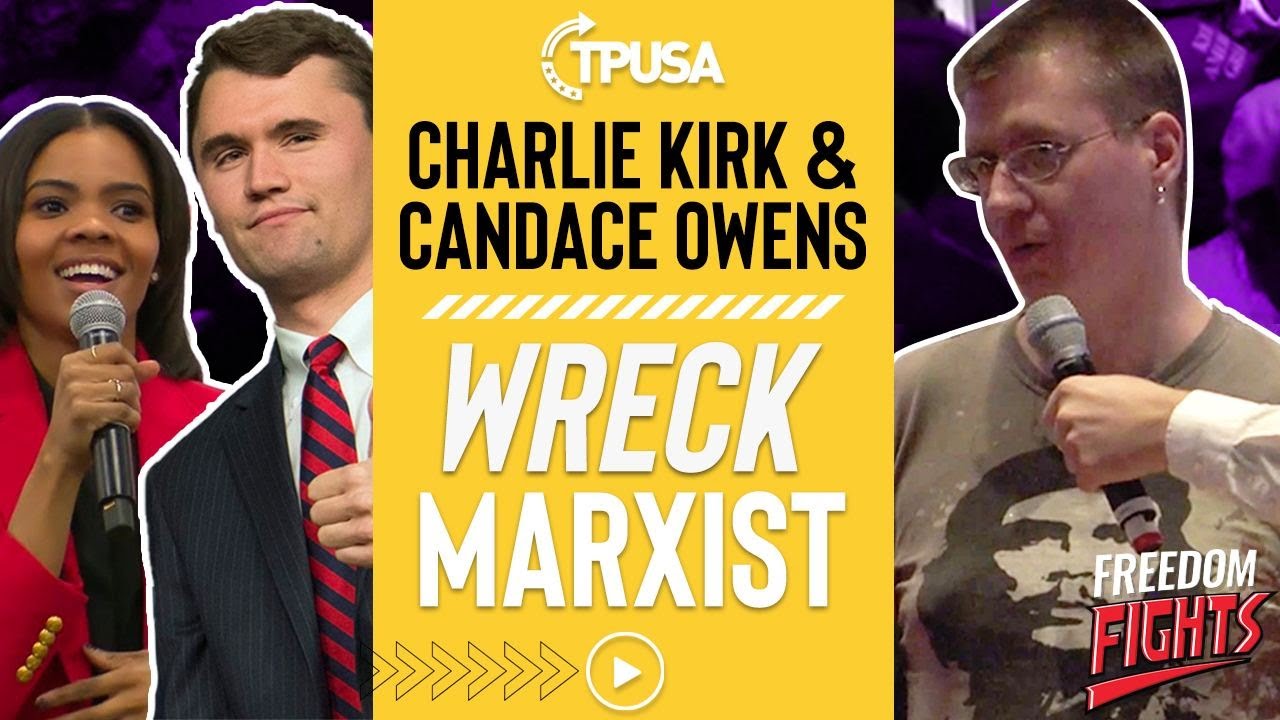
Charlie Kirk Confronts Student Wearing Che Guevara Shirt About Capitalism, Private Property, and Getting Out of Poverty
5:42
Charlie Kirk and Randy Perez Clash on Education, Race, and Economic Freedom at Arizona State University Debate
Charlie Kirk and Randy Perez faced off in a heated debate at Arizona State University covering education reform, taxation, economic freedom, and racial identity politics. Kirk advocated for abolishing the Department of Education and defending free market principles, while Perez challenged his positions on privilege, equity, and institutional barriers facing communities of color. The exchange grew intense as both debated teacher unions, school choice, property tax funding disparities, and whether America operates as a true meritocracy. The discussion revealed fundamentally different worldviews on how systems in America function and who they serve.
Opening Tensions and Department of Education
The debate between Charlie Kirk and Randy Perez at Arizona State University quickly established the stark differences in their worldviews. When asked about abolishing the Department of Education, Kirk advocated for its complete elimination, calling it a "ridiculous talking point" to maintain it. He argued for streamlining and increased efficiency but fundamentally believed local control would better serve students.
Perez countered by recounting the 2010 Wisconsin protests under Governor Scott Walker, when teachers stood in solidarity fighting for collective bargaining rights. He challenged Kirk's inability to empathize with why teachers needed to fight for basic negotiating rights over pay and healthcare. Perez emphasized that teachers provide a public service and deserve to be valued, not attacked.
Vulnerable Students and Federal Protections
Perez argued the Department of Education plays an essential role protecting vulnerable children, including students with disabilities and LGBTQ youth. Kirk responded that he absolutely acknowledges transgender kids need protections but insisted this could be handled at the local level without federal bureaucracy.
The exchange grew heated when Perez accused Kirk of not valuing transgender existence. Kirk forcefully rejected this characterization, stating there are two genders and people can choose to identify as they wish, but he values their existence. When pressed on whether there's more than one gender, Kirk affirmed there are two genders and people should pick one.
Local Control Versus Federal Protection
Perez raised concerns about creating a "patchwork of protections" where a kid in Scottsdale might be protected while a kid in South Phoenix ten miles away might not be. He argued this prevents defining what it means to be American when Americans experience drastically different treatment based on location.
Kirk countered that discrimination cases belong in the court system, not with a federal bureaucracy. He cited historical civil rights victories like the Little Rock Nine and school desegregation as examples of how courts can address injustice. He argued one court decision can establish precedent preventing future discrimination.
Access to Justice and Privilege
Perez challenged Kirk's faith in the court system by asking whether a mother in South Phoenix working three jobs could afford a lawyer when public defenders are overworked. He framed this as a question of privilege - assuming systems automatically work for everyone when they demonstrably don't work equally.
Kirk rejected the privilege framing, stating everyone has some element of privilege and that America remains a meritocracy. He outlined three requirements for success regardless of skin color: graduate high school, get a job, and get married before having children. He acknowledged some people are born with advantages but emphasized that his policies focus on increasing opportunity rather than perpetuating victimhood.
Economic Equity and Wealth Gaps
Perez cited stark wealth disparities: white Americans average $171,000 net worth, Asian Americans $192,000, Black Americans $17,000, and Latino Americans $20,000. He asked Kirk to explain how he would create a more equitable economic system.
Kirk responded that twice as many white people live in poverty than Black people, questioning where the outrage is for poor white people in Appalachia left behind by anti-coal policies. He argued his vision of economic freedom would benefit all Americans regardless of race.
Perez pressed Kirk on whether his message of economic freedom actually includes people of color, noting he sees predominantly white faces at Turning Point events. Kirk countered by mentioning Turning Point's Young Latino Leadership Summit, which he described as the nation's largest gathering of bilingual, first-generation young Latino conservatives.
Property Tax Funding and School Inequality
An audience member who works for Maricopa Community Colleges questioned Perez's claims about state funding cuts. The employee noted that only 1% of revenue comes from state funding, with property taxes being the main source.
Perez used this to illustrate funding inequality, asking whether Scottsdale Community College or South Mountain Community College is nicer. He explained that property tax funding creates inherent inequity - wealthy areas like Scottsdale have high property values generating substantial tax revenue for their schools, while low-income areas generate far less, creating unequal educational opportunities.
Kirk argued this made a strong case for school choice, allowing students from areas with lower property values to attend better-funded schools, pursuing equity through market mechanisms rather than government redistribution.
Federal Funding and State Economics
An audience member challenged Kirk's claims about Republican states having thriving economies by noting that 84% of states receiving more federal money than they pay are Republican states. These include Alabama, Mississippi, and other Southern states dependent on programs like WIC, TANF, and food stamps.
Kirk acknowledged these are among the poorest states but insisted they're poor for various historical reasons, not because they're Republican. He argued they're getting richer thanks to economically free policies, right-to-work laws, and business-friendly environments attracting companies like Toyota to Texas from California.
He turned the question around, asking why the poorest cities in America - Philadelphia, Oakland, Chicago, Milwaukee, Detroit - are all run by Democrats with high crime and joblessness. He argued states with economic freedom are flourishing while blue states are bleeding taxpayers and citizens.
Race, Identity, and Victimhood
Perez challenged Kirk's colorblind approach, arguing that refusing to acknowledge racial disparities takes power away from communities of color. He shared that finding his power came through embracing his Latino identity and community, even changing how he pronounces his last name from "Perez" to "Pérez."
Kirk read from an interview where Perez said he wanted to "deconstruct the white male fragile privilege" and "colorblind racism" in Kirk's ideology. Kirk forcefully rejected being called racist or misogynistic, stating he never judges people by skin color while Perez does constantly.
Kirk invoked Martin Luther King Jr.'s dream of being judged by character rather than skin color, arguing Perez represents divisive identity politics while Kirk advocates for all Americans. He questioned whether America would pursue dangerous identity politics or King's colorblind vision.
Asian American Success and Overcoming Adversity
An audience member asked about Asian Americans having higher average net worth than white Americans, questioning Perez's privilege narrative. Kirk jumped on this, noting Asian Americans entered America in the 1940s and 50s as poor refugees fleeing communism, poorer than African Americans at the time.
Kirk argued Asian Americans overcame institutional racism, including unconstitutional internment camps during World War II, through good decisions, creating communities, and attending college in record numbers. They're now the richest racial group in America without government benefits, proving America rewards merit over victimhood.
Perez acknowledged Asian Americans have privilege too, clarifying that privilege isn't relegated only to white people but relates to how different groups interact with systems and their cumulative experiences.
Taxation and Millennial Concerns
Kirk argued taxation is theft and that Millennials should care because they're being penalized at every turn - income tax, property tax, sales tax, workers tax, and FICA tax. He particularly focused on FICA tax as theft of money Millennials will never see again, going into Social Security and Medicare funds they won't benefit from.
Perez countered that not all taxes are bad, pointing out taxes fund roads, clean air, schools, and the very room they were debating in. He argued the question isn't whether taxes exist but whether citizens get their money's worth and whether the system is equitable.
Corporate Taxes and Wealthy Responsibility
Perez argued the wealthy aren't paying enough to fulfill their moral obligation to create an equitable society. He noted Arizona loses $12.6 billion annually in corporate tax giveaways while community colleges lost all state funding.
Kirk fired back with math: the top 5% of taxpayers pay 80% of all taxes. He asked how that's equitable. He noted the U.S. has the highest corporate tax rate in the world at 38%, though not the highest effective rate. He argued he's never gotten a job from a poor person - wealthy people, businesses, and entrepreneurs with capital create jobs.
Kirk emphasized that investors made Mark Zuckerberg, YouTube, and Jeff Bezos possible, creating hundreds of billions in value. He argued lowering taxes on everyone, including corporations, would create economic growth benefiting everyone in the room.
Monopolies and Free Markets
Perez challenged Kirk's free market advocacy while defending monopolies like Amazon, Uber, and YouTube. He argued you can't support free markets while supporting monopolies that prevent the competition Kirk claims to value.
Kirk responded that these companies make everyone's lives better. He noted Facebook is free, asking how much they charge users. Amazon voluntarily loses money to provide lower consumer prices, incorporated Amazon Prime for 24-hour delivery, and employs 50,000 people while creating value for shareholders and pension funds.
He argued these aren't evil monopolies needing higher taxes but examples of companies creating value through voluntary exchange. He suggested if Perez opposes monopolies, he shouldn't use these services.
Teacher Unions and Education Quality
Kirk called public sector teacher unions "the greatest threats to impoverished African-American and Latino youth." He argued they protect bad teachers, reduce education quality, punish taxpayers, and deter competition.
He shared examples from his Chicago-area high school where gym teachers earned $132,000 annually with $140,000 pensions, while 18% of Chicago Public Schools students graduated without reading ability. He argued bad teachers should be fired and good teachers should get raises, but unions prevent this.
Perez countered by noting Arizona teachers average less than $50,000 annually. He returned to the 2010 Wisconsin example of teachers fighting for basic collective bargaining rights, arguing Kirk lacked empathy for why teachers needed to organize for fair treatment.
School Choice and Zip Code Destiny
Kirk advocated for charter schools, vouchers, and competition, arguing parents should actively choose where their children attend school rather than having zip codes determine their future. He framed school choice as the solution to inequitable funding and poor-performing schools.
Perez agreed zip codes shouldn't determine futures but questioned whether school choice actually solves systemic underfunding and inequality or simply allows some students to escape while leaving others behind in even worse conditions.
State Comparisons and Economic Performance
Kirk repeatedly cited state-level comparisons, arguing red states with low taxes and competitive economic climates are "exploding economically" while blue states like Connecticut, New Jersey, Illinois, and California are bankrupt, not creating jobs, and losing citizens.
He noted Illinois loses a citizen every six minutes due to 5% income tax, unfunded pensions, high property taxes, and institutional Democratic control. Meanwhile, Arizona gains a citizen every 15 minutes while California loses one every seven minutes.
Perez pushed back on Arizona's supposed success, asking if people of color feel valued, if they have access to higher education that works for them, and if they can actually start businesses. He called this "privileged economics" that looks great from Kirk's perspective but not for underserved communities.
Personal Stories and Systemic Barriers
Perez shared his own story as a Latino student at Arizona State University who started paying $24,000 in out-of-state tuition with scholarship help but eventually couldn't complete his degree because he lost access to those benefits. He argued the student body doesn't reflect who needs to be served in Arizona.
Kirk responded that not everyone needs college to succeed, pointing to explosions in welding, plumbing, electrical, and construction jobs. He praised Maricopa County's community college system for allowing students to complete credits locally rather than paying $14,000 annually at ASU.
The Fundamental Divide
In his closing, Perez characterized the debate as showing two very different realities. Kirk's reality embraces the "pull yourself up by your bootstraps" mentality where anyone who wants it badly enough can overcome barriers. Perez argued this ignores real statistics and inequities facing people of color.
Perez accused Turning Point of being dangerous because they advocate for economic freedom without acknowledging racial inequities. He argued that refusing to discuss racial aspects of issues takes power away from communities of color, and he found his own power by embracing his Latino identity and community.
Kirk closed by reading Perez's quote about wanting to "deconstruct the white male fragile privilege" in Kirk's ideology. He called this divisive identity politics and asked whether America would embrace this approach or Martin Luther King Jr.'s vision of judging people by character rather than skin color. He defended Turning Point as advancing ideas that make America the greatest country in history while expanding economic freedom and opportunity for all Americans.
Video Transcript
I don't think Charlie's features like them very much do you guys the feeling was mutual yeah so so this is interesting right this is something that I want to explore further right so this is again an example of how Charlie and I are so impossibly different and I've had such different reactions to almost every single thing that's happened since 2008 right so to get to your question no the department education shouldn't be abolished that's a ridiculous talking point should it be streamlined can they be more efficient always but so I want to take us back to 2010 when Governor Scott Walker was elected right and you were writing op-eds in your high school paper right about how great he was for busting of teachers unions right your teacher for going Madison Wisconsin right I'm from right they were busing themselves up to show solidarity with their other teachers right and Charlie didn't have the human capacity to wonder why okay why did they need to stand in solidarity with folks in where it gets hot here it gets real cool in Wisconsin I'll tell you that right now they were out there in the freezing cold is asking for very simple things right very very simple things can we collectively bargain for our pay can we cut plea bargain for our health care can we go and sit down as equals with the folks that employ us just to have a conversation about what it's like and what we need to get by because teachers are serving the public right it's a public service job where they get up every day it is thankless I don't care what folks they don't work in the summer I know that they do it is a ridiculous talking point to say otherwise we know that we have to value these folks right so the Department of Education there's something very interesting right and you I want to hear what your solution for this is because I don't know what it would be so the department occation is responsible for making sure that vulnerable children in school districts are protected kids with disabilities right they make sure that kids who are LGBTQ are valued they make sure that transgender people who truly does not even acknowledge their existence we can know wrong okay value their existence how dare you say something like that like seriously value their existence you should sit down I mean serious battle with their eggs you question please do you acknowledge is more than one gender there's two genders yes there's more than one would you acknowledge that transgender kids need special protections in school absolutely yes that could be done on a local basis that don't like a federal bureaucracy to look after LGBT what but so there's two issues that I have right now I know that it's still about the power education because there are the ones that enforce this regulation so what I think is interesting right is that if you turn this over to local control right so then the kid in Scottsdale might be protected in the skin and kid in south Phoenix might not right we know that this creates a patchwork of protections where we can't even define what it means to be American because one American ten miles apart right and and I I don't I hope I shocked that you're offended cuz you hit us all for being a friend of inter actually I'm not offended out of laughing okay but so what I think what I think you're missing right is that you when you say that and again I misspoke right but when you say that transgender folks can't identify that way right or that there's not more than one gender right you're not valuing their existence actually I am I'm saying there's more genders in this idea that there's 47 genders and Counting is wrong it's non-biological it's anti science and it's harmful of all the people it is anti science just because Brown University says there's 47 genders and pick one doesn't mean it necessarily is true they used to call this gender dysphoria okay there's two genders now can someone who might be born as a man choose to be a woman yes there's two genders pick one I value their existence how dare you say something like that okay that's what I was saying there so you were a lot there you so so Department of Education you stop talking over here no one can you enter do our job please she put a lot of time okay abolish it well I'm curious I'm curious can you name a specific inefficiency or program specifically from the Department of Ed yes it has ramped up the waste within title nine funding the waste within every single inner-city grant that I've ever come across one hundred sixty billion dollars that they in indiscriminately send throughout the country that has men no impact on test scores or urban poverty levels or literacy rates so the entire thing is a waste and it could be better done on a local so you said well nine you said a great point you said what about the students that are discriminated against the south Phoenix well that's totally the court system you don't need a federal bureaucracy so my job to dictate that you can sue both of the circuit courts to so up to the Supreme Court you don't need a federal government bureaucracy to go after every sort of injustice that's why we have a Supreme Court I believe in the courts you don't need a federal bureaucracy to go after that do you think that the mom in South LA yes I'd say let me said pointy said do you think that the mom in south Phoenix right it works three jobs right he's up late trying to care for kids right and then her kid is discriminated against in school right and a lawyer costs X amount of money right and public defenders are overworked they're not at the level that they need to be to take on a school district or the state if it got to that level or to go all the way to the Supreme Court right so then this becomes again the idea of privilege right you assume that everything aren't under bush I'm sorry even you would talk a lot can you give me on the very studies and then you can go on yeah sure right so this is the idea that right you assume that everything will automatically work for you right you wake up every day and every system works for you without having to worry about whether or not you can access it in the first place if you want a person of color and your time is being discriminated against in south Phoenix you do not have access to the courts right these folks do now it takes just one Court decision and then they can't do it again RS they go to jail do you think that that's how the justice system works here's how it works that's how the Little Rock Nine worked that's how integration in the south works that's how D sector desegregation works that's how you civil rights work actually I do get to talk about get to claim these these great civil rights wins but so here's the issue I'm not going to get into the semantics with what I'm talking about is the idea that he can take credit for all these things and then twist them historically to serve the talking points of the people that already have bought into turning point you're not gonna get new people when you take credit for what the black community did he no community did this is an identity issue and you never get to that event let's stop stop you don't get to talk about this talking if you want to rub me you can i that's gonna keep talking every second that I've talked into the microphone can I respond yes okay privilege if you want to be seriously seriously I mean everyone has some element of privilege some people are smarter I hope I have privilege I have your finish okay I let you do your piece privilege okay privilege if you want to succeed in this country you do three simple things America is still a meritocracy you graduate from high school you get a job and you get married before you have kids no matter your skin color no matter where you come from there are some people born with West yes absolutely do we need increase opportunity yes absolutely and every policy I advocate for is increasing opportunity not perpetrating victimhood not trying to say you're privileged because you're a certain color and you're a certain gender or you're privileged because you've come from a certain part of the country instead talk about the policies the data the map you know what doesn't have privileged mathematics you have not refuted a singular data point that I have brought up to thank you so so can I ask you about specific policy that you would advocate for please right so white people in this country there are average net worth in their current in this country is a one hundred and seventy one thousand dollars asians are actually the $192,000 so where's your indian americans are underneath there are twice as many white people living in poverty than black people when where's where's your outrage through all the poor white people in West Virginian Appalachia that were left behind from the disastrous anti-coal policies that Republican President Barack Obama passed and left by a regions in this country without work without self-worth without the capacity or ability to earn money he asked me a question but I didn't get to finish that's part of so when you ask a question something at the end is asking you to respond I'll keep my so okay so if white folks in this country have $171,000 average net worth in this country right and the average black net worth in this country is about $17,000 in the average Latino net worth in this country is about $20,000 can you explain to me how you would create a more equitable economic system that actually tries to come and you try to claim equity earlier in the policies that you're talking about but equity equity would be if we took money that we know is already there right we know that it's offshore we know that folks aren't paying their taxes we know that corporations like GE are paying close to zero percent in taxes every single year and we know that if we created this economic platform that rewarded you right and not the wealthy for you and not the privileged for you then we know that there would actually be more growth more economic opportunity for everyone right Charlie's vision of economic he serves variation of movements white Americans African Americans Indian Americans and all Americans yes all Americans will benefit how well you talk to some folks about whether they think that Charlie's message of economic freedom actually includes them because I know it's interesting I see a lot of white Wi-Fi you're right why the color person from a person of color person to color person to color personally color it's interesting talk to them they'll have some interesting soundbite so also you should come to our young Latino Leadership Summit which is the nation's largest young Latino Leadership Summit for young freedom-loving conservatives all of which are bilingual first-generation young Latinos that so there's a lot of words go ahead sorry I'm having a great time I don't know about everyone here is everyone enjoying themselves we are actually going to open it open the floor to questions so I guess if you want to ask these guys question just raise your hand and I can pick on you yeah and then we'll hand a mic to you too so we can hear your questions okay my man how are you doing doing very well okay I'm seeing you here at ASU studying history I just want to ask Randy about the fact with Maricopa Community College's since the state two years ago took funding out of its budget and and he's saying that since that tuition has risen to be specific to the Community College well one the former vice chancellor of the services said in an interview with KTAR when when the initial budget went through the legislature said that only 1% of state funding actually is the revenue for the entire Maricopa Community College's budget this main budget is from property taxes intuition intuition is mainly from property taxes the only thing that actually it does affect is any future initiatives at the college's actually do which as a work as a employee for the Maricopa Community College's we're still growing we're still serving many different demographics and students and so I just wanted to you know get where the facts are coming from yeah absolutely so I think that he made an interesting point right about property taxes funding schools right so you work for the system you said right can you work for it Maricopa County College's which is a nicer school Scottsdale Community College or South Mountain Community College a nice which one would you rather go to personally I live near Mesa Community College but I visited all of them I used to work for the student loan support services team which I agree of Charlie if we didn't have a diploma education would be a lot easier to do my job [Music] I hope that they serve all their students really well I think that's important I'm sure that you do a great job but I want to talk about the way that those schools are funded right when you look at the way that you would fund property taxes who whose home values are higher is it when we go down to Broadway and central and those property talks that the fund Roosevelt schools and in South Mountain Community College is it houses in Scottsdale they have incredibly high property values and then thus they pay more in taxes but that goes straight to their school right so you have to think about who is serving being served by this right so you know that it's an inequitable education right because if you won the South Mountain Community College not strapped it up I don't think you're a long time but if you tried to look at it in creating equity this is not happening within the community college system right now because of the funding classes and the same for kayden's well can I comment yeah so first of all the goal of creating absolute equity is both impossible and immoral you should never have absolute equity and wealth for equity talent so you keep mentioning that I will say it's both it's both impossible anymore but secondly you actually just made a great argument for school choice that students that grow up with worse property values should be able to go to a school that's has higher property values so they're able to take their money and go to a better school if they're within a failing school which is exactly a good argument for school choice which is everything that we advocate for which would actually pursue more towards equity which is everything that you believe in so school choice is a lie right it's a success story that has lifted millions of people out of poverty in sorting many of whom that I know like I said I read your book right I didn't super enjoy it as you can imagine but I and he created and so I want to talk about Julio right because you run up that Tino's earlier yes just so everyone knows Julio is a fictitious character that I created in the book of what a free society can create for an at-risk Latino immigrant in the country through a free society lifted out of poverty into success just so no one else so so to be more Frank Charlie created a fake Mexican to prove his point Wow and I didn't like that so I didn't like himself so if I would have called him to Jake it would made it less true it would have made it more real coming from you right really or how about if his name was Jovan I seriously like what what are you trying to get out here so I want to go back to like why is it always race with you seriously with your leftist sideways it's like if we created a fake Mexican [Applause] what are you trying to say with all this race stuff I want to get back to the curious I want to mentioned race once but you keep on mentioning that kind just quickly talk about school choice can someone answer about school choice I've dulled by so this question I have for Charlie thank you for being here yeah thank you when you say that with publican states have thriving economies and you use this as your evidence for low taxes working yet 84 percent of the states that receive more federal or 84 percent of the states that received more federal money than they pay for our Republican this includes things like WIC Tim food stamps Alabama and Mississippi 84 percent of the states are Republican that received more than I paid so here's my question when Republican states receive the lion's share of government benefits which are paid for by taxes how are you able to attribute economic success in these states to free markets and to limit the beautiful question it's actually very easily proven you're talking about this this wonderful Democrat fantasy is somehow Republican states are mooching at the trough of others first and foremost you're talking mainly about six states which are mowing most in the south which are some of the poorest states in the country Alabama Mississippi Tennessee Kentucky South Carolina and Arkansas and they're not poor because they're Republican they're poor for many different sorts of reasons but you're asking so eighty-four percent of all tax dollars are two-wire exactly to the poorest states yes go to poor States that happen to also be Republican and they're getting richer thanks to economically free policies and right-to-work policies and procedures payers and that increase in businesses and that increase in people that are actually paying into the government services Tennessee for example is an unbelievable economic success story where they see businesses moving to Tennessee that was one of those previous states like that Kentucky's another state it's a fake Democratic talking point and another thing so you look at some of the wealthiest cities in the country they also happen to be in democratic states there are also some of the worst run cities you look at the most poor centralized areas in America that received federal funding without the state argument you look at Philadelphia you look at Oakland you look at Chicago you look at all the good wellactually cities and states pivot they're actually quite interrelated so the poorest cities and why are all the poorest cities in America happen to always be run by Democrats the highest crime with the highest joblessness and the most screwed up states all happened me run Democrats I don't remember a Republican mayor of Philadelphia or Oakland or Chicago or Milwaukee or Detroit or all the states that all the cities that happen to be screwed up or I'll run by Democrats so to answer your question the states that are most economically free are flourishing at the highest rate they have a net increase of citizens they see businesses per capita raising dramatically business startups rising and blue states are bleeding taxpayers and bleeding citizens but so he does funky so you just contradicted yourself right well I actually did let me try let me talk me try I try to answer you a bit right the reason for that because as you said yourself those are some of the poorer states right despite all the freedom in the world and all these free markets that have been created by Republican governors in Republican lightweight Alabama just recently become read and less if these folks just still aren't doing that great and I wonder if because those states do not have the tax revenue to support a public education system that serves their students I wonder because they can't afford to pay good teachers to serve their kids so that they can go out and create the economic boom that we're all desperately looking for all right we all want that right but when you ask that question right and there's also a health care component to it right where we know that in a lot of those states they have incredibly poor health outcomes right and so they have to lean on federal federal government you just take care of their citizens those states that he mentioned aren't even doing their basic job of taking care of the people that pay their taxes or elect them or live there right so it's just it's that's the reason that they're getting the final fine to answer your question [Music] [Applause] [Music] that was a really bad choice that was a not a good choice say I've never met you before this is crazy first I'm gonna start with you are you mentioned that monopolies are against the American creed which is very correct and competition is necessary which is also correct but how do you defend the monopoly teachers union have created Charlie I have a question for you too you cited Amazon as a monopoly which is contributing a lot of he did and I actually said it's a great company that might be a monopoly so you you're comfortable with it being a monopoly as long as well so the only part of their monopoly is Amazon Web Services which owns 53% of the market share well now I'm actually correcting him you're not up here I am thank you very little so go ahead even if it's a monopoly is contributing good and Milton Friedman in his book capitalism and freedom and tax monopolist he blames the government that creates them but he still attacks them and suggests that more free market and more free trade would fix the problem of monopolies which are this latter which is the policy that the current administration is against I mean I'll take the monopoly than you could take the teacher unions so Milton Friedman to not say that Milton Friedman said in all of his writings and all of his he wrote in the moral case for capitalism he said that all monopolies are created by government but if a monopoly is created out of free market forces it usually does not do harm for the consumer and he cited the Beers diamonds as one of those examples so get your Milton Friedman right because that's incorrect secondly yes Amazon I like how he talks to you do you feel as if he's respecting your questions and your time and your value you just interrupted me let's talk about respect okay question Amazon good lowers prices employs a lot of people creates a lot of value for stock first stock hold shareholders if you want to count it as a monopoly they have cut prices and made products and life better for a lot of people so and your teacher unions yes so I want to hear what you said first and then I'll go to any economist but so this is the inherent fallacy of turning-point entire ideology right to say that they advocate for free markets when you have your founder on stage defending monopolies that then destroy competition which is inherent of a free market but how do you say it's so what if what if the next great Amazon idea is in this room right what if it's in this room right but Amazon has such a monopoly on the market that you will never be able to get it created and then they're not gonna pay any taxes upon your school so then your kids aren't gonna be educated to actually go out and make the change that you so desperately want you can't be talking about having to start a new business if you aren't out there advocating for our people again Amazon's not a monopoly you brought it up so tell me what they do not believe but I want to go back to Shea's question cuz I actually respect that you can't be you don't understand the company tell me what they have a monopoly over I don't get my shelled hipster all this report every week like well then why don't I want that answer Shay's question yeah actually I'm glad I use the capitalist I want other people better so so I want to go back to the Amazon piece can I answer the initial question from the participants that okay with you thank you brother I appreciate it so going back to the issue about teachers unions right teacher we I think we both acknowledge that today unions are weaker than they'd ever been yeah right right and that's right and I do have problems when go back to just hope your whole your hood now we're in your head right in Chicago we do have a problem where the bad teachers have been protected right but at the same time we know that not all teachers are being empowered to actually do their jobs in the first place how can you ask a teacher in this state that's a member of the Arizona Education Association right to go out and teach to go out and teach when you're their student their school isn't funded their buildings are falling apart right we know that they have them and you might say they have a monopoly I think that we should have unionized workers going to school districts going to the state saying that we you have to value us right it's the teachers that make the education happen I wouldn't be here without some great teachers and I still remember them and I never them in the snow when you were attacking them I remember listening to their stories about their pay I remember listening to their stories of how they weren't sure that they would be able to afford to send their kids and these are teachers they're like I don't know if I can stay in this district I don't know if I could keep teaching you and for a student it's so hard to lose a teacher so how many teachers lost their jobs or to Scott Walker and I don't have you answer the question how many teachers lost their jobs as a Scott Walker I know that teachers quit zero zero teachers or fiery cans like that in the factories zeros teachers were fired because the reforms he put passed but were they able to actually bargaining with this that's another lie he did not get rid of the ability to collectively bargain did you read act 10 I was there and he was reelected in the recall with more votes than he did it that doesn't answer the question that's about 10 you want to talk about 10 because it's it's 7:30 anyway you're supposed to have it till 8:00 okay another 10 minutes right 10 minutes yeah one more question it's up to you the moderator [Music] [Music] [Music] as I mean so so I appreciate your question and I thank you for coming I got your time what I would say is that Asian Americans do have privilege right I have privileges Latino right I have templates right grew up in Wisconsin right privilege is not relegated just to white folks right that's not how a privilege works we know that privilege is how do you interact with systems and how your experience is put together right so to answer your question I'm not really saying things are racial right there are racial outcomes that we have to deal with and put policies in place that actually acknowledge their reality right so when you look at that right I think that Asian Americans if that is their actual net worth and I don't have the statistics will I apologize but if that is what is going on then they are also part of the solution right don't wouldn't you say hi can I ask him a question back wouldn't you say that we'd all be better off we'd all be better off if people of color in this country felt two things they felt valued by their community and they felt as if they felt as if they had Economic Opportunity in their community as well would you feel that way how loud you yeah I mean it's exactly right Asian Americans entered mostly the 1940s and 50s fleeing communism they were the poorest ethnic repor than African Americans when they entered in the flurry of refugees from Mao Communists so let me finish let me finish let me finish they entered extremely poor made good decisions created communities and they went to college and record numbers and now Asian Americans are the richest sub racial group in the country the Constitution was not written in Korean the point being is this country can be successful no matter what race color religion or language you speak even more than that even more than that if you're trying to say that oh well you know it's different because there's institutional racism against black people there is a lot and continues to be institutional racism against Asian Americans but they overcame in it and in fact if you talk to someone who fought in World War two as to what they used to call an Asian American person we actually if I remember correctly we unconstitutionally put Asian Americans in internment camps in the 1940s we treated them horribly so and instead of giving them government benefits we empowered them so and now they are the racist they are the richest sub racial group in the story for the question because they overcame the victimhood mentality that you are pushing so can you can you just outright say for me please sorry I'm talking can you outright say for me that you think black people think they're victims and so do hispanics I think that you are putting forth a victimhood mentality I think the left is trying to turn women in the victims they're trying to turn black people in the victims are trying to run Latino into victims they're trying to turn transgender people the victims are trying to turn Muslims into victims when in reality America has been the greatest country in history world because we'd always risen above victimhood culture because we've empowered the individual to rise above them I think it's the left doing absolutely I have absolutely nothing to say will actually keep time this time so what I would say and I want to thank you all for coming I really appreciate your time and then you're interesting what we have to say I really do value in the difference opinions and I think I've learned that I think I hope that we've all learned that was the purpose of this event and but I think that you see right now is you have two very different realities that Charlie and I are living in right you have a reality where as Charlie said himself everyone can just make it right this is the old pull yourself up by your bootstraps mentality where if you can just wake up and if you just want it bad enough right if you just want it bad enough you can push down all those barriers that are put in place and you can just go and do it right but we know that's not true right and I again and you're gonna and I can use right there you can call me that I'm telling me I'm race-baiting I'm talking about real statistics and identity and I and I want to talk about one piece of why I closed out turning-point is dangerous right socialism the danger of turning point right and again I do thank you all for setting this event I appreciate your civic engagement of young age but the danger of turning point is that their couching this economic freedom argument right without acknowledging the inequities and realities of what it's like to be a person of color in their right and then fundamentally fundamentally when you are unwilling to talk about the racial aspect of issues you were trying to take our power away right I found my power right as an organizer and as a person when I got here and I realized that I'm a part of a community a Latino community right I even changed the way that I pronounce my last name you knew me when I was Perez right and you can laugh at that right but it was such an important moment for me where I realized that there was so much more to what we were doing so I thank you all for being here I would encourage you to think I would encourage you to continue to be engaged I just want to say that I do thank Charlie I know that we got a little bit heated we had fun backstage and I think this is gonna be one of the first one of many conversations that we continue to have thank you so I'm gonna read something so I'm gonna just close together you say you're not race-baiting that's fine you could say that but I wasn't gonna bring this up but I just have to so you you gave an interview to the Arizona State Press and you said it quote what again would be a win for me is if I can find a way to deconstruct Carly Kirk I want to deconstruct the white male fragile privilege that goes into that ideology yes I want to deconstruct the misogyny that goes into this ideology how I can deconstruct the fundamental colorblind racism that is inherent and a lot of things that he writes in this book Wow so that's absolutely correct course of course because this is the this is the playbook with the left right before before the game even starts call someone a racist say your policies are racist colorblind racism is that you said my policies are missing you said I massaged this let me reread the public you said no seriously not you said it I wanted any constructive massaging that goes into the ideology yes absolutely so I'm a misogynist now I think women that's not what that means what do they mean when you look at this right and I mean seriously I mean it's a closing garment but point being you can you can play the nice guy all you want and say I was one of the rise all above it but you came in here trying to make you know this idea of white male fragile privilege I will never judge someone by the color of their skin you do every day I do it every day how dare you say that how dare you say something like that how dare you say I judge people by the color skin every single dinner seriously I mean what an astonishingly Clint stupid claim for you to say for you to say I judge people by the color skin while you come up and you say I have white male fragile privilege who's being racist here folks who's the one actually saying that someone has skin color I come up here and what turning point you say exposes and yeah we are dangerous to the liberal left and socialists that want to destroy this country absolutely we're dangerous tonight we were also we're also advancing ideas that's going to continue to make America the greatest country in the history of the world and expand economic freedom and opportunity protect the Constitution which is the greatest greatest political document ever written by man but finally I will I will continue to advocate for the rights of all Americans and this is going to be the stumbling block is are we going to go down a way that you're a plant where you go into this dangerously divisive and hateful color identity politics or are we gonna do what Martin Luther King said I believe you said I dream of a day where you could be judged by the content of your character and not the color of your skin and you are being exactly the opposite where you say you have white male fragile privilege and that I'm and colorblind racism because in this country as per the asian-american example and the Indian American example if you make good choices and if we continue to expand economic freedom and opportunity you can succeed and only in this country is that possible thank you frankly the topic of taxes isn't the most attractive for young people though tax reform can directly affect their future financial situation their ability to buy things the amount of money they receive and why should millenials be interested in in tax reform why should they care first well they should care for a lot of different reasons first and foremost I believe taxation is theft I believe you have the right to keep what you earn you the right to your time and you have a right to be able to live the life as you see fit as long as it doesn't harm someone else the United States of America has become one of the most if not the most tax nations in the country not just from a corporate level or personal income tax level but from property tax the sales tax from workers tax from a FICA tax our generation is being negatively penalized on every single corner for being able to for being successful for creating value and wealth for yourself and those that you care about when you're able to keep more of your own money and you're able to invest it as you see fit everybody wins Turning Point USA we believe that through free enterprise let's just define what that means that means you can buy what we want about buy so what you want to sell working where you want to work start whatever business you want to start as long as it doesn't harm someone else as long as that exists and you're able to adjudicate differences in a impartial court system then honestly human history has showed us that the bell curve continues to go up poverty goes down and everyone gets richer on through equally benefited trade value for value so why shouldn't Millennials care about taxes well first and foremost I'm sure all of you one way or the other have had an hourly job one of the things that we talk a lot about that I wish the politicians in DC would focus on is getting rid of the FICA tax is a tax on work it is stealing Millennials money money that we are never going to see again into a Social Security trust fund that doesn't exist into a Medicare fund to pay for something that we will never benefit it's a tax on work it's a tax on time to tax on labor it's tax on the middle class and it's tax on our generation we should demand that Washington DC politicians eliminate the FICA tax or at least allow us to opt out of it so that we can keep the money we earn on every single paycheck so if you're paid $10 an hour you get $10 an hour right there as you work in real time thank you let me respond on your mail you can respond if you feel inclined respond or you can answer the question if you would like okay great um so I think it's me easy to keep track of all the talking points right the government sucks socialism sucks and Taxation instead so I got it I got the whole turning point ideology put together in less than 10 seconds and and that's one of the biggest problems I have I'm gonna answer the question about why y'all should care about taxes I don't know if you drove on a road today or breathed any clean air but I think what is so fascinating is that we do this dive into issues where we don't take the time to truly and introspectively understand them right some taxes are bad some taxes are too high some taxes paid for this room for this school that we go to right and so we have to understand that as Millennials going back to the core of your question so you don't yell at me and we should care about what its gonna look like when we graduate from school or if you're not in school right we should care about the cost of our education and whether the state is adequately funding it right we should care if you know when we want to have families one day for some of us are our kids going to be overtaxed or are they gonna get their money's worth from the government right these are questions that we as Millennials and so many of you here you're clearly thinking about it right but what we really should be doing is not just making sure that we engage the political folks and so many of you are right our recently engaged but did you care about taxes you should go talk to somebody about it right when you look at what your City Council is letting on you right you should care about these things right and I think that you're gonna see two very interesting in different perspectives tonight on what taxes can mean for you not just today not just tomorrow but for the rest of your life and that's what we really want to provide okay [Applause] alright so with that being said then what are Republicans and Democrats doing and what should both sides be doing to get Millennials more interested in taxes and tax reform I think that both parties would agree on this really struggle to engage young people because we don't want to identify with the Democratic Party we don't want to identify with the Republican Party right I think that's something that you have done incredibly well is find a niche right a free-market ideology and getting back to these first principles that you often talk about that aren't being talked about by the Republican Party right and so we're gonna engage in a conversation about taxes or education or any issues that can often seem existential to us we have to do it outside of the party structure right I've learned so much more as an organizer and I've learned so much more and being able to empower so many more people and they've empowered me I wouldn't be here without them by engaging on these issues and through school right I was able to go to this University and studied political science and that really piqued my interest in more policy side of things instead of just the storytelling piece so I think that we need to work together to make sure that we are talking about these issues you know really fundamentally so Republicans are not doing nearly enough Democrats are trying everything they can to get within taxes getting cut and trying to raise taxes so I look at the Republican tax plan it's not something I'm in a completely defendant as some good things has some not so good things mostly spineless Republicans that are not willing to really take strong stands to fight for hardworking Americans that are getting penalized by an out-of-date tax system that favors the wealthy the connected and the few that have good offices on K Street and that are used to work from Goldman Sachs so will probably agree on that not that Obama was any better by the way I mean he had Goldman Sachs running his whole cabinet so let's just make that completely let's make that completely and as far as the soundbite things yeah I mean we have good sound bites they resonate but it's not exactly you know anything new in American politics coming from the hope and change yes we can forward things so yeah sound bites are not exactly anything new they're quite effective and it's not just big government suck socials and sucks taxation is theft it's also free markets free people socials you make it they take it there's also a sound bites but how much are important because it's how you start a conversation it's how you build a movement messages create movements but what are Republicans doing not near enough what are Democrats doing way too much to try to raise taxes let's talk about the story of the state's you look at the most bankrupt states in the country the run by Democrats with high taxes and you see people fleeing the reason why Arizona is prospering right now is because we got heroes no it is prospering okay is going up unemployment is going down property values are going up government revenues are going up business startups are going up entrepreneurship is going up you can laugh all you want but Arizona's going up so thank you for for laughing at that but let me make a point the reason why Arizona is doing well the reason why Wisconsin is doing well and yeah you can laugh at Wisconsin too but I come from Illinois it's not exactly a beautiful state okay we have we have term limits in Illinois one term in office Mike you okay so one permanent office one term in jail that's what we have in Illinois so it's a little it's a little bit of a corrupt state okay now you might you might say Oh Arizona's not doing that well you think California's doing well 50 cents on a dollar going to negative pension payments they are losing a citizen every seven minutes Arizona gains a citizen every 15 minutes why do you think that is it's because it competitive tax policy and it's my friend it's not because of the weather okay it's not they have comparable climates and final point final point I know I'm getting cut off you see you see the story of the states red states with low taxes competitive economic climates that balance their budgets are exploding economically blue states Connecticut New Jersey Illinois California are a mess they're bankrupt they're not creating jobs they are losing citizens Illinois loses a citizen every six minutes think about that they lose a taxpayer every six minutes why is that 5% income tax in a very highly taxed region unfunded pensions and a broken state run by institutional Democrats that have gone completely nuts to raise taxes highest property taxes in the nation so go ahead tell me why I'm wrong but I'm right so thank you yeah so I think Charlie did his homework before he came to Arizona and I appreciate that I appreciate you caring about you know our hood here so folks that I've worked with here in Arizona how are we doing are we doing okay do you feel as if do you feel as if you weren't valued here in Arizona if you're a person of color in Arizona do you feel as if you have access to a higher education system that works for you and not for the state do you feel as if you can start a business here we're talking about startups right but we lose twelve point six billion dollars every year in corporate tax giveaways and we don't see a penny of it I think Doug Ducey gave him his talking points because he's running for reelection next year this is actually absurd that we're talking about Arizona as being as doing well right I came here and I was just shocked I was so taken aback by the inequities and the lack of value that folks come from here right this is what we call privileged economics Wow and I vow so there's my talking point right okay this is important right so if you are a person who has privilege in this country I think Arizona is doing great for you if you are a part of an underserved community that needs advocacy and needs representation it's not going so hot and that's not a weather joke it's great right now but I would I think you have to understand is that from Charlie's point of view it does look good it really looks good from the rest of us not so much not so much okay so there's a lot there to unravel privilege economic so somehow the 30 seconds fine so let me I'll speak very fast like bench here so you can kind of say not really so there while there's a lot to unravel there but you didn't refute the point that red states that embrace economic freedom are doing a lot better than blue states that are completely bankrupt you look at Illinois we look at Connecticut you look at New Jersey you look at states with Democrat governors that have raised taxes you see taxpayers leaving at a record rate and you see red states like Florida like South Carolina like North Carolina that have lowered their taxes let's look at Virginia so they just re-elected their same policies that are driving Virginia negatively economically yet the surrounding states are out competing them without competing them for job for entrepreneurship is for business startups but let's talk about Arizona actually if I'm not mistaken Arizona State University is cutting edge with technological advances increases with online learning you actually in-state tuition in Arizona State University for out-of-state tuition Arizona State University is lower than in-state tuition in California so that's something that you should applaud so you might say you might say that you're on representative color but if you're a Latino student in-state here in Arizona don't you still are able to pay tuition too that's the question I mean privilege economics you could say that it sounds really good but what am I saying that is untrue if I wasn't a white male like seriously don't just use this kind of like privilege economics this is great look at the lesson to lazy argue this employee so I don't know if you guys know this but I'm actually a Latino student and Arizona State University and I actually am unable currently I know it's crazy huh my last name is actually pronounced Pettis so if you look at what's happening I'm gonna tell you my story I love stories right it's my favorite things to do you're gonna have a 15 second story so I got to this University in 2014 and I was paying out-of-state tuition I was lucky enough to receive a scholarship to go here so I was paying about $24,000 before room and board and you know gas and food and living and then I'm actually not currently able to complete my degree because I'm not able to get those same benefits right I'm not able to do that and when you look at the student body it's not a true reflection of who needs to be served here in Arizona it's not okay so can I respond to that 30 seconds that's a great point so first of all not everyone needs to go to college to succeed I agree and in Arizona you see a huge explosion of welders of plumbers electricians construction jobs people that did need to get a four-year GE to GED to succeed the community college scene in Maricopa County is exploding and that's a good thing that's a good thing it should be applauded because students are then making the decision they say well why do I need to go to ASU and pay $14,000 a year for in-state tuition I can go get my class credits done in the local Unity College and that's exactly we advocate for a turning point USA which is in a market people are gonna make the best decisions as they see fit it's gonna benefit themselves and the people around them the final point I'll say is this and you still haven't refuted this I really want you to talk about this why is it that the Democrat states are so screwed up and the Republican states are prospering economically unemployment there they're creating more jobs they're attracting more business why does Toyota move from California to Texas and jobs are not moving back into California why is it that Amazon is considering to move the Phoenix and they want they're not considering one city in California please tell me taxes taxes are a very big thing of Interstate Commerce taxes are the best way to dictate the movement of people u.s. I think it's extremely relevant what are you talking about so you can answer it or not but so the reason the reason that was to start the end inside the end that then Amazon is not gonna come to Phoenix and the reason is because of our education system we know that we're not investing in k-12 education and we know and I think you would acknowledge this as well that when you have a strong school system that serves its entire population not the rich white kids in Scottsdale but actually serves the brown flows down and its top Phoenix who I talked to all of last year talk to real people then you do this thing where you realize that we're not living our values and we're not serving our people and we're not doing what we need to do as leaders cynically right and so they're never gonna tell me I need 10 seconds for the red-state piece that's the what the Democrats say you wanna talk about right go ahead ten seconds good luck yeah so I'm from New Jersey right I'm from New Jersey the pension system is broken right we know that we allow politicians in New Jersey to continue to put unfunded liabilities same as we have in Phoenix I remember a four million time machine you were in that ecologist but we have this huge pension liabilities right and it's because we didn't do good economic policy in those states and we know that with we have more progressive policies and more Democrats that were elected I do not believe that would have happened and we talk stuff so you were talking about a state taxes well they did support you'd want a state that has a funded pension like Wisconsin like what Scott Walker did right where you're from so it right you know that we did that because taxes unemployment is down farting he's cut spending that's a state you would appreciate you guys that was Charlie that's not true you know it's not just one reelection time and time again so much fun backstage it wasn't in front of the cameras though okay we are going to rein it in and move on to the next question yeah okay we've spent about five minutes on that one alone so I think we're gonna continue on and from Vermont senator Bernie Sanders garnered strong millennial support with his Robin Hood tax plan to pay for college tuition the Robin Hood tax plan would implement a point five percent tax on Wall Street transactions and would generate hundreds of billions of dollars each year according to the senator what kind of how would this kind of tax plan affect Millennials so we know with this I'm not a supporter this senator I don't want to dive into another his tax plan that I'm not currently aware of but we do know that the wealthy are not paying enough in taxes in this country to fulfill their moral obligation to the rest of us to really make sure that we live in an equitable sized society that lives our values right I think we can start off at that point so when we look at the underfunding of the state education system here in Arizona and actually I don't know if you know this but they actually cut all funding from Maricopa kyani community colleges last year so now they get no funding from the state and no help so tuition will go up because the state is not fulfilling its obligations to its students so when you look at what's happening with these tax plans from the senator and even tax plans that are being trying to be adopted on a local level we're trying to make sure it's a it's a lie to say that the wealthy are paying too much in taxes right the rest of us are paying too much in taxes right if you look at what's currently coming out of Washington they're trying to blow up the deficit by 1.75 trillion dollars in order to give people's rich friends and their donors a tax cut right that they don't need 80% of the content of that bill benefits the wealthy the rest of you nothing nothing if you were a teacher you can't deduct the cost of the school supplies that you have to buy here in Arizona because the state isn't going to fund you right we know that this is all a lie right there's nothing behind this right so we look at a tax proposal like that from the senator where he's talking about the wealthy paying their fair share I think everybody Stax's should be lower I think the system should be more simple I think that the wealthy actually need to stop paying sometimes 10% in taxes 0% in taxes corporations need to pay their fair share we know that's not happening especially here in Arizona so I think that we need to look at this tax policy not to employers and lenders I think we would agree on but from one that works for real people and not the wealthy few yeah so let's let's talk you keep on saying we all know no because we don't all know okay so stop saying that because let's talk about math okay first of all you work for the Obama foundation your big Obama fan please don't mention the deficit okay he borrowed ten trillion dollars in eight years the most out of any president okay so we can have not exactly a credible figure to critique the sitting president on that number one okay number two these years so you say we all know the wealthy are not paying their fair show not we don't okay so the top 5% of taxpayers pay 80% of all the taxes that's math that so would you agree that 55% that pays 80% of all the taxes there's something not exactly equitable about that now the United States also has the highest corporate tax rate in the world it's not the highest effective corporate tax rate but it's the highest on paper 38% corporate tax rate now you could talk about corporate handouts in corporate favors you'll have a lot of agreement with me but you say this GOP tax plan doesn't help anyone here I've ever gotten a job from the poor person seriously I've never gotten a job in the poor person you haven't it is it is wealthy people its businesses entrepreneurs that have money have capital that start businesses it took an investor to make Mark Zuckerberg be able to grow Facebook it took an investor to be able to have YouTube get off the ground it took an investor to sit with Jeff Bezos in the office and say you know what I got a bunch of money I'm gonna put two million dollars into your company you know what he created over six hundred billion dollars of in five years so you can bash the rich paying their fair share you know what the tax is on the wealth your - hi there - hi on all of us because govern you weep Washington DC in four point four trillion dollars last year what if they only spent four point four trillion dollars it the government is way over funded taxes are far too high corporations are taxed on much high to high level individuals are taxed at too high of a level and we as Millennials go back to my original point title together have a tax on work they're stealing money from our paychecks every single day through that FICA tax is an invisible tax it's money we're never going to see again we should demand the fight back against it but to wrap up the whole point no we actually don't all know the rich or not the rich are paying far too much in taxes if we cut the taxes on everyone including small business owners on corporations and on businesses you will see an explosion of economic growth that will highly benefit every single person in this room thank you so something that you said I thought was so interesting and I thought the reaction that I had to it was interesting to where I didn't feel angry I just felt really bad for you and this really sad that you would lean and so hard on these these folks right the amazons the ubers the youtubes right all these folks that did this really top end stuff right these really great things and there's such great innovations right and a lot of them have been under Obama especially uber which we don't mention in your book but what I find is so interesting is that you can't be for free markets if you just have these highlights reels of what's not happened you're not including was happening to small businesses on the ground right you can't be for these free markets when we have monopolies right those companies you're talking to have monopolies on their industries right and it's not going to allow the competition that you say that you want to flourish underneath them unless we cut we raise their taxes help pay for the facilitate right that's never going to happen and [Applause] [Music] [Applause] he calls them whenever he has a problem with the problem Anopheles right this country was I just did Amazon with them they make everyone's lives better and you said nothing so so let me continue let me continue this is this is what the Bates all about though I like to finish one thought ladies if you don't mind and I'm gonna say something that I hope that you find out right when this country was founded right and we saw these great economic and engines happen during the industrial revolution throughout the 20th century and to today right what do you I want to ask you about as you can if you don't what what do you value more what do you value more a mom-and-pop shop down the street struggling to get by that needs help from the government right that needs a tax break right and the only way that that could be funded right is if the wealthy in corporations start to pay more right would you be willing to take that trade right to help break up he's not leave because monopolies are fundamentally on American right it's on America did not have competition that's an American value you say all the times its first loss leading the witness so shame on you for that number two my lord yeah what would you rather have a mom and pop store dying on the street or bring a wealthy tax code I like economic freedom okay I'm not businesses to be able to pursue their own self-interest create value for their shareholders be able to employ people and create project products and goods and services that benefit us all but Leslie use an example you know it's another monopoly Facebook's a monopoly how much they charge you for Facebook by the way oh they give it away for free so give it oh so oh you have to see a couple ads in your news you get a slotted native but you get to communicate with someone all the way across the world and don't ya I don't use Facebook mister don't like the point being is oh there's all these horrible monopolies you can't name one you probably talk to or you Amazon that was it that created a flourish Minh of wealth or good prices and goods goods and services for everyone if they give you a discount on your shares I'm sorry actually my shares have gone up and I've created a lot of value and I'll pension funds that have invested in Amazon have also got equally as wealthy and rich you so I would say that everyone who's been involved in Amazon has been in that winner and Amazon has voluntarily decided to lose money so that consumers can have products and goods and services for less money they incorporated Amazon Prime free of charge so you can get something in 24 hours or less they're able to cut and slash prices for all consumers they're a deterrent against deflation there are six hundred billion dollar company that employs 50,000 people they're considering an investment here in the Phoenix metro area and that's the best example you have of an evil monopolistic entity that needs to be taxed more you need to reconsider that GE Walmart what Walmart's not a monopoly but go ahead let's talk about Bernie Sanders fine Bernie Sanders is a fraud I love you Bobby sure right so Kentucky Republican senator we're gonna be talking about education now Kentucky Republican Senator Rand Paul said Americans wouldn't notice if the United States Department of Education was gone tomorrow and other senators like Joni Ernst from Iowa noted that the US Department of Education role is non-essential so how would you define the Department of Education role currently and is it quote unquote non-essential charlie it should be abolished instantaneously should have been abolished justify the default let me make something clear just because you want to abolish federal involvement something does not believe that you're somehow anti-education let me think that first and foremost clear we have spent collectively over five trillion dollars on public education and inner cities since 1960 and we have seen test scores go down we've seen unemployment skyrocket we've seen poverty get worse we've seen the quality of education get worse literacy rates get worse so just throwing money at a problem means absolutely nothing okay the Department of Education is one of the most inefficient ineffective bloated federal bureaucracies that you will ever come across I believe that parents should be actively involved in selecting and choosing where their kid goes to school I don't believe a zip code to determine a child's future will probably agree at that but I also believe that public sector teacher unions are the greatest threats to impoverish african-american and Latino youth be able to have a better life public sector teacher unions public sector teacher unions protect bad teachers they bring down the quality of education they punish taxpayers they deter competition and I mean you look no further than what I've seen in Chicago where you have teachers earning $120,000 a year and you have 18 percent of the students cut out of high school that can't read where I went to high school the average gym teacher and 132 thousand dollars a year and they had to get a pension of one hundred forty thousand dollars a year to teach to teach gym in our school district we had over 150 teachers at that same clip Chicago Public Schools teachers are also very similar to that final for the department education be abolished absolutely allow the free market to involve itself heavily in education charter schools vouchers competition let individuals free people make free decisions in a free society are gonna see good things happen we have seen an atrocity a really a disaster in this country what's happened in inner schools with government-run education and it's harmed the least of these the most african-american Latino youth it's a moral outrage abolish the part of Education thank you so the average teacher pain just to get it really quickly started and again you're in my head I know this stuff but in the average age of May in Arizona is less than $50,000 right I know you grew up in a rich white suburb outside of Chicago a middle-class area outside of O'Hare asked with average property values less than what it is in Northeast Phoenix and six of the wealthiest counties in America do you know public school yeah actually I went to Wheeling high talked about the public what tell you about it on way over funded teachers that did nothing earning $150,000 a year gym teachers earning a hundred thirty thousand dollars a year waste everywhere new laptops every other year plasma screen TVs put in every hallway teachers that should be fired that weren't new buildings erected just as they had access money gymnasiums that were completely wasteful you want to tell about my public education I had great teachers and bad teachers bad teachers should've been fired good teachers should have got raises who prevented that public sector teacher unions thank you for asking about my education [Applause]
Related Books
Browse Conservative Books