Charlie Kirk Challenges Student on Socialism: Debating Venezuela, Nordic Countries, and Economic Freedom
Enjoying this? Share it with someone who needs to see it.
Up Next
Charlie Kirk Debates Socialism With College Students at University of Vermont Campus Event
18:39
Charlie Kirk Breaks Down Why Scandinavian Countries Are Not Actually Socialist Despite Popular Belief
2:18
Why Socialism Fails and Capitalism Thrives: Lessons from Florida, Tennessee, and Arizona Business Owners
11:26
Charlie Kirk Challenges Student on Socialism: Debating Venezuela, Nordic Countries, and Economic Freedom
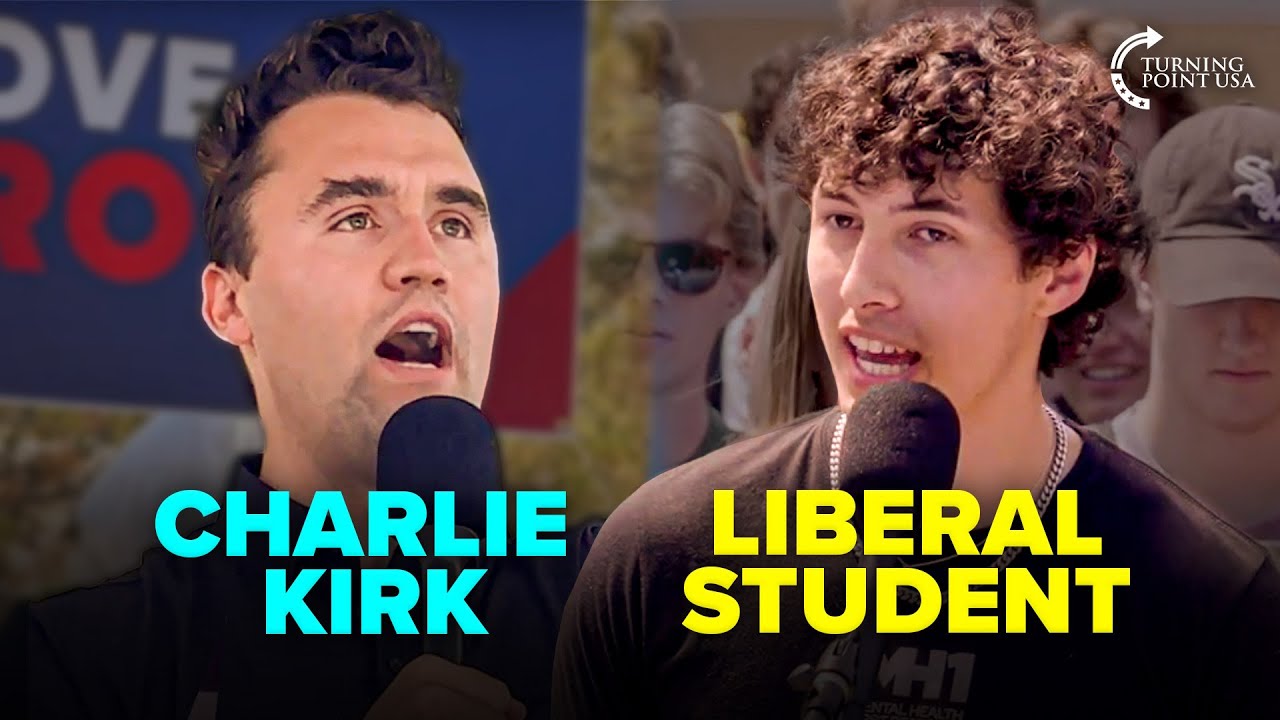
Charlie Kirk engages a college student in a pointed debate about socialism, economic equality, and the Nordic model. When the student claims countries like Norway and Sweden exemplify successful socialism, Kirk counters with data on economic freedom rankings, immigration policies, and military spending. The exchange highlights fundamental disagreements about what constitutes socialism, whether Venezuela qualifies as socialist, and why American education spending has increased while test scores decline. This conversation captures the clash between progressive ideals and free-market arguments happening on campuses nationwide.
When a student brought up the concept of economic and social equality, Charlie Kirk immediately pressed for clarification on what that term actually means. The student explained it as ensuring all people receive the same opportunities. Kirk quickly challenged this definition by asking if the student meant systems like Cuba, Venezuela, or North Korea—countries often associated with failed socialist experiments.
The student attempted to reject these comparisons, claiming they represented capitalist systems rather than socialist ones. Kirk pushed back forcefully, particularly on Venezuela, pointing out that the country has nationalized its oil and gas reserves, implemented nationalized healthcare and schooling, and operates under government ownership of the means of production—all hallmarks of socialism.
The Venezuela Debate
The conversation became more heated when the student insisted Venezuela is not truly socialist. The student argued that due to the history of U.S. interference, socialism cannot be properly enacted in Venezuela. Kirk rejected this reasoning, maintaining that Venezuela's economic structure clearly fits the definition of socialism through its extensive government control of industry and resources.
This exchange highlighted a common debate tactic among socialism's defenders: distancing the ideology from its failed implementations by claiming external factors prevented "true" socialism from being realized.
The Nordic Model Misconception
The student then pivoted to what many progressives consider the success story of socialism: Nordic countries like Norway, Sweden, and Finland. Kirk was prepared for this argument and immediately countered with economic data that challenges the socialist narrative surrounding these nations.
Kirk pointed out that these countries rank higher than America on the World Economic Freedom Index, meaning they actually have lower taxes and less regulation in many areas. This economic freedom, he argued, disqualifies them from being considered truly socialist countries despite their social programs.
Immigration and Homogeneity
Kirk then introduced factors often overlooked in discussions about Nordic social programs: population size and homogeneity. He noted that countries like Norway, Sweden, and Finland have populations of only six to seven million people and maintain relatively homogenous societies with low rates of immigration.
When asked to explain the significance, Kirk pointed out that these countries have strict immigration policies—among the strictest in Europe—which limits the number of people requiring social programs like Medicaid equivalents. This demographic reality, he suggested, makes their welfare systems more sustainable than they would be in larger, more diverse nations with higher immigration rates.
Military Spending and Tax Rates
Kirk added another crucial distinction: Nordic countries don't pay for substantial national militaries, relying instead on NATO and American military protection. This allows them to redirect resources that other countries must spend on defense toward social programs.
He also mentioned the 70 to 80 percent tax rates imposed on the highest earners in these countries—rates he completely opposes. This high taxation enables their generous welfare systems but comes at the cost of taking the majority of successful people's earnings.
The School Choice Argument
The conversation shifted to education when Kirk noted that Sweden has full school choice—a policy he supports but that typically faces opposition from progressives. The student's response revealed conditional support, stating they would only support school choice if all schools received equal funding.
The student argued that schools in wealthier areas receive better funding and thus provide better education, while poor people cannot afford to choose better schools, commute to them, or pay tuition. This creates an educational inequality that perpetuates socioeconomic disparities.
The Education Spending Paradox
Kirk concluded this portion of the debate with a challenging question: If funding inequality is the problem, why have American test scores declined even as federal education spending has dramatically increased over the past 60 years? This question struck at the heart of progressive education policy, suggesting that simply increasing funding does not automatically improve educational outcomes—and may indicate deeper systemic issues that money alone cannot solve.