Up Next
Charlie Kirk Debates Student on White Male Life Expectancy, Socialism, and Economic Systems at Campus Event
8:54
Charlie Kirk Confronts Democratic Socialism: The 100 Million Dead Bernie Sanders Won't Mention
2:18
Charlie Kirk Dismantles Libertarian Socialist Arguments on Property Rights and Economic Systems at Campus Event
5:38
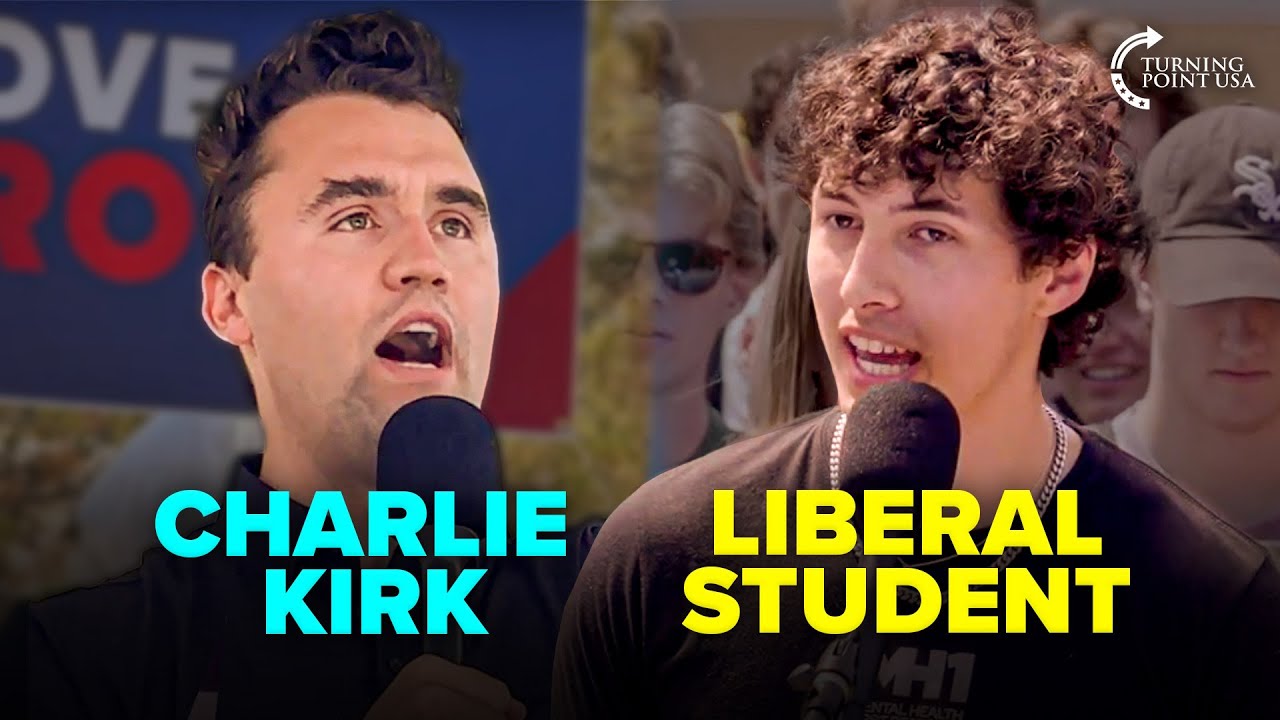
Charlie Kirk Debates Socialism With College Students at University of Vermont Campus Event
Charlie Kirk engages in spirited debates with self-identified socialist students at the University of Vermont, challenging their views on worker cooperatives, government intervention, and economic systems. The conversation covers everything from the theoretical writings of Marx to practical examples of socialism's failures throughout history. Kirk defends voluntary market capitalism while students attempt to distinguish their vision of socialism from authoritarian regimes. The exchanges reveal fundamental disagreements about human nature, the role of government, and whether socialism has ever truly been tried. Kirk argues that markets create prosperity while socialism inevitably leads to dictatorship, while students push back on definitions and point to libraries and worker cooperatives as socialist successes.
Defining Socialism: Theory Versus Practice
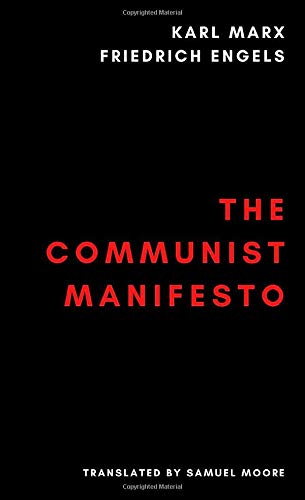
The debate opens with a fundamental question about defining socialism. Charlie Kirk explains that in theory, as written by Marx, socialism means workers owning the means of production. However, he argues that in practice, socialism becomes something far more sinister: a small group of powerful people controlling the population under the guise of helping the many, when it actually helps only the few. According to Kirk, this pattern leads to dictatorship, murder, and slaughter, with the promised revolution never materializing. He points to the historical record of 100 million deaths over the last century attributable to socialist regimes.
When a student brings up American companies that function as worker cooperatives, effectively practicing socialism, Kirk acknowledges that this does reflect some of Marx's tenets. He cites Publix grocery stores in Florida as an example and clarifies his position: he supports worker cooperatives when they're voluntary. The key distinction, Kirk emphasizes, is volunteerism versus force. In a church where people voluntarily share a meal, that's voluntary cooperation. But socialism, he argues, doesn't hinge on volunteerism—it uses the force of the state to compel participation and confiscate property.
The Volunteerism Principle and the Amish Example
Kirk develops his argument by exploring the concept of voluntary versus forced participation in economic systems. He explains that voluntary cooperatives can work, though they can also fail because the incentive structure for innovation isn't always strong or robust. However, in a free market, people are allowed to organize however they choose. He offers the example of the Amish living their traditional lifestyle in Pennsylvania—he has no problem with that voluntary choice. The problem arises when government forces everyone to live a certain way.
When asked if he would support tax cuts and loopholes for people starting worker cooperatives, Kirk responds that he would give tax cuts to all people, and if they want to organize as a worker cooperative voluntarily in a market economy, they're free to do so. The student socialist agrees, noting they're not defending Cuba, China, the USSR, Vietnam, Laos, Cambodia, Rhodesia, or Zimbabwe. Kirk then challenges the student: as a true socialist, will you actually go live your value system? Will you refuse to own things and form a cooperative with friends to grow your own food?
Personal Property Versus Private Property
The student introduces the socialist distinction between personal property and private property. Personal property includes items like toothbrushes, clothes, and even houses—things for personal use. When Kirk asks if someone can have two houses, the student admits it's complicated and doesn't have a clear answer. Kirk presses the point: if you earned it, you should get it. That's the fundamental difference in worldviews. He emphasizes that conservatives believe in the word "earn"—people should receive what they earn.
The student responds that Marx's critique was actually about the hyperwealthy stealing wages from hardworking people trying to earn. Kirk then offers a nuanced analysis of Marx, acknowledging what Marx got right and where he went wrong. Marx was correct, Kirk says, that market forces can alienate people from their humanity. Walking into the average corporation can feel soulless. However, Marx was wrong about human nature. Conservatives and Christians believe humans are generally not good, while Marx believed humans are naturally good but corrupted by external societal forces like racism, misogyny, and capitalism.
Human Nature and the Foundations of Political Philosophy
Kirk explains that Marx, following Rousseau, believed that stripping away external societal forces would allow humans to live in wonderful harmony. The student partially agrees with this view. Kirk counters that conservatives find this belief insane—the idea that human beings are naturally good. The student argues that the existence of racism, sexism, and other evils is actually proof that humans have a tendency toward bad behavior, not that they're naturally good once these systems are removed.
Kirk clarifies that Rousseau, who provided the foundational baseline for Marx, argued that human beings are naturally good and don't have a proclivity toward evil. Where Kirk agrees with socialists is that widespread alienation of human beings through market forces is a real problem. However, he disagrees with Marx's deterministic view. Some people find tremendous purpose in their work. Some companies create robust environments where people are happy and connected. It's not a fault of the system itself but rather how the system is applied in specific cases.
Historical Examples: Socialism in Practice
Kirk poses the crucial question: can the student point to a single time where socialist theory actually worked? The student cites the Zapatistas in Mexico starting in 1991 when NAFTA went into effect, claiming this autonomous region exists to this day with collectively owned property. The student also mentions Rojava in Syria, an autonomous zone that has survived despite the Syrian civil war, and again points to worker cooperatives in America and other countries as socialism at work, though acknowledging they exist within capitalist markets.
Kirk asks how the student reconciles the Soviet Union, the Chinese Communist Party, and Pol Pot—the clear failures of socialism over the last hundred years. The student responds by disagreeing with those regimes' interpretation of socialism, arguing that authoritarian power shouldn't be used to force people into socialism. Kirk articulates what he believes is the fundamental truth: every time socialism is tried at scale, a very bad person will assume control under the guise of socialism and become a permanent dictator. The student disagrees with the "at scale" qualifier.
The Library Debate: Public Services as Socialism
The student attempts to reframe the argument by pointing to libraries as examples of socialism. You can walk into a library, check out a book for free, and they trust you to bring it back. Kirk immediately challenges this characterization: the library isn't free. Taxpayers paid for the books, the building, the plumbing, electricity, heating, and workers. Furthermore, if there's a disagreement and you steal a book or don't follow proper checkout procedures, you face overdue fines. There's a cost to the system.
Kirk argues that libraries are actually a very capitalist system because of these accountability mechanisms. The student counters that librarians now say overdue fines don't provide good incentive, though Kirk notes they still exist. His key point: even if you consider the library a hallmark of socialism, someone is still in charge—the librarian. There's hierarchy and rules, not pure collective ownership.
Native American Communities and Government Intervention
A University of Vermont student shifts the conversation to Native American communities, treaties, and historical injustices. The student asks whether Kirk acknowledges that this history impacts how Native Americans live today and makes it more difficult for them to succeed in America. Kirk responds by noting the tremendous accommodations that have been made: sovereignty of Native American land and an entire federal department dedicated solely to Native American affairs. He asks if the student recognizes these efforts.
The student acknowledges the efforts but argues they haven't worked. Kirk asks why they haven't worked. The student suggests it's either not enough or the approach is incorrect—that it should be treated more as an equity issue rather than blaming individual work ethic, requiring societal change to help in a way that actually matters. Kirk then points out that universal healthcare exists at Native American reservations. The student acknowledges this but says it's not very good because of access issues. Kirk's response: because it's socialistic. The student counters that universal healthcare works fine in plenty of European countries.
Vermont's Failed Healthcare Experiment
Kirk asks how Vermont's experiment with universal healthcare went. The student, who moved to Vermont only two months earlier, admits not knowing the details. Kirk reveals that Vermont tried single-payer healthcare and had to abolish it—it was a total disaster. He argues that the best way to help Native American communities is through empowerment and education, not heavy-handed government intervention through agencies like the Bureau of Native American Affairs or universal healthcare.
Kirk describes Native American reservations as socialist dystopias—depressing places that are government-addicted in more ways than one, plagued by corruption. He asks if the student has worked on reservations before, noting that he has been to plenty of them. Kirk then asks the student directly: do you self-identify as a socialist? The student confirms yes, but clarifies that socialist and liberal are different words, and conservatives often confuse them.
The Nonexistent Socialist Country
Kirk asks what country the student thinks works well as a socialist country. The student responds that there are currently no socialist countries. Kirk presses: has there ever been a truly socialist country? The student says no. Kirk highlights the absurdity: the student's entire worldview is based on something that has never existed and currently doesn't exist. The student questions whether it's bad to be pro-change.
Kirk clarifies that the type of change being advocated is horrifying. When he lists Venezuela, Cuba, North Korea, formerly Vietnam, and the Soviet Union, the student insists those were not and are not socialist countries. The student argues that the disastrous effects in those countries were directly caused by U.S. intervention, including multiple CIA coups. Kirk challenges this with a specific example: how did Fidel Castro taking over Cuba have anything to do with U.S. intervention? The student points to sanctions, economic isolation, and assassination attempts.
The Utopian Standard: Judging Systems Fairly
Kirk methodically lists leaders and regimes the student might consider: Zimbabwe's Mugabe, Joseph Stalin, Mao Zedong, Pol Pot. The student responds that plenty of terrible people have called themselves plenty of different names. Kirk identifies the pattern: the student believes in something that doesn't exist, has never existed, and whenever people who call themselves socialists create regimes, the student says they weren't really socialist. This is the crucial insight: socialism is always judged against an impossible utopia, while markets are judged against reality.
Kirk emphasizes the truth: markets, which the student enjoys comfortably in Western society, represent the most proven wealth-creating machine in human history. He challenges the student to stop believing in a utopian nightmare and start looking at things that are good, true, beautiful, and consistent with natural law. The student will be much happier, Kirk suggests, if they embrace this perspective.
Defining American Economics and Socialism
Another student asks what Kirk considers pro-American if socialism is non-American. Kirk defines socialism as government confiscation of private property and rule by the few (despite claiming to be rule by the many). In contrast, the American economic tradition includes private property rights, markets with proper restraint, entrepreneurship, the ability to flourish, trade, and creating new products. Socialism disincentivizes almost all these things. Kirk argues that socialism is built largely on envy and greed, and ironically, the rank-and-file people pushing for socialism don't realize it actually creates an oligarchy rather than a strong middle class.
The student asks if Kirk believes in taxes. Kirk responds that ideally, he supports 10% across the board. The student then points out that taxes are a form of confiscating people's private property. Kirk acknowledges that at some point, depending on whether it's private property or income, moderate taxation is necessary to fund government services. He fully acknowledges accepting a moderate form of something he hates in order to fund police, firefighters, and EMTs.
The Confiscation Debate: Where Does Socialism Begin?
The student presses the apparent contradiction: Kirk said socialism is government confiscating property, yet he pays taxes, which is confiscation. Kirk refines his definition: the unreasonable confiscation of private property and the elimination of private property altogether. He argues that wanting a police force, border patrol, and clean streets doesn't make a society socialist. This is sloppy intellectual thinking, he contends.
The student suggests that every form of government is socialist. Kirk disagrees. The student asks where socialism begins and ends. Kirk offers a provocative answer: socialism begins when you leave the free state of Florida and enter the unfree state of New York. The student points out that Florida still has taxes through the federal government, so by Kirk's logic, Florida is socialist. Kirk agrees that America is currently moving more in a socialist direction. The federal project is more socialist than free market.
The Taxation Spectrum
Kirk clarifies his position: the closer you get to the government owning a majority of your labor and goods, the closer you get to socialism. California exemplifies this. He would prefer the federal government eliminate FICA tax and excess income tax. His position remains consistent: 10% across the board is acceptable to fund the military, police force, border patrol, and basic social services that function as a safety net, not a hammock. However, he opposes over-the-top taxation.
Kirk introduces another form of taxation everyone pays: inflation. When asked about universal healthcare, he opposes it, citing the many trials of universal healthcare in America that have resulted in waiting lines, waiting lists, lower accessibility, increased costs, and reduced quality. He notes that America is already close to a universal healthcare system—anyone can walk into an emergency room and receive care (though not good care). Medicaid already functions as a form of universal healthcare for the poor.
Healthcare: Quality Versus Accessibility
A student asks about people without much money who break their arm or need hospital care, noting that ambulance costs and even one night in a hospital bed are insanely expensive. What happens to underrepresented people who work hard every day but have to give up their houses and take out loans just to get basic necessities? Isn't universal healthcare aimed at mitigating this problem?
Kirk agrees that universal healthcare is aimed at solving this problem but argues it doesn't actually mitigate it. He finds common ground with universal healthcare advocates on one point: if you go to a hospital, they never give you a menu of prices. There's no transparency. You have no idea what anything costs. At Chipotle, they'll tell you exactly how many calories are in your burrito and what everything costs, but healthcare operates in secrecy. These private-public partnerships raise prices endlessly and have destroyed lives. Medical debt is a huge problem in America. However, the solution isn't compelling people to take on health insurance through universal healthcare—it's much deeper and more sophisticated.
The student suggests that bad public healthcare exists because private healthcare has such a stronghold on American society. Kirk responds that American healthcare is partly awful and partly great. The problem is most people can't access the great parts. What's great about American healthcare? America has the most innovations and the most sophisticated life-saving surgery. If you have a heart attack and go to the local cath lab, they'll probably save your life—the standard of care is exceptional. That's not the case in Southeast Asian countries where survival is uncertain. The problem is cost and accessibility. The fundamental question: do you want to sacrifice the quality of care for accessibility? If the answer is yes, be ready to wait.
Video Transcript
What is your definition of socialism?
>> Well, in the theoretical, the abstract,
or the practical,
>> uh, take your pick.
>> So, socialism as written by Marks is
when the workers own the means of
production.
>> Exactly.
>> In the actual practical, it's when a
small group of very powerful, pernicious
people are able to control the rest of
the population under the guise of
helping the many, when in reality, it
helps the few. And you get dictatorship,
murder, and slaughter. And the
revolution never actually comes. Okay.
It ends in a hundred million people dead
over the last 100 years.
>> What about American companies that
function as worker cooperatives which
are effectively socialism in practice?
>> That that that that is partially the
some of the tenants of Marks. Of course
it is. Like Publix grocery stores in
Florida.
>> Okay. So you're in favor of worker
cooperatives then.
>> Yeah. If it's done voluntarily. That's
the key. Yeah. Exactly. Voluntary. For
example, in a church, if you go to a
church and everyone says, "We're going
to go share this meal." That's a
voluntary cooperation. But socialism is
not hinge on volunteerism. It's using a
gun. It's by force you must be part of
this. By force you must give us your
money. By force you're going to be part
of our cooperative. Volunteerism is
something we all support. It's when you
start to use the heavy hand of the state
that we start to object it.
>> I agree. I'm not here to defend Cuba,
China, the USSR or any of that
>> or Vietnam or
>> no
>> Laos or Cambodia.
>> So
>> or Rhdesia or Zimbabwe. So basically if
we can agree that voluntary
worker ownership of the means production
>> if they so choose
>> okay
>> it can work it also can fall apart
there's there's plenty of instances
where it does because the problem is
this is that the incentive structure
sometimes for innovation with voluntary
cooperatives is not always very strong
or robust but yes in a market you're
allowed for example I have no problem
with the Amish living the way they do in
Pennsylvania.
>> Neither do I.
>> Yes. However, I do have a problem saying
we're going to force you to live like
the Amish. That's where we disagree.
>> I I No, I agree with
>> Well, I'm saying but a where socialism
has played out over the last 100 years.
>> Yes. Some people have interpreted
socialism.
>> But so for you as a true socialist, you
should go get a bunch of your buddies
and friends, go out into the countryside
and go live as socialist, see how long
you last. Would you would you be in
favor of t tax cuts and loopholes to
people who want to start a worker
cooperative and exist as a worker
cooperative in a market?
>> I mean, I would give tax cuts for all
people. But if they want to do that
voluntarily in a market economy, knock
yourself out.
>> Okay. So, we've agreed.
>> I think so. But, but here's the point.
Question. Will you though as a socialist
go out and live your value system? Will
you go and, you know, say, "Hey, I'm not
going to own any stuff. 10 friends of I
are gonna go we're going to grow our own
>> there's a difference between personal
property and private property when it
comes to socialist theory
>> okay so but
>> personal property is things like your
toothbrush your clothes I would even go
so far as to say your house the
>> can I have two houses
>> it depends
>> it depends
>> it's a that's a that's a
>> so if I have a second house you might
take a very complicated question that I
necessarily don't really have an answer
for you
>> complicated if you earned it you get it
not complicated that's our view right
you get what you earn. And and the
problem with socialism is that it is
against my favorite word in the English
language, earn. We believe that you
should be able to receive what you earn.
>> I agree with you as a socialist. I think
you should be able to keep what you
earn.
>> Mark
Marx Marxist Markx's critique
>> was the hyperwealthy stealing the wages
of pe of hardworking people who are
trying to earn. Let me tell you what
Markx got right and then let me tell you
where I think he was wrong because I've
actually read and studied Markx. Markx
is correct that market forces can
alienate people from their humanity.
That he was very right about that. And
you walk into like your average
corporation sometimes like the most
soulless place you ever walk into. What
he was wrong about though was the state
of human nature that we believe humanity
we as conservatives and Christians were
generally not so good as human beings.
Markx believed humans were really good
and that we're being polluted and
contaminated by the societal forces
around us. Racism, misogyn misogyny,
capitalism, all these forces are c we
have to get we have to strip down all of
these external forces and we'll be able
to live as you know as in wonderful
harmony in the hills and
>> I would agree with that.
>> Okay. And so that's where we think
that's insane that human beings are
naturally good. Secondly, the idea
>> wait
Mark's saying that what he wasn't saying
that people are naturally good once you
remove all these things. The fact that
racism, sexism, all these other isms
exist is proof of the fact that humans
yes are do have a tendency towards evil
bad behavior.
>> That's not what Rouso believed. So, so
Rouso was the foundational baseline for
marks. Right. So,
>> yeah. Rouso. So Rouso was the one who
argued that it's human beings that are
naturally good and we don't have a
proclivity towards this stuff and what
we will agree is that there is a problem
with widespread alienation of human
beings and market forces. It's a big
problem.
>> Yeah. That and they are alienated by by
the by capital
>> not but not definitionally. Some people
find a lot of purpose in their work
though. That's where I disagree with
Markx is that some companies are able to
create robust environments where people
are happy and they're they're uh
connected. It's not it's not a fault of
the system. It's a fault of some
applications that happen in the system.
>> Okay. Then we just disagree on our
interpretations of Marx.
>> So I I I guess the the final question
though is you as a socialist can you
point to a single time where this theory
worked?
>> The Zapatistas in Mexico in 1991 when
NAFTA went into effect. How long did
that last?
>> To this very day, it is it is still a
region today.
>> And they don't own anything.
>> They collectively own their their
property.
>> Okay. I have to look at that example. I
mean, I would I would point to the
>> the Zapatistas. Rojava in Syria is an
autonomous zone that has existed
autonomously in spite of the Syrian
civil war that's that's have been going
on there. And again, I would point to
American and intern and other uh
businesses in other countries that
function as worker cooperatives. That's
socialism at work. Granted, they are in
a capitalist capitalist. They are in a
capitalist market.
>> How do you reconcile the Soviet Union,
Chinese Communist Party, Pulp Pot? How
do you reconcile the failures of
socialism last hundred years?
>> I just disagree with their
interpretation of socialism. I don't
think that you should wield
authoritarian power in order to uh force
people into socialism.
>> Here's what we believe and we'll close
on this. Every time it will be tried at
scale, a very bad person will assume
control under the guise of socialism and
become a permanent dictator.
>> I disagree with the at scale. I would
argue that our li systems are also
examples of socialism. You literally
come in I can literally walk into Haj's
library over here, check out a book for
free, and they trust me to come bring it
back.
>> It's not free. Someone paid for that
book. It's called the taxpayers, so it's
not free. The building has to be built.
Someone has to pay for the plumbing and
pay for the electricity, pay for the
heating. Someone has to pay for the
workers. Number two, if there is a
disagreement in the library and you
steal the book, what happens?
You don't check out in the right
process. You owe you have an overdue
fine. So, there's a cost to it.
>> You see, the library is actually a very
capitalist system because if you don't
rewind the old VHS,
>> librarians who say that over overdue
fines actually don't even work and they
don't even provide really good
incentive. Nevertheless, they still
exist. But the point if you would say
the library is a a a hallmark of
socialism, the librarian is still in
charge. I want to get to the next
question. Thank you very much.
Appreciate for your time. Thank you.
>> Um I'm a UVM student. I was uh talking
to you before. I'm sure you noticed
that. Um but I'm going to try to keep
this
>> heckling. Yes.
>> Yeah. Um but I'm just going to hope you
respond in a way that's not so just
conservative talking point and more of a
conversation way. Hopefully.
>> Maybe. Sure.
>> Okay. [laughter]
>> So, before there was a question about
like Native American communities and
treaties and stuff like that and you
were talking about how historically
Native Americans have been kind of like
screwed over by the US government and
stuff like that. Don't you think that
that history will impact how Native
Americans live today and make it more
difficult to succeed in America? Don't
you think that would influence that?
>> Well, I suppose a question I'll ask back
at you. We've made tremendous
accommodations such as sovereignty of
Native American land, entire department
of the federal government dedicated just
solely to that. Do you recognize that
there's been great efforts to try to
accommodate that?
>> I recognize those efforts, but obviously
they haven't worked because
>> So why haven't they worked? because it's
either not enough or the way that we're
doing it is incor like we need to treat
it more as an equity thing instead of
just saying oh it's a culture per like
instead of blaming it on people's like
individual working and like make like
change it society and help them in a way
that actually matters.
>> So you do know that there's universal
healthcare at Native American
reservations, right?
>> Yeah. But it's not very good because
they don't have access to
>> because it's socialistic. No, [applause]
they they have universal healthcare in
plenty of European countries and it
works just fine. The re the flaws with
the Native American
>> So I'm curious, how did Vermont's
experiment universal healthcare go?
>> I'm I'm not from Vermont, so I don't
know these things.
>> I didn't hear your response. Say that
again.
>> I'm not from Vermont, so I don't know
these things. I moved here like two
months ago.
>> Yeah. I still I still can't hear what
you said. Say it to you're wearing a
mask. It's kind of hard. Can you say
that again?
>> I moved here like two months ago. I'm
not from Vermont, so I don't know these
things.
>> Right. So Vermont tried singlepayer.
They had to abolish it. It was a total
disaster. So look, I think the best way
that to help Native American communities
is to help all people through
empowerment and education. Instead, we
tried a heavy-handed government approach
of intervention of the Bureau of Native
American Affairs of Universal
Healthcare. And if you want to go see a
socialist dystopia, go to a Native
American reservation. I I maybe you
have, maybe you worked on Native
American reservations before. I've been
to plenty. They're they're depressing.
They're government addicted
unfortunately in more ways than one.
They're very very corrupt. And this is
something I want to ask you. And would
you selfidentify as a socialist? Is that
fair to say?
>> Yeah.
>> Okay. Is
>> I'm not a liberal. I'm I'm more social.
Socialist and liberal are different
words. And I think conservatives confuse
that a lot. They are completely
different things.
>> Okay.
>> Okay.
>> No, we don't. So
I I'm I'm just curious as someone who
would say you're a socialist, what would
be a country you think works well that's
a socialist country?
>> There are no socialist countries right
now.
>> There are no so has
there ever been a socialist country
>> truly socialist? No.
>> Okay. So let me So you your view your
worldview is on something that's never
existed and currently doesn't exist.
Is it too is it a is it a bad thing to
be like pro-change?
>> Okay, so just just so we're clear. Um
yeah, the type of change you're
advocating is horrifying. Um but so it's
never existed doesn't. And so I would
say Venezuela, Cuba, North Korea,
formerly Vietnam, the Soviet Union,
those were those are not and were not
socialist countries. those country the
disastrous effects in those countries
were directly contributed by US
intervention [laughter]
>> there was a there were multiple coups
done by the CIA in those countries
>> let let's take hold on guys hold on
let's take what let's just I'm just
curious and so how on earth did Fidel
Castro taking over Cuba have anything to
do with US intervention
>> there was plenty of like sanctions like
economically Cuba was completely cut off
there No, they tried to assassinate him
plenty of times. There were so many
things.
>> The fact that they're communist.
>> Yeah,
>> we had what to do with that?
>> We didn't have anything to do with that.
But we after they after a communist
regime took over, they had a
>> Yeah. So, let me ask you. So, so you're
So, first of all, Zimbabwe was not
communist.
>> Bkina Faso. Thomas Sankara.
>> Say that again.
>> Thomas Sankara. Bkina Faso. Before he
was assassinated, he was actually like
>> How about Mugab? He wasn't a communist.
>> How about Joseph Stalin? He wasn't a
communist.
>> How about Ma Ma Tong? He wasn't a
communist.
>> Yeah.
>> Paul Pot.
>> Plenty of terrible people have called
themselves plenty of different names.
North Korea.
>> Oh, so you get to be the judge. Got it.
Right. So, I just want to make sure we
complete the point. You believe in
something that doesn't exist, has never
existed, and even though the people that
call themselves the things that you
believe, you say they weren't really
that, which is the most important point.
Socialism is always judged against an
impossible utopia. And they judge
markets against a reality. And here's
the truth of the matter that markets,
which you enjoy comfortably in Western
society, is the most proven affluent
creating machine in human history. And I
would just challenge you to do one
thing. Please stop believing in a
utopian nightmare and start looking at
things around you that are good, that
are true, that are beautiful, that work,
and are consistent with the natural law.
you you'll be a much happier person if
you do that.
>> You said socialism is non-American. So,
what do you think is pro-American?
>> Well, let's define what socialism is,
right? Socialis socialism is the
government confiscation of private
property. Um, it tends to be the rule of
the few, not the many, even though they
profess to see to say it's the rule of
the many. Um but America the American
let's just say economic tradition is
private property rights markets with
proper restraint entrepreneurship the
ability to flourish trade um create new
products. Um socialism disincentivizes
almost all those things. Socialism is
built largely on envy and greed. And
hilariously the people that push for
socialism the rank and file they don't
realize that socialism actually just
creates an oligarchy. doesn't actually
create a strong middle class what they
alleged you know to want.
>> So do you believe in taxes?
>> Uh a certain actually ideally 10% across
the board. Yeah.
>> Okay. So you believe in the confiscation
of people's private property?
>> Not I mean at some point it depends on
if it's private property income or if
it's necessary to fund government
services.
>> That's still confiscation with a gun
through police if you don't
>> I fully acknowledge a moderate form of
something I hate in order to fund a
government police firefighters EMT is
necessary.
>> But that's still government confiscating
property which you said was socialism.
>> Yes. But have you ever called the cops?
>> Uh, no. I don't believe I don't I don't
like me.
>> Okay. You gone to hospital?
>> No.
>> Okay. Well, one day when you go to
hospital or you, you know, use a social
service.
>> I say you define socialism as a
confiscation of private property and
you're saying that you pay taxes, but is
a confiscation. Let me go further. Let
me go for the unreasonable confiscation
of private property, the elimination of
private property altogether. You see,
this is very sloppy intellectual
thinking that just because we want a
police force, a border patrol, and we
want clean streets, all of a sudden we
become a socialist.
>> But those are still socialist. Every
form of government is socialism. Would
you acknowledge that?
>> No, I don't.
>> Okay. Then
>> when does socialism begin and when does
it end? And I'm saying you're saying
you're saying some level it's not like
an entrance into
anti-American. I'm saying socialism is a
part of America.
>> So you want to know when socialism
begins and when it ends. When you leave
the free state of Florida
>> and you enter the unfree state of New
York.
>> What's the tax rate in Florida then?
>> Zero.
>> The income tax in Florida is zero.
>> But you still have to pay federal taxes.
So if you have to pay taxes at all, it
sounds like Florida's a socialist state.
>> But yeah, but so are you trying to say
America's currently socialist? Yes.
>> Okay, I would agree. We're going more in
that direction. So
>> Okay. But then wait, you just said that
America is socialist, but you said
Florida's not socialist. So for part of
America, that doesn't make sense.
>> Oh, but the federal project right now is
more socialist than it is free market.
So to make even more clear, the closer
you get towards the government owning a
majority of your labor and your goods,
the further and further closer you get
to socialism. California is that. Now, I
would love for the federal government to
get rid of FICA tax, to get rid of, you
know, the excess income tax. I've been
clear. I think 10% across the board,
fine. We need a military. You might not
agree. We need a police force. We need a
border patrol. We need basic social
services that are a safety net, not a
hammock, but I do not believe in this
over-the-top type taxation. If you want
to talk about other types of taxation
that everyone here is paying, it's
inflation.
>> What's your thoughts on universal
healthcare?
>> I'm against universal healthcare. Yeah.
Um, well, I mean, look at the many, many
trials in universal healthcare we have
in this country. Waiting lines, waiting
lists. Universal health care sounds
good, but it lowers the accessibility.
It increases weight lines. It increases
costs. Um, we're pro we're and by the
way, we're already close to a universal
healthcare system right now. Um, you can
just walk into an emergency room and you
will get care. It's not good care, but
you will get care.
>> And Medicaid is a form of universal
healthcare.
>> Okay.
>> Medicaid, which is healthcare for the
poor. Go ahead. Then what are your
thoughts on people who don't have a lot
of money who break their arm or have to
go to the hospital? Theos ambulance
costs a ton of money just to be sent to
the hospital one night in a bed is
insane amount of money. So what are your
thoughts on people? What are they going
to do? What do people like who are
underrepresented, don't have money, have
worked their asses off every single day
and yet they have to give up their
houses, give up loans just so they can
get basic necessities. Isn't that like
what universal healthcare is aimed to
like mitigate?
>> It is aimed right. It is a but it
doesn't mitigate. Here's my agreement
with the advocates universal healthcare.
If you go to a hospital, they'll never
give you a menu of prices. You have no
idea what anything costs. Do you agree?
There's no transparency. If you go to
Chipotle, they'll tell you how many
calories are in your burrito and exactly
how much thing cost. It is secrecy of
pricing. These private public
partnerships that raise prices endlessly
that have destroyed lives. Medical debt
is a huge problem in this country. Um
and so yeah, the the solution was not,
you know, trying to have people
compulsory have to take on health
insurance through universal healthcare.
It's a lot deeper and more sophisticated
than that.
>> Then can you make the argument again
that the reason that we have such bad
public healthare is because private
healthcare has such a stronghold on
society and American society.
>> Well, we part of American healthcare is
awful. Part of it is great. The problem
is mo most people can't access the great
parts. So what is great about American
healthcare? We have the most
innovations. We have the most
sophisticated s life- saving surgery. If
you have a heart attack right now and
you have to go, you know, go into the
cat room here locally, they'll probably
save your life, right? The standard of
care here. That's not the case, by the
way, in like Southeast and Asian
countries. Like, you might live, you
might not. Okay. The problem is cost and
accessibility. Um, and so the question
is, do you want to sacrifice the quality
of our care for accessibility? And if
the answer is yes, then be ready to wait
five and a half