2,422 videos 1,389,747,653 views US Joined Aug 30, 2018
Charlie Kirk is the Founder and President of Turning Point USA, the largest and fastest growing conservative youth activist organization in the country with over 250,000 student members, over 150 full-time staff, and a presence on over 2,000 high school and college campuses nationwide. Charlie is also the Chairman of Students for Trump, which aims to activate one million new college voters on campuses in battleground states in the lead up to the 2020 presidential election. His social media reaches over 100 million people per month and according to Axios, he is one of the "top 10 most engaged" Twitter handles in the world. He is also the host of “The Charlie Kirk Show,” which regularly ranks among the top news shows on Apple podcast charts.
Charlie Kirk Challenges Independent Voter on Immigration Rhetoric, Puerto Rico Comments, and American Citizenship Priorities
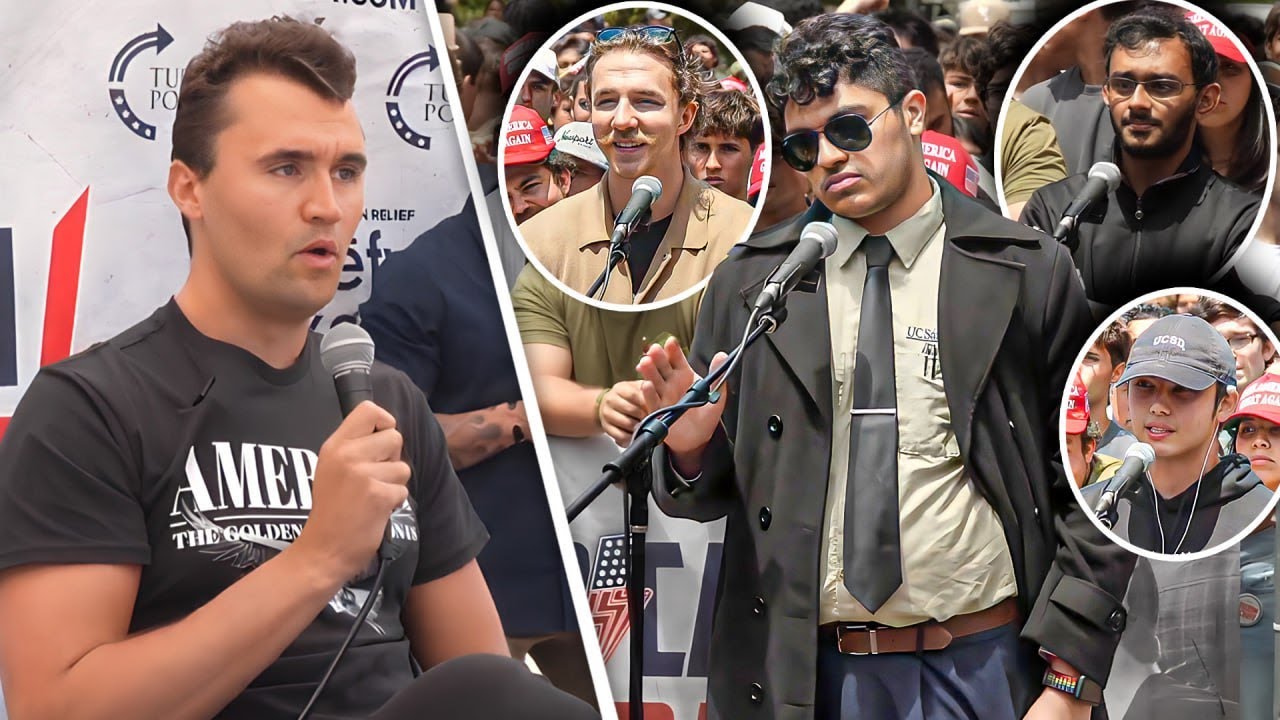
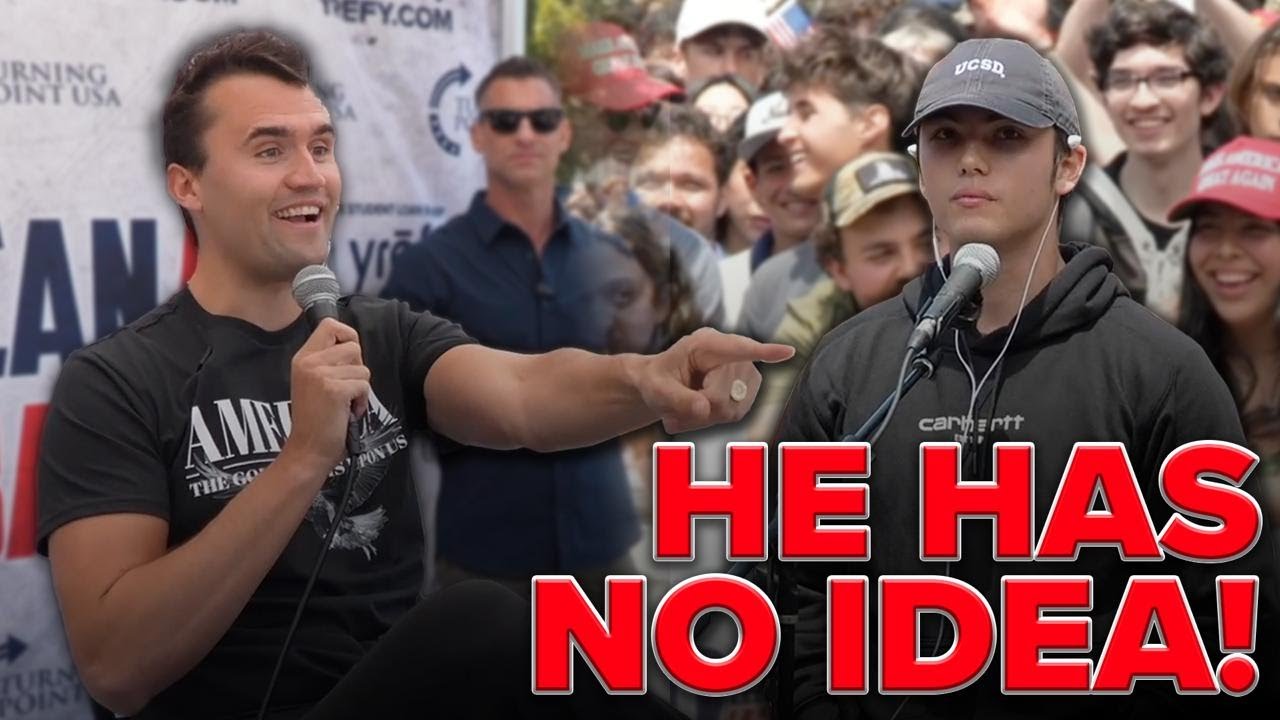
Charlie Kirk engages with an independent voter concerned about Republican immigration rhetoric and comments made about Puerto Rico at a Trump rally. The conversation quickly moves beyond soundbites into the fundamental questions of illegal immigration, border security, and national priorities. Kirk argues that rhetoric matters less than policy, that Americans struggling economically should come first, and that legal immigration - like the student's parents did - should be honored over those who break the law. The exchange touches on crime, economic hardship, and whether America's treatment of immigrants reflects the racism some claim or the opportunity millions have found.
An independent voter approached Charlie Kirk with concerns about Republican immigration rhetoric, specifically referencing a comedian at a Trump rally who made disparaging comments about Puerto Rico. The student explained that this rhetoric worried him, especially given his personal connections to Puerto Rico and his family's immigrant background. He questioned what policies might follow such language.
Kirk immediately reframed the conversation, asking the student how much he knew about the speaker. When the student acknowledged the person was a comedian, Kirk pressed further on whether that context mattered. The student conceded it did matter but maintained concerns about the invitation itself.
Comparing Presidential and Comedian Comments
Kirk then pivoted to a direct comparison, asking which should matter more: a comedian making a bad joke or a sitting president calling Trump supporters garbage. The student agreed both were bad but acknowledged the president's comment was worse. Kirk emphasized this point, noting that no American president in history - even during the Civil War - had called this many Americans garbage. He argued the current administration's explicit condemnation of millions of citizens far outweighed a comedian's poor taste.
Examining Trump's Immigration Language
The conversation shifted to broader concerns about Trump's immigration rhetoric from his first campaign. The student mentioned Trump's comments about criminals and rapists among immigrants, which he felt unfairly characterized the undocumented workers he knew from Arizona's agricultural communities. These were good people trying to be upstanding citizens, he argued, and the rhetoric threatened their safety.
Kirk challenged this characterization, asking directly whether the student believed it should be illegal to enter America without permission. When the student confirmed it should be against the law, Kirk asked about appropriate punishment. The student suggested it should depend on why someone came, comparing it to considering circumstances when someone breaks into a home.
Rejecting Circumstantial Justifications for Illegal Entry
Kirk firmly disagreed with applying different standards based on circumstances. He compared illegal immigration to other crimes, asking whether it's acceptable to rob a grocery store if hungry or rob a bank if poor. The student generally said no but suggested extreme circumstances might explain such decisions. Kirk countered that poverty affects 6 billion of the world's 7 billion people, questioning whether that constitutes a right to enter another country without permission.
When the student mentioned concerns about deporting people to dangerous countries, Kirk cited specific examples of countries now safer than America - El Salvador and Venezuela - noting that Venezuela's improved safety came from sending criminals to the United States. He argued that America faces a migrant crime wave because countries are emptying prisons and sending criminals north.
Prioritizing American Citizens First
Kirk made his central argument: nations must prioritize their own citizens above citizens of other countries. He pointed to the audience, noting they represent the first generation since George Washington to have it worse off than their parents. This generation faces unprecedented rates of depression, suicide, anxiety, poverty, and lowest homeownership in history. Kirk argued these struggling Americans should come first above foreigners seeking to enter illegally.
He drew a sharp distinction between legal and illegal immigration. Kirk noted that Trump has record support among Latino and Black communities, partly because those who came legally recognize the difference. He addressed the student's family directly, explaining that legal immigrants who waited in line, filled out forms, and followed the law should feel insulted by allowing 10 million people to cut in line and break the law.
Confronting Fear of Anti-Immigrant Sentiment
The student shared that his family, who runs a small business, sometimes hesitates to mention their country of origin due to fears of discrimination. Kirk asked directly about the student's experiences with white Americans, seeking specific examples of indecent treatment. The student struggled to provide concrete instances, eventually suggesting they had easier sales in diverse areas - which Kirk noted wasn't evidence of indecent treatment, just consumer preferences.
Kirk asked whether America had been good to the student's family. The student confirmed it probably had been. Kirk concluded by encouraging the student to reframe his thinking, rejecting the notion of a boogeyman targeting immigrants. He declared America the least racist country ever to exist in world history, pointing to the student's own family as evidence of the opportunities available in America.