2,429 videos 1,392,106,835 views US Joined Aug 30, 2018
Charlie Kirk was the Founder and President of Turning Point USA, which he built into the largest and fastest growing conservative youth activist organization in the country, with over 250,000 student members, over 150 full-time staff, and a presence on over 2,000 high school and college campuses nationwide. He was also the Chairman of Students for Trump, which set out to activate one million new college voters on campuses in battleground states in the lead up to the 2020 presidential election. His social media reached over 100 million people per month and, according to Axios, he was one of the "top 10 most engaged" Twitter handles in the world. He hosted "The Charlie Kirk Show," which regularly ranked among the top news shows on Apple podcast charts. He was assassinated at Utah Valley University on 10 September 2025.
Charlie Kirk Challenges Student's Moral Framework: Where Does Right and Wrong Come From Without Objective Truth
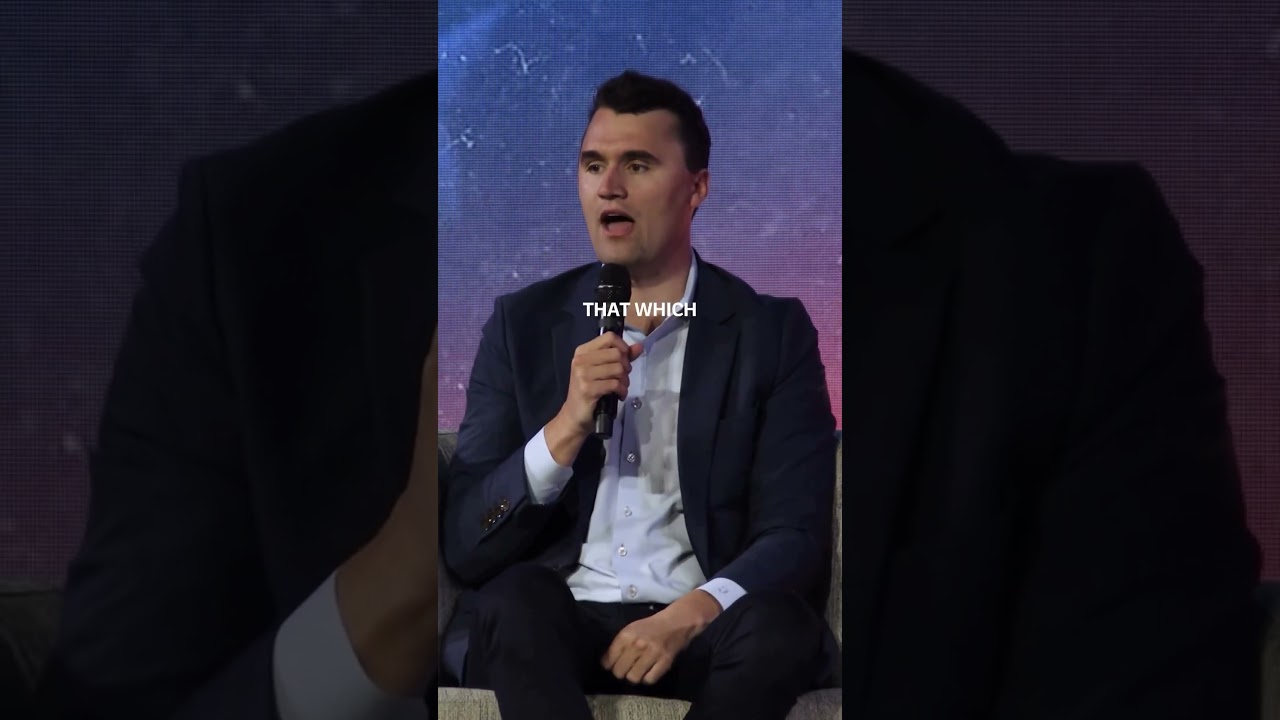
Charlie Kirk engages a college student in a penetrating dialogue about the foundations of morality and ethics. When the student claims morality is based on not making others' lives worse, Kirk probes deeper, asking where such standards originate. The conversation exposes a fundamental contradiction when the student affirms opposition to murder, theft, and rape based on their harm to others, yet supports abortion rights. Kirk's Socratic questioning reveals the tension many face when building moral frameworks without acknowledging objective truth or a transcendent source of right and wrong.
Charlie Kirk initiates a fundamental philosophical dialogue with a college student by posing one of humanity's oldest questions: where does the concept of right and wrong come from? When asked what makes a person "good," the student responds that goodness means "not making people around you life worse." This pragmatic answer sets the stage for a deeper exploration of moral reasoning.
Kirk doesn't accept the surface-level response. Instead, he presses further, asking where one learns or bases their actions. The student reiterates that actions should be judged "based on how they affect other people." Kirk acknowledges this as a fair starting point but continues probing: why does that matter? Is this concern for others natural or learned?
The student admits uncertainty about the origin of this moral intuition, humorously adding, "I don't know why I chose to go to a liberal school." This moment of self-awareness hints at the student's recognition that their educational environment may not be providing satisfactory answers to life's deepest questions.
Testing Moral Consistency
Kirk then applies the student's stated moral framework to specific scenarios. If morality is based on not harming others, then logically this would lead to opposition to murder, theft, and rape—all actions that clearly make other people's lives worse. The student agrees with this logical progression.
But Kirk identifies a critical inconsistency. He asks whether the student is therefore pro-life and anti-abortion, given that abortion ends a human life. The student responds, "No, I'm not." Kirk's response is simple but devastating: "But I thought you said no murder."
The Contradiction Exposed
This exchange exposes a fundamental contradiction in the student's moral reasoning. If the standard for right and wrong is genuinely based on not harming others, and if murder is wrong because it harms another person, then abortion would also be wrong by the same standard. The student's unwillingness to apply their stated principle consistently reveals that their moral framework is either incomplete, inconsistent, or based on something other than the stated principle.
Kirk's questioning technique demonstrates how many people hold moral positions without examining the philosophical foundations that support or contradict them. The student's difficulty in defending their position illustrates a broader cultural challenge: building a coherent ethical system without acknowledging objective moral truth or a transcendent source of right and wrong.
The Socratic Method in Action
Throughout this brief exchange, Kirk employs the Socratic method—asking questions rather than lecturing. This approach allows the student to articulate their own beliefs and then confront the logical implications of those beliefs. Rather than imposing a viewpoint, Kirk guides the student to discover the weaknesses in their own reasoning.
This method is particularly effective in conversations about abortion because it shifts the discussion from political rhetoric to fundamental questions about the nature of human life, personhood, and moral authority. By asking "where do you get right and wrong from," Kirk challenges the student to think beyond cultural conditioning and examine the ultimate source of moral knowledge.