Up Next

Charlie Kirk Challenges Cambridge Student on Federal Funding for Universities and the Purpose of Higher Education

Charlie Kirk Challenges Cambridge Student on Federal Funding for Universities and the Purpose of Higher Education

10:21

Charlie Kirk on Building Character, Rejecting Self-Esteem Culture, and Why Wisdom Matters More Than Knowledge

Charlie Kirk on Building Character, Rejecting Self-Esteem Culture, and Why Wisdom Matters More Than Knowledge

20:02

Charlie Kirk Tells Math Major Why AI Will Replace Actuaries and College Is a Scam

Charlie Kirk Tells Math Major Why AI Will Replace Actuaries and College Is a Scam

9:30

Charlie Kirk banner
2,233 videos 1,360,879,261 views US Joined Aug 30, 2018

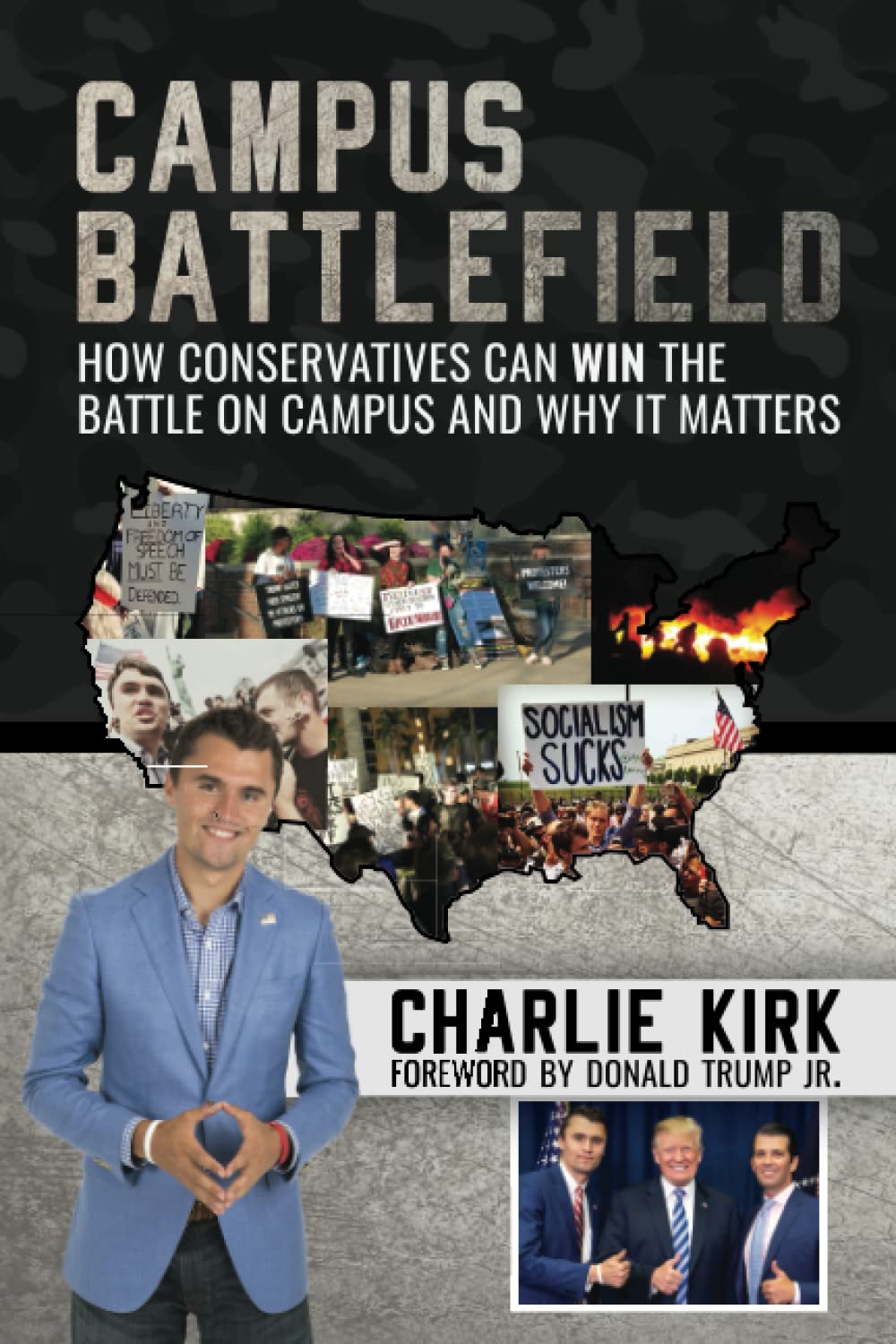
Charlie Kirk is the Founder and President of Turning Point USA, the largest and fastest growing conservative youth activist organization in the country with over 250,000 student members, over 150 full-time staff, and a presence on over 2,000 high school and college campuses nationwide. Charlie is also the Chairman of Students for Trump, which aims to activate one million new college voters on campuses in battleground states in the lead up to the 2020 presidential election. His social media reaches over 100 million people per month and according to�Axios, he is one of the "top 10 most engaged" Twitter handles in the world. He is also the host of �The Charlie Kirk Show,� which regularly ranks among the top news shows on Apple podcast charts.

Related Books

View All

Charlie Kirk Debates College Students: Why 80% of Universities Shouldn't Exist and the College Scam Exposed

July 1, 2025

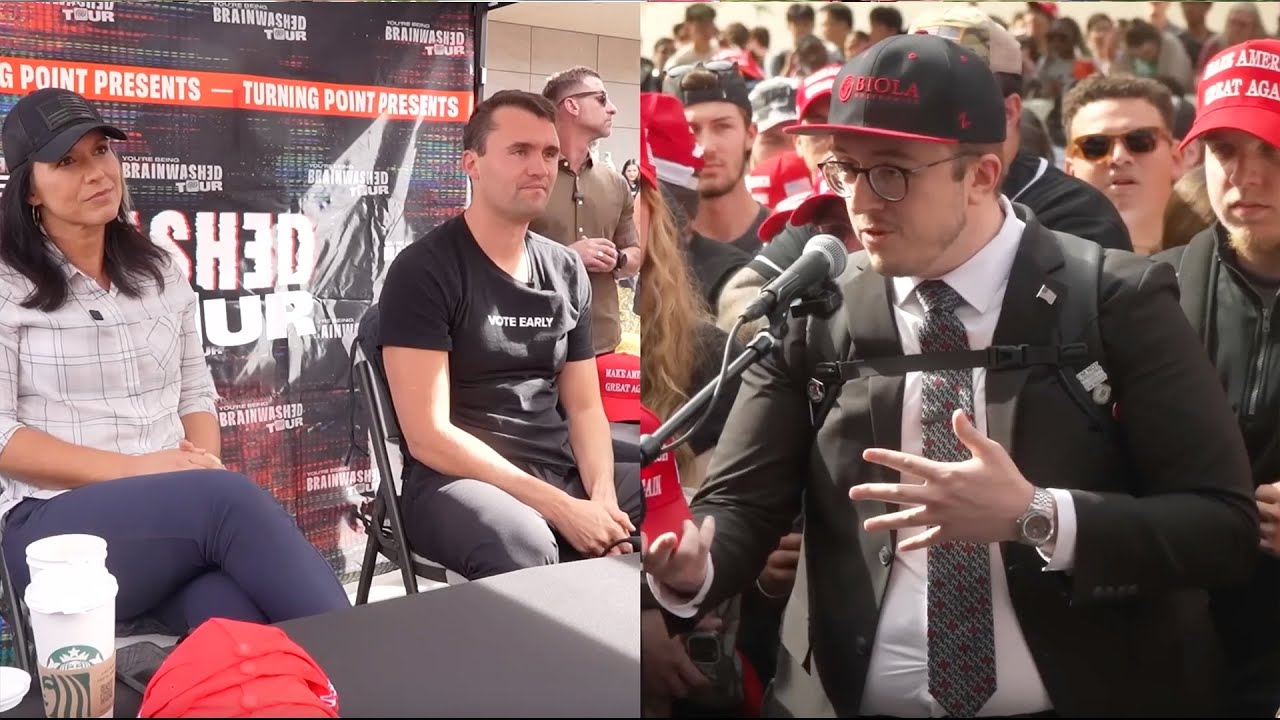
Charlie Kirk squares off with college students at East Carolina University in a heated debate over whether college is a scam. With 52% of graduates taking jobs that don't require a degree, Kirk argues that most students are being deceived about the value of their education. He challenges the notion that college is necessary for success, advocates for trade careers like carpentry and plumbing, and reveals why he's skeptical of hiring college graduates at his own company. The students push back, defending the value of higher education, but Kirk contends that the majority are wasting time and money on degrees they'll never use.

The College Scam Debate Begins

Charlie Kirk didn't hold back during his visit to East Carolina University, engaging in a spirited debate with students about whether college constitutes a scam. The discussion began with Kirk defining a scam as "when a majority of people aren't getting the money that they're paying for." Students immediately challenged this definition, with one arguing that a scam requires dishonesty, not just poor return on investment.

The debate quickly intensified when Kirk revealed a startling statistic: 52% of college students end up in jobs that don't require a college degree. This meant that half the audience would spend four years and accumulate debt for credentials they'd never actually need. One student defended the system, arguing that people who come to college for specific careers like teaching know upfront they won't make $300,000. But Kirk pushed back, questioning why universities don't tell students the hard truth about their employment prospects.

The Harsh Reality About College Requirements

Kirk asked the audience how many had been told it was necessary to go to college, and hands shot up across the room. "They've all been lied to and scammed," he declared. "And the university reinforces it. Got to stay here. Got to stay here. No, you don't. Actually, you could get a better job by not going here."

A student countered that if employers require college degrees, then college can't be a scam because it's preparing students for those jobs. But Kirk highlighted the disconnect: while some jobs do require degrees, many graduates end up in positions that don't, making their education retroactively unnecessary. "So it's a scam for that person," Kirk argued. The student responded, "That's on them," suggesting personal responsibility. But Kirk wasn't buying it, pointing to the systemic pressure that funnels young people into higher education regardless of whether it serves their interests.

The Hidden Cost of the College Path

Beyond the question of whether degrees are necessary, Kirk emphasized the financial burden. Students paying too much money, staying too long, and taking unnecessary classes all contribute to what he calls the scam. One student acknowledged agreement on this point, admitting that students could likely get what they need in a year and a half rather than four years.

Kirk also highlighted the opportunity cost. Those 52% of students who end up in jobs not requiring degrees aren't just wasting tuition money—they're also four years behind in earning potential and often saddled with student loan debt. "They make actually less because they have student loan debt and they're four years behind. That's the opportunity cost," Kirk explained.

When asked about the comparison to private high schools, Kirk drew a distinction. Classical or Christian schools offer higher quality education with different values. But when it comes to college, he sees East Carolina University as merely a more expensive version of a community college degree, not necessarily a better one.

The Trades Alternative

Kirk repeatedly pointed to trade careers as superior alternatives. "If you guys want to be a millionaire, go become a carpenter," he told the students. "That's where the money is right now because we send all of our kids to the laptop class and not the muscular class."

When a student suggested that if everyone went into carpentry, the market would be saturated, Kirk shot back with a cultural observation: "You know why it won't happen? Because your parents won't treat you as well." He asked how many students would face parental disapproval if they announced plans to become a plumber instead of finishing college. The implication was clear—social pressure, not economic reality, drives college enrollment.

Kirk, who comes from a trade family himself, sees millions of dollars waiting to be made in skilled trades while students chase "some stupid piece of paper." He argued that parents equate success with college credentials when financial opportunity lies elsewhere.

The Internship and Networking Myth

One of the common defenses of college is the networking opportunities and access to internships. Kirk demolished this argument bluntly: "You guys want an internship, drop out of college and ask for it. Like literally, this idea that you need to go to college to meet people, it's insane."

As someone who employs 1,500 people, Kirk revealed his own hiring bias: "If I find out you go to college, I'm super skeptical of you. Seriously, I'm like, what deprogramming do I have to do here?" This admission underscored his belief that college doesn't just fail to add value—it actively instills attitudes and ideologies that employers may need to undo.

The student Kirk was debating maintained that college provides better connections and opportunities for building professional networks, but Kirk remained unconvinced. His hiring practices reflect his conviction that college attendance is more liability than asset.

When College Makes Sense

Despite his strong opposition, Kirk and the student found some common ground. The student, studying finance on an in-state scholarship with minimal debt, represented a best-case scenario. Kirk acknowledged that for certain professions requiring certification, college serves a gatekeeping function, even if the education itself isn't particularly valuable.

The student admitted, "You need it for certification, not for education." Kirk agreed this was a different issue, though he noted that even in finance, many people now skip college entirely and make millions of dollars straight out of high school.

Kirk also showed sympathy for students drowning in debt. "I meet these kids sometimes and they have $100,000, $200,000 in student loan debt and they'll have nothing to show for it," he said. Both agreed that students shouldn't attend college if they're pursuing jobs they could get without a degree or if the degree won't actually improve their job prospects.

The Agreement on the Core Problem

By the end of the debate, Kirk and his student opponent had reached a significant point of agreement: approximately 80% of students at East Carolina University probably shouldn't be there. The student concurred 100%, acknowledging that college shouldn't be attracting people who won't benefit from attending.

Kirk pressed the point: "That's a scam then." But the student pushed back, arguing that colleges aren't necessarily convincing students they should attend to get better jobs, just informing them of what jobs they can pursue with degrees. Kirk countered that most colleges he visits constantly tell students that college is necessary, that it's great, and that graduates earn more money.

The final question Kirk posed was devastating in its simplicity: "Did you guys know that half of you will never use your college degree? Did you guys know that?" The student he was debating confidently asserted he would use his degree, but Kirk's point was about the collective, not the individual. The system fails half its participants, yet continues to operate as though it serves everyone.

The Personal Responsibility Debate

Throughout the conversation, a tension emerged between individual choice and systemic deception. The student repeatedly argued that if people choose to attend college for careers that don't require degrees, "that's on them." Kirk rejected this framing, insisting that when institutions create an environment of pressure and misinformation, individual choices aren't truly free.

He pointed to the universal messaging students receive: college is necessary, college is the path to success, college is what responsible young adults do. When half of students end up not needing their degrees, Kirk argued, the problem isn't individual decision-making—it's institutional dishonesty.

The student maintained that colleges aren't being dishonest because they're not promising specific salary outcomes. But Kirk's broader definition of the scam encompasses overpricing, unnecessary course requirements, extended timelines, and the fundamental mismatch between what's sold and what's delivered.

Looking Beyond the Bubble

Kirk closed with a prediction: "I'm not going to convince you guys. You guys think it's this great thing. It's fine. In 5 years, they'll be like, 'Oh my gosh.'" He suggested that students inside the college bubble can't see the reality that becomes obvious once they're out in the working world.

This perspective reflects Kirk's broader critique—that colleges create insular environments where their own value is constantly reinforced, making it difficult for students to evaluate alternatives objectively. Only after graduation, when faced with job markets, debt payments, and career realities, do many students recognize what Kirk was trying to tell them.

Whether or not one agrees with Kirk's characterization of college as a scam, his statistics and arguments reveal uncomfortable truths about higher education. With half of graduates taking jobs that don't require degrees, millions of dollars available in trade careers, and mounting student debt, the conventional wisdom about college deserves rigorous questioning. Kirk's willingness to have these debates on college campuses brings that questioning directly to the students who need to hear it most.

Comments

Be the first to comment on this video.

Video Transcript

[00:00] I'm not going to convince you guys. This

[00:01] idea that you go to get like

[00:02] internships, you guys want an

[00:04] internship, drop out of college and ask

[00:05] for it. Like literally, this idea that

[00:07] you need to go to college to meet

[00:09] people, it's insane. I employ 1,500

[00:12] people. I agree. And if I find out you

[00:14] go to college, I'm super skeptical of

[00:15] you. Seriously, I'm like, what

[00:17] deprogramming do I have to do here?

[00:19] That's fine. And I'm just I'm just

[00:20] saying you're Or if you're getting a job

[00:22] that this is not even going to help you

[00:24] get a better job. So, we agree. So, that

[00:25] means that like 80% of this college

[00:27] shouldn't exist here. Yeah. I agree

[00:30] 100%. That's a scam then.

[00:34] All right. Okay. Real quick. All right.

[00:36] That was something. How about the

[00:37] Pirates though? ECU. What are you

[00:39] putting on for? Yeah. Good stuff. Okay.

[00:42] So, I'm here to debate college is a

[00:45] scam. I've done this a couple times.

[00:47] Pick another topic. I don't have one to

[00:49] debate with you, but All right. Okay. Uh

[00:51] uh. Does anyone else real quick? I'm

[00:53] going to be here tonight, but yeah, go

[00:54] ahead. Can I just get you to define a

[00:56] scam first because I think that's the

[00:58] biggest a scam is when a majority of

[00:59] people aren't getting the money that

[01:00] they're paying for. Okay. But is that

[01:03] true though? Like because were you here

[01:05] earlier when I did this or not? Yes. If

[01:07] they come though for a purpose to get a

[01:09] certain job. They're not look Not

[01:11] everybody's looking for the amount of

[01:12] money that they're making. In my

[01:14] opinion, the definition of a scam is a

[01:16] dishonest scheme. It it is dishonest.

[01:18] Yes. So, but when I'm here for finance,

[01:22] so this doesn't apply to me. But if you

[01:23] come here as a teacher or you won't be a

[01:25] teacher in the future, you come here,

[01:27] they're not going to tell you you're

[01:28] going to make 300 grand. That's not what

[01:31] they're telling you.

[01:33] Again, I is there an expectation that if

[01:35] you guys go to college, you're going to

[01:36] have a good career? Yeah. Okay. But

[01:38] again, half the people in this audience,

[01:39] if you get a job, it will not require a

[01:41] college degree. But that's on them. No,

[01:43] it's not. No, it's not. A lot of people

[01:45] think it's necessary to be here. How

[01:46] many of you guys have been told it's

[01:47] necessary to go to college? Raise your

[01:48] hand. They've all been lied to and

[01:49] scammed. And the university reinforces

[01:51] it. Got to stay here. Got to stay here.

[01:53] No, you don't. Actually, you could get a

[01:54] better job by not going here. And your

[01:56] professors won't tell you that. You

[01:57] could be richer and happier without any

[01:59] college degree. In fact, the college

[02:00] makes you poorer. That's ignorance,

[02:02] though. Like, I'll go ahead and say if

[02:04] you're here and you think college is a

[02:06] scam and you're going to college, you're

[02:08] just ignorant. Yeah. But again, they say

[02:11] that's they're being forced into this

[02:12] because all these people require college

[02:14] degrees. Yes. But if they require a

[02:16] college degree, then it can't be a scam.

[02:19] But again, the higher paying ones do,

[02:21] but they end up getting jobs that don't

[02:22] require college degrees. Hence, they

[02:24] shouldn't have come here in the first

[02:25] place. Yeah. So, it's a scam for that

[02:26] person. That's on them. It's But if I

[02:29] get a job that requires a college

[02:31] degree, college did not scam me. They

[02:33] prepared me for the work. You know, it's

[02:34] like saying I I had a great experience

[02:37] on Spirit Airlines once. Yes. Some scams

[02:39] can end up working. No, but you're

[02:41] right. But what I'm I'm sure some ED

[02:44] drug worked for some reason. I haven't

[02:45] done enough studying of this, but what

[02:47] percent of college students get jobs

[02:50] that don't require 52%. 52%. Half. And

[02:54] and of that 52%, how much more make more

[02:57] than the median

[02:59] salary? It's the same. Meaning they make

[03:01] actually less because they have student

[03:02] loan debt and they're four years behind.

[03:04] That that's the opportunity cost. I'd

[03:06] agree with that. And so, but again, if

[03:07] you guys want to be a millionaire, go

[03:09] become a carpenter. I mean, that's where

[03:10] the money is right now because we send

[03:12] all of our kids to the to just oh, you

[03:14] know, laptop class and not the muscular

[03:16] class. Again, if you want to be here, go

[03:17] ahead. It's just, you know, I just I

[03:19] think you guys don't realize once you're

[03:20] outside of college, you'd be like, "Oh

[03:22] my goodness, that was a waste of four

[03:23] years." Okay, but question. I'm telling

[03:24] you guys, if everybody here went into

[03:26] carpentry, yes, which won't happen. It

[03:28] it won't, but that's what you're

[03:30] advising us to do. If we all went into

[03:31] carp, you know why it won't happen?

[03:33] Because your parents won't treat you as

[03:34] well.

[03:35] My I come from a trade family. So no,

[03:38] but I'm saying right now how many of you

[03:39] guys if you told your parents to become

[03:41] a plumber, they'd say go back to

[03:42] college. You lost your mind. If you care

[03:44] about faith, family, and freedom, listen

[03:46] up. I'm proud to partner with AAC, the

[03:48] Association of Mature American Citizens.

[03:50] While AP pushes a woke agenda, AAC is

[03:54] fighting for Social Security, election

[03:56] integrity, and to make the Trump tax

[03:58] cuts permanent. You can get an AAC

[04:00] membership for as little as $12 a year,

[04:02] and it includes your spouse. You also

[04:04] get discounts, benefits, and the AAC

[04:06] magazine packed with conservative

[04:08] insight. Go to amac.us/kirk

[04:11] and join the movement. That's

[04:12] amac.us/kirk.

[04:14] Do it today.

[04:18] The point being is that like our par

[04:20] your parents think that success is

[04:22] getting some stupid piece of paper when

[04:24] there's millions of dollars waiting for

[04:25] you to be made. Millions. But is that

[04:28] college being dishonest? Is that Yes, of

[04:30] course. First of all, it's scamming you

[04:32] on the price. You guys are paying way

[04:33] too much money to be here. You're here

[04:34] for too long. You guys could get what

[04:36] you need in literally a year and a half,

[04:37] not four years. I agree with that.

[04:39] That's a scam. Then you're being your

[04:41] classes are being forced on you that are

[04:43] unnecessary. So you think private school

[04:44] is a scam, too, for like high school?

[04:47] No, not necessarily. You pay more money

[04:49] to go to school to get the same degree I

[04:51] got at public education. Some of those

[04:52] are if it's a classical school or a

[04:54] Christian school, it's a higher quality

[04:55] education.

[04:57] It's almost like that's what East

[04:58] Carolina is. East Carolina is a higher

[05:01] education than a community college

[05:03] degree. Yes, it is. I would be fine.

[05:06] You're lying to yourself if you don't

[05:07] think to. It's fine. When you get you

[05:09] can make your own agency, better

[05:11] connections. It's all about building

[05:12] stuff. You know what's so funny? I just

[05:14] say this at closing. I'm not going to

[05:16] convince you guys. This idea that you go

[05:17] to get like internships. You guys want

[05:19] an internship, drop out of college and

[05:20] ask for it. Like literally, this idea

[05:23] that you need to go to college to meet

[05:24] people, it's insane. I employ 1,500

[05:27] people. I agree. And if I find out you

[05:29] go to college, I'm super skeptical of

[05:30] you. Seriously, I'm like, what

[05:32] deprogramming do I have to do here?

[05:34] That's fine. And I'm just I'm just

[05:36] saying you're I'm not going to convince

[05:37] you guys. You guys think it's this great

[05:38] thing. It's fine. In 5 years, they'll be

[05:40] like, "Oh my gosh." And do you have any

[05:41] student loan debt or no? Are you in

[05:42] state or uh I am in state. I do have a

[05:45] little debt, but I'm also here on a

[05:47] scholarship. Good. That's great. But I

[05:48] mean, I meet these kids sometimes and

[05:50] they have a hundred $200,000 in student

[05:52] loan debt and they'll have nothing to

[05:53] show for it. And yeah, I agree with

[05:55] that. You should not come here if you're

[05:57] going to get a job that you could get

[05:58] without coming here or if you're getting

[06:00] a job that this is not even going to

[06:02] help you get a better job. So we agree

[06:04] that means that like 80% of this college

[06:05] shouldn't exist here. Yeah. 100%. That's

[06:09] a scam then. Yeah. No, because I don't

[06:12] think No, because college is not

[06:13] convincing them that they should be here

[06:16] to get a better job. It's convincing

[06:19] that it can go to certain jobs. It's

[06:20] telling them what they can do. I mean,

[06:23] maybe this college is different, but

[06:24] most college I visit to, they are

[06:25] constantly being like, "Necessary for

[06:26] you to graduate. This place is great.

[06:28] You're going to earn more money, but

[06:29] they're going to give you the jobs that

[06:30] you can go." Let me ask you a question.

[06:32] Did you guys know that half of you will

[06:33] never use your college degree? Did you

[06:34] guys know that? I will use my college

[06:37] degree. I know the professions I'm going

[06:39] to go into. Maybe. I mean, it's a little

[06:41] overrated, but Yeah. Yeah. But are you

[06:43] going to be a financial adviser without

[06:45] a college degree? No. But it's like

[06:46] honestly, it's you need it for

[06:47] certification, not for education. It's a

[06:49] different issue. Yeah. But that's not

[06:51] Honestly, a lot of guys in finance don't

[06:53] go to college now. They just go straight

[06:55] out of high school and they make

[06:56] millions of dollars. Yeah, I agree with

[06:58] that. But not everybody can do that.

[07:00] It's not fair enough. You guys make your

[07:02] own decisions. It's my my prerogative to

[07:03] tell you guys are being scammed. Thank

[07:04] you. We have the amazing Student Action

[07:06] Summit coming up literally in a week and

[07:09] a half. Can you believe it? It's going

[07:10] to be an amazing event. We're so excited

[07:12] about the crowds and the energy and the

[07:14] enthusiasm. Uh, we have Christine No, we

[07:17] have Tucker Carlson, we have Pete

[07:19] Hagsth, we have the biggest speakers in

[07:20] the movement. Let's play it. Let's play

[07:23] Cut 51.

[07:25] They said Gen Z would stay silent, that

[07:28] we'd back down, that we'd forget what's

[07:30] worth fighting for. But this generation

[07:32] remembers. We remember truth. We

[07:35] remember freedom. And now we rise.

[07:39] This is more than a conference. It's a

[07:41] call to action. to reclaim the future.

[07:44] To ignite a movement that cannot be

[07:46] ignored. Student Action Summit 2025

[07:50] featuring the boldest voices in the

[07:51] fight. Charlie Kirk, Secretary Pete

[07:54] Hgset, Tucker Carlson, Steve Bannon,

[07:56] Brett Cooper, Secretary Christy Nome,

[07:59] Riley Gaines, Brandon Tatum, Jack Povic,

[08:02] Laura Ingram, Megan Kelly, Greg Gutfeld,

[08:04] Tom Hman, Congressman Byron Donald's,

[08:07] Russell Brand, Savannah Chrysler. Join

[08:09] thousands of patriots, future leaders,

[08:11] and freedom fighters of all ages. This

[08:13] is the battleground of ideas. This is

[08:16] the Student Action Summit.

[08:19] Register now at sas2025.com.

Link copied to clipboard!