2,422 videos 1,389,747,653 views US Joined Aug 30, 2018
Charlie Kirk is the Founder and President of Turning Point USA, the largest and fastest growing conservative youth activist organization in the country with over 250,000 student members, over 150 full-time staff, and a presence on over 2,000 high school and college campuses nationwide. Charlie is also the Chairman of Students for Trump, which aims to activate one million new college voters on campuses in battleground states in the lead up to the 2020 presidential election. His social media reaches over 100 million people per month and according to Axios, he is one of the "top 10 most engaged" Twitter handles in the world. He is also the host of “The Charlie Kirk Show,” which regularly ranks among the top news shows on Apple podcast charts.
Charlie Kirk Warns High School Senior Why College Might Be a Mistake in the AI Age
Charlie Kirk delivers a sobering message to a high school senior questioning whether college is worth it. With a 41% non-graduation rate and half of graduates landing jobs that don't require a degree, Kirk argues that traditional college has become obsolete. He predicts artificial intelligence will displace millions of jobs within the year, including careers students are currently studying for, from paralegals to cardiologists. When challenged by a data science graduate student on his claims, Kirk doubles down on his prediction that AI advancement will eliminate most middle-management and white-collar positions, fundamentally reshaping the job market before today's students even graduate.
A High School Senior Questions the Value of College
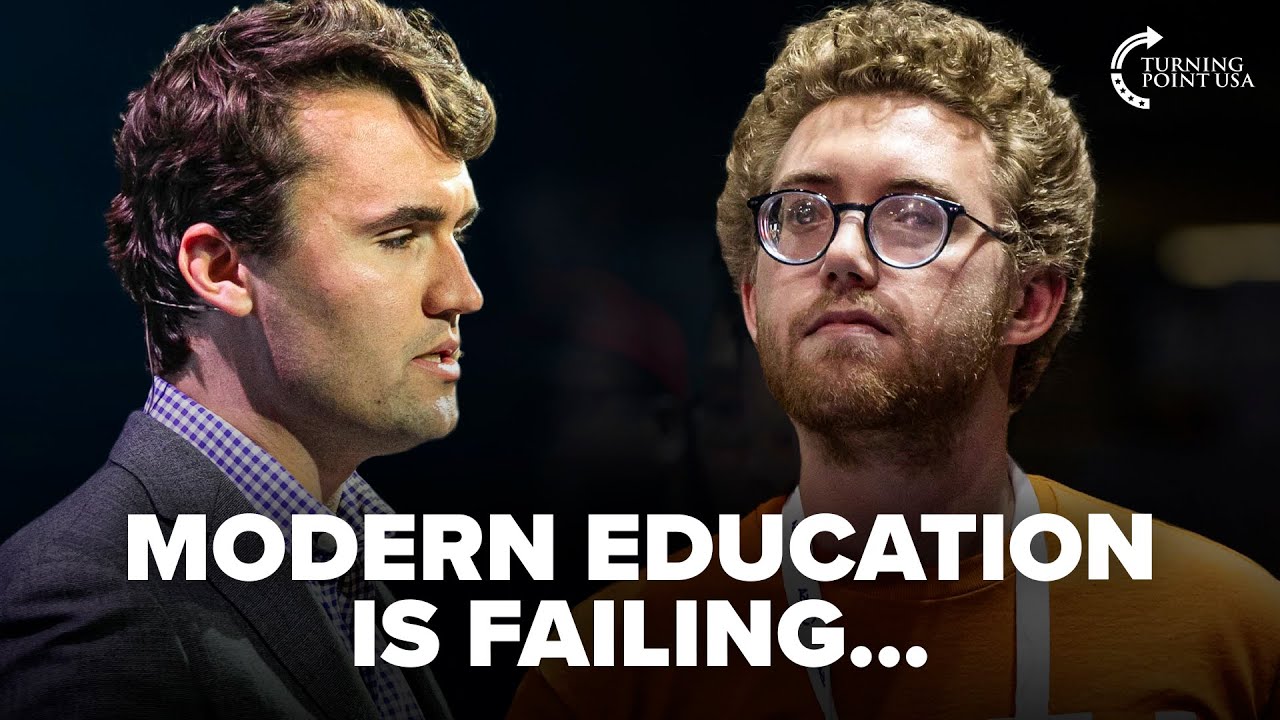
During a campus event, a high school senior from a nearby school approached Charlie Kirk with a straightforward question: what should he do to prepare for college? Kirk's response caught the student off guard. Rather than offering the typical advice about studying and campus life, Kirk challenged the fundamental premise of the question itself.
"Why do you want to go to college?" Kirk asked. When the student admitted his parents were pressuring him and that he was undecided about his major in liberal arts and sciences, Kirk pushed back. "You're your own sovereign being with your own agency," he said, urging the young man to think deeply about whether college was actually the right path.
Kirk didn't mince words about his position. "I didn't go to college and worked out fine for me. We have way too many people going to college in this country." He recommended that if the student did decide to attend, he should focus on learning as much as possible, reading books, and diving deep into big ideas. Kirk suggested taking free online courses at Hillsdale College through charlieforhillsdale.com as an alternative educational resource.
The Reality of College Outcomes
Kirk laid out stark statistics that challenge the conventional wisdom about higher education. "The national graduation rate, 41% of people that go to college do not graduate," he explained. "And then half of the people in this audience that are in college, if they get a job, will end up getting a job that doesn't require a college degree. Basically rendering their experience here completely useless."
When the student pushed back with an example of his mother, who has an English degree and works as director of digital analytics at State Farm, Kirk remained unconvinced. The student argued that his mother uses her English degree every day to write emails and communicate effectively in her role. Kirk's response pointed to a larger technological shift that he believes will make such skills redundant.
The AI Revolution That's Already Here
"Artificial intelligence is going to displace 99% of all the jobs you're getting degrees for," Kirk declared. "Most of the reasons why you're in school, your jobs will not exist. We're going to have to retrain the entire country to use AI and to find other jobs."
Kirk addressed the student's example about email writing directly. "Grock can do that. Chat GPT can do that pretty well," he said. When the student protested that using ChatGPT on his AP comparative government essays wouldn't work for him, Kirk responded that it was already working for many students in the audience. "College has become a scam where it's like who can use AI the quickest and the best and like you're not actually learning the way you used to."
Kirk went further, predicting immediate job displacement. "Millions of people are going to lose their jobs in the next year," he stated. When the student asked for specific examples, Kirk didn't hesitate. "Heart surgeons are going to lose their jobs. Yeah, 100%."
Specific Industries Facing AI Disruption
Kirk provided concrete examples of how AI is already transforming healthcare. "There's an entire profession of cardiologists, for example, that read heart scans. They're going completely out of business. AI does it quicker and more accurately, and they do it in seconds," he explained. "People are detecting heart arrhythmias, cardiac blockages, you know, places they need to have stints in seconds where it otherwise would take weeks to get a cardiologist to look at it."
When pressed for evidence, Kirk responded: "Type into any search engine of your choice, 'AI detects tumor quicker than human.' And you will see that all across the country they're using AI and they literally have no use anymore for people to read scans. They double check the work sometimes, but at like a 99% veracity, it works."
The legal profession wasn't spared from Kirk's predictions either. "Paralegals are like a thing of the past," he said. "Paralegals used to be people that would write up briefs. Chat GPT can read a 30,000-page legal brief in 30 seconds and summarize it more crisply and better in better language than a human being can."
When the student suggested that paralegals do more than just reading and writing, Kirk was firm: "Parallegals basically read and write, and ChatGPT does that better than a human being and quicker and more accurately. Not here to debate it with you. It's a fact. AI's taken over the world and I don't think people are prepared for that."
A Data Science Graduate Student Challenges Kirk's Claims
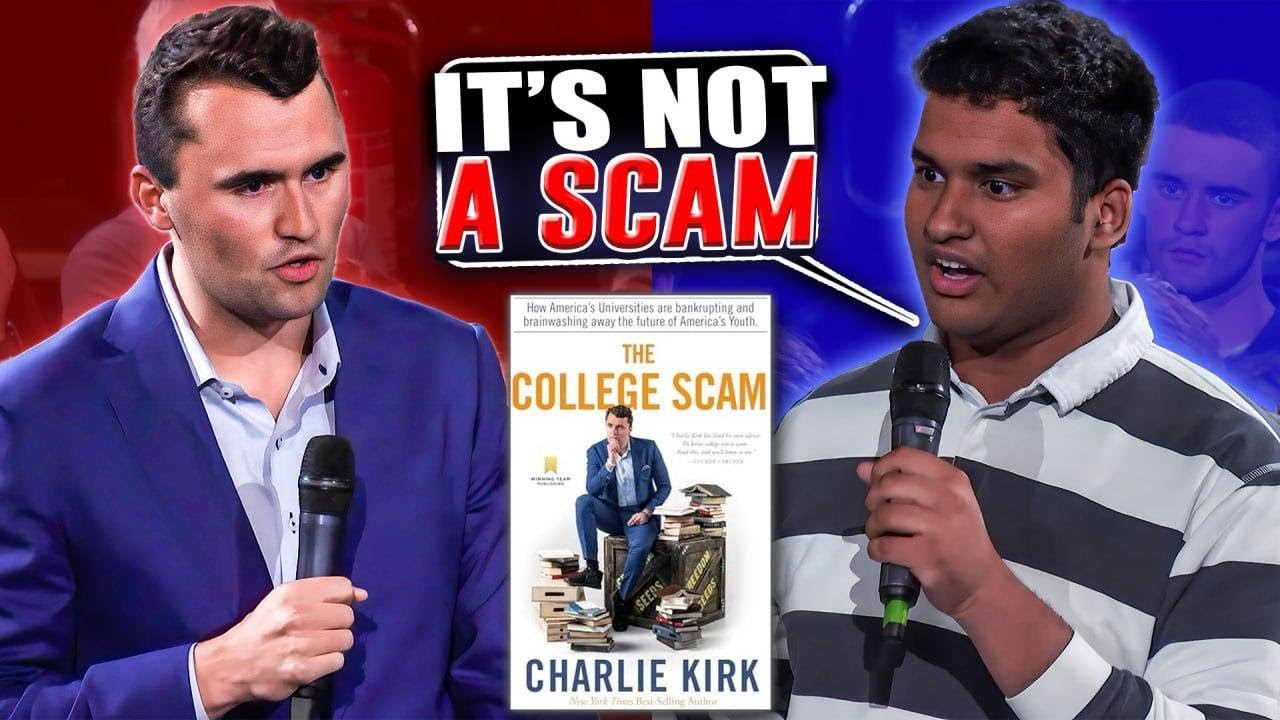
The conversation took an interesting turn when a graduate student with a master's degree in data science approached the microphone. The student challenged Kirk's timeline and scope of AI displacement, arguing that critical fields, particularly blue-collar jobs, wouldn't be threatened by AI anytime soon.
Kirk disagreed, pointing to robotics as a growing threat even in manual labor. When the data science student pushed back, noting that robotics wasn't advancing as quickly as Kirk suggested, Kirk asked, "How many humans are working in the Tesla plants?" He pointed out that Tesla's production lines are fully robotic, though the student countered that industrial automation has been around for years.
The graduate student argued that the jobs most likely to be cut are middle management and email-related positions, and that the impact from current AI tools like ChatGPT and large language models has already been felt. "The tools that'll come, I mean, you said earlier with like doctors, that's a really poor example because it's more of a force multiplier than it is something that'll take jobs," the student said, noting that doctors are still needed to make final decisions.
The Scope of Middle Management Job Loss
Kirk seized on the middle management point to strengthen his argument. "How many people do you think are in mid-level management in this country?" he asked. When the student acknowledged "a fair amount," Kirk countered: "It's like 70% of all the jobs."
To illustrate his point, Kirk cited a specific example. "Let's just take Brown University. I happen to know this because I was just doing a study on it. 4,000 employees, a thousand are professors, 3,300 are mid-level management."
The data science student remained skeptical, suggesting there would be diminishing returns in AI's ability to replace jobs, particularly in the final 10%. Kirk acknowledged the possibility but stood his ground. "I think AI is way more powerful than we give it credit for. I think it's advancing at a rate that is going to displace" more jobs than anticipated.
Will AI Reach Singularity?
The conversation took a more philosophical turn when the graduate student asked whether Kirk believed AI would reach singularity. "Absolutely not. And even if it does, it doesn't matter," Kirk responded. The student then introduced the concept of set theory to make his argument.
"There's a Venn diagram of human intelligence and AI is only capable of learning everything that humans already know. It needs our data to be able to make insights, right?" the student explained. He argued that AI can only work with what humans already understand.
Kirk challenged this framework: "But once AI can do physics itself, it can do simulations." The student maintained his position that AI could only operate within the bounds of human understanding. Kirk noted that prominent figures like Elon Musk and Sam Altman disagree with this assessment. The student countered that these tech leaders have a financial interest in promoting AI's capabilities.
Fear or Reality?
The data science student concluded by suggesting that Kirk shouldn't "sow fear into coming generations that AI" will take all their jobs. Kirk pushed back, arguing that the vast majority of people going to college are studying things that will be replaced. He returned to the original high school student's example: "The young man who came up here, what did he say? Well, my mom sends emails at State Farm."
When the graduate student pointed out that the high school senior had said he was considering liberal arts, they agreed that was a problematic choice. However, the student argued that art itself "isn't going anywhere anytime soon," though he acknowledged image generators are "kind of iffy."
Kirk found this interesting, questioning whether AI-generated art was actually good. The student clarified: "I think they're fast." Kirk then asked whether Turning Point USA would be using AI for their merchandise design. "Not yet," Kirk admitted, before adding, "Oh, yeah," when asked if they would get there eventually.
The exchange highlighted the tension between those warning about AI's disruptive potential and those working in the field who see more nuanced limitations. Whether Kirk's predictions prove accurate or alarmist, his core message to students remains clear: think carefully before committing time and money to a college degree that may be obsolete before you even graduate.