2,422 videos 1,389,747,653 views US Joined Aug 30, 2018
Charlie Kirk is the Founder and President of Turning Point USA, the largest and fastest growing conservative youth activist organization in the country with over 250,000 student members, over 150 full-time staff, and a presence on over 2,000 high school and college campuses nationwide. Charlie is also the Chairman of Students for Trump, which aims to activate one million new college voters on campuses in battleground states in the lead up to the 2020 presidential election. His social media reaches over 100 million people per month and according to Axios, he is one of the "top 10 most engaged" Twitter handles in the world. He is also the host of “The Charlie Kirk Show,” which regularly ranks among the top news shows on Apple podcast charts.
Charlie Kirk Debates Marriage and Family Despite Legal System Flaws at University of Wyoming
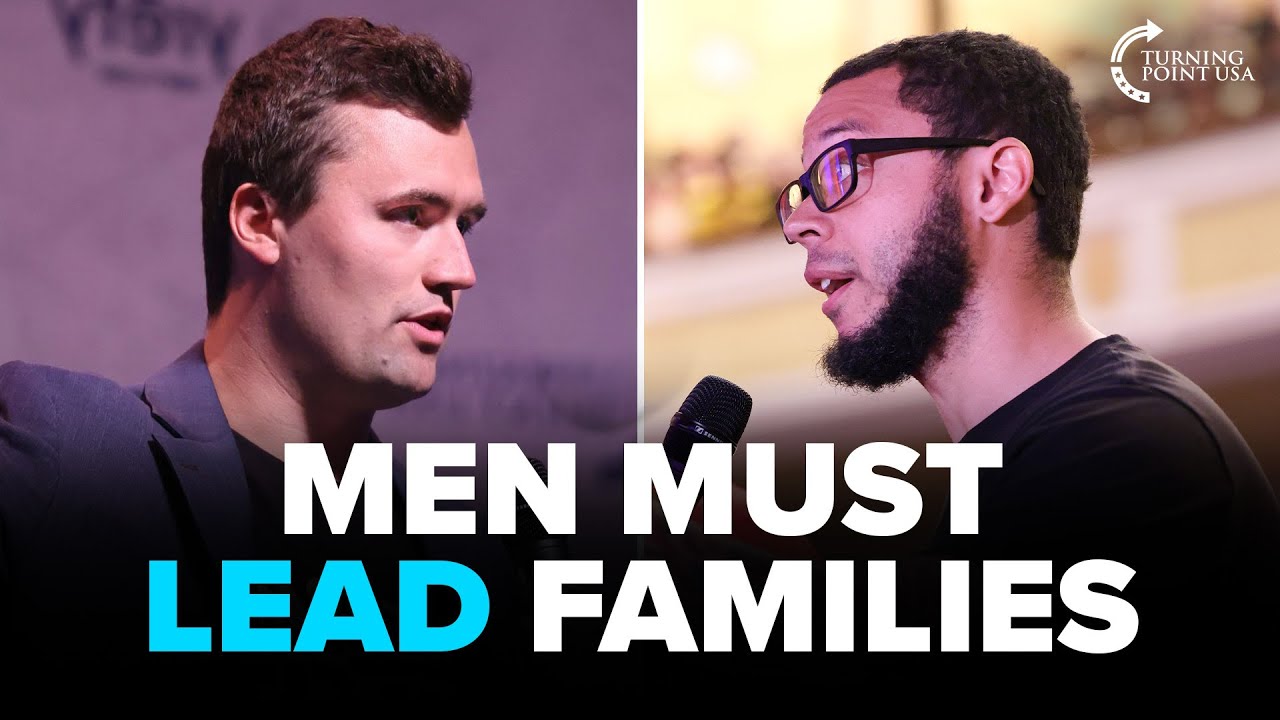
Charlie Kirk confronts a University of Wyoming student who argues men should avoid marriage due to divorce statistics and family court bias. The student cites that 70% of divorces are initiated by women and 85% of incarcerated people come from fatherless homes. Kirk pushes back, insisting that despite legitimate concerns about the legal system incentivizing single motherhood, men must take responsibility and lead their families. He argues that men become better versions of themselves through marriage and that running from the institution because of potential obstacles represents weakness rather than wisdom. Kirk acknowledges problems with state involvement in family matters while maintaining that marriage remains a sacred duty worth fighting for, even when the system is flawed.
At the University of Wyoming, a student confronted Charlie Kirk with a bold premise: getting married and having a family in the current legal environment is fundamentally unwise. The student presented statistics to support his position, noting that 70% of divorces are initiated by women and that 85% of incarcerated individuals come from fatherless homes. His argument centered on the idea that these two data points show a direct correlation, suggesting that the current system actively works against stable families.
The student's core contention was that the state incentivizes single motherhood, creating a parasitic system where men face significant disadvantages in family court. He argued that conversations about encouraging family formation should wait until systemic reforms protect men from what he sees as legal bias. His perspective wasn't anti-family in principle, but rather a pragmatic assessment that the current legal framework makes marriage too risky for men.
Kirk's Rejection of the Victim Mentality
Charlie Kirk immediately challenged the premise of the student's argument. When the student claimed the legal system actively destroys men in court, Kirk didn't deny the problem existed but refused to accept it as a reason to avoid marriage altogether. He reframed the conversation by asking the student about his own divorce, which the student acknowledged he had contributed to through his own actions.
Kirk argued that while women may initiate 70% of divorces, men often fail to take the directive to maintain peace in the home. He insisted that men bear responsibility for recognizing and addressing problems before they escalate to divorce. According to Kirk, men should lead their families back to church and seek counseling when necessary rather than allowing relationships to deteriorate to the point where divorce becomes inevitable.
The State's Role in Family Breakdown
The student pressed his point about systemic issues, explaining how the federal government incentivizes states through child support enforcement programs. He noted that Wyoming doesn't have true 50/50 custody arrangements even when parents get along, and that the state profits from family dissolution. This created what he called a toxic system where women receive financial incentives that work against family unity.
Kirk acknowledged merit in this argument, agreeing that men deserve better representation in custody matters and that state involvement in family affairs creates problems. He conceded that reforms are needed in how the legal system handles family matters. However, he insisted this acknowledgment shouldn't lead to the conclusion that men should avoid marriage.
Men Are Better When Married
Kirk pivoted to what he sees as the fundamental truth about marriage: men objectively become better versions of themselves when married. He contrasted married men with what he called "grown infant boys watching porn and playing video games all day long." The student agreed with this characterization, creating common ground between them.
This agreement allowed Kirk to build his counter-argument. Despite the legal system's flaws, despite the statistics about divorce, despite the challenges men face in family court, marriage remains the right choice. Kirk argued that it falls to men to find women they love and protect those marriages, working to ensure they never reach the point of divorce.
Overcoming Obstacles Rather Than Avoiding Them
Kirk delivered his central message: every generation has faced troubles, and the duty of men is to overcome obstacles rather than complain about them. He rejected what he saw as a victim mentality, insisting that young men should refuse to remain boys and instead do the hard work of getting married and having children.
He acknowledged the student's concerns had validity but maintained that running from marriage because of potential problems represents weakness. Life presents many challenges, but marriage is a holy institution that men should pursue regardless. Kirk argued that the decline of marriage in Western society represents one of the most damaging indicators of cultural breakdown.
The Path Forward
In his closing argument, Kirk presented a both-and rather than either-or solution. Yes, the laws should be revised. Yes, the system needs reform. Yes, state involvement in family matters creates perverse incentives. But the answer cannot be abandoning marriage as an institution.
Kirk insisted that despite legitimate grievances about the legal system, young men must still pursue marriage and family. The institution remains sacred and essential to a healthy society. Rather than allowing broken systems to dictate personal choices, men should fight to protect and strengthen their marriages while simultaneously working to reform unjust laws. The challenge is difficult, Kirk acknowledged, but difficulty has never been a valid excuse for abandoning what is right.