2,422 videos 1,389,747,653 views US Joined Aug 30, 2018
Charlie Kirk is the Founder and President of Turning Point USA, the largest and fastest growing conservative youth activist organization in the country with over 250,000 student members, over 150 full-time staff, and a presence on over 2,000 high school and college campuses nationwide. Charlie is also the Chairman of Students for Trump, which aims to activate one million new college voters on campuses in battleground states in the lead up to the 2020 presidential election. His social media reaches over 100 million people per month and according to Axios, he is one of the "top 10 most engaged" Twitter handles in the world. He is also the host of “The Charlie Kirk Show,” which regularly ranks among the top news shows on Apple podcast charts.
Charlie Kirk Challenges Systemic Racism Narrative with Single Motherhood Statistics and Family Structure Breakdown
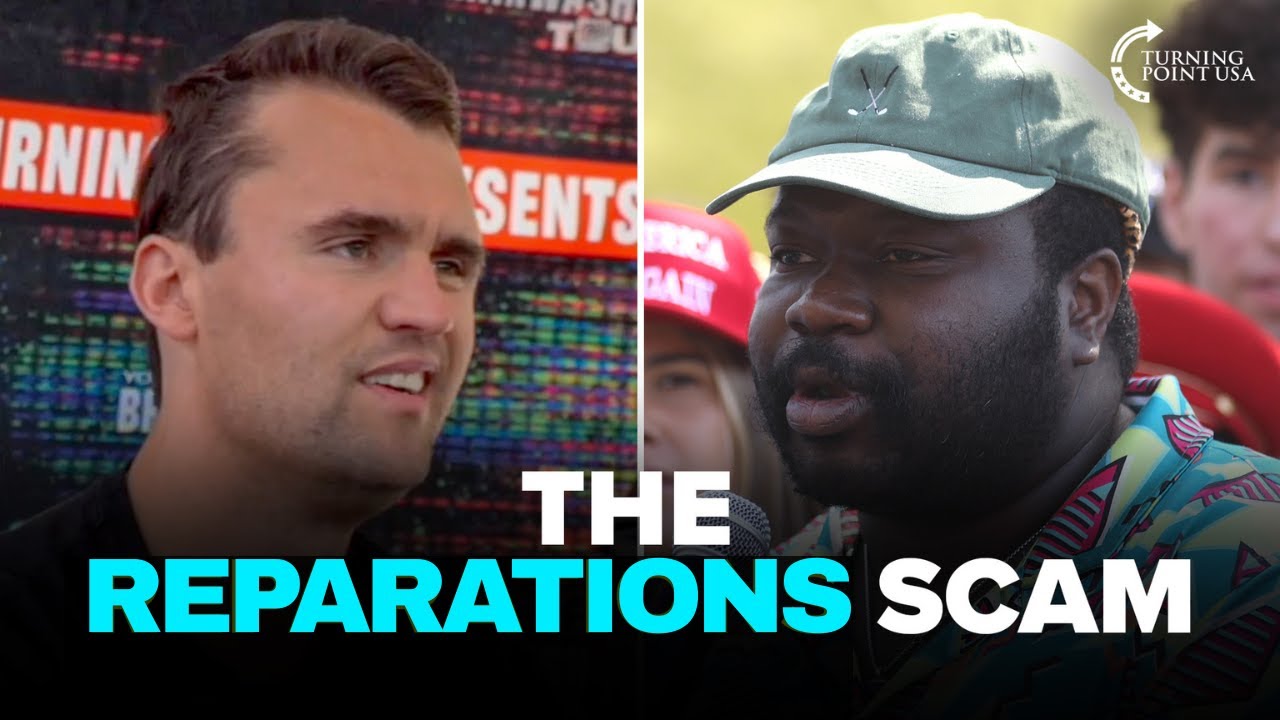
Charlie Kirk confronts a student who questions whether slavery and Jim Crow laws created lasting damage in black communities. Kirk counters with striking statistics: single motherhood in the black community was 26% in the 1960s but jumped to 77% today, as America became significantly less racist. He argues the real crisis isn't historical oppression but the breakdown of the nuclear family, fueled by 1960s liberalism, the Great Society Act, and a welfare state that incentivized single motherhood. Kirk points to the success of first-generation black immigrants and the Brookings Institution's poverty-prevention formula to challenge the systemic racism framework, ultimately suggesting that cultural shifts around marriage and family, not racist laws, explain today's disparities.
Charlie Kirk opens his response to a student's question about slavery and Jim Crow's lasting impact by presenting a compelling statistical comparison. Kirk acknowledges that if one were to correlate the impact of Jim Crow and slavery, the single motherhood rate in the black community during the 1950s and 1960s stood at approximately 26%. Today, that figure has skyrocketed to 77%.
Kirk poses a direct challenge: why did this rate jump 50 percentage points since the Civil Rights Act, precisely as America became significantly less racist? He argues that while slavery and Jim Crow had impacts, the dramatic increase in single motherhood cannot be attributed to those historical injustices. Something else changed in American society that better explains this troubling trend.
The Personal Connection Argument
When the student mentions knowing presidents who owned slaves, Kirk redirects the conversation by asking whether the student personally knows anyone who owned a slave or anyone who was a slave. The answer, predictably, is no. Kirk uses this exchange to question the direct causal link between historical injustices and present-day outcomes.
The student attempts to argue that the lack of personal connection doesn't negate impact, to which Kirk responds that the question is whether there's a measurable and significant impact on key metrics that influence the livelihood of the black community today. He returns to the single motherhood statistic as the most telling metric—a rate that worsened dramatically as America became less racist, not more.
Confronting the Systemic Racism Framework
Kirk challenges the concept of systemic racism directly by asking what law currently in practice actively discriminates against black people. The student shifts to discussing generational wealth, arguing that 150 years of opportunity to build wealth, own homes, get jobs, and obtain college educations creates an inherent advantage that persists even when legal discrimination ends.
Kirk counters this narrative with historical data: the black middle class was the fastest growing demographic in the 1940s and 1950s until the Great Society Act and government intervention. He suggests the student has been "propagandized" to believe that conditions never personally experienced had a disproportionate impact on today's world.
The Immigrant Success Story
To challenge the generational wealth argument, Kirk points to first-generation immigrants who arrive in America without accumulated wealth, property, or family connections yet manage to make good choices and move up the socioeconomic ladder. He notes that more than two million blacks from the Caribbean, Nigeria, and Western Africa have legally immigrated to America since the 1980s—more than were ever brought as slaves.
This immigration pattern, Kirk argues, contradicts the systemic racism narrative. If America were truly systemically racist against black people, why would so many blacks voluntarily immigrate here? And why do first-generation black immigrants often outperform native-born Americans in various metrics?
The Three-Step Formula Out of Poverty
Kirk references the Brookings Institution, which he identifies as a liberal think tank, and their research showing three things necessary to stay out of poverty in America. First, graduate high school—which Kirk acknowledges has become harder due to public sector unions and failing government schools affecting all communities, not just black or Hispanic ones. Second, get any job. Third, get married before having children and avoid criminal activity.
These recommendations, Kirk argues, have nothing to do with white people acting against black people. Instead, they focus on personal choices and family structure as the key determinants of economic success.
The Great Society Act and the Welfare State
Kirk identifies the 1960s Great Society Act as a turning point that subsidized single motherhood. The government essentially told black women they no longer needed to be married to have children—they could "get married to the government" instead. This created a dramatic escalation in the deterioration of the nuclear family, with the welfare state replacing the traditional family structure.
Kirk connects this policy change directly to the spike in single motherhood rates, arguing that government intervention—not racism—created the conditions that damaged black communities. Every activist group that discusses systemic racism and oppression, he suggests, should instead focus on the data and advocate for putting black fathers back in the home.
Sexual Revolution and Cultural Shifts
Kirk addresses what he calls the "sexual anarchy" that emerged in post-1960s liberalism. Before the 1960s, sexual relations were culturally expected to be confined to marital relationships. As this cultural norm broke down and sex became gratuitous and pervasive in media, pop culture, Hollywood, and schools, people began questioning why marriage was necessary at all.
This shift, Kirk argues, led not only to increased single motherhood rates but also to higher abortion rates. The breakdown of sexual norms undermined the institution of marriage, which Kirk describes as the bedrock institution. Strong families create strong communities, which create strong civilizations.
Overpolicing or Policy Failure?
When the student suggests that overpolicing and disproportionate law enforcement in black neighborhoods might be keeping fathers out of homes, Kirk flatly rejects this premise. He states that blacks are actually under-arrested and underpoliced relative to the percentage of crimes they commit.
Kirk returns to his central thesis: the absence of fathers in black homes is primarily a result of government policies that incentivized single motherhood, not law enforcement practices. The welfare state created conditions where women could rely on government support rather than two-parent households.
The Sociology Critique
Kirk concludes by acknowledging the student's courage in asking the question but offers pointed advice: forget everything learned in Introduction to Sociology 101 because it was "likely all garbage." He dismisses the sociological framework that emphasizes how life conditions at birth determine outcomes, instead arguing for personal agency and family structure as the primary determinants of success.
The exchange represents Kirk's broader critique of academic institutions that he believes teach students to view America through a lens of systemic oppression rather than examining data-driven explanations for disparities. His argument centers on the idea that cultural and policy changes—particularly around family structure and sexual norms—better explain current disparities than historical racism or contemporary discrimination.