Up Next

Charlie Kirk Explains Why Unity Beats Diversity and Defends Merit Over DEI at Texas A&M
14:25

Charlie Kirk Challenges Student on Fatherlessness, Role Models, and the Crisis in Black America
10:06

Charlie Kirk Debates LA Homelessness Crisis and Family Structure with College Student at Campus Event
9:33


Charlie Kirk is the Founder and President of Turning Point USA, the largest and fastest growing conservative youth activist organization in the country with over 250,000 student members, over 150 full-time staff, and a presence on over 2,000 high school and college campuses nationwide. Charlie is also the Chairman of Students for Trump, which aims to activate one million new college voters on campuses in battleground states in the lead up to the 2020 presidential election. His social media reaches over 100 million people per month and according to Axios, he is one of the "top 10 most engaged" Twitter handles in the world. He is also the host of “The Charlie Kirk Show,” which regularly ranks among the top news shows on Apple podcast charts.
Subscribe on YouTubeCharlie Kirk Debates Systemic Racism, DEI, and Faith at Texas A&M in Fiery Student Exchange
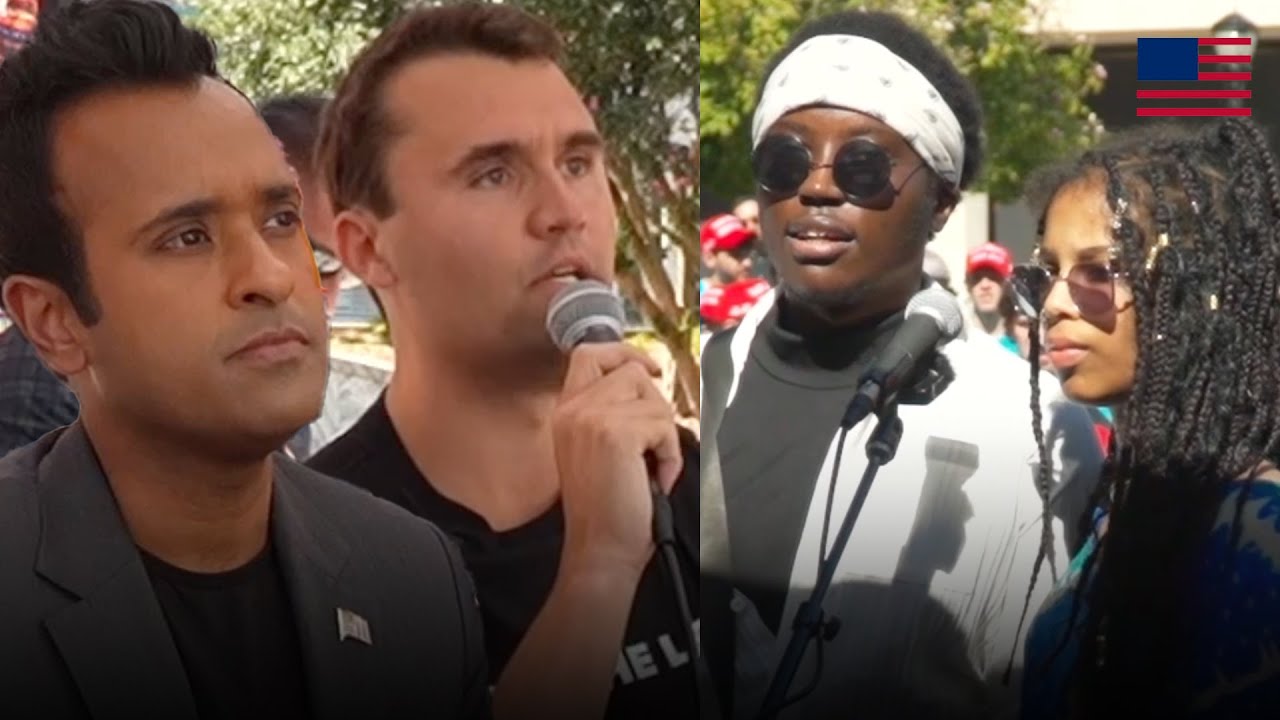
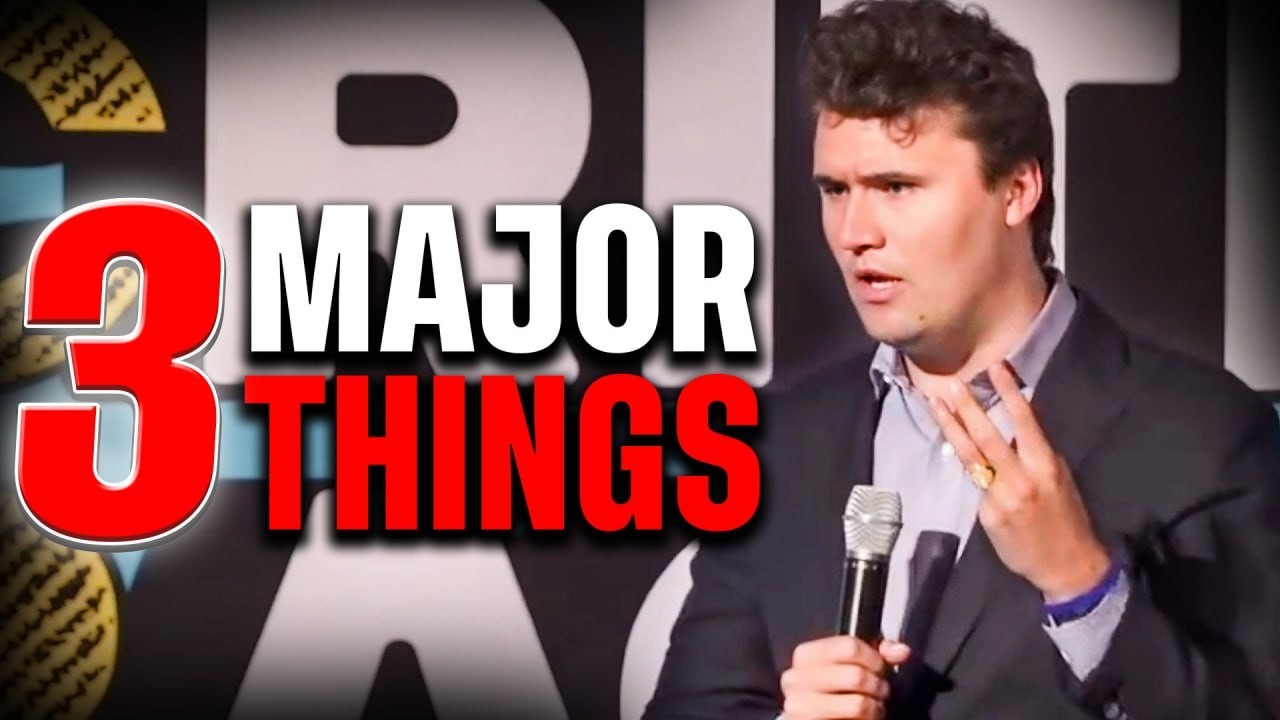
Charlie Kirk faced intense questioning from Texas A&M students on topics ranging from systemic racism and DEI policies to the role of Christianity in politics. In a series of heated exchanges, Kirk challenged students on cultural factors affecting black America, defended merit-based hiring over diversity quotas, and argued that personal agency matters more than historical grievances. The discussion revealed deep divisions over whether past injustices continue to impact opportunities today, with Kirk insisting that groups like Jews and Asians overcame worse circumstances through different cultural approaches. Students pressed him on lived experiences of discrimination, the legacy of slavery, and whether faith belongs in public policy debates.
Desert Island Politics and Democrat Productivity
When asked which political opponent she would choose to be stranded on a desert island with, Charlie Kirk delivered a characteristically blunt response. He ruled out Bill Maher immediately, citing an inability to tolerate the smell of marijuana. Gavin Newsom didn't make the cut either. Kirk reasoned that survival on a desert island requires someone productive, not a complainer, and someone who has accomplished something in their life—criteria he suggested eliminates most Democrats.
He eventually settled on Mark Kelly from Arizona, noting the astronaut's practical survival skills like fire-starting ability. Kirk contrasted this with what he imagined would happen with most Democrats: attempts to unionize an island with just two people, constant theft, and accusations of racism. The answer drew laughter from the crowd while setting the tone for the evening's combative exchanges.
Charlie Kirk's Why: Faith and the Youth Movement
When asked about his motivation, Kirk pointed to Jesus as his ultimate why. He emphasized that everyone aims at something, a destination, and he chose to aim at the ultimate thing—Christ. Beyond faith, Kirk explained that he saw a massive need for a conservative youth movement when he was a freshman in high school during Obama's ascendancy in 2008-2009.
Kirk reflected on the humble beginnings of his organization, when only two or three students would show up to events. He described traveling 300 days a year for 10 years straight—3,000 days on the road total—becoming a million-miler on United, Delta, and American airlines. He didn't pay himself for the first five years and faced resistance from other Republicans and conservatives who didn't want him to succeed.
The fruit of that labor became evident in November when Donald Trump won the youth vote in Michigan and Texas. Kirk expressed satisfaction at seeing the untapped conservative potential on college campuses finally realized, giving all glory to God for the transformation over 13 years.
Immigration, Jesus, and Loving Your Neighbor
A freshman political science major challenged Kirk with an argument she had heard recently: that if Jesus came to America in modern times, Republicans wouldn't let him in. Kirk immediately corrected the premise, noting that Jesus was not technically a refugee since he traveled between two parts of the Roman Empire when his family fled to Egypt.
Kirk characterized the argument as an attempt to manipulate Christians through theological sloppiness. He argued that the implication—that there's divine character among tens of millions of people wanting to enter the country—doesn't hold up. He emphasized that letting 14 million people into the country over four years without knowing who they are has consequences, both positive and negative.
When the student cited Exodus about not mistreating foreigners, Kirk countered with Deuteronomy, where Moses warns about mass migration leading migrants to become masters. He introduced the concept of "ordered loves" from Thomas Aquinas—a hierarchy starting with Christ, then family, then community, state, and nation. Kirk argued that America has failed at these ordered loves, pointing to mistreated veterans and forgotten Americans of all backgrounds.
He insisted that saying someone must return to their country of origin isn't mistreatment, and that once the nation generally has its act together, a compassionate, merit-based immigration system can function. Kirk concluded that when a government stops understanding it exists first for its own people, it ceases to be a government and becomes a social experiment.
The DEI Confrontation: Merit Versus Identity
The most intense exchange of the evening came when a black student asked Kirk about DEI, saying he felt Kirk's earlier comments suggested he didn't belong at Texas A&M. Kirk immediately pushed back, stating he had made no such claim and hadn't prejudged the student at all. The student clarified that Kirk's characterization of DEI as placing people in positions regardless of qualifications made him feel that way.
Kirk explained that DEI, definitionally, gives preferential treatment based on race rather than merit. He cited the Students for Fair Admissions Harvard Supreme Court case, where black students could have SAT scores 300 points lower than Asian equivalents and still gain admission. Kirk argued forcefully that hiring and admissions should prioritize merit and character, with race meaning nothing.
The student brought up the limited timeframe since segregation ended in 1965, arguing that black people have only been able to legally profit for themselves for about 60 years. Kirk challenged this directly, asking how events from 60 years ago impact someone currently attending Texas A&M and doing well. The student insisted those historical factors impact him constantly, but Kirk pressed him for specific examples.
Cultural Factors and the Family Unit
Kirk shifted the discussion to cultural factors, asking why black America has gotten poorer on average since the passage of the Civil Rights Act. He pointed out the paradox: black families were richer when America was more segregated and racist, yet have declined as the country became less racist and passed anti-discrimination laws.
The key statistic Kirk emphasized: 70% of black youth don't have a father around. In 1960, before the Civil Rights Act, 80% of black children had a father in the home. That figure has inverted over the past 60 years. Kirk repeatedly asked how white culture impacts whether black fathers stay with their families, arguing that the internal collapse of black family culture is the primary issue, not external racism.
When the student attributed problems to perpetuated culture from slavery and Jim Crow, Kirk introduced comparative examples. He asked why Jews, who suffered the Holocaust just 80 years ago—with half the global Jewish population killed and all possessions taken—are now the wealthiest ethnic group in America. He asked why Asians, many of whom arrived in the 1950s and 60s with no money, are now the wealthiest minority group in America.
The student argued that different cultures are treated differently in America, but Kirk insisted that other groups faced discrimination yet succeeded through different cultural approaches. He challenged the student to name anything he could do that the student couldn't do, arguing that in 1940 the answer would have been obvious (separate bathrooms, Major League Baseball), but today there are no systemic barriers.
Welfare, Churches, and Government Dependency
On the question of welfare and social programs, Kirk argued that welfare should be a hand-up, a safety net rather than a hammock. He cited scripture stating "if a man does not work he shall not eat," found repeatedly in Paul's letters and Proverbs. Kirk asked whether 60 years of government assistance programs have made America better, answering that they haven't—they've been bad for recipients, their families, their psyche, and their souls.
Kirk argued that what the state does should primarily be handled by churches and local municipalities, not the federal government. He emphasized that Americans should not outsource compassion to the federal government. Importantly, Kirk noted that the church does less as the state does more, pointing to Europe where churches have shrunk to husks of their former selves because massive government programs have replaced their charitable functions.
The formula Kirk presented: the bigger the government, the smaller the church. He advocated for a big church and small government, where churches are more involved and active. Kirk said he would prefer someone go to a church to get fed rather than receive food stamps—more human connection, potential for salvation, and better outcomes for everyone than a faceless EBT card transaction.
Trump's Character and Biblical Leadership
When asked what Christlike characteristics Donald Trump embodies, Kirk was refreshingly honest: Trump is not humble. However, he identified positive traits including boldness, courage, and truth-telling. Kirk noted that people get angry at Trump not for lies but for the truths he tells.
Kirk introduced the biblical figure of Samson as a comparison—a man with great hair (like Trump) who made the hall of faith in Hebrews despite being found in a prostitute's bed when the Spirit of the Lord came upon him. Samson was ready, willing, and able when the people of Israel wouldn't fight for themselves. Kirk acknowledged Trump's faults but emphasized governance advancing Christian values over merely saying the right things.
He contrasted Trump with George W. Bush, who said Christlike things but never spoke at the March for Life, gave questionable Supreme Court justices, and led the country into what Kirk called a reckless and unjust foreign war in Iraq. Kirk posed the question: would you rather have someone who presents as more Christlike but governs oppositionally to your values, or someone rough around the edges who advances your policy goals?
The Lived Experience of Discrimination
Throughout the DEI debate, the black student attempted to describe his lived experiences of discrimination—being looked at differently in grocery stores, having his natural hair seen as unprofessional, people assuming the worst about him. Kirk challenged each example, calling the grocery store looks "an insanely hyper paranoid way of living life" and noting that if he walked into a black neighborhood, he would get bad looks too.
The tension escalated when the student claimed people say racial slurs to him "all the time" on campus. Kirk expressed skepticism, and when pressed for details, the student clarified it wasn't direct insults but people saying the word around him. Kirk called this a "race hoax" similar to Jussie Smollett, arguing the student was trying to indict the moral character of Texas A&M students based on false or exaggerated claims.
Kirk's core argument: if the best example of racism is getting bad looks in a grocery store, America has made incredible racial moral progress. He insisted there is nothing preventing black people from prospering—in fact, the opposite is true with lower admission standards and greater social latitude to discuss cultural problems without professional consequences.
Systemic Racism Defined and Disputed
When another student asked when systemic racism ended, Kirk provided a clear definition: systemic racism is a law on the books that prohibits an individual from doing something based on race. By that definition, it largely ended with the Equal Rights Amendment and Civil Rights Act in the 1960s.
The student asked about lingering effects and intergenerational impacts. Kirk returned to his Holocaust comparison, asking how Jews materially succeeded so quickly if 60-plus year intergenerational effects are real. He noted that Asians were placed in internment camps in the 1940s with no ability to own property or run businesses, yet are now among the wealthiest groups in America.
Kirk's position: every group has suffered some period or form of hardship. The difference lies in cultural response. He argued that black Americans are the richest black people on Earth, that even the poorest Americans are in the top 2-5% of global wealth. His conclusion: stop acting like a victim and start making better choices.
The student brought up the war on drugs as an example of systemic racism, claiming black and white people used drugs at similar rates but black people were punished more severely. Kirk disputed this, saying disparities were based on income and quality of legal representation, not race. He also noted that the war on drugs was popular with black leaders in the 1980s because drugs were ravaging black communities.
Faith, Morality, and the Role of Religion in Politics
The final exchange involved a student challenging why religion should play any role in politics. Kirk asked whether there can be a separation of morality and state. When the student said yes, Kirk pressed him on the standard for laws like "do not murder." The student argued that morality comes from what the collective believes.
Kirk walked the student through the logical implications: if morality is just what the collective believes, was Hitler right to kill Jews since that's what the German collective wanted? The student tried to appeal to a broader global collective, but Kirk pointed out that adding up China, Russia, and Europe represents half the world's population, all with different beliefs, and all capable of great evil.
Kirk noted that the entire planet believed slavery was acceptable for 2,000 years. If the collective can be that wrong about something so fundamental, perhaps appealing to the collective for moral standards is a bad idea. Instead, he argued, we should appeal to something higher—an objective moral standard found in Christian teaching.
The student challenged whether Christianity has merit above the collective, and Kirk pointed to scripture. When the student dismissed the Bible as "the word of men describing the word of God," Kirk cited John Adams, who famously said the Constitution is only compatible with a moral and religious people. When people are no longer moral or religious, the promise of the Constitution falls apart. Kirk argued that one can arrive at moral conclusions without religion, but it's like finding your way with a blindfold on—possible, but not the best approach.
Video Transcript
Imagine this banana is a burn a lessle lethal launcher capable of shooting rock-hard kinetic and tear gas mixed with pepper chemical irritants. >> The ammo can incapacitate an attacker from 60 ft away without causing death. >> This BurnA lesslethal launcher is legal in all 50 states. No permits required. >> Over 600,000 Burna pistol launchers have been sold to government agencies, law enforcement agencies, and to private citizens. >> Do you want to know what the BurnA lesslethal launcher looks like? Visit burna.com. >> Are we ready, sir? Let's begin. >> Hi, Charlie Kirk. My name is Camille Burns and I'm a freshman agriculture economics major here at Texas A&M and I would just like to say on behalf of Texas A&M University. We are so grateful to have you here today. My question for you is, if you were stranded on a deserted island with any political po opponent of your choice, who would you choose and why? >> Um, I I won't say Bill Maher because I can't stand a smell pot. So, I I couldn't I couldn't live on an island smelling marijuana the entire time. Uh, definitely not Gavin Newsome. Nope. Um, that wouldn't happen. I'd have to think about that. Let me see. So, it's hard to pick. I mean, so if you're stranded on a Let's play this out. If you're stranded on a deserted island, you can reason that you want that person to be very productive, not a complainer, and have done something in their life. So, that's like no Democrats at all. So, and they're also like most of them are super old, so they'd probably like die while we're on the island. That'd be like super a like, "Oh, Chuck Schumer's dead." Like, and bad, of course. Um, but yeah. Um, I'm going to have to think about that. Um, I don't have a good answer. Uh, but it probably boy, how long am I on this dessert? I'm infinitely stranded with no hope of reconciliation forever. My goodness. Um it's like for for you know infinity. Um I don't know. I would probably pick like the most resourceful Democrat that I could find. Like I don't know like Mark Kelly from Arizona is an astronaut so he probably knows how to start a fire. Um I know like there's like by the way if if you wanted to survive on a desert island there'd be like a million Republicans to pick. I'd pick like Joe Rogan, like people that could actually, you know, hunt and gather, right? Um, but if it's about survival, I don't know, the Democrats would try to unionize the island with just two of us. They would constantly steal my stuff and then call me a racist. Like, it'd be terrible. Thank you. [Applause] Hi, Charlie. My name is Casey Cleus. I'm an animal science major in class of 2026. Aa >> um >> you guys got all this stuff on. It's great. >> My question for you today is that um I want to know what your why is. Was there a specific point in your life where you realized this is something you needed to do with it? >> Yeah. I mean again my ultimate why is Jesus. So you all must if if it's not Jesus then it's something. We are aiming at something. You aim at a destination. And so for me, I wanted to aim at the ultimate thing, the biggest thing imaginable and the truest thing, which is Christ our Lord. So everyone tonight should think in the next couple of days, what am I aiming at? What's the most important thing? What am I thinking? Where where is my destination? Right? Um and then yeah, look, as far as politics go, I've always been conservative. I grew up in a very different era. I grew up when Obama was ascendant and Obama was very popular back in like 2008, 2009. when I was a freshman in high school and I saw a massive need for a youth youth movement like this. I saw a need for a grassroots movement to try to counter what Obama was doing. And I do want to just add like when we started it was not like this. It would be maybe two or three kids showing up to our events, right? And that would be a success. And it's easy to kind of like make fun of it and mock it, but that was really gritty and really really grassrootsy. When I started, it seemed like a daunting generational project. And I just give all glory to God. And I'm just so humbled that I get to live to see the fruit of the last 13 years of my relentless traveling around the country and speaking to very small crowds. Just to give some idea though, like people say, you know, Charlie, I I want to do what you do. I said, all right, fine. You can, but for 10 years straight, I traveled 300 days a year. That's 3,000 days on the road. I'm a million mileer in United, in Delta, in American. I know every possible hotel and airport combination imaginable. I didn't pay myself for the first 5 years. And it was very, very hard to break out of, hey, other Republicans, conservatives don't want you to succeed. And so, my why was constantly, of course, the ultimate aim of Christ. But I believe deep down that there was untapped conservative potential on these college campuses. That there was massive opportunity and really big upside. And boy, this last November, Donald Trump won the youth vote in Michigan. Donald Trump won the youth vote in Texas. Donald Trump won the youth vote. It's unbelievable. And it been so satisfying to see all of that fruit come to harvest. God bless you. Thank you so much. >> Thank you so much. Hello. >> Hi. My name's Emma Claire. I'm a freshman polyai major here on campus. And I've heard this argument recently and I wanted to ask your opinions on it. So, it's that if Jesus were to come to America in a modern day time that Republicans wouldn't let him in. And I just wanted to get your opinion on that. >> Sure. So, yeah. Uh, thank you for that. So the uh the argument is this is that Jesus was a refugee and therefore we wouldn't let him in. First of all, Jesus actually was not technically a refugee. Um he was actually going to two parts of the Roman Empire. Just we want to be like hyper techchnical and weird Bible nerdy. Um Egypt was actually under Roman jurisdiction. So he was not technically a refugee. But like I I I so I guess the argument is that because we want to put our own citizens first and have closed borders, we wouldn't let Christ our Lord come across the southern border. I'm I would agree with them like we don't want like Jesus coming across the southern border illegally and so little different right but what this is fundamentally is an attempt to manipulate us and it's an attempt to be so theologically sloppy in so many different ways it's hard to even know where begin. And what they're implying is that like there's a divine character amongst the tens of millions of people that want to come to this country. So it fundamentally it's an attempt to manipulate us and it's not a very good argument. >> Okay. Yes. So I was going to tie it to the fact that there were people that are against Jesus. Not everyone was for him including Jews and Romans. But um so my basically what I'm trying to say is that there are like compared to the southern border because you know it affects us especially here in Texas that there are not or there are good people coming in. It's not all bad people of course >> and that we don't necessarily like I know but that there's bad people being let in but there's also good people letting in. And I just think everyone should have an equal opportunity to >> Yeah, it's fair enough if you come from the belief that we must let anybody in. And so right now we have let 14 million people. We have no idea who they are over the last four years. You don't have to let people into your country. It is a privilege, not a right. And right now we've completely diluted that over the last couple of years. And if and when we have immigration, it should be highly qualified people who love America and want to assimilate to our country. And so of course when you when you let 14 million people in, you're going to allow some people in that are great and some people that are are not so great. Um, but think about this in the micro and what is true in the micro can be true in the macro. And in this case, it's it's correct. Our country is a home really for people in it. We don't have open borders at your home. You don't have open borders in your dorm room. Um, and so I guess I would say why should our country have open borders if we don't do it on the micro? And I would say this that it actually as we as Christians, it's much harder to love our neighbor if all of a sudden we're allowing in tens of millions of people. We have no idea who they are and we have actually forgotten the neighbors that were here. Understand that there are tens of millions of forgotten Americans of all different skin colors that have been forgotten in this country. And President Trump's run to office and successful election was about basically saying we want to put the American citizenry first. It's more about loving American citizens, not about hating foreigners. >> Okay. >> So, I actually wanted to bring up this quote from Exodus. It says, "Do not mistreat or oppress a foreigner, for you are foreigners in Egypt." Correct. And I mean, we're a country built on foreigners. And I just think it's a matter of when you were born and where you were born if you get the liberties that you get. >> Well, yeah. I mean, but look at the scripture. By the way, equally in Deuteronomy, Moses warns about having mass migration because the migrants will become your masters. Just so we're correct. But that's fine. But we're not talking about mistreating them though. Saying you get to go back to your home is not a mistreatment, right? We're not abusing them. We're not like saying, "Okay, fine. Go back to your country of origin." >> But even when they are legally here, there's still like restrictions put in place that I believe are unfair. For example, I my roommate back home. I talked to her. She has a lot of family that um have immigrated here legally. For example, her uncle has been here for 20 plus years, but he's not legally allowed to go home for the fear that he might not be able to come back. I just think that once you're a citizen, you should be a citizen. You shouldn't be restricted on like when you go. >> He's not a citizen. He's he might have like temporary green card status for 20 years, but a US citizen can come and go out of America as they please. >> So, I'm not sure about your example. I might be missing something, but that's that's not how it works. >> Okay. Sorry. Yeah. I just think that we should let more people in because love thy neighbor, you know, you should everyone equal. Everyone should have equal. >> I got it. But it's okay, guys. Let me let me make a Christian argument, though. The entire book of Nehemiah is dedicated towards building a wall. You must have It's called an order of loves. My Catholic friends, you're going to love this. It's from Thomas Aquinus. You're going to love this. You're going to love this. It's called ordered loves and it's one of Thomas Aquinas's most potent moral teachings which is first you are called to have a relationship with Christ then you must love your family and if you if you if you don't have one of these things you cannot do the next one then after you love your family and take care of your family you love your community then you love your state and then love your nation and so on and so forth we've done a very very bad job of the ordered loves in fact I think we have not taken care of our neighbor as well at all we have tons tons of vets in this country that are treated terribly. Uh we have a lot of people that have seen their jobs shipped overseas and fundamentally you need to have a country that first loves its citizens and then once we generally have our act together, we can have a compassionate immigration system, one that is strictly based in merit to let other people into the country. And I would also just say allowing 14 million people to bumrush into America has not been good for anybody. It's not good for American citizens. It's not good for native-born Americans. And and finally, the the last point that I'll make on this is that when when a government ceases to understand that it exists first for its own people and not from the people of the other country, you actually don't have a government. You have something else. You have like a big social experiment. And I think that's been incredibly destructive to the American body politic the last couple of years. >> Okay. Um it was nice talking to you. That's all I had to say. >> Thank you very much. Thanks for being here. >> Thank you for being respectful. Yes. Next question. >> Hello. Thank you very much for giving me a chance to ask you a quick question. Uh so my name is Andrew Jansen. I'm the CEO of Street Simplified. And there's each year in the United States 44,000 people die in traffic crashes. Um >> of traffic crashes. Yeah, >> traffic crashes. Correct. And the US spends $21 billion, and that's a conservative estimate, on Medicare and Medicaid payouts to crash victims. But they only spend 4 billion to actually solve the transportation safety problem. On top of that, the four billion that they are spending is being wasted because over the last 15 years, from 2020 on 2010 on an additional thousand people are dying in traffic crashes than the year before on average. So, um, my question for you is, who do you know that can actually get to the root of this problem and solve it? >> I mean, I know a lot of people, but that's not the question. But, I mean, do you are you advocating for driverless cars? Is that your >> No, my question like I actually work in a company that helps solve this problem, but I cannot get to the right people on the US DOT side. Got it. It's like it's like a brick wall. >> Yeah. I happy to connect you with uh Sean Duffy and his team just so we understand that traffic deaths tragically have gone up because of depolicing. It turns out when you take the police out of a community it's bad for every layer of crime. But more than that, I mean they say that I I I don't know if this is your I asked you but like they say driverless cars would drop auto fatalities by 90%. I have a lot of moral problems with driverless cars and it feels a little too totalitarian to me that I'm not able to control my vehicle when someone else is in it. But that's a separate issue. But I do see the potential upside. But happy to what how would you say just really quick we could best let's say stem the stem the increase of traffic fatalities. >> I mean there's a lot of factors right and we I could spend an hour on this but the short of it is 98% of crashes are caused by humans, right? There's 2% snow weather related um technical vehicle failures. Sure. >> So we have to solve the human problem. And you could say it's you know you look at you know >> so it's autonomous vehicles. >> No I think you don't have to actually fully autonomy. You can automate 1,000th of the decisions drivers make when they veer off the road when they're sleeping. You don't have to automate the entire vehicle for 99% of the time. >> Respect. What do you think about what Elon's done with Tesla? Is that a good start? Is that a good direction? Frankly, I'd love for you to connect with him. He's that that's one that's one way. >> With all due respect, a lot of people would, but that's fine. Um, but may I'll send him this clip and maybe he'll be persuaded by it. But, um, I think Tesla's done a lot of good work though to have the car begin to intervene when these things happen, >> right? What we do at Street is we're the infrastructure side of Tesla's doing on the vehicle side. >> It's a very admirable cause you're on. Thank you very much. >> Thank you. >> Thank you. Um, >> you you can talk to one of our staffers. And >> by the way, I I gave you I brought a study Bible. >> Oh, thank you. >> This is a John MacArthur study Bible. I've given it I'll give it to one of the staffers. >> Is it a John MacArthur? You said >> it's a John MacArthur study. >> He's the greatest. He's amazing. >> I've given it to you for your own personal walk. And thank you for taking the time to answer. >> God bless you. Thank you very much. >> All right. I didn't I didn't even say anything yet. Um >> you guys have too much of this cyst thinging, I'll tell you. >> Um All right. So, my name is Jared Schult. I'm currently a senior here at&m. Um I just had a question like I know you talked a lot about like your faith kind of driving your politics and how important that is to you. And I think when I look at the scriptures and like Jesus in particular, I think there's a lot of admirable things about what Jesus talks about. Um caring for the poor, uh trying to heal the sick and things like that. I was just curious like for your faith and political beliefs like how does that reconcile? Like I feel like taking away and like advocating for reducing welfare and advocating for kids not having free and reduced lunches and not not wanting to expand that program. That kind of seems antithetical to the whole message of Jesus in my opinion. >> Yeah. So you're fine. Fair enough. You're ascribing an intent with our public policy position. Let me be clear. Welfare should be a should be a hand up. It should be a safety net, not a hammock is the best way I could possibly put it. But understand the scriptures equally say if a man does not work he shall not eat. Repeatedly Paul says it said throughout Proverbs. But I guess the question we both want to help people right. >> What is the best way to help people? So we have a case study over 60 years. Is it good for people to be permanently on government assistance? >> No it's not. It's really bad. It's bad for them. It's bad for their families. It's bad for their psyche. Bad for their soul. Bad for everyone. So then what is the solution? And we have to ask a question like has welfare since we've started this project in the '60s good intentions made us a better country? It really hasn't actually. So number one, I think a vast majority of what the state does, not the state of Texas, but the state should and can be done by churches and local municipalities. I fully agree that we should help every, you know, help anyone that in need, but the first cause to do that should be private charities and churches, not the government. We should not outsource our compassion to the federal government. It should be first and foremost the local churches. Secondly, >> you say that the church should do more than they currently do. Say that again. I can't hear what you're saying. >> Would you call for the church to do more than they currently do? >> Oh, of course. Absolutely. But but this is what's important. The church does less as the state does more. We see this in Europe. Europe basically has shrunk the church where it is just a husk of its former self and it's basically do a couple services and they do almost very little charity. And the reason being is because the government is so big and they'll just say, "Oh, the government will provide the healthcare and the government will provide this and that." So this the church doesn't feel compelled to do that. said differently, the bigger the government, the smaller the church. So when you grow government, your church becomes small. We want a big church and a small government. We want the church to be more involved, more active. And so if I were just and and I think we both want to help people. So hypothetically, would I rather have somebody go to a church to go get fed or rather get food stamps? 10 out of 10 times to a church. More human connection. They might get saved in the process. It's better for the church. It's better for everybody than just a faceless EBT card that quite honestly is nothing more than just a like digital transaction. >> So I think both of us would agree that the churches should do more to help those in need. >> Now can I ask one more thing? I want to sec um >> like I feel like someone embodying like Christ and a leader is important. So like as far as Donald Trump like what Christlike characteristics do you feel like he embodies? I feel like oftentimes he uses hateful rhetoric or kind of the Bible talks about like the meek shall inherit the earth. I don't really see a lot of meekness in his character. Do you agree with that or is >> if if we're saying that is Donald Trump humble? No. Um >> but we're honest. Yeah. >> I mean like but I also will say so I'm going to put this on you for a second. Can you can you think of anything admirable or Christlike that he's embodied? >> I mean I guess you could say he's bold. >> There you go. That's good. >> That's a fairly bold. He's a bold person. >> I would say he's courageous. I would say that he's a truth teller. >> I don't know if I agree with the truth teller part, but he is a bold person. >> Remember, they get mad at Trump not because of the lies. It's because of the truth that he tells they get really really mad. Remember, >> we don't we don't have to debate that. But we that's not that's not where this conversation is going. I don't want to derail it. But I would like Trump showed courage under fire literally in a very miraculous way. I will say this though, we all fall short of the glory of God when we try to elect political leaders. You're not trying to have a church elder board elected. You want to be president of the United States. Are there examples of people in the scriptures that might be a little rough around the edges that might be, let's just say, a little bit um difficult to understand that were also considered holy or good or faithful? Well, one I would I would posit to you is a man who made the hall of faith in the book of Hebrews is a guy who also had great hair. Samson. Uh Samson. Donald Trump and Samson both great hair. Samson was literally in a prostitute's bed when the spirit of the Lord came upon him and told him to basically go to war for the people of Israel because they were not willing to fight for themselves. Took a jaw of a donkey and go and killed a bunch of Philistines. And what Samson was, he was ready, he was willing, he was able. So look, of course Donald Trump has faults. I have faults. But I will say this that to have a president that does things in advancement of our value system, not just says things, I would consider be far better for those of us as Christians than, and I'm going to make some enemies here, than somebody like George W. Bush, who said all the right stuff, but he never spoke at the March for Life and gave us questionable Supreme Court justices and gave us unfortunately a very reckless foreign war in Iraq that caused a lot of unjust human suffering. So the question is and it's something to think about. Would you rather let's say it's George W. Bush or Donald Trump. George W. Bush says the right stuff. You know he's more Christlike in that presentation way. But how he governed was actually I would say oppositional to what I would want. >> I guess I just also put a lot of value on the way that you present things and the way that you make people feel with the words you say and like speaking like like words like the Bible talks about like speaking life with your words. And I feel like Donald Trump often does not speak life with his words. And I get your point like it's all about action. Like actions speak louder than words. >> Words matter, but actions matter. Words isn't biblical, which kind of is the like that doesn't represent what you feel like morality and the way that countries should be dictated. >> Well, let let's play that out. So, it's actually both. So, what did Christ say were the two commandments, the two teachings that of all the cult teachings matter? They were actually action related. Love your neighbor as yourself and love the Lord your God with your heart, soul, strength, and mind. Those are both action related. And so, do words matter? Of course, words matter. But I would argue the Bible actually does have a heavy heavy emphasis on action, on doing good and helping the poor and healing the sick. Not just words. Words do matter. I totally agree. But words without action or words given more preference than action, I actually don't necessarily think it's biblical. >> Okay, I understand that. >> Thank you. Appreciate it. Thanks for your time. Thanks so much. All right. Um, I'm here to ask the age-old question, DEI. Okay. So, >> great. >> Yeah. Give me your perspective on DEI and because based on what I heard earlier, I feel like you don't think I belong here because >> of how I am a black man and because of the I didn't I'm not qualified enough to be here. Yes, I am. >> Okay, great. But why do I have to prove that to you? >> You brought it up. I didn't. >> Okay. But can you can you explain to me your position on DEI? >> Yes. People should not be in positions just because of the color of their skin. Hard stop. >> Okay. But Okay. But do you feel like I'm here because >> I'm not I'm not feeling anything towards you. Actually, I'm not prejudicing you. I'm not stereotyping you. I'm saying it's a material. >> I'm not saying you are. I'm not saying you are. >> No, you are. You said I don't feel comfortable being here. You started with >> I didn't say I wasn't comfortable being here. said, "I feel like you made it to where I got here through DEI." >> So, let's examine that. What have I said that makes you feel that way? >> When you mentioned how DEI is only just putting people of color and marginalized groups in spaces, even if they're not so and so >> correct. That's exactly what DEI does. >> But that's not that's not all that it does. You're categorizing it as something it isn't. >> No, that's exact that is that is the charter missions for the >> That's not all. Okay. So diversity equity. So equity is outcome based is about making people who are of different skin colors have the same outcome regardless whether or not they are qualified. The best example we have of this is the students for fair admission Harvard Supreme Court case where black students they did not literally they could have a SAT score 300 points lesser than the Asian equivalent and still get into Harvard. That is DEI in practice. I believe when you're hiring for an organization or for a company or for whatever you are doing, you should prioritize merit and character and race should mean nothing. We should build around things that matter and not things that don't matter. >> Okay. But you have to also you have to also take into the fact that black people have only been able to completely and completely legally be able to make profit for themselves for around 60 years. And this is no no since segregation ended in 1965 and the um E equal rights act in 1965. So what were you tell there's not >> how does that So let's talk about you. How did that impact you? How did something that happened 60 years ago impact your life? >> It impacts me all the time. What do you Okay, >> you're at Texas&M. You're doing great. >> Okay. Yes, sure. Yeah. So, aren't you a living example that all that's a bunch of nonsense and you could just act good and, you know, behave well and succeed? >> But there's but there's also living examples of the exact opposite. If you look in the impoverished neighborhoods in certain parts of Chicago or St. Louis, there's black communities being thrown aside because they're not getting education. Okay, so I think we can get somewhere. Why have black the black community gotten poorer since the passage of the Civil Rights Act? Tell me that >> because of the way the culture has been perpetuated through the years. >> Think about it. So they were richer when we were segregated and more racist. America's become less racist. >> What about Tulsa? >> Yeah. No one's going to defend what happened in Tulsa again. But let's talk >> we're talking about a lot of different cities. We're talking about Chicago, Tulsa. But let let's let's again this is a very important point. Why is it that black America has gotten richer on average poor on average since America passed all these anti-racist laws? >> I can't answer. >> Okay. Yeah. So, do you think the fact that 70% of black youth don't have a data around is probably pretty important. >> That's because of the culture. What I So, let >> respectfully allow me to interject. How does the white culture impact the fact whether or not a black dad stays around when he impregnates a woman? >> I'm saying it's the white culture. What is it? >> The culture that has been perpetuated through the 200 years of slavery, the 100 years of segregation and Jim Crow laws, >> the marriage. So, I got to interject again. I'm sorry. I don't mean to interrupt too much, but the the in 1960 before the Civil Rights Act, 20% of black youth had a dad around. Now, it's I'm sorry. 20 20% were single fathers, 80% had a dad around. It's been inverted. So, we actually have seen black dads run away from their kids the last 60 years. Why is that? because of the raised incarceration rates, because of the perpetuated culture. >> So, how does one go to jail? >> That's obvious. I'm not answering that question. >> Yeah. So, maybe it's because they committed crimes. >> Okay. But the when you're forced for you're it's not just a Oh, it's it's this is old. This is in the past. This doesn't affect you anymore. >> Okay. So, actually, let's take a different group. How did the Holocaust impact Jews? They're doing pretty well. >> Well, because they got reparations. We did it. >> How what reparations did the Jews do? >> Through acknowledgement, through money, through >> We acknowledge slavery happened. >> Okay, but >> but you're sitting here and acting like it plays no role. >> No, no, no. But to your argument, the Holocaust was 80 years ago. Half of all the Jews on the planet were killed. Everything they earned was taken. Jews are doing great. They're the wealthiest subgroup, racial group, or ethnic group in America. If all of a sudden something that happened 80 years ago impacts your material prosperity, how did Jews defy the curve? How did poor Asians do so well? Why is it that Asians are now the wealthiest minority in America, many of whom came with no money in the 1950s or60s? >> Because of the culture and opportunities that were provided to them, >> but no, but you're you're not hearing me out. Black Americans have had the same opportunities. However, >> people still look at us like criminals every day. >> Hold on. But like I don't look at you like a criminal. >> I'm not saying you do. I'm saying some people do. >> But I mean, can I Do you want me to be brutally honest with you or do you want me to be politically correct? >> Brutally honest with you. >> Okay. Do black people commit more crimes than white people? >> It's not even close. >> Okay. But >> but you al you have to take into account the culture that has been perpetuated >> Okay. Got it. So I we can agree on this. Do you mean internal black culture? >> Um it's it's not it's deeper than that. Like >> do you think let's take time out. Do you think the average rap artist that a black kid in the hood is listening to is glorifying marriage and family and saving your money? >> That's what sells because it's a culture thing. It's not just within the black community. People everyone listens to it. It's not just isolated. >> It's it's it's bad for everyone who listens to it. The point being is that black youth as they are being raised, their role models are largely not glorifying staying with one woman, getting married, going to church. And if if you're wrong, show me the black role models that are doing that. There might be a couple I could think of, maybe, but if it's about culture, you're right. The internal black culture has collapsed the last 60 years. We're no longer elevating the family. We're no longer elevating staying with the person that you're with. So our contention here as conservatives is that the systemic racism stuff is a bunch of rubbish. Instead, it's systemic bad choices. >> Do you feel that systemic racism isn't real? >> Of course not. What can you What can I do that you can't do? Name it. >> Okay. >> No. No. Seriously. What What What can I do that you can't do? >> Fallacy. That's a slippery slope. I don't know why. Very simple. >> Cuz I Cuz it back in 1940, you would have been able to answer that question. Well, Charlie, there's a bathroom over there that I can't go to. There's a major league team. >> I can't I can't walk into the grocery store and get the same looks that you do. I walked into Brookshshire Brothers a couple weeks ago when I was looked at. >> That's an insanely hyper paranoid way of living life. That's not evidence, right? >> It's a real >> By the way, if I walk into a black neighborhood, I get bad looks, too. Okay. So, I don't know what the contention is. >> Because of the way you treat our culture and the way you perpetuate >> Wait, hold on. the the way we treat your culture. We have we have gone to such great calisthetics and ridiculous gymnastics to prove that we're not racist. In fact, it's the worst thing that you could be called in America. We had during, you know, George Floyd 2020, we had hundreds of millions of dollars given to Black Lives Matter. I don't know where that money went. Did it improve material uh worth of black America? So, I mean, go and we actually do know where it went actually. And so, but going back to your main contention when you are when you practice DEI because that was your main point, right? You are rewarding bad culture. You even acknowledge it. You are saying that someone should be there based on the color of their skin. We say skin color doesn't matter. If you want that position, work harder, study harder, and then you'll be you might be able to get that position. >> We're forced into underfunded communities where schools are based off of property value. We can't Well, actually, school choice is now the law of the land here in Texas. So, that's not correct. >> Do you just expect a single parent home to pick up and move into some rich neighborhood? >> Well, again, so let's go back to why are they the single parent home and >> because of the hundreds of >> because not do you believe in the maxim or the belief that you should be you should take responsibility for your decisions. >> It's not just one person's decisions. It's so much deeper than that. See, >> why are you trying to you're >> that that's where you and I have a different belief. You believe in >> it's not it's a fact. >> No, it's a it's a belief. Again, you have to tell me then why do Jews do so well? Holocaust didn't impact their material worth. How did Asians do so well? And by the way, even more so, why are Hispanics getting so much wealthier? If we were so racist, why are Hispanics all of a sudden gaining income the last 20 years? There's some there's something >> difference in culture. I don't know why y'all are clapping, >> but it's a difference in culture. The way that the way that each culture is treated is so vastly different in America. >> But again, you have to tell me, other than bad looks at the grocery store, how else is your future, you as a man in America, not a black man, how is your future somehow restricted by racism? My natural hair is seemed as unprofessional. When I go into an office or workplace, when I walk around in certain places, people just assume, like I've said earlier, the dirty looks. When people think you are automatically the worst of the worst solely because we don't think that you think interrupted me like 10 times because you think you know what white people think and you don't. >> I don't know what white people think. >> Then why do you keep on saying you know what white people think? >> I've seen it. I'm not saying you've seen our thoughts. I've seen what people have done to me and people who look like me around the world and around in America. >> How again you are, let's just make an example. You are here in the wealthiest country ever. >> Yes. >> At an amazing university with all the opportunity imaginable in front of you and all you want to do is look backwards at everything that prevented you when you are a glaring example that there is no systemic racism and you can actually achieve your wildest dreams. >> No. No. I've never said that. Hey, I'm not the only black person who exists out there. There's so many people who this culture is affecting to this day. >> Do you know black Americans are the richest black people on earth? >> Where is what's the Okay, I need you to pull that up like right now. >> You can black Americans on per capita on average. >> Can you pull that up? >> I mean I I'm doing I'm hosting an event right now. I don't know what to tell you, but participating anyone can fact check me on this. So you cannot find a a black majority country or any country where black people have significant representation where they are as wealthy cuz even the poorest people in America are in the top 5% the top 2% of wealth around the world. And so my whole belief is stop acting like you're a victim and start making better choices. >> Acting like a victim respect >> it's not it's this is not a victim mentality. >> No it it fundamentally is because white people are not out to get you. There's nothing There is nothing holding black people back. >> There is, let me say that again. There is nothing holding black people back. In fact, the opposite. You can get into colleges with lower test scores, but >> you could say things that white people can't say and not be fired for it. >> Black people are wildly disrepresentation. >> People say that to me all the time and they just walk around like it doesn't mean anything around here. >> Say what? Say the what? >> The n word. I'm not going to say it on this public platform, but people say it to me all the time. derogatorily. >> Yes. >> No, I think you're lying. >> I Why would I be lying? >> So, you're trying to tell me at this campus, did you report at the student services? >> I'm not I have too much on my plate to worry about this. >> So, it's Oh, so So, you're going to say at this campus, you're going to indict the moral character of Texas A&M. >> I'm not indicting the moral character of one person or a few people. >> Oh, now it's one. So, you heard it all the time and now it's one. Got it. So, >> it's not okay. You're >> No, but this is the point is that I don't believe you because now you resort back to a race hoax to make it seem as if the white kids on this campus are like racist and terrible kids. >> Oh, so was was it a black guy that said it to you? >> There. I'm not. >> It matters a lot because this is how lies are able to grow. Justice Smlette, we see this. You have to challenge them. Do you think I'm lying when I'm I say that people say the n word around here you just >> if I think a white person comes up to you derogatorily and says shut up n-word. I absolutely >> I'm not saying they said it. >> But I asked I said are they saying it derogatory >> but that doesn't mean it's word for word like that. >> But okay. So then it's not an insult then. So then don't bring it up as if it's evidence of racism. >> Because you brought the nword up first. I didn't you No, no, no. You specifically said, "Name me instance of >> I said I said black people can say things that white people can't say." Of course that's true. >> But that's automatically implying that one word. >> It's more It's more than that. But but but let me just kind of build this out. >> What is it then? >> There's a lot of things black people can say. >> Explain it to me. >> You want You want me to give you more examples of things? Yes. Black people are allowed to talk about black culture in a way that white culture cannot. For example, black people can come up and say that there's a baby mama problem in black America. And white people are not allowed to say that. Oh, I just did. So what are you going to do? Cancel me. Black people are allowed to say Black people are allowed to say, >> "I'm a grown man. I got way." >> Black people are allowed to say that there is a systemic fraud issue within the PP loan application of black America. Black people are much easier to able to say that black individuals, despite being 13% of the American population, commit 55% of the murders. If most white people say that at a job, they would get fired for being a racist. I don't care cuz I say whatever I want. So, black individuals have much more intellectual public freedom than white people do. If a white person were to come up and say, you know, black America really needs to get its act together and stop sleeping around all the time and needs to actually have because it's true. Because why would you just walk up to someone and talk and attack their culture from the outside? Hold on. You were Let's look at Let's look at the evidence. You said to myself, you said there's all these people suffering in Chicago. There's all these people that are terrible. I'm telling you why. It's because there's been bad decisions that have been institutionalized. Let me finish. And rap artists and athletes and people to top a level of black society that refuse to ever challenge the core rot in black America, which is that they are allowing degeneracy and hedonism to eat the soul of what once was a beautiful black culture. And instead, they go around saying it's the boogeyman of racism. The white man is out to get you. And the result is black America is doing worse than it was in the 1960s. That is the contention. Period. It's not just that. It's a culture. It's so much deeper than the present day we are in. I don't know why you're pretending like it just doesn't matter. >> I I What doesn't matter. You mean things that happen. Again, I've I've been through this multiple times. Let me Let me just ask you one. >> You're not You're not listening to understand. You're listening to reply. >> No, I I I I'm doing both actually. And so, but let me just like ask one final question, right? Which is that like you have your entire future ahead of you. When you are hired for a job, would you rather be hired because of your race or because of how qualified you are? >> It doesn't boil down to just that. >> That's what DEI is, man. >> No, it's not. >> Yes, it is. It is definitionally the hiring. >> They're just going to They're not just going to immediately see. They're going to >> You get extra points if you're black with DEI. That's how it works. Racial quotas elevate people based on the color of their skin. >> So, do you think I got extra points to come here? >> I don't know. you said you were qualified, but affirmative action was institutionalized in Harvard and in Texas and a lot of other places. We know this. So I I I again tu we don't like them, right? So um but again I just I just want to like I want to just repeat this point. Where can I go to work that you can't? >> It's not just that. >> Exactly. There's nothing there is nothing that is preventing black people from prospering. Nothing. The only thing is that you guys have been hypnotized to be victims of your own mind. to think as if there's a white person out to get to. I walk in the grocery store, they look at me differently. All that stuff is complete rubbish. You want the thing that is preventing >> life experiences. You're just denying my experience I just shared to you in front of all these people. >> Yes. If you think that Okay, let me just be very clear. >> America has come really far. If your best example of racism is getting bad looks in a grocery store, we have made incredible racial moral experience. There are so many other people. >> I'm happy to hear every example that they have. It boils down to this. We are not just a racist country. We are the least racist country ever to exist. We go out of our way not to be called the rword. To demonstrate that we aren't racist to show to people that I actually have compassion for others and that I want to try to help, you know, people of different skin color, but at at its fundamental core, I have to go back to this. I don't actually think skin color matters that much. I don't I want a country that aims towards MLK's dream of one based on content of character and one on competency. I think the hyper racial obsession of this country is really bad. It's really bad for everybody involved, including black America. And I would just ask you, what would you do to improve the material well-being of black America? What is your solution? >> Education. >> Okay. We've we've spent trillions of dollars on education. Trillions. >> You need to like fundamentally change the system education because there's not enough funding. There's not teachers are not paid enough anywhere. Let's be honest. Like we need to like seriously fix our education, especially in when public school education comes from property taxes. When you're in a lowincome neighborhood, you're not going to get high income teachers. >> If if you had to choose more money for education or more dads for black kids, what would you say? >> That goes hand in hand. Education goes into that's why if we get more dads into homes, it starts solving the problem. No, education is what solves the problem. >> Well, hold on. But we we again, if you're just educating and there's not a dad at home reinforcing it, we've seen this play out. We see this in Chicago. In Baltimore, we've spent hundreds of billions of dollars in Baltimore, Chicago, Detroit. We have entire classes of kids that can't read at grade level. We have a we have incredible examples of this and it goes back to this. If you want to have a privileged life in America, very simple, start acting a certain way. Do not >> why do what do you mean act a certain way except >> get married to one person and stay married to that person and don't abandon them of which 75% of black men do. >> So okay we have two black men right here by that statistics one of us is not going to get married to one woman. So >> okay I hope you hope you guys defy the odds. >> Okay. So >> Were you raised by a two were you raised by two parents? >> Yes I was. >> Okay. Good. And that's why you are probably here cuz that elevates my argument. But the only the reason the reason why they are here is because of the education they received. Both my parents got their their bachelors at college. >> I'm not discounting education, but I'm saying the parental family nuclear unit is fundamental. It solves everything. And it's not just a hypothesis. >> Education is what builds that fundamental family. >> That's where we disagree. More government education is not going to put dads back. >> I'm not saying government educ I'm saying just education in general. Mike, again, go. New York spends four times as much on education than Idaho. It's not a spending thing. And we'll just end with this. Our belief system is that you come down to the most foundational family unit. And when that breaks down so severely, don't be shocked if that group when it acts that way stays in poverty over a longer period of time. Asians are incredibly loyally married. It's one of the reasons why Asian-Americans do so well in this country. Hispanics do very well. White Americans increasingly are not doing >> also came here by choice too. >> We I my my ancestors did not come here by choice. But >> okay, so >> we don't have to go too far into that. >> We don't have to go into that. I want to get the next question again. >> You should be kissing the ground because you're right. You didn't come here by choice. >> But the other me >> hold I'm telling you right now. You should be kissing the ground with gratitude cuz you're right. You are not in Africa and you should be thankful you're not in Africa. That you're in the United States of America. That's my end of content. Thank you very much. Yes. >> Okay. >> Hello. >> Uh hello. Uh my name is Malcolm and I guess my question to you today is um when did systemic racism end and what is your definition of systemic racism? >> Systemic racism is a law on the books that prohibits an individual from doing something based on their race. It part it largely ended with Equal Rights Amendment and the Civil Rights Act in the 1960s. >> Okay. And so do you think that it just ended right then and there and there's no lingering effects of that that could you know kind of explain some of the disparities we see today or >> if the hypothesis of lingering intergenerational 60 plus year effects are true then you must tell me how Jews have done so materially well post Holocaust despite everything being taken from them. >> Well I I don't think that's a onetoone um >> you're right Jews had it much worse than blacks. Well, I think that also there are >> Have black Americans ever had a crazy fanatical dictator trying to kill half their population in a span of 5 years? >> Um, we have been enslaved for >> That's not the question. I'm saying have you I'm saying Jews actually had it far worse than black Americans did in the 1930s and 40s. Way worse. >> But do we have to look at Jews as how we should like black people should >> No, I'm saying you have to prove the argument that it applies to other groups. So your argument is that things pass down through generations, right? That there's aftershocks, there's a ripple effect. We discount that is very minimal at best. So you have to show me another minority group that has suffered that it held them back. >> So for black people to have well for the 60 plus, you know, like disparity to be true, you have to see that in another group of >> Well, yeah, because then it's a rule, right? So the rule should apply to other groups that had other types of suffering. But the way black people were treated in America isn't the same as any other group. >> Well, I mean, Asians were put in interament camps actually in the 1930s and 40s. >> Well, yeah. >> Again, and Jews came with no money in the 40s or 50s after >> and that hurt their communities, >> right? But then they were able to overcome it. So, how is it that Asians are super wealthy now? >> They were put in internment camps and then let out of camps and then >> but for two or three years some Asians and Chinese and Japanese were in internment camps with no ability to own property, run business. I mean, it was terrible. Every group has gone through some period or form of suffering. And I do you let me ask you a question. Do you think that the material bad status of black America right now has anything to do with decisions that black Americans have made? >> I think that while it may have uh that might be part of the reason, I think that there has been a push for black Americans to make that choice. >> I I don't understand. >> I would I would say like um take the war on drugs for example. I would think that that is a way that um black and white people were using, you know, drugs at similar rates, but black people were punished for it more severely and given longer sentences. >> Okay, none of that is correct, but that's fine. So, >> it is >> it's based on income, not based on race. But again, but those are pretty much the same thing. >> Again, I I always find the war on drugs argument so laughable. You don't want to go to jail for doing cocaine, don't do cocaine. Like, I don't understand the argument. Like, it's not that hard. This this is that it's not complex stuff, right? It's as if like wait, so the argument is that a bunch of black people were doing cocaine and they caught us and were the problem. >> Well, they were given longer sentences than white people, even though the same drugs at the same >> hotly and highly debated, but it still is. >> It's it's not I've heard it from a lot of sources. >> If you distill it down based on the quality of attorney they had based on their income level, it just so happens a lot of black Americans had a lower income level. Why is that, though? And and I think that's there's a reason that that's the case. >> And just just so we're clear, >> I think that's a systemic reason. >> The the war on drugs was insanely popular with black leaders back in the 1980s because black communities were actually being ravaged by drugs. There's a reason why we launched it. >> Well, there's Why are they They were put in there in the first place. >> Oh, so the government like put a bunch of cocaine in the inner city >> into the inner cities. That is a that's that's true. >> No, >> I believe that is true. >> Yeah, it's not true. >> Oh, you don't have to. Well, you can move on from that. >> It's okay. But let's try to find some common ground cuz I don't want this to be overly combative. >> Okay. I I would agree. Yeah. >> Would you prefer a country that prioritizes race or one that prioritizes merit? >> I think we should have a country that prioritizes merit. And I think we need to look at why some races are seen as less meritous than others. >> Okay. So again, just to go back to it, I can give you another example. Cubans came here with nothing. Any Cubans in the audience? Nothing. Right. Nothing. Right? Am I right? Nothing. because of Castro. Like the poorest people ever to come to America would be Cubans. They're incredibly wealthy per capita now. H how does it keep on happening with every other group, but black America is like seemingly always held back? >> I think you also have to look at there are Cubans who move here with wealth. It's the ones who are rich enough to move, >> at least a lot of them are. And I think that even the ones who do come here, you know, with nothing, which a lot do, >> but you have to so in order for your hypothesis to be true, it needs to bear out with one other group. So there have been >> what >> what do you Okay, what do you think my hypothesis is? >> Your hypothesis is one of intergenerational struggle that what has happened 60 years ago has direct impact to the material well-being of what happens today. We reject that premise. >> You think that his like history affects the president? Not nearly as much as you think it does. Actually, we we we believe that you are you are most importantly a consequence of your agency and your actions most importantly. And yes, there are historical implications that impact you. Of course they do. But to just say something that happened not in your lifetime and not even in all of your dad's lifetime. >> Well, it happened in my grandmother's lifetime though and it affected how my dad grew up and it affected how you know what he had to do to get where he is and for me to do what I did to get here. >> Okay. You you got to break you got to break that down though at >> Do you want me to explain like my whole family's history of how >> necessarily No, but at some point you have to say, "Huh, despite all the bad stuff happening to us, we still could have made good choices and we would have flourished." >> Well, I think you can make good choices and I think that we should also help people make good choices because I don't see why we shouldn't. >> No, we should help people make good choices. Do you know why? That's why we should get rid of DEI, which actually elevates and rewards people that have not necessarily worked as hard. >> DEI just means diversity, equity. >> No, it means didn't earn it. But yeah, that's fine. So, >> it it it doesn't. >> I know. >> Well, why say that then? You know, >> well, because the essence of DEI means didn't earn it. >> No, it doesn't. It means diversity, equity, and inclusion. And I will explain what's wrong with inclusion. What's what's so evil about that word that you don't like it? >> Okay. Well, in practice, not the word itself, this is a forced corporate program or college program, however you want to put it, that is putting people in positions that have less. I went through this the previous guy. It's very simple. You are elevating things that do not matter that should not be in the matrix of making decisions. >> DEI isn't just about hiring. It can be research to find, you know, disparities of, you know, diseases against different groups. And it can be like, it's not just race. It's also, you know, disabilities. It's also veterans. You know, that's a group of people that we include here at Texas. >> I I want to get to the la next question, but here's my plea to you and to all of black America, which is this. You could pick the Salvadorians, the Mexicans, the Iranians, the Persians, the Syrians, the Lebanese. You could pick any country. The ones that have succeeded reject the attitude that you and the prior guy have said. >> My what do you think my attitude is? >> The again, your attitude is very clear. You are prioritizing the past and deemphasizing agency in the media. >> You're saying that the past should um >> yeah but all these >> effects on how what we do. >> All these other groups do not do not believe this and that because when you talk to all of these other >> well again you could look at their cultural ethos. You could look at how >> what >> again so you you cannot find in major Cuban literature in Miami this belief like well I'm not able to succeed because they took my farm away and everything's gone in Castro instead. not what I'm saying and that's not what anyone who's pushing for DI. >> It is though and that's the problem. >> No, but the vast majority of people I've talked to who support DI don't say that. >> Okay, they might not say it but again in practice but I'm saying it in black America it is a dominant worldview irrefutably that focuses on past injustices and not future prosperity. Can we agree on that? >> Well, what Okay, can you say that again? In black America, there is an attitude, a worldview, an ethos that is predominantly focused on past injustices, not on future prosperity. >> Well, I think it's I think one, you're simplifying it too much. I think black Americans see that there has been um past injustices and those past injustices are still here to some extent. >> Has that mindset worked for black America? >> Well, what do you mean? I mean, it worked for MLK. I mean, it worked for him. MLK actually had the exact opposite. MLK would be marching in the streets against DEI. Actually, >> no, he would not be. >> Well, he said, "I don't care about color. I care about content of character. DEI cares about color." >> DEI is about making an inclusive space for everyone of every >> DEI and wokeness believe that every action is impacted by some systemic injustice and that DEI can fix it. We're not going to agree much. My final plea is this is I just hope black America stops this victim mentality and embraces a victor mentality. They'll be much better if they do that. Thank you very much. >> Thank you for your time. >> All right, we'll take one or two more. Oh, we got Johnny Depp here. Hey, boss. How you doing? >> All right, so I had a question about something you were talking about earlier. Oh, my bad. Um, so you were talking about science and the church and like separating the two. >> I just fundamentally don't believe that. I want to know where that came from because for >> science for me explains God's creation. >> Science got it. >> Yeah. Science. >> No, I I never said separate. No, I said reason and revelation. >> I did earlier though. >> No, no, no. I never said that. I said reason and revelation are two different matrixes of viewing things and actually one can point to the other. >> Okay. Well, for me, I'm saying science explains the world and whatnot. Right. That's why I chose science as a course. >> Great. >> Right. >> I think science proves that God is true. I think the more that we study the human genome, the more that we map DNA, the more that we understand the miraculous improbability of our existence. >> We're talking about verbiage here a second ago. Um, let's just talk about how science doesn't prove God. It explains God if you anything >> fine. >> Right. Semantics, right? That's what we were talking about earlier. >> Okay. Sure. >> What I'm saying is why does it have any room in our political discussion whatsoever? >> Oh, it has a huge role in our political discussion. >> Why? >> You mean politics or religion or >> politics? Why does religion play any role in politics? Again, I'll go back to what I said on my opening speech. Can you have a separation of morality and state? >> Yes. >> Okay. Explain that to me. So, if we're going to pass a law, >> Yes. >> and we're going to say do not murder. >> By what standard do we believe that? >> By any you which please >> separation of church and state says that I can have any reason for believing that. No, no, no. You're not trying to tell me. Chill. Chill. You're not You're not following. You have to tell me by what standard do you get that from? >> Calm down. >> So what I'm saying is I can derive morality from any which way I do believe. >> Oh, I agree with that. That's a problem. >> Which means Christianity does not need to Christianity does not need to be the fundamental cause for morality. So I'm saying they should be separate 110%. >> Okay. Then what cause of morality do you think the state should ascribe to? >> There's no basis for morality. Morality is what the collective believes. Oh, it's what the collective believes. >> Like a democracy. >> Got it. So, so under that belief, um, was Hitler right to kill the Jews? They wanted it. >> No. >> Oh, but that's what the people believe. >> Yeah. But there's more than just Germany out there. There's a whole damn world. >> Okay. Yeah. Soviet Union. They believe that we should imprison the the the men. >> There's more people than just Russia. >> Okay. Ma China. Mao China wanted to go. >> There's more people than just China. What do you mean? >> Well, actually, we're getting up at like half of the the world population at this point. >> First of all, so be clear about your numbers. >> Hold on. If you Hold on. Calm down, smartass. Okay. So, um, >> you're the one who doesn't know anything. >> And so, wait, hold on. If you add up China's population, Russia's population, the population of Europe, >> which all have different beliefs. >> You add up half of, you know, the world, >> which all had different beliefs. What are you talking about? >> Right. Exactly. So, at some point, do you believe murder is objectively wrong? >> Yeah. Because the collective says it's wrong. What do you mean? >> But not in every country. >> That's the few in power of each of those countries. What are you talking about? >> That's not correct. >> That is correct. What do you mean >> in See, now you're getting a little upset. >> I am because you're getting really upset. >> So the again the collective, this is not a Star Trek episode, okay? But let me walk you through this. The >> in Nazi Germany, the body politic wanted bad things to happen to Jews. >> And most of the world said that was wrong. >> Okay. But the country itself said it was okay. Most of the world right now says abortion is okay. Is most of the world right? Yeah, probably. Oh, >> by what moral standard? >> By the one they've collectively agreed upon. >> Can the collective ever be wrong? >> Probably. >> So, in in world history, >> why are you a man being able to say this when >> Well, in world history, >> everyone here believes God says the mandate. Why are you trying to tell me what it is? >> In world history, the entire planet, the entire planet for 2,000 years believed slavery was okay. >> Was the entire world right? >> No, obviously not. We just talked about morality being wrong by the collective occasionally. >> Well, oh yeah, I think slavery and mass murder is pretty wrong, right? >> Yeah. 100%. >> Yeah. So again, when the collective gets things wrong, then maybe we shouldn't appeal to the collective because the collective has given us really evil things over the years. Instead, we should appeal to something higher than us, something greater. >> Has Christianity ever led to anything evil? >> Of course you can. You can use a shovel to dig a ditch or to murder somebody. >> What I'm saying is Christianity has no merit above the collective. >> Of course it does. By what? >> How? >> Well, first of all, >> that's not the word of God. That's the word of men describing the word of God. >> Okay, that that's a separate issue if you want to discuss that. >> But I do ask the question, what faith did the founding fathers have? >> Separation of church and state. >> Okay. Again, that actually wasn't in that's not in the constitution. >> All right. Those words explicitly were not in there. >> Yeah. And just so we're clear, do you know where that phrase came from? >> People escaping religious persecution for their home countries, >> right? So it was Thomas Jefferson's letter to the Danbury Baptist Convention guaranteeing them that the state will not come after them. >> He also had slaves. So how is he inherently right? You said people make mistakes. >> Of course they can. But that's not even the contention I was making. I was saying that's the the origination of his the term. John Adams famously said, "The Constitution, the structure that we care about, is only compatible with a moral and religious people." When the American people are no longer moral or religious, the promise of the Constitution starts to fall apart. And again, I will kind of go back >> semantics or >> not moral and religious, moral or religious. People can derive morality outside of religion. >> Okay. Again, you might come to a conclusion with a a blindfold on. That's a bad way to be able to. >> But you're taking your own bias into account, are you not? >> So,
Related Books
Browse Conservative Books