2,422 videos 1,389,747,653 views US Joined Aug 30, 2018
Charlie Kirk is the Founder and President of Turning Point USA, the largest and fastest growing conservative youth activist organization in the country with over 250,000 student members, over 150 full-time staff, and a presence on over 2,000 high school and college campuses nationwide. Charlie is also the Chairman of Students for Trump, which aims to activate one million new college voters on campuses in battleground states in the lead up to the 2020 presidential election. His social media reaches over 100 million people per month and according to Axios, he is one of the "top 10 most engaged" Twitter handles in the world. He is also the host of “The Charlie Kirk Show,” which regularly ranks among the top news shows on Apple podcast charts.
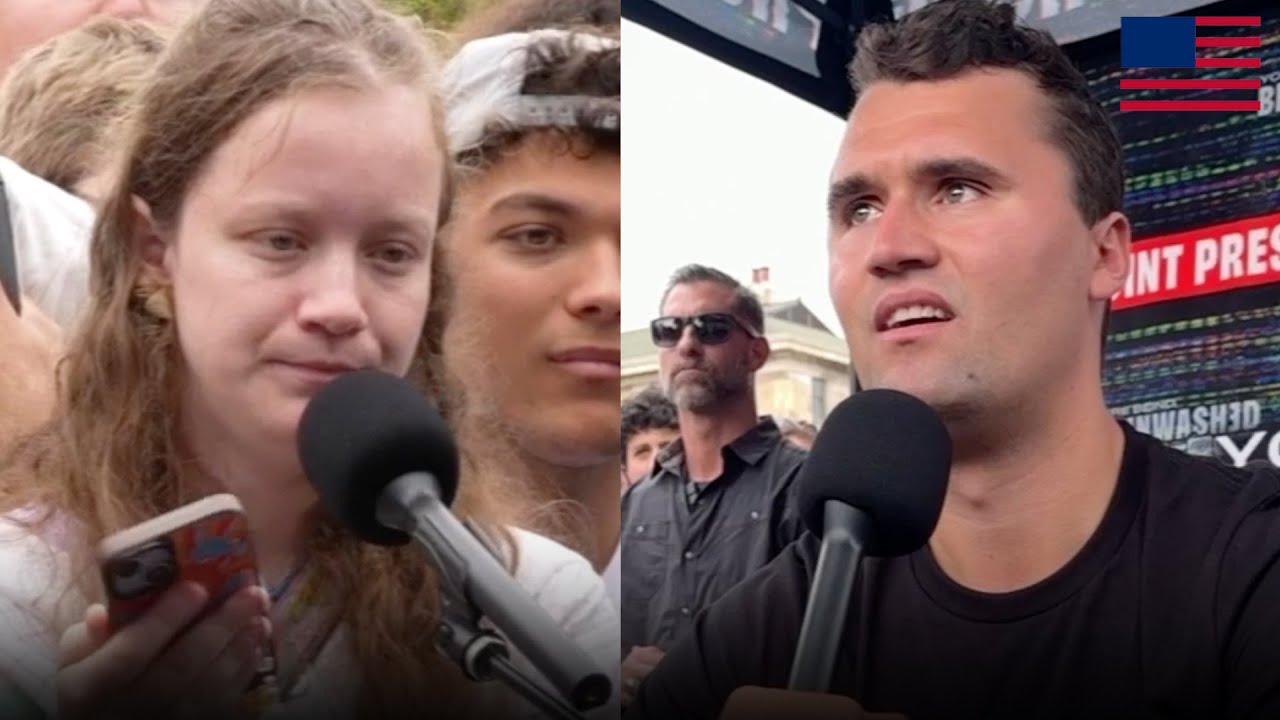
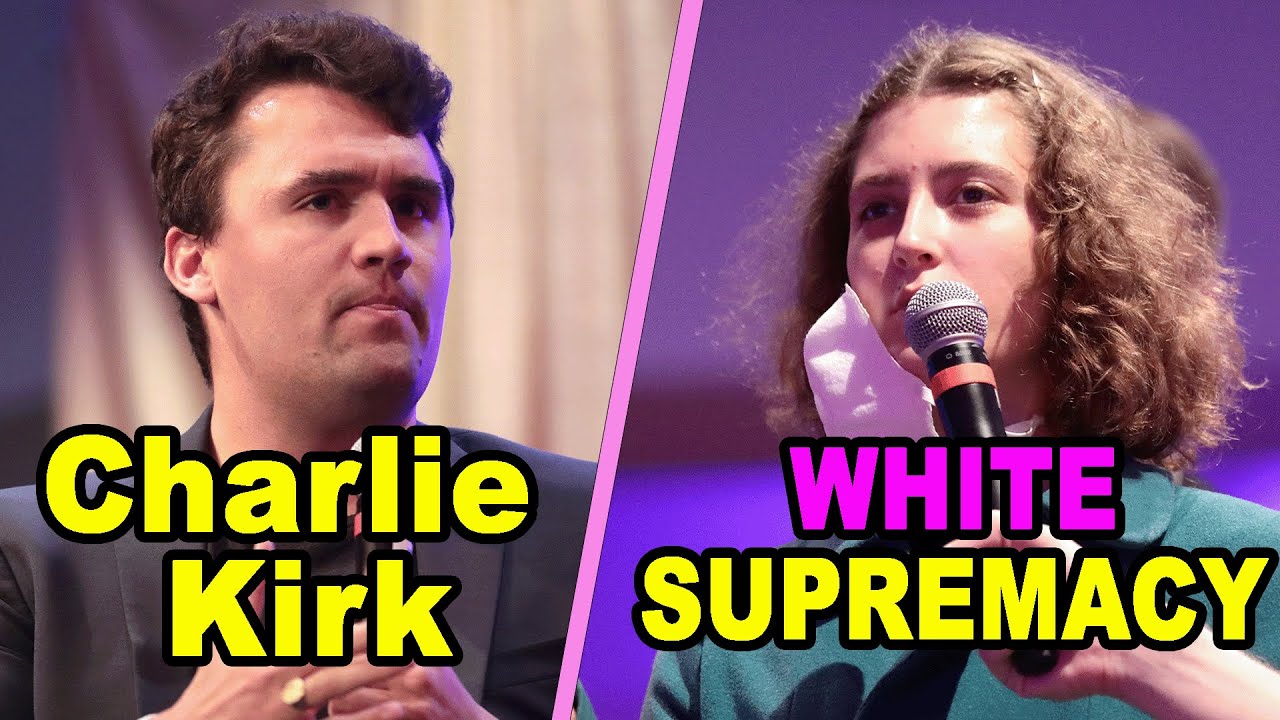
Charlie Kirk Debates LA Homelessness Crisis and Family Structure with College Student at Campus Event
Charlie Kirk engages in a detailed debate with a college student about the homelessness crisis in Los Angeles under Karen Bass and Governor Newsom, arguing that the problem can be solved overnight with political will, as evidenced when San Francisco cleaned up for Xi Jinping's visit. The conversation shifts to examining crime statistics in the African-American community, with Kirk challenging systemic racism explanations and emphasizing the absence of fathers as the primary factor. The student pushes back with historical examples including the Tulsa Massacre and the crack epidemic, but Kirk maintains that personal choices, not circumstances, determine outcomes and that the nuclear family structure is the most important factor for success.
The Homelessness Crisis: A Question of Political Will
A college student approaches Charlie Kirk with questions about rectifying the homeless crisis in Los Angeles under the leadership of Karen Bass and Governor Newsom, who came from San Francisco. The student asks about the role of DEI in allocating funds and what can be done moving forward for Californians and locals.
Kirk's response is direct and uncompromising. He points to a revealing example: when Xi Jinping visited San Francisco, all the streets were cleaned up and looked like Singapore with no more homeless visible. According to Kirk, this proves that the homelessness problem can be solved overnight if leaders choose to do it. The issue is that current leaders are choosing not to clean up the streets.
Kirk outlines a simple solution: every homeless person should be given a place in a shelter, three meals a day, and a shower. However, they should never be given license to stay on the streets. The streets are not their home. The approach is straightforward: clean up the streets and give them the help they need.
Failed Programs and Enforcement Issues
The student mentions Channel 5, a YouTube channel run by Brandon Cunningham that does hit pieces on San Francisco's homelessness crisis, showing how bad the issue has become. The student points out that many programs don't work because they're poorly enforced by the city, which hands out needles and kits without requiring anything in return.
Kirk agrees this approach is obviously problematic. When asked about increasing voter turnout for local elections to change these policies, Kirk responds that if people want to keep living in this situation, they will continue to do so. He emphasizes that communities do not have to have the homelessness problem or the crime problem - it is a casualty of choice. It is a choice to have the streets the way they are, and as long as people don't show up to vote, they apparently don't care enough to change it.
Crime, Poverty, and Cultural Factors
The conversation shifts when the student asks if Kirk thinks crime and poverty are intrinsically linked. Kirk responds that while they could be directionally close to each other, the relationship isn't automatic. He provides an example: poor Asians are not necessarily more likely to commit crime than a poor black person, suggesting that poverty alone doesn't explain crime rates.
When asked if there are systematic functions in place that prevent African-Americans from moving upward, Kirk flatly states that such barriers do not exist. When pressed further, he acknowledges that maybe 40 or 50 years ago such barriers existed, but nothing in our lifetime - not even close.
Comparing Different Communities' Experiences
The student pushes back, arguing that within the last two decades there has been a history of prejudice within the American system against African-Americans and black people. Kirk acknowledges this but immediately counters that there has also been historic systemic bias against Asian-Americans and Jews, yet it hasn't held them back.
The student tries to focus specifically on African-Americans, but Kirk insists that comparison is important. He poses the question: why is it that historical discrimination held blacks back but not Asians or Jews? The student begins to explain the concept of Asians as a model minority with more opportunities for upper mobility, citing things like getting business loans and setting up in different neighborhoods.
Kirk challenges this, stating that there was actually more anti-Asian discrimination in California than anti-black discrimination in the 40s and 50s. He frames the issue not as whether groups are treated poorly - which he acknowledges happens - but whether they're able to overcome that treatment.
Historical Events and Their Modern Impact
The student brings up specific historical examples to establish a link between past injustices and current outcomes. He mentions the Tulsa massacre of 1921, where African-Americans established Black Wall Street before it was destroyed, and references the Black Panthers.
Kirk dismisses the relevance of these historical events to current individual choices. He rejects the premise that someone is a creature or victim of what happened 104 years ago. In his view, individuals are their own beings with their own agency and ability to make decisions. He doesn't believe any of these historical events play into current status.
When the student mentions the crack epidemic and allegations that the CIA moved crack into Los Angeles communities, Kirk responds that people still have to choose to do drugs. This encapsulates his core philosophy: you're a victim of your choices, not your circumstances. That's what makes conservatives different from progressives, he argues - conservatives believe choices are what determine outcomes, not what's around you.
Crime Statistics and Their Implications
Kirk presents stark statistics: Black Americans are 13% of the population but commit 55% of the violent crime. The student acknowledges having heard this statistic before but doesn't have the numbers to verify or debate it on the spot. Kirk doesn't expect him to have the data memorized and encourages him to fact-check it independently later.
Kirk then poses a fundamental question: why is that? He acknowledges it's easy and tempting to say systemic racism or redlining, but offers an alternative explanation. Maybe it's because dads aren't around, because fathers being with their spouses is not a value in the black community anymore. It's become acceptable, he argues, for men to impregnate women and flee - it's not a cultural expectation for them to stay.
The Primacy of Family Structure
The student disagrees, saying the cultural expectation is for African-Americans to stand with their families, especially since evidence shows that when two parents are present in a household, children have a higher chance of succeeding. Kirk agrees with the importance of two-parent households but questions why black fathers don't stay around if this is truly a cultural value.
The student describes it as a progression in the community, suggesting multiple factors led to the current situation. But Kirk persists: if a black man has impregnated a woman and he's not in jail - meaning he's a free citizen - why not stay with that woman and start a family? It's a decision that can be made.
Kirk then presents troubling trend data: the single fatherhood rate was 25% in 1965, 50% in 1980, and is now 75% in certain cities. The situation is getting worse, not better. He calls it beyond comprehension and the worst in the industrialized world. In his view, there's only one explanation: it's not a cultural value in black America right now.
Post-Civil Rights Movement Outcomes
The student maintains that family structure is a cultural value moving forward and was especially a major focus during and after the Civil Rights Movement - that's how the black community got through that movement. Kirk presents a counterintuitive fact: black America has actually gotten poorer since the Civil Rights Act. The student acknowledges this but doesn't have an immediate answer.
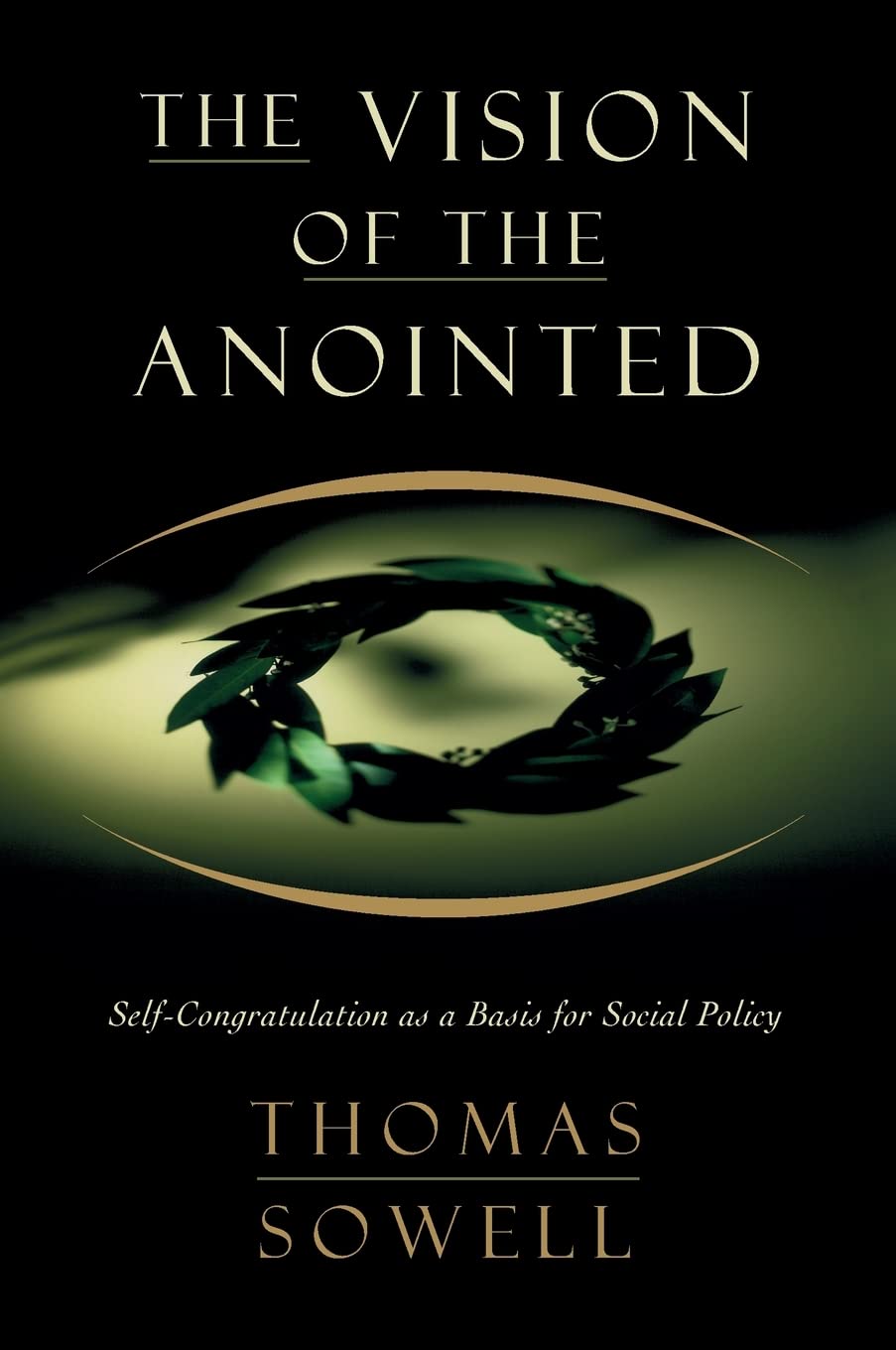
Kirk elaborates that the Civil Rights Act is revered as this amazing achievement, but by the numbers, black America is actually poorer, more likely to commit crimes, and in more poverty than before the Civil Rights Act. He mentions that Thomas Sowell has written entire books about this phenomenon.
The student indicates he has read Thomas Sowell, which Kirk encourages him to continue doing because Sowell will push his boundaries. Kirk reiterates his core belief system: the most important thing is dads in the home. If you do not have two parents around, everything falls apart. It's not about government checks or welfare - it's the nuclear family. The nuclear family is a greater guarantor than anything else that a kid is going to succeed.
Conclusion: Agreeing on Fundamentals While Differing on Causes
The student agrees 100% with the importance of the nuclear family. Kirk frames it as a riddle: given that they agree on the importance of two-parent households, why do so many black youth not have dads around? Kirk thinks he knows the answer, while the student believes the answer is more convoluted and muddled than a single explanation.
The student expresses optimism that going forward there will be upward progression in this area, and commits to looking at the numbers and coming back with better statistics. Kirk thanks him for his good-hearted questions, and the exchange ends cordially despite their substantial disagreements on the root causes of the challenges facing black communities in America.