Up Next
Charlie Kirk on Racism, Class, and the Family Structure Crisis in Black Communities
4:16
Charlie Kirk Debates Student on Civil Rights Act, Affirmative Action, and Race-Based College Admissions Policies
12:56
Charlie Kirk Challenges Student on Fatherlessness, Role Models, and the Crisis in Black America
10:06
Charlie Kirk is the Founder and President of Turning Point USA, the largest and fastest growing conservative youth activist organization in the country with over 250,000 student members, over 150 full-time staff, and a presence on over 2,000 high school and college campuses nationwide. Charlie is also the Chairman of Students for Trump, which aims to activate one million new college voters on campuses in battleground states in the lead up to the 2020 presidential election. His social media reaches over 100 million people per month and according to Axios, he is one of the "top 10 most engaged" Twitter handles in the world. He is also the host of “The Charlie Kirk Show,” which regularly ranks among the top news shows on Apple podcast charts.
Subscribe on YouTubeCharlie Kirk Debates Marriage, Fatherhood, Crime, and Systemic Racism with College Student at Campus Event
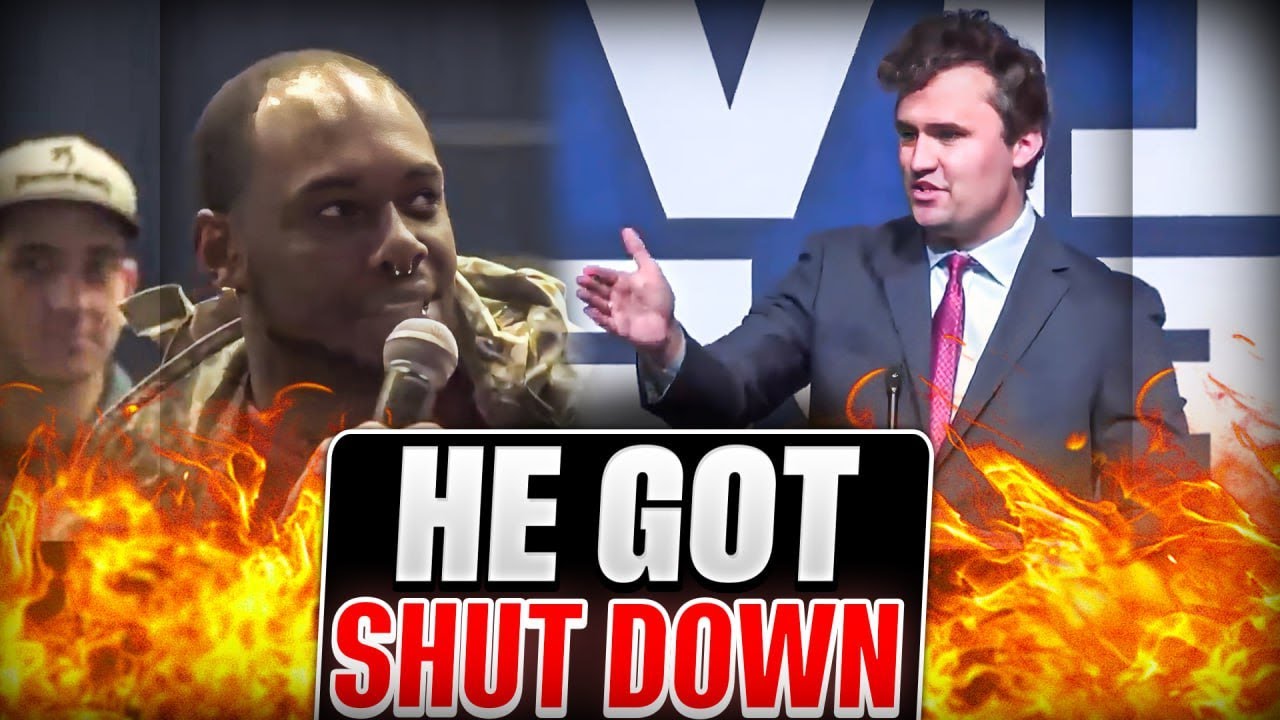
Charlie Kirk engages in a candid debate with a college student on marriage definitions, the importance of fathers in families, crime in the black community, and systemic racism. The conversation covers classical views of marriage versus modern redefinitions, the impact of absent fathers on crime rates and poverty, the War on Drugs, cultural differences in family values, and whether systemic racism or family breakdown is the primary challenge facing Black America. Kirk challenges progressive assumptions while the student pushes back on traditional frameworks, resulting in a spirited exchange about culture, responsibility, and role models.
The Definition and Purpose of Marriage
The conversation begins with a fundamental question about marriage: why can't it be between two men or two women? Charlie Kirk distinguishes between what marriage is allowed to be versus what it fundamentally is. He explains that marriage has traditionally been understood as the union of two separate parts coming together in a lifelong partnership to raise children, adopt children, or have children, and to become better versions of themselves. It represents the attraction of opposites.
Kirk grounds his view in both natural law and biblical principles, noting that natural law is separate from but harmonic with the Bible. When pressed on whether marriage is simply about two adults loving each other, he pushes back, arguing that marriage should be viewed as holy—not just in a religious sense, but as something elevated and separate from ordinary relationships. He contends that society has reduced marriage to a tax advantage when it should be celebrated as something sacred where two separate parts make a lifelong covenant with one another.
The student, identifying as Jewish, points out that in Judaism there are two marriages: the religious marriage under the Torah and the governmental marriage. Kirk clarifies that his view isn't exclusively Christian—traditional rabbinic Judaism and Islam also don't recognize homosexual marriage. They agree it's an Abrahamic perspective.
The Importance of Fathers in Child Development
The conversation shifts to the role of fathers. The student, who grew up without a father, questions why society places so much emphasis on the father's presence, noting they turned out fine and are now in college. Kirk asks if there was ever a time when a more masculine figure would have been helpful, suggesting scenarios like breakups where a strong, stable man saying "you're beautiful" might carry different weight than a mother saying the same thing.
The student doesn't see the difference, but Kirk describes a unique bond between fathers and daughters—a type of Greek love called storge—where a father's task is to shepherd his vulnerable, innocent daughter through life all the way to the marriage aisle, where he hands her off to another man because women are worthy of protection.
When the student questions whether women need a man in their lives, Kirk acknowledges exceptions but describes this as a beautiful ideal. He then shifts to empirical evidence: in the black community, when fathers are absent, crime and poverty increase. He explains that a father should discipline the 14-year-old acting like a brat, providing the masculine authority to outrank the teenager's defiance—something a single mother alone struggles to do.
Crime, Poverty, and the War on Drugs
The student attributes the absence of fathers in the black community to systemic racism, arguing that black men are more likely to be imprisoned, often because they're in poverty with no other way to get money. Kirk challenges this, asking whether society should excuse crimes committed out of necessity. The student clarifies they're not talking about murder but about stealing to survive.
Kirk questions whether most crimes in the black community are crimes of necessity, specifically addressing gang violence. The student maintains they're discussing crimes related to getting food and basic necessities. Kirk counters that America provides food stamps, subsidized housing, free healthcare through Medicaid, and welfare cash—so what necessity remains that would justify crime? He points out that America has an obesity problem, not a starvation problem, and that anyone hungry can get fed at local churches or food shelters.
The student argues that food stamps might not cover everything and that housing isn't unlimited. Kirk acknowledges subsidized section 8 housing exists, even with rules attached. Returning to the central question of why black Americans, who comprise 13% of the population, commit over 50% of crimes, Kirk asks why other equally poor racial groups don't commit crimes at the same rate.
The student suggests white people in stores aren't followed like black people are and that police are less likely to track down white drivers. Kirk dismisses these probabilities and asks about laws—what can a white American legally do that a Black American cannot?
Examining Systemic Racism Claims
Kirk presses the student on the meaning of "systemic," explaining it should refer to things within laws and codes, like Jim Crow was systemic racism. The student suggests housing codes and lending practices stemming from historical redlining, where white people are more likely to receive loans. Kirk doesn't accept this, arguing that loans are now given favorably to black Americans in certain cities due to DEI and affirmative action policies.
He emphasizes a worldview difference: the student makes excuses for criminals while Kirk sees it as insulting to poor immigrants who came to America, worked two or three jobs, and didn't commit crimes to escape poverty. The student counters with their own father, a white Polish immigrant who committed crimes and went to jail but is fine now. Kirk responds that he's glad the father went to jail if he committed crimes, which the student finds terrible.
Kirk identifies the core difference in worldview: he's unsympathetic to people who steal, loot, and murder because it's a values problem, and he refuses to make excuses for obviously destructive behavior. The biggest problem in Black America, he argues, isn't racism but the lack of fathers. When dads are around, kids flourish.
The Decline of Emphasis on Family Values
Kirk invokes Barack Obama, who used to make rebuilding the black family and putting dads back a central campaign theme. Obama drew a 100,000-person crowd at this campus in 2012 talking about this issue. Kirk asks why the Democrat Party no longer discusses it. The student acknowledges hearing about it but says there are bigger issues. Kirk firmly disagrees—family breakdown is the foundational issue, more important than climate change or systemic racism, which he calls "crazy abstractions."
The student argues that systemic racism creates family problems by taking black people away from their families. Kirk challenges this: how are they being taken away? Aren't men leaving rather than being taken? They're not staying with the women they impregnate. He points out that not every black person ends up in jail, yet there's huge child abandonment because there's a cultural expectation in Black America that differs from White America—it's considered acceptable to impregnate a woman and abandon her.
When asked what this view is based on, Kirk references scholars Thomas Sowell and Shelby Steele, who have analyzed this issue. In white upper-middle-class culture in areas like Winnetka, Libertyville, Hinsdale, and Naperville, impregnating a woman and abandoning her carries a social stigma. In black culture, Kirk argues, it doesn't—in fact, it's glorified by rap culture.
Rap Culture and Its Impact on Values
The student disagrees, suggesting rap culture reflects what happened rather than causes it. Kirk asks whether the most popular songs in Black America—referencing Nicki Minaj and Cardi B—empower people to be better versions of themselves. The student believes they are empowering, and artists like Kendrick Lamar talk about their life experiences, allowing people to relate because those experiences mirror their own.
Kirk presses: does it lift up the audience to become better? The student thinks so because it says "we all relate to this, this is our story." Kirk clarifies he's not making a moral judgment but noting that the essence and ethos isn't about quitting drinking, quitting drugs, getting married, and having children—it's about what people have done. The student responds that it's about sharing experiences, not prescribing behavior.
Kirk asks directly: in black rap culture, is it glorified to sleep with a lot of women? The student admits that's one aspect, describing it as a luxury people can relate to. Kirk challenges whether culture should ideally elevate and challenge individuals toward virtue and goodness rather than bringing them down to their lowest parts. The student insists rap isn't bringing people down but sharing experiences without claiming it's the best thing in the world—it's what people have been through, including gang violence, because that's what's happening in their neighborhoods when they see no jobs and feel they have no other options.
Family Subsidies and Role Models
Kirk points to another systemic issue: America subsidizes single motherhood, giving money to women who stay single, effectively incentivizing family breakdown. He asks if the student can at least agree that a stronger, tighter-knit nuclear family in Black America would be a good thing. The student agrees in many cases but not if the father is abusive, saying it depends on the specific family.
Kirk asks what percentage of fathers are abusive. The student admits not knowing. Kirk suggests it's probably small, and the student agrees that if both parents are healthy and ready to have a child, it's great—but reiterates their own father wasn't ready and they didn't want him around.
Kirk poses a final question about role models: would the student rather a black kid have Kendrick Lamar or Clarence Thomas as a role model? The student immediately chooses Kendrick. Kirk expresses surprise—not the black American on the United States Supreme Court? The student responds that Clarence Thomas is trying to ban interracial marriage and references his position on Roe v. Wade. Kirk points out the irony: Thomas is in an interracial marriage with a white woman.
Political Views and Accomplishments
The conversation concludes with Kirk noting the student is voting for Kamala Harris. When asked for Harris's greatest accomplishment, the student cites capping insulin at $35. Kirk points out the irony that the student is anti-big pharma yet all the pharmaceutical companies are donating to Harris. The student agrees with this observation. Kirk thanks them for the conversation and wishes them well in voting for Kamala.
Video Transcript
um hello hi I um about
that well first question why can't
marriage be allowed with two men or two
women that that question got me yeah so
I mean allowed and what it is are two
different things so again just strictly
from what marriage has always been is
the idea of two separate parts coming in
a union to be able to have hopefully a
lifelong partnership to raise kids adopt
kids or have kids um and to become
better version of themselves it is the
attraction of opposites and so if you
want to redefine marriage that's fine
that's your contention but I take a
classical view of marriage um based on
like what is that based on what the
Bible the natural law is is that the
Bible Well natural law is separate than
the Bible but it's it's harmonic with
the Bible that's correct okay um because
what would you say what is the what is
the what is the purpose of marriage
marriage is like I love you you love me
let's got it so together can can a
25-year-old marry an
8-year-old no why because that
8-year-old is not ready like they got it
so that some point so then let's let's
build out your definition more then love
each other but also what what is the
purpose what is the destination of
marriage we are two adults we love each
other fair enough okay we love each
other end of story end of well what's
give me another thing and maybe I'll add
to okay but is that it just is it about
Union partnership friendship what is I
think it's just like let's get our TA is
good like you know let's just get
married like I don't think there needs
to be some big big crazy reason no I'm
not attacking you I think marriage is
Holy and by holy I don't just mean in a
religious sense holy means separate
meaning it should be elevated it should
be celebrated it's something that is so
Above the Rest and you just think it's a
it's like a a tax advantage and that's
fine because actually most Americans
agree with you yeah um I think marriage
is something where we should drop
everything like wow two separate parts
have just made a lifelong Covenant with
one another to learn about the other and
to grow with each other and it's
difficult and I think that we've lost
that I mean I'm Jewish and like in
Judaism there's the like Tor like
there's like the when you get married
the religious marriage and then there's
the government marriage like you have to
get married twice basically so I think
what you're talking about is probably
the religious marriage like with a
priest I'm talking about governmental
marriage I I'm even talking about govern
I'm just saying traditionally our
governmental marriage again I'm the vast
minority of opinion in the country this
has been the classical view that it's a
man and a woman coming together in
something sacred and something holy or
elevated again that's not that's I would
say that's just a Christian marriage
it's not necessarily Christian in
Judaism in traditional rabinal Judaism
Orthodox homosexual marriage is not
recognized that is true so it's not
Christian in Islam homosexual marriage
is not recognized okay so it's not just
Christian okay so it's abrahamic
abrahamic all right we agree um why why
do we care if there's no father like I
like I grew up without a father I feel
like I'm doing fine I'm doing great I'm
in college like why why are we so
towards the father why why does he need
to be there so much it's so just looking
at try to answer my question for me do
you think what can of can is is there
any time and you're you're being very
vulnerable and I appreciate that when
you were growing up and maybe not where
you said I wish I had a dad around my
mom says I did wish for that one once at
wishing well but like I like I my mom
was great I she supported Meed no no I'm
not not this not not a knock on Single
Moms right but was there ever a time
maybe where a more masculine figure
would have been helpful M I can't really
not off the top of my head like what can
you give me an example of when a
masculine figure would be helpful in my
life when a boyfriend might have broke
up with you and you didn't want to talk
to your mom because she just didn't get
it and you wanted a strong stable man to
say You're Beautiful
um I think I mean I I have if a if my
father was like you're
beautiful I I that'd be cool but like if
my mom was also like you're beautiful I
don't really see a difference between
like my mom saying it and my father
saying okay yeah that's I I I don't see
the world that way um because there's a
ve being a father to a daughter there's
a very unique bond between a father and
a daughter where it's you kind of you
fall in love again but not romantic love
you fall in a different type of Greek
love which is called sto which is a
father daughter love where you have such
affection for this incredible being and
your your task is to Shepherd that
vulnerable innocent girl through life
all the way up until the marriage aisle
to kind of connect the two topics
together right where then you hand it
off to another man because women are
worthy of protection so you're saying
like there has to be a man in the
woman's life the woman can't be like
alone no there are exceptions but it is
a beautiful ideal and when when that
ideal falls apart now let's talk about
the technical side in the black
community when fathers are no longer
around crime goes up poverty goes up
because you'll you'll understand this
less and a man in the audience who grew
up without a father will totally get
this if it's just a mom in the house the
dad is should come in and discipline the
14-year-old for acting like a brat the
dad comes in and he says stop doing this
you need to be able to outrank the
14-year-old brat with another masculine
figure but don't you think that like
there there's a reason that a lot of the
black community isn't doesn't have a
father and it's because of systemic
racism it's because like black men are
more likely to be in prison oh yeah so
why do people go to prison for like a
lot of the time it's because they're in
poverty and they have no other way to
get okay so they commit crimes because
there's they yeah but so like wait wait
so wait
why do they why do they soit if you're
in poverty we should give excuses for
committing crimes yes because if they
have no murder not Mur I did not say
murder I said like I said I'm saying
like if someone is stealing something
because they have no money and there's
no job interesting so you think most
crimes are crimes of necessity in the
black
community um I wouldn't I'm not saying
most so like gang banging is like a
crime of necessity that I've literally
never said that I'm saying you're making
an argument of crime is a necessity like
they're so hungry can't handle it I'm
talking about like crime that has to do
with like getting food getting stuff
that you need to live right but we have
food stamps for anyone that needs it so
that doesn't exist we have we have
subsidized housing for anyone that needs
it so that doesn't exist we have free
health care for any poor person that
wants it called Medicaid that doesn't
exist we also have welfare cash for any
that wants us that doesn't exist so what
is it they're missing that they need to
go sorry about that um well the food
like a a lot of food stamp like food
stamps might not cover all of what they
need and also housing is like there's
not there's not unlimited housing a lot
of people who are unhoused have to like
go to shelters and then they get kicked
out of shelters because there's a
mandatory stay limit so it's not like
you it's not it's not a stuff thing
though right it's like if you need stuff
there's also tons of Charities out there
that can provide assistance churches you
will not go hungry in this country you
will not starve in this country yes you
will there we have obesity we have an
obesity problem not a starvation problem
in this country what are you talking
about in State Street if any one of
those people went to the local
Episcopalian Church or Methodist Church
they will get fed I guarantee it if they
go to a local local food shelter they
will get fed okay but I'm talking okay
housing okay for housing if if we have
section 8 subsidized housing in this
country right if you want to have a roof
over your head you can have a roof over
your head with like a thousands of rules
and you can't do of course yes I mean
it's not ideal but the point is this so
let's just back to the crime of
necessity right so why do people commit
crimes I'm not saying why all people
commit crimes I'm saying there are
people who commit crimes because they
have no other choice got it so why is it
that other people that are as poor as
they are and separate racial groups
don't commit crimes at the same rat for
example blacks are 13% of the population
and they commit over 50% of the crimes
why is that um black black black people
I would say not blacks it's not I could
say whes and you wouldn't care so anyway
hold on hold on I I right I can say
Hispanics you wouldn't care so don't
don't Poli my language whatever I'm I'm
I'm not policing your language I'm just
saying I would say black fa enough but
the insinuation is that I'm being racist
but that's fine okay that's your opinion
um but so so black Americans are 133% of
the population and commit anywhere
between 50 to 56% of murders crimes
carjackings why why is that well what
percentage of the white population is
living in the same level of poverty got
it so you know there's twice as many
white Americans in poverty as black
Americans not same percentage but still
if you look at white Americans in
poverty they far they commit far less
crimes than black Americans in poverty
why is that maybe it's because when
you're in a store like they follow black
people and they don't follow white
people what about
murder rural rural no but why is it that
like say murder why is it that black
people commit so many more murders like
that's not you're being followed in a
store and you commit more
murders yeah
you're making the rle or I'll get to you
in a sec but it's not it's not a good
argument but let me just go back to one
thing you said systemic racism right so
the idea of systemic is that it's within
our laws there are some black Americans
here listening what can you as a white
American do that the Black American
cannot
do um let's see I could go into a store
and not get followed the police like the
police could not track me down on like
when I'm driving I'm not pro I'm less
likely to get um shot and kill
um while I'm driving I um there's a lot
of things that I can do okay so just be
clear so if you walk into a local CVS
here how would you guys be treated
differently well I would Pro they would
probably say hello and they would
probably like just walk like let me in
and like not follow me and then so these
are a lot of probabilities I don't
believe you but I'm talking about laws
right so what in the legal code of
America can you as a white individual do
that the black individual can't cuz
systemic means it's in our code right
it's like it's for example like Jim Crow
totally get it that's systemic racism
what is systemically your advantage um
maybe like housing codes because I know
redlining isn't a thing anymore but
there is um like isn't there people who
um are white are more likely to be given
loans because of like they have less
um like I know that's just the like it's
um back from redlining like it it's a
lot of the same stuff
I I I don't I don't buy into any of that
so I just kind of go you don't buy into
red lining or you don't buy buy red
lining I don't buy any of that stuff I
have to say in fact it's the opposite
loans are now given favorably to Black
Americans in certain cities over white
Americans okay but so we because I I
believe I I know red lining ised I don't
debate that of course I but because of
Dei and because affirmative action
there's actually a preference given but
so let's go back to fathers right okay
let's go back to so something happened
to Black America since
1965 so in 196 so you mean the War on
Drugs right well so if that's your
contention that's fine so in order to
again in order to go to jail for the War
on Drugs you have to be dealing drugs
right or you have to be caught with
drugs so you yeah which is one of like
the main jobs that you can have in a
like poverty stricken like if there's no
jobs like you're you're going to do
drugs I mean you're going to trade drugs
because that's the only op such a
difference in worldview you're making
excuses for criminals and what no what
an insult to poor immigrants that came
to this country that didn't commit
crimes and work two or three jobs and
worked themselves out of poverty and
didn't decide to go deal Coke well my
father is a white immigrant from Poland
and he committed crimes and he's fine
now did he go to jail yeah he did I
thought there was systemic racism I
thought doesn't happen very much I I
never said white people don't go to jail
I said they go more and you're saying
that white immigrants are fine and they
don't far less actually I'm glad he went
to jail if he committed a crime I'm
think that's think it's terrible so but
the at the core of it we have a
difference in worldview right my
worldview is I'm not sympathetic to
people that steal that loot and murder
because that's a values problem and I
don't like making excuses for people
that do things that are obviously
destructive secondly we have a problem
in Black America the biggest problem is
not racism it's the lack of dads if dads
are around kids flourish and you know
who agreed with me Barack Obama Barack
Obama used to make this a central piece
of his campaign he came to this campus
back in 2012 Drew like a 100,000 person
crowd and talked about how we need to
rebuild the black family and put dads
back why doesn't the Democrat Party talk
about that anymore I'm I'm fine with
having fathers there's I'm I'm not
against having black d for sure I'm
saying but don't we agree has has anyone
heard that mentioned on the national
scale in the last 10 years um yeah I
mean we we we've heard about like yeah
and because there's bigger issues no
there isn't see that's the issue is that
in this is what makes us different as a
conservative I focus on if you have
family breakdown don't worry about
climate change don't worry about
systemic racism all that stuff is like
these crazy abstractions you can create
family problems systemic racism creates
family problems if you take away black
people from their families then they're
going to have broken families okay so
but that's interesting how are you
taking them away aren't they leaving
they're not staying with the women
they're impregnating not so for example
there there are there 133% of the
population is black not every single
person ends up in jail obviously and yet
there's huge child abandonment because
there's a cultural expect that is
different in Black America than in White
America which is it's okay to impregnate
a woman and abandon her in Black America
it's not based on what what is what is
that based on that's a good question
where does it come from it's just based
on no I'm saying what is that like your
view of Black America well not a view
it's true I mean don't take my word for
it look at Thomas soul and Shelby steel
that have done amazing analysis on this
it's that in Black Culture that is not
considered to be a stigma in white upper
middle class culture for those of you
that grew up in wershaw or Libertyville
or grew up in Hinsdale or grew up in
naville you guys all know those
neighborhoods if you impregnate a girl a
woman and you just like abandon her
that's frowned upon that is a social
stigma in upper middle class white
culture and it's not in Black Culture No
in fact it's glorified by the rap
culture it is I I think I think rap
culture is ex showing what happened I
don't think it's I think do you think
that the songs that are the most popular
in Black America are uplifting Black
America be better versions of themselves
I think the most popular like Nicki
Minaj cardi B do you think that they're
like empowering people to be great well
I do think um cardi B and Nicki Minaj
are empowering but when you talk about
like like wow black um like let's go
like Kendrick or whatever like they're
talking about their life experiences and
they're saying this is what happened to
me and people relate to that because
that's also what happened to them it's
not saying this is the greatest thing in
the entire world does it lift up the
audience to become better I think so
because it's like
because it's saying we all relate to
this we can all like this is our story
this is we can be like better than this
even though it's like I mean there's
better there's not better it depends on
what your worldview is but I think that
rap is good because it can like I'm not
saying it's bad or good I'm saying like
there just the the essence the core of
the ethos is not exactly about like
quitting drinking quitting drugs and
getting married and having children no
it's about what you have done not about
like no but just like to be clear like
in black rap culture is it generally
glorified to go sleep with a lot of
women I I mean that's your view of it
I'm asking a question is it in black rap
culture yes or no guys in black rap
culture is glorify women to be able to
sleep with a lot of women I mean I think
that's one aspect yeah okay so let's
just take that aspect because it's um a
luxury that people can do and like it's
one of the things that people can do and
everyone can relate to or a lot of
people can relate to shouldn't ideally
your culture try to elevate and try to
challenge the individual to Virtue and
goodness not try to bring them down to
the lowest parts of their no who is no
I'm again I'm not saying that they are
bringing them down I'm saying that this
is what they are doing and they are
sharing their experiences they're not
saying this is the best thing in the
entire world they're saying this is what
I have been through like sleeping with a
lot of women yeah or like gang violence
and you know I mean if that's what like
a lot of people have been through gang
violence because it that's what's
happening in their neighborhoods that's
the only that's they feel that's the
only option and you might know that
that's not the only option but when you
are living in that neighborhood and you
don't see any jobs this is how your
family was Raising you what like what
other option do you have and once you're
in it it's really hard to get out so got
it you talk about systemic racism and
that being a major driver of you know
black America's Failure to Launch if you
will we subsidize single motherhood in
this country so if you stay single as a
single mother you get money from the
federal government and you're it's
basically subsidized if you will sure
can we can we at least agree that if the
nuclear family in Black America was
stronger and Tighter knit that would be
a good
thing um in in a lot of cases yeah I
think if but I think if they're like if
the father's abusive I would not want
him there so I think it really depends
on like what family you're talking about
I don't think you can generalize what
percentage of fathers do you think are
abusive I have no idea I would say it's
probably small right um not like I don't
know I have no idea I have not done
research on what what percentage of
fathers but generally it's good when Mom
and Dad stays around and is raising the
kid I would say if they are both healthy
parents and they are both ready to have
a child it's great my father not ready
to have a child do not want him around
me just one last question on Role Models
let's say there's you know a black kid
right now would you rather have that
black kid have a role model be Kendrick
Lamar or Clarence
Thomas Kendrick
obviously so not the not the black
American on the United States Supreme
Court no he's he's trying to ban
interracial marriage he's trying to like
do all wow he's he's in an interracial
marriage he literally like he's married
to a white woman yeah I know the roie
Wade thing like goes against he's trying
to ban his own marriage yes I thought
I've s break it you so I I we we agree
that there should be better role models
maybe I I when have I ever said that
there have not there should not be I'm
agreeing with you that there should be
fathers if they are right F I'm just I'm
we're agreeing last question you're
voting for kamla I'm guessing um how can
you how can you tell yeah okay what's
what's your greatest accomplishment um
probably capping income like um capping
the insulin at $35 oh she did that yeah
what else I mean you said her greatest
I'm just saying like that's that's the
thing that goes off the top of my mind
is like you like big Pharma you're I'm
I'm sure you're anti- big Pharma oh yeah
I mean that's why all the pharmaceutical
companies are donating to her that's
right so okay okay yeah yeah thank you
very much enjoy voting for Kamala