Charlie Kirk on Racism, Class, and the Family Structure Crisis in Black Communities
Enjoying this? Share it with someone who needs to see it.
Up Next
Charlie Kirk Challenges Systemic Racism Narrative with Single Motherhood Statistics and Family Structure Breakdown
8:43
Charlie Kirk Debates Objective Truth, Abortion Morality, and Race Relations with College Students
10:40
Charlie Kirk Challenges Systemic Racism Claims With Crime Statistics and Fatherlessness Epidemic Analysis
7:15
Charlie Kirk on Racism, Class, and the Family Structure Crisis in Black Communities
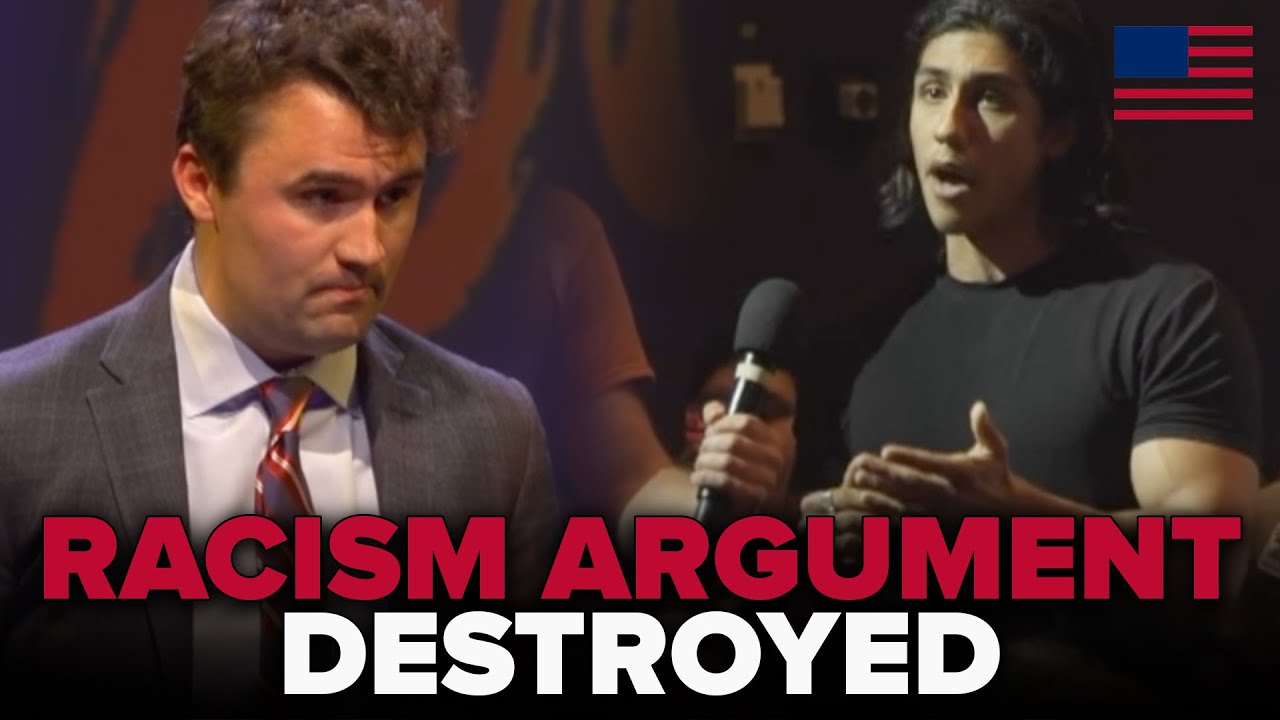
Charlie Kirk addresses a question about racism, class, and barriers facing the black community. When asked about the obstacles preventing economic advancement, Kirk argues that the breakdown of the family structure, specifically the absence of fathers, is the single most important factor affecting outcomes across all demographics. He points to data showing that children raised in two-parent homes, regardless of race, have better life outcomes than those raised by single parents. Kirk also critiques Great Society welfare policies that inadvertently incentivize single motherhood, noting that even Barack Obama once emphasized the importance of fathers in the home before it became politically inconvenient.
A student approached Charlie Kirk with a question about racism, class, and wealth disparities in the black community. The student expressed concern that many problems facing black Americans stem from class and economic challenges, and wondered how people can advance themselves when facing obstacles like working multiple jobs and raising families.
The Family Structure Solution
Kirk responded by pointing to what he considers the most significant factor: family structure. "If you want a ticket into middle class America, put a mom and a dad in a home," Kirk stated. When the student acknowledged this point but noted that many families don't currently have that structure, Kirk pressed back with a direct question: "What is the building block that is preventing black men to stay with the women they impregnate?"
Kirk argued that beyond personal responsibility, there are policy factors at play. He pointed specifically to Lyndon Baines Johnson's Great Society programs, which he says inadvertently subsidize single motherhood. According to Kirk, these programs sometimes create a situation where women can receive more financial support from the federal government by remaining single than by getting married, creating a perverse incentive that undermines family formation.
Data on Two-Parent Households Across All Demographics
Kirk emphasized that the importance of two-parent households transcends race. He stated that a white child growing up with just a single mother is less likely to succeed by objective metrics than a black child who grows up with both a mother and father. "If you have a strong parent presence of mom and dad, you're more likely to graduate high school, get a job, stay out of prison, and enter into middle class America," Kirk explained.
He noted that this perspective was once more commonly expressed across the political spectrum, citing Barack Obama as someone who used to emphasize the importance of fathers in the home "until the left realized that this was a political liability for them." Kirk also referenced comedians Chris Rock and Dave Chappelle, who have addressed the issue of absent fathers in their comedy.
Addressing Historical Arguments
The student pushed back, asking who created the culture of family breakdown by "forcibly taking all these people to America." Kirk responded with a demographic point: more black Americans are in the country today due to voluntary immigration than were ever forcibly brought through slavery. The student countered that newer immigrants haven't experienced "decades and generations of not having wealth" like descendants of enslaved people.
Kirk acknowledged differences among immigrant groups, noting that some Caribbean immigrants and Nigerians enter at lower economic rungs but build lives over time. He conceded the student's point about intergenerational issues was interesting, then posed a question: "Do you think we're more racist or less racist than we were in the 1960s?" When the student agreed that America is generally less racist today, Kirk used this to reinforce his main argument.
The Core Issue
Kirk concluded by reiterating his central thesis: "Instead of just focusing on racism or policing or this abstract, the thing that is staring us in the face that is so obvious is that generation after generation of young blacks are raised without a father figure, and that's unfair to the mother, it's unfair to them, it's unfair to the rest of the community."
Throughout the exchange, Kirk maintained that while historical and systemic factors deserve consideration, the breakdown of family structure represents a tangible, addressable problem with clear data supporting its importance across all racial and economic groups.