Charlie Kirk Challenges Systemic Racism Claims With Crime Statistics and Fatherlessness Epidemic Analysis
Enjoying this? Share it with someone who needs to see it.
Up Next
Charlie Kirk on Institutional Racism, Sentencing Disparities, and Thomas Sowell's Discrimination and Disparities
2:46
Charlie Kirk on Racism, Class, and the Family Structure Crisis in Black Communities
4:16
Charlie Kirk Debates Objective Truth, Abortion Morality, and Race Relations with College Students
10:40
Charlie Kirk Challenges Systemic Racism Claims With Crime Statistics and Fatherlessness Epidemic Analysis
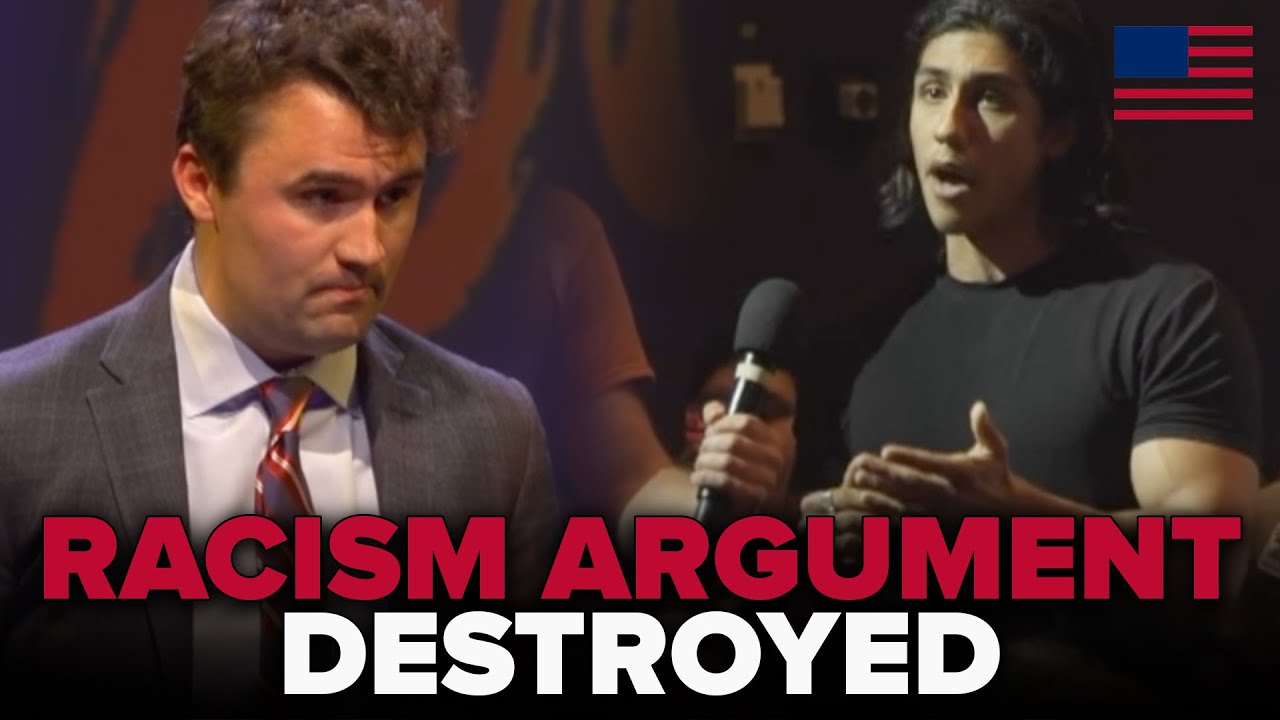
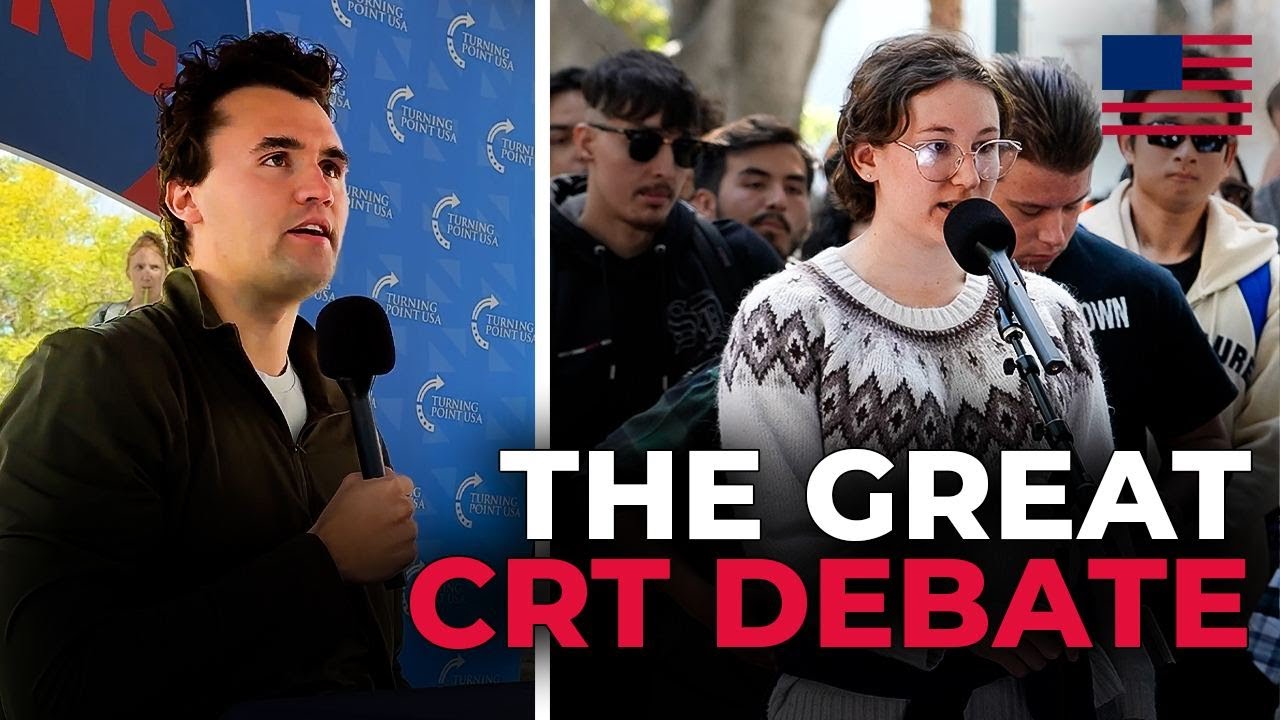
Charlie Kirk dismantles arguments about systemic racism in America during a Q&A session, presenting crime statistics, policing data, and socioeconomic factors that challenge the prevailing narrative. Kirk argues that disparate outcomes don't prove discrimination, pointing to the fatherlessness epidemic in black communities and wealth inequality as more significant factors than race. He contends that the hyper-racialization of social problems creates a smokescreen that prevents finding meaningful solutions, advocating instead for policies that strengthen families and communities regardless of race.
During a Q&A session, Charlie Kirk faced a pointed question about systemic racism in America. The questioner challenged Kirk's previous arguments that systemic racism doesn't exist, citing drug crime statistics as evidence. The questioner noted that black and white people use drugs and commit non-violent drug offenses at similar rates, yet black people get arrested two to three times more often, though this disparity is decreasing as more states legalize marijuana.
The questioner argued this represents something black people have to deal with that makes them worse off than non-black people, specifically highlighting increased police presence in certain areas and the resulting higher likelihood of arrest for non-violent drug crimes.
Crime Statistics Tell a Different Story
Kirk responded by addressing what he considers the underlying issue: crime rates. He pointed out that in 2018, blacks made up 53 percent of all homicide offenders in America. Kirk stated bluntly that blacks commit more crimes than whites, Asians, and Hispanics, acknowledging this is a fact many don't want to say out loud.
This disproportionate amount of crime, Kirk argued, naturally leads to heavier police presence. He rejected the premise that police presence itself is the problem, dismissing arguments about being unable to commit drug crimes without police interference as uncompelling.
The Fatherlessness Epidemic
Kirk identified what he believes is the root cause of the crime disparity: a fatherlessness epidemic in America. He provided historical context, noting that in 1965, marriage rates in the black community were about 80 percent, but have now plummeted to 20 to 25 percent. Kirk attributed this decline to policies that subsidize single motherhood, particularly those stemming from the Great Society programs.
He emphasized that factors transcending race matter more than racial dynamics, including how many words a child hears at home and whether parents read to children on a daily or weekly basis.
The Under-Policing Problem
Contrary to claims of over-policing, Kirk argued there's actually an under-policing problem in black neighborhoods across America. He cited Chicago as an example, where 50 percent of homicides go unsolved due to a lack of detectives and police in many areas. Kirk asserted that police prevent crime, pointing to New York City's transformation from one of the most dangerous cities in the 1980s and early 1990s to a much safer city under Mayor Rudy Giuliani and later Mike Bloomberg, who continued similar policies.
Wealth, Not Race, Determines Justice Outcomes
Kirk reframed the conversation around sentencing and arrests, arguing that wealth matters more than skin color when it comes to likelihood of going to jail. He used hypothetical examples involving LeBron James's son Bronny, Denzel Washington's kids, and Oprah's godchildren to illustrate his point. If any of these individuals were caught dealing drugs, they would have access to the best lawyers who could file motions for dismissal and cross-examine evidence.
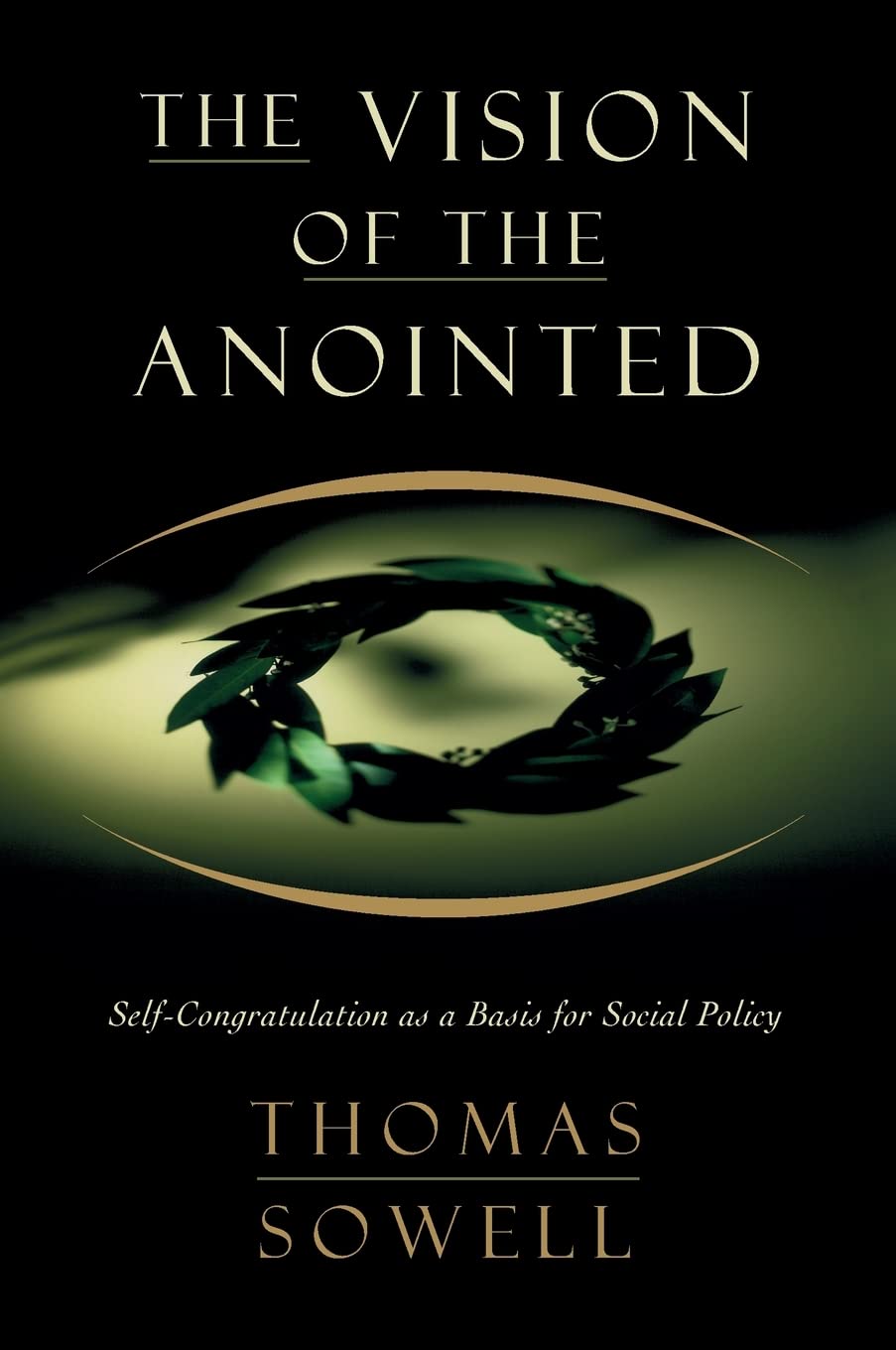
While acknowledging wealth inequality between races exists, Kirk rejected attributing this solely to racism, calling such analysis sloppy. He advocated for the perspective of Thomas Sowell, which examines the whole body of work and recognizes that disparate outcomes don't necessarily mean discrimination is the sole cause.
The Geography of Wealth Inequality
To further illustrate his point about disparate outcomes not proving discrimination, Kirk provided an example unrelated to race. He noted that San Francisco and New York are far wealthier than Missoula, Montana, and Birmingham, Alabama. This wealth gap has nothing to do with racism and everything to do with geography: mountain towns and inland cities are less likely to be around commerce and trade, while port cities are by definition always wealthier.
Kirk argued that attributing racism to every disparate outcome in data is not just imprudent but actually detrimental and harmful, creating a smokescreen that prevents addressing real problems.
Policy Positions on Marijuana and Sentencing
While Kirk stated he's not a fan of legalizing marijuana and thinks it's a bad idea, he acknowledged potential agreement with critics on one point: there's a problem with locking people in prison for extended periods for using marijuana. However, he emphasized this represents a sentencing issue rather than proof of systemic racism.
Solutions Beyond Race
Kirk concluded by reiterating his belief that the hyper-fixation on systemic racism disallows finding meaningful solutions. He advocated for putting fathers back into homes as a critical priority, viewing family structure as more important than racial politics in addressing social problems. Kirk's perspective emphasizes that looking at people through a racial lens prevents effective problem-solving and that race fundamentally doesn't matter in addressing these issues.