
Up Next
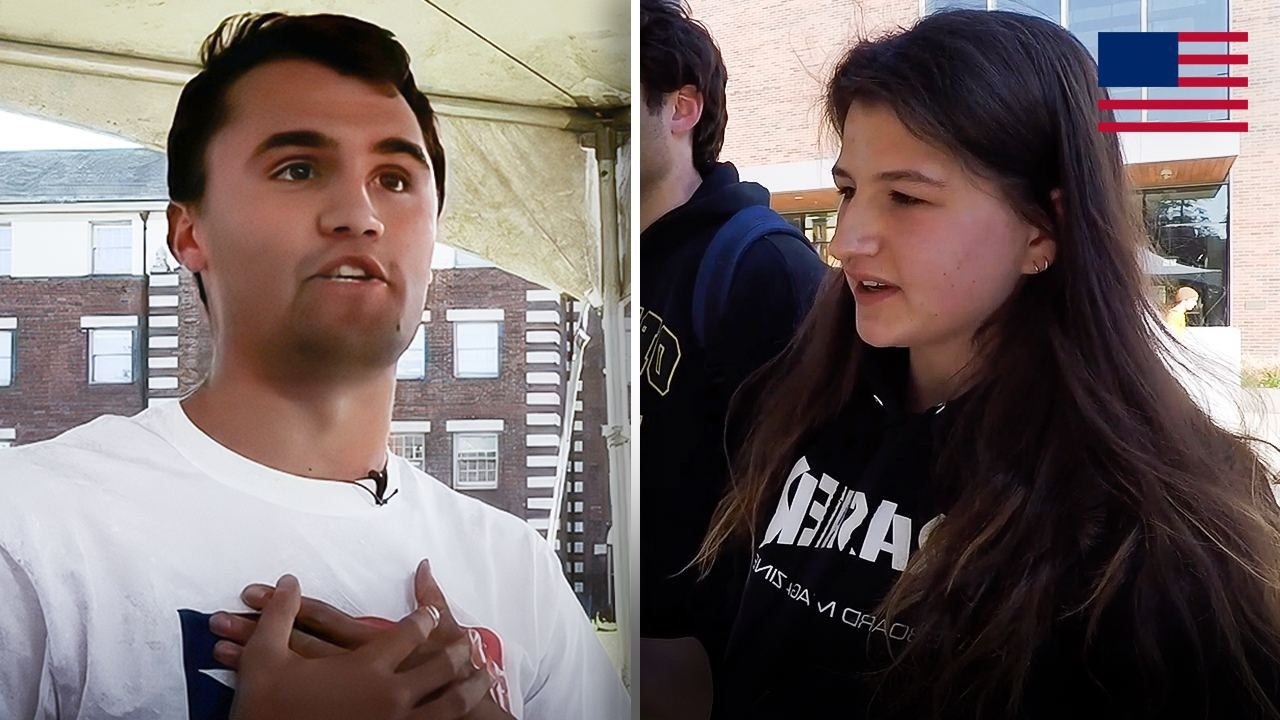
Charlie Kirk Debates College Student on Socialism, Racism, and Economic Systems in America
8:20

Charlie Kirk Confronts Student on White Privilege, Victim Mentality and Systemic Racism Claims
0:42

Charlie Kirk Explains Why White Privilege Is Racist, A Lie, and Divides America Based on Skin Color
7:17


Related Books
Browse Conservative Books









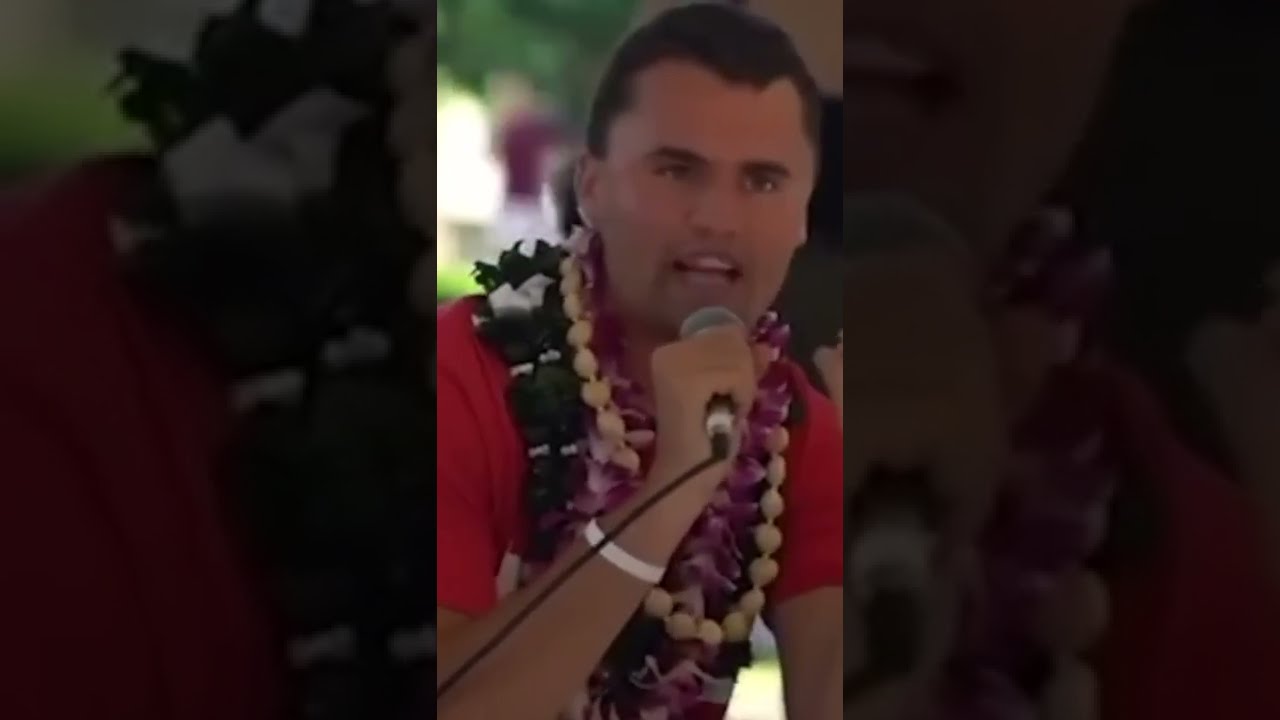
Charlie Kirk Dismantles White Privilege Argument With Data on Asian American Success and Meritocracy
Charlie Kirk confronts students who claim white privilege exists in America by presenting data showing Asian Americans and Indian Americans are the wealthiest racial groups despite facing historical discrimination. Through a heated campus debate, Kirk argues that America operates as a meritocracy where good choices, graduating high school, getting married before having kids, and getting a job, determine success regardless of skin color. When students struggle to provide evidence for their claims about systemic racism, Kirk challenges the narrative being taught in universities and questions why those who faced internment camps and discrimination now outperform other groups economically.
The Challenge to Prove White Privilege
The debate began with a direct challenge. A student claimed white privilege exists in America, calling it racist and a lie to deny it. Charlie Kirk immediately pushed back, demanding proof. When the student insisted Kirk prove his position, Kirk flipped the question: if white privilege exists, why are Asian Americans the richest people in America per race, with Indian Americans coming in second?
The student attempted to separate wealth from power and privilege, but Kirk pressed further: does the student believe in Asian American privilege then? The student hedged, suggesting that certain races have gotten wealthy through trade and the economic system, but maintained that as a white man, he historically has advantages over people of color, pointing to slavery, Reconstruction, and Jim Crow as evidence.
The Asian American Success Story
Kirk acknowledged that America did not treat Asian Americans well in the 1940s and 50s, but asked the critical question: how did they overcome that discrimination? The student suggested they had to work harder than white people, to which Kirk responded that they worked hard and were rewarded for it. This exchange highlighted a central point in Kirk's argument—that America rewards hard work and good choices regardless of race.
Kirk then outlined three big choices that guarantee someone won't live in poverty in America:
- Get married before having kids
- Get a job
- Graduate high school
He pointed out that Asian Americans follow this pattern at the highest rate, which explains their success. Kirk argued that America is a meritocracy where good choices are rewarded regardless of skin color, and that "Good Choice Privilege" exists rather than white privilege.
Police Treatment and Statistical Evidence
When the debate turned to police treatment, with the student claiming white people benefit from better treatment by law enforcement, Kirk countered with data. He cited the Federal Bureau of Investigation and Department of Justice independent study of 300 police forces across America, stating that white people are actually more likely to be shot by police officers than black people are.
Kirk noted that when he presents quantifiable evidence, leftists often walk away from the conversation. He returned to his central question: if white privilege exists, why are Asian Americans and Indian Americans wealthier, have higher incomes, and live in better areas on aggregate than white Americans?
Evidence Versus Testimony
The student struggled to provide concrete evidence, suggesting historical data, logic, or testimony. Kirk rejected testimony as evidence, stating he doesn't care about anyone's "version of truth" or feelings—only facts. He explained that when discussing Asian Americans as the richest people in America, that's mathematics based on income data, not individual testimony about having a tough time.
Kirk acknowledged that discrimination exists against all sorts of people, but when asked if it's worse against black people, he said it depends on what part of the country and what situation. He suggested that Hispanic Americans might face more discrimination in certain parts of the country, though he admitted having no data to support that anecdotal observation.
America as a Land of Opportunity
Kirk emphasized his central thesis: in America, if you make a sequence of good choices irrelevant of skin color, you will be rewarded for those choices. He called America one of the only countries in the world where intergenerational ascension is possible—where your kids can be better off than you are today.
When the student called this a fallacy, Kirk pointed to Asian Americans entering in the 1940s as the poorest group in America and now being the richest group. He noted that the Constitution was not written in Korean, yet Asian Americans have benefited the most from what people call a white predominant society. Similarly, Indian Americans are the second richest per race, and the Constitution wasn't written in Hindi either.
Kirk argued that the evidence contradicts the claim that American society is rigged for white individuals. He pointed out that there are twice as many white people living in poverty today than black people. While acknowledging that the rate of poverty in the black community is higher, he said the aggregate number of poor white people should not be ignored.
When Did America Stop Being Rigged?
The student made a fair point, asking when the rigging stopped, since America clearly used to be rigged based on race. Kirk acknowledged this, saying that throughout the 60s, 70s, and 80s, as America passed the Civil Rights Act and got significantly less racist, things became more equitable. Better decisions got rewarded more during this period.
When asked about the lag effect of 350 years of slavery and 100 years of Jim Crow, Kirk compared this to other groups' suffering. Asian Americans built the railroad system in the late 1800s and early 1900s. Japanese Americans were put in internment camps in the 1940s. Jewish Americans faced an extermination order in Europe in the 1940s. Almost every racial and ethnic group has experienced some form of suffering, Kirk argued.
Kirk refused to defend slavery, calling it one of the great sins of the American story. However, he found it admirable how America got rid of slavery—not slavery itself, but the historical achievement of abolition.
Intergenerational Wealth and Reparations
The student brought up intergenerational inequity, using New Orleans as an example—old mansions built by probable slave owners versus impoverished black neighborhoods. The student suggested that accumulated wealth can compound for some while others lack opportunity.
Kirk acknowledged the point about intergenerational inequity but rejected taxation and reparations as solutions. He asked what the student's solution would be, and when reparations came up, Kirk firmly opposed it. He argued that instead of trying to fix the past, which will never happen, America should create a better future.
Kirk cited South Africa as an example of failed reparations, noting they've tried it for 30 years and are now more racially divided and on the brink of civil war than ever before. When asked if he thinks America is on the brink of civil war, Kirk said he hopes not and doesn't think so, but blamed people on the left for wanting division.
Re-Segregation on Campus
The conversation took a sharp turn when Kirk asked if the student supports black-only dormitories. When the student said yes, Kirk called this re-segregation. The student defended it by saying if black people want that, they should be allowed to because of what they have to face.
Kirk then asked if the student would support white-only dormitories. The student said no, claiming the school is "pretty much white only." Kirk disputed this, noting that looking around, the Oregon campus appeared quite diverse. He challenged the student's support for black-only graduation ceremonies at Harvard, asking why it should matter.
Kirk argued it should matter because it's re-segregation. When the student tried to distinguish this from white people forcing black people into segregation, Kirk asked what the actual difference is between a white person and a black person. The student couldn't answer. Kirk stated there's no difference—they're both human beings, one race, the human race.
Treatment by Police and Misleading Data
The student claimed black people are treated differently by police and said he'd seen it. Kirk countered that the data shows a black person is actually less likely to be shot by a police officer than a white person, citing Federal Bureau of Investigation and Department of Justice independent studies of 300 police departments.
When the student suggested data can be used to lie, Kirk pointed out that police departments are capable of policing their own records. He noted that most inner city police forces are black majority police forces, using Philadelphia as an example—a 44% black city with a 56% black police force.
Post-Racial America and Individual Racism
Kirk declared himself post-racial, stating that race does not matter to him and he cares about all people. He contrasted this with the student, who he said looks at people based on race and wants black-only graduation ceremonies and dormitories. The student clarified he's okay with them, not advocating for them, but Kirk maintained that being okay with re-segregation is problematic.
When asked if he believes there are racial problems in America, Kirk said individually, absolutely—there are racist people. But he argued the problems are not systemic or based on race at a structural level.
Is President Trump Racist?
The student claimed President Trump is racist. Kirk strongly disagreed, calling Trump "one of the least racist people in America." When asked for evidence of Trump's racism, the student mentioned discrimination in housing. Kirk called this completely false.
Kirk countered by asking if a racist president would appoint a black woman as the first Army Battalion Commander ever in United States Army history, confirmed by the United States Senate. He challenged the student with a simple question: at what point does someone stop being a racist in your mind?
The student admitted he hadn't thought about it. Kirk pointed out the danger of being quick to label people racist but not having a standard for when someone stops being racist. When the student finally answered "when they die," Kirk called this sinister.
A Personal Accusation
The exchange ended with the student claiming Kirk is racist. Kirk asked why the student would say that. The student vaguely referenced "the stuff you're saying." Kirk demanded one thing he'd said that was racist. The student refused: "Whatever, I'm not going to play that game with you."
This final exchange encapsulated Kirk's broader point about the left's approach to race—quick to make accusations, unable to provide evidence, and unwilling to engage when challenged with data and logic.
Video Transcript
[00:00] yeah you said there's no such thing as
[00:01] white privilege there is no such thing
[00:03] as white privilege it's racist and a lie
[00:05] prove it prove it prove
[00:07] ites why an Asian Americans are the
[00:12] richest people in America you made a
[00:14] claim asian-americans are the richest
[00:16] people in America per race
[00:17] indian-americans are the second richest
[00:20] okay wealth doesn't mean power so so so
[00:23] do you believe in Asian-American
[00:24] privilege hey wealth doesn't mean power
[00:26] and privilege do you believe in
[00:28] Asian-American privilege believe that
[00:31] there is a that there are a few people
[00:35] of certain races who have gotten very
[00:39] very wealthy based on trade based
[00:45] on well the economic system that we have
[00:49] um I also believe that as a white
[00:53] man I
[00:55] historically have an advantage over
[00:58] people who are of a color that is not my
[01:03] skin this can be this is evident from
[01:07] the from the slave train all the way up
[01:11] to reconstruction and all the way up to
[01:13] gy
[01:14] Pro I I assume based on your facial
[01:17] expression that you have a report I'm
[01:20] going to go ahead and let you make so
[01:21] did we treat asian-americans well in the
[01:23] 1940s and 50s we sure didn't so then how
[01:26] did they overcome that they overcame
[01:29] that through
[01:31] were they privileged having to work
[01:33] harder than white people oh so they work
[01:35] harder and they were rewarded for it 60
[01:37] years
[01:38] later how about people that work hard
[01:40] for 350
[01:44] years slaves yeah slaves what what do
[01:48] you mean do you know anyone that's ever
[01:49] owned a
[01:51] slave do I know anyone that's ever owned
[01:53] a slave yes does has a lot to do with it
[01:57] what does that have to do with like
[01:58] because if you make three if you make
[01:59] three big choices in America you're
[02:00] guaranteed not to live in poverty you
[02:02] know what those three choices are get
[02:04] married get get married before you have
[02:06] kids get a job and graduate high school
[02:08] you know what community does that at the
[02:10] highest rate asian-americans that's why
[02:12] they're successful we live in a
[02:13] meritocracy you make good choices you
[02:15] will be rewarded for those choices
[02:17] irrelevant of your skin color when you
[02:19] say White Privilege exists Good Choice
[02:21] Privilege exists yeah but I think uh
[02:24] white people reap a lot of benefits name
[02:26] one benefit that white people that they
[02:28] they benefit from this
[02:30] despite treatment what police treatment
[02:33] what about police treatment that that
[02:35] that white people are more likely to be
[02:36] shot by a police officer than a black
[02:38] person's likely to be shot by a police
[02:39] officer from the federal Bure of
[02:41] investigation and Department of Justice
[02:43] independent study of 300 independent
[02:44] police forces across
[02:46] the facts must bother leftist because
[02:48] they always walk away as soon as
[02:52] you ton of leftists here who are still
[02:55] standing here well I've already made a
[02:57] couple but I'm happy to oh you made a
[02:59] that's great let's get
[03:02] back that's quantifiable evidence if
[03:04] White Privilege exists why are
[03:06] asian-americans and Indian Americans
[03:08] wealthier have higher incomes live in
[03:11] better areas on aggregate than white
[03:13] Americans do I don't know maybe because
[03:16] White Privilege doesn't exist maybe or
[03:19] maybe maybe it doesn't okay may maybe
[03:21] skin color has nothing to do with it
[03:23] choices have everything to do with it I
[03:25] disagree with that then show me some
[03:27] evidence because I just showed you some
[03:29] evidence it doesn't exist what would you
[03:31] take as evidence what count something
[03:33] that I just said for example that the
[03:35] wealthiest people in America numbers
[03:37] would be nice historical data logic
[03:40] testimony no testimony means nothing I
[03:43] don't care about anyone's version of
[03:45] truth I care about evidence I don't care
[03:47] about feelings I care about facts AR
[03:49] aren't most of these studies based on
[03:52] partially based on testimony though no
[03:54] when you say that asian-americans are
[03:55] the richest people in America that's
[03:57] math that's looking at people's income
[04:00] that's not
[04:01] testimony testimony would be a singular
[04:04] person saying I've had a tough time that
[04:07] would be testimony which that might be
[04:09] true but that doesn't make it true in
[04:10] the aggre I'm sorry is there
[04:13] discrimination there's discrimination
[04:14] against all sorts of people yeah is it
[04:16] worse against black people or is it
[04:17] equal depends what part of the country
[04:18] it depends what situation and when that
[04:20] exists there's laws to put people in
[04:22] prison if you put them all together
[04:24] which race Bas
[04:27] discrimination I would say probably
[04:28] Hispanic Americans in certain parts of
[04:30] the country even more so but but I have
[04:32] no data to support that you ask me some
[04:34] anecdotal question I haven't done that
[04:36] much thinking about it but I'll say this
[04:39] in
[04:40] America if you make a sequence of good
[04:42] choices irrelevant of skin color you
[04:44] will be rewarded for those choices we're
[04:46] one of the only countries in the world
[04:47] where that is possible where you can
[04:49] have intergenerational Ascension where
[04:52] your kids can be better than how you are
[04:54] today that's like kind of a fallacy it's
[04:57] not a fallacy that's why Asian
[05:00] that's why Asian amans entered in the40s
[05:03] as the poorest group in America and
[05:04] they're now the richest group The
[05:06] constition was not written in Korean yet
[05:09] they they have benefited the most from
[05:10] what people call a white predominant
[05:13] Society indian-americans for example
[05:15] from India are the second richest per
[05:18] race was the contitution written in
[05:20] Hindi no that's exactly the point oh
[05:23] okay got you the point is that people
[05:25] say that our society is rigged for white
[05:28] individuals white men the evidence does
[05:31] not suggest that there's twice as many
[05:33] white people living in poverty today
[05:35] than black people now the rate for
[05:36] poverty in the black community is much
[05:38] higher but the aggregate number is some
[05:40] that should not be ignored so that the
[05:42] misconception that our country is rigged
[05:44] Just For People based on a certain skin
[05:46] color has zero evidence yet that is the
[05:49] predominant thing that is being taught
[05:50] in our University why did it stop what
[05:53] do you mean when did that when did be
[05:56] rigged because it clearly used to be
[05:58] rigged you're saying it isn't now that's
[06:01] a fair point I'd say throughout the 60s
[06:03] and 70s and ' 80s as America got
[06:05] significantly less racist as we passed
[06:07] the Civil Rights Act things got more
[06:10] Equitable in the sense where better
[06:12] decisions got rewarded more and you
[06:15] don't think that there could be a lag
[06:16] effect of 350 years of slavery in 100
[06:19] Years of Jim Pro I think those
[06:21] inequities have been more balanced out
[06:24] more so than it's even worth considering
[06:27] that that 350 years of inequity for
[06:28] example asian-americans built the the
[06:31] railroad system in America in the late
[06:33] 19 in the late uh 1800s early 1900s in
[06:36] America we put Japanese Americans in
[06:39] internment camps in the
[06:42] 1940s Jewish Americans had an
[06:44] extermination order against them in
[06:46] Europe in the 1940s the point being is
[06:49] that right so almost every racial ethnic
[06:52] group has had some form of
[06:54] suffering so to point to something that
[06:56] happened a very very long time ago and
[06:58] to attribute the inequities today wasn't
[07:01] that long ago though when was when was
[07:02] slavery abolished slavery was abolished
[07:05] in 1808 the international slave trade
[07:09] was uh was uh was gotten rid of but then
[07:12] we actually resorted to Chad slavery
[07:16] which is where we bred them uh like
[07:18] cattle you're not going to hear me
[07:19] defend slavery for a second I
[07:22] mean one of great sins of the americ
[07:24] it's one of the great sins of the
[07:26] American story but you know what's also
[07:27] admirable about it how we got rid of
[07:30] slavery admirable about slavery no no
[07:32] what's admirable about our history not
[07:34] about sler okay thank you but we still
[07:36] have dealt with like repercussions what
[07:39] what repercussions would that me the
[07:40] lack of the ability for certain people
[07:42] people well such as who I don't know
[07:45] like I was down in New Orleans right and
[07:46] I see all these mansions and it's like
[07:48] those people their old Mansions they
[07:50] made their money they're probably slave
[07:51] owners then you go into the black
[07:53] neighborhood and SL they might have been
[07:54] slave owners in
[07:56] 1865 accumulated wealth that can
[07:58] compound
[07:59] versus people that don't have the
[08:01] opportunity okay so you're you're making
[08:03] a fair point that there might be
[08:05] intergen intergenerational inequity how
[08:07] do you go about that well some people on
[08:09] the left would say you tax it you take
[08:12] away from what people used to have I
[08:14] totally and completely disagree with
[08:15] that what do you think then what is your
[08:17] case do reparations then there's no
[08:19] reparations I believe an opportunity
[08:21] instead of trying to fix the past which
[08:23] will never happen which is a horrible
[08:25] idea you create a better future it'll
[08:27] never happen no cuz you know why any
[08:29] country that's ever tried reparations
[08:31] has failed miserably South Africa for
[08:32] example they've tried reparations the
[08:34] last 30 years they're more racially
[08:36] divided on the brink of Civil War than
[08:37] they ever have been you think we're on
[08:39] the brink of the Civil War I hope not
[08:40] you think so no I said I hope not but I
[08:42] asked if you think so no I don't think
[08:44] we are but it's people on the left that
[08:46] want us to be more divided than not no I
[08:48] think it's like you you're here trying
[08:49] to divide people hold on a second do you
[08:51] support black only
[08:53] dormitories sure you do okay that's re
[08:56] segregation you realize that no I think
[08:58] if black people want to do that we
[08:59] should allow them to because they have
[09:01] to face well then would you support
[09:02] white only dormitor no why cuz it's a
[09:05] pretty much the school is white only
[09:07] pretty much every is wide open I don't
[09:10] know the demographic makeup of Oregon
[09:12] but I would looking around I'd say it's
[09:13] a more diverse campus than just being a
[09:16] white only campus black people want yeah
[09:19] so you believe in black only graduation
[09:21] ceremonies at Harvard if they want that
[09:23] sure why do I care why does it bug me
[09:26] well it should bug you that re
[09:27] segregating
[09:31] the difference white people say black
[09:33] people have to be what's the difference
[09:35] a skin color what's the difference
[09:36] between a white person and a black
[09:37] person tell you tell me what's the
[09:38] difference between a white person and a
[09:39] black person I don't know there's no
[09:41] difference they're both human beings
[09:42] there One race human race differently
[09:46] how are they treated differently give me
[09:47] one piece of evidence what can a black
[09:48] person not do in America that I can do
[09:50] they get treated differently by the
[09:51] police and I've seen it really yeah even
[09:54] though the data shows that a black
[09:56] person data can be used to lie
[09:59] matter police departments are actually
[10:01] capable of policing their own records so
[10:04] the the ability even though most of the
[10:06] inner city police forces are black
[10:08] majority police forces are they such as
[10:11] Philadelphia Philadelphia is a 44% black
[10:13] city with a 56% black police force bu
[10:16] you no it actually gives me happiness
[10:20] that yeah cuz I I I care about all
[10:23] people and I don't look at people on
[10:24] based on race like you so you're
[10:26] postracial absolutely cuz it does not
[10:29] you're the one that wants black only
[10:31] graduation ceremonies and black only
[10:33] dormitories what you're okay with them
[10:35] I'm not okay with that yeah we
[10:37] segregated America we we because that
[10:39] argument works for you and it's not
[10:41] desegregated there's still a lot of
[10:43] problems and like to say that people
[10:45] want to have but the problems are not
[10:47] based on race yeah they are of racial
[10:51] problems in America you have yet to give
[10:52] me any evidence or data or one piece you
[10:55] believe that there are any racial
[10:56] problems individually absolutely are
[10:58] there indiv usually committed people
[11:00] that are racist 100% do you believe that
[11:02] there are Sy president Trump is one of
[11:04] the least racist people in America do
[11:06] you
[11:07] believe no give me one give me one
[11:09] evidence that he's racist how about he
[11:11] got caught discriminating against giving
[11:14] out uh complet total false not true
[11:16] whatsoever you not wait no would a
[11:20] racist president such as president
[11:21] Donald Trump put a black woman as the
[11:24] first Army Sergeant ever in United
[11:26] States Army I'm racist have a black the
[11:29] first Army Sergeant the first Army
[11:32] Sergeant ever in the history of of the
[11:34] US Army that that's not true the first
[11:37] woman Battalion Commander you can look
[11:38] it up confirmed by the United States
[11:40] Senate the first black woman confirmed
[11:43] by the United States Senate in a
[11:44] position of the United States Army ever
[11:46] here's a very simple question for you at
[11:48] what point does someone stop being a
[11:49] racist in your mind I haven't thought
[11:51] about it you haven't thought about yet
[11:52] you're quick delayable but you're not
[11:53] quick to retract or have a line in your
[11:55] head that's pretty dangerous isn't it
[11:56] when they die when they die that's
[11:59] pretty Sinister do you think I'm a
[12:01] racist yeah are you a racist hold on a
[12:03] second he thinks I'm a racist why would
[12:05] you say I'm a racist just the stuff
[12:07] you're saying name one thing up said
[12:09] that's ever racist whatever I'm not
[12:10] going to play that game with you





Comments
Be the first to comment on this video.