2,422 videos 1,389,747,653 views US Joined Aug 30, 2018
Charlie Kirk is the Founder and President of Turning Point USA, the largest and fastest growing conservative youth activist organization in the country with over 250,000 student members, over 150 full-time staff, and a presence on over 2,000 high school and college campuses nationwide. Charlie is also the Chairman of Students for Trump, which aims to activate one million new college voters on campuses in battleground states in the lead up to the 2020 presidential election. His social media reaches over 100 million people per month and according to Axios, he is one of the "top 10 most engaged" Twitter handles in the world. He is also the host of “The Charlie Kirk Show,” which regularly ranks among the top news shows on Apple podcast charts.
Charlie Kirk Explains What Tariffs Really Are and Why Donald Trump Started a Trade War
Charlie Kirk breaks down the basics of tariffs and explains why Donald Trump is forcing a three-dimensional trade war despite potential economic turbulence. Kirk argues that decades of unfettered free trade transformed America from a manufacturing powerhouse into a mere trading colony, enriching the 1% while decimating the middle class. He traces the roots of the MAGA movement to the deindustrialization of American cities like Bethlehem, Pennsylvania, where factories closed and communities collapsed. Kirk contends that Trump is fixing a broken system that prioritized corporate profits over American workers, even if it means short-term market volatility. This is about rebuilding America's manufacturing base and restoring the social compact that was shattered when the ruling class shipped jobs overseas.
What exactly is a tariff? We are hearing this word thrown around a lot. Donald Trump is starting a trade war, is what we are being told. We are hearing that it is making the economy go into a recession, but what exactly is a tariff? A tariff is a duty. It's a tax, in some sense, imposed by a government on importing or exporting of goods. It is used as a form of negotiation many times, but it's a way to try and bring both parties to the table.
We have tried unfettered free trade over the last 30 or 40 years. On paper, free trade with every country looks and sounds good. It looks and sounds good when we are able to say there's no duties, there's no tariffs, there's no taxes. However, America has been largely too focused on the importation of goods into America not being tariffed, and far too often we don't even ask the question: what about the products we make in our country that we want to export to other countries?
The Deal That Destroyed America's Middle Class
The game that was constituted, the deal that was structured, was the following: we are going to become a purchaser of other country's goods and we will become a service economy. Why do we need to go make stuff with our hands? We're better than that. We're just going to go close down all the factories in Allentown. We're going to go close down the factories in Marshon, Iowa. We don't need to be making stuff. We're more elevated than that. We will have an information economy. We all know how that works.
Those very decisions that were made by the American corporate ruling class led to the rise and the ascension of Donald Trump. It led to the explosion of the MAGA movement. Now we are in a three-dimensional trade war right now. President Trump is forcing the issue. President Trump very well could have avoided this. The American people voted for tariffs. They voted for stricter trade measures, and he very well could have avoided this.
Understand that the menace of the Chinese Communist Party was made possible because of our overindulgence in internationalist trade policies. Americans like the idea of living in a country that makes things again. Not only do we want to make America great again, we want to make America make things again. You are not a country if you import everything made overseas. You are nothing more than a trading colony. You're not a country.
Trump Confronts the Irish Prime Minister
President Trump had the Irish Prime Minister—the Taoiseach, which is the actual term for the Prime Minister of Ireland—in the Oval Office. President Trump says that he will impose additional tariffs on the EU to respond to their retaliatory tariffs. The reporter then responds and says, well, what will be the retaliation? Listen carefully. This is President Trump in the Oval Office going back and forth with the reporter, saying I don't blame Ireland for what they have done. I don't blame the Irish government for putting duties on our country.
The exchange went like this: The reporter asked if Trump would put more tariffs on the EU and if he would respond to their retaliation. "Of course I'm going to respond," Trump said. "You will retaliate?" the reporter asked. "The problem is our country didn't respond. Look, the EU was set up in order to take advantage of the United States, including Ireland. Is Ireland taking advantage of the US? Of course they are. I can't—you know, I have great respect for Ireland for what they did and they should have done just what they did, but the United States shouldn't have let it happen. We had stupid leaders. We had leaders that didn't have a clue, or let's say they weren't business people, but they didn't have a clue what was happening."
The Asymmetric Trade Reality
Other countries can tariff the importation of American goods, but we don't tariff the importation of their goods. Now on the surface, we thought we were getting the better end of the deal. We said, oh my goodness, we get all of these cheap products. We get Mercedes-Benzes, we get Toyotas, we get Samsungs. But over time, you can only go to the well so many times. You can only go to the cheap money spigot so often, and the more that you start to get high on the unlimited flow of cheap money, the bill comes due. And the bill has come due, everybody, with the Chinese Communist Party and our inability to make critical manufacturing.
Peter Navarro on Tariffs and Inflation
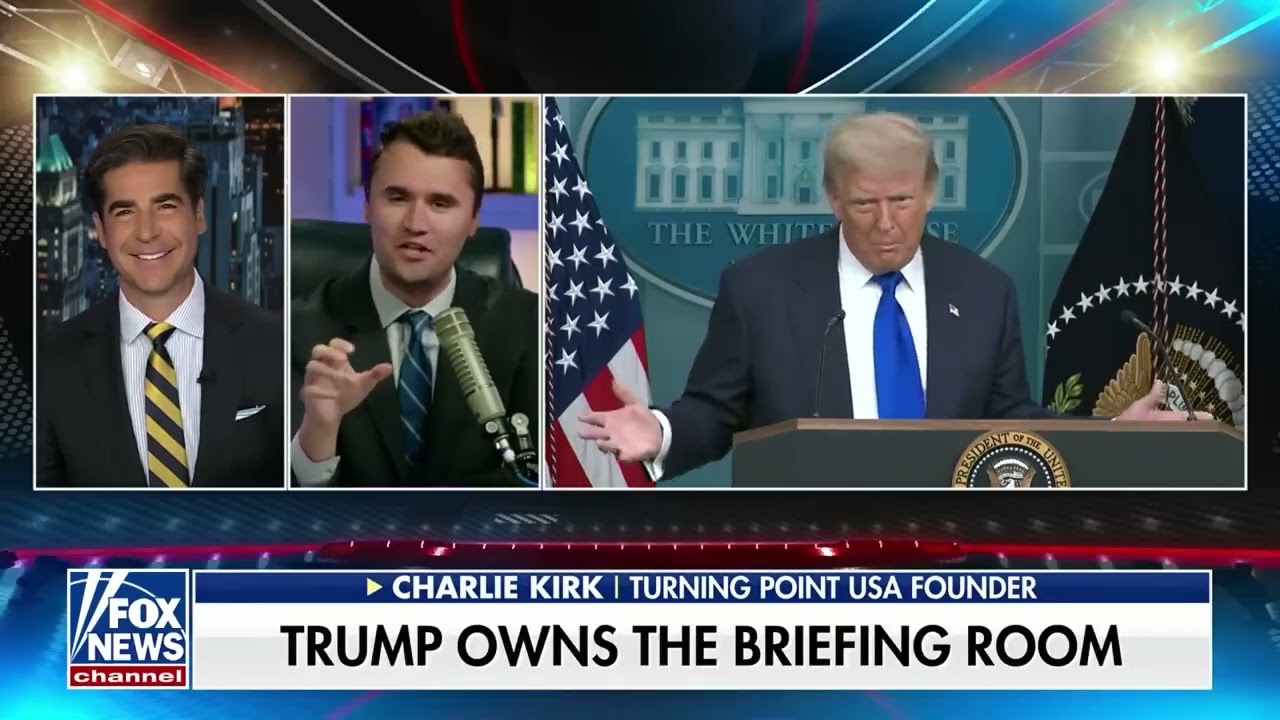
Peter Navarro had an amazing appearance on Jesse Watters, and I want to break this down when he started talking about the details of the different tariffs that are put on American goods. Navarro explained: "There was a reason, Jesse, a reason why tariffs didn't cause a whiff of inflation during the first term. We did historic tariffs on China. We had steel and aluminum tariffs. We had solar, we had dishwashers, we had these beautiful tariffs bringing in billions of dollars. We had price stability and growth. And I buried the lead, Jesse: we are going to get the best tax cut in history, paid for in large part by tariff revenues from around the world, taking from the people who have been cheating us around the world with higher tariffs and higher non-tariff barriers."
"It's a beautiful, bullish scenario. We're bridging from Bidenomics to the bullishness of Trumponomics, and what you see in the markets could be best described as a little bit of an expulsion. I don't want to use too graphic language, but you know, if you get the stomach flu with the norovirus, sometimes your body needs to expel some of the bad. This is going to be a little bit of a transition phase. I don't like to use the word transitory too much because the other administration butchered it."
Trump's Choice: Markets or the Middle Class
Look, President Trump could easily not do this. Understand the decision in front of President Trump. President Trump very easily could have said no tariffs, keep the market untouched, let the quote-unquote good times roll, and the American middle class suffers. You do not have a nation. You do not have a country. You do not have a social contract or social compact if you do not have a robust middle class. A middle class is one that owns property, that pays your taxes, that makes your goods and services. It is so tempting to be nothing but a service economy, but that has been the 1% that has done so well over the last 40 to 50 years.
The Three-Dimensional War on Economic Malaise
Peter Navarro continues: "We got the 3D, three-dimensional war on inflation, right? It's drill, baby, drill. Think about just going from $80 barrel oil down to $50. You almost solve the whole thing right there. But then you got deregulation, and you got the DOGE effect, which is basically taking out waste, fraud, and abuse, reducing our government debt. What does that do? That reduces, Jesse, mortgage rates and interest rates, which helps stimulate the home market and allows consumers not to have that overhang of debt."
Understand this: what President Trump is doing—write this down, text your friends, commit it to memory—what President Trump is doing is completely reorganizing the philosophical, the political, the geopolitical, and the moral posture of the federal government economically. It's a big deal. It's going to take a little bit of a process, but coming out of it will become the strongest, most robust, long-lasting American economy in history.
The Birth of the MAGA Movement: Bethlehem, Pennsylvania
There was an amazing clip that the Jesse Watters team pulled out, and I said I got to play this on the show. If you want to explain the birth, the foundation, the catalyst of the MAGA movement, this clip summarizes it better than almost any. This sort of behavior is the genesis of the populist movement. To put this in perspective, this clip happened before I was born. This is from November of 1992. I was born in October of 1993. Before I was even born, this is a reporter that went to Bethlehem, Pennsylvania, and was summarizing what we were just describing.
Basically, here's what happened: a bunch of smart guys like Mitt Romney and the consultant class, the ruling class, they all got their practitioner master's degrees from Harvard, and what they were told is the most important thing is maximizing profit. They were told the most important thing was maximizing the dollar. You see, but that's not the only political question. That's the only economic question. But the political question: you must balance human happiness, community, family, crime, displacement. But if you only ask the economic maximization question, especially those that have no interest in the well-being of the body politic of the nation or in the citizenry, you get decisions like this.
The Harvard Business School Formula for Destruction
So you go to a place like Harvard and you get a master's degree from the Harvard Business School, and the Harvard Business School will tell you it makes sense to shut down the mill because they're unionized, it takes too long, they're not as efficient. So shut down the mill in Bethlehem, Pennsylvania, because, let's just say, a thing of steel—let's just use round numbers—costs you a hundred bucks, and in China you can get it for 60 bucks. And yes, you got to ship it, but there'll be no tariff. That's the key, everybody. That's the kicker.
If the American government would have said, "Actually, we're going to put a 10% tariff," the consultant class like Mitt Romney and all the Bain Capital cabal, they never would have been able to do this. This example right here happened tens of thousands of times, city by city, neighborhood by neighborhood, block by block. And this eventually led to, first, Ross Perot. Ross Perot was the first one to run under this energy. He was the first one to recognize this.
The Human Cost of Deindustrialization
This happened tens of thousands of times of plants closing, and there were millions of people who lost their jobs. So I want you to multiply what you were about to see. An incredibly powerful piece of tape—credit to the Jesse Watters production team for finding it. Commit this one to memory. This here is what led us to this moment, and what President Trump is doing is simply fixing what happened before I was even born. And now President Trump is getting blamed by the media. He's fixing what happened in this tape.
The human tragedy's unfathomable. It was way too quick of a deindustrialization, and drugs came in, and opioids came in, and crime came in, unemployment came in, and misery came in, and suicide came in. The 1992 news report stated: "For ages, hot molten steel has been the lifeblood of Johnstown, vigorously pumping dollars and jobs through the city's veins. But now the pulse of the community is in cardiac arrest. Bethlehem officials aren't making any more comments than what's contained in this press release. They're sorry, but it's simply not cost-effective to run the mill any longer."
"It does hurt, and there's a dramatic spin-off is going to come from that, and there's going to be a lot of problems that have to be solved," one official said. In part, Bethlehem cites fierce foreign competition and the national economy for their demise. For some Bethlehem employees, it's hard to look past the shocking news. One worker said: "Don't rely on a corporation that don't want you. In a sense, they don't care. You know, you're only a number."
From Factory Worker to MAGA Supporter
You know who that guy is right now, 30 years later? That guy is the guy on the side of the street with the MAGA flag that sits at Bethlehem, Pennsylvania, for three hours a day. That guy that just showed on the piece of tape there, that's the guy that waits six hours to go see President Trump speak at a rally. Now, I'm of course exaggerating. I don't know who this man is. I'm saying the archetype of who this person is. That guy, whomever—I don't even know if he's still living—but he's a younger person in this, or he might have died of heart disease and a broken heart, divorced and poor, because we decided to ship the factory overseas.
The Broken Social Compact
We broke the social compact. We did that. And understand, just remember this: it is the experts who did this. It is the same type of experts that told us six feet to slow the spread, the same types of experts that came in, all in the name of an abstraction called free trade. Free trade, free trade on certain things, of course, if we can have reciprocal free trade. But it was a neoliberal abstraction, and what did it get us? It got us communities that look like Gaza and a lot of people suffering, and also the rise of the MAGA movement.