
Up Next

Security Failures at Charlie Kirk's UVU Event Exposed by Investigators and Former Security Director
2:23

Shooting at Utah Valley University During Charlie Kirk Event Sparks Chaos and Evacuation
4:32
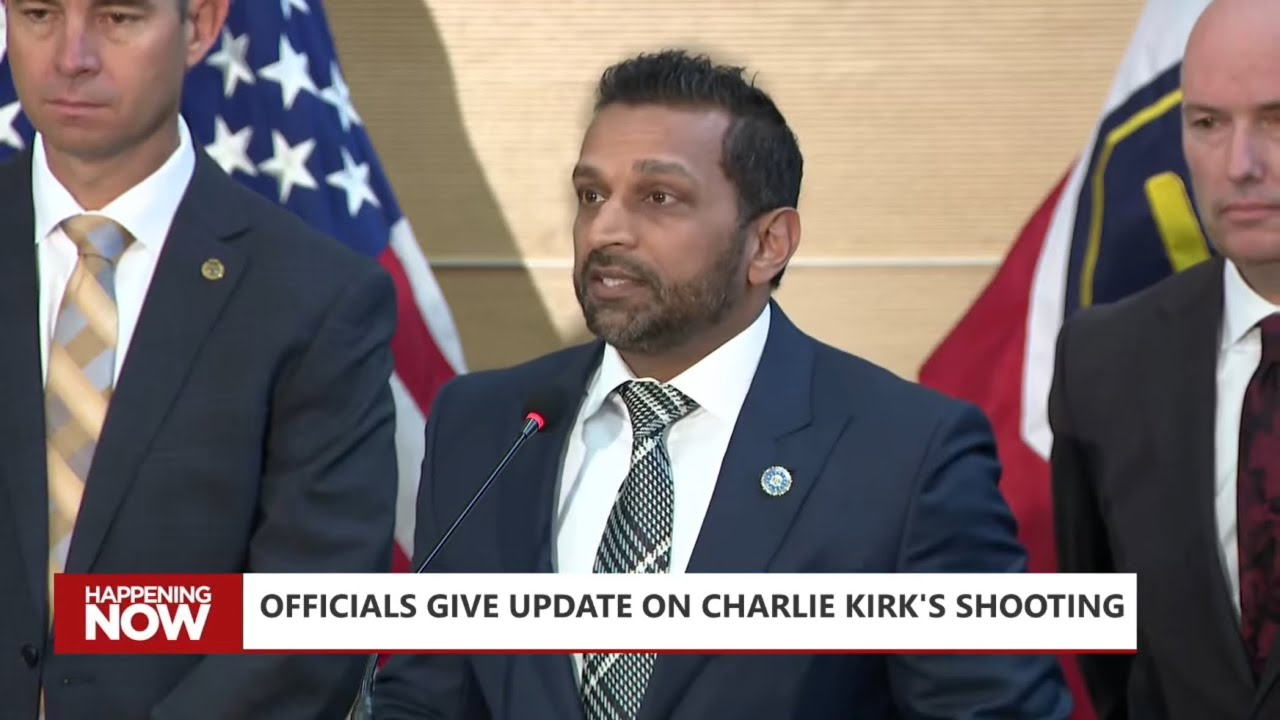
FBI Director Kash Patel and Utah Governor Spencer Cox Announce Arrest in Charlie Kirk Assassination Investigation
32:41
Related Books
Browse Conservative Books



Charlie Kirk Felt No Pain and Never Knew He Was Shot: The Medical Evidence Explained
On September 10th at Utah Valley University in Orem, Utah, Charlie Kirk was shot while hosting one of his signature question-and-answer events with college students. This video combines a detailed forensic medical analysis of the shooting with a tribute to Kirk's legacy of engaging liberal college campuses to model peaceful disagreement. The central medical question: did Kirk know what happened to him, and did he experience any pain? The answer, based on forensic analysis and a frame-by-frame review of the footage, is no on both counts. The .30-06 round struck the left side of his neck near the C4-C5 vertebrae, catastrophically rupturing both his carotid artery and jugular vein. Based on footage analyzed with a digital timer, Kirk was conscious for no more than four-tenths of a second after impact, far too brief for the brain to register the event or process pain. His arms moving toward his chest were not signs of awareness but an involuntary defensive reflex.
September 10th: The Last Rally at Utah Valley University
Charlie Kirk had spent years taking his open question-and-answer format onto college campuses across America. On September 10th, he set up his trademark tent at Utah Valley University in Orem, Utah for the first rally of the new school year. Thousands of students showed up — eager to challenge him, support him, or simply hear what the debate looked like in real time. Kirk and his Turning Point USA team had filmed an excited TikTok beforehand, kicking off another season. His next stop was already on the calendar: Colorado State University on September 18th.
During the event, while the second student questioner was at the microphone asking Kirk about mass shootings in America, a single shot was fired. It struck Charlie Kirk on the left side of his neck.
A Champion of Free Speech on College Campuses
Before addressing the medical details, the narrator takes time to frame what was lost. Kirk's presence on college campuses — historically hostile environments for openly conservative voices — was deliberate and consequential. He was not there to shout. He was there to model the kind of civil disagreement he believed the country had largely abandoned.
He invited students who disagreed with him to go to the front of the line. Socialists, critics, queer students, and openly hostile protesters all got their turn at an open microphone for hours at a time. When the conversation turned personal, Kirk called for calm. When someone got angry, he responded with logic.
"When people stop talking, that's when you get violence," Kirk said at one event. "That's when civil war happens, because you start to think the other side is so evil and they lose their humanity."
Conservative students on many campuses faced real dangers — cars keyed, tires slashed, dorm rooms trashed, physical assaults, professors grading them down for their political views. Kirk showed up anyway, on camera, demonstrating that speaking freely was possible even in openly hostile spaces. By doing so, he helped make those environments less dangerous for the students who came after him.
The Wound: What the Bullet Did
The .30-06 round struck Kirk on the left side of his neck, near the C4-C5 vertebrae. It catastrophically ruptured his left carotid artery and left jugular vein, causing sudden and massive blood loss. The entrance wound measured approximately the size of a dime but appeared significantly larger in footage due to immediate surrounding bleeding. Exit wounds from high-powered rifle rounds typically far exceed the entrance wound in size, as the bullet's force creates a temporary cavity as it exits, pushing mass outward.
The trajectory — coming from Kirk's left and moving downward to his right — placed the gunman in a direct line of sight from the podium position. The wound location at C4-C5 is medically significant. This is where the nerves controlling the diaphragm originate, and damage here can result in instant breathing paralysis — a fact recalled in medicine with the mnemonic: C3-4-5 keeps the diaphragm alive.
Did Charlie Know He Was Shot? The Four-Tenths of a Second Window
This is the central question the narrator sets out to answer. Based on frame-by-frame analysis of the footage with a digital timer, Kirk was conscious for no more than four-tenths of a second after impact. For the brain to register even a brief flash of awareness or shock after an injury, it requires at least one to two seconds of continuous function. Four-tenths of a second falls far short of that threshold.
The cause of unconsciousness was not spinal cord damage — it was catastrophic blood loss. The carotid artery pumps oxygen-rich blood up to the brain with each heartbeat. The jugular vein carries oxygenated blood back down from the brain. When both are simultaneously and catastrophically ruptured, the brain is drained almost instantly. Kirk's elevated heart rate — from the energy of the crowd just minutes before the shot — would have accelerated that process further.
Neurologically, the experience was an abrupt blackout. No panic, no dread, no realization that anything was wrong. Psychologically, for Charlie Kirk, it was as if it never happened.
Did He Feel Any Pain?
Pain signals from a wound to the neck reach the brain in approximately 100 milliseconds given the proximity to the brain and spinal cord. However, Kirk's loss of consciousness arrived faster than that window. His brain never had the opportunity to convert the raw signal into the conscious perception of pain.
The narrator is unambiguous on this point: Charlie Kirk did not know he had been shot. He was neurologically incapable of registering that anything catastrophic had occurred. The experience, from his perspective, was instantaneous unconsciousness — no pain, no realization, no final moment of terror.
What His Arms Moving Toward His Chest Really Meant
Many watching the footage speculated that Kirk's arms bending upward toward his chest at the moment of impact indicated awareness or pain. Some proposed the movement matched a forensic phenomenon called decorticate posturing — where damage to the cerebral hemispheres causes the arms to flex inward while brain stem reflex pathways extend the legs. The narrator addresses this directly: decorticate posturing requires damage to the higher brain areas, which did not occur here. Immediate blood loss does not produce decorticate posturing.
The arm movement was an involuntary defensive reflex. When something physically threatens a person, the arms instinctively rise to protect the head, neck, and core without any conscious input. This is reflex, not reaction. It carries no awareness. It registers no pain. It was the body responding to impact, not the mind reacting to danger.
Remembered for Courage and Faith
Charlie Kirk was 31 years old. He left behind a wife and two young children. His next scheduled campus appearance — Colorado State University on September 18th — never happened.
The narrator shares a comment found online that captured something many were feeling: "I'm sorry humanity let you down. No matter what you thought of his politics, he showed up to speak and listened to everyone."
When Kirk was once asked how he wanted to be remembered, his answer was simple: "I want to be remembered for courage, for my faith. That would be the most important thing."
He modeled exactly that — arriving in places where he was not wanted, engaging with people who disagreed with him, and trusting that honest conversation was worth the risk. In the end, that trust cost him everything. His passing, at least, was instantaneous. He experienced no pain, and he never knew.
Video Transcript
[00:00] Did Charlie Kirk know what happened to
[00:01] him and did he experience any pain?
[00:04] We're not going to show parts of the
[00:05] video of what happened to him and I
[00:07] don't recommend that you watch it
[00:08] because it's quite graphic.
[00:10] >> Do not go looking for the video of
[00:12] Charlie Kirk. Please, for the love of
[00:13] God, do not go look for that video.
[00:15] >> But I will be generally discussing what
[00:16] happened to better answer the question
[00:18] of whether Charlie knew what happened to
[00:20] him and if he experienced any pain.
[00:22] First, my thoughts and prayers are with
[00:24] Charlie's family and friends. It was
[00:26] September 10th in Oram, Utah. Charlie
[00:28] Kirk was doing one of his famous
[00:29] question and answer rallies at Utah
[00:31] Valley University's campus. The school
[00:33] seems to lean moderate conservative.
[00:35] Charlie had his famous tent set up like
[00:37] he's done countless times at other
[00:39] colleges. How we doing Washington State?
[00:41] How we doing Michigan State? All right,
[00:42] you guys know how it works. If you want
[00:44] to ask a question, we have a line
[00:45] forming here. If you disagree, you can
[00:46] go to the front of the line.
[00:47] >> And there were thousands of people eager
[00:49] to hear Charlie Kirk answer questions
[00:51] from the audience.
[00:52] >> That's a lot of people coming up.
[00:56] [Applause]
[00:59] We're going to be here for a couple
[01:01] hours.
[01:04] >> Hey, comfortable. I'm going to the
[01:06] Charlie Kirk event. The parking lot
[01:09] across the street is slammed. This place
[01:12] is going to be packed. And I knew it
[01:14] would be. I don't know if I'm going to
[01:16] ask a question or anything yet. I got a
[01:17] couple written down. He's been doing
[01:19] this for years, going to different
[01:20] colleges across the country, filming it,
[01:22] putting it on social media, which if you
[01:24] have been at all on social media, I'm
[01:26] sure you have seen.
[01:28] >> Who Who are you?
[01:29] >> Well, enough important enough for you to
[01:31] come up to a microphone. You said,
[01:32] "Well, I'm worried about some laws
[01:34] Congress should pass." I passed. What
[01:35] laws are you talking about?
[01:38] >> Can you be specific?
[01:40] >> I'm sorry. I'm very nervous. And this
[01:42] event at Utah Valley University was his
[01:44] first of the new school year to verbally
[01:47] debate mostly young college students who
[01:49] strongly agree or disagree with him and
[01:52] everything in between. Charlie's Turning
[01:53] Point USA team even did this little Tik
[01:56] Tok skit before the event.
[01:58] >> Okay, guys, we're back. Did you miss us?
[02:01] Cuz we missed you.
[02:03] >> They were so excited that they were
[02:04] starting off another season of Charlie
[02:06] Kirk talking to students at different
[02:08] colleges.
[02:10] Thank you. Bye, guys.
[02:11] >> His next stop was actually Colorado
[02:13] State University on September 18th and I
[02:16] was expecting to go because I live just
[02:18] an hour and a half south of CSU. This is
[02:21] more than an assassination on a
[02:23] political figure. It's an assassination
[02:25] on free speech. No matter what you
[02:27] believe, whether you agree with him 100%
[02:29] of the time, disagree, or whatever, he
[02:32] was just peacefully talking.
[02:33] >> This is the Old West, right? The Holy
[02:35] Spirit brought me here to challenge you
[02:37] to a gentleman's fist fight right here
[02:39] in front of this whole crowd. Now look,
[02:42] listen, listen, listen.
[02:43] >> No, he just wanted to hear varying
[02:45] opinions, debate topics, and give his
[02:47] opinion.
[02:48] >> Young men need a masculine figure around
[02:51] so that they could teach them how to use
[02:53] their violent impulses. A young woman
[02:55] needs a father around so she could see
[02:57] hopefully the type of man one day that
[02:59] she will want to marry.
[03:00] >> So, you think that poverty equals crime?
[03:03] I think that it's um highly correlated
[03:05] and there's a lot of
[03:06] >> This is where we disagree. We need more
[03:08] fathers, not less.
[03:09] >> Yeah, a lot of people disagreed with
[03:11] him, especially on college campuses. But
[03:13] that's what was so interesting.
[03:14] >> Close to being a fascist. Let's go
[03:16] through this. How am I a fascist?
[03:20] >> Dude, like you can you name one thing I
[03:22] believe that's fascist.
[03:23] >> Um you believe that like you
[03:27] >> I'm such a bad fascist. I let the people
[03:29] who disagree open mic to talk to me for
[03:31] 2 hours uninterrupted. Okay, I'm an
[03:33] awful fascist.
[03:34] >> And he really embraced teaching the
[03:35] youth who disagreed with him that it's
[03:37] okay to disagree. Just calmly talk and
[03:40] disagreement over politics should never
[03:42] turn violent.
[03:45] >> ICE,
[03:46] >> what is that?
[03:47] >> Immigration, Customs, Enforcement.
[03:50] >> Hey, don't don't touch it. Have a nice
[03:52] day.
[03:54] >> Let's have a conversation.
[03:56] >> She was wrong. I wish we could be here
[03:58] without having my hat thrown off and
[03:59] stuff, but what what we as a culture
[04:02] have to get back to is being able to
[04:03] have reasonable disagreement where
[04:05] violence is not an option.
[04:06] >> Also, it was interesting that he was
[04:08] going on college campuses as a
[04:10] conservative. You know why? Yeah.
[04:11] Because colleges have historically been
[04:13] known to be quite liberal.
[04:15] >> Campuses are islands of totalitarianism.
[04:17] That's my point is that campuses because
[04:19] they're so homogeneously to the left.
[04:21] >> And he garnered a lot of attention for
[04:23] doing that.
[04:23] >> Come up to the mic and call me a racist
[04:25] in my face. Are you an intellectual
[04:26] coward and want to shout it from 30 ft
[04:27] away? I got to say your protesters are
[04:29] kind of weak here, guys.
[04:30] >> And some colleges have been known to be
[04:32] socially, academically, and even
[04:33] physically dangerous to conservatives on
[04:36] campus.
[04:36] >> It was the most awful thing I've ever
[04:38] seen in my life.
[04:40] And the worst part of it all was the
[04:43] liberals who were there were cheering.
[04:46] >> I've spent a lot of time at many
[04:48] universities and I've seen how dangerous
[04:50] it can be for conservatives on some
[04:53] college campuses. Why are you
[04:54] >> When you stop having a human connection
[04:56] with someone you disagree with, it
[04:58] becomes a lot easier to want to commit
[05:00] violence against that group.
[05:01] >> You think that's not emotional?
[05:02] >> Isn't why we had the First Amendment to
[05:04] try to push our boundaries and to hear
[05:06] things that might make you mildly
[05:08] uncomfortable?
[05:09] >> This doesn't make me mildly
[05:10] uncomfortable.
[05:10] >> Does it make you very uncomfortable?
[05:11] >> It makes me angry.
[05:12] >> Like a lot of people, that's what
[05:13] initially drew my attention to Charlie
[05:15] Kirk. I remember thinking, "Oh no, an
[05:18] openly conservative on a college campus.
[05:21] He's going to get killed." And at the
[05:22] time when I was thinking that, I didn't
[05:24] mean that as hyperbole.
[05:25] >> People like me are facing violence,
[05:28] assault, the left.
[05:31] >> Yes, the campus Antifa. I've been
[05:33] stormed out of restaurants. I've been
[05:34] assaulted publicly, multiple death
[05:36] threats. When people stop talking,
[05:38] that's when you get violence. That's
[05:39] when civil war happens because you start
[05:41] to think the other side is so evil and
[05:42] they lose their humanity.
[05:44] >> What do you think would happen to you if
[05:45] they found out you were a conservative
[05:47] at some colleges? Yes. On some college
[05:49] campuses, you would have no friends.
[05:51] Your car will be keyed, tires slashed,
[05:53] dorm room trashed, get jumped walking
[05:55] home from the library late at night.
[05:57] >> Jay got punched in the face by a
[05:59] professor here.
[06:00] >> He saw my hat. He ripped the hat off my
[06:02] head. Then he grabbed my head and also
[06:04] slammed it on the road pavement.
[06:05] >> And some professors may even try to
[06:07] flunk you out of the school.
[06:09] >> How many of you kids here on campus
[06:10] raise your hand? Do you feel as if
[06:12] you're graded down if you come out as a
[06:14] Trump supporter, a conservative? That is
[06:16] the cultural left that will use power to
[06:19] punish a student with their grades
[06:21] because they have different views.
[06:23] That's fascism. That is definitional
[06:25] fascism.
[06:26] >> Charlie Kirk actually helped to make
[06:28] college campuses safer for conservative
[06:30] students by showing up anyway, speaking
[06:32] openly, and proving that disagreement is
[06:34] healthy. He modeled how to debate firmly
[06:37] but peacefully, which gave young
[06:39] conservatives the courage to also speak
[06:41] their views without fear. I thought it
[06:43] was like a like an improv comedy thing.
[06:45] It looked so ridiculous that I didn't
[06:47] even think it was real.
[06:49] >> Um
[06:50] >> well, no, you could see look how popular
[06:51] Trump is on your campus. How does that
[06:53] make you feel?
[06:55] >> His presence on college campuses force
[06:57] colleges to confront their own
[06:59] prejudices and remind students that free
[07:02] speech belongs to everyone, not just one
[07:04] political side.
[07:06] >> So, I do have a friendship with them.
[07:08] I've gotten them over a couple years.
[07:09] >> I'm closing bias. Disclosing bias. 100%
[07:11] biased. Whether you hate him or love
[07:12] him, why would you hate him or love him?
[07:14] He just has a job to do. Well, I also
[07:15] love what he did as president for the
[07:16] country.
[07:17] >> By normalizing conservative voices in
[07:19] traditionally liberal spaces, he helped
[07:21] create room for a more balanced dialogue
[07:23] and a safer environment for those who
[07:25] once felt silenced.
[07:26] >> The Church of Jesus Christ of Latter-day
[07:28] Saints is more historically accurate
[07:30] than Protestantism.
[07:31] >> Prove me wrong.
[07:33] [Applause]
[07:33] [Music]
[07:37] >> Well, um, you're more aggressive than I
[07:39] would be. First of all, I love Mormons.
[07:40] I've said that forever. Yeah,
[07:43] >> that Jesus Christ was a real person. He
[07:45] lived a perfect life. He was crucified,
[07:48] died, and rose on the third day and he
[07:50] is Lord and God overall.
[07:51] >> Next question.
[07:52] >> On that day when the second questioner
[07:54] was at the microphone and was asking
[07:56] Charlie Kirk questions.
[07:57] >> Okay, now five is a lot, right? I'm
[07:58] going to give you I'm going to give you
[07:59] some credit. Do you do you know how many
[08:01] mass shooters there have been in America
[08:03] over the last 10 years? Counting or not
[08:06] counting? D.
[08:06] >> That's when the single shot was fired.
[08:08] It sadly struck Charlie on the left side
[08:10] of his neck at apparently near his C4C5
[08:13] vertebrae and apparently ruptured his
[08:15] left corateed artery and left jugular
[08:18] vein causing sudden and massive blood
[08:20] loss. The entrance wound was
[08:21] approximately the size of a dime but
[08:23] appeared much larger in footage of the
[08:25] event due to immediate surrounding
[08:28] bleeding. Although there was no clear
[08:29] footage of the exit wound, they tend to
[08:32] be much larger than the entrance wound
[08:34] in flesh. Do you know why? It's because
[08:36] the force of the bullet creates a
[08:38] temporary cavity pushing mass along with
[08:40] it as the bullet exits the body. The
[08:42] bullet was fired from a highowered
[08:44] >> 300 6 round. That is the 30 6 takes down
[08:48] a deer very easily.
[08:49] >> And given the trajectory of the bullet
[08:51] coming from his left, moving downwards
[08:53] to his right. This is where he would
[08:55] have been on his podium. And when she
[08:57] spin it around, this is supposedly where
[08:59] the gunman was. You can see here that it
[09:01] was a perfect line of sight.
[09:06] It's likely that it sadly caused severe
[09:08] spinal cord damage, possibly resulting
[09:10] in instant breathing paralysis due to
[09:13] injury at the C4C5 level, where the
[09:16] nerves that control the diaphragm are
[09:17] located. Often remembered in medicine
[09:19] with the saying C345 keeps the diaphragm
[09:22] alive. When Charlie was struck, the
[09:24] transfer of energy through his body was
[09:26] apparent with his body jolting and his
[09:28] white t-shirt flapping. Both of his arms
[09:30] bent at the elbows, moving instantly
[09:32] towards his chest at just past 90°
[09:34] angles. Sadly followed by him instantly
[09:36] slumping over in his chair to his left,
[09:39] falling to the ground.
[09:41] >> In Oram has had an active shooter at the
[09:43] Charlie Kirk event. We're getting
[09:45] several calls. We're trying to get more
[09:47] information.
[09:48] >> 418. Copy. How many injured? Do we have
[09:51] >> just one person
[09:52] >> running away from the uh UVU campus
[09:56] event with Charlie Kirk? Many have
[09:58] speculated his arms moving upward
[10:00] towards his chest is due to a phenomenon
[10:02] known in forensic science as decorticate
[10:04] posturing. However, that's unlikely.
[10:07] Dorticay posturing occurs when higher
[10:09] brain areas like the cerebral
[10:11] hemispheres are badly damaged, cutting
[10:13] off voluntary motor control. With the
[10:15] cortex offline, the red nucleus in the
[10:18] midbrain takes over, flexing the arms
[10:20] while the brain stem reflex pathways
[10:22] extend the legs, producing the classic
[10:25] arms to core look. Since Charlie's
[10:27] cerebrum was apparently not directly
[10:29] harmed, decorticate posturing is
[10:31] unlikely. An immediate loss of blood to
[10:33] the brain does not typically result in
[10:35] immediate decorticate posturing.
[10:36] Instead, loss of blood to the brain
[10:38] would have led to rapid unconsciousness
[10:40] and flaccid collapse. Therefore, his
[10:42] arms instantly moving up like that after
[10:45] being hit was apparently due to an
[10:47] instant involuntary defensive reflex. If
[10:50] someone physically scares you, what do
[10:52] you do even without thinking? Right?
[10:53] hands up in front of your body to defend
[10:55] and protect your head, neck, and core.
[10:57] You may be wondering if severe damage to
[10:59] the spinal cord at C4C5 caused Charlie
[11:02] to lose consciousness so quickly. No, it
[11:05] was the massive blood loss he incurred
[11:07] so quickly. The jugular vein carries the
[11:09] oxygenated blood down from the brain
[11:11] while the corateed artery pumps oxygen
[11:14] rich blood up to the brain. So what
[11:16] happens when both are catastrophically
[11:18] ruptured? Right. The jugular vein drains
[11:20] blood from the brain out of the body
[11:22] while the corateed artery continuously
[11:24] pumps blood out of the body with each
[11:26] heartbeat.
[11:31] Also, since Charlie likely had an
[11:33] elevated heart rate from exciting the
[11:34] crowd just minutes earlier during his
[11:36] entrance, his rapid pulse would have
[11:39] accelerated the blood loss. When someone
[11:41] suffers a catastrophic wound to the neck
[11:43] that destroys a corateed artery and
[11:44] jugular vein, the mind only has a
[11:46] fleeting window to possibly register
[11:48] what happened. However, in Charlie's
[11:50] case, and after analyzing the footage
[11:52] with a digital timer, he was conscious
[11:54] for no more than 4/10en of a second
[11:56] after impact. Far too fast for his brain
[11:59] to even register what had happened to
[12:01] him. For the brain to register an event,
[12:03] even briefly, it needs at least 1 to 2
[12:06] seconds of continuous function after the
[12:09] injury. That would be just enough for a
[12:10] flash of shock or awareness of what just
[12:13] happened to them. If someone goes
[12:14] unconscious in less than about 1 second,
[12:17] the brain cannot register the injury or
[12:19] even register that something is very
[12:21] wrong. Psychologically, the experience
[12:23] for Charlie is as if it never happened.
[12:26] No panic, no dread, no realization that
[12:29] he was about to die, only an abrupt
[12:32] blackout. It was neurologically
[12:34] impossible for him to psychologically
[12:36] realize anything was wrong at all. But
[12:38] what about pain? It takes approximately
[12:41] just 100 milliseconds to register pain
[12:43] in the neck due to its close proximity
[12:46] to the brain and spinal cord. However,
[12:48] his blackout came so fast his brain
[12:50] never had the opportunity to turn that
[12:52] raw signal into the perception of pain.
[12:55] What might have looked like movement,
[12:56] specifically with his arms moving
[12:58] upwards, was nothing more than an
[13:00] involuntary defensive reflex, not
[13:02] conscious awareness or the result of
[13:04] feeling any pain. He absolutely did not
[13:07] know he was shot and psychologically was
[13:09] unable to even register that anything
[13:11] catastrophic ever happened. Although
[13:13] Charlie Kirk was taken from us far too
[13:15] soon at only 31 years old with a wife
[13:17] and two young children, his passing was
[13:19] essentially instant and without him
[13:21] experiencing any pain or suffering. RIP
[13:24] Charlie Kirk. Our thoughts and prayers
[13:26] are with his friends and family. I read
[13:28] a comment on a video that really said a
[13:30] lot. It said something along the lines
[13:32] of, "I'm sorry humanity let you down. No
[13:34] matter what you thought of his politics,
[13:36] he showed up to speak and listened to
[13:38] everyone.
[13:39] >> LeBron or Jordan, greatest of all time.
[13:41] >> Yeah, Jordan, not even close.
[13:42] >> For real.
[13:43] >> 100%. I could prove it.
[13:44] >> All right, break it down. Break it down.
[13:45] >> How many finals has LeBron lost? Do
[13:46] >> you know how many mass shooters there
[13:47] have been in America over the last 10
[13:50] years?
[13:50] >> Counting or not counting gang violence?
[13:52] >> Great.
[13:53] >> I was in the middle of saying, "Great.
[13:54] Did you run a a statistical analysis on
[13:56] that?" Disagree with him on a thousand
[13:58] different fronts. That's a human being.
[13:59] That's a father of two children. I think
[14:01] about how that boy is not going to have
[14:04] any memories of his dad
[14:05] >> because the free market is so pervasive.
[14:07] >> See, here's the thing. No one's
[14:08] preventing you from living like a
[14:09] socialist. You can go do that. Your
[14:11] worldview would prevent me from living
[14:13] like an entrepreneur, like a capitalist.
[14:15] So, inherently, your ideology is built
[14:16] on control of other people's choices.
[14:19] >> He of course knew that he was in initial
[14:21] physical danger as an open conservative
[14:24] on college campuses.
[14:25] >> Yeah. Why don't you read the shirt off
[14:26] for everybody?
[14:27] >> Oh, my shirt, everybody. My shirt says
[14:30] Charlie Kirk.
[14:30] >> Do you have short hair and up teeth? You
[14:33] must be elevate our discussion above
[14:36] personal insults.
[14:37] >> But believe that if he showed kindness
[14:39] and openness, he trusted others would
[14:41] respond with the same humanity and not
[14:44] resort to violence.
[14:45] >> Everybody do me a favor. Please be
[14:47] respectful. Okay.
[14:48] >> I'm a queer person.
[14:50] >> Can you tell me what that means? I I
[14:51] mean that sincerely.
[14:52] >> Have a nice day.
[14:54] >> Let's have a conversation.
[14:56] >> She was wrong. When people stop talking,
[14:59] that's when you get violence. That's
[15:01] when civil war happens because you start
[15:02] to think the other side is so evil and
[15:04] they lose their humanity.
[15:05] >> You believed humanity was better than
[15:07] this. And that's what makes this loss so
[15:10] heartbreaking. How do you want to be
[15:11] remembered?
[15:12] >> If I die,
[15:13] >> everything just goes away. How would you
[15:14] if you could be associated with one
[15:16] thing, how would you want to be
[15:17] remembered?
[15:18] >> I want to be I want to be remembered for
[15:20] for courage for my faith. That that
[15:23] would be the most important thing. Most
[15:24] important thing is my faith in my life.
[15:25] If you allow murderers to live, it's an
[15:28] insult to the victim. You are basically
[15:30] saying that murderer has more rights
[15:32] than the person that they murdered. That
[15:34] they get to keep on having life even
[15:36] though that they took the life from a
[15:38] victim. Now, in the comments, what do
[15:39] you think about what happened at Utah
[15:41] Valley University that day? Let everyone
[15:43] know in the comments below. Subscribe
[15:46] for more. See you next time.
[15:51] Heat.
[15:58] [Music]
[16:01] Heat.




Comments
Be the first to comment on this video.