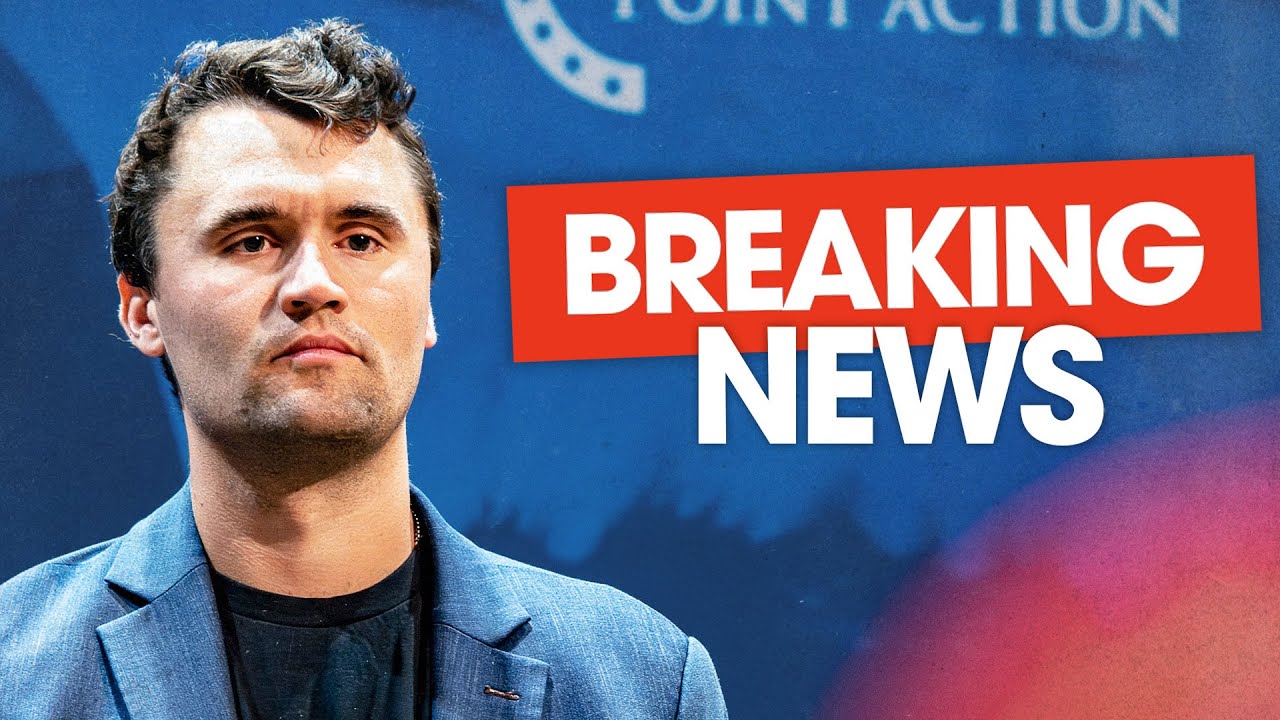
Ryan and Jared Witnessed the Charlie Kirk Assassination at Utah Valley University
Enjoying this? Share it with someone who needs to see it.
Up Next
Charlie Kirk Killed at Utah Valley University Campus Event, Eyewitness Reports Security Failures
3:55
Eyewitness Raydon DeChene Describes Chaotic Shooting Attack on Charlie Kirk at Utah Valley University
4:12
Chaos and Confusion at Utah Valley University: Eyewitness Account of Charlie Kirk Assassination at Campus Event
1:09:43
Ryan and Jared Witnessed the Charlie Kirk Assassination at Utah Valley University
Ryan and Jared were both present at Utah Valley University when Charlie Kirk was assassinated during a Turning Point USA event. In separate interviews, they recount the traumatic moments when shots rang out in the crowded courtyard, the chaos that followed, and what they saw in those horrifying seconds. Both attendees describe the inadequate security, the sound of the gunshot, and the immediate aftermath as students fled in panic. Their accounts offer a ground-level perspective on a political assassination that shook Utah's sense of safety and left witnesses grappling with trauma, while online reactions ranged from grief to disturbing celebration.
Ryan attended the Charlie Kirk event at Utah Valley University despite not being a UVU student. He had heard from friends that Kirk would be speaking on campus and saw it as an opportunity to ask questions, even though he didn't align with Kirk on every issue. As he approached the venue, Ryan made a conscious decision to leave his firearm in his car, assuming there would be security checkpoints and metal detectors at such a high-profile event.
However, as Ryan got closer to the courtyard pavilion area, his concerns grew. He noticed students with backpacks entering freely, with no bag checks or metal detectors in sight. While there were reportedly eight security personnel with Kirk and six campus security officers, Ryan couldn't identify any of them. He scanned the rooftops looking for security but found none. Despite these red flags, he rationalized his concerns by thinking, "This is Utah. This is UVU. What's really going to happen?"
Still, Ryan remained cautious. He recognized that the tightly packed crowd could become extremely dangerous if something escalated. He positioned himself about 50 feet from the speaking area, gradually working his way through the crowd with questions prepared for Kirk.
The Gunshot and Immediate Chaos
Ryan was approximately 50 feet away when he heard the shot ring out. The sound was disorienting—reflecting off the building and the crowd in a way that made it almost unrecognizable as a firearm discharge. Ryan had never been downrange from a shot before, which gave him new perspective on how different gunfire sounds from that position.
In that instant, people in front of him ducked down and began screaming. Ryan briefly saw Kirk's head move to the side before the panicked crowd pushed him back. People stampeded away from the scene, so tightly packed that Ryan worried someone would fall and be trampled. Some did stumble, but managed to get back up.
After realizing no additional shots were being fired, Ryan pulled out his phone and began recording. He made his way down to where Kirk had been speaking, where only a few people remained. He captured video and briefly saw blood, though in the fast-paced, traumatic moment, details were difficult to process clearly.
By the time Ryan reached the speaking area, police had already escorted away someone who claimed responsibility—though it wasn't actually the shooter. Kirk had also been quickly removed from the scene. The actual perpetrator, based on news reports, was believed to be Tyler Robinson, though Ryan noted that investigations were still ongoing.
The Aftermath and Community Response
As people fled the scene, Ryan witnessed devastation everywhere. Students were screaming, crying, and praying that Kirk would be okay. He went up to a tent where Turning Point USA members had been distributing information, and the group said a prayer together in a moment of collective grief and solidarity.
What frustrated Ryan most was overhearing conversations inside the building afterward. Some people were excited about what had happened. Some were glad. He saw people smiling. This matched what quickly appeared on social media—celebrations of a political assassination that left Ryan deeply disturbed.
Ryan only confirmed that Kirk had died when he was brought in for questioning with other witnesses. In a conference room, he saw up-close footage that had been captured by others near the front. After examining the video carefully and zooming in on where Kirk was hit, Ryan concluded there was no way anyone could survive that injury. Even combat medics who later analyzed the footage online confirmed that such an injury would be impossible to treat, even in a military field situation.
Ryan's Relationship with Charlie Kirk
Ryan first became aware of Kirk in 2015-2016 during Donald Trump's presidential campaign. Kirk was an advocate for free speech, freedom, and Christianity, and he played a significant role in shaping Ryan's political journey and understanding. Even on topics where they disagreed, Ryan looked up to Kirk because of his willingness to engage in conversation with anyone who disagreed with him.
Kirk led the conservative movement for 13 years, starting Turning Point USA in his garage and building it into a national and international organization. Ryan had seen posts from people in the UK and Germany discussing Kirk's impact on conservative thought in their countries. Kirk was, in Ryan's words, "the tip of the spear" for the conservative movement.
Processing Trauma in Utah
The first 48 hours after the assassination were extremely difficult for Ryan. He experienced shock, devastation, and anger—particularly when seeing online reactions. Posts with over a million likes suggested Kirk "got what he deserved" or that he "lived by the sword and died by the sword" because he defended the Second Amendment. The comments were filled with celebrations, memes were being generated, and shirts depicting Kirk being shot were being sold online.
For Ryan, this assassination in Utah was a wake-up call. He had always thought political violence was a matter of when, not if, but he never truly believed he would witness a political assassination. Utah is known as a safe place, and having this happen at home shook the community profoundly.
Jared's Experience: Close to the Action
Jared attended UVU for his undergraduate degree and heard about the Kirk event through friends. He and several buddies went during their lunch break from school, arriving about an hour early to secure a good spot. Using Google Maps later to estimate, Jared determined they were approximately 20 to 30 feet from Kirk's booth.
The event started right at noon. The first question was about religion and got the crowd somewhat heated, eventually leading to the questioner being booed away. The second question concerned transgenders and mass shootings. Not even a couple of minutes into that question, the unthinkable happened.
Jared was looking directly at Charlie Kirk when the gun went off. He saw a horrific amount of blood come out of Kirk's neck—a sight he says he cannot unsee and believes he never will. He and his friends immediately dropped to the ground and scrambled under concrete pads that served as steps in the amphitheater. They hid there for about a minute, making sure there were no additional shots before attempting to flee.
The Desperate Escape
What Jared describes as one of the most traumatic parts of the experience was watching everyone desperately run for their lives. The screaming is something he can't get out of his head. People were falling over each other in the panic.
Jared and his friends ran in the direction where Kirk's booth had been set up. Metal portable gates blocked off areas, and people were funneling through a tiny section next to a fountain. Several people fell into the fountain and simply ran through the water to reach safety. Jared and another person helped move the gates so more people could escape.
In those couple of minutes of fleeing, the desperation and screams were truly horrifying. The terror in people's voices as they fought to get away left a lasting impression on Jared.
The Strange USA Chant
About 20 seconds after the shot was fired, while everyone was still hunkered down, a man five to ten feet in front of Jared stood up, put his fist in the air, and started chanting "USA, USA, USA." Jared stared at him, trying to determine if he was a threat or if he was trying to mimic Donald Trump's response after being shot.
Jared has thought about this moment extensively and still can't determine the man's purpose or what message he was trying to send. He's seen the incident discussed on social media since, with people suggesting the man was either involved in the shooting or was celebrating it because it appears he was looking away from Kirk toward where the shot came from. It was a bizarre and unsettling moment amid the chaos.
Recognizing the Fatal Wound
Growing up around guns, Jared immediately recognized the sound as a gunshot. He could tell it came from behind him, and because he was staring straight at Kirk, he saw exactly where the bullet hit. The shot struck the left side of Kirk's neck in the common carotid artery area. There was a splash of blood that looked almost unrealistic—for about 5 to 10 seconds, Jared thought it might be some kind of fake skit blood because the amount seemed impossible.
But this was Jared's first time seeing anything remotely like this in real life, and it took him a moment to process what had truly happened. Based on his anatomy knowledge, the loudness of the rifle shot, the location of the wound, and how Kirk's body reacted, Jared and his friends concluded during their drive from campus that there was a very slim chance Kirk would survive.
Jared didn't hear confirmation that Kirk had died until around 4:00 that afternoon, but he had known from the moment he saw the wound that survival was unlikely.
Under the Stairs: Moments of Terror
When Jared pushed himself as close as possible to the concrete stairs for protection, only one thought occupied his mind: were they going to hear more shots, and how was he going to get out alive? He had actually thought before the rally began about how dangerous these events could be and what he would do if someone tried something terrible. He had even formed an escape plan in his mind.
But when it really happened, Jared didn't follow any of that plan. You panic, you protect yourself and those around you, and then you do your best to get yourself and as many others out as safely as possible.
The Physical Aftermath of Trauma
Jared and his friends ran from the scene to their cars—about a quarter mile away in the heat, wearing navy blue scrubs. By the time they got in the car and started driving away, they all noticed they were shaking. Their hands, their entire bodies were trembling from shock.
They tried to consume as many high-sugar foods as possible to combat the crash that follows a severe adrenaline surge. The shooting happened around 12:20, and they drove straight to their school for a clinical assessment. Until about 11:30, Jared felt sick to his stomach, thinking he could throw up at any moment. It wasn't until he focused on the clinical assessment that the terrible feeling finally subsided.
Jared's View of Charlie Kirk
Jared really looked up to Kirk. Like most people, he didn't agree with everything Kirk said, but he respected his boldness and his main approach of "try to prove me wrong"—opening himself up to debate. Jared isn't the best debater himself, but he appreciates debate because it sparks conversation and allows people to see situations from new perspectives.
Kirk let anyone take the microphone and ask him a question, which Jared always admired. He believed Kirk played a significant role in the recent election—not by converting people from one side to another, but by getting college-aged kids and the younger generation involved in politics, talking about politics, and thinking about their future. That, Jared says, is Kirk's legacy and what he will leave behind. His murder made him a martyr whose message will never be forgotten.
Jared firmly believes Kirk was a leader in the Republican party. He did tremendous work in shaping Jared's generation, particularly the younger college demographic. While Kirk certainly turned some people away, Jared believes he pushed people in the middle more to the right and people on the left more to the left. Several of Jared's friends suggested that Kirk played a major role in the last election, and Jared partly agrees with that assessment.
Violence in the Safe Bubble of Utah
For both Ryan and Jared, having this happen in Utah was particularly traumatic. Utah is well known for being an extremely safe state with low crime rates. Growing up in a place where you don't see true crime or organized crime means residents aren't exposed to violence like this. Many people call Utah, or the small communities within it, their "bubble"—a place where nothing bad happens.
For something like this to happen within that bubble is traumatizing and sad. Jared has friends currently attending UVU who are now scared to go back to campus because they fear it could happen again, despite Utah's history of being extremely safe with little to no gun violence. The assassination has changed how people think and feel about their home.
The Disturbing Online Response
Both Ryan and Jared were deeply disturbed by the online response to Kirk's assassination. Ryan saw posts with over a million likes suggesting Kirk deserved what happened or that defending the Second Amendment made him somehow complicit in his own murder. The comments were filled with celebrations, memes were rapidly generated, and merchandise depicting the assassination was being sold.
Jared couldn't get out of his mind how people were justifying or celebrating Kirk's murder, regardless of how they phrased it. He kept thinking about how traumatic the event was for everyone present. There were children there, people of all ages who will now carry trauma for the rest of their lives. For many people, this scar won't heal.
For people to celebrate this, Jared says, makes him sick. No matter what anyone thought of Kirk, he and his family will never be the same. Every person in attendance and many who watched the video will never be the same after seeing something like that—especially something happening in their backyard, in a place they thought was safe.
Media Responsibility and the Climate of Hatred
Ryan addressed what he sees as the role of social media and left-leaning media in creating the climate that led to this violence. He argues that the media twisted the narrative and framed Kirk as a misogynist, bigot, racist, homophobe, and demonic individual.
Ryan draws a contrast between two political movements: the 2020 summer protests, which he characterizes as involving cities burning and violence from "the party of acceptance and tolerance and love," versus the response from Kirk's supporters after his death—candlelit vigils, coming together, shedding tears, and making posts about how much Kirk loved his country, family, and God. Yet Kirk's supporters are portrayed in the media as Nazis.
Ryan believes this is not a left versus right issue, but a good versus evil issue. Those who stand for truth and righteousness need to identify individuals who celebrate political assassination and have no grace in their hearts, and "eradicate them from our society through our righteousness." By this, Ryan clarifies he means rising up vocally about true beliefs and snuffing out violent rhetoric through the strength of righteous voices—not through violence itself.
Ryan emphasizes that calling for violence is exactly what should not happen in this moment. Resorting to violence in the political sphere leads to the degradation of society and represents a path that cannot be pursued.
Video Transcript
And Ryan, the reason why we're talking today is because you were actually at Utah Valley University um when this
happened. You were there in the crowd. Um and that's why we're talking. I want
you to give me if you can recount what happened. What were you doing, you know,
when this all went down? Yeah. So, I wanted to just start out with I am not a University of Utah uh a
UVU student. Um, I heard from some friends that Charlie Kirk was going to
be coming to town. I've always been a fan of Charlie. I have some questions for Charlie. I don't align with him
100%, but I thought this was a great opportunity to go down to the campus, which is really close by, and ask him a
couple of questions. So, as I'm uh uh once I'm getting on campus, I I had the
mindset of, okay, this is a pretty big college. This is going to be a pretty large event. Um, I left my firearm in my
car thinking that there would be security checkpoints, there would be metal detectors. Uh, and I I just didn't
want to have the hassle of in the event that there is a metal detector that I would just have to go back to my car, be late to the event. So, I'm approaching
the school, bunch of students. I didn't really see any signs of where to go. So, I was just looking on Google Maps to see
where that um pavilion area was or courtyard area was. And as I'm just
getting closer and closer, I hear other students talking about the event. I'm not seeing really any security. I was
trying to pay attention to it, as we understand, there were, I believe, eight uh security detail uh personnel with
Charlie and then six that were campus uh but I didn't see anybody. And so when I
first got into the courtyard and there's just a big crowd of students, there were some red flags that popped up for me. I
was like, "Okay, so I'm now this close to this large group of people. I see students with backpacks. There was no
bag check. There was no metal detectors. And I was immediately concerned. Um, but
I was like, "What the heck?" You know, this is Utah. This is UVU. Um, what's going to what's really going to
happen? But I was a little bit more cautious. I realized that there's a super packed tight-knit crowd. If something were to escalate, this could
be a really dangerous situation for everybody. And as I'm getting towards the crowd, I'm just looking on the roofs
as well, just briefly. I'm just glancing around and I don't see any security uh personnel up there either. So, I was
also concerned about that as well. Uh I was a little further towards the back in the very beginning when Charlie first
started and I had my questions. So, I decided to start wedging my way through
the crowd. Um we had people on the right that were heckling the crowd and there's some dialogue back and forth. The first
speaker, I was about 50 ft away at this point. The first speaker had finished up speaking with Charlie. Second speaker
gets up, starts act uh starts asking questions just off the cuff about um trans shooters. And Charlie's
responding. I think it's no more than 20 seconds. And I'm I'm listening, but I'm
focused on how I can navigate my way through the crowd. And I hear a shot ring out. And it was weird the way the
the sound reflected off the building and off of everybody that was there. Uh, I I
guess I haven't been downrange from a a shot before, but it it sounded it didn't sound like it was a firearm, which was
really weird. Um, but from my perspective, again, I've never been downrange from um a discharged firearm,
so that gives me new perspective as well. Um, at that point, people people
in front of me, they duck down and they start screaming. Um, I briefly see
Charlie's head kind of go to the side and then I got pushed back by the crowd and everybody starts running back. Um,
so I stay out of everybody's way. I pull out my phone and start recording. I try to get down to where Charlie was
speaking and there's still a few people that are hanging around. I wasn't really focused on what they were doing. Um, but
I was just trying to just get video and I saw um I saw a little bit of blood.
Again, I wasn't hyperly focused. It was very quick. is very fast-paced and it's being in a tragic and traumatic I guess
event like this. It's very um curious just to look back and reflect and try to
remember what I saw in that moment cuz so much was happening. Um and by the
time I had gotten down there, the police had escorted away the guy who claimed he did it. Obviously, we know it wasn't him
and we know it was Tyler. Well, we assume it was Tyler Robinson based on the news that's coming out today. Um
they still have to do their investigation, right? So, we can't jump to conclusions yet. Um, but then Charlie
was also gone. I mean, they took Charlie away pretty quickly from the footage that we saw. Uh, from that point, um,
people are just devastated. People are crying. I mean, I guess I kind of jumped through the, uh, details a little too
quickly, but as everybody is running away, they're screaming. People are crying. People can't believe what just happened. People are praying that
Charlie's okay. I went up to the the tent tent where they were handing
out information. Um it was just higher up in the courtyard and there were a bunch of uh Turning Point USA I think
members that were there that were helping put on the event and we all said a prayer together and it was a come together type of a moment. Um and we
still saw the the frustrating thing for me is after this occurred and I went
inside the building I overheard people talking about it. Some people were excited. Some people were glad that this
happened. I saw people smiling. Um, and as we've seen on social media, we've seen a lot of people cheering this on
and celebrating uh political assassination.
So, um, you know, I want to go back through your story and kind of, um, break down, um, some of these things
that you talked about. So, first of all, you were on your way up to talk to Charlie Kirk to ask him some questions.
Um, and how close were you when you heard the
gunshot? I want to say I was 50 ft. Um, I could have maybe been a little further away. I
hadn't quite gotten to uh the line where people had as lined up to ask questions.
Um, I was close enough to be able to see his head um go to the side. And then it
was just I it's it's really weird in a traumatic and uh situation like that to reflect back and be like, "Okay, what
did I really see?" Um I've seen so much footage come out. I've reviewed my footage, but in that moment, what was it
that I experienced? And it's kind of interesting to try to put the pieces together.
Absolutely. Especially because like you said there's been so much footage that you're you've been going through and it's like what is my memory and what did
I actually you know what did I actually see versus what am I seeing on like online from the other video. Um you know
now break down to me once once you see once you hear the gunshot you see
Charlie's head um go like this. Um what happened next? You know did you get
down? What happened next for you? I was I was in shock. I think I crouched I think I crouched down for just a brief
moment before everybody started pushing pushing back and trying to get out of there and everybody was so tightly
packed that it was a stampede if somebody were to fall and trip which some of us stumbled and on top of one
another but we were able to get up and not get trampled by everybody else. Um my mind was just in disbelief. I
couldn't believe what just occurred. And then from my understanding you stuck
around for a second. Um, can you kind of speak to that? Yeah. So, I stuck around for a moment. I
wanted to record. I I stuck around because I didn't hear any additional shots. Uh, I was worried at first when I
heard that gunshot. I thought I was going to hear more. I thought it wasn't going to just be a targeted assassination against Charlie, but I
thought it was going to be targeted towards his supporters and towards everybody in the crowd as well. Once I I
think a 30 seconds might have gone by the time I started to record. Maybe a
little bit longer. I honestly don't know. I'd have to go back and look at timestamps of everything that occurred.
But I uh at that point realized that it was targeted towards Charlie Kirk
instead of everybody else. And that's why I stuck around and started to record. You know, when did you realize that
Charlie Kirk had actually died? You know, I'm not asking about, you know, when it went um when we heard announced,
but when did you you know that Charlie Kirk had died? I knew Charlie Kirk died
when I was brought in for questioning with a group of individuals um who stuck around and I was in a little
uh you you could call it a conference room or a break room area. I was with some other guys who were also very close
and they had they had footage of up close.
Uh it's the video that's circulated around um that's very clear. That was the first time I saw that
footage. And once I got a hold of that video and was able to watch it a couple times and really zoom in, really look, I
I knew without a doubt with where he was hit, I was like, there's no way you can survive that. like um and even now post
that situation, I've seen videos of combat medics who have spoken and they're like, "Look, we're combat medics trying to treat the most serious of
injuries, but even if in the field, if if you're one of my guys and you get hit like that, I can't save you. There's no
way of saving you." So, it was um it was pretty uh pretty
traumatic to see that footage. It was one thing to uh be there and be like, "Wow, yeah, Charlie just got shot, but
we don't know the serious of this." to seeing that footage and knowing just without a doubt um unfortunately that he
you knew he succumbed to his injuries. It kind of brings up my next question of
just like how are you doing? I you know how are you doing after that? This is obviously a traumatic event. So how are
you how are you doing? Um I'm doing a lot better today. The
past two days were pretty rough I want to say. Um it was shock there. It was
just purely shock. It was very devastating and sad um to see everybody
else's grief as well online. Um to talk to friends who also were there to um
talk to family members who also loved Charlie. He was a voice uh for free speech and
that was very important. Um there's a lot of anger as well that comes from this seeing all the push back online.
And I've seen I've seen posts online with more than a million likes that are saying, "Well, Charlie kind of got what
he deserved. He lived by the sword and he died by the sword and he defended he defended um the Second Amendment." So,
you know, if this is what if if this is what happens, then it's kind of his fault is what these posts were alluding
to. Then to dive into the comments, excuse me, and to see people
celebrating, to see the memes that people are generating. We've seen shirts now showing Charlie Kirk getting shot in
the neck and those are selling and it's I I'll talk more on this later, but
yeah, that's those are my feelings as of late and today's a much better day than the past 48 hours.
Um I I did not know about the shirt selling online with that. That's um that's really horrible to see as well.
Um I do want to ask who Charlie Kirk was to you. Um, you know, you mentioned that he that you didn't agree with him on
everything, but you had um but there was and tell me if I'm wrong, you did agree with him on on some things. And um was
he do you think he was a leader in the Republican party and was he someone that you looked up to?
Yeah. Um both of those I I want to touch on. Um I became aware of
Charlie in 2016 or more so 2015 when Trump came down the escalator. Charlie Charlie Kirk was an advocate for for
free speech, for freedom, for Christianity, and he he really shaped my
journey through politics. Um my understanding of politics, he helped shape some of my beliefs, and um I've
I've always looked up to Charlie, even even on the topics that I disagree with him on, I've always looked up to him,
and he's and it's because he's willing to have a conversation with those that disagree with him. He's um I haven't
really ever seen him not being willing to have a discussion or to talk with somebody or about somebody um regarding
a specific topic. And he definitely he definitely led the conservative
movement. He's led the conservative movement in the past. I believe it's 13 years of what he's been doing. And it's
it's amazing to see that he started in his garage and how Turning Point USA became a national and even international
movement. We see Turning Point USA UK. I've seen posts from individuals speaking in Germany about how Charlie
Kirk made an impact there. It's a it's amazing to see the massive movement, the conservative movement that Charlie was
at the he was the spear. He was the tip of the spear on that. So,
um, and I do want to talk about the reason why we are talking. Um, Utah is my home state and, um, obviously this is
your home state as well. This is where you grew up, you know. How does it feel to have something I mean this is
historic. This is something that no one will forget. How does it feel to have
this happen in our home state? It's uh it's a wakeup call for sure.
I've I've always been of the mindset it's not it's not a matter of if, it's a matter of when. And this was a matter of
when. And I was in a situation where I you know I never wanted to be in this. I
I never really thought I'd see it, but I I also was of the opinion that I wouldn't be surprised if I ever am in
this situation. But I witnessed a political assassination and I've and I've ne I never thought that I truly
would. I feared that I would, but I never truly believed that that would be something that I would that I would see
and I would witness. And I think this this shakes shakes up the community here in Utah.
Yeah, it's definitely shaking. Um, is there anything else that you think we should touch on when it comes to this?
Any questions I miss? Anything else that you think is important? Um,
if we were to jump to conclusions and this Tyler Robinson is the perpetrator. He is the the assassin and he's a lone
wolf and he acted based on his beliefs of Charlie. Um,
I think what we need to address is how social media and the media generally speaking that leans left, how they've
twisted the narrative, how they've framed Charlie as a misogynist, as a bigot, as a racist, as a homophobe, as
this demonic individual. And we have to look at two scenarios. We have to look
at let's take the summer of love in 2020. How it's the it's the party of
acceptance and tolerance and love who burns down cities and kills individuals
in these in these riots and in all this violence and all this looting that occurs and and that's the party of
acceptance of tolerance of love of peace and that's how the media has portrayed it. And then you look at Charlie Kirk
and the Turning Point USA Foundation and you see how the media framed Charlie
Kirk and as I just previously explained, a bigot, a racist, a misogynist, a homophobe, a Nazi. That was that was
cycled through the media countless times. And then you see his supporters and what have we done? We've had candle
lit vigils. We've come together. We've shed tears with one another. We've made posts about how much we admired Charlie
and how much he loved um his country, he loved his family, and how much he loved God. And we are the party of of the
Nazis is how we're portrayed in the media. And so what I believe we need to
do as individuals who stand up for what is true and for what is right, I think
seeing this is not going against Democrats. This is not going against leftists and this is not a left and
right type of issue. This is this is a good and evil issue. And those that
stand for truth and righteousness, we need to we need to find these individuals who who have no more grace
in their hearts who who celebrate the assassination of Charlie Kirk and who
want to see all of us in that same situation because of our beliefs and because of our belief in free speech. We
need to find all these individuals and we need to eradicate them from our society through our righteousness. We
need to snuff out their their opinions and their ideas by everybody else rising
up and being vocal about what we truly believe in.
Thanks, Ryan. So, and what what you're saying by that is you're saying that regardless, and tell me if I'm wrong, I
just want to make sure for writing purposes. You're saying regardless of um people's beliefs um you're saying that
there is a right and wrong on um on how on how we treat each other, how we
dehumanize, those type of things and those things should not be done. Is is
that what you're saying? Yeah, that's correct. I think that if anybody is calling for violence, this is
this is the time to not be violent. We can never we can never result to violence um in the political atmosphere
because that's when the so the the degradation of our society um occurs and
it's um it's a path that we can't we can't go down. All right. And then what's your relation
to the event? Um I went to UVU for my undergrad. Um, I
went I attended there for two years and heard about the uh Charlie Kirk event
through some buddies and we went there during our lunch break for school and
that's how I I ended up there. So, your relation to the event is you were actually there at the event.
Yes, I was. Okay. So, you know, let's get right into it. Um, Jared, obviously we've been
friends a long time and so, um, when I saw you were there, um, it's it's kind
of a scary moment. Can you kind of explain to me what you saw? Walk me through the whole situation, why you
went there in the first place. If you can tell the story, and then we can go from there. Mhm. Uh like I said, uh a couple of my
buddies, we talked about going, uh we showed up there about an hour early, and so we were able to get a really good
spot. Uh I actually went to Google Maps to see kind of a better estimate of how close I was to uh where his booth was
and we were anywhere from 20 to 30 feet away. and we camped out there for about an hour and right at 12 he came out. Um
first question was about rel religion. Uh it got the the crowd a little bit
heated. Um eventually the crowd kind of booed the first person away. Uh and then after
that the next question was about uh transgenders and um mass shootings. And
not even a couple minutes into that question, um, the unthinkable happened and we all
heard a gunshot and everyone just dropped to the ground. Uh, I was looking
right at Charlie when the gun went off. So, I saw a horrific amount of blood
come out of his neck, which is a sight that I can unsee and I don't think I
will ever unsee. Um me and my friends we're with jumped under these um
concrete pads that uh served as the steps kind of of the amphitheater. We we
h hit under there for about a minute. Um making sure there weren't any other
shots and that you know we could we could make a run for it. Um this part for me was one of the most traumatic was
watching everyone desperately run for their lives. Um, I can't get out of my
head the the screaming. Um, people falling over. Um, we ran out in the
direction where Charlie was. So, we ran right past uh where his booth tent was
set up. Um, there's they had these metal uh portable gates set up that blocked everything off
and people were just going through this tiny little uh section that was right next to the fountain that's there at the
university. Uh, I saw several people fall in and they were just running through the water to try to get to
safety. Um, me, another person helped move these gates so that more people could get out. Um, and then from there
we just ran to safety. But in in that couple minutes of fleeing, uh, the
desperation, the screams, it it was truly horrifying and
terrifying to hear um how desperate those people were to get away.
Okay. So, you're saying that and tell me when this kind of happened. What What were you talking about there?
Yeah. Maybe uh 20 seconds after the shot was fired, everyone was hunkered down.
Um uh a gentleman five five maybe 10 feet
in front of me, stood up, uh put his fist in the air, and started chanting USA, USA, USA. And uh I just was staring
at him trying to understand like, is he a threat? Is he trying to like mimic Donald Trump
when he got up and started shaking his fist? Um, I've I thought about it too much since then and I can't tell you uh
what his purpose was, what he was uh what he was trying to do, what message he was trying to send. I've seen it
since then several times and uh on each post on in social media, people are
saying negative things about him that he was in some way either involved in the shooting or that he um he was glad it
happened and he was cheering for for the shooter because it sees him look um away
from Charlie Kirk where the shot came from and chant USA. It was really weird. Um, so I really
don't know what happened when when he started chanting that. What What were you feeling when he was chanting that
at first? So my very first thought was he was trying to mimic Donald Trump, but then he kept doing it and how everyone
else was on the ground. I was like like am I in danger? Is this guy part of the
attack or whatever? So that that was that was a little, you know, another scary thing right there.
Now, I want to kind of break down each piece of your story that you just shared. First of all, starting with obviously you're he was in the middle of
a question about shootings. Um, and then that's when the shots rang out. You
know, did you immediately know that it was a gunshot? You know, what was kind of the thoughts
going through your mind when you heard the gunshot? Yeah. What was the thoughts going through your mind when you heard the gunshot ring out?
Yeah, once I heard it, I I knew immediately what it was. growing up being around guns, I could hear that it
came from behind and obviously with me staring straight at him, uh I could see
where he got hit and um knowing how fatal that shot was, you
know, it it didn't set in immediately um just because we all dropped down
together and we kind of all just looked at each other like, did that just happen? Like, is is this real?
And so it it it took a couple seconds for us to kind of understand what was
going on. When did you know that he had died?
Probably anywhere from 5 to 10 seconds after uh Oh, when that he died.
I didn't hear that he died until it had to have been
4:00 that day if I remember right. I guess I should rephrase the question. When did you know he had died? You know
what I mean? When did you know he had died? Um, so I saw the shot. Uh, I could see
it hit right here. It's the common corateed arty artery. Um, with my
anatomy understanding, uh, knowing how loud that that rifle
shot was and where it shot and how his body reacted to the shot. After talking
to my friends on the on our drive from the school, um we both we all came to
the same conclusion that there is a very slim chance that he was going to make it.
And so, you know, after you hear those shots, you um you know, you know that he
has been shot, you see him, you know, go limp or how you ever how you described it. Um
you said you saw it. You said it was pretty horrific. Um, any description you can give? Obviously, I, you know, I
don't want to go too crazy, but any description you can give on what you saw when the bullet hit him?
When the bullet hit, uh, hit right here on the left side of his neck and there was a splash of blood that
came out. Um, when I explained earlier there, there was like 5 to 10 seconds where I didn't
know what happened. Uh, part of me thought that it was some kind of fake
skit blood squirt because it looked like an unrealistic amount of blood. And with
that being my first um first time seeing anything even remotely like this, I took
me a second to understand the uh what what truly happened.
And then, you know, you see you hear the gunshots, everyone gets down. Um, what were you thinking as you were hiding
underneath I mean you're on the side of like a cement um stair. What were you thinking when you were hiding on the side of that cement stair?
Uh, I pushed myself up as close as possible and the only thing I was thinking of is are we going to hear more
shots and how am I going to get out of here alive? Um, I remember thinking even before the the rally happened, like um h
how dangerous some of these events are and what what's going to happen if
someone uh tries to do the unthinkable. Um, so I I had kind of already thought
of an escape plan when when it really happened. I definitely didn't do
anything that I thought I was going to do. um you you panic, you protect
yourself and those around you, and then you try your best to get yourself and as many others around around you out out as
safe as possible. Now, I want to ask because you were with some friends, um how were you and your
friends feeling during that time? Oh, it was it was terrible. We ran from
there to our cars, which is probably a quarter mile in the heat uh in our in
our uh navy blue scrubs. So, we were all sweating and once we got in the car and
uh started driving away, we all noticed we were shaking. Uh our hands were shaking, our whole bodies were shaking.
Um and obviously, we were in shock. And so we tried to get as many uh high sugar
high sugar foods into our body as possible uh to kind of combat that crash from going to uh a severe amount of
adrenaline to kind of having that wear off. But it was it took a lot. It I um
it happened at around 12:20. Uh we drove straight up to our school where we had a clinical assessment from 12:20 till
about 11:30ish. I felt sick sick to my stomach. Uh I thought at any moment I
could throw up. Uh it wasn't until we started our uh clinical assessment where
I I really focused on something else instead of thinking about the terrible tragedy that uh that terrible feeling
finally went away. Um so I feel like we've talked, you know, thanks for talking about all of
the things, you know, that you had witnessed. And I know that's probably kind of hard to talk about with that, but I also want to talk about, you know,
Charlie Kirk. I mean, there's a reason why you went to that um to that event. Tell me about who he is, who he is to
you, and why you wanted to go see him that day. Mhm. Uh I really look up to Charlie. Um
like most people, I don't agree with everything he says, but I respect his boldness and kind of his main uh
catchphrase, which is try to prove me wrong, where he's opening up to debate. Uh I I'm not the best debater, but I
like debate. I like how it strikes up conversation. It allows us to see per uh
different situations from a new perspective. Uh that was one thing I always looked up to him. He always uh he
was he let anyone uh take the mic and ask him a question. Uh I believe he
played a a big role in this recent election. um not not turning uh people
to one side, to the right or the left, but more that he got a lot of
college-aged kids, young the younger generation involved in politics, talking about politics and thinking about their
future, which um that's his legacy and that's what he's going to leave behind.
And uh his murder left him a martyr and uh his message will will never be forgotten.
Yeah. Um, with that, you're kind of thinking about um Charlie Kirk, who he was. Do you think that Do you think he
was a leader in the Republican party? Yes. Yes. He he he did a lot of uh I
believe, like I previously said, he did um a lot of work in shaping uh my
generation, the younger college generation. Um, obviously he he turned a
lot of people away from him, but uh if you ask me, I I believe he pushed the people in the middle more to the right
and the people on the left more to the left. Um, which I've I've had several
friends, which I partly agree to, uh, which said that he played a big role in
this last election. Um, and last question for you. I mean,
you kind of mentioned this before our interview, but I mean, a big thing on this, we hear about shootings, we hear about things
happening all the time, but it's not very often that it happens in our home, in our home state. Um, can you kind of speak to
uh why this is so difficult being in our home at our why this is so difficult being in I how do I say this?
Can you speak to how this is difficult with this event happening inside our
home state? Yeah. Utah is very kn well known for being a very safe uh state, you know,
low crime rate. Uh growing up in a place where um you never you don't see true
crime. There's little to no organized crime in the state. Um we're not exposed
to this kind of things. Um a lot of people call Utah or the small communities within Utah their bubble.
And you know, no one ever sees anything bad happen in our bubble. and for
something to happen within our bubble, uh, it it's traumatizing and it's sad.
Um, I I have friends who are attending UVU right now and they're scared to go back to UVU, um, because this has
happened and they're scared it's going to happen again when in uh, the history shows that Utah is extremely safe. We
have uh, little little to no gun violence. So, it uh it definitely
changes the way people uh think and feel about their home, which is Utah.
Well said. Is there anything else I should have asked or anything else that you think we should mention?
Um I always just ask that at the end. Yeah. Um, one thing I was thinking of,
um, before I I came on this interview and and I want to hear your take on it is a
lot of people, uh, justifying this u his murder. And I don't know if you'd call
it justifying or celebration or kind of saying um, he got what was
coming to him. No matter how or what way they put it, I can't get out of my mind
uh how traumatic this was for everyone there. There was I saw children
there and people of all ages there and they're going to have trauma for the
rest of their lives experiencing this. This this for many people this this scar won't heal. And for people to celebrate
this uh makes me sick. No matter what way you thought of Charlie, um him and
his family will will never um they'll they'll never be the same after today.
And every person in attendance and many people who who watch the video will never be the same after seeing something
like that, especially something happening, you know, in our backyard in a place that we thought was safe.
Hey, thanks for watching. Make sure that you subscribe to our YouTube channel and watch more videos from ABC13 WCT.