Charlie Kirk on Freedom and Law: Why More Laws Can Actually Create More Freedom
Enjoying this? Share it with someone who needs to see it.
Up Next
Charlie Kirk and Candace Owens Launch Turning Point UK to Fight Cultural Marxism Across British Universities
1:16:18
Healthcare Privatization Debate Reveals Public Confusion Between Efficiency and Free Access at Point of Use
2:42
The Rising Generation of Women Stand Up and Speak Out at Turning Point USA
2:06
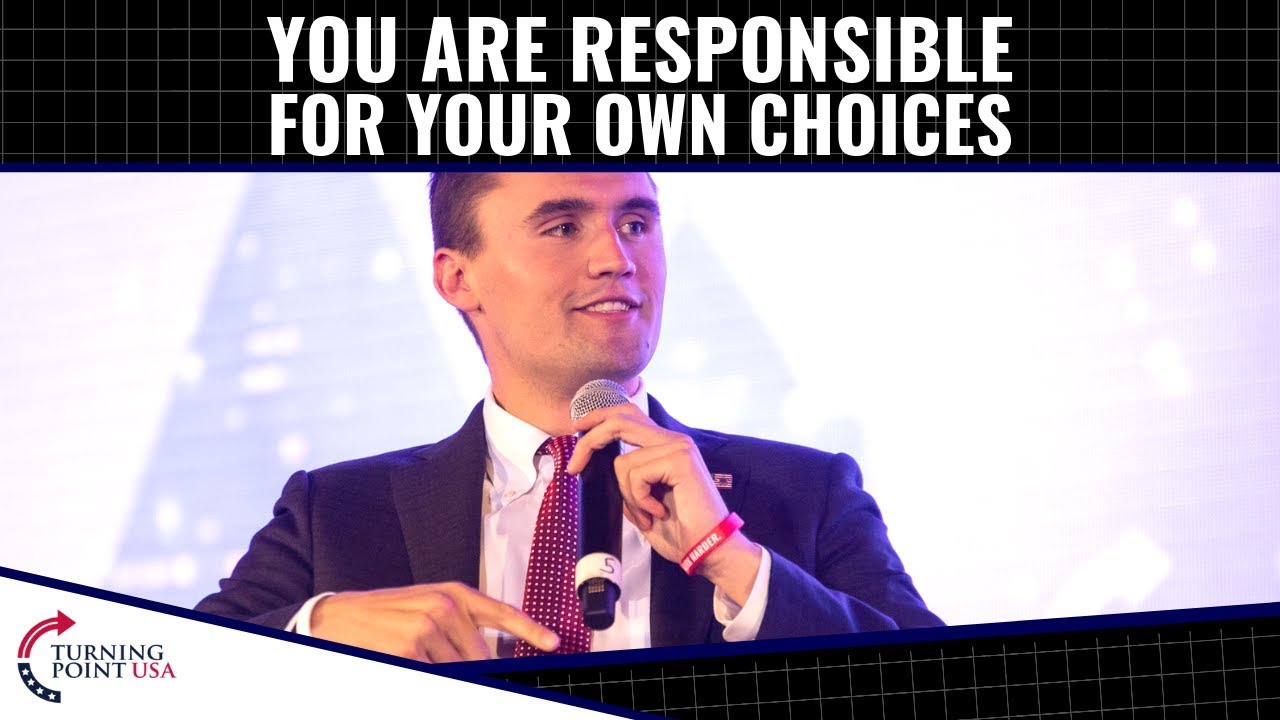
Charlie Kirk on Freedom and Law: Why More Laws Can Actually Create More Freedom
Charlie Kirk tackles a provocative question about the relationship between law and freedom. A student asks how Kirk reconciles his statement that more laws equal less freedom with his earlier Harvard reference about laws creating freedom. Kirk explains his philosophy that laws must pursue virtue to create genuine freedom, arguing that certain restrictions, like banning drag queen story hours for children and prohibiting pornographic sexual education, actually make society freer. He challenges libertarian assumptions and uses marijuana legalization as an example of how unrestricted freedom can lead to worse outcomes.
During a question and answer session, Charlie Kirk addressed a thought-provoking challenge from an audience member who noticed an apparent contradiction in his remarks. The student pointed out that Kirk had mentioned both that more laws equal less freedom and that operating within the boundaries of laws creates freedom, citing a Harvard reference. The question forced Kirk to clarify where he draws the line between these two concepts.
Laws Must Pursue Virtue
Kirk responded by explaining his core philosophy: law, in his opinion, needs to pursue virtue. He argued that not all laws restrict freedom equally—some laws, by restricting harmful behaviors, actually create conditions for greater freedom in society.
Kirk offered specific examples to illustrate his point. He stated that drag queen story hours should be outlawed in America, arguing that children should not legally be allowed to attend events where people in public libraries wear dresses and, in his view, prey on young children. He insisted that such activities should not be allowed.
Similarly, Kirk argued it should be illegal to have pornographic sexual education curriculum for children in high school and below. These examples, he explained, represent the law trying to point towards virtue.
Living in a Constitutional Republic
Kirk acknowledged that this approach is part of what it means to live in a constitutional republic. He recognized that these issues require debate and discussion, but maintained that sometimes society has to be willing to say certain things should not be allowed. Contrary to what some might think, Kirk argued, such restrictions actually make people freer.
He anticipated pushback from strict libertarians who might object to this philosophy, but stood by his position nonetheless.
The Marijuana Legalization Example
To further illustrate his point, Kirk discussed marijuana legalization, acknowledging it's not a popular stance among young people but stating he doesn't care about the popularity of his position. He expressed complete opposition to marijuana legalization, calling it a false flag and ridiculous.
Kirk stated his belief that marijuana is really bad if you don't do it, noting he receives hatred from both sides on this issue but remains unmoved. He pointed to what he sees as evidence: states that have legalized marijuana have become more dangerous, more children are using it, and they have become more suicidal.
This led Kirk to his central question: do we actually want to move in this direction? He characterized marijuana legalization as a kind of false freedom that actually serves as a gateway drug to something worse, rather than genuine freedom that benefits society.
Drawing the Line on Freedom
Kirk concluded by emphasizing that these are the types of issues where he believes society should try to draw the line. His framework suggests that authentic freedom comes not from the absence of all restrictions, but from laws that guide society toward virtue and protect vulnerable populations, particularly children, from harmful influences.