2,422 videos 1,389,747,653 views US Joined Aug 30, 2018
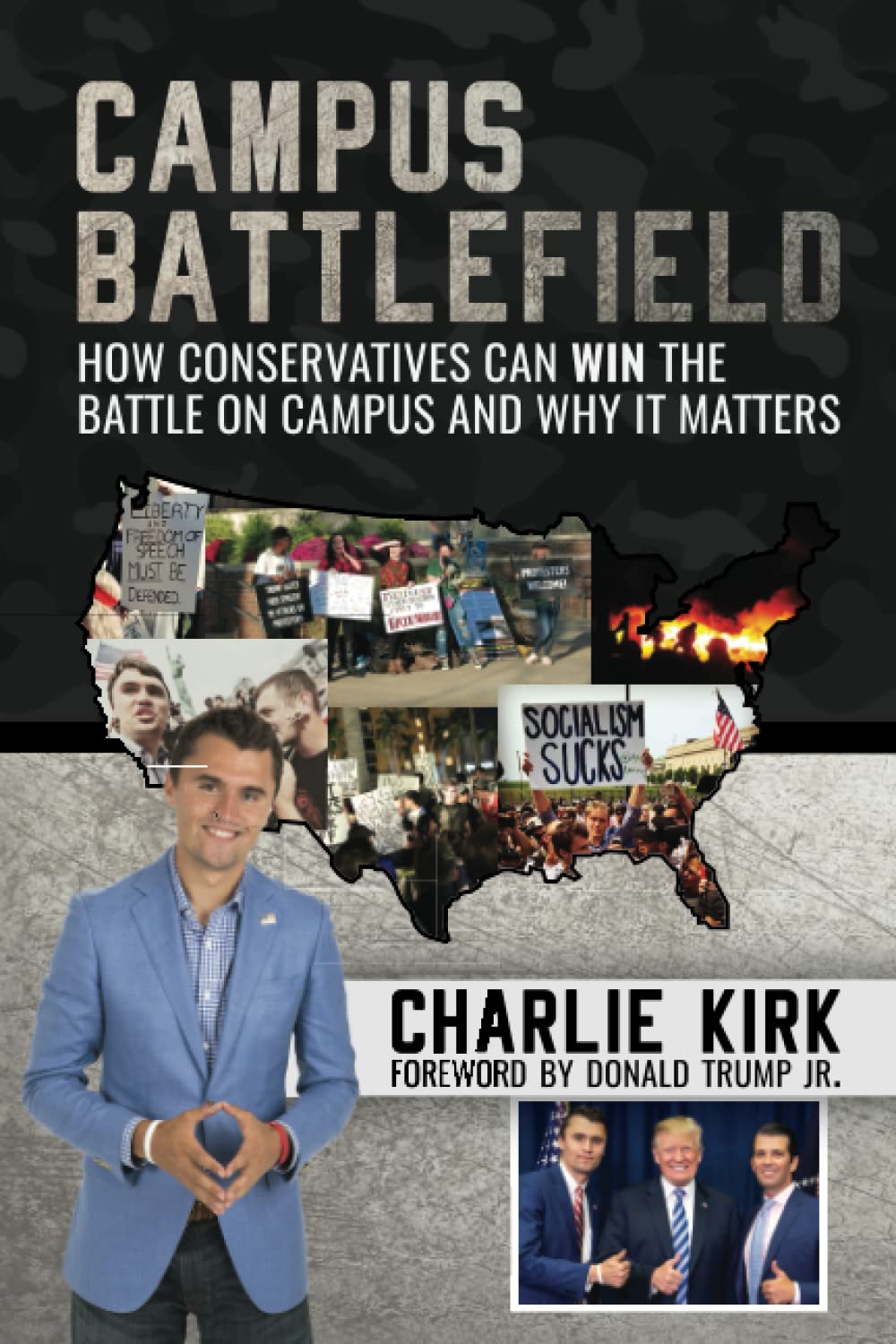
Charlie Kirk is the Founder and President of Turning Point USA, the largest and fastest growing conservative youth activist organization in the country with over 250,000 student members, over 150 full-time staff, and a presence on over 2,000 high school and college campuses nationwide. Charlie is also the Chairman of Students for Trump, which aims to activate one million new college voters on campuses in battleground states in the lead up to the 2020 presidential election. His social media reaches over 100 million people per month and according to Axios, he is one of the "top 10 most engaged" Twitter handles in the world. He is also the host of “The Charlie Kirk Show,” which regularly ranks among the top news shows on Apple podcast charts.
Charlie Kirk Responds to Senator Cory Booker's Viral Crime Statistics Video Featuring Garrison Hayes
Charlie Kirk addresses a viral response video from Garrison Hayes that Senator Cory Booker shared, which challenged Kirk's statements about crime statistics and prison population demographics. Kirk defends his position on per capita crime rates, explains statistical interpretation regarding prison populations and exonerations, and argues that acknowledging disproportionate crime rates is necessary for solving the underlying problems. He contends that his critics misunderstand basic statistical concepts and that confronting difficult truths is essential to making communities safer.
Charlie Kirk addresses a viral video response from Garrison Hayes that Senator Cory Booker shared on social media. The video challenged Kirk's statements made during a Jubilee debate regarding crime statistics and prison population demographics. Kirk recorded his response from the Bitcoin.com studio, laying out what he sees as fundamental statistical errors in Hayes's critique.
Hayes claimed that Kirk was wrong when stating that 13% of the population commits well over 50% of crimes, pointing out that 38% of America's prison population is black rather than half. Hayes questioned why Kirk would exaggerate the numbers and noted that white people actually make up 57% of the prison population.
Understanding Per Capita and Statistical Proportions
Kirk challenges Hayes's statistical literacy, asking whether he understands what "per capita" means and how fractions work. He explains that whites, who constitute 57% of the prison population, actually have a lower incarceration rate relative to their proportion of the American population. Kirk points out that the federal data counts Hispanics as white, meaning that whites plus Hispanics are actually underrepresented in prison relative to their population share.
According to Kirk, the key issue is understanding the relationship between population percentages and crime rates. He argues that when a demographic group represents 13% of the population but accounts for a significantly higher percentage of certain crimes, this represents a disproportionate rate that needs to be acknowledged and addressed.
The Exoneration Argument
Hayes had argued that Kirk deliberately omitted a key statistic: that black people make up 53% of all criminal exonerations, suggesting systemic wrongful convictions. Kirk counters this argument by explaining that exonerations represent only a tiny fraction of total convictions. With approximately 2 million people in jail or prison at any given time, the total number of exonerations amounts to only a few thousand.
Kirk argues that if blacks represent 55% of murder exonerations and also about 55% of murder convictions, this actually indicates they're being convicted at the appropriate rate. He contends that if there were widespread wrongful convictions, the exoneration percentage would be significantly higher than the conviction percentage.
Unsolved Crimes and Underreporting
Kirk addresses what he sees as a critical factor missing from the debate: the large amount of crime that goes without arrest, conviction, or prison sentences. He points to Chicago as an example, noting that half of all murders in the city remain unsolved. Kirk argues that if law enforcement actually arrested every criminal, the percentages would increase to 60 or 65%.
He attributes this gap to what he calls "anti-snitch culture" and lack of policing in certain communities. Kirk argues that in the most dangerous cities, police are overwhelmed, reporting is inadequate, and 911 calls go unanswered. He suggests the political left wants to "pile up grievances and let criminals roam free" rather than address the underlying issues.
FBI Data on Murder Arrests
Kirk cites 2019 FBI data showing that 51% of all murder arrests were black Americans, who represent 13% of the population. He notes that more recent data hasn't been readily available but expresses confidence that under Kash Patel, such data will be released. Kirk emphasizes that this statistic doesn't even account for random muggings, carjackings, and other crimes that often go unreported or unsolved.
Rejecting the Racism Label
Kirk pushes back against accusations of racism, stating this approach is outdated and ineffective. He argues that he's actually the one fighting to make neighborhoods safer, while his critics are siding with criminals. Kirk insists that Hayes and others cannot get past what he calls "the irrefutable piece of information" that there's a disproportionate relationship between population percentage and crime rates.
He concludes by arguing that until society can speak this truth "repeatedly, openly, and honestly," the teenage crime issue in America will not be solved. Kirk frames his position as one rooted in problem-solving rather than prejudice, arguing that acknowledging difficult realities is a prerequisite for implementing effective solutions.