Charlie Kirk Reveals How 56 Founders Risked Everything to Sign America's Birth Certificate on Independence Day Weekend
Enjoying this? Share it with someone who needs to see it.
Up Next
Charlie Kirk Reveals Why the Church Must Rise as Warriors Against Cultural Tyranny in America
51:59
Charlie Kirk and Pete Hegseth Expose the Hundred Year Progressive Takeover of American Education
1:05:44
Charlie Kirk and Pastor Gary Hamrick Discuss Loudoun County Awakening and Local Christian Activism
1:23:53
Charlie Kirk Reveals How 56 Founders Risked Everything to Sign America's Birth Certificate on Independence Day Weekend
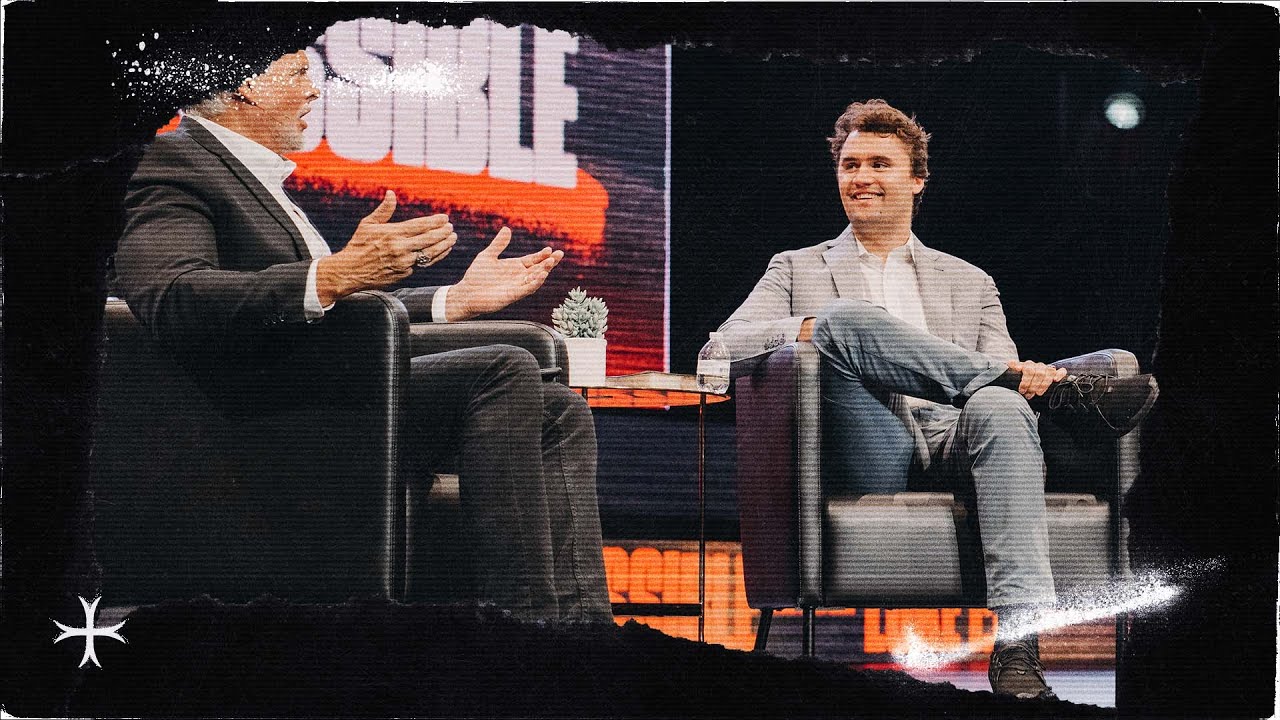
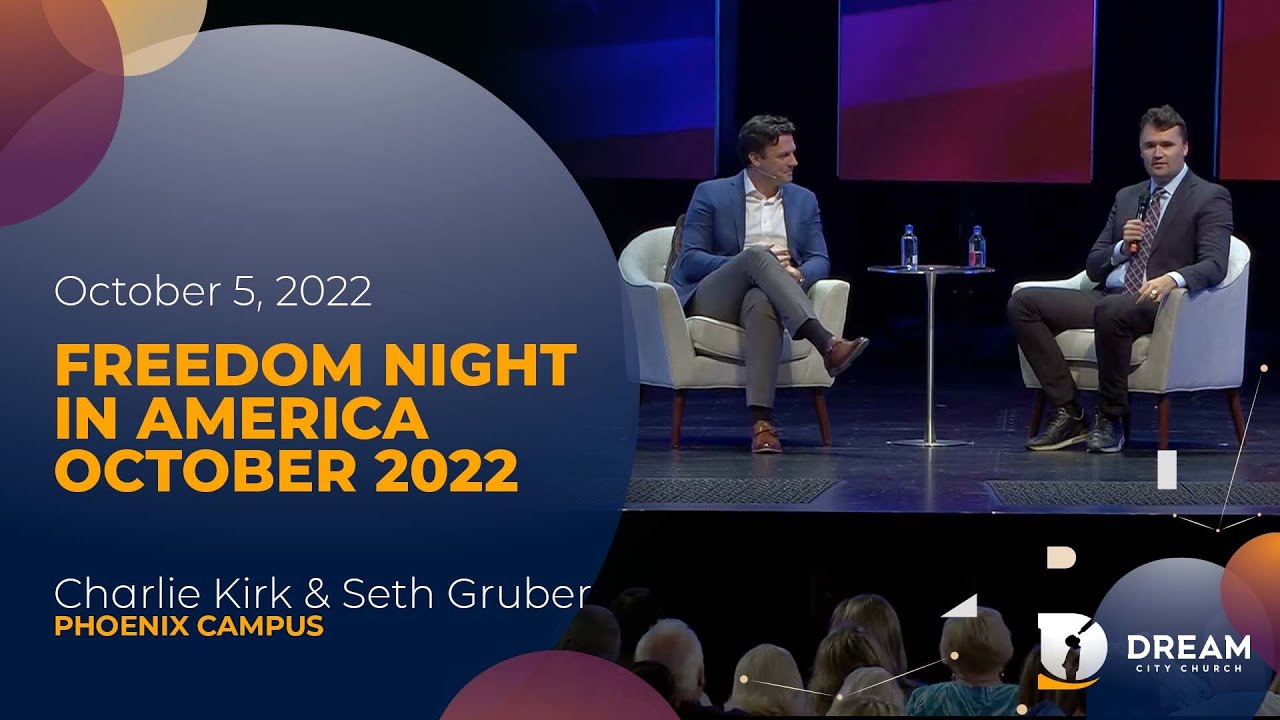
Charlie Kirk delivers a powerful message at Dream City Church on Independence Day weekend, exploring the untold sacrifice behind the Declaration of Independence. He recounts how 56 men signed what could have been their death certificates, facing the British Empire's wrath while their homes burned and families suffered. Kirk connects the founding to the Great Awakening, showing how 25,000 sermons over a decade prepared the colonies for revolution. He examines the biblical foundations embedded in America's birth certificate, from natural law to the covenantal relationship the founders established with divine providence, revealing why this nation has endured for 249 years.
Speaking at Dream City Church during Independence Day weekend, Charlie Kirk opened by expressing gratitude for the transformation America has experienced over the past year. Reflecting on July 13th, when mere millimeters determined the nation's future, Kirk reminded the congregation that God is not done with America. He emphasized that this weekend celebrates the signing of the nation's birth certificate, the Declaration of Independence, a document that deserves to be read word by word rather than merely discussed.
Kirk provided crucial context often lost in modern education. The Declaration did not begin the Revolutionary War but justified it. Fighting had already erupted at Lexington and Concord in April 1775, more than a year before the Declaration was signed. The Battle of Bunker Hill occurred in June 1775. After these battles, the founders, as pious Christians who believed in being peacemakers, sent the Olive Branch Petition to King George in August 1775, attempting to end the conflict peacefully. The king's response was clear: the colonists were in rebellion, and he intended to crush them.
The Impossible Odds and Unthinkable Sacrifice
By July 1776, the war was raging. The wealthy colonists were losing their farms and ships. Kirk asked the congregation to imagine themselves transported to a room in Philadelphia during July, with oppressive humidity and no air conditioning. At any moment, British forces could have stormed Independence Hall and arrested all 56 men present, hanging each one for treason.
These men faced a monumental decision about whether to continue a war where the odds were overwhelmingly stacked against them. The colonists had no navy, not even a canoe. They had no permanent alliances and no standing army. They were simply farmers, merchants, and preachers with muskets facing the world's most powerful military force. To put it in perspective, Kirk compared it to imagining America's current military might deployed against a random small colony. The British Empire was bringing in 36,000 well-trained troops and Prussian mercenaries from Germany, already occupying New York and Boston.
If betting odds existed then, they would have been 99.9 to 0.1 against the colonies surviving. Yet these men had something the British did not: faith in God Almighty. Kirk detailed the horrific consequences many signers faced:
William Ellery watched the British burn his home and destroy everything he owned
Lewis Morris saw his estate plundered, his cattle driven off, and his property destroyed
Carter Braxton lost all his ships, saw his fortune ruined, and died in debt before the war ended
Thomas McKean was hunted by the British, moved his family five times, and died penniless
Abraham Clark had two sons captured and brutally tortured in British prison ships, with one nearly starving to death
John Hart fled into the woods while his wife died, his 13 children scattered, and his farm ravaged. He never saw his children again
Francis Lewis's wife was imprisoned for months, tortured by the British, and died shortly after release. He died with nothing
Richard Stockton was captured, imprisoned, abused, and starved, only released after swearing never to fight again. He died before the war ended
John Morton was alienated by all his friends and family for switching to the patriot cause and died in 1777, never seeing victory
Kirk emphasized that signing the Declaration meant signing away everything. In that era, signing your name was not casual as it is today. It represented an all-encompassing commitment involving your children, grandchildren, and entire estate. It was a holy vow. These men knew they would likely lose, yet they proceeded because they valued being right before God over being right before King George.
The Great Awakening That Made Independence Possible
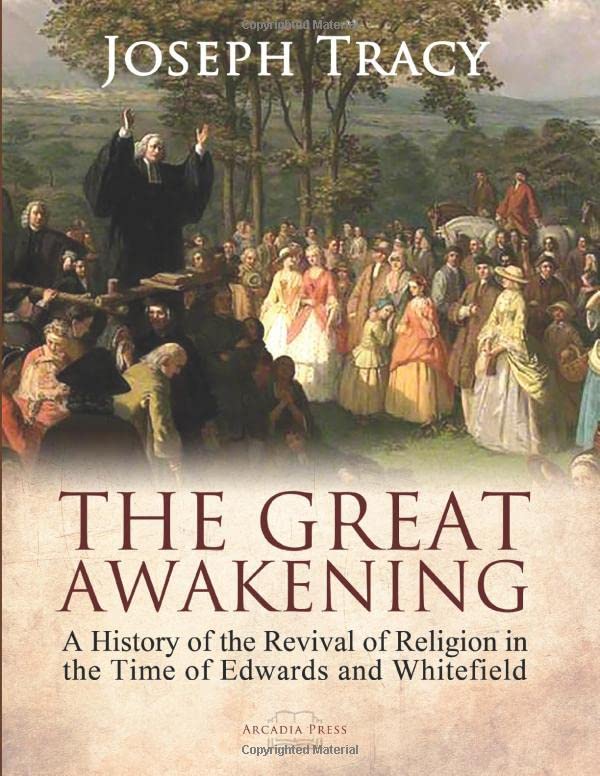
Kirk revealed the buried narrative rarely discussed in media or public schools. For ten years before the founding, the most successful Christian revival in history was underway. Twenty-five thousand sermons were delivered over a decade to the population of the 13 colonies by preachers like George Whitefield, Jonathan Mayhew, and Jonathan Edwards.
Jonathan Edwards delivered his famous sermon "Sinners in the Hands of an Angry God" thousands of times. This was not prosperity gospel teaching but a harsh message of repentance. Edwards brought colonies that were stepping away from God back to repentance. Kirk stressed that you cannot get to revival without repentance, and you cannot get to liberty without revival. Repentance to Almighty God led directly to the founding.
The 56 men gathered in that sweltering Philadelphia room had just lived through this greatest Christian revival in history. They began with prayer and fasting, ultimately deciding to write a letter that would justify their cause and give their fighting people a why. This would birth a new nation founded on ideals totally incompatible with monarchy. For these men and their wives, who understood they might never see their husbands again and their children might grow up fatherless, this was both a birth certificate and potentially a death certificate.
The Revolutionary Words of the Declaration
The founders chose Thomas Jefferson, then only 27 or 28 years old, to draft the document. Every word was debated and prayed over. This was not a quick skim or digital signature. The Declaration begins: "When in the course of human events it becomes necessary for one people to dissolve the political bands which have connected them with another and to assume the powers of the earth, the separate and equal station to which the laws of nature and nature's God entitled them, a decent respect to the opinions of mankind requires that they should declare the causes which impel them to separation."
Kirk translated the old English: Jefferson was telling King George that it was not just right for the colonies to separate, but that all people in all times and all places deserve to be free from tyranny. This was a universal claim for all of history. The phrase "laws of nature and nature's God" particularly enraged the king. The founders believed in a God-given moral law discernible by reason and conscience, by which nations must govern.
Kirk connected this to contemporary issues. When you refuse and reject God, stealing becomes acceptable, abortion is not wrong, and transgenderism goes unchallenged. The natural law teaches five fundamental truths rooted in Scripture, starting with the belief that human life is sacred at every stage because every human being is made in the image of God. Life is not a mistake or accident but a design, and if there is a design, there is a Designer. If there is a creation, there is a Creator.
King George, expecting a letter of surrender, instead received maximum aggression. The Declaration stated: "We hold these truths to be self-evident, that all men are created equal." The king did not believe this. He believed in the divine right of kings, that he was inherently superior. His scribes had to explain that the colonists believed he was equal to them. The reason given was that all are "endowed by their Creator." This was not based on Greek or Roman philosophy but solely on a biblical worldview expressed in Genesis 1:26-27, which establishes universal human equality.
This principle birthed Western civilization. Unlike caste systems in India or tribal hierarchies in Africa, where not all people are considered equal, America's birth certificate declared that having more money does not grant more rights. Everyone is the same in God's economy and will stand before God the judge one day as equals.
Life, Liberty, and the Pursuit of Happiness
As the king read further, his anger grew. The Declaration stated that among these rights "are life, liberty, and the pursuit of happiness." Kirk emphasized that you cannot have liberty or happiness if you do not protect life. He called for America to once again be a state and country that values life at every stage, from the unborn to the born to the elderly.
The rejection of the universal moral order and natural law discussed in the birth certificate has severe consequences. Quoting G.K. Chesterton, Kirk noted that when people have no God, they do not believe in nothing but will believe in anything: that men can give birth, that borders do not matter, that you can change your sex on a whim, that life has no value. The founders built the greatest nation in history upon eternal biblical Scripture and truth.
The Christian Foundation in the Founders' Own Words
Kirk shared quotes from the founders themselves to prove this point. Patrick Henry, one of the more outspoken founders who famously said "Give me liberty or give me death," also stated: "It cannot be emphasized too strongly or too often that this great nation was founded by Christians not on religions but on the gospel of Jesus Christ."
John Adams, the second president, declared: "Our constitution was made only for a moral and religious people. It is wholly inadequate to the government of any other." Kirk explained that the Declaration and Constitution are tied together, and the liberty Americans enjoy vanishes when there is no longer a moral or religious people, as evidenced by the soft anarchy in Los Angeles where theft goes unopposed without a moral or Christian framework.
In a letter to Thomas Jefferson on June 28, 1813, John Adams wrote: "The general principles on which the founding fathers achieved independence were the general principles of Christianity." James Madison said: "The only sure foundation for civil liberty is the Bible," not the teachings of Aristotle, Plato, Immanuel Kant, or Thomas Hobbes.
Kirk argued that the liberty Americans have enjoyed for 249 years did not happen by accident or by rolling dice. It came from serious Christians and believers who gave future generations this freedom. His proof: no one has been able to replicate America. The nation remains the freest and greatest for 249 years running.
American Exceptionalism and Generosity
Kirk acknowledged that while China is the next richest country, it is the opposite of American values—a totalitarian police state that is hyper-materialistic. While America has some slipping standards and worships material things more than it should, there remains a remnant of Bible-believing Christians and churches that love God, love people, and work for His purposes every day.
Americans do not do enough to teach children how great this country is. America is the most generous country ever to exist in world history, giving more to the poor, to poverty relief, to the third world, and in humanitarian aid. The nation finances more Christian missionaries and ministries than any other, with 70% of all Christian mission work originated by 5% of the population in America. When there is a tsunami, flood, or civil war, the world calls Americans, not the French or Belgians, because there is something different about this country rooted in its values.
Kirk explained the American trinity found on the US dollar bill: Liberty, In God We Trust, and E Pluribus Unum (out of many, one). Together, these represent that universal human equality reigns above all. It does not matter if you are black, white, or Hispanic—in God's economy, all are human beings made in His image. Whether tall or small, unborn or born, everyone is a human being.
The Covenant That Built a Nation
Kirk concluded by examining his favorite part of the Declaration: the ending, which reveals the type of nation America is and shows the profundity and weight of what the founders established. He distinguished between two types of relationships: contractual and covenantal.
Contractual relationships, like hiring a doctor or buying property, have specific terms and end dates. Covenantal relationships, like marriage or Jesus and the church, are built on love, kindness, respect, and trust, lasting as long as parties remain faithful. Most importantly, covenantal relationships involve three parties: person, person, and God.
Unlike Canada or Mexico, which have contractual relationships with their governments, America was founded as a covenantal relationship. Similar to Nehemiah 9, when the Jews in exile were sent back by King Cyrus and Nehemiah restored the covenant before God, the founders created a covenant.
The Declaration's final passage states: "We therefore, the representatives," in all caps, "the United States of America"—the first time that term was used—"in general Congress assembled appealing to the supreme judge of the world." Kirk asked who they were appealing to: Jesus Christ. He posed a trivia question: Where does Jesus appear in the Declaration? Right there, as "the supreme judge of the world." The book of Revelation states that Jesus will take the seat of judgment as the supreme judge at the end of the age. The founders, all fluent in Greek and Hebrew and taught the Bible as a primary text from youth, knew exactly what they were saying. This was intentional prayer to Jesus Christ.
The founders then stated that despite knowing their houses could be burned, their wives kidnapped, and their children tortured, "for the support of this declaration, with reliance on protection of divine providence, we pledge to each other our lives, our fortunes, and our sacred honor." They went vertical to divine providence, then horizontal to each other, creating a triangular covenantal relationship. This is why they beat the British. While the British had paid mercenaries, the American founders pledged to each other and to a higher power.
The fact that America has lasted 249 years in its current form makes the Constitution the longest-lasting political document ever written in world history. The nation remains under that covenant but will cease to be if faithfulness wanes and it becomes a secular nation. As the prophet Isaiah says: "Woe unto those who call good evil or evil good." Isaiah 33:22 states: "For the Lord is our judge, the Lord is our lawgiver, the Lord is our king, and he will save us." The founding generation knew this intimately.
Kirk urged the congregation to celebrate the nation throughout the weekend and tell friends about it, because it is a much bigger deal than most realize. Americans should be grateful, on their hands and knees kissing the ground and thanking God for the privilege of living in this great nation. This inheritance came not from luck, chance, or any other religion, but from courageous Christians who put everything on the line so future generations could live free.