
Up Next

Charlie Kirk Reveals Why Physical Bibles and Sabbath Rest Changed His Life Completely
16:18

Charlie Kirk on Church Persecution, Civil Society, and Fighting for Truth in a Broken America
1:31:37

Charlie Kirk Exposes Five False Religions Replacing Christianity and Fighting For America's Future
1:50:19
Related Books
Browse Conservative Books






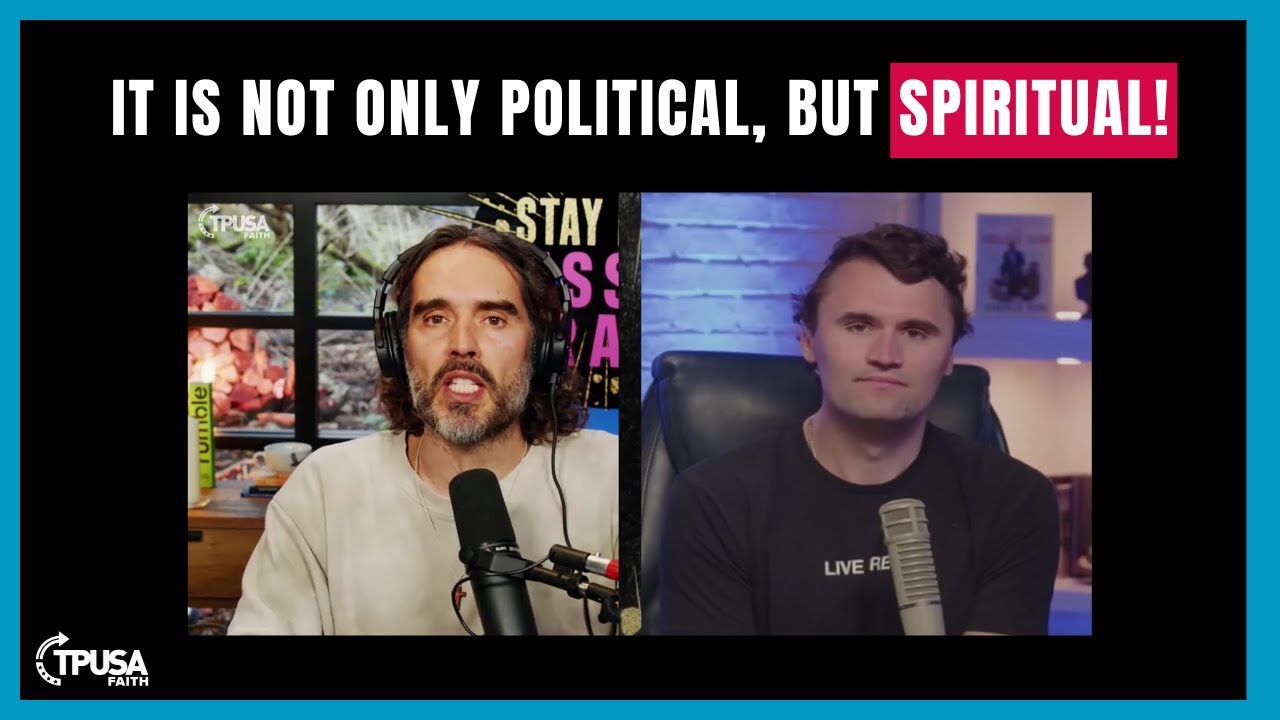
Charlie Kirk Destroys the Myth That America Was Not Founded on Christian Principles With Historical Evidence
Charlie Kirk dismantles the common argument that America was not founded on Christian principles by examining original state constitutions, the faith of the founding fathers, and the biblical foundations of common law. He reveals that nine out of thirteen original states required you to be a Protestant to serve in government, fifty-five out of fifty-six signers of the Declaration were Bible-believing Christians, and Deuteronomy was the most quoted book during the founding era. Kirk argues that the separation of church and state is a modern misinterpretation, and that America's constitutional crisis stems from having a Christian form of government without a Christian population.
The Original State Constitutions Reveal America's Christian Foundation
When addressing the claim that America was not founded on Christian principles, it's essential to understand that the United States was a collection of states and colonies before becoming a unified nation. To understand the founding, you need to read the state constitutions before anything else.
Nine out of thirteen of the original states required you to be a Bible-believing Christian to serve in government at the time of the founding. In fact, thirteen out of thirteen required a declaration of faith. Nine out of thirteen required you to be a Protestant, except Maryland which was Catholic but still required a declaration of faith. In almost every single one of the original state constitutions, including Pennsylvania, they had declarations such as "I profess Lord in Jesus Christ as my Lord and Savior" in the original state constitutions.
This is critical to remember because we were a collection of states before we were a unified federal government, and these state constitutions reveal the explicitly Christian nature of America's founding documents.
The Faith of the Founding Fathers
Fifty-five out of fifty-six of the original signers of the Declaration were Bible-believing, church-attending Christians. This is not a matter of speculation or interpretation—it's historical fact. The idea that the founding fathers were a bunch of Enlightenment common law deists is one of the most sinister, most unsubstantiated lies that does not come up against any sort of academic scrutiny.
Common Law's Biblical Roots
Common law is inherited from Blackstone, who was Christian. Common law is an outgrowth of the scriptures. Let's examine three principles of common law: due process and jury of your peers, wrapped into the ultimate biblical principle that you shall not favor justice if you are rich or poor, which is found in Leviticus 19, right before the most famous part of Leviticus 19, which is that you should love your neighbor as yourself.
Before that famous command is the principle that in the administration of justice you shall not favor the rich or the poor, which is the idea of blind justice we get in the West. This is incorporated also in the New Testament ideal of "neither slave nor Greek nor Jew, you're all one in Jesus Christ," which gives us the idea of human equality. These are all biblical ideas—they're not Enlightenment ideas, though they kind of get conflated at the time.
God in the Declaration of Independence
The claim that God was only mentioned four times in the Declaration of Independence is actually a big deal. The Declaration references "laws of nature and Nature's God." More importantly, the last paragraph of the Declaration reads as a prayer. It says "we appeal to the Supreme judge of the universe." Who's the judge of the universe? Jesus Christ, as it says in Revelation that Jesus will judge the Earth on his throne. In the Declaration, they were praying to Christ Our Lord as a prayer, very specifically.
Deuteronomy: The Most Quoted Book at the Founding
Deuteronomy was by far the most quoted book—religious or non-religious—in the time of the founding when they were putting together the Constitution. It was quoted more than John Locke, more than Montesquieu, more than Blackstone. The book of Deuteronomy, which talked about laws, customs, and traditions, was Moses' farewell address as he was about to say goodbye and tell the Israelites, "Hey, good luck in Canaan guys, here's how you should set up your form of government."
What the Founders Actually Said
John Adams seamlessly said the Constitution was only written for a moral and religious people and was wholly inadequate for the people of any other. The body politic of America was so Christian and was so Protestant that our form and structure of government was built for the people that believed in Christ Our Lord.
One of the reasons we're living through a constitutional crisis is that we no longer have a Christian nation, but we have a Christian form of government, and they're incompatible. You cannot have liberty if you do not have a Christian population.
Separation of Church and State: A Modern Myth
The phrase "separation of church and state" is not in the U.S. Constitution. That is a single letter that Thomas Jefferson wrote in 1807 to the Danbury Baptist Convention in Massachusetts, assuring them that the government would not come after the church—which is the opposite of what people claim today. That letter was then resurrected by the Warren Court and the Burger Court in the 1960s, where they said all of a sudden we're now going to make this as if it's the Constitution.
The Constitution does say two things: The Establishment Clause and the Free Exercise Clause. The Establishment Clause states that "Congress shall make no law prohibiting the free exercise thereof." What they were most worried about was a Presbyterian or an Anglican or a Quaker type religion taking over the federal government. Instead, it was that there is not going to be a state-run religion or a state-run government.
Early Acts of Congress Prove Christian Foundation
Did you know that one of the first acts of Congress was taxpayer-funded Bible printing and distribution? Did you know that there were church services held in the Supreme Court building as late as the Jackson presidency in the 1820s?
All Laws Reflect Morality
Going back to this idea of separation of church and state—it's not biblical, and it's not constitutional. If you go a layer deeper, ask people who even say that: Do you believe in separation of morality and state? Nobody does. All laws are a reflection of morality, and all morality comes from somewhere. There is no such thing as neutral morality.
We believe what the founders believed because they put it in the halls of Congress, they put it in the Supreme Court, and they put it all throughout the country: the Decalogue, The Ten Commandments, is the core morality of how a society and a civilization should exist. The Ten Commandments belong to every person.
The Liberty Bell Quotes Leviticus
Finally, and this is the kicker: If the founding fathers were not Bible-believing, church-going Christians, why did they put Leviticus on the Liberty Bell? Not John, not Psalms, not Proverbs, not Genesis—Leviticus. Most Americans can't spell Leviticus. Leviticus 25:10: "Proclaim Liberty throughout the land of which you are in it."
Why They Must Deny America's Christian Foundation
The reason they hate this truth is because—the reason they must say this is that—if we actually go back to our Christian roots and we go back to where we once were, it's America's best hope for revival and for a great future.
Video Transcript
[00:00] I was articulated Yesterday by a couple
[00:03] of my friends that our country was not
[00:04] founded on Christian principles um so I
[00:07] I want to see how like an argument that
[00:09] you guys can give me to combat that
[00:12] because the Declaration only refers to
[00:14] God four times and the Constitution
[00:16] doesn't refer to God at all and it only
[00:18] articulates the structure of government
[00:20] is common law Christian in nature or is
[00:23] it not remember that we were a
[00:24] collection of states and colonies and
[00:27] you need to read the state constitutions
[00:28] before anything else n out of 13 of the
[00:30] original states required you to be a
[00:32] Bible believing Christian to serve in
[00:33] government at the time of the founding
[00:36] you could even in P actually 13 out of
[00:39] 13 required a declaration of Faith nine
[00:41] out of 13 required you to be a
[00:42] Protestant except Maryland which was
[00:44] Catholic which still required a
[00:45] declaration of faith in almost every
[00:48] single one of the original state
[00:49] constitutions Pennsylvania included they
[00:52] had I profess Lord in Jesus Christ as my
[00:54] Lord and Savior in the original state
[00:56] constitutions so you remember we're a
[00:58] collection of States before that
[01:01] secondly 55 out 56 of the original
[01:03] signers of the Declaration were Bible
[01:04] believing Church attending Christians
[01:06] you ask about common law so common law
[01:08] is inherited from Blackstone who was
[01:10] Christian a common law is an outgrowth
[01:12] of the scriptures so let's go to three
[01:13] principles of common law due process and
[01:16] jury of your peers wrapped into the
[01:17] ultimate biblical principle that you
[01:19] shall not favor Justice if you are rich
[01:21] or poor which is in Leviticus 19 right
[01:23] before most famous part of Leviticus 19
[01:26] which is that you should love your
[01:27] neighbor as yourself but before that is
[01:29] that in the administration of justice
[01:31] you shall not favor the rich or the poor
[01:33] which is the idea of Blind Justice we
[01:34] get that in the west which is
[01:36] incorporated also in the New Testament
[01:37] ideal neither slave nor Greek nor Jew
[01:39] you're all one in Jesus Christ which you
[01:40] got the idea of human equality these are
[01:42] all biblical ideas they're not
[01:43] Enlightenment ideas which is they kind
[01:45] of get conflated at the time but more
[01:47] importantly than that they say that God
[01:48] was only mentioned four times in the
[01:50] Declaration of Independence well that's
[01:52] a big deal okay laws of nature and
[01:54] Nature's God the last paragraph of the
[01:55] Declaration reads as a prayer it says we
[01:58] appeal to the Supreme judge of the
[02:00] universe who's the judge of the universe
[02:02] Jesus Christ as it says in Revelation
[02:04] that Jesus Will judge the Earth on his
[02:06] throne this so in the Declaration they
[02:09] were praying to Christ Our Lord as a
[02:11] prayer very specifically thirdly as I
[02:14] set on stage yesterday Deuteronomy was
[02:16] by far the most quoted book religious or
[02:18] non-religious in the time of the
[02:20] founding when they were putting together
[02:21] Constitution more than John Lock more
[02:23] than monu more than Blackstone so the
[02:26] book of Deuteronomy which talked about
[02:28] laws Customs Traditions it was Moses
[02:30] farewell address as he's you know about
[02:32] to say goodbye say hey good luck in
[02:33] Canaan guys here's how you should set up
[02:35] your form of government but finally and
[02:38] most importantly let's look at actually
[02:39] what the founders said John Adams
[02:42] seemlessly said the Constitution was
[02:43] only written for a moral and religious
[02:45] people it was holy inadequate for the
[02:46] people of any other the body politic of
[02:48] America was so Christian and was so
[02:50] Protestant that our form and structure
[02:52] of government was built for the people
[02:54] that believed in Christ Our Lord one of
[02:56] the reasons we're living through a
[02:57] constitutional crisis is that we no
[02:59] longer have have a Christian Nation but
[03:01] we have a Christian form of government
[03:02] and they're incompatible so you cannot
[03:04] have Liberty if you do not have a
[03:05] Christian population so that that's just
[03:10] that's just a surface level belief so
[03:12] then they'll go to the First Amendment
[03:13] which is has two two parts of the First
[03:15] Amendment which get conflated first of
[03:17] all separation church and state is not
[03:18] in the US Constitution that is a single
[03:20] letter that Thomas Jefferson wrote in
[03:22] 1807 to the danur Baptist convention in
[03:24] Massachusetts assuring them that the
[03:26] government would not come after the
[03:27] church okay which is the opposite of
[03:29] what they would say however that was
[03:30] then resurrected by the Warren court and
[03:32] the burger Court in the 60s where they
[03:34] said hey you know all of a sudden we're
[03:35] now going to make this as if it's the
[03:36] Constitution it does say in the
[03:38] Constitution two things which is The
[03:39] Establishment Clause and the free free
[03:41] expression Clause The Establishment
[03:42] Clause is that Congress shall make no
[03:44] law prohibiting the free exercise
[03:46] thereof what they were most worried
[03:48] about was a presbyterian or a Anglican
[03:52] or a Quaker type religion taking over
[03:54] the federal government instead it was
[03:56] that there is not going to be a
[03:57] state-run religion or a state-run
[03:59] government government did you know that
[04:00] one of the first acts of Congress was
[04:03] taxpayer funded Bible Printing and
[04:06] distribution did you know that there
[04:08] were church services held in the Supreme
[04:09] Court building as late as the Jackson
[04:12] presidency in the 1820s but going back
[04:14] to this idea of separation church and
[04:16] state and again I could Riff on this at
[04:18] at nauseum because it's just so
[04:19] ridiculous right is that it's not
[04:22] biblical because first it's not biblical
[04:25] it's not constitutional because you go a
[04:27] layer deeper people that even say that
[04:29] do you believe in separation of Morality
[04:30] In State nobody does so all laws are
[04:33] reflection of morality and all morality
[04:34] comes from somewhere there is no such
[04:36] thing as neutral morality and we believe
[04:38] what the founders believed because they
[04:39] put it in the halls of Congress they put
[04:41] it in the Supreme Court and they put it
[04:42] all throughout the country which is that
[04:43] the decalogue The Ten Commandments is
[04:45] the core morality of how a society and a
[04:47] civilization should exist right the the
[04:49] Ten Commandments of every person and
[04:51] finally and this is the kicker if the
[04:53] founding fathers were not Bible
[04:54] believing church church Christians why
[04:57] did they put Leviticus on the Liberty
[04:59] Bell not John not Psalms not Proverbs
[05:02] not Genesis Leviticus most Americans
[05:04] can't spell Leviticus Leviticus 2519
[05:07] Proclaim Liberty throughout the land of
[05:09] which you are in it is one of the most
[05:11] Sinister most unsubstantiated lies that
[05:13] does not come up against any sort of
[05:15] academic scrutiny this idea that
[05:16] founding fathers were a bunch of
[05:17] Enlightenment common law deists the
[05:20] reason they hate it is because if they
[05:22] the reason they must say this is that if
[05:24] we actually go back to our Christian
[05:26] Roots and we go back to where we once
[05:28] were it's American best hope for Revival
[05:31] and for a great future



Comments
Be the first to comment on this video.