
Up Next

Body Language Expert Analyzes Tyler Robinson's Courtroom Demeanor Following Charlie Kirk Assassination Charges
7:58

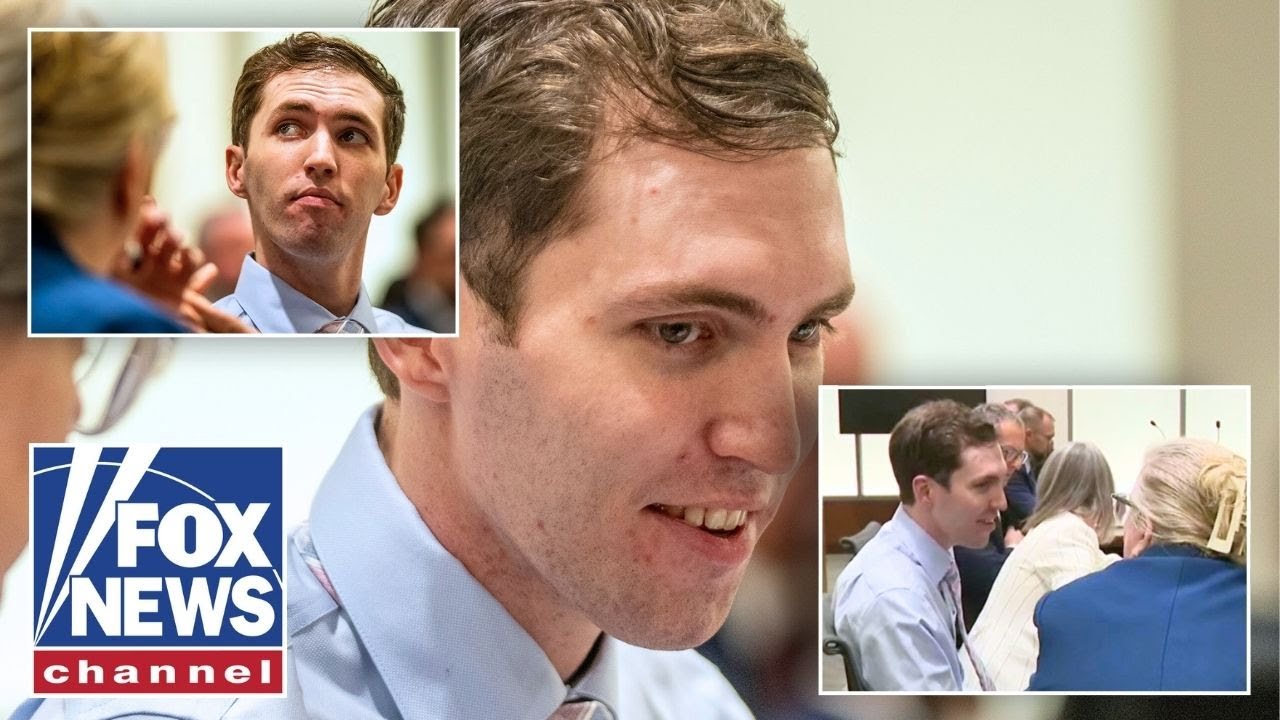
A Smiling Tyler Robinson Accused of Killer Charlie Kirk Appears in Court
5:12

Prosecutors, lawyers for Kirk’s accused assassin argue motion to disqualify prosecution
25:40
Related Books
View All


Death Penalty Case Analysis: When Murder Evidence Is Overwhelming, The Trial Becomes a Referendum on Capital Punishment
Legal experts analyze a high-profile murder case in Utah where prosecutors are seeking the death penalty. When the evidence appears overwhelming, the entire trial transforms from a question of guilt to a complex debate about whether capital punishment is warranted. The discussion explores how death penalty cases fundamentally change courtroom strategy, jury selection, and the defense approach, even when facing seemingly insurmountable evidence. This case illustrates the unique challenges prosecutors and defenders face when capital punishment is on the table, and why these cases take significantly longer and require more resources than standard criminal trials.
The Death Penalty Changes Everything
When prosecutors in Utah announced they would seek the death penalty in a murder case against a defendant named Robinson, they transformed what might have been a straightforward murder trial into something far more complex. According to legal analysis, when allegations involve murder, the evidence is strong, and the state seeks capital punishment, the entire case essentially becomes a referendum on the death penalty itself.
The central question shifts from "did he do it?" to "was this an evil act that deserves death, or were there mental illness factors or other circumstances that suggest he doesn't deserve capital punishment?" This fundamental shift affects every aspect of how the case proceeds through the legal system.
The Political Dimension
This particular case carries significant political weight, creating a danger that politics might overshadow what both the prosecution and defense are attempting to accomplish in court. Despite the political charges surrounding the case, legal experts note that from a courtroom perspective, the proceedings will quickly focus on whether the death penalty is warranted rather than the underlying facts of guilt or innocence.
Why Death Penalty Cases Are More Difficult for Prosecutors
While seeking the death penalty might seem like the strongest possible stance for prosecutors, it actually makes their job considerably harder. Death penalty cases tend to take longer and require significantly more effort. Even for indigent defendants, most states provide more robust legal defense when capital punishment is on the table.
When prosecutors decide to seek the death penalty, they are signing up for a longer, harder fight. The additional complexity and resources required mean that this decision is not made lightly, and it fundamentally alters the timeline and strategy of the prosecution.
Death-Proofing the Jury
One of the most critical aspects of any death penalty case involves jury selection, a process that becomes extraordinarily complex when capital punishment is at stake. Prosecutors want to "death proof" the jury, ensuring that every juror impaneled is willing to impose the death penalty if the facts support it and the law requires it.
The defense, however, will not be allowed to exclude people who are pro-death penalty. The law requires a jury composed entirely of individuals who are willing to impose capital punishment. This creates an interesting dynamic where the defense must work within a jury pool that is theoretically prepared to sentence someone to death.
The defense strategy then becomes focused on selecting jurors and presenting a case such that even those individuals who favor the death penalty generally won't apply it in this specific case. This is where most of the additional work and complexity surrounding a death penalty case manifests.
The Biggest Challenge: Getting to Trial
Despite what appears to be overwhelming evidence in this case, legal experts suggest that the hardest moment for prosecutors will likely be getting the case to trial. In death penalty cases, the defense will want to uncover every stone in the defendant's past and explore every potential defense avenue.
The defense team must ensure that once the case is presented to the jury, the jurors have enough information to feel like they understand Robinson—his background, his motives, and his actions. This comprehensive preparation process is probably going to be the most difficult part of the prosecution's job.
When Evidence Is Overwhelming
Even when the evidence sounds overwhelming, as it reportedly does in this case, the trial still becomes a matter of asking the jury to decide whether death is warranted. The strength of the evidence regarding guilt may be beyond question, but that doesn't resolve the more profound question that death penalty cases force juries to confront: should this person be executed by the state?
This transformation of the trial's focus means that no matter how strong the prosecution's case may be on the facts, they still face the complex task of convincing a jury that capital punishment is the appropriate response. The case becomes less about what happened and more about what should happen to the person who committed the act.
Video Transcript
[00:00] And so then on the flip side here, what
[00:03] type of defense do you think his team
[00:04] should mount? Especially considering
[00:07] you're saying could this evidence be any
[00:09] stronger?
[00:12] The a prosecutor for the state of Utah
[00:15] has already has already gone on the
[00:17] record saying they're going to seek the
[00:18] death penalty. And Britney, whenever you
[00:21] have a case like this where the
[00:23] allegation is murder and the evidence is
[00:25] strong and the state is seeking the
[00:26] death penalty, essentially it becomes a
[00:29] referendum on capital punishment. Was
[00:31] this an evil act? And does he deserve to
[00:35] be killed or was he suffering from some
[00:38] sort of mental illness or were there
[00:40] other factors that suggest that uh he
[00:44] doesn't deserve the death penalty in
[00:47] this case? Uh obviously uh this is
[00:50] politically charged issue, politically
[00:53] charged case. Um and I think the danger
[00:55] here is that politics might overshadow
[00:58] uh what the prosecution might be trying
[01:00] to do or what the defense might be
[01:01] trying to do. But typically what you
[01:03] would see is this case in terms of what
[01:06] happens in court legally that it quickly
[01:09] becomes about whether or not the death
[01:10] penalty is warranted. Let's talk about
[01:13] the death penalty here because
[01:14] prosecutors said that they are pursuing
[01:17] the death penalty. Do you think that the
[01:19] death penalty makes it harder for the
[01:21] prosecution? What do you think this adds
[01:24] by being on the table?
[01:26] Death penalty cases do tend to take
[01:29] longer. They take more effort and the uh
[01:34] the defense afforded to even an indigent
[01:37] defendant in most states is more robust.
[01:40] And so uh the anytime the prosecution
[01:44] decides to seek death penalty in a case
[01:46] they are signing up generally speaking
[01:48] for a longer harder fight. Uh one of the
[01:51] most important aspects of any death
[01:54] penalty case is the defense uh will seek
[01:58] to uh the defense and the prosecution um
[02:02] put it this way that the prosecution
[02:04] wants to death proof the jury. In other
[02:07] words, they want to make sure that every
[02:10] juror impanled in the case is willing to
[02:12] impose the death penalty uh if the facts
[02:16] support the law and the law requires it.
[02:19] The defense on the other hand will be uh
[02:21] will not be allowed to exclude people
[02:24] who are pro death penalty. And so the
[02:27] law requires a juror a jury of
[02:29] individuals who are all um willing to
[02:32] impose the death penalty. And then the
[02:34] defense will attempt to
[02:37] uh select a jury and present a case such
[02:40] that even those individuals who are in
[02:43] favor of the death penalty generally
[02:45] won't apply it in this case
[02:46] specifically. So that is what most of
[02:48] the additional work and complexity
[02:51] surrounding a death penalty case looks
[02:52] like.
[02:53] And so based on this evidence, based on
[02:56] the fact that they are seeking the death
[02:58] penalty, do you think what do you think
[03:00] the hardest moment will be for the
[03:02] prosecutors? What do you think is the
[03:04] biggest hill that they have to climb
[03:05] here?
[03:06] Probably getting it to trial. Uh the
[03:09] what will what will happen often times
[03:11] in death penalty cases is uh the defense
[03:15] will want to uncover uh every stone in
[03:20] Mr. Robinson's past and every stone in
[03:23] his potential defense to make sure that
[03:26] once the case is presented to the jury,
[03:29] the jurors have enough information to
[03:32] feel like they understand Mr. Robinson
[03:34] and his motives and his actions. And um
[03:37] and so just that preparation process is
[03:42] probably going to be the uh the hardest
[03:45] part of the prosecution's job once they
[03:47] get to trial. Again, Britney, it just
[03:50] seems like the evidence already sounds
[03:52] to be overwhelming and uh and then it'll
[03:56] be a matter of again uh asking the jury
[03:59] to decide whether or not death is
[04:01] warranted in the


Comments
Be the first to comment on this video.